
Best Commercial Sectors in Kharghar: Where Shops, Offices and Investment Work Best
Kharghar does not have one single best commercial sector. The right sector depends on what you are buying or leasing for. Sector 2 usually works better for transit-linked retail and quick-service business, Sector 10 stands out for formal office space, central residential belts like Sectors 7, 12, 15 and 20 work better for repeat local services, and the outer sectors near the metro and corporate park story are better treated as longer-term bets, not automatic winners.
Kharghar’s commercial map is shaped by very different forces: railway and highway access, internal residential catchment, Metro Line 1 reach, the CIDCO corporate park vision, parking friction, and PMC compliance realities. CIDCO remains the planning authority in the area, while civic administration and licensing sit with Panvel Municipal Corporation, which matters because trade licences, society NOCs and property-tax issues can directly affect whether a commercial unit is practical to operate.
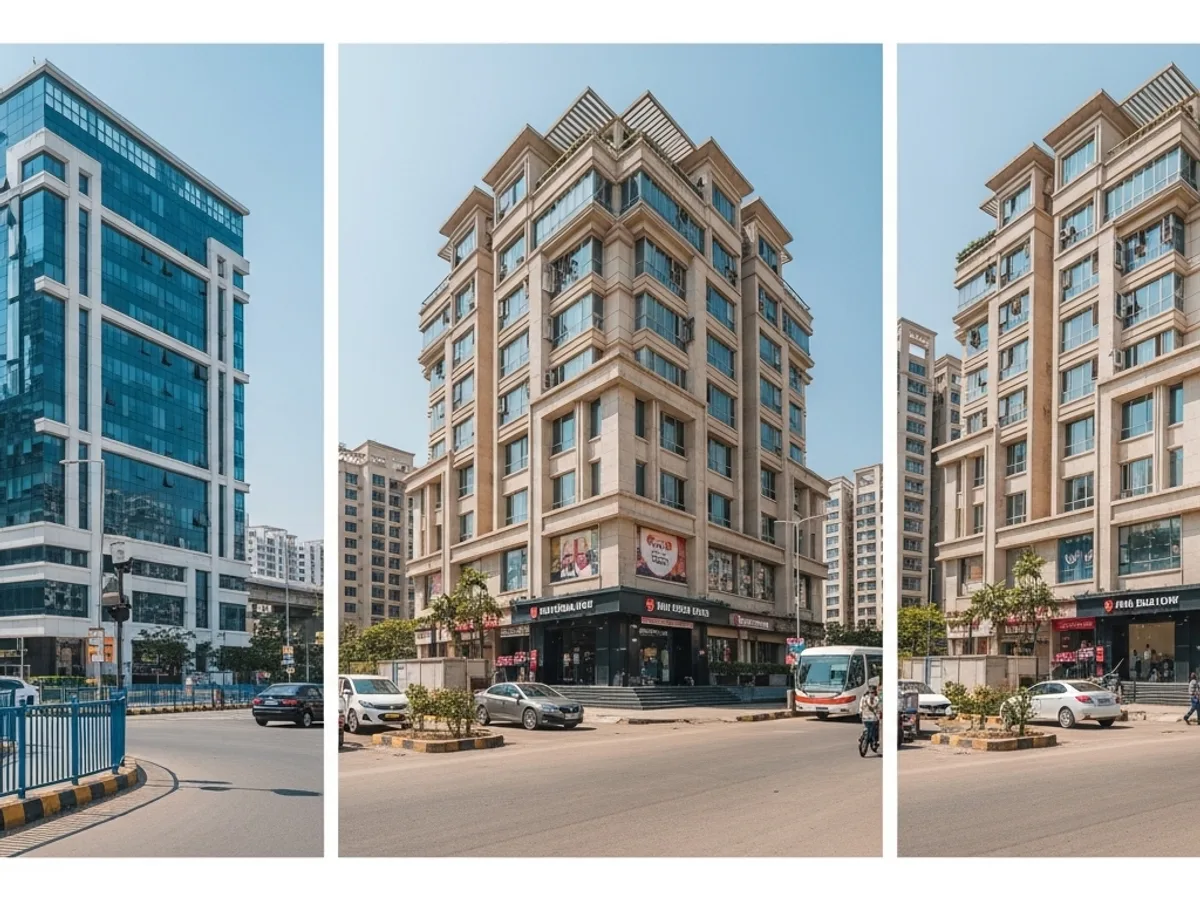
Quick answer: which commercial sectors in Kharghar are strongest right now?
| Use case | Best-fit sectors in Kharghar | Why they work better |
|---|---|---|
| High-footfall retail, QSR, banking, destination shops | Sector 2 | Near the station-highway belt, mall anchors, stronger movement and visibility |
| Grade-A offices, consultancies, formal business setups | Sector 10 | Office inventory, business-park environment, better fit for structured office use |
| Daily-needs shops, salons, clinics, local services | Sectors 7, 12, 15, 20 | Residential catchment and repeat local demand matter more here than pure visibility |
| Coaching, tuition, upper-floor service use | Sector 7 and selected outer sectors like 34/35 | Large student/residential catchment and cheaper upper-floor viability |
| Long-term emerging commercial investment | Sectors 30, 32, 34, 35 | Metro influence and corporate park story, but still more growth-led than fully mature |
This is the simple answer. But it only helps if you understand one thing clearly: Kharghar is not one flat commercial market. A sector that works for a retail franchise can be a weak fit for an office. A sector that looks attractive for investment can still be poor for immediate leasing.
Why there is no single “best” commercial sector in Kharghar
The biggest mistake in Kharghar commercial property is treating the node like one uniform market. It is not. The area is spread across very different pockets, and commercial performance changes sharply depending on whether the property is close to the railway station, the Sion-Panvel Highway, dense residential societies, or the metro-linked outer belts.
A shop depends on visibility, stopping ability, frontage and repeat walk-ins. An office depends more on access, building quality, lifts, power backup, lobby quality and where staff or clients can reach comfortably. A clinic or salon needs trust, local catchment and easy parking more than a flashy façade. That is why a premium office unit in Sector 10 can be excellent for a consultancy and still be a weak place for a grocery or impulse-led food format.
In real terms, Kharghar’s commercial sectors can be understood in four buckets:
- Station-linked and highway-facing commercial zones
- Internal residential-serving sectors
- Office-oriented formal inventory
- Emerging metro-and-corporate-park growth belts
That framework is much more useful than asking for one universal “best sector.”
Sector 2 and the station-highway belt: when does this pocket make the most sense?
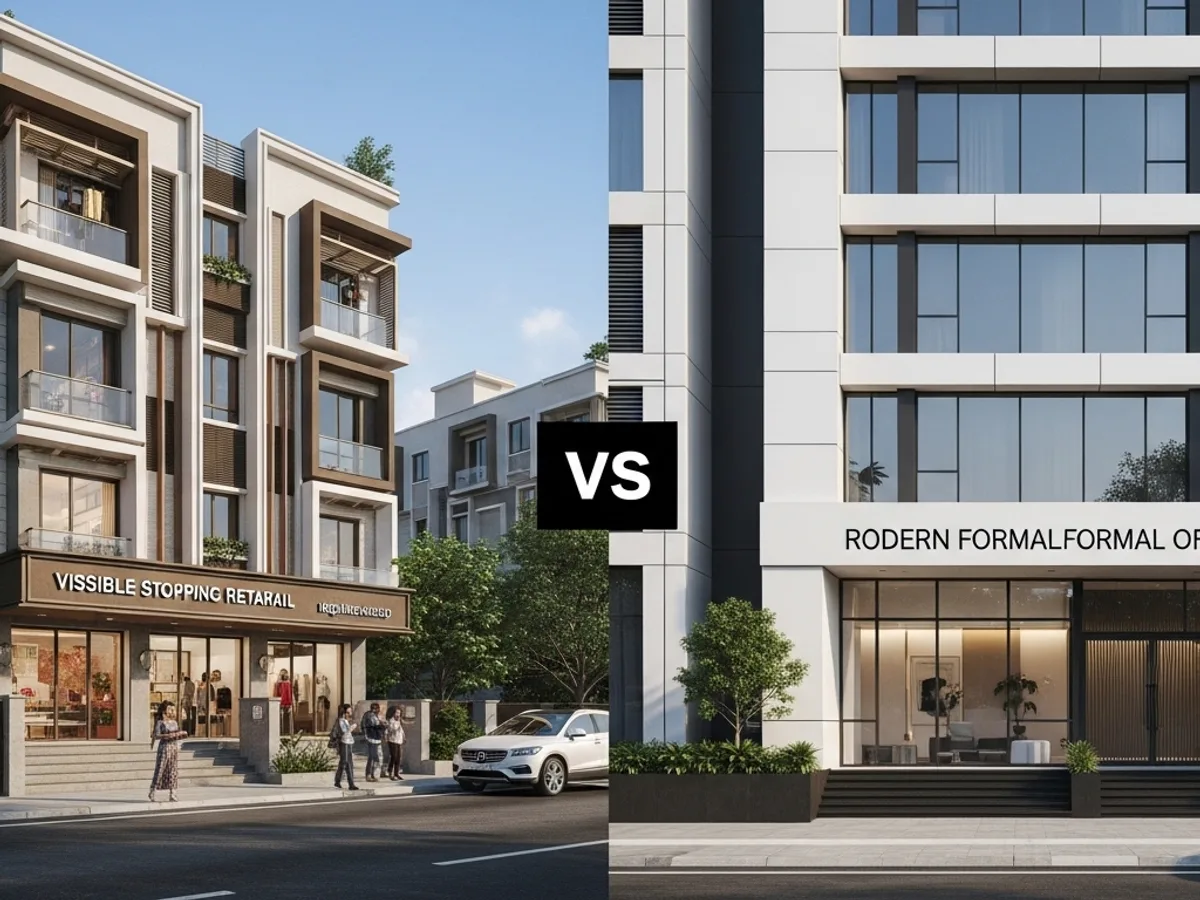
Sector 2 is one of the strongest commercial anchors in Kharghar, but only for the right asset type. It sits close to Kharghar station access and the Sion-Panvel corridor, and the area is strengthened by known retail anchors like Little World Mall. That makes it far more visible than many internal sectors.
Why this belt gets stronger recall than many internal sectors
People remember this pocket because it has movement. There is commuter flow, road visibility, and existing retail familiarity. That combination helps businesses that need brand recall, destination visits, and faster customer turnover. This is why banks, branded retail, QSRs and certain service outlets naturally fit this belt better than quiet internal residential roads.
Which businesses suit it best
Sector 2 is usually stronger for:
- ground-floor street-facing retail
- quick-service food
- larger service brands
- destination shopping
- banking and franchise-led formats
As of early 2026, the local research pattern for Sector 2 retail shows a premium entry barrier compared to many other Kharghar pockets. That makes sense. Visibility and access carry a cost here. But that cost only makes sense if the business actually uses that visibility.
Where buyers and tenants still make mistakes here
The mistake is assuming every commercial unit in Sector 2 is equally strong. It is not. Ground-floor frontage and easy access matter. Internal mall units and upper-floor retail are much riskier unless the business is destination-led. Kharghar, like wider Navi Mumbai, has seen the gap between high-street performance and weak internal mall inventory very clearly. A cheap upper-floor shop can still become a dead asset if the customer has no reason to go there.
Sector 7, 8, 10 and nearby central Kharghar belts: are these the most practical commercial sectors?
For many real users, yes, central Kharghar is often the most practical zone. Not always the most glamorous. Not always the easiest. But practical.
These sectors sit inside stronger residential catchments and more lived-in daily movement. That matters for salons, clinics, convenience stores, coaching, bakeries, pathology, mobile shops, medical stores, small-format restaurants and neighbourhood service businesses. At the same time, Sector 10 also stands apart because it holds formal office inventory that behaves differently from normal mixed-use local retail.
| Sector / belt | Stronger for | Watch-outs |
|---|---|---|
| Sector 7 / nearby central residential belts | Repeat local retail, tuition, services, clinics | Parking friction, residential society restrictions |
| Sector 8 / central mixed-use pockets | Local service businesses, selective retail | Visibility varies a lot by road and frontage |
| Sector 10 | Offices, consultancies, formal commercial setups | Can be overkill for businesses that need cheap daily catchment |
| Nearby central sectors like 12, 15, 20 | Daily-needs retail, clinics, salons, local services | Not ideal for destination-led or highway-led retail |
Best pockets for repeat residential-serving retail
If the business depends on repeat local customers, internal central sectors usually outperform overhyped “future growth” locations. A salon, paediatric clinic, dental practice, chemist, bakery, stationery shop or tuition centre survives on repeat behaviour. That usually comes from households around the unit, not just from road traffic passing nearby.
Where offices work better than shops
Sector 10 is the clearest office-oriented pocket in this conversation. Current listings in projects like Juhi Niharika Mirage and Sai Mahaavir Zion show the type of built environment and ticket size that align more naturally with office demand than everyday retail. Listing evidence in early 2026 shows office asking rates in the mid-₹20,000s per sq ft in this sector, with ready office stock and rental inventory visible as well.
Which pockets look busy but are not equally productive
This is where many people get trapped. A road can look busy but still convert poorly if customers cannot stop, park, or access the unit comfortably. In central Kharghar, parking disputes are not a theoretical issue. They are an operational issue. Reports around PMC enforcement and local friction show why buyers and tenants must check actual parking and society rules, not just ask whether a sector is “prime.”
Which Kharghar sectors are best for shops, and which are better for offices?
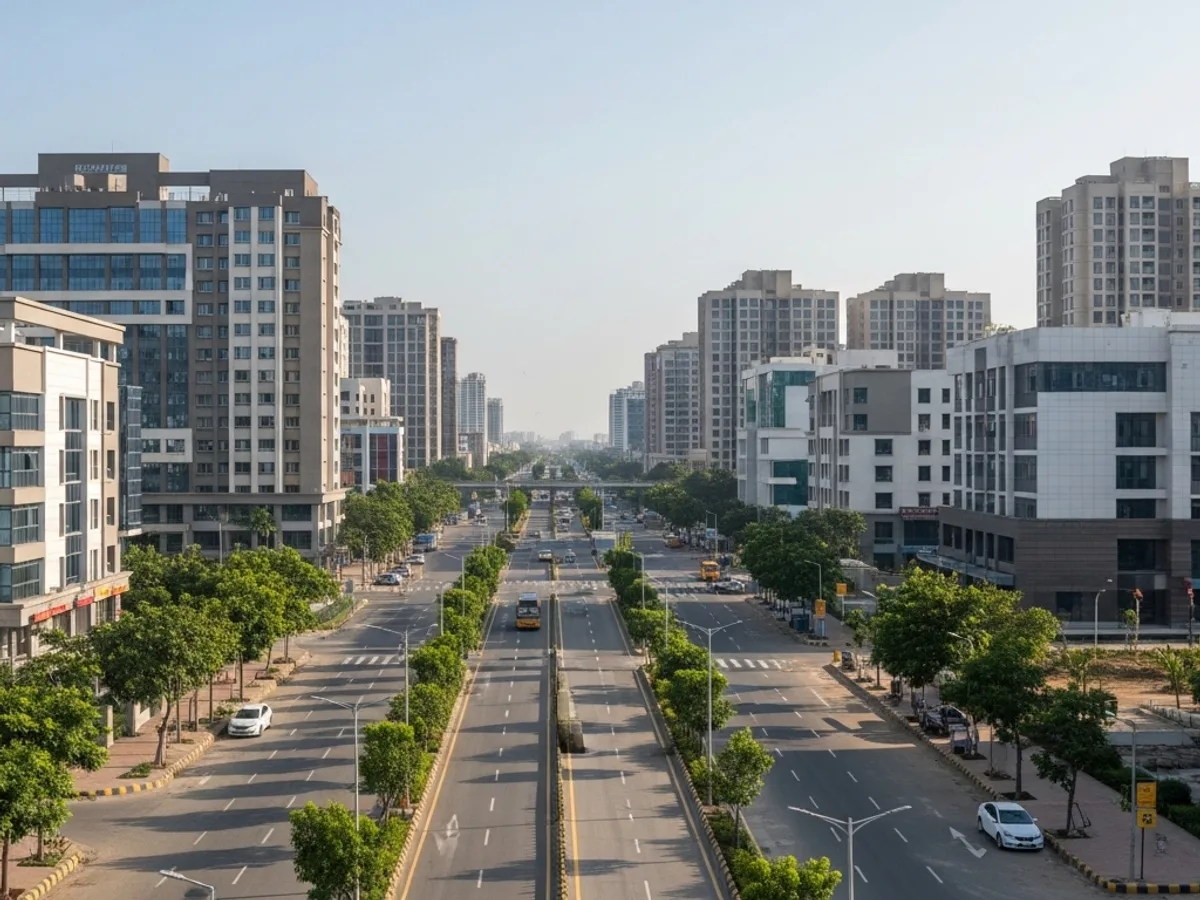
The answer is straightforward.
For shops, the better sectors are usually those with direct frontage, better stopping behaviour, and strong residential or transit catchment. That points more toward Sector 2 for destination retail and central residential sectors like 7, 12, 15 and 20 for repeat local trade.
For offices, the stronger sectors are those with more formal office stock and better commuting logic. That points more toward Sector 10, and to a lesser degree future-oriented pockets near the corporate park and metro influence where office-led evolution may strengthen over time.
A simple way to think about it:
- Shop logic: frontage, repeat catchment, visibility, stopping convenience
- Office logic: building quality, access, lift core, power backup, formal environment, commute ease
Mixing these two logics is one of the fastest ways to make a wrong commercial decision.
Best commercial sectors in Kharghar by business type
Daily-needs retail
For kirana, pharmacy, bakery, grooming, mobile repair, basic services and convenience-led retail, central residential belts such as Sectors 7, 12, 15 and 20 are usually stronger than high-ticket formal office pockets. These businesses need a captive local customer base much more than a premium commercial address.
Cafes, food outlets and quick-service formats
This depends on the format. A brand that needs visibility, youth movement and destination traffic does better in Sector 2. A smaller neighbourhood food business can work better in central residential sectors if the catchment is dense and delivery-friendly. But F&B needs extra caution because PMC trade licence requirements can extend to fire and other NOCs, and society NOC problems can kill a seemingly good location.
Clinics, salons and service businesses
These usually work best where trust, repeat visits and convenience meet. That often means Sectors 7, 10, 12 and 15, depending on exact frontage, building mix and parking. For clinics especially, a quiet but accessible location can outperform a flashy high-rent retail stretch.
Small offices, consultancies and professional setups
Sector 10 is the strongest answer here. It has the clearest office ecosystem in this topic, and current market listings support that position. Small firms, consultants, agencies, finance professionals and backend teams usually fit here much better than in pure retail belts.
Tuition, coaching, studio and appointment-led use
These can work in central sectors with student catchment, but they can also work in upper floors and cheaper units where walk-in retail would fail. This is exactly why upper-floor commercial space is not always bad. It is bad for general retail. It can still work for destination or appointment-based businesses.
Which sectors are better for commercial investment, not just self-use?
Investment logic is different from operating logic. A business owner asks, “Can I run from here?” An investor asks, “Can this stay leased, resell well, and avoid hidden friction?”
For stable, income-led investment, mature sectors are safer. In Kharghar, that usually means Sector 10 offices and proven retail in Sector 2 or strong residential-serving central sectors, depending on frontage and tenant quality. The research pattern for early 2026 puts pre-leased office yields in Sector 10 broadly in the 4% to 6% band, while stronger retail formats can be higher.
For growth-led investment, the more interesting story sits in Sectors 30, 32, 34 and 35. Metro Line 1 opened for Phase 1 between CBD Belapur and Pendhar on 17 November 2023, and CIDCO’s corporate park plan is a real long-term institutional signal. Godrej Properties’ 2025 acquisition in the broader corporate park story at around ₹716.58 crore underlines that serious capital is betting on this belt. But long-term institutional confidence is not the same thing as immediate retail success.
Are Sector 30 and 32 the future, or are they still an early bet?
They are a real long-term bet. But they are still an early bet.
That is the honest answer. CIDCO’s corporate park project in Kharghar is real, and CIDCO itself describes it as a major commercial-economic centre in a large planned area. Godrej’s acquisition reinforces that institutional conviction. Metro connectivity has also changed how outer Kharghar is viewed.
But small retail investors should not treat this like a ready-made high-footfall ecosystem. The broader outer belt still depends on execution, occupancy, surrounding development and time. Good future direction does not automatically mean good current leasing depth. So if someone asks whether Sector 30 or 32 is good for a 7-year commercial hold, the answer can be yes. If they ask whether it is the safest place for immediate shop rental income today, the answer is much more cautious.
> Caution: The term “Upper Kharghar” is often used as a marketing label, not a legal planning category. Treat outer sectors by actual location, metro access, title clarity, utility readiness and current habitational depth, not by branding alone.
What makes one Kharghar commercial sector work better than another in real ground terms?
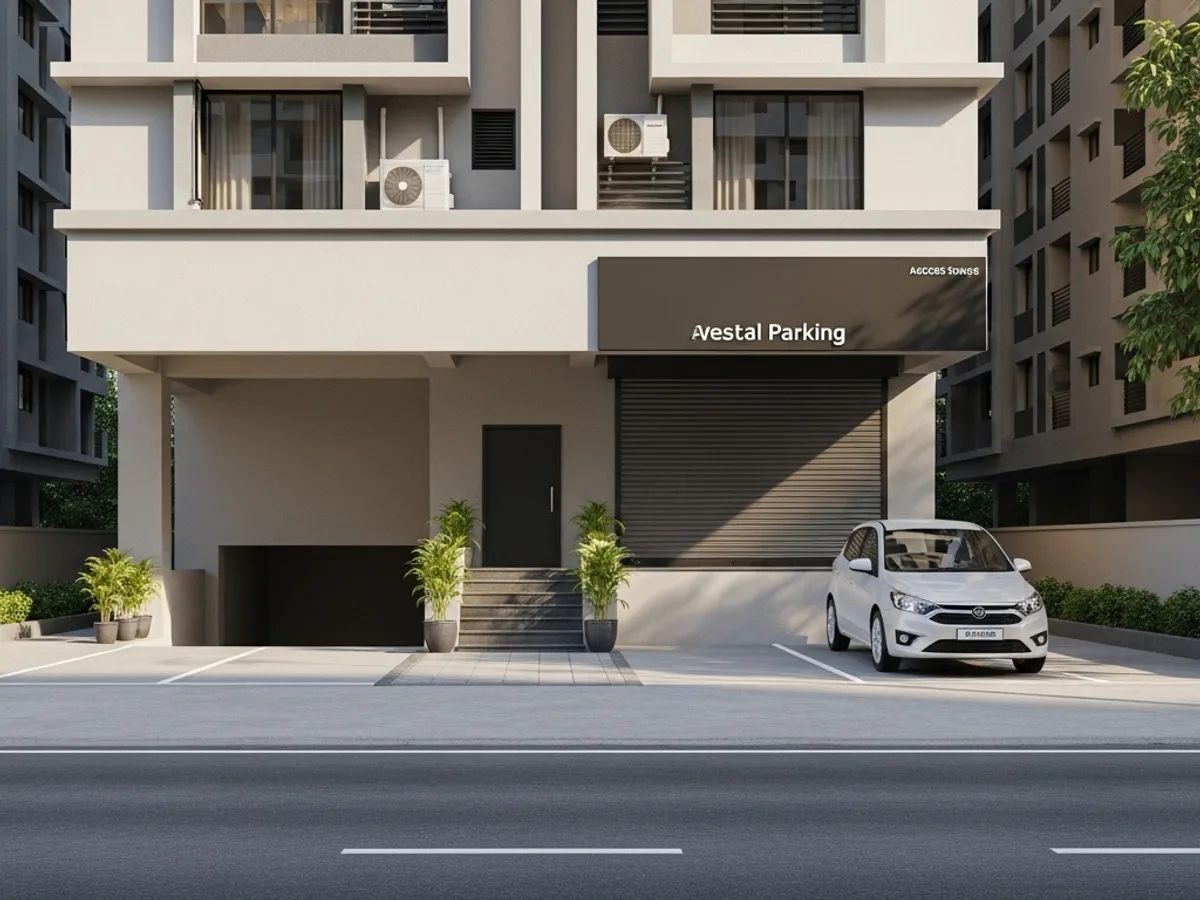
Most people focus on the wrong thing first. They look at the sector name. They should first look at how the unit will actually function.
Use this checklist before you trust any “best sector” claim:
- Is the business retail, office, clinic, tuition, service or food-led?
- Is the unit on ground floor, visible, and easy to access?
- Can customers actually stop or park there?
- Is it a society-attached commercial unit, and will the society give NOC?
- Does the business need a trade licence, fire NOC or special permissions?
- Is the property tax fully clear?
- Is the area driven by destination demand, office demand or daily local repeat demand?
- Is the asset in a strong high-street position or inside a weak mall / upper-floor setup?
These are not minor details. PMC’s trade licence process itself reflects how documentation-heavy commercial operation can be. The application process and help material show the importance of property documents, society NOC, property tax receipt, and in some cases fire-related permissions.
Sectors that look attractive on paper but need caution before you buy
Two categories need caution in Kharghar.
The first is upper-floor mall or internal mall retail. Buyers are often attracted by lower ticket size, but casual retail rarely behaves well on higher floors unless the business is destination-led. This is where the difference between a high street and a strata-sold mall unit becomes brutal.
The second is units with hidden civic or society friction. A cheap deal can stop looking cheap very fast if there are PMC tax arrears, society NOC problems, parking disputes, or restrictions on the intended business type. Panvel Municipal Corporation has been actively pursuing defaulters, and reports in 2025 described 447 pre-seizure notices and 27 warrants, alongside recoveries from Kharghar properties. That should be a very serious warning for investors buying resale commercial units without document verification.
How to shortlist the right commercial sector in Kharghar before you visit sites
Before you pay token money, do these checks:
1. Decide your use case first. Shop, office, clinic, coaching, café and cloud-kitchen requirements are different.
2. Shortlist sectors accordingly. Sector 2 for transit-led retail, Sector 10 for office, central sectors for repeat local services, outer sectors for growth-led bets.
3. Check actual access, not map distance only. Visit in working hours and evening hours.
4. Verify parking reality physically. Not “parking available nearby.” Actual usable parking.
5. Ask whether society NOC is available for your exact business type. This matters more than many people realise.
6. Check the PMC trade-licence process and required documents. Registered lease or ownership proof, tax receipt and other permissions may be needed.
7. Check property-tax status before booking. Especially in resale. PMC enforcement has been active.
8. If under construction, verify MahaRERA details independently. Do not rely only on brochure promises.
Final verdict: which commercial sector in Kharghar fits which buyer best?
| Buyer / user type | Best-fit Kharghar sector | Why |
|---|---|---|
| Retail franchise or QSR | Sector 2 | Best mix of movement, visibility and destination pull |
| Local service operator | Sectors 7, 12, 15, 20 | Stronger repeat catchment from surrounding residents |
| Office buyer or tenant | Sector 10 | Best established office-oriented inventory in this topic |
| Conservative investor | Sector 10 pre-leased office / proven central retail | Better current leasing logic and lower speculation |
| Growth-seeking investor | Sectors 30, 32, 34, 35 | Metro and corporate park story, but longer holding horizon needed |
| First-time commercial buyer | Mature central sector or proven office asset | Easier to understand and less dependent on future hype |
So which is the best commercial sector in Kharghar? There is no single answer. Sector 2 is strongest for transit-linked retail. Sector 10 is strongest for formal office space. Central residential sectors are stronger for repeat daily business. Outer metro-and-corporate-park sectors are more about future upside than immediate certainty. That is the practical truth.
Conclusion
The best commercial sectors in Kharghar are not decided by hype, brochure language or one blended rate per square foot. They are decided by use case.
If you want the cleanest office answer, look at Sector 10. If you want transit-led retail strength, start with Sector 2. If you want practical neighbourhood business demand, central residential sectors deserve more attention than many flashy “future” belts. And if you want long-term upside, the outer sectors linked to metro access and the corporate park story may be worth tracking, but only with patience, documentation discipline and realistic expectations. That is how Kharghar should actually be read.
FAQ's
Frequently Asked Questions