Best Sectors in Ulwe for Buying a Flat
There is no single best sector in Ulwe for every buyer. The better sectors are usually the ones that balance station access, road connectivity, daily livability, and usable project inventory, not just airport hype. For most buyers, the real shortlist usually comes down to established sectors around the Bamandongri and Kharkopar side, while more peripheral pockets work better only for patient investors. Ulwe is a CIDCO-planned node, its rail logic is shaped by Bamandongri and Kharkopar stations, and airport-led demand has made micro-location more important than ever.
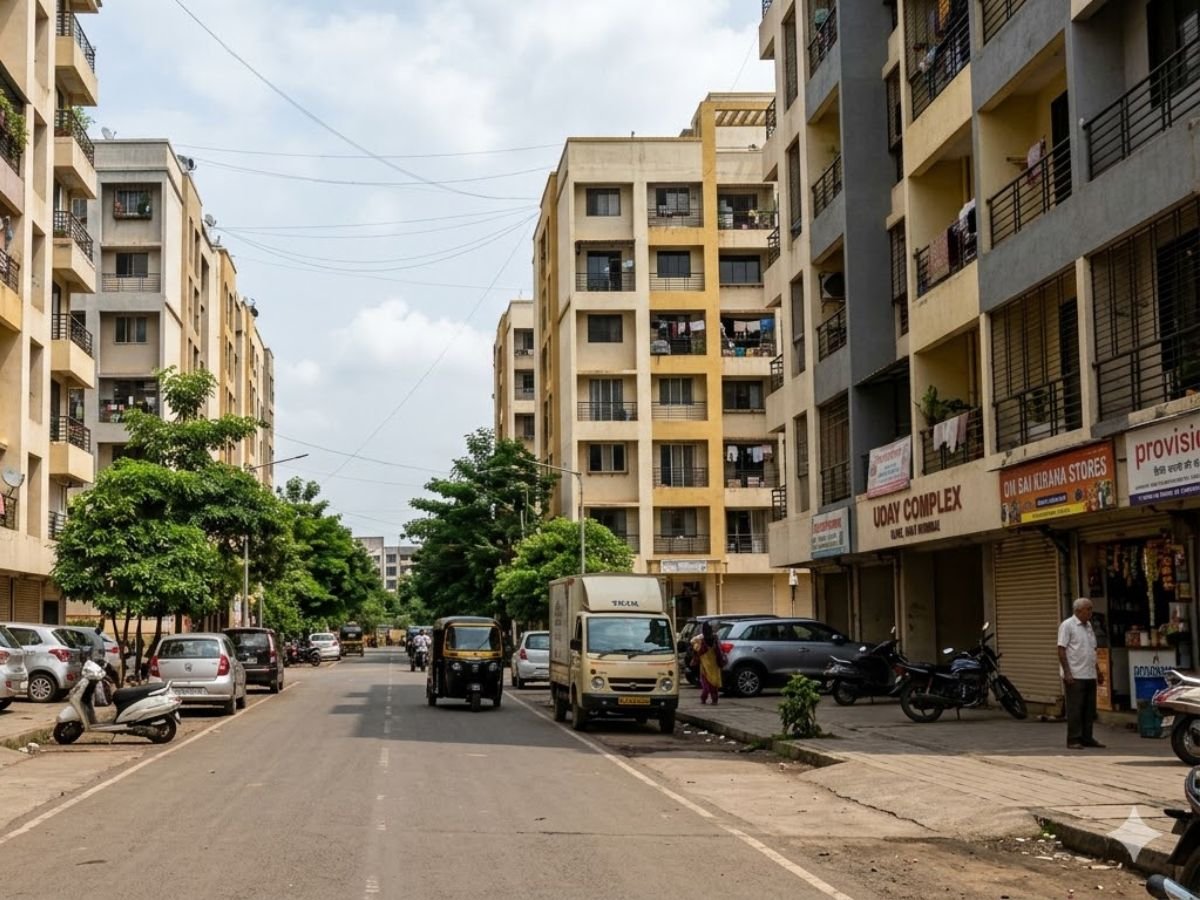
Ulwe is no longer just a speculative name on a brochure. It is now a functional, populated suburb with clear internal differences. Some sectors feel ready for real daily life. Some are still better on paper than on the ground. If you are buying a flat here, that difference matters more than any marketing line about “future growth.”
Best sectors in Ulwe for buying a flat: the direct answer
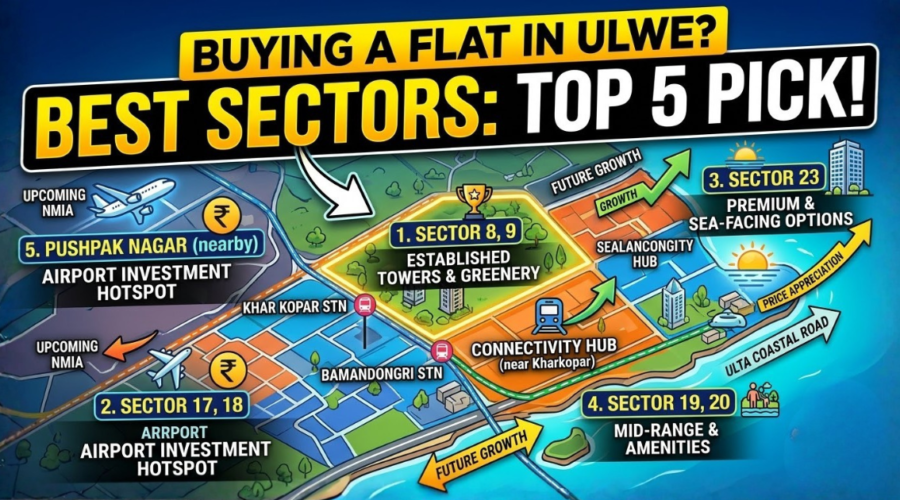
For most practical buyers, the strongest shortlist usually starts with Sector 19B, Sector 20, Sector 17, and Sector 9.
- Sector 19B and Sector 20 usually work best for buyers who want railway access, daily convenience, and better resale comfort.
- Sector 17 works well for buyers who want a balance between station access, road movement, and relatively broader choice in compact flats.
- Sector 9 is often the better pick for families who care more about a settled feel and larger-home potential than the cheapest entry ticket.
- Sectors 23, 24, and similar edge pockets can make sense for long-term investors, but they are not automatically the best sectors for immediate self-use.
Quick summary table
| Sector / Cluster | Best for | Main strength | Main caution | Better fit |
|---|---|---|---|---|
| Sector 19B / 20 | Daily commuting, self-use | Bamandongri-side access, better daily ecosystem | Higher pricing, denser movement | Self-use and balanced buying |
| Sector 17 | Mixed-use buyers | Kharkopar-side access, practical balance | Building quality varies a lot | Self-use or investment |
| Sector 9 | Family end-use | More settled feel, better larger-flat logic | Premium budget needed | 2 BHK family buyers |
| Sector 23 / 24 | Patient investors | Lower entry points in some pockets | Less settled daily ecosystem | Long-term investment |
| Pushpak Nagar side | High-risk future bet | Airport-linked long-term story | Dust, infrastructure dependence, extra caution | Only selective investors |
The main mistake buyers make is asking, “Which sector is best?” The better question is, “Best for what?”
Which Ulwe sectors usually make the first shortlist for serious buyers?
Serious buyers usually stop looking at Ulwe as one big block. They start filtering by commute, daily life, and transaction safety.
If railway access matters, Sector 19B, Sector 20, and Sector 17 usually come up first because Bamandongri and Kharkopar are the two railway anchors that shape how Ulwe functions on the ground. The Nerul-Uran suburban corridor made these station-linked sectors far more practical than brochure-era Ulwe.
If everyday livability matters more, Sector 9, Sector 19/19B, Sector 20, and parts of Sector 17 usually make more sense because they tend to feel more usable right now. In Ulwe, that means better chances of finding active ground-floor retail, autos, pharmacies, groceries, and finished housing stock in the immediate catchment.
If a broker is pushing “future growth” very hard, the sectors needing more caution are usually Sector 23, Sector 24, outer pockets toward the airport side, and Pushpak Nagar-linked areas. These may still work, but only when the buyer is honest about the trade-off: lower current comfort in exchange for possible long-term upside.
Are Bamandongri-side sectors or Kharkopar-side sectors better for buying a flat?
This is one of the most practical questions in Ulwe, and the answer changes with lifestyle.
Bamandongri-side sectors are usually better if:
- you depend on railway travel more than highway travel
- you want a more settled day-to-day environment
- you are buying for family use
- you want stronger walkability and easier everyday resale
Kharkopar-side sectors are usually better if:
- you care more about road exits and the Atal Setu side
- you travel by car more often
- you are okay with slightly more mixed-stage development
- you want to balance self-use with future growth potential
The railway corridor established Bamandongri and Kharkopar as separate functional anchors, while Atal Setu improved the broader Navi Mumbai to South Mumbai movement story. That is why Bamandongri-side sectors often feel more practical for routine life, while Kharkopar-side sectors can appeal more to buyers who think in road-connectivity terms. :contentReference[oaicite:2]{index=2}
In plain terms, Bamandongri-side buying is usually the safer answer for a family that wants normal daily life. Kharkopar-side buying can be very good too, but it suits buyers who are more comfortable with transition-stage micro-markets.
Which sectors in Ulwe are better for self-use, and which are better only for investment?
This is where many buyers get trapped.
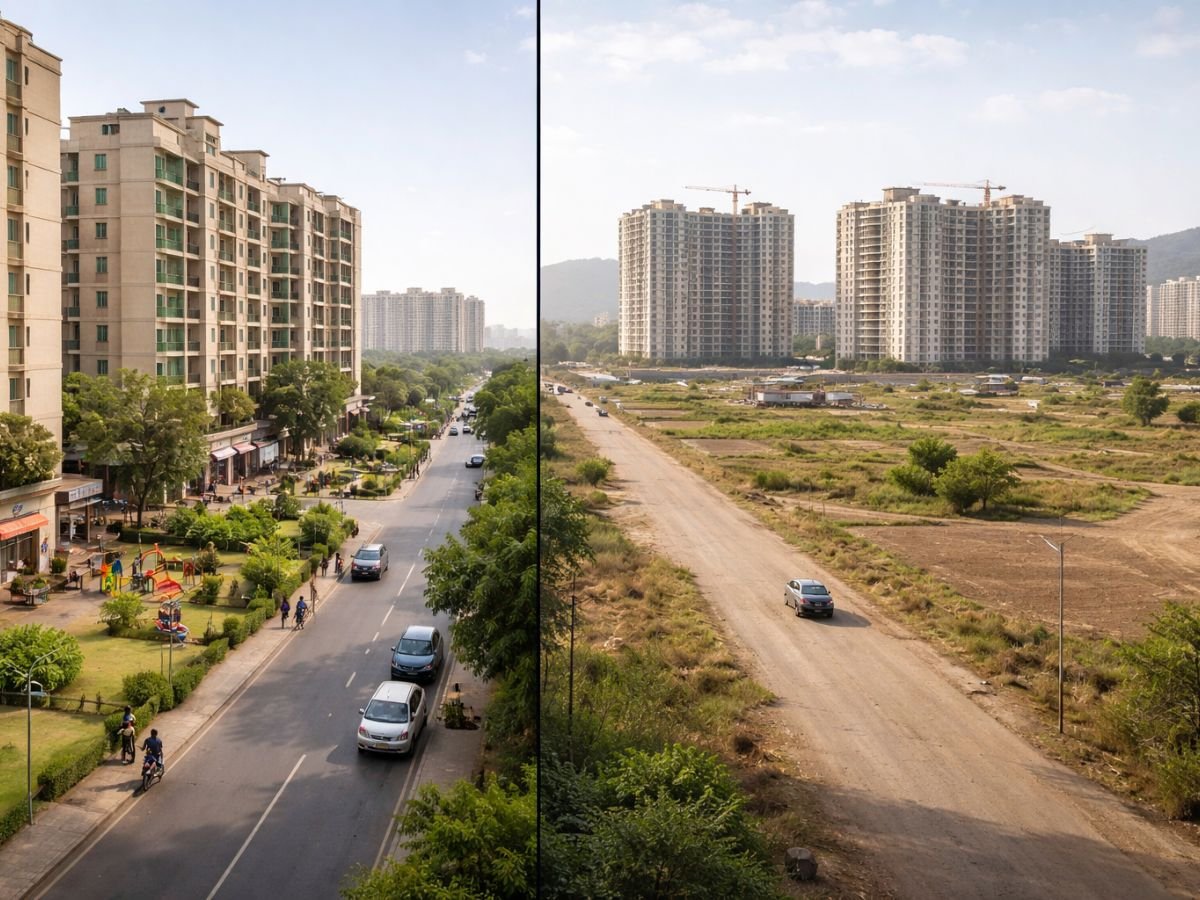
For self-use, you should usually focus first on Sector 9, Sector 19B, Sector 20, and selected parts of Sector 17. These sectors generally offer a better chance of getting what end-users actually need: a finished building, some neighborhood activity, easier commuting options, and better comfort for families.
For investment, Sector 23, Sector 24, outer southern or edge pockets, and Pushpak Nagar-linked belts can still make sense, but only if you are holding for several years and are comfortable with uncertainty. These areas are more dependent on future infrastructure, airport-linked demand, and broader regional growth themes rather than strong present-day livability.
One more thing matters here: Ulwe is in a civic transition zone between its CIDCO-planned origin and PMC-led taxation and city management reality. So a sector that looks promising on a map may still create friction in real life if the building, water backup, local roads, or dues situation is weak. PMC’s property-tax system is active, and Panvel’s larger tax dispute history has already shown that buyers cannot ignore this side of due diligence. :contentReference[oaicite:3]{index=3}
Which Ulwe sectors make more sense for a 1 BHK buyer and which are better for a 2 BHK family buyer?
If you are buying a 1 BHK, the better sectors are often the ones where entry price and resale liquidity still work together. In Ulwe, that usually pushes buyers toward Sector 17, Sector 18, Sector 23, and Sector 24, depending on building quality and exact location.
Why? Because many 1 BHK buyers are either:
- first-time buyers with budget pressure
- investors who want easier rental movement
- buyers who can compromise on larger family infrastructure today
But here is the practical warning: a low-priced 1 BHK in Ulwe is often a very compact home. If you are imagining a comfortable long-term family setup, some of those units may feel too tight once you actually check carpet area, light, and usable room dimensions.
If you are buying a 2 BHK for family use, the better bet is usually Sector 9, Sector 20, Sector 21, and stronger parts of Sector 19/19B. These sectors generally align better with the buyer who wants:
- more stable self-use value
- a better chance at decent society infrastructure
- a flatter transition from purchase to actual daily living
Approximate market averages in established Ulwe pockets are often seen around ₹8,500 to ₹11,500 per sq. ft., while premium projects can go above that depending on amenities, exact location, and station proximity. That is why family buyers should not compare only headline ticket size; they should compare actual carpet comfort and the quality of the surrounding micro-location.
Should you buy closer to the airport-growth side or inside the more settled part of Ulwe?
For most normal buyers, the more settled part of Ulwe is the safer answer.
Yes, the airport has changed Ulwe’s long-term value story. Navi Mumbai International Airport began commercial operations on December 25, 2025, which means the airport narrative is no longer purely theoretical. But that does not mean every sector close to the airport side becomes automatically superior.
There are two practical reasons to stay careful.
First, airport-driven price excitement has already entered the market. So buying near the airport is not the same as buying before the market noticed it.
Second, aviation compliance can create extra scrutiny. In 2024, residents near the airport influence zone received notices asking for building-height details because authorities were verifying whether rooftop superstructures breached safe flight-path limits. That does not mean homes are randomly getting demolished, but it does mean buyers near the airport-facing edge should ask sharper questions than usual.
So the practical answer is simple:
- buy the settled mid-node sectors if you want safer self-use
- consider the airport-side growth belts only if you understand the risk, have patience, and verify compliance properly
Which sectors feel more practical today for shops, schools, daily movement, and resale comfort?
In Ulwe, practical livability is not about a glamorous brochure. It is about whether daily life works without friction.
The sectors that usually feel more practical today are Sector 19B, Sector 20, Sector 17, and Sector 9. They tend to score better because they are closer to the current movement spine of Ulwe, have more finished buildings, and usually offer better daily rhythm.
That matters for resale too. Buyers rarely admit it, but resale comfort comes from boring things:
- how easy it is to reach the station or main road
- whether the area feels active after dark
- whether autos and shops are available without struggle
- whether the building looks maintained
- whether the buyer’s spouse or parents will feel comfortable there
That is why two flats of similar size in Ulwe can feel very different in value. One is in a functioning daily ecosystem. The other is in a location that still depends on future completion of the surrounding area.
In Ulwe, is it smarter to buy ready possession, resale, or under-construction by sector?
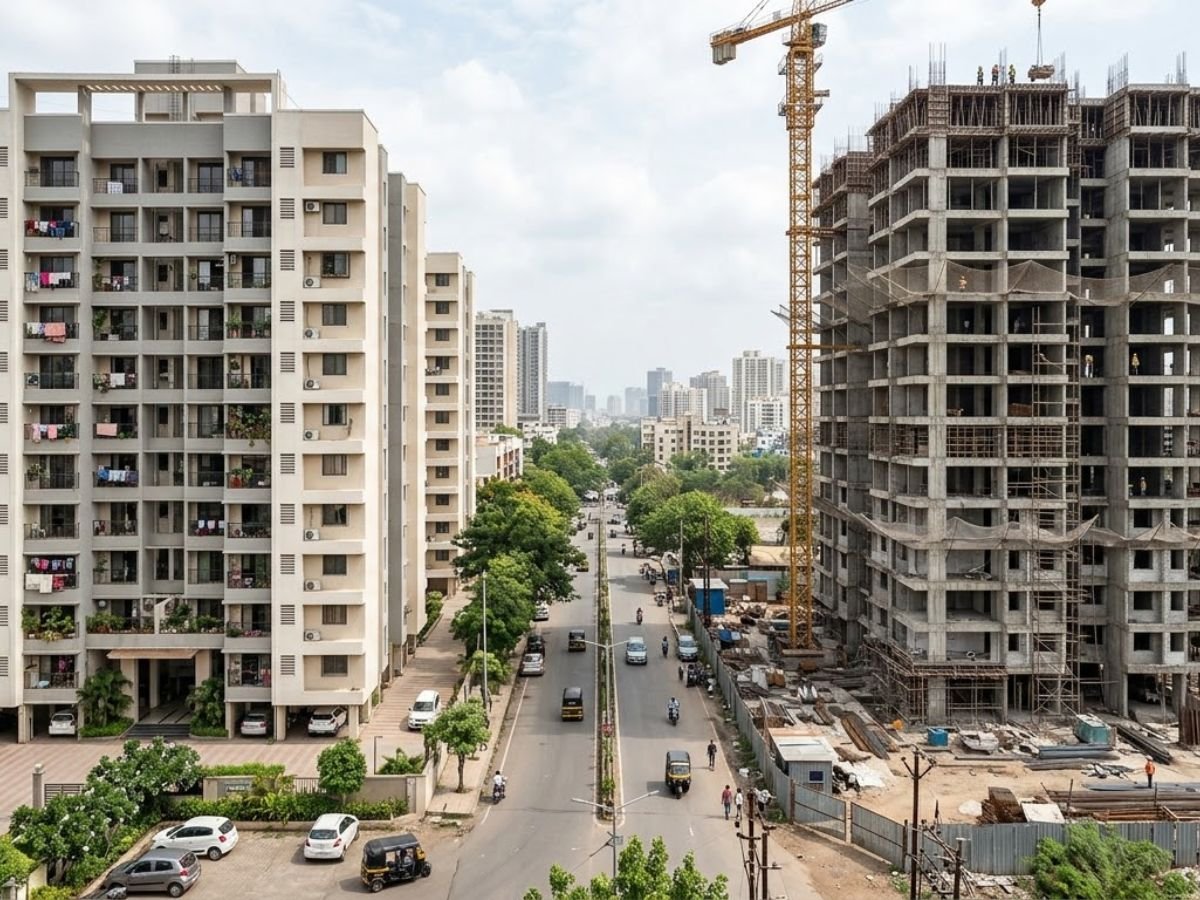
Right now, for most end-users, ready possession or clean resale is the smarter choice.
That is not because under-construction never works. It is because regulatory risk in Maharashtra is real, and MahaRERA’s enforcement actions have made that impossible to ignore. MahaRERA suspended registrations of 4,812 lapsed housing projects and froze their related bank accounts for non-compliance, including a significant number in Raigad district. Buyers should therefore check project status, not just whether a project once had a RERA number.
So the practical sector logic becomes:
- In Sector 9, Sector 19B, Sector 20, and stronger parts of Sector 17, ready-possession or resale usually makes the most sense.
- In Sector 23, Sector 24, and more speculative belts, under-construction may still be considered, but only if you verify the developer’s MahaRERA status, latest updates, and promised completion claims very carefully.
If you are a family buyer and not a speculative investor, paying a little more for a completed building is often cheaper than getting stuck in delay, compliance issues, or weak execution.
Which Ulwe sectors should buyers approach more carefully even if agents call them “the next hot spot”?
This section is not about writing off sectors. It is about knowing where extra caution is needed.
Buyers should slow down in:
- outer sectors that still depend too heavily on future infrastructure
- airport-side peripheral pockets where compliance questions matter more
- buildings in areas with weak water backup or weak internal approach roads
- very cheap projects where the price looks great but the daily ecosystem is still thin
Ulwe has seen repeated water-supply disruptions connected to the Hetawane pipeline system and CIDCO repair works, including shutdown notices affecting Ulwe in early 2026. That does not mean every building suffers equally. It means the buyer has to verify society-level water storage and tanker dependence instead of assuming the sector alone tells the full story.
Another caution is title and land history. Ulwe has also seen legal disputes around project title and stop-work action in some cases. So in edge sectors and heavily promoted projects, cheap pricing should never replace title verification.
A practical Ulwe sector comparison before you shortlist flats
| Sector / Cluster | Best for | Primary strength | Primary weakness | Better for self-use or investment | Better for 1 BHK or 2 BHK |
|---|---|---|---|---|---|
| Sector 19B / 20 | Commuters and balanced buyers | Near Bamandongri-side movement, stronger daily ecosystem | Pricier and denser | Self-use | Both |
| Sector 9 | Family end-users | More settled feel, stronger family-use logic | Higher budget needed | Self-use | 2 BHK+ |
| Sector 17 | Mixed buyer profile | Kharkopar-side access, practical balance | Building-to-building variation | Both | 1 BHK or compact 2 BHK |
| Sector 23 / 24 | Long-term investors | Lower entry in some pockets, future upside thesis | Less settled daily life | Investment | Mostly 1 BHK / budget entry |
| Pushpak Nagar side | Aggressive future bet | Airport-linked long-term narrative | High uncertainty, higher caution | Investment | Case by case |
If you want a weekend shortlist, most buyers should start by physically visiting: 1. Sector 19B / 20 2. Sector 17 3. Sector 9
Then compare those with one lower-entry sector only if budget is pushing you outward.
Before paying token money in Ulwe, what should you check besides the sector name?
A good sector does not guarantee a good flat. Before token payment, check these:
Ulwe flat buying checklist
- Is the building ready-possession, resale, or under-construction?
- If under-construction, what is the current MahaRERA status, not just the registration number?
- Does the society have enough water storage for shutdown periods?
- Are the internal roads and immediate access roads actually usable today?
- Has the society received any aviation-related notice about rooftop structures or height clearance?
- Are there pending PMC dues, tax arrears, or unresolved society issues?
- Is the carpet area practical, or just brochure-friendly?
- Does the building feel livable in real life, not just in listing photos?
This checklist matters in Ulwe because micro-level friction is real. Two buildings in the same sector can behave very differently.
What documents and authority checks matter when buying a flat in Ulwe?
Ulwe buyers should not rely only on broker language. They should separate project legality, transaction history, and civic dues.
When MahaRERA matters most
For under-construction projects, verify:
- project status
- latest updates
- promised completion timeline
- whether the project appears on any suspension or abeyance action list
MahaRERA’s recent suspension drive is exactly why this check is now mandatory, not optional.
What to cross-check on IGR Maharashtra
For ready-possession and resale flats, check:
- Index II
- registered transaction trail
- whether the seller’s claim matches registered history
This is one of the simplest ways to cut through inflated asking prices and weak documentation stories.
Where CIDCO or local planning context matters
Ulwe is a CIDCO-planned node, so project-level legality, approvals, and development background often still require CIDCO-linked understanding. At the same time, PMC matters for ongoing taxation and civic dues. In simple language: CIDCO tells you more about planning and original development structure; PMC matters for current property-tax and city-side liability.
Why building quality and approvals still matter more than sector reputation
Even the best sector cannot save a weak building. In Ulwe, building-specific checks on title, approvals, occupation status, water backup, and dues are often more important than whether a sector is “famous.”
Conclusion
If you want the safest practical answer, start with Sector 19B, Sector 20, Sector 17, and Sector 9. These are usually the sectors where Ulwe feels less like a promise and more like a place to actually live.
If you are buying for self-use, stay focused on settled sectors and preferably ready-possession or strong resale stock. If you are buying for investment, then sectors like 23, 24, and airport-linked edge pockets can still be worth studying, but only with patience and sharper due diligence.
The best sector in Ulwe is not the one with the loudest future story. It is the one that matches your commute, your budget, your flat size, your risk tolerance, and the real condition of the building you are about to buy.
FAQs
Frequently Asked Questions