
Bhokarpada Village near Hiranandani Fortune City
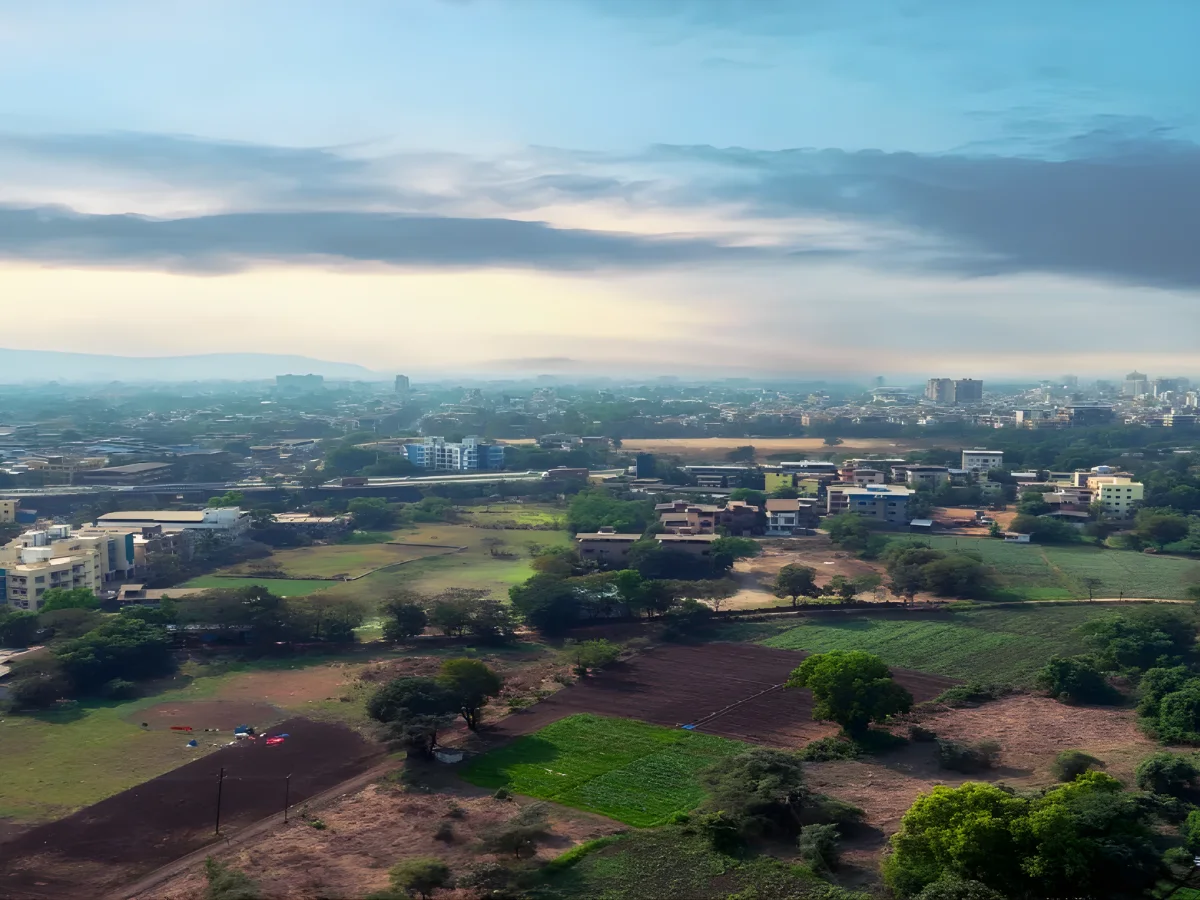
The first time I turned my bike off the Old Mumbai-Pune Highway and entered the dusty approach to Bhokarpada, it didn’t feel like I was in Navi Mumbai at all. You know that specific “Navi Mumbai vibe”- the structured grids of Kharghar, the wide, manicured avenues of Nerul, or even the bustling chaos of Vashi? This was none of that. The air here tasted different – a strange cocktail of highway diesel and fresh, wet earth from the nearby hills. The skyline wasn’t dominated by glass facades reflecting the sun, but by the jagged, green outline of the Western Ghats. For a split second, I actually checked my GPS, wondering if I had crossed some invisible boundary and ended up in a village far away from the city’s ambition.
That feeling, that initial moment of disorientation, stayed with me for a long time, and I think it defines exactly what this place is. Bhokarpada is a paradox. It isn’t fully urban, yet it hosts one of the most premium townships in the region. It isn’t fully rural, yet you will see cattle grazing just a few hundred meters from a luxury clubhouse. It exists in the grey zone, that messy, confusing, and exciting space between “what is” and “what could be.” And that is exactly why people are so incredibly confused about it. I’ve heard real estate agents call it the “Goldmine of Panvel,” breathless with excitement about the airport nearby. But I’ve also heard locals and cynical investors quietly refer to it as a “waiting game” or, worse, a trap for the impatient.
Bhokarpada Location and Access
If you look at Bhokarpada on a map, it looks like a stroke of genius. It is situated in Panvel Taluka, sitting right on the edge of the logistics corridor. On paper, the connectivity seems flawless. You are roughly twelve to fourteen kilometers from Panvel Railway Station-which, let’s be honest, is the lifeline for anyone working in Mumbai. The much-hyped Navi Mumbai International Airport site is about nineteen kilometers away. The Shedung toll plaza is just down the road, acting as your gateway to the Expressway. If you draw straight lines on a map, Bhokarpada looks like the center of the action.
In reality, Bhokarpada depends almost entirely on one major artery-the Old Mumbai-Pune Highway. This isn’t just a road for commuters; it is a major freight corridor connecting to the Jawaharlal Nehru Port Trust (JNPT). This means the road is absolutely dominated by heavy container trucks. I’m talking about massive, eighteen-wheel behemoths that rumble past all day and night. Driving a small hatchback or riding a scooter here can feel intimidating. During peak hours, what should be a twenty-minute breeze to Panvel station can turn into a forty-five-minute slog, dodging trucks and navigating unexpected bottlenecks.
And then there is the public transport situation. If you don’t own a car, Bhokarpada tests your patience. Yes, there are buses, but the frequency is something you plan your day around, not something you rely on spontaneously. The gap is filled by the ubiquitous shared autos-the lifeline of peri-urban India. But let’s be real about what that experience is like. It’s not comfortable. You are often squeezed in with four other people, sweating in the humidity, hoping the driver doesn’t stop for ten minutes at the next junction to fill the last seat. Late-night travel? That’s a whole different challenge. If you are coming back from a late shift in Mumbai and reach Panvel station at 11:00 PM, finding a ride back to Bhokarpada feels less like a commute and more like a negotiation.
The Bhokarpada Paradox: Massive Water Plants
We cannot talk about an Indian real estate market without talking about water. And Bhokarpada has a rich, almost cruel irony when it comes to this resource.
The area hosts a massive Water Treatment Plant that is arguably the lifeline of Navi Mumbai. It is so significant that engineering students from colleges like Pillai HOC come here for industrial visits to study purification systems. This facility is the beating heart that processes millions of liters of water piped down from the massive [Morbe Dam], ensuring that the developed nodes of the city get clean water. You would think, “Great, we are living right next to the source!”
But distribution is a different beast. While the water from Morbe flows through here to reach Vashi and Nerul, the local village reality is different. You see the familiar sight of blue drums and dry taps. Many households still depend on borewells or private tankers. It is a bitter reality: getting a lecture on water purification inside the plant, while knowing that just outside its gates, people are paying a premium to buy water from tankers.
Bhokarpada Property Prices and Living Costs
This brings us to the money. Real estate prices in Bhokarpada are fascinating because they reveal just how much people are willing to pay for a brand name and a sense of security. I spent some time gathering the genuine price rates of the locality, and the gap is staggering.
If you are looking at Hiranandani Fortune City, be prepared to pay a premium. A standard one-bedroom apartment here typically commands between ₹55 lakh and ₹65 lakh. If you want a two-bedroom home, you are looking at a range of ₹87 lakh to ₹1.2 crore, while the larger, premium units with better views or decks can easily touch ₹1.5 crore. The three-bedroom apartments are in a different league, usually falling between ₹1.6 crore and ₹1.85 crore. When you crunch the numbers, the price per square foot hovers around ₹11,500 to ₹13,500. Let’s pause and think about that. That is a rate you might expect in parts of Thane or established Navi Mumbai, yet you are paying it for a location that is nearly fourteen kilometers from the nearest train station.
Now, walk down the road to the standalone buildings in the village or the smaller local developer projects. The story flips completely. Here, you can find small one-room units (1RK) or compact one-bedroom homes for as low as ₹15 lakh to ₹25 lakh. Even in the slightly better standalone projects, a one-bedroom apartment often ranges from ₹30 lakh to ₹45 lakh. The price per square foot in these areas drops dramatically to ₹4,000–₹7,000, depending heavily on the location and, frankly, the legal clarity of the land title.
It is striking to see two homes in the same pin code differ in price by more than fifty percent. Why? Because in Bhokarpada, buyers aren’t paying for the square footage. They are paying for the ecosystem. They are paying for the guarantee that water will come out of the tap, that the lift will work, and that the security guard will be at the gate. In the chaotic development of the urban fringe, peace of mind carries a very high price tag.
Who Lives Here? The Rental Reality
The rental market tells you a lot about the soul of a place. Who actually wakes up in Bhokarpada every morning? It’s not the high-flying CEOs-not yet, anyway. The rental market is stable, but it lacks the glamour of the sales brochures. In the township, a one-bedroom apartment usually rents for ₹12,000 to ₹18,000 per month. Two-bedroom units fetch around ₹18,000 to ₹25,000. The tenants here are a mixed bag. You have students from nearby institutions like St. Wilfred’s who want a better quality of life than a hostel. You have mid-level professionals working in the Patalganga and Rasayani industrial zones who want a “city” feel when they come home from the factory. And interestingly, you have a lot of families who are “waiting”-waiting for their own homes to be built elsewhere, or waiting to see if the area develops before they commit to buying.
In the village areas, the rental rates crash. Small units often rent for between ₹5,000 and ₹8,000 per month. These homes are typically occupied by the blue-collar workforce-industrial workers, drivers, construction staff, and support staff who keep the township running.
For an investor, this is the tricky part. Despite the demand, the rental yields are modest. When you factor in the high maintenance charges of a luxury township (which can be steep), your net return on investment from rent alone is pretty low. If you are buying here expecting the rent to pay your EMI, you are in for a rude shock. Bhokarpada is a capital appreciation play, not a rental yield play.
Bhokarpada Land Investment Guide
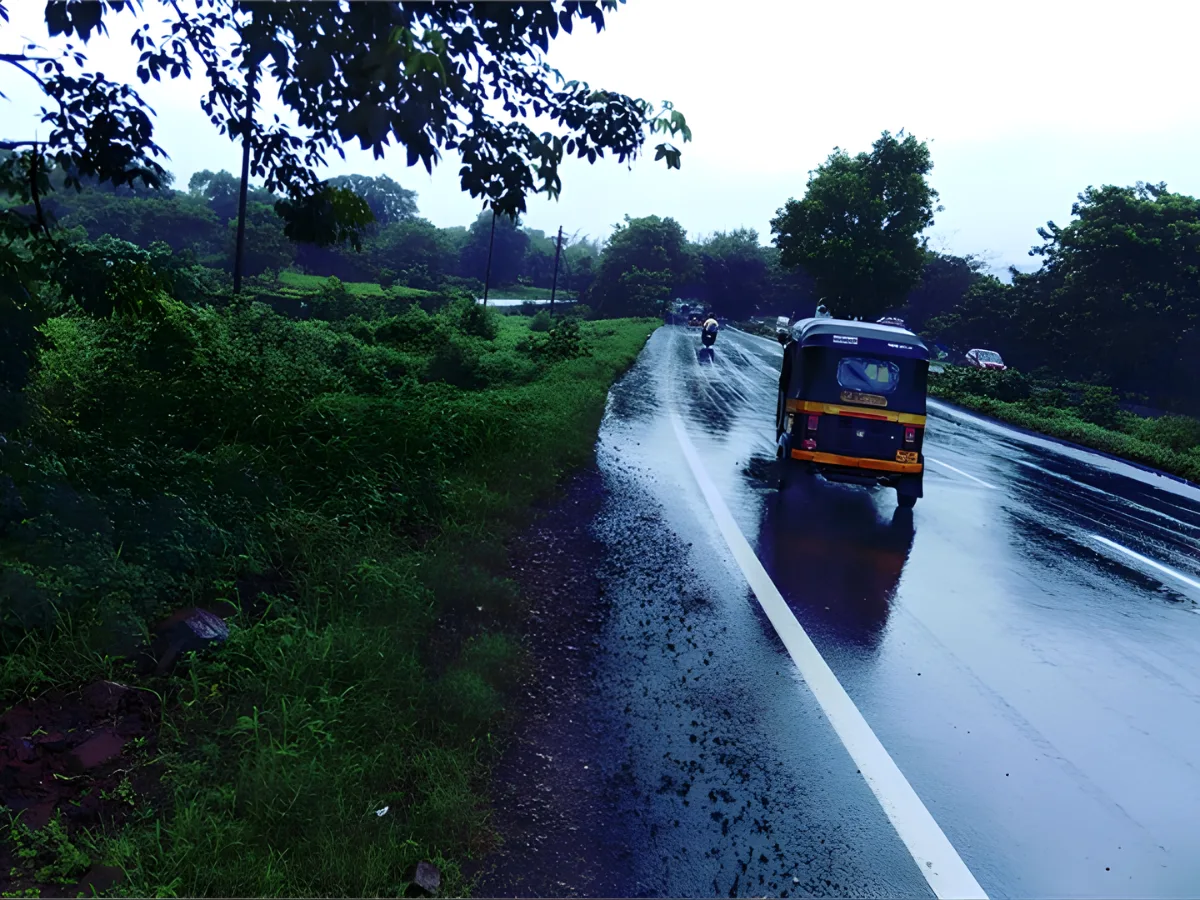
If apartments are for residents, land in Bhokarpada is for the gamblers-I mean, the aggressive investors. This is where the real speculation happens. Everyone knows the airport is coming. Everyone knows NAINA (Navi Mumbai Airport Influence Notified Area) is the planning authority. And that knowledge drives a frenzy.
Residential plots with clear titles and Non-Agricultural (NA) status generally trade around ₹10 lakh to ₹15 lakh per guntha. Larger agricultural land parcels can range from ₹4 crore to ₹5 crore per acre, depending on how close they are to the main road. Many investors are quietly accumulating land here, sitting on it like dragons on a pile of gold, believing that once the airport opens, these prices will explode.
But I have to inject a dose of caution here. Land in Raigad is tricky. The regulations are complex. NAINA’s town planning schemes often involve “land pooling,” where landowners must surrender a significant portion of their land (sometimes up to 50 or 60 percent) to the authority for infrastructure development like roads and parks. In return, they get a smaller, developed plot with better FSI (Floor Space Index). If you don’t understand these rules, you could end up buying an acre and being left with half an acre of usable land. In Bhokarpada, land is not just an asset; it is a complex bet on policy, government speed, and patience.
Daily Needs & Lifestyle in Bhokarpada
| Category | Available Options (The Reality) | What You Need to Know |
|---|---|---|
| Daily Groceries (Kirana) | Manna Kerala Store, B-Food Mart, Gupta Super Market, Ambika Super Market | Good for fresh produce, dal, rice. Don’t expect fancy imported cheese or loyalty cards. |
| Malls & Movies | None in Bhokarpada. Nearest: Orion Mall (Panvel) or Little World (Kharghar). | You strictly need a car or bike. It’s a planned weekend trip, not a quick walk. |
| Food Delivery | Zomato & Swiggy (Limited) | Warning: “Service Unavailable” is common after 11 PM. Delivery takes longer than in the city. |
| Medical / Emergency | Small local pharmacies available | For serious needs, you must drive to Panvel (Lifeline / Niramay Hospitals). |
| Shopping Strategy | D-Mart (Panvel) is the go-to | Residents usually “stock up” for the week. You can’t rely on last-minute runs. |
Education vs. Healthcare: The Ground Reality
| Category | Key Institutions / Names | The Reality Check |
|---|---|---|
| Schools (Inside/Near) | Hiranandani Trust School, St. Wilfred’s School & College (Shedung) | Excellent. Very convenient. Walking distance for township residents. Massive campuses nearby. |
| Schools (Panvel Hub) | DAV Public School, Delhi Public School (DPS) | Good but tiring. Accessible via school bus, but the commute can be exhausting for younger children due to distance. |
| Local Healthcare | Small Clinics, Pharmacies, Basic Dispensaries | Basic only. Good for flu, cuts, or fever. Cannot handle surgeries or cardiac emergencies. |
| Major Hospitals | Lifeline, Sparsh, Niramay (All in Panvel) | Critical risk. Located ~12–14 km away. In peak traffic, reaching here can take 30–45 minutes, which is risky during emergencies. |
Conclusion:
Bhokarpada is neither a pure goldmine nor a complete trap-it’s a long-term bet. It offers premium township living at relatively affordable prices, fresh air, and future growth driven by NMIA and NAINA. But the reality today is uneven infrastructure, weak connectivity, limited healthcare, and slow development.
If you are an end-user looking for space, peace, and long-term stability, Bhokarpada makes sense. If you are an investor expecting quick returns, it can feel like a waiting game. In simple words, Bhokarpada is not a place for impatient buyers-it’s for those who understand that real growth here will come slowly, not suddenly.
FAQ's
Frequently Asked Questions