


A studio can deliver thoughtful interiors yet struggle to build a steady project pipeline. For independent interior designers in Navi Mumbai, the business side may involve unclear enquiries, changing budgets, quotation comparisons and time-consuming site decisions.
These challenges do not indicate poor design ability. Clear positioning, better client qualification, transparent proposals and consistent communication can make projects easier to manage. Here are ten challenges and practical steps for smaller studios.
10 Business Challenges and Practical Solutions
1. Competing With Established Brands

Established brands may have extensive portfolios and familiar names, while smaller studios must earn attention project by project.
Rather than copying their scale, independent designers can highlight direct access to the person handling the work. Show relevant completed projects, explain your process and be specific about the homes you can confidently design.
2. Converting Enquiries Into Projects

An enquiry is not necessarily a suitable project. If budget, location, scope and expected completion date remain unclear, a studio may spend hours preparing a proposal that goes nowhere.
Use a short briefing checklist, confirm who will approve decisions and schedule a follow-up before sending a detailed quotation.
3. Building Long-Term Client Relationships

Handover need not be the final meaningful conversation with a client. Share product information, maintenance guidance and a clear process for reporting outstanding issues.
A thoughtful follow-up after occupancy can uncover concerns early and maintain a positive relationship. Ask for a review or referral only when the client is comfortable.
4. Handling Price-Sensitive Clients

When homeowners ask for a lower price, the quickest response may be a discount. But reducing fees without adjusting the work can strain budgets and create unrealistic expectations.
Break down costs, explain material alternatives and offer a revised scope that matches what the client can spend. Record the trade-offs in writing.
5. Homeowners Comparing Multiple Designers

Comparing designers is a sensible part of a homeowner’s decision. Two quotations may differ because one includes hardware, site supervision or finishing work that the other excludes.
Help clients compare like for like by listing specifications, deliverables and exclusions clearly. This shifts the conversation from headline price to the actual work proposed.
6. Building Trust Before Meeting
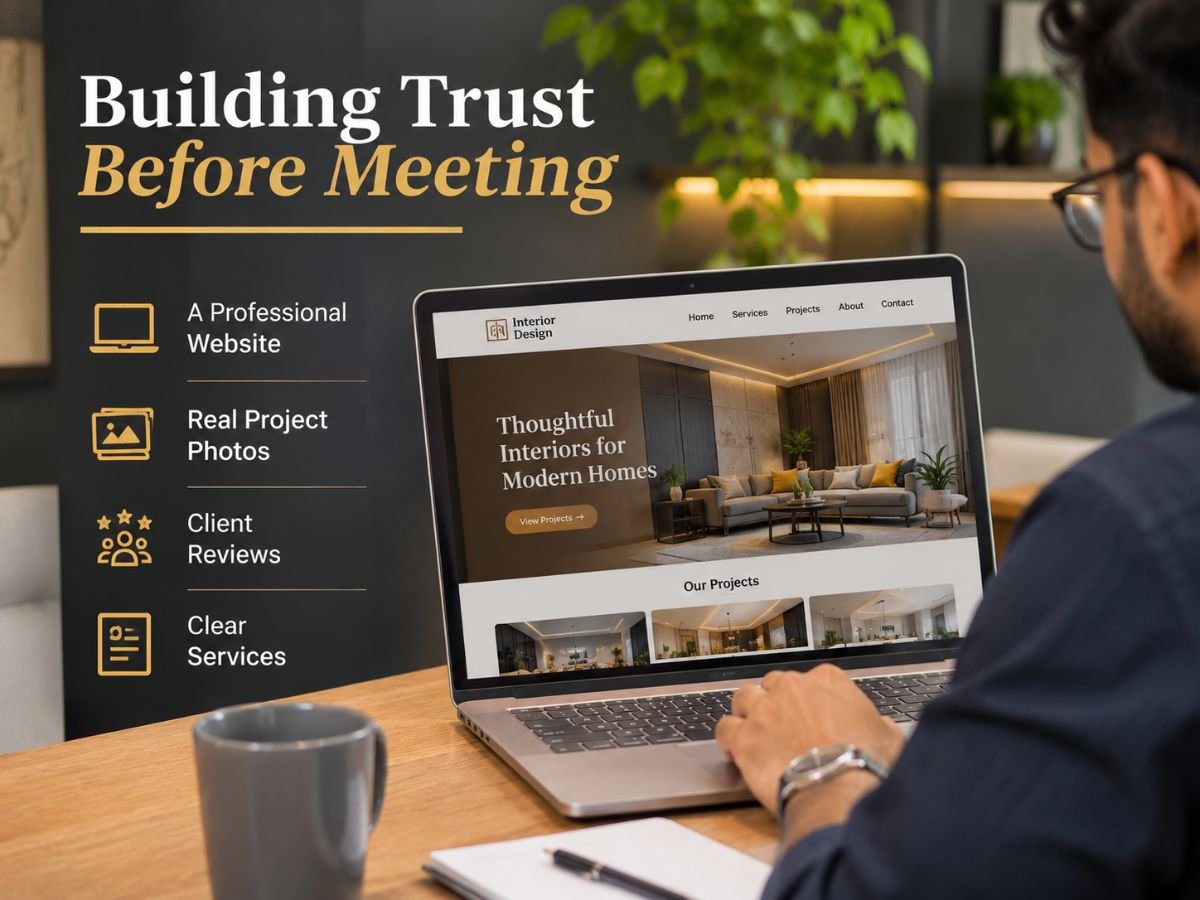
Before a client visits the studio, they may already be judging whether the team is dependable. A portfolio of genuine completed spaces, consistent contact details and a straightforward explanation of the process can reduce uncertainty.
Show projects relevant to the enquiry and clarify what your team designed, supplied or supervised.
7. Reducing Reliance on Referrals

Referrals are valuable, but their timing is unpredictable. Studios can make their work easier to discover with an accurate website portfolio and, if eligible, a Google Business Profile with current information.
Connections with architects, contractors and previous clients can also bring introductions. Track enquiry sources to see which channels actually help.
8. Creating Clearer Client Proposals

A short quotation may answer “how much?” without explaining what is included. Specify design deliverables, materials, hardware, exclusions, expected timelines and payment milestones.
Identify who approves drawings and variations. A proposal that records responsibilities protects both sides from misunderstandings and gives homeowners a clearer basis for comparing offers before work begins.
9. Differentiating Studio Services
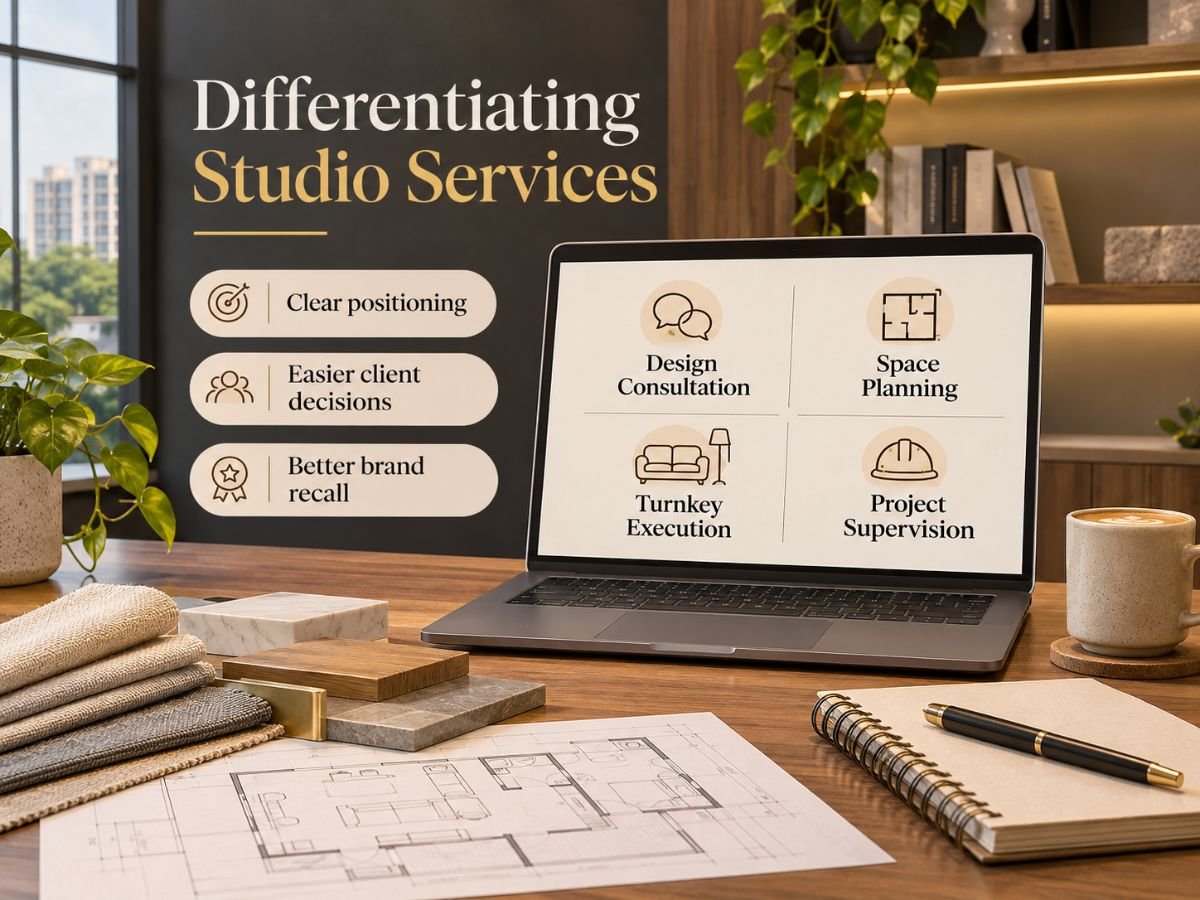
Calling a studio “full-service” tells clients little about its strongest work. A team experienced in compact-flat storage, kitchen renovations or phased upgrades can explain that strength through project examples.
Choose a clear service focus based on proven ability, rather than claiming a speciality simply because it sounds popular.
10. Preventing Communication Gaps

Many disputes begin with small changes that were discussed but never recorded. Agree on one channel for decisions, share brief site updates and document changes to drawings, costs or deadlines before executing them.
For apartment renovations, check relevant society rules and applicable permissions early, rather than discovering restrictions once work has started.
A Practical Way Forward
Review recent enquiries: which progressed, and where did conversations stop? Then improve one proposal template, organise proof of completed work and establish a simple project-update routine. None requires a large team.
Conclusion
Interior design business growth is not only about getting more enquiries. Smaller studios benefit from clear positioning, realistic expectations, transparent proposals and consistent project communication.
Addressing these challenges individually makes improvement more manageable while keeping attention on the homeowner’s experience.