

DY Patil Stadium Nerul Navi Mumbai: Architecture, Events & Concerts
At a Glance
| 🏟️ DY Patil Stadium – Key Highlights | |
|---|---|
| 📍 Location | Sector 7, Nerul, Navi Mumbai, Maharashtra |
| 📅 Established | 4th March 2008 |
| 🏗️ Architect | Hafeez Contractor |
| 👥 Capacity | ~45,000 to 55,000 (Event dependent) |
| 🎯 Multi-purpose | Cricket, Football, Music Concerts & Corporate Events |
| 💺 Seating Type | Individual bucket seats (Unobstructed view) |
| 🏠 Roofing | India’s first cantilever fabric roof (German imported) |
| 💼 Corporate | 60 Luxury Corporate Boxes |
| 🎙️ Media Centre | Air-conditioned center (120-person capacity) |
| 🎾 Other Facilities | Olympic pool, 9 Tennis courts, 4 Badminton courts |
| 🏆 Notable Events | IPL Finals, FIFA U-17 World Cup, Coldplay, Justin Bieber |
Quick Summary
DY Patil Stadium in Nerul is one of India’s most advanced multi-purpose sports and concert venues, located inside the DY Patil University campus in Navi Mumbai. Inaugurated in 2008, the stadium has evolved from being a cricket ground to becoming Western India’s largest concert destination.
With a seating capacity of approximately 45,300 spectators and a fully cantilevered roof structure, the stadium is known for offering completely unobstructed views. Over the years, it has hosted IPL finals, international cricket matches, FIFA tournaments, Women’s Premier League fixtures, and global concerts that have reshaped Navi Mumbai’s economy.
The Vision Behind the Stadium
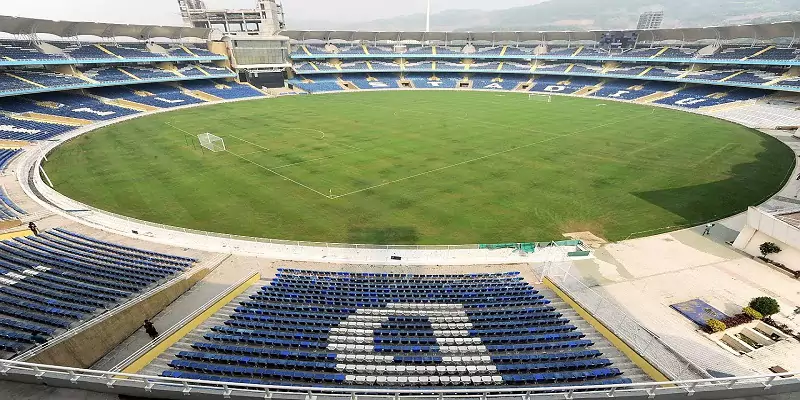
The stadium was conceptualized under the leadership of Vijay D. Patil with a long-term vision of integrating world-class sports infrastructure within an academic ecosystem. Unlike traditional government-built stadiums, this project was institution-driven, backed by DY Patil University’s ambition to promote professional and grassroots sports development.
The idea was never limited to cricket alone. The broader objective was to establish a sports academy ecosystem where infrastructure, research, athlete training, and international standards coexisted within one campus. This institutional model was rare in India at the time and positioned Navi Mumbai on the global sporting map.
Architectural Brilliance by Hafeez Contractor
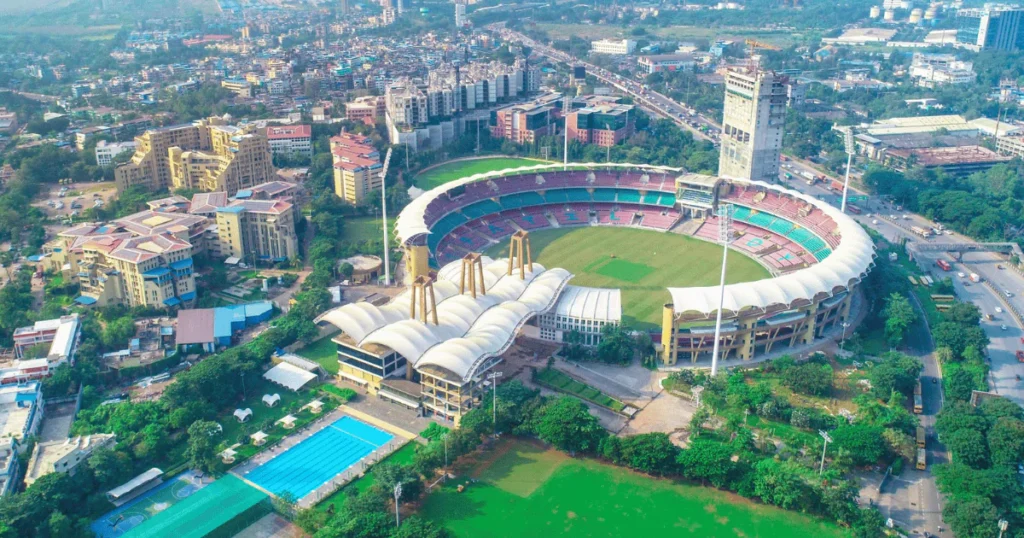
The stadium was designed by renowned architect Hafeez Contractor, known for large-scale urban structures across India. His mandate was clear: build a modern stadium without obstructed views, capable of handling both cricket matches and global concerts.
The defining feature is the fully cantilevered membrane roof imported from Germany. Unlike older Indian stadiums that rely on vertical pillars, this structure eliminates blind spots entirely. Every seat offers a clear, panoramic view of the field or stage, making it one of the most spectator-friendly arenas in the country.
Seating Capacity and Infrastructure Design
The official seating capacity stands at approximately 45,300, placing it among India’s largest cricket stadiums. Unlike older venues with concrete galleries, DY Patil Stadium features individual bucket seating for all spectators, improving comfort during long IPL matches or multi-hour concerts.
The stadium houses 60 luxury corporate boxes, a fully air-conditioned media center for 120 journalists, large LED display screens, and premium hospitality lounges. The layout has been engineered for efficient crowd movement, enabling faster entry and exit during high-footfall events.
Advanced Lighting, Acoustics and Safety Systems
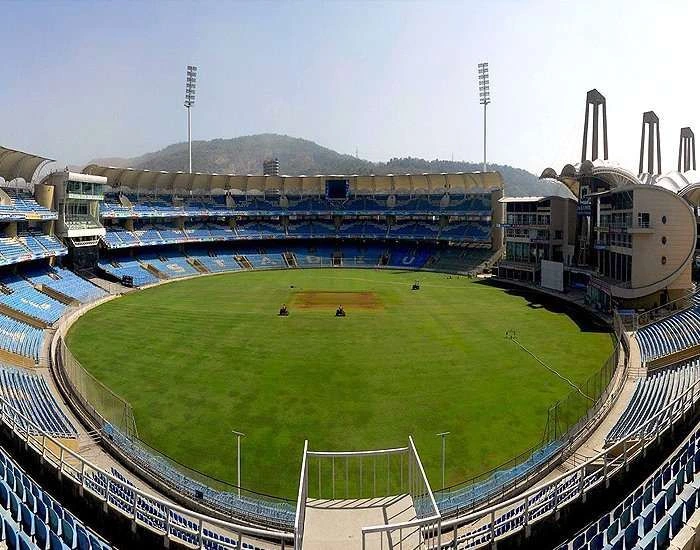
One of the stadium’s most underrated features is its built-in concert-grade sound architecture. It was among the first venues in India designed to handle large-scale live music production without structural modifications. This acoustic advantage is one reason global artists prefer this venue over congested Mumbai alternatives.
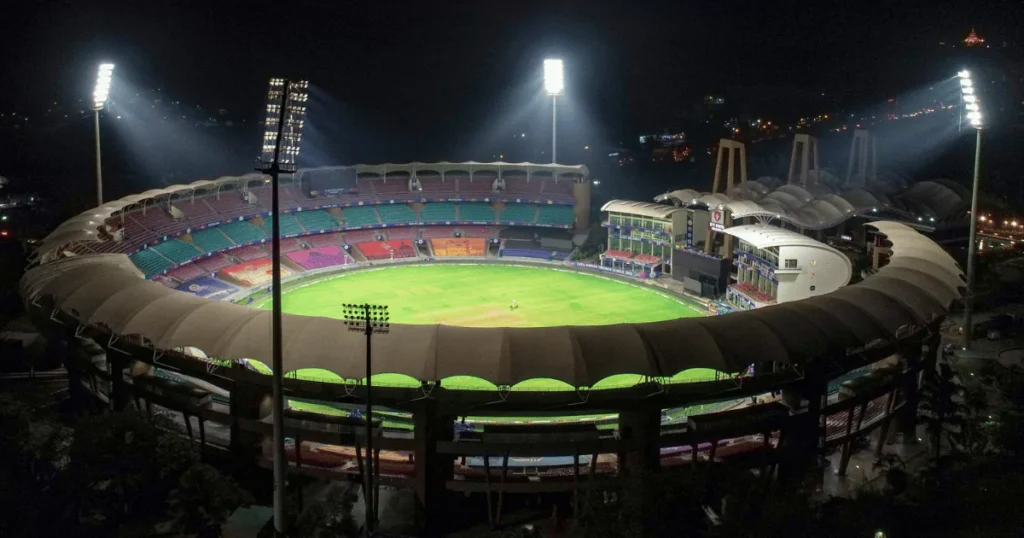
The lighting infrastructure uses high-efficiency LED modules mounted on tall masts to ensure uniform illumination without glare. The stadium is earthquake-resistant and equipped with advanced fire safety systems, enabling safe management of 45,000+ attendees during mega-events.
Sustainable Operations and Solar Integration
Sustainability was integrated into the project from the beginning. A 500 KW solar plant powers more than 70% of the stadium’s energy requirements, significantly reducing operational dependency on conventional power grids.
This eco-conscious approach not only lowers costs but also aligns the venue with global ESG compliance standards. International touring artists increasingly prefer venues with renewable energy integration, making this a strategic advantage for future bookings.
Multi-Sport Ecosystem Beyond Cricket
The DY Patil Stadium complex is not limited to cricket infrastructure. The campus includes a FIFA-approved football ground, nine tennis courts, indoor badminton courts, a futsal arena, and an Olympic-sized swimming pool.
Dedicated practice pitches and athlete recovery zones further support professional training programs. This multi-sport ecosystem ensures the facility remains active year-round rather than being dependent solely on seasonal tournaments.
Quick Event Impact Summary
| Category | Performance & Impact Analysis |
|---|---|
| 🏏 Major Events | IPL Finals: Elevated national cricket reputation and global visibility. |
| 🏆 WPL 2026 | Boosted weekday stadium utilization and promoted women’s sports in the city. |
| 🎤 Concerts | Coldplay 2025: Generated a massive ₹322 crore ticket economy. |
| 🏨 Hospitality | Hotel Occupancy: Consistent surge up to Full Capacity (100%). |
| ♻️ Environment | Waste Generated: Approx. ~9 tonnes during mega concerts (Sustainability focus needed). |
IPL Legacy and Cricketing Milestones
When the Indian Premier League began reshaping cricket in 2008, DY Patil Stadium became one of its earliest power centers. It served as the original home ground for Mumbai Indians and hosted the historic IPL final in 2008, followed by another final in 2010. That instantly positioned Nerul on India’s premium cricket map.
The stadium later earned the IPL governing council’s “Best Stadium Experience” recognition, largely due to crowd flow, seating comfort, pitch quality, and hospitality standards. Unlike older venues, it handled high-capacity matches without chaos, which built long-term trust among organizers and broadcasters.
Women’s Premier League and the Rise of Women’s Cricket
In early 2026, the stadium became a major venue for the Women’s Premier League, further strengthening its sporting relevance. The opening clash between Mumbai Indians and Royal Challengers Bengaluru in January drew packed stands and strong regional support.
Accessible ticket pricing starting around ₹100 ensured full local participation. That decision deeply integrated women’s cricket into Navi Mumbai’s sporting culture rather than keeping it limited to elite audiences. The WPL fixtures significantly boosted weekday stadium utilization.
ICC T20 World Cup Warm-Ups 2026
Ahead of the ICC Men’s T20 World Cup 2026, the stadium hosted high-profile warm-up matches including India vs South Africa and New Zealand vs USA. India’s dominant 240/6 performance during warm-ups once again proved the pitch’s batting-friendly reputation.
Hosting international practice matches strengthens the venue’s credibility with the ICC and BCCI. It confirms that DY Patil Stadium is not only commercially viable but technically reliable for global tournament preparation.
Football and Global Sporting Credentials
The stadium also played host to Mumbai City FC during the early Indian Super League seasons, expanding its sporting portfolio beyond cricket. Its multi-sport adaptability was internationally validated when it served as a venue during the 2017 FIFA U-17 World Cup.
Hosting a FIFA tournament required strict compliance with global safety, pitch, and broadcast standards. Successfully executing those matches enhanced Navi Mumbai’s reputation as a serious international sporting destination rather than just a domestic cricket hub.
The Coldplay Moment That Changed Navi Mumbai
January 2025 marked a defining economic shift when Coldplay performed three consecutive sold-out shows at DY Patil Stadium. Originally scheduled for two nights, overwhelming demand forced organizers to add a third date. All tickets sold out within hours.
Across India, the five-show tour generated approximately ₹322 crore in ticket revenue, with over ₹58 crore collected as GST. Navi Mumbai became the epicenter of India’s concert tourism economy during that week.
From Cricket Venue to Global Concert Hub
Over the past decade, the stadium has hosted global artists including U2, Justin Bieber, Katy Perry, Dua Lipa, Martin Garrix, A. R. Rahman, and 50 Cent. This consistent booking pattern proves promoters prefer Nerul over legacy Mumbai venues for logistical ease.
The pillar-less roof, built-in acoustic design, and superior crowd dispersal via the Sion-Panvel Highway make it operationally stronger than central Mumbai alternatives. Large-scale stage setups can be executed here without disrupting dense urban neighborhoods.
Why Promoters Prefer Nerul Over Mumbai
Event planners consistently compare DY Patil Stadium with Wankhede Stadium. While Wankhede is iconic, its South Mumbai location creates heavy congestion, limited parking, and residential noise concerns.
DY Patil Stadium sits inside a spacious university campus with highway connectivity and controlled perimeters. This allows better security management, staging logistics, and smoother post-event traffic flow compared to inner-city venues.
Traffic Restrictions and Civic Friction
Large-scale concerts have required strict traffic protocols by Navi Mumbai Police. During the Coldplay shows, heavy vehicles were restricted and traffic diversions were imposed from afternoon until midnight to manage 45,000+ attendees daily.
Local concerns also emerged around parking spillovers and waste management. After the concerts, municipal teams cleared nearly nine tonnes of waste from surrounding areas, highlighting the environmental responsibility attached to mega-events.
Concert Tourism and Hospitality Explosion
During major concerts, hotel demand around Nerul and Vashi surges dramatically. Properties like Courtyard by Marriott Navi Mumbai sold out months in advance, while premium hotels charged record-breaking tariffs.
Restaurants around the stadium launched themed menus and tribute nights to capture concert crowds. This transformed DY Patil events into multi-day economic festivals for the entire Navi Mumbai hospitality ecosystem.
Quick Economic Summary Table
| 📊 Segment | 📈 Economic & Real Estate Impact |
|---|---|
| 🏨 Hotel Sector | Near full occupancy during mega events and international matches. |
| 🍕 Restaurants | Record footfall on concert weekends; high demand for quick-service brands. |
| 🏢 Office Demand | Strong commercial growth with 6–9% rental yields in Nerul/Belapur belt. |
| 🛍️ Retail | Premium rentals ranging from ₹250–₹400 per sq. ft. in prime corridors. |
| 🌉 Infrastructure | NMIA (Airport) + MTHL connectivity strengthen long-term asset value. |
The Economic Spillover Effect on Nerul
DY Patil Stadium does not function in isolation. Every mega match and concert creates a ripple effect that spreads across Nerul, Juinagar, and the Palm Beach Road corridor. The spending does not stop at tickets. It extends to hotels, restaurants, transport operators, parking vendors, and retail stores.
This recurring cycle of high-footfall events has transformed the stadium into a consistent economic engine. Instead of one-time boosts, Navi Mumbai now experiences predictable commercial spikes during IPL seasons, WPL fixtures, and global concerts.
Concert Tourism and Hotel Occupancy Surge
During major concerts like Coldplay in 2025, hotel searches across Navi Mumbai surged multiple times above normal levels. Properties within a 20 km radius reported near-total occupancy, with premium hotels charging several times their standard nightly rates.
Hotels such as Courtyard by Marriott Navi Mumbai and Vivanta Navi Mumbai Turbhe became strategic assets during event weekends. Even Vashi-based properties benefited, proving that the stadium’s economic radius extends well beyond Nerul.
Restaurants and Retail Footfall Around the Stadium
Concert weekends have turned local dining spots into high-revenue hubs. Restaurants near Nerul Station and Palm Beach Road reported packed reservations during Coldplay and IPL events, with many launching event-themed menus to attract fans.
This pattern has encouraged new café launches, quick-service outlets, and premium dining investments in the vicinity. The stadium has indirectly strengthened the F&B ecosystem, creating a sustained commercial culture rather than temporary spikes.
Nerul MIDC – The Commercial Transformation Zone
The Nerul MIDC belt has emerged as one of Navi Mumbai’s most dynamic commercial corridors. Businesses increasingly prefer office addresses near the stadium due to visibility, connectivity, and association with a premium landmark.
The presence of the stadium signals strong footfall, brand visibility, and accessibility. Combined with proximity to the Sion-Panvel Highway and Palm Beach Road, this has made Nerul MIDC attractive for startups, event agencies, IT firms, and hospitality ventures.
Dream Ikon – A Direct Beneficiary of Stadium Growth
Located directly opposite DY Patil Stadium, Dream Ikon is a 31-storey commercial high-rise strategically positioned to capitalize on event-driven footfall. The project offers customizable office units ranging approximately from 325 to 675 sq. ft., targeting startups and mid-sized enterprises.
Its rooftop café, structured parking, and highway visibility are not accidental features. The project is designed for businesses that benefit from proximity to concerts, sports tournaments, and daily university traffic within the campus ecosystem.
Mark One and Presidentia Offices – Luxury Commercial Tier
Mark One by IJB Realty represents a higher-end commercial approach within Nerul MIDC. This mixed-use project integrates premium office spaces with hospitality features, catering to corporates and high-net-worth investors seeking long-term appreciation.
Office configurations extend from 500 sq. ft. to 1100+ sq. ft., positioning the development toward established firms rather than small startups. The stadium’s presence enhances the prestige factor of such commercial towers.
Emperia Icon and Emerging Business Parks
Projects like Emperia Icon further demonstrate how developers are aligning with the stadium’s growth narrative. These high-rise business parks offer customizable bare-shell offices, multi-level parking, and modern infrastructure aimed at IT and service-based companies.
The logic is straightforward. Proximity to a landmark venue ensures continuous brand recall and footfall-driven visibility, especially during match days and global events.
Rental Yields and Investment Returns (2025–2026)
Commercial rental yields in Nerul currently range between 6% and 9%, depending on building quality and exact location. Premium offices near the stadium command monthly rentals between ₹85 to ₹110 per sq. ft., significantly outperforming many residential assets.
Compact offices often generate stronger percentage yields due to consistent SME demand. This combination of recurring event-driven footfall and growing infrastructure projects makes Nerul MIDC one of Navi Mumbai’s strongest commercial micro-markets.
Palm Beach Road – The Premium Corridor Advantage
Palm Beach Road functions as the luxury spine connecting Nerul, Seawoods, and Vashi. Its proximity to DY Patil Stadium amplifies its premium perception, especially during large-scale events.
Retail rentals along this corridor range significantly higher than interior MIDC lanes due to affluent demographics and lifestyle branding. Match-day and concert-day visibility further strengthen long-term commercial positioning.
Infrastructure Multiplier – Airport and Atal Setu Impact
The upcoming Navi Mumbai International Airport and the operational Mumbai Trans Harbour Link are major catalysts supporting the stadium’s long-term value. Improved airport access will increase international artist routing and sports tourism.
As connectivity improves, Nerul’s commercial appeal will likely strengthen further. The stadium stands at the center of this infrastructure triangle, benefiting directly from each new project.
DY Patil Stadium Pitch Report – Detailed Analysis
The pitch at DY Patil Stadium is generally considered batting-friendly, particularly in T20 formats. The surface offers good bounce and carry, allowing stroke play during powerplay overs. Average first-innings scores in T20 matches typically range between 160 to 185 depending on weather and match pressure.
Evening matches often witness dew formation, especially during winter IPL schedules. This makes chasing slightly easier, as bowlers struggle to grip the ball. Teams winning the toss frequently prefer to bowl first under lights.
DY Patil Stadium Records and Statistics
The stadium has witnessed multiple high-scoring IPL fixtures and domestic tournaments. Totals above 200 have been posted here, reflecting the pitch’s support for aggressive batting lineups.
Bowling performances, however, have also shaped outcomes, especially when new-ball seamers exploit early moisture. Balanced team compositions tend to perform better here compared to spin-heavy sides.
Highest Team Totals
Several IPL matches at DY Patil Stadium have crossed the 200-run mark. The flat nature of the pitch combined with short square boundaries supports boundary hitting during middle overs.
Such totals usually occur during dry evenings when the surface remains consistent without excessive movement.
Lowest Defended Score
While it is known as a batting venue, disciplined bowling and tight fielding have occasionally resulted in successful defenses below 150. These instances usually occur during early season matches before dew becomes a factor.
Low-scoring thrillers are rare but memorable, proving the pitch still rewards tactical bowling.
Behind the Scenes – How Mega Concerts Are Executed
Large-scale concerts at DY Patil Stadium involve weeks of preparation. Stage structures are assembled within the central ground while preserving the pitch integrity. Load-bearing calculations are performed to ensure structural safety.
Sound systems are integrated with the stadium’s acoustic design, which was originally engineered to handle large audio dispersions. This built-in capability reduces distortion compared to older Indian stadiums.
Security and Crowd Management Framework
Mega-events at the stadium involve multi-layered security coordination between event organizers and Navi Mumbai Police. Entry gates are zoned based on ticket categories to reduce cross-flow congestion.
Emergency evacuation routes are clearly mapped within the campus perimeter. Crowd dispersal is supported by wide access roads connecting to the Sion-Panvel Highway, reducing post-event bottlenecks compared to inner-city venues.
Environmental Impact and Waste Management
Large concerts have highlighted environmental challenges. Following the Coldplay concerts, municipal authorities reported approximately nine tonnes of waste generated over multiple days.
In response, organizers have increased emphasis on waste segregation, plastic control, and collaboration with civic teams. The stadium’s existing 500 KW solar plant already supports a majority of its power needs, aligning it with sustainable infrastructure goals.
Year-Wise Commercial Growth Around Nerul MIDC
Commercial demand has steadily increased as the stadium gained global visibility through concerts and WPL hosting. Event-driven branding has amplified the desirability of addresses near the venue.
Smaller office units have shown higher rental velocity due to startup demand. Premium towers command stronger appreciation due to brand positioning.
DY Patil Stadium vs Other Indian Mega Venues
Wankhede Stadium and Narendra Modi Stadium are often compared with DY Patil Stadium.
While Narendra Modi Stadium leads in capacity, DY Patil Stadium offers superior acoustic engineering and urban accessibility for concerts. Compared to Wankhede, it benefits from wider roads and lower residential congestion, making it operationally smoother for mega-events.
Common Visitor Challenges and Practical Solutions
Parking remains the most common challenge during IPL finals and global concerts. Early arrival or public transport significantly reduces entry delays.
Food pricing inside the stadium is typically premium during events. Many visitors prefer dining near Nerul Station or Seawoods before entering to manage expenses.
Is DY Patil Stadium a Long-Term Growth Anchor for Nerul?
The stadium functions as a landmark-driven economic anchor. Its ability to attract international artists, ICC tournaments, and franchise cricket ensures recurring high-value footfall.
With the upcoming Navi Mumbai International Airport and expanding metro connectivity, the stadium’s role in shaping Nerul’s commercial ecosystem is likely to intensify over the next decade.
How to Reach DY Patil Stadium Nerul
DY Patil Stadium is located inside the DY Patil University campus in Nerul, Navi Mumbai. The nearest railway station is Nerul Railway Station, approximately 2–3 kilometers away. From the station, auto-rickshaws and app-based cabs are easily available during event days.
For road connectivity, the stadium sits close to the Sion-Panvel Highway and is well connected via Palm Beach Road. During mega concerts or IPL matches, Navi Mumbai Police typically impose traffic diversions, so early arrival is strongly advised.
Distance from Key Locations
The stadium is roughly 25–30 km from South Mumbai depending on traffic conditions. From Vashi and CBD Belapur, travel time ranges between 15 to 25 minutes under normal conditions.
With the upcoming Navi Mumbai International Airport, international access will significantly improve. Once operational, global artists and international teams will have direct connectivity within a short driving distance from the venue.
DY Patil Stadium Ticket Booking Guide
Tickets for IPL matches, WPL fixtures, and concerts are typically released through official platforms such as BookMyShow and authorized event partners. Prices vary widely depending on event type, seating category, and demand intensity.
For high-profile concerts, tickets often sell out within hours. It is advisable to book only through verified platforms to avoid black-market scams that have previously surfaced during major concerts.
Seating Plan and Best Viewing Zones
The stadium features a bowl-shaped seating design ensuring unobstructed views due to its cantilever roof structure. Pavilion stands typically offer the best pitch view during cricket matches, while central lower tiers provide optimal proximity for concerts.
Corporate boxes deliver premium comfort with air-conditioning and private amenities, making them suitable for business hospitality. Upper tiers offer broader panoramic views at comparatively lower ticket prices.
Facilities Inside the Stadium
DY Patil Stadium includes modern washrooms, dedicated VIP lounges, media centers, and multiple food counters during events. Entry gates are equipped with strict security checks to ensure crowd safety.
Large LED screens enhance visibility for spectators seated farther from the stage or pitch. Efficient crowd dispersal routes help minimize congestion after events, though peak exit times may still experience temporary delays.
Nearby Attractions After a Match or Concert
After an event, visitors often explore Seawoods Grand Central Mall for dining and shopping. The mall’s late-night options make it a convenient post-match destination.
For quieter experiences, Nerul Lake and a sunset drive along Palm Beach Road offer a calmer atmosphere compared to the stadium’s high energy.
Traffic Restrictions on Event Days
During major concerts such as Coldplay 2025, authorities imposed heavy vehicle bans and traffic curfews from afternoon until late night. These measures were implemented to manage crowd inflow and outflow efficiently.
Visitors are advised to track official Navi Mumbai Police announcements before attending large-scale events. Public transport or carpooling remains the most practical option during peak footfall days.
DY Patil Stadium vs Mumbai Venues
Compared to Wankhede Stadium, DY Patil Stadium benefits from wider roads, campus-based access control, and better staging flexibility. Wankhede carries historic prestige, but logistical constraints often limit its concert hosting frequency.
The Nerul venue’s spacious campus and modern acoustic design provide a structural advantage for global touring productions. This operational edge explains why promoters consistently prefer Navi Mumbai for mega-events.
Conclusion
DY Patil Stadium is no longer just a sports arena. It has evolved into a commercial anchor influencing hospitality demand, office leasing patterns, and retail footfall across Nerul and Palm Beach Road.
With infrastructure upgrades such as the Navi Mumbai International Airport and enhanced highway connectivity, the stadium’s role in shaping Navi Mumbai’s economic future is expected to expand further. It stands as one of the strongest landmark-driven growth catalysts in the region.
FAQs
Frequently Asked Questions