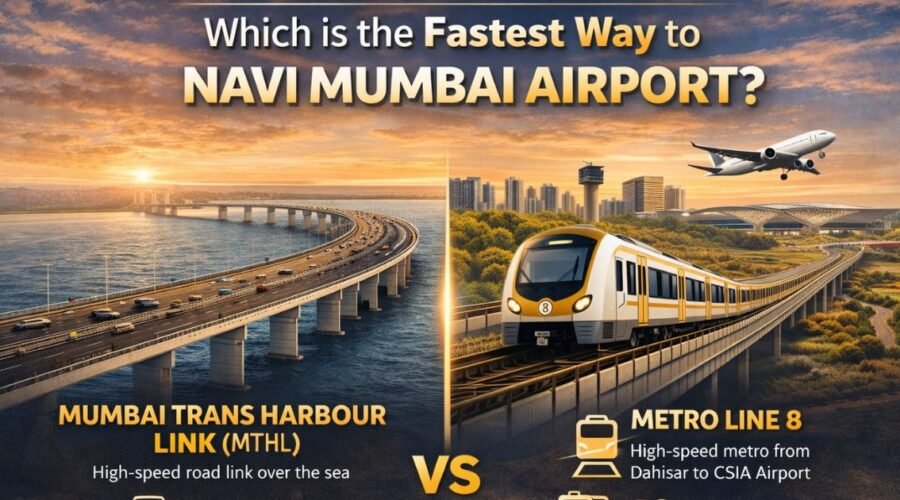
MTHL or Metro Line 8: Which is the Fastest Way to Navi Mumbai Airport?
The Navi Mumbai International Airport (NMIA) isn’t just another airport in the Mumbai Metropolitan Region it’s a complete reset of how people, jobs, and logistics will move across the region for decades. This makes connectivity to NMIA more important than ever.
Two major infrastructure projects dominate this conversation: Metro Line 8 and the Mumbai Trans Harbour Link (MTHL). Both promise faster access to the airport, but they solve very different problems.
For years, Mumbai’s airport access relied heavily on organically grown road networks that eventually choked under traffic. NMIA is different it’s being planned with multiple, coordinated access systems from the start. This is where the road-versus-rail debate comes into play again.
Why Airport Connectivity Matters More Than Ever
Airports today are not just for passengers; they are employment hubs, logistics centres, and economic anchors. NMIA will generate daily movement for airline staff, ground handling teams, cargo operators, hospitality workers, and other service professionals. Unlike older airports that expanded first and connected later, NMIA is being integrated into the transport network from day one, with metro lines, expressways, freight corridors, and arterial roads forming a single coordinated vision. This ensures smooth and predictable travel for all user types.
What Is Metro Line 8?
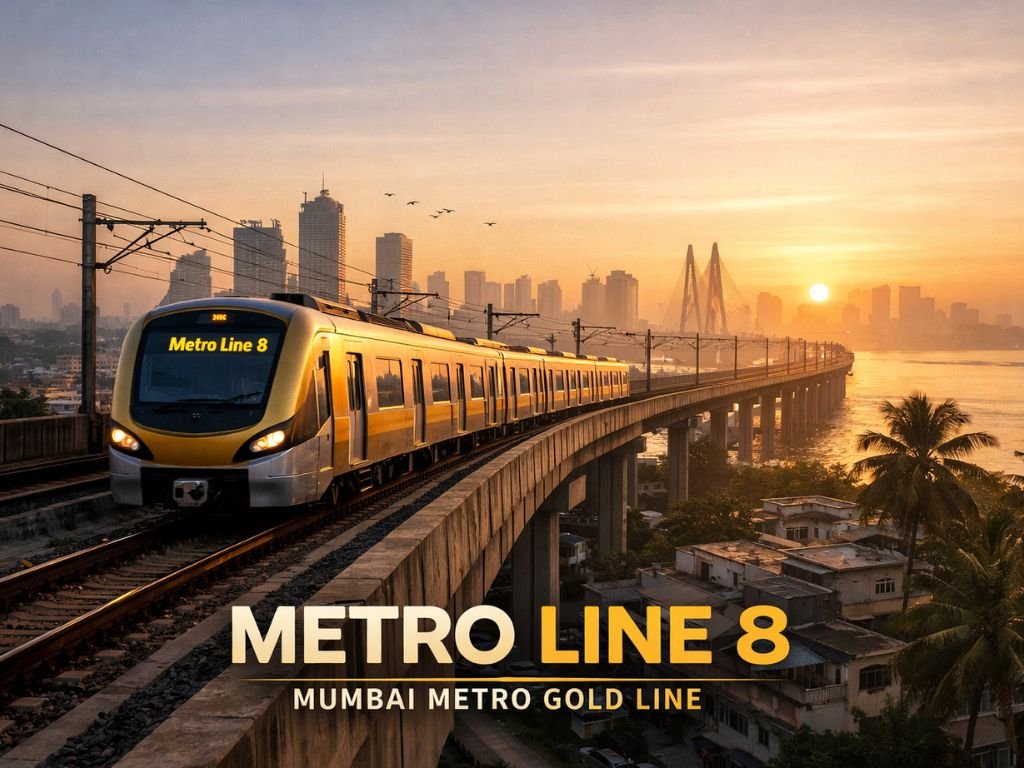
Metro Line 8 is a proposed high-capacity metro corridor designed to serve NMIA and connect it to key parts of Navi Mumbai and the wider metro network. The alignment passes through strategic nodes with interchange points for other metro lines, making it an integral part of the larger metro network rather than a standalone airport shuttle. It primarily serves daily commuters, such as airport staff, nearby office employees, and regular flyers who value predictability over speed. The real strength of Metro Line 8 lies in its consistency unlike road travel, it isn’t affected by traffic jams or weather, making it ideal for predictable daily travel.
What Is MTHL (Mumbai Trans Harbour Link)?
The Mumbai Trans Harbour Link (MTHL) is India’s longest sea bridge, connecting Sewri in South Mumbai to Nhava Sheva in Navi Mumbai. It drastically reduces travel time between Mumbai and Navi Mumbai by bypassing congested land routes. MTHL is primarily used by private vehicles, taxis, and cargo operators. It is designed for speed and flexibility, making it ideal for time-sensitive travel and logistics movement. However, unlike Metro Line 8, its efficiency depends on traffic conditions, weather, and road incidents.
Travel Time Comparison: Metro Line 8 vs MTHL
| Feature | Metro Line 8 | MTHL |
|---|---|---|
| Travel Time | Predictable, fixed | Fast during non-peak hours, variable in peak traffic |
| Best For | Daily commuters, airport staff | Business travelers, occasional flyers |
| Reliability | High | Variable |
| Frequency | Regular intervals | Depends on vehicle availability |
| Cost | Low (fare-based) | High (toll + fuel) |
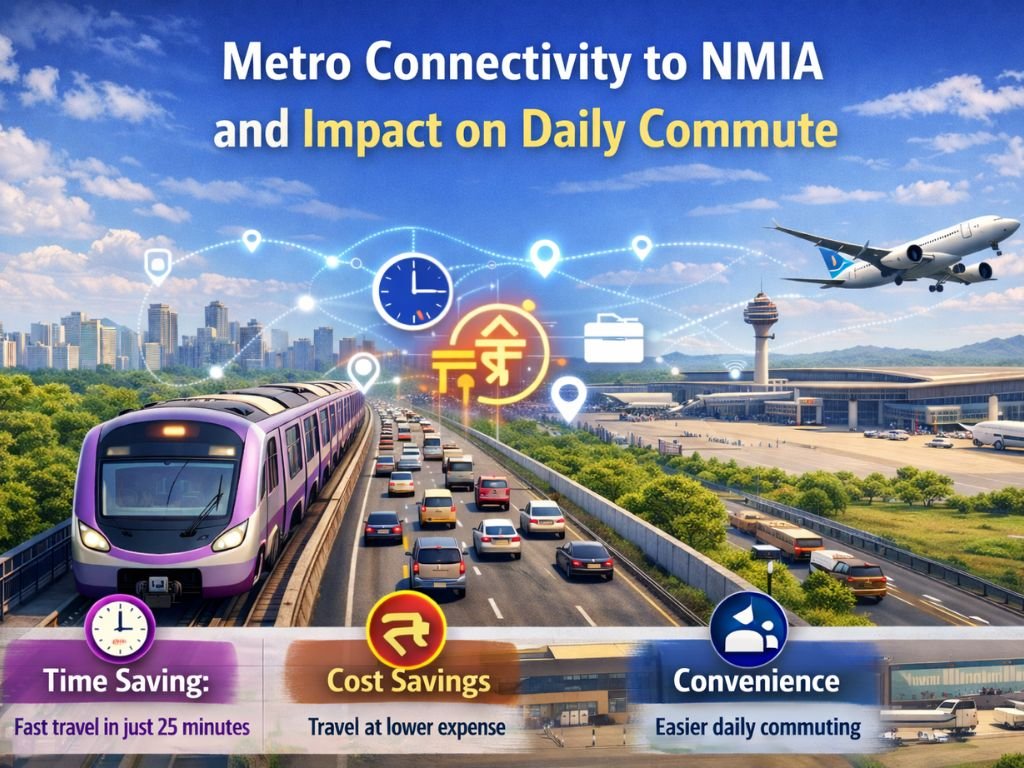
Metro Line 8 may not always be the fastest, but it guarantees on-time arrival. MTHL can be quicker, but only when traffic conditions allow.
Cost Comparison for Different Users
Metro Line 8 is designed for daily affordability. Commuters benefit from low travel costs without worrying about fuel charges, tolls, or vehicle maintenance. It is ideal for airport employees or residents traveling regularly to work. On the other hand, MTHL involves tolls, fuel expenses, and vehicle wear and tear, which makes it suitable for occasional flyers or business travelers who prioritize speed and comfort. For daily use, however, MTHL can become quite expensive.
Which Option Is Better for Whom?
Daily commuters and airport staff benefit more from Metro Line 8 because of its low cost, reliability, and predictable travel schedule. Business travelers or occasional flyers generally prefer MTHL for speed and flexibility. Logistics and cargo operators depend heavily on MTHL due to its suitability for rapid, high-volume transport.
Side-by-Side Snapshot
| Feature | Metro Line 8 | MTHL (Atal Setu) |
|---|---|---|
| Cost | Budget-friendly | High (Toll + Fuel) |
| Speed | Consistent / Fixed | Fast (Traffic dependent) |
| Reliability | High | Variable |
| Best For | Employees & Students | Tourists & Business Travelers |
Conclusion
Both Metro Line 8 and MTHL address different layers of airport connectivity. Metro Line 8 focuses on mass movement and daily predictability, while MTHL provides speed, flexibility, and regional integration. Together, they make NMIA accessible from multiple directions for different types of users.
Pro-Tip: If you’re traveling with heavy luggage, MTHL is the more convenient choice. If you’re commuting daily or alone, Metro Line 8 is the best option for cost and reliability.
FAQ's
Frequently Asked Questions