

How to Buy Commercial Property in Navi Mumbai: Step-by-Step Buyer Guide
Buying commercial property in Navi Mumbai is not just about finding a unit in a busy area and checking the budget. A good buy happens only when the use case, the micro-location, the legal status, and the demand logic all match. In simple words, first decide what kind of commercial property you need, then check whether the location really works, whether the papers are clean, and whether the price makes practical sense. That is how expensive mistakes are avoided.
Commercial buying is very different from residential buying. A flat can still work even if the building is average. A commercial unit usually does not get that luxury. If visibility is poor, parking is weak, access is inconvenient, or tenant demand is shallow, the property may stay legally saleable but commercially weak.
That is why this guide focuses on how to buy commercial property in Navi Mumbai in a practical way, not a brochure-style way.
How should you think about commercial property buying in Navi Mumbai before you even shortlist a unit?
The right way to think about commercial buying is simple: business viability first, paperwork second, pricing third. Many buyers do the opposite. They see a “commercial” board, hear a future-growth story, like the rate, and then try to justify the purchase backward.
In Navi Mumbai, that approach is risky because one side of a corridor may behave very differently from the other. Some areas fall under NMMC, some under PMC, and in many nodes CIDCO history still affects transfer logic, leasehold context, and documentation flow. So the first filter should never be “cheap or expensive.” It should be “does this unit genuinely work for my purpose?”
Quick summary
| Step | What to Decide First | Why It Matters |
|---|---|---|
| 1 | Define the use case | A shop, office, showroom, and clinic do not work on the same logic |
| 2 | Choose the right unit type | Wrong unit type destroys rentability and usability |
| 3 | Check the micro-location | A few hundred metres can change demand completely |
| 4 | Verify legal and authority records | Clean papers matter more in commercial than in residential |
| 5 | Judge total cost, not just rate | GST, stamp duty, CAM, fit-out, transfer charges all affect the real deal |
| 6 | Negotiate only after clarity | Negotiation works best when you know the unit’s weak points |
What kind of commercial property are you actually trying to buy: shop, office, showroom, clinic, or something else?
This is where many first-time buyers go wrong. They treat all commercial units as one category. In real life, they are not.
A ground-floor shop in Vashi Sector 17, a mid-floor office in Airoli, a frontage-heavy showroom on Palm Beach Road, and a clinic unit in a residential-serving plaza in Kharghar all serve different user behaviour. Their pricing drivers, legal checks, tenant profile, and location logic are different.
When a shop makes sense
A retail shop makes sense when the business depends on walk-in customers, repeat neighbourhood demand, and visible frontage. Pharmacies, cafés, mobile stores, salons, daily-need retail, small food brands, and branded service outlets usually fit this model.
In established pockets of Navi Mumbai, especially Vashi, prime retail shops can command very high rates because the value comes from street-level visibility and usable footfall, not just built-up area. In the dossier, premium ground-floor retail in Vashi was indicated in the broad band of around ₹45,000 to ₹65,000 per sq ft, with some premium resale cases even going higher. That is exactly why buyers should not compare a good retail shop with a random internal commercial unit.
When an office unit makes sense
Office units work on a different logic. Here the key drivers are connectivity, business ecosystem, employee convenience, floor plate usability, and tenant profile.
Airoli, Mahape, Turbhe, and CBD Belapur make more sense for office-led buying than a high-street retail pocket. Buyers who want corporate leasing stability usually prefer areas where long leases, business parks, and organized workspaces already exist.
When a showroom or frontage-led unit makes sense

Showrooms need strong road visibility, wide frontage, easy approach, and practical loading-unloading movement. This is very different from a normal shop.
A showroom on a major road looks attractive on paper, but if there is a divider problem, poor vehicle access, or no stopping convenience, the value drops sharply. In Navi Mumbai, arterial roads like Palm Beach Road, Thane-Belapur Road, and Sion-Panvel Highway belts matter because vehicular visibility can be more important than pedestrian movement.
When a clinic, service, or mixed-use commercial unit makes sense
Clinics, salons, classes, diagnostic spaces, and certain service businesses often do not need the most expensive main-road ground floor. They need accessibility, visitor comfort, and practical usage.
A first-floor or second-floor unit in a residential-serving plaza can work very well if there is elevator access, visitor parking, and steady local demand. In Kharghar, Ghansoli, Sanpada, and Koparkhairane, this kind of logic matters because surrounding residential density often drives the business more than main-road flash.
Should you buy for self-use or buy for rental income first?
This is one of the most important decisions in commercial buying. If you mix up self-use logic and investment logic, you can easily overpay.
A self-use buyer can justify paying a premium for an exact operational fit. An investor usually cannot.
Self-use buying
If you are buying for your own business, your main question is not just yield. Your question is whether the space will support operations, branding, staff movement, client access, and long-term convenience.
A business owner may sensibly pay more for a better unit in Vashi, Turbhe, or Belapur if that location directly reduces friction and improves daily operations. For self-use, control matters. You can fit out the space properly, avoid repeated rent escalation pressure, and build around long-term business plans.
Rental income buying
If you are buying for investment, personal liking is almost irrelevant. The only question is whether the unit can attract stable tenants at a sustainable rent.
Commercial property in Navi Mumbai can offer stronger gross yields than residential in many cases, and the dossier indicates broad gross rental yield patterns often around 6% to 8% in suitable commercial zones. But that number depends entirely on lease depth, tenant strength, and the actual usefulness of the unit. A property that looks premium but keeps changing tenants is not a strong income asset.
Which location signals actually matter when buying commercial property in Navi Mumbai?
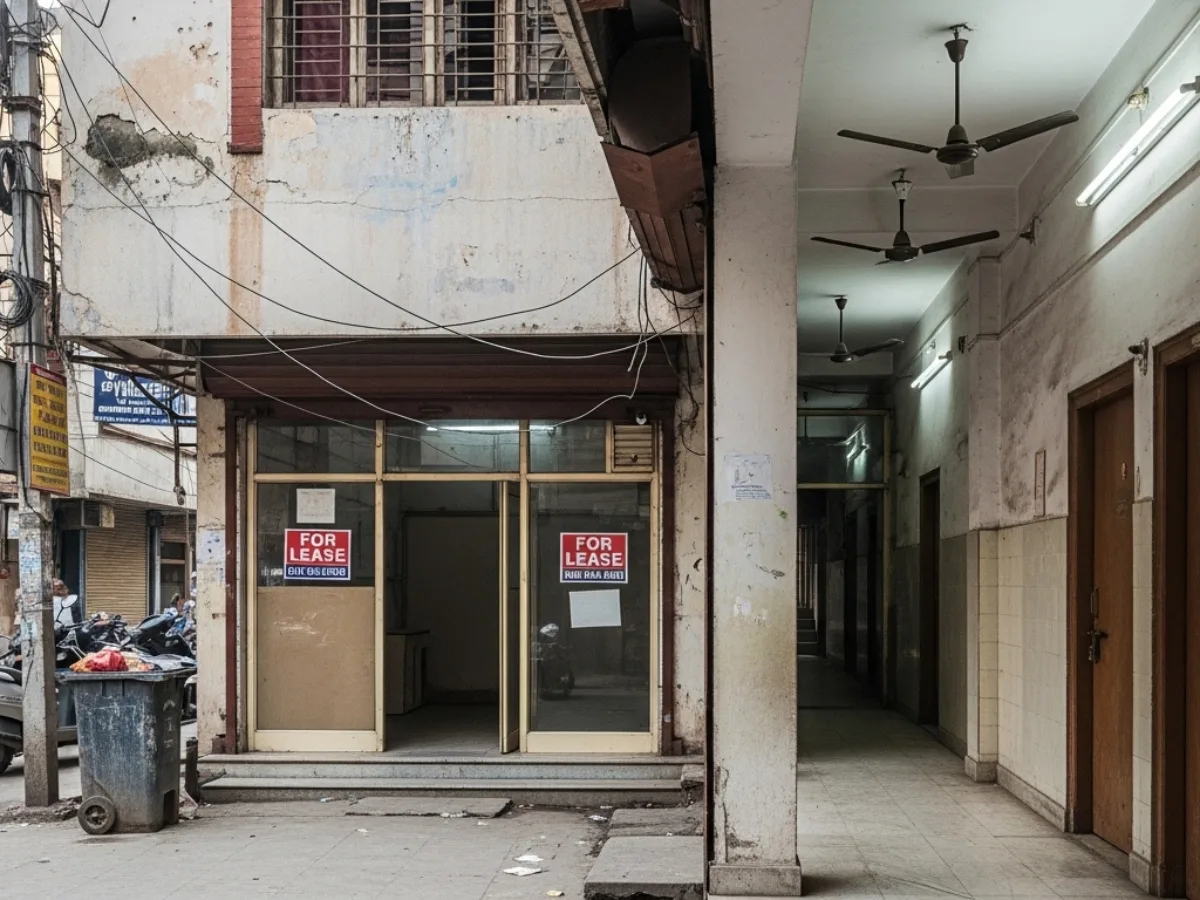
This is where real buying intelligence starts. “Prime location” means nothing unless broken down properly.
In Navi Mumbai, commercial performance is often decided by very local signals: whether customers can actually stop there, whether office staff can reach it comfortably, whether the crowd is in a buying mood, and whether the catchment supports the business type.
Footfall versus usable footfall
High movement is not the same as useful movement.
A location near a busy transport path may have many people passing, but if they are only rushing to catch a train or cross a junction, that movement may not help retail at all. Usable footfall means people are likely to stop, browse, buy, or return.
That is why Vashi Sector 17 works differently from a random busy road. It is a commercial destination, not just a movement corridor.
Visibility, frontage, and approach road reality
A unit may look visible in a broker video but still perform badly on the ground. A flyover, trees, a divider, service road confusion, or awkward entry can damage commercial value.
For showrooms and shops, the approach route matters almost as much as frontage. If the customer has to make a long U-turn or cannot pull over easily, many will simply move to a more convenient competitor.
Parking, loading, and customer convenience
Parking is not a small issue in Navi Mumbai commercial buying. In many locations it directly affects sales, patient flow, office usability, and tenant comfort.
A unit depending on illegal roadside parking is risky. Civic enforcement, local traffic action, and practical customer inconvenience can reduce daily business. For larger retail, service units, or anything with delivery movement, loading and unloading also matter.
Station access, road connectivity, and catchment logic
Office spaces near station networks and strong road links usually hold demand better. Retail and service units do better when there is a dense nearby catchment that actually needs those services.
This is why office logic in Airoli, Sanpada, Juinagar, and Belapur differs from neighbourhood-serving commercial logic in Kharghar or Koparkhairane. The right location depends on what kind of demand will use the unit every day.
How do node differences change the buying decision in Navi Mumbai?
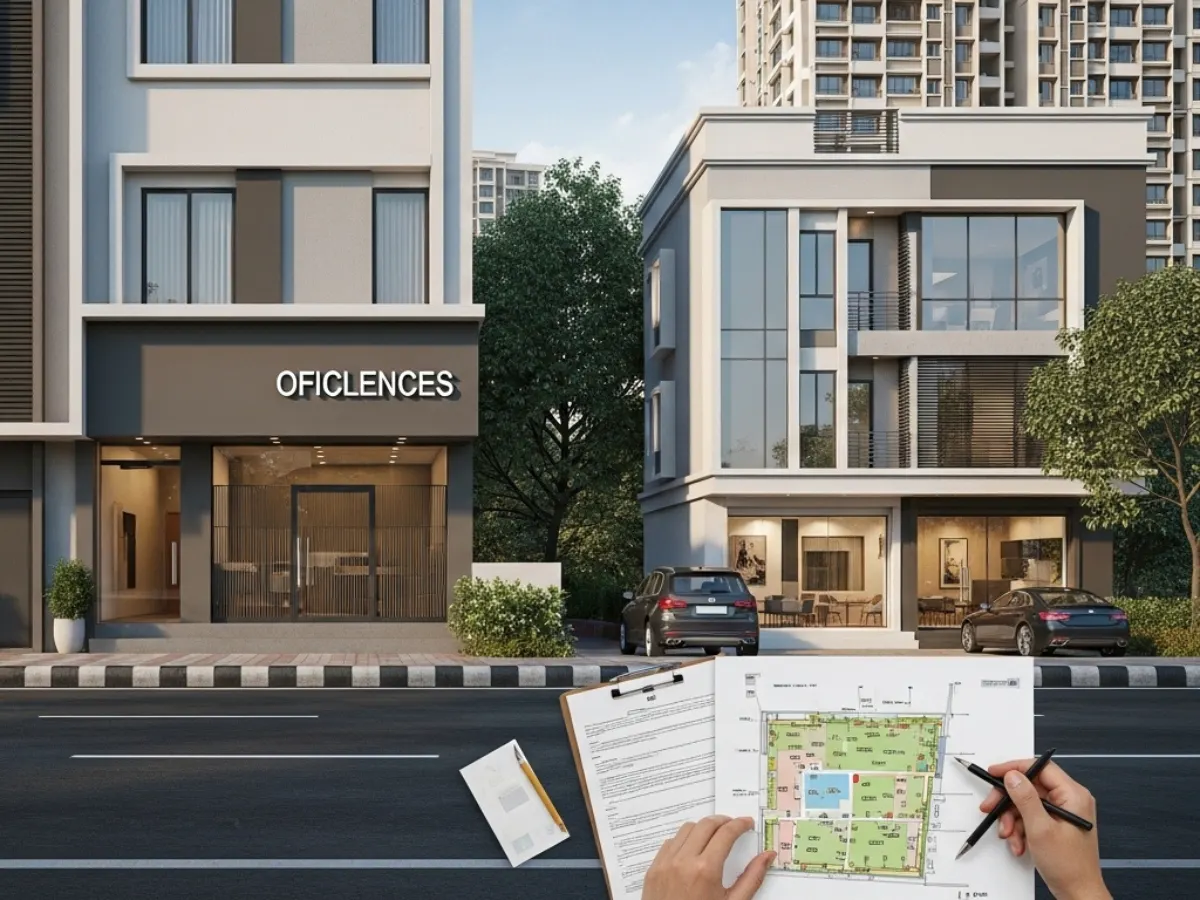
Navi Mumbai is not one commercial market. It is a set of very different sub-markets.
Established business nodes
Vashi, Nerul, and CBD Belapur are more stable commercial nodes. These areas usually suit buyers who want business-ready locations, stronger leasing depth, and lower uncertainty.
Vashi is still one of the strongest retail-commercial locations in Navi Mumbai. Belapur works well for institutional and office-led logic. Nerul sits somewhere in between depending on the exact pocket.
These locations are generally better for buyers who want immediate usability rather than future hope.
Residential-serving commercial zones
Kharghar, Ghansoli, Sanpada, and Koparkhairane are not the same as a pure CBD, but they can be very strong for the right kind of commercial property. Clinics, classes, daily retail, service units, and neighbourhood office formats often work well here if the surrounding residential base is strong.
In these nodes, matching property type to local demographic demand matters more than chasing the “best commercial address” label.
Growth corridors where caution is needed
Ulwe, Panvel, Dronagiri, and some other airport-influence or infrastructure-led corridors are more aggressive bets. They may offer appreciation potential, but they also carry execution risk.
The dossier notes the role of NMIA and related growth expectations in shaping these markets. That can create opportunity, but buyers should not confuse future upside with present business readiness. In many of these corridors, current civic maturity, empty surrounding plots, and shallow tenant demand can still be real issues.
Quick comparison of node logic
| Node Type | Examples | Best For | Main Caution |
|---|---|---|---|
| Established business nodes | Vashi, Belapur, Nerul | Immediate use, stable rentability, lower execution risk | Higher entry cost |
| Residential-serving nodes | Kharghar, Ghansoli, Sanpada, Koparkhairane | Clinics, services, local retail, mixed demand | Must match the unit to local residential need |
| IT and office corridors | Airoli, Mahape, Turbhe | Offices, corporate leasing, organized commercial stock | Office logic only, not all retail will work equally |
| Growth corridors | Ulwe, Panvel, Dronagiri | Appreciation-led buyers with long horizon | Infrastructure timing and present tenant depth may not match brochure claims |
How do you judge whether the asking price actually makes sense?
Do not buy commercial property on rate per sq ft alone. That is one of the most common mistakes.
A correct buying decision is based on total cost and total usefulness.
Ready income logic versus future promise logic
In mature nodes, pricing is usually linked to current rentability. In growth corridors, pricing is often linked to future promise.
That difference matters. A ready commercial unit in Vashi or Airoli may look expensive, but if it can generate income now or support operations now, the price logic may still be sound. A lower-priced unit in a future area may look attractive, but if it depends on future infrastructure and future demand, you are taking the risk today for benefits that may take years.
Area rate is not enough in commercial buying
Even when the base rate looks reasonable, the real cost may be much higher after GST, stamp duty, registration, CAM charges, transfer charges, and fit-out.
Under-construction commercial property attracts 12% GST. Ready property with Occupancy Certificate does not. Stamp duty and registration also materially affect total acquisition cost, and ongoing CAM in premium buildings can significantly reduce net yield.
That is why buyers should always calculate total cost of occupancy before saying a deal is cheap.
What to compare before negotiating
Before negotiating, compare:
- same floor type, not random floors
- same frontage quality
- same visibility and access
- same level of occupancy in the building
- same CAM burden
- same tenant quality or leasing potential
- same usability of internal layout
A ground-floor retail shop cannot be valued like a third-floor office just because both are in the same project.
What legal and document checks should you do before paying token?
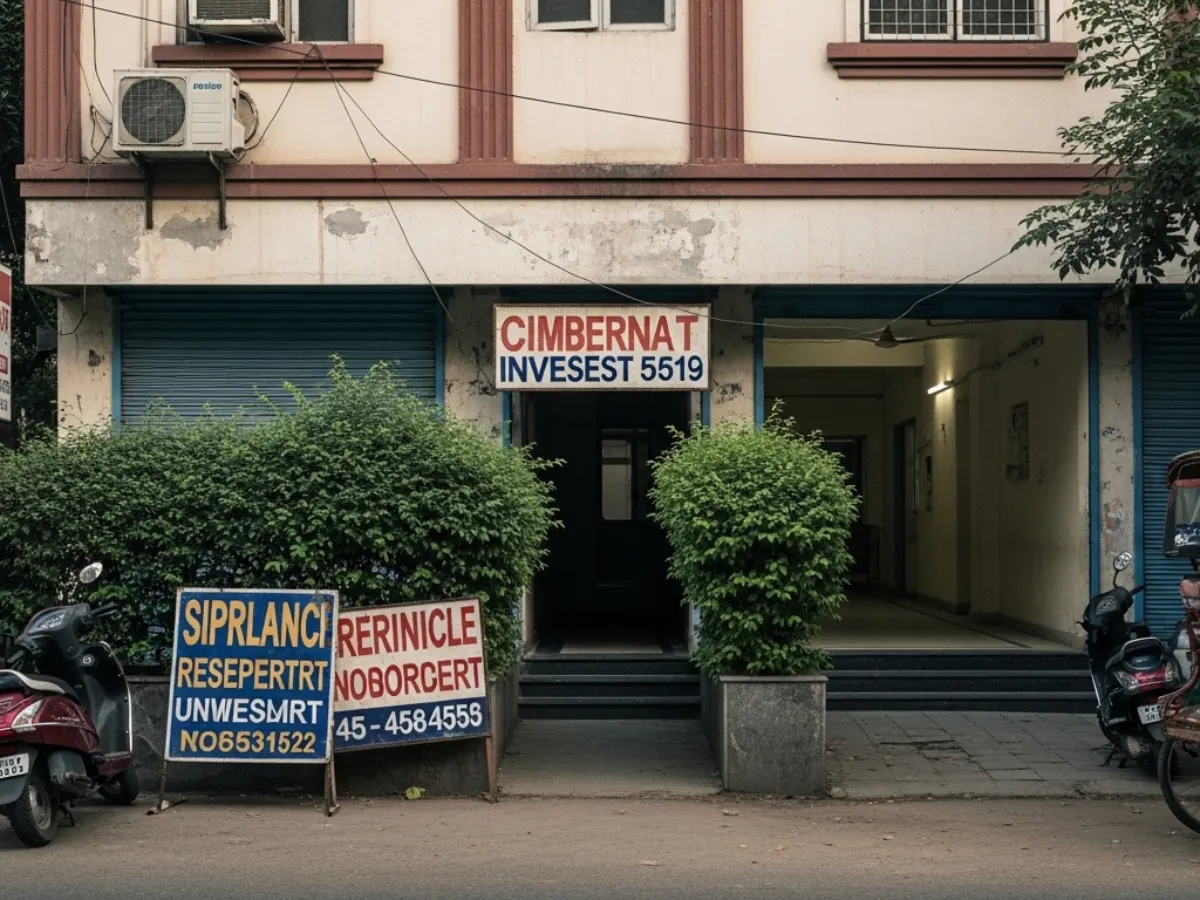
This is the most important section for most buyers. Never let excitement or broker pressure push you into paying token before legal clarity.
Title and seller authority
Start with ownership. The title chain should be checked properly, ideally through a local property lawyer. Seller authority matters too. If the seller is acting through power of attorney, company structure, or partnership route, that authority must be verified.
An incomplete title chain or unclear authority can turn a normal deal into a very expensive dispute.
MahaRERA and project status where relevant
For under-construction or recently completed commercial projects, MahaRERA is not optional. Buyers should check the project registration, uploaded documents, possession timelines, and the developer’s disclosed records.
If the project is not properly registered where it should be, buyer protection becomes much weaker.
Approved plans, CC, OC, and usage clarity
A building existing physically does not automatically mean everything is legally clean.
Check whether the building has a valid Commencement Certificate for construction and an Occupancy Certificate for final use. A ready commercial property without proper OC status is a major warning sign. Also check whether the unit is actually approved for the commercial use being claimed. A residential unit casually used for business is not the same as a legally recognized commercial unit.
CIDCO, leasehold, society, and transfer context where relevant
This is where Navi Mumbai becomes more locally specific. In many parts of Navi Mumbai, especially older CIDCO-influenced nodes, leasehold history, transfer charges, and society approvals can matter.
Buyers should check whether the property is leasehold or freehold, whether CIDCO-related transfer requirements apply, and whether the society has cleared dues and permits transfer. Property tax dues should also be checked, whether the unit falls in NMMC or PMC area.
Registration records and Index II checks
Once the Sale Deed is executed and registered, the buyer should secure the registered record and verify the Index II document. This is a critical part of ownership proof and should not be treated as a minor formality.
Legal checklist before token
- title chain examined properly
- seller authority verified
- encumbrance position checked
- MahaRERA checked if applicable
- approved plans verified
- CC and OC verified where relevant
- commercial usage clarity confirmed
- CIDCO and leasehold transfer issues checked if relevant
- society dues and NOC checked
- property tax arrears checked
- agreement and registration structure understood
Should you buy a ready commercial unit or an under-construction one?
This depends on your risk appetite and objective.
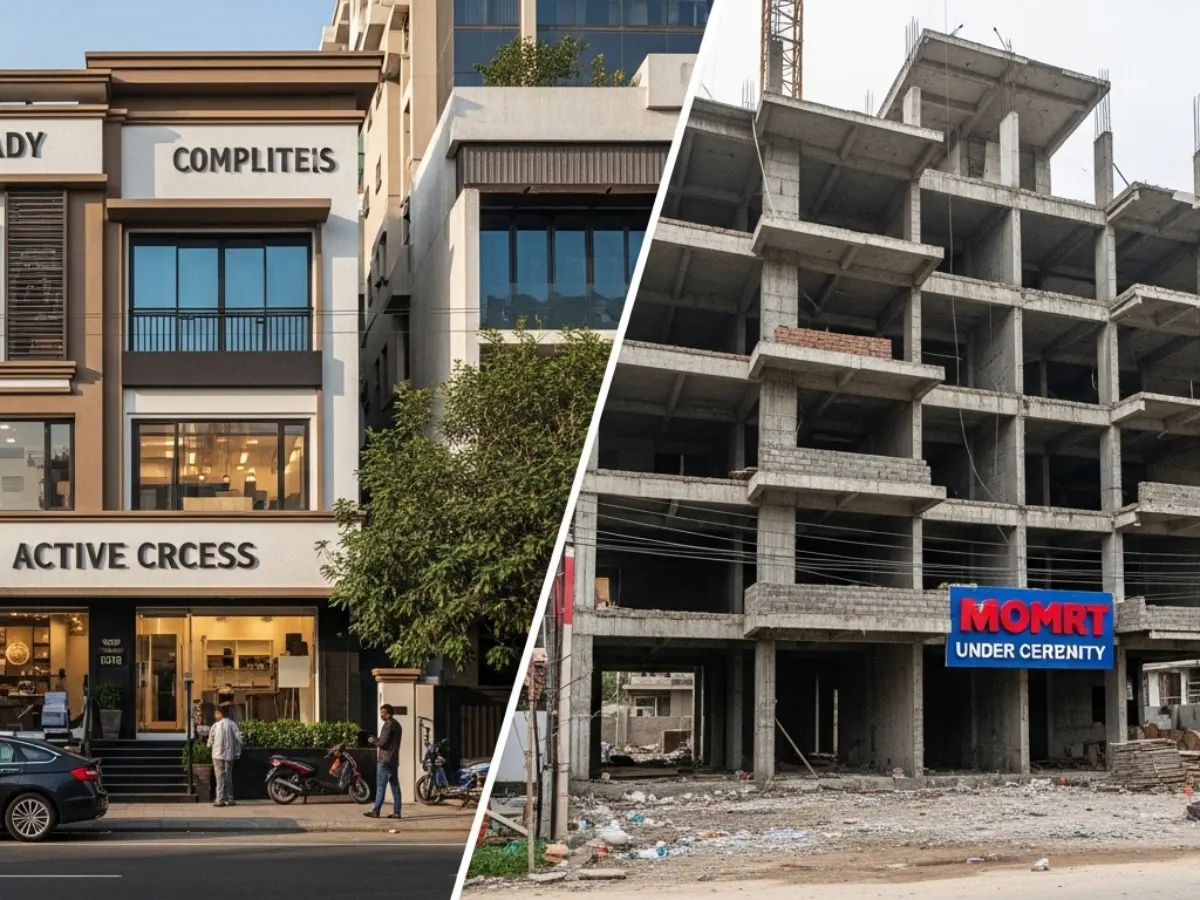
A ready commercial unit is usually safer. You can inspect the actual building, verify the surroundings, check the tenant ecosystem, and avoid developer delay risk. The dossier also clearly notes that ready units with OC do not attract GST, which improves upfront cost efficiency.
An under-construction commercial unit may offer a lower entry price and better unit choice, especially in premium business parks or future corridors. But that comes with delay risk, execution risk, and the burden of 12% GST. It is better suited to buyers who can hold patiently and do not need immediate income.
For most first-time buyers, especially self-use buyers and conservative investors, ready property is usually the safer path.
What red flags usually mean a commercial unit should be avoided?
Some warning signs should make you step back immediately.
A missing Occupancy Certificate is a major red flag. So are unauthorized changes such as illegal mezzanine floors or converted parking areas. If the seller avoids sharing original papers, pushes heavy cash components, or wants quick token before due diligence, do not proceed casually.
Economically, be cautious of half-empty buildings, dead internal corridors, very high CAM burdens, and units that look premium but have weak real accessibility. A commercial unit can be legally valid and still commercially poor.
Also be cautious when the local story sounds stronger than the ground reality. In Navi Mumbai, future infrastructure can improve value, but it cannot magically fix a bad unit in a bad micro-location.
What is the safest step-by-step process to buy commercial property in Navi Mumbai?
The safest process is disciplined and boring. That is exactly why it works.
1) Define use case and full budget
Decide whether the purchase is for a shop, office, clinic, showroom, or rental investment. Then build a real budget including GST if applicable, stamp duty, registration, CAM, fit-out, transfer charges, and working capital needs.
2) Shortlist only matching micro-locations
Do not browse the whole city randomly. Narrow your focus based on the business model. A yield-focused office buyer should not waste time on a weak retail corridor. A clinic buyer should not blindly chase highway frontage.
3) Visit during business hours, not just once
This matters a lot. Visit on weekdays, at active hours, and observe real movement. Check whether the area is alive, whether customers can stop easily, whether offices around it are occupied, and whether the building feels commercially active.
4) Verify legal papers before token
Do not reverse this order. Legal check first, token later. That is how buyer leverage is protected.
5) Negotiate using facts
Negotiate on the basis of visibility, rentability, CAM, occupancy, access, floor utility, fit-out burden, repair needs, and surrounding competition. Emotional negotiation does not work in commercial buying.
6) Register properly and complete post-purchase follow-up
After registration, secure the Index II, update records where required, and complete mutation or transfer follow-up with the relevant municipal or authority process.
What does a good commercial property deal in Navi Mumbai usually look like in real life?
A good deal usually looks boring on the surface and strong underneath.
One example is a ready retail shop near a genuine neighbourhood-commercial pocket where documents are clean, the location has usable footfall, and the tenant profile is stable. Another is a self-use clinic or service unit in a residential-serving plaza where access and parking are better than glamour. A third is a carefully chosen office unit in a business corridor where tenant demand is proven and long lease structures are normal.
The common factor in all strong deals is not hype. It is fit.
If the property type fits the demand type, the location supports real usage, the paperwork is clean, and the price matches today’s reality, the deal is usually on the right track.
Who should buy now, who should lease instead, and who should wait?
Established businesses with clear long-term plans in Navi Mumbai can buy now, especially for self-use, if the property genuinely supports operations and the total cost is manageable.
Investors with strong capital and patience can also buy selectively, especially where there is proven leasing depth or where future growth is being taken with full awareness of risk.
Businesses still testing their model, startups trying a new market, and buyers with stretched finances should often lease instead. Leasing protects liquidity and gives flexibility. Commercial buying should not choke the business.
Buyers who are unclear about their purpose, too dependent on future hype, or uncomfortable with the legal and cost structure should wait. Waiting is better than buying the wrong commercial asset.
conclusion
The safest way to buy commercial property in Navi Mumbai is to stop thinking like a general buyer and start thinking like an operator. First decide what the property must do. Then check whether the location genuinely supports that use, whether the papers are clean, and whether the total cost is justified by present reality.
If you buy a commercial unit only because it is available, looks modern, or sounds like a future bet, you are taking unnecessary risk. But if the unit type, micro-location, approvals, access, and pricing all align, commercial property in Navi Mumbai can become a very strong long-term business asset or income asset.
FAQ's
Frequently Asked Questions