
How to Verify Sanctioned Industrial Use and Zoning in Navi Mumbai
In Navi Mumbai, you verify sanctioned industrial use in four layers: first identify the exact plot and the planning authority; then obtain the zone or part-plan or DP remark; then match that with the sanctioned plan, development permission, CC or OC, and lease or title papers; only after that use MahaRERA or IGR as support. Do not rely on broker language, nearby factory activity, tax bills, or ready reckoner category alone.
That is the real answer. In Navi Mumbai, a property may look industrial, be surrounded by sheds, have a three-phase connection, and still fail proper legal verification. The biggest mistake buyers, tenants, and even brokers make is assuming that “industrial belt” and “sanctioned industrial use” mean the same thing. They do not.
This matters more in Navi Mumbai because many industrial assets sit inside overlapping authority logic. Some fall under CIDCO nodes, some under MIDC estates, and some under Panvel-side municipal planning. On top of that, a lot of land is leasehold, not simple freehold. So the correct question is not “Does this look industrial?” The correct question is “Which authority controls this plot, what does the land-use record say, what does the sanctioned building plan say, and do the lease conditions allow this exact activity?”
Quick Summary: What You Need to Verify First
| What to verify | Why it matters | Where you usually start | What it proves |
|---|---|---|---|
| Exact plot identity | Wrong plot number means wrong due diligence from day one | Seller papers, title papers, allotment papers, previous agreement | Identifies the exact land and structure you are checking |
| Planning authority | Navi Mumbai does not have one single approval path | CIDCO, MIDC, or municipal town planning side | Tells you which records and portal matter |
| Zone / Part Plan / DP remark | Land use must support industrial use at plot level | DTP service, authority records, municipal planning side | Proves the land-use category |
| Sanctioned plan + CC | The building itself must be approved for that use | CIDCO approval trail, municipal town planning, MahaRERA if project-based | Proves what construction and use were actually sanctioned |
| OC | Confirms completed building is fit for occupation as approved | Authority records / project documents | Proves completion and compliance for that sanctioned use |
| Lease deed / allotment terms | Lease conditions can restrict use, transfer, subletting, or change of activity | CIDCO or MIDC title papers | Proves what the lessee is actually allowed to do |
| MahaRERA / IGR support checks | Helpful but not primary zoning proof | MahaRERA portal, IGR portal | Supports title, project transparency, and valuation context, not land-use approval by itself |
If a property is being sold as “industrial” in Navi Mumbai, what should you verify first?
The first step is not the building. It is not the brochure. It is not the rent yield story. The first step is exact plot identity plus planning authority.
Start with the exact plot identity, not the marketing brochure
Ask for the full property identity in writing. That means plot number, survey number or CTS number where applicable, sector, node, village, estate name, building name, and unit number if it is a gala or floor unit. Without this, every later check becomes unreliable.
This is especially important in places like Taloja, Dronagiri, Kalamboli, Mahape, Rabale, Pawane, Turbhe, and Panvel-side fringe areas, where people casually describe locations by market name rather than by legal plot identity. “Near Taloja MIDC” is not a legal description. “Industrial belt” is not a legal description. “Warehouse pocket” is not a legal description.
Identify the planning authority before checking anything else
Once you have the plot identity, identify who controls planning and permissions for that land. For CIDCO-side property, the official website itself separates building permission, development permission, and COPAS citizen search. For MIDC plots, MIDC has separate post-allotment processes for transfer, sub-leasing, sub-letting, change in activity, and even change in land use. For Panvel-side municipal areas, the Town Planning Department states that it grants development permission and commencement certificate based on sanctioned regulations, DP remarks, and part plans.
That is why there is no one universal Navi Mumbai verification shortcut. If you start with the wrong authority, you can end up checking the wrong documents and getting false confidence.
Which document actually proves zoning, and which document only supports it?
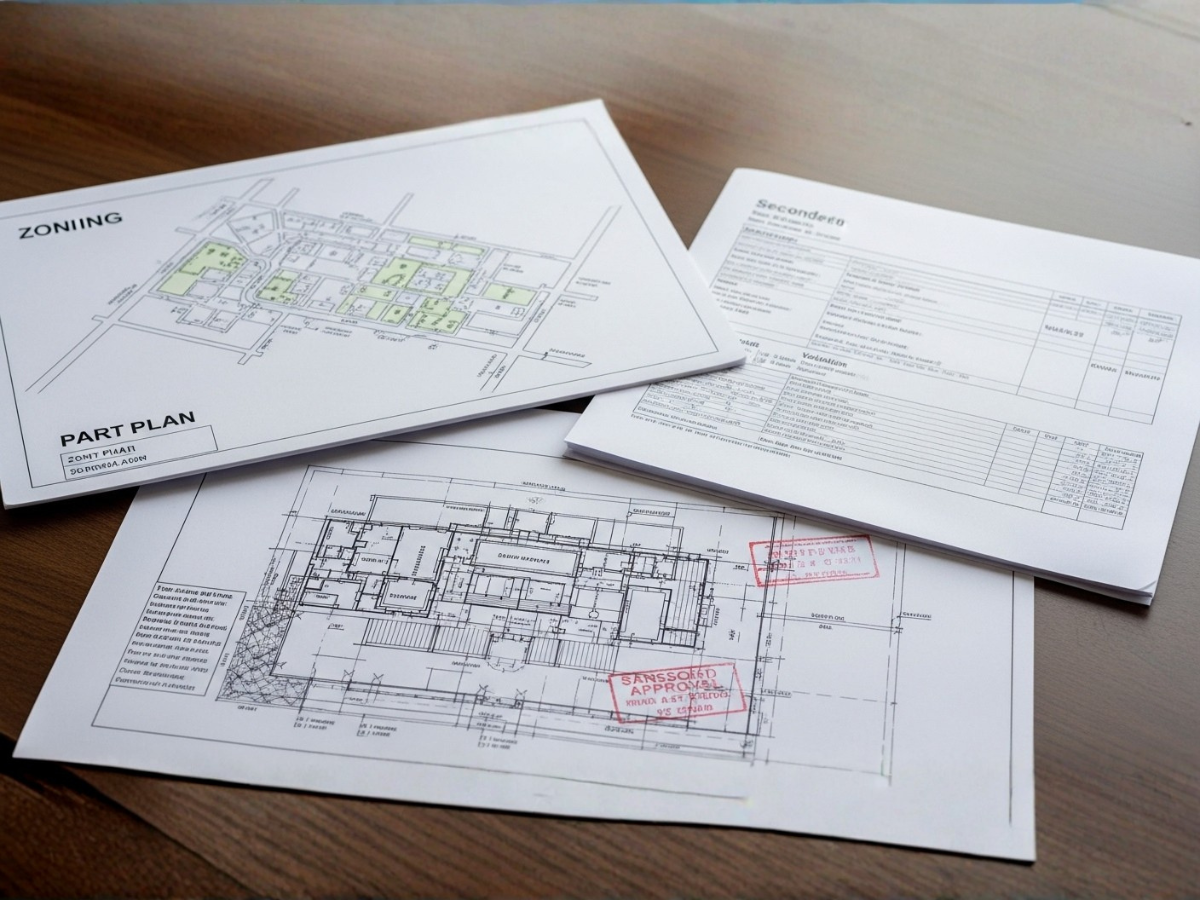
This is where most weak articles fail. All documents do not have equal weight. Some prove land use. Some prove sanctioned building use. Some only show tax, valuation, or commercial reality.
What a Part Plan or Zone Certificate can help establish
A certified Zone Certificate and certified Part Plan from the Directorate of Town Planning and Valuation are the strongest public-facing proof for land-use category at the planning level. The DTP RTS portal lists both services, with required documents such as 7/12 or city survey extract, and it shows a 7-day service timeline for a certified Zone Certificate and a 3-day timeline for a certified Part Plan from the Regional Plan.
In simple words, this is the document family that tells you whether the land itself is categorized as industrial, commercial, residential, or something else.
But that still does not finish the job.
Why sanctioned plan, development permission, CC, and OC answer a different question
Land use and building sanction are not the same lock. A plot may fall in an industrial zone, but the actual structure standing on it still has to be approved properly.
For that, you need the sanctioned plan, development permission trail, commencement certificate, and then occupancy certificate. CIDCO’s development permission page publicly links approved cases archive and COPAS citizen search. Panvel Municipal Corporation separately publishes downloadable CC and OC lists under its Town Planning records. MahaRERA, for registered projects, requires documents such as legal title report, encumbrance certificate, layout approval, building plan approval, and valid commencement certificate during project registration.
So the legal logic is simple:
- Zone Certificate / Part Plan proves the land-use category.
- Sanctioned Plan / Development Permission / CC proves what construction and use were approved.
- OC proves the completed building matches that approved use closely enough to be occupied.
Why tax bill, electricity connection, and surrounding factory activity are not enough
A property tax bill is a revenue document. An electricity meter is an operational utility document. A ready reckoner category is a valuation tool. None of them, by themselves, are statutory zoning proof.
The Maharashtra eASR portal itself says the information gives only an approximate idea of land rates and users should enter details accurately and confirm rate information with the relevant office. The IGR site also labels newer tools like e-ASR 2.0 and e-Search 2.1 as beta. That is useful for valuation and document search context, but it is not a zoning certificate.
So if somebody says, “The tax bill is industrial, so everything is clear,” treat that as incomplete at best.
How do you verify sanctioned industrial use in CIDCO-controlled areas?
If the property falls in a CIDCO-controlled node, the process becomes more structured, but also more document-sensitive.
Check development permission, approved cases, and COPAS search trail
CIDCO’s official development permission page for Navi Mumbai and Khopta directly points users to development permission, approved cases archive, and COPAS citizen search. Its sitemap also separately lists building permission, COPAS, development permission, online CFC, and Navi Mumbai property database related services.
That means a CIDCO-side verification path should usually include:
1. confirming the plot identity 2. checking whether a development permission record exists 3. checking approved cases or COPAS trail 4. matching the sanctioned plan and certificate status with what is being marketed
If a seller cannot even produce the basic approval trail for a supposedly clean industrial asset in a planned CIDCO node, that is already a caution sign.
Match the claimed industrial use with lease conditions and plot history
This is where Navi Mumbai differs from many freehold markets. A lot of CIDCO land is leasehold. That means even if the land is in an industrial-oriented area, the allotment and lease conditions still matter.
MIDC’s sample lease framework makes this logic very clear at a policy level: prior written consent is required for transfer of interest, and failure to obtain that consent can lead to show-cause action and resumption of possession. The same document set also shows that use contrary to grant conditions can trigger removal or alteration action. While CIDCO and MIDC are separate authorities, this is the exact kind of leasehold mindset buyers must apply in Navi Mumbai industrial due diligence.
In practical terms, do not stop at “industrial zone.” Read the allotment letter, lease deed, transfer conditions, and any later permissions. In leasehold property, use risk is also title risk.
Why CIDCO-side lease language matters more than many buyers think
A lot of market confusion comes from this assumption: “If the built structure exists, the authority must have accepted the use.” That is dangerous logic.
In a leasehold system, authorities often control transfer, sub-letting, sub-leasing, activity change, and land-use change separately. So one of the most important checks on a CIDCO-side industrial property is whether the existing use, past permissions, and future transfer path all align. If they do not, your resale or lease transaction can get stuck even if the unit is physically functioning.
How is the process different in Panvel-side or non-CIDCO planning areas?
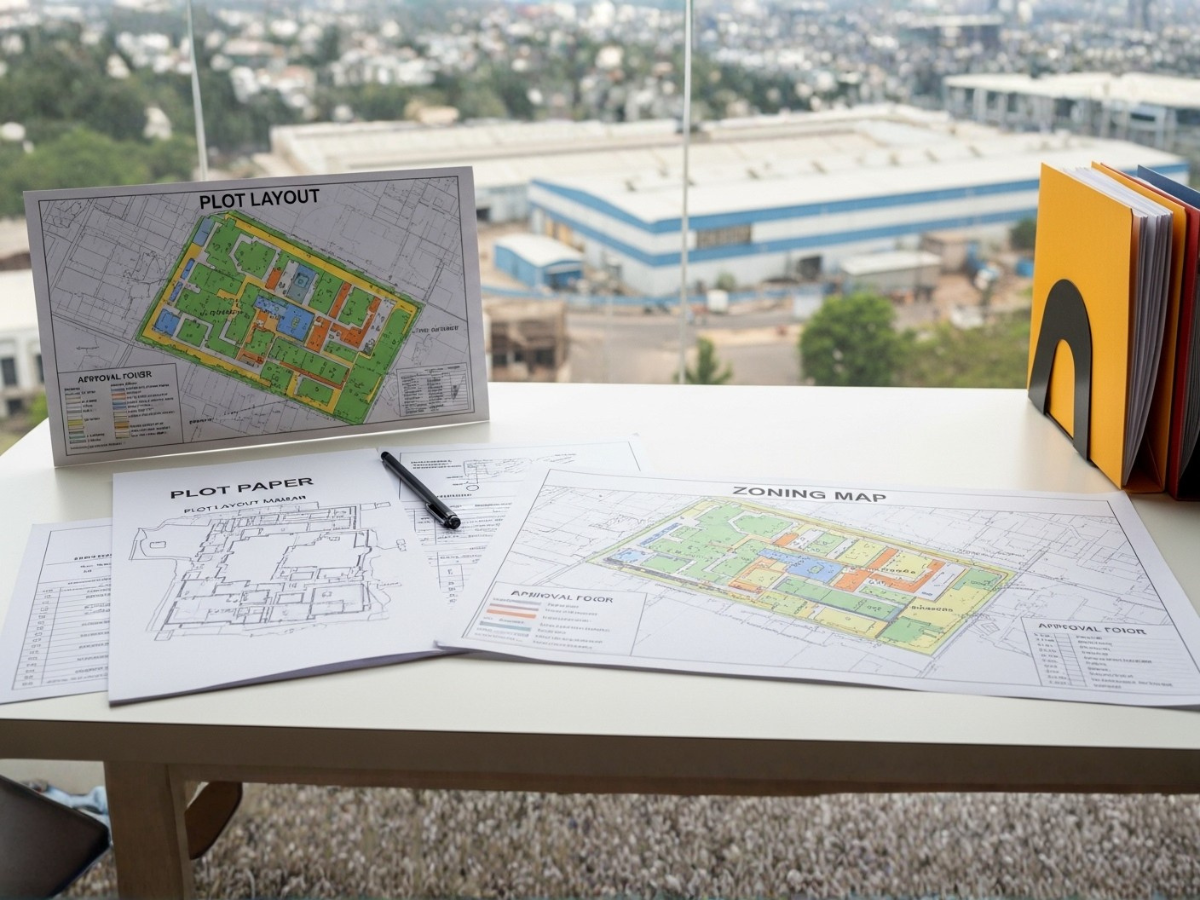
Panvel-side and other municipal planning areas need a different approach. This is where many generic blogs become useless because they keep repeating CIDCO language for every plot in the Navi Mumbai region.
What DP remarks, part plans, and municipal permissions help you confirm
Panvel Municipal Corporation’s Town Planning Department states that it grants development permission and commencement certificate as per sanctioned development control regulations, DP remarks, and part plans, and also implements sanctioned development plans and town planning schemes.
That tells you exactly what matters in a Panvel-side due diligence file:
- DP remarks
- part plan logic
- sanctioned plan
- development permission
- commencement certificate
- occupancy certificate
If the asset is in a PMC-side area, you should not behave as if CIDCO COPAS alone will solve the entire question.
Why a municipal CC or OC still does not replace a land-use check
PMC’s download section publicly lists online commencement certificate and occupancy certificate records across time periods. That is useful because a buyer can independently cross-check whether permissions were issued.
But even here, the same rule applies: CC and OC prove building-level permission and completion. They do not replace the land-use check. So in municipal areas too, you still need to connect land-use status with building sanction, not treat one as a substitute for the other.
How do you match land-use permission with the sanctioned building plan?
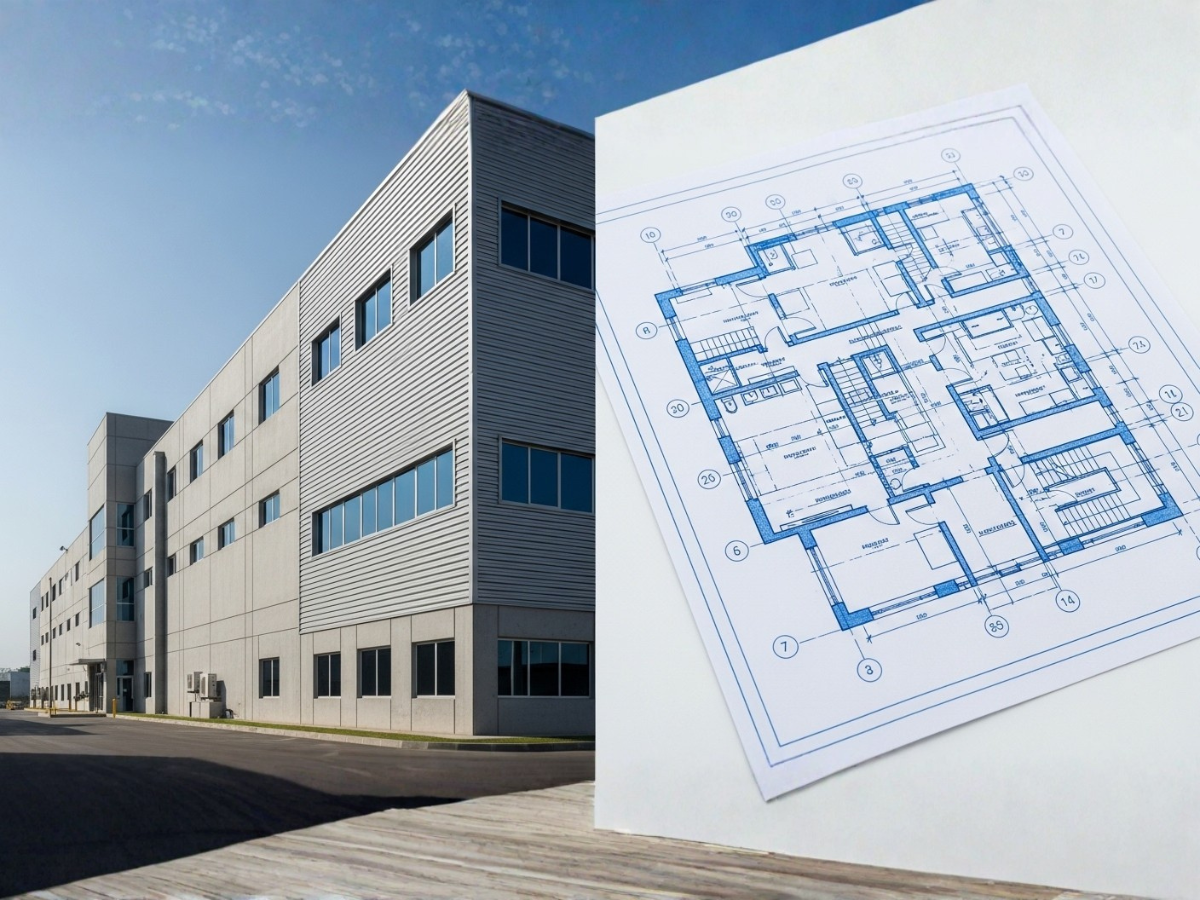
This is the section that usually saves people from expensive mistakes.
The short version is this: plot zoning, sanctioned building use, and actual business use are three different things.
A plot may be industrial. The sanctioned building may be for a certain industrial or service-industrial format. But the actual occupant may be running something else entirely.
Plot use, building use, and actual business use are not the same thing
Think of it in layers:
- Plot zoning = what the land broadly allows
- Sanctioned building use = what the authority approved this specific structure for
- Actual business use = what the occupier is really doing on the ground
All three should align closely enough for the deal to be safe.
Common mismatch cases that create industrial-property risk
Mismatch example 1: industrial plot, wrong building format A plot may sit in an industrial-use belt, but the built structure may have been partitioned or altered in a way that does not match the sanctioned layout. On paper it may not support the way it is being marketed.
Mismatch example 2: sanctioned building exists, but current activity has drifted A unit may have basic industrial approval history, but the current occupier may be running a very different activity that needs separate permissions, different safety clearances, or activity-change approval.
This is exactly why a site visit should come last, not first. You do the document logic first, then inspect whether the physical layout and current use match the approval trail.
What should a buyer, tenant, or broker each check before calling a property industrial?
Not everyone carries the same risk. A buyer, tenant, and broker need different depth in different places.
| Role | Top priority checks | Why it matters most |
|---|---|---|
| Buyer | Zone or part plan, sanctioned plan, CC, OC, lease deed, transfer conditions, title chain | Buyer is taking long-term capital and exit risk |
| Tenant | Permitted use, current layout compliance, OC, fire and operational compatibility, whether actual use matches approval | Tenant needs day-one usability and lower shutdown risk |
| Broker | Primary proof pack before marketing: zone record, approved layout, CC or OC, authority history | Broker risks misrepresentation and credibility damage |
Buyer checklist
A buyer should think like a future transfer case, not just a present user. If the property is leasehold and approvals are weak, your resale can become painful later even if today’s possession looks smooth.
At minimum, a buyer should ask: Is the land use clear? Is the building sanction clear? Is the OC clear? Do lease or allotment conditions restrict this activity, transfer, or subletting?
Tenant checklist
A tenant’s problem is immediate operational risk. The wrong unit can delay fit-out, licensing, finance, fire approvals, or business launch.
Tenants should focus less on valuation stories and more on permitted use, present compliance, and whether the premises can support the intended activity without a future dispute.
Broker checklist
A broker should never market a unit as industrial only because the surrounding lane is full of factories. The minimum professional standard is to collect a basic proof file before making strong claims.
That usually means: zone or part-plan proof, sanctioned layout or authority approval trail, and CC or OC status if the structure is completed.
Where do MahaRERA and IGR Maharashtra help, and where do people misuse them?
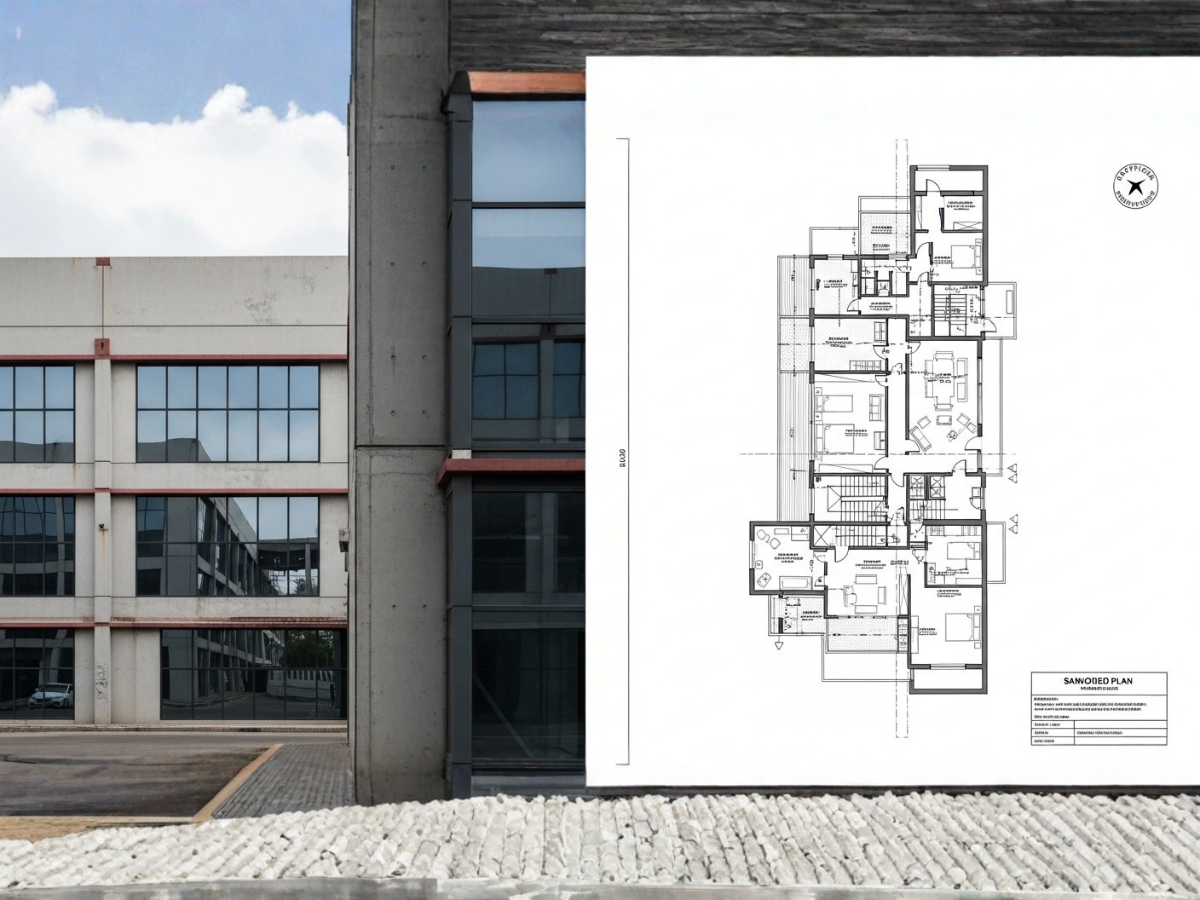
These two tools are useful. But they are very often overused in the wrong way.
When MahaRERA adds useful proof
For registered projects, MahaRERA is a strong support platform because the authority’s buyer guidance tells users to search the project and review details such as legal title certificate, draft allotment letter, litigations, encumbrances, amenities, and other project documents. Its FAQs also show that mandatory project registration documents include legal title report, encumbrance certificate, layout approval, building plan approval, and valid commencement certificate.
So if the industrial or commercial asset is part of a registered project, MahaRERA can help you cross-check the project’s document transparency quickly.
When IGR records help title review but not zoning proof
IGR tools are useful for registered document search, record trail, and valuation context. The IGR website also links e-Search and other record services. That makes it useful for title-side investigation.
But that does not make it a zoning authority.
Why eASR is not a sanctioned-use certificate
This point should be kept simple. eASR is a market-value and stamp-duty reference system. The portal itself says it provides only an approximate idea of rates and that users should verify the rate information properly. That is a clear warning against using it as legal zoning proof.
So yes, use IGR and eASR for support. No, do not use them as the final word on industrial legality.
Which red flags usually mean the industrial-use story is weak?
These phrases should make you slow down immediately.
- “All nearby properties are industrial.”
Reality: neighboring use is not legal proof for your plot.
- “Conversion is under process.”
Reality: until approval exists in writing from the competent authority, treat the risk as open.
- “Possession is possible, OC is pending.”
Reality: a pending OC means the building-completion side of the due diligence is still incomplete.
- “Current tenant is already running industrial activity.”
Reality: present activity may itself be non-compliant, tolerated, temporary, or unsupported by the sanctioned file.
- “Tax bill is industrial.”
Reality: taxation and land-use approval are not the same thing.
- “It has commercial electricity, so use is clear.”
Reality: utility classification is not planning approval.
A practical 8-step Navi Mumbai workflow to verify zoning and sanctioned industrial use

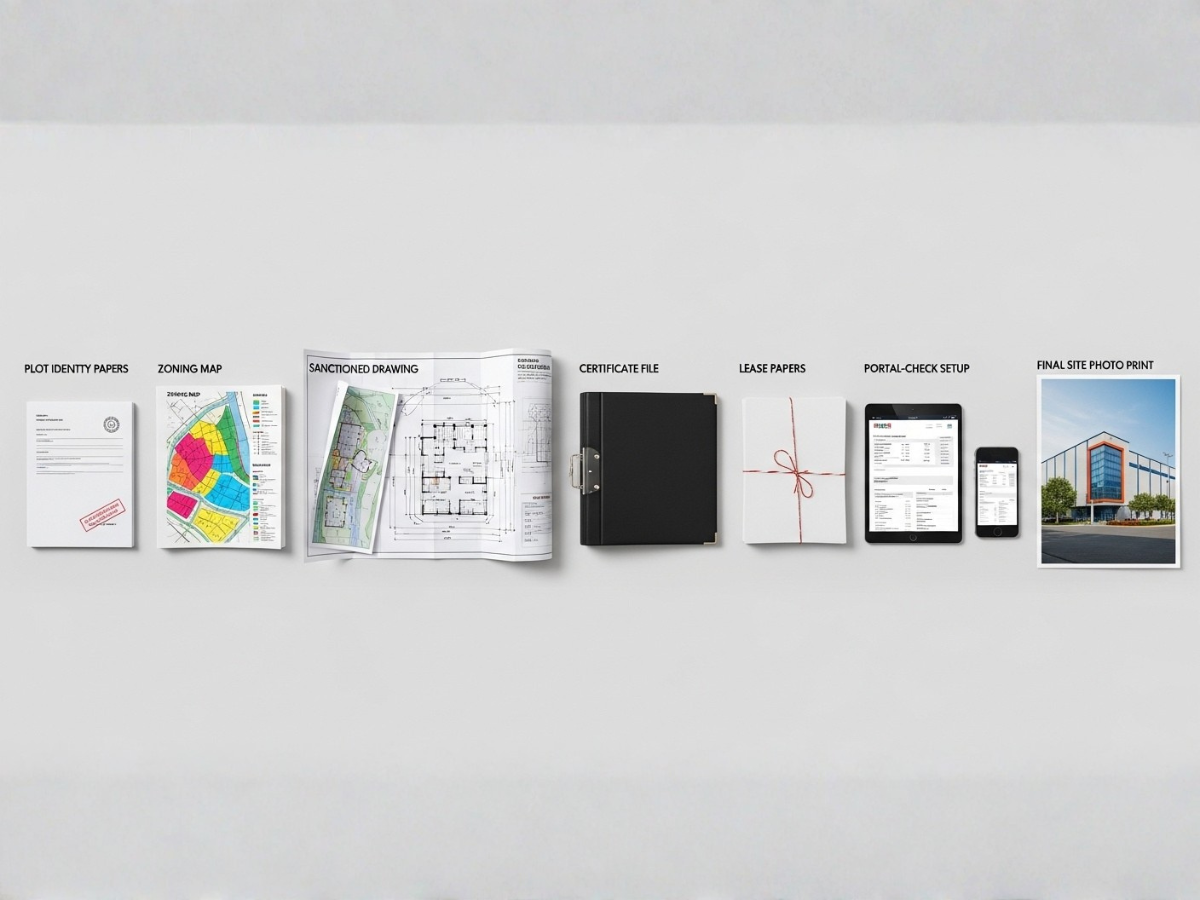
If you want one save-worthy workflow, use this:
1. Capture the exact property identity Plot number, survey or CTS number, sector, node, village, building name, unit details.
2. Identify the planning authority Check whether the property falls under CIDCO, MIDC, or municipal town planning logic.
3. Obtain land-use proof Apply for or obtain the Zone Certificate, Part Plan, or relevant DP remark. DTP’s RTS system publicly lists certified Zone Certificate and Part Plan services.
4. Collect sanctioned building documents Ask for sanctioned plan, development permission, and commencement certificate.
5. Check completion status Verify occupancy certificate status through authority records, project documents, or public ledgers where available. PMC’s public download records are useful here.
6. Read lease and title restrictions carefully In leasehold property, check allotment letter, lease deed, transfer conditions, subletting or subleasing restrictions, and activity-change rules. MIDC publicly provides workflows for transfer, sub-leasing, sub-letting, change in activity, and change in land use.
7. Use MahaRERA and IGR as support tools Check MahaRERA if the project is registered. Use IGR for registered document and valuation context, but not as zoning proof.
8. Do the site visit last Compare the actual on-ground use, internal layout, access, and building format against the sanctioned file. If the document story and physical story do not match, stop and investigate.
Conclusion
If you remember only one thing, remember this: in Navi Mumbai, industrial due diligence is not one document, it is a chain. You need the right authority, the right land-use proof, the right sanctioned building file, and the right lease or title conditions to line up together.
So before you buy, lease, or market any so-called industrial asset, do not ask only, “Is this in an industrial area?” Ask this instead:
Which authority controls it? What does the land-use record say? What does the sanctioned plan say? Is there a valid CC or OC? And do the lease conditions actually allow this exact use?
That is the difference between a property that only looks industrial and one that can survive real due diligence.
For any live transaction, especially leasehold industrial property, it is wise to get a local property advocate or due-diligence professional to review the approval trail, title chain, and transfer conditions before money is locked in.
