
Industrial Land vs Shed vs Warehouse in Navi Mumbai: Which One Fits Your Business Best?
Industrial land usually makes sense in Navi Mumbai when you want long-term control, custom build potential, and future expansion, and you can handle approvals, time, and extra capital. A shed usually suits engineering, fabrication, and light manufacturing that needs a ready industrial shell. A warehouse usually suits storage, 3PL, e-commerce, and port or highway-linked logistics. In Navi Mumbai, the right choice changes mainly by business type, MIDC rules, truck access, power need, and whether you are looking at TTC, Taloja, Panvel side belts, or Dronagiri.
A lot of buyers search for industrial property in Navi Mumbai and end up seeing the same words again and again: plot, gala, shed, factory, warehouse. On the ground, they are not the same thing. The legal position, operating cost, loading ability, future modification freedom, and exit logic can change completely depending on what exactly you buy.
This guide is for that practical decision.
Quick Summary: Industrial Land vs Shed vs Warehouse in Navi Mumbai
| Asset type | Best for | Capital intensity | Operational speed | Expansion flexibility | Main caution | Best-fit Navi Mumbai belts |
|---|---|---|---|---|---|---|
| Industrial land | Custom factory, phased expansion, long-horizon self-use | High | Slow | Highest | Approvals, construction cost, MIDC utilization rules | Taloja MIDC, selective larger industrial belts |
| Industrial shed | Engineering, fabrication, light manufacturing, MSME operations | Medium to high | Faster than land | Moderate | Inherited layout, old structure, power and loading limits | TTC belt, Taloja, some older industrial estates |
| Warehouse | Storage, 3PL, e-commerce, EXIM, distribution | Medium to high | Fastest if ready | Lower for manufacturing use | Wrong for heavy production, height/floor/truck specs matter | Dronagiri, Panvel, Kalamboli, Plaspa-side logistics corridors |
Industrial Land vs Shed vs Warehouse in Navi Mumbai: The Straight Answer
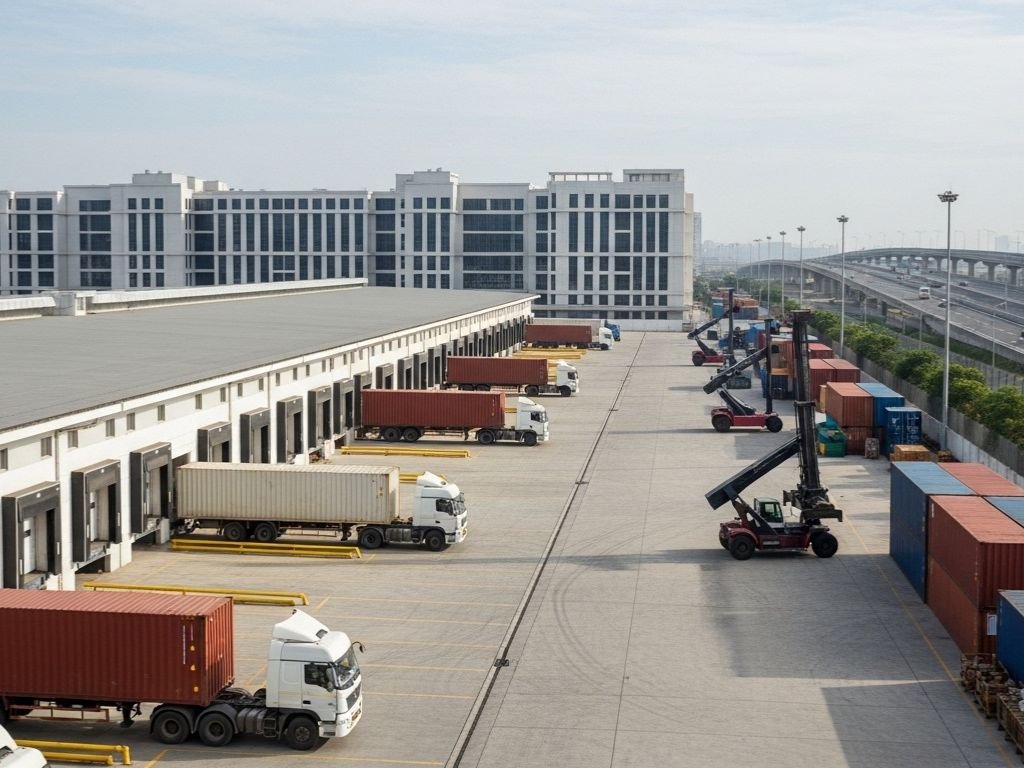
If your business is factory-led, process-heavy, or planning a custom plant over the next 5 to 10 years, industrial land is usually the right starting point. If you need to start operations faster and your process fits an existing industrial shell, a shed is usually more practical. If your core business is movement of goods rather than production, a warehouse is usually the correct asset.
That is the simple answer. The better answer is that in Navi Mumbai, the wrong format can cost you far more later through transfer premiums, tax burden, weak truck access, water issues, or a building that simply does not suit your actual workflow.
What Are You Actually Buying in Each Case?
Industrial land
When you buy industrial land in an MIDC-controlled setting, you are usually not buying casual freehold land. Under current MIDC frameworks, industrial plots are typically allotted on a long leasehold basis, often around 95 years, with conditions around usage, development, transfer, and subletting. That means you are buying control and future buildability, but not unlimited freedom.
The attraction is obvious. You get to design for your exact use. You can plan machine layout, future FSI use, truck movement, height, utility rooms, and phased expansion properly. But you also inherit the hardest part of the journey: approvals, design, environmental clearances where needed, fire approvals, construction management, and time.
Industrial shed
A shed is usually the middle path. You are buying a built industrial structure that can often be used much faster than raw land. For many engineering, fabrication, packaging, and light manufacturing users, that is a major advantage.
But a shed is never a blank slate. You inherit the column spacing, roof profile, power sanction, load-bearing capacity, age of structure, and the practical limits of the site. Some old sheds in Rabale, Pawane, or other mature industrial pockets are excellent for MSME work. Some are expensive problems hiding under a decent rate.
Warehouse
A warehouse is not just a big empty unit. A proper warehouse is a logistics tool. Modern grade-A stock in port or highway-driven belts is designed for storage volume, racking, forklift movement, loading bays, and truck turnaround. That is why clear height, floor load, apron space, and internal movement matter so much more here.
This is where a lot of buyers go wrong. They see a large covered unit and call it a warehouse. But a modern logistics warehouse and an older industrial gala or shed are not interchangeable, either physically or legally.
Which Option Fits Which Business Model Best?
The easiest way to choose is to stop thinking like a property buyer for a minute and start thinking like an operator.
Manufacturing, fabrication, and engineering units
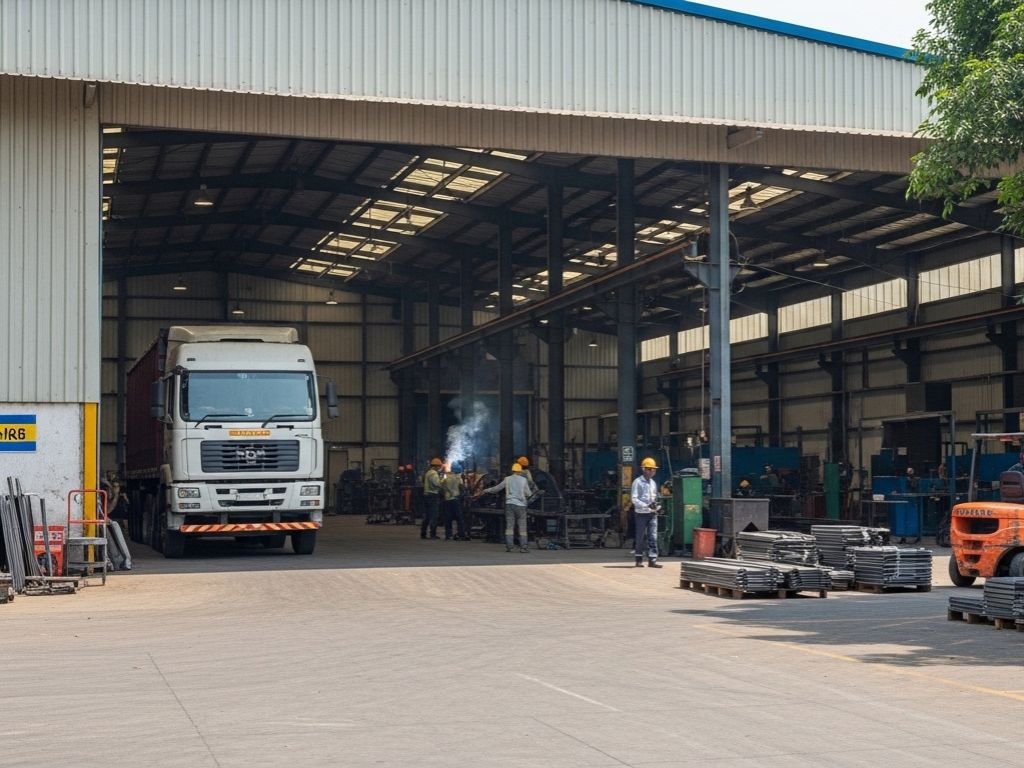
For manufacturing and engineering use, industrial land or an industrial shed usually makes more sense than a warehouse. These businesses often need stronger RCC flooring, higher power sanctions, machine vibration tolerance, raw material handling, and sometimes effluent-related planning. A warehouse may look large and efficient, but that does not mean it is suitable for a process-heavy unit.
A small or mid-sized engineering business in the TTC belt, for example, may be better off with a ready shed or even a usable industrial gala than with land, because the business needs to start, not wait 12 to 18 months for approvals and construction.
Storage, 3PL, e-commerce, and distribution
For storage and logistics, the answer is much cleaner: warehouse first. A proper warehouse gives you vertical storage capacity, better pallet logic, safer material handling flow, and faster dispatch. Modern logistics users should care about clear height, floor load, loading docks, and truck apron space far more than just carpet area or rate per sq ft.
This is especially true in Dronagiri, Panvel, Kalamboli, and similar corridors where highway or port movement is the real value driver.
Buyers planning future expansion or custom build
If future expansion is central to your business model, land is usually the better bet. You can phase your capex. You can consume FSI in stages. You can plan a plant that actually reflects your production process instead of forcing your process into somebody else’s structure.
But this only works if you genuinely plan to build. Under current MIDC rules, passive holding is not a comfortable strategy. There is a minimum utilization expectation, and non-utilization can trigger annual penalties or worse. So land is good for planners, not for casual speculators.
Investors looking for rentability or easier exit
For investors, pre-leased warehouses are often easier to understand than raw land. The tenant pool is broader in the current logistics market, especially in strong corridors. Long lock-ins, corporate tenants, and clearer usage formats can improve visibility of income.
Land can still be valuable, but not as a lazy appreciation play in every case. In Navi Mumbai industrial markets, especially MIDC-linked environments, undeveloped land comes with rule-based friction. That changes the entire investment logic.
Where in Navi Mumbai Does Each Option Make More Sense?
Navi Mumbai does not have one industrial answer. The corridor changes the answer.
TTC belt: Rabale, Mahape, Pawane, Turbhe-side logic
The TTC belt is the old, powerful, urban industrial spine of Navi Mumbai. Mahape has strong IT and electronics presence. Rabale and Pawane have deep engineering and industrial MSME history. Turbhe works as an inner-city movement and distribution link.
This is usually not where large modern warehousing shines. Land is expensive, roads can be tight, and many properties are better for intensive industrial use than for big-box logistics. Sheds, industrial units, and usable galas often make more sense here than a modern warehouse strategy.
There is also an operating-cost issue here that buyers often ignore. In NMMC areas, commercial and industrial properties attract much higher property tax than residential properties. Under the current framework cited in your dossier, industrial and commercial rates are around 68.33% to 68.45% of rateable value, far above residential levels. For a business choosing between TTC and a more peripheral belt, that is not a small detail. It directly affects overhead.
Taloja MIDC: heavier industrial and larger-format logic
Taloja works better for buyers who genuinely need industrial logic. Larger plots, heavier industry suitability, and CETP-linked ecosystems make it relevant for manufacturers, especially those who cannot fit comfortably into older urban industrial stock.
But Taloja has a serious reality that generic articles ignore: water. Entry rates may look attractive compared with TTC, and the area has strategic value for industrial use, but chronic water shortage can become a daily operational headache. For water-intensive users, that is not a side issue. That is part of the site selection itself.
So Taloja is not “cheap and best.” It is better described as industrially useful but infrastructure-challenged.
Panvel, Kalamboli, and Plaspa-side logistics logic
This belt works naturally for highway-oriented movement. If your business depends on dispatch, regional distribution, steel movement, trucking efficiency, or access to the Sion-Panvel and Mumbai-Pune corridors, Panvel-side logistics property often makes more sense than trying to force the same model inside TTC.
This is where warehouses start looking stronger than sheds for many users. Not because sheds are bad, but because movement efficiency is the core value here.
Dronagiri and JNPA-influenced warehouse logic
Dronagiri is not a general industrial answer. It is a logistics answer. The JNPA influence matters here. Port-led cargo flow, EXIM handling, CFS logic, and logistics-grade specifications make this corridor much more suitable for warehouses, bonded movement, and container-linked operations than for traditional manufacturing.
A proper warehouse in this belt can work very well for a 3PL or export-import operator. A chemical or heavy process manufacturer choosing Dronagiri just because it sounds strategic may simply be buying into the wrong ecosystem.
Which One Demands the Most Capital, Time, and Execution Capacity?
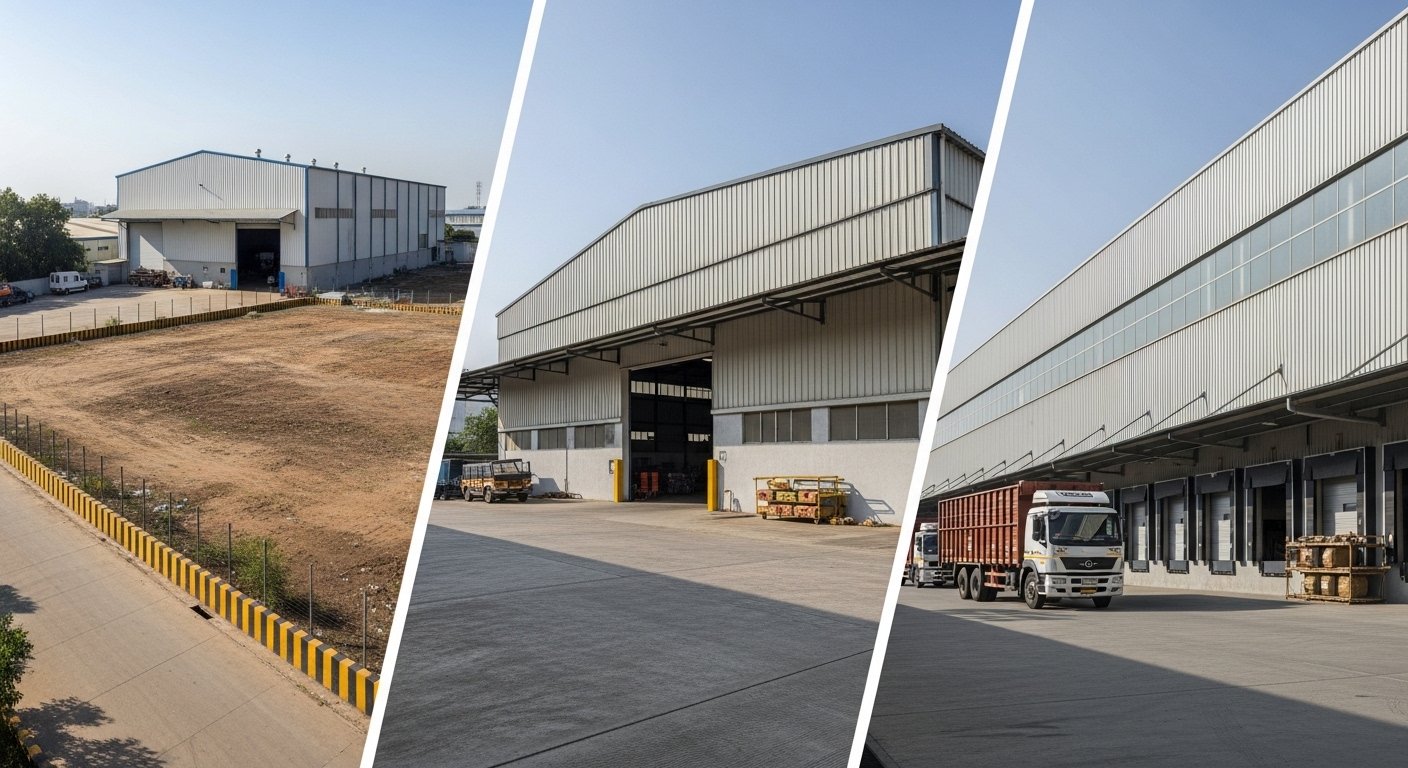
Industrial land often looks cheaper than it really is. The land rate is only the beginning. After that come design, consultants, approvals, environmental and fire compliance where needed, civil work, utility activation, construction inflation, and delay risk. In the current Mumbai Metropolitan Region cost environment cited in your dossier, industrial construction itself can be expensive, with modern pre-engineered warehousing and RCC industrial construction both carrying meaningful cost bands.
That is why land is often the most demanding option even when the entry price looks manageable.
A ready shed or warehouse, by contrast, asks for heavier upfront clarity but less execution risk. You pay more for a built asset, but you reduce delay, construction uncertainty, and working-capital blockage.
Cheap entry can become expensive later
A buyer who picks raw land to “save money” can later face:
- long approval timelines
- construction cost escalation
- interest or capital blockage
- penalty exposure if utilization conditions are not met
- higher total project cost than a ready operational asset
This is one of the biggest industrial property mistakes in Navi Mumbai. Buyers compare land rate with shed rate, but they should compare total activation cost with total activation cost.
Which Asset Is Easier to Lease Out, Resell, or Scale Later?
For leasing and resale, the answer depends on who the next buyer or tenant is.
Warehouses usually have better rental liquidity today when they sit in the right logistics corridors and meet proper operational standards. The tenant understands the format. The use case is clear. The building works for modern cargo handling. That creates stronger tenant depth.
Sheds can lease well too, but the pool is narrower. A shed is easier to let out when its power, structure, access, and footprint suit a real industrial user. If it is too old, too awkward, or too deep inside a constrained pocket, the exit becomes harder.
Land is the most flexible for self-use scaling, but not always the easiest to exit. In MIDC-linked contexts, the transfer of undeveloped land can attract a much higher differential premium than a developed plot. Under the Step 2 dossier, the difference is significant: developed plots may attract around 10%, while undeveloped open plots can face around 30%. That one rule alone changes the speculative logic.
What Legal and Title Checks Change the Answer in Navi Mumbai?
This is where many expensive mistakes begin.
MIDC or non-MIDC changes the buying logic
MIDC property is structured, but controlled. Private or non-MIDC land may offer a different title profile, but it can also mean more conversion, infrastructure, and regulatory uncertainty. So do not ask only “What is the rate?” Ask, “Under which authority and under what conditions am I buying?”
Leasehold, transfer, subletting, and use-permission issues
In an MIDC framework, the right to transfer or sublet is not automatic in the same way many buyers assume. Permissions, transfer premiums, annual charges, and compliance with use conditions matter. A buyer planning rental income from an industrial shed or warehouse should verify whether subletting permission is in place or required.
That sounds technical, but the practical meaning is simple: do not buy an asset assuming income or transfer freedom that the authority has not actually allowed.
Built asset approvals if you are buying a shed or warehouse
If you are buying a built unit, check the built form properly. A warehouse approved and used as storage is not the same as an industrial structure suited to process-heavy manufacturing. NBC building groups matter here. Industrial manufacturing and storage/warehousing are not treated as identical categories.
That is why “we will retrofit later” is a dangerous plan.
Legal due diligence checklist before shortlisting
- Confirm whether the property is MIDC leasehold, CIDCO-linked, or private/non-MIDC
- Check title chain and transfer documents
- Verify whether the plot or unit is developed or undeveloped
- Check if a Building Completion Certificate or equivalent development milestone exists where relevant
- Check transfer premium exposure, especially for open plots
- Verify subletting permissions if rental income is part of the plan
- Review use restrictions, setbacks, and buildability if buying land
- Check whether the existing structure’s approvals match the use you plan to run
What Technical Checks Matter Before You Choose Land, Shed, or Warehouse?

A clean title is not enough. Industrial property fails in real life when the site does not work operationally.
For sheds, power sanction matters immediately. Heavy manufacturing users may need 3-phase load well above what a small industrial unit can support. Upgrading later can take time and money.
For warehouses, clear height and floor load are non-negotiable. A modern grade-A warehouse in a serious logistics belt may offer 12-meter clear height, heavy floor load capacity around 6 tons per square meter, and wide truck aprons around 16.5 meters. An older low-height shed with awkward access can be far cheaper on paper and far weaker in real use.
For both, road width, truck turning radius, loading area, drainage, and flood vulnerability matter. And in certain belts, water is not a background issue. It is part of the technical viability.
When Is Industrial Land the Wrong Choice?
Industrial land is the wrong choice when your business needs to start fast. It is also the wrong choice when you do not have the internal bandwidth to manage consultants, approvals, contractors, and delays.
It is especially risky for investors who think an MIDC plot works like passive freehold land. Under current frameworks, there is a real “use it or lose it” discipline. Minimum FSI utilization expectations and annual non-utilization charges can turn a speculative land buy into a slow financial leak.
A simple example: an investor buys open industrial land in expectation of easy appreciation, does not develop it, then later discovers that transfer costs and non-utilization pressure have already eaten into the upside. That is not a rare theoretical mistake. It is a common one.
When Is a Shed the Wrong Choice?
A shed becomes the wrong choice when the inherited structure fights your business.
That happens when the column layout breaks your movement flow, the roof or frame is aging badly, the power sanction is too weak, or truck movement is too tight for your dispatch pattern. It also becomes the wrong choice when a buyer wants warehouse economics from an old industrial shell that was never built for vertical storage or logistics turnover.
This is where the TTC gala illusion matters. Many buyers looking for “warehouse in Navi Mumbai” are actually shown galas or older industrial units in dense estates. These can be excellent for localized industrial work, but they are usually poor substitutes for genuine logistics-grade warehousing.
When Is a Warehouse the Wrong Choice?
A warehouse is the wrong choice when the core need is heavy manufacturing, high vibration machinery, process hazards, crane use, or strong utility modification.
It is also the wrong choice when a business assumes that height alone makes a building versatile. A warehouse may have great volume but poor suitability for an industrial process. In legal terms too, storage and industrial manufacturing are not simply the same category. Fire, structural, and pollution-control implications matter.
A startup that takes a high-clearance warehouse in a logistics park thinking “we will do some light production later” can quickly run into permission trouble. That is exactly the kind of wrong-format decision this topic should help avoid.
A Practical Decision Matrix for Buyers in Navi Mumbai
conclusionIf the business is about making things, start by comparing industrial land and industrial shed. If the business is about moving goods, start by comparing warehouse options in the right logistics corridor. If the plan is long-term self-use with serious expansion, land can be powerful. If the plan is quick start with manageable execution, a shed often wins. If the plan is yield or logistics-led leasing, a pre-leased or properly specified warehouse usually makes more sense. In Navi Mumbai, this is not just a property-format decision. It is a corridor decision, a compliance decision, and an operating-cost decision. The safest buyer is usually not the one who buys the cheapest asset. It is the one who buys the format that actually matches the business. FAQsFrequently Asked Questions Are Vashi commerciaIs a shed safer than land for first-time industrial buyers?l rates higher than nearby nodes for the same kind of office?
Not by default. Industrial land is better when you need custom build, future expansion, and control. A warehouse is better when your business is storage, logistics, or distribution and you want faster operational readiness. Is a shed safer than land for first-time industrial buyers?
Often yes. For many first-time buyers, a usable shed is safer because the execution risk is lower. Land only becomes safer when the buyer has strong planning capacity, approval appetite, and enough capital buffer. Which is better for Taloja: land, shed, or warehouse?
For Taloja, land and industrial sheds usually make more sense than warehouse-led buying if the use is actual manufacturing. But the water situation must be checked seriously. Lower entry cost does not cancel operating stress. What is riskier in Navi Mumbai: ready shed or vacant industrial land?
For most ordinary buyers, vacant industrial land is riskier because delay, construction, compliance, and MIDC utilization rules can create a bigger execution problem. A ready shed can still be risky, but its problems are more visible if inspected properly. Can a warehouse work for manufacturing use?
Sometimes for limited and suitable operations, but not automatically. A warehouse is not a universal industrial shell. Structure, approvals, fire norms, pollution permissions, and process type all matter. Why do some buyers overpay for industrial land?
Because land feels flexible and prestigious. But if the business only needs a functioning industrial unit now, that flexibility may never be used. The buyer ends up paying for future potential while suffering present delay.  Shashank HibareShashank Hibare is a real estate professional who contributes to I Love Navi Mumbai (ILNM), focusing on the city’s evolving property market. Related Posts |
|---|