
Industrial Stamp Duty, Registration and Transaction Costs in Navi Mumbai: What Buyers Actually Pay
In Navi Mumbai industrial deals, your closing cost is not just stamp duty plus registration fee. What you finally pay depends on the document type, the higher of agreement value or market value, and whether the property sits inside a CIDCO or MIDC leasehold transfer chain. That is why an industrial gala, plot, shed, or warehouse can look affordable on paper and still become a much costlier transaction before registration day.
If you are buying in TTC, Taloja, Dronagiri, Panvel-side industrial belts, or any CIDCO-linked node, the safe rule is simple: quoted price is not final acquisition cost.
Quick summary
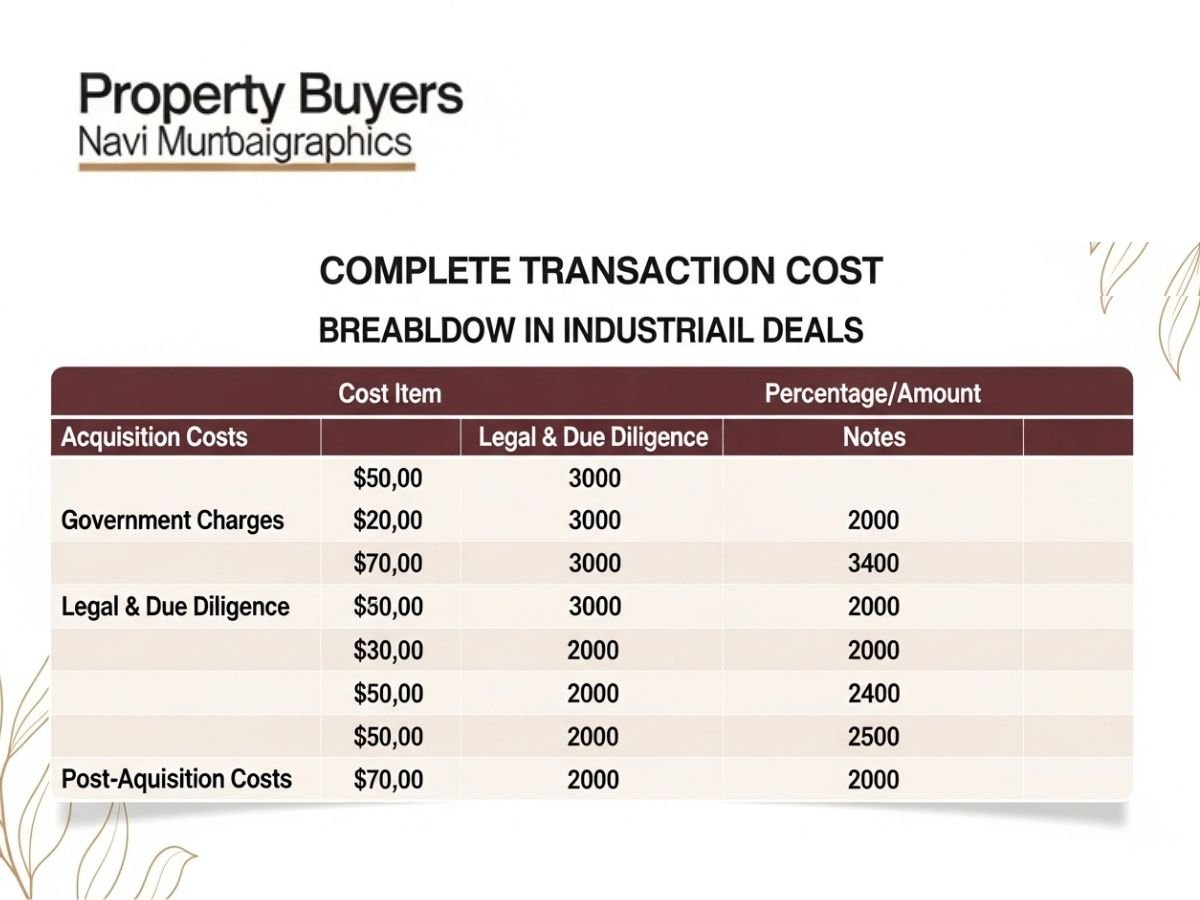
| Cost Head | When it applies | Fixed or variable | Who usually pays | Why buyers miss it |
|---|---|---|---|---|
| Stamp duty | Almost every transfer document | Variable | Buyer | People calculate on quoted price only |
| Registration fee | At registration | Variable but capped | Buyer | Many still assume uncapped 1% forever |
| CIDCO or MIDC transfer charges / premium | Leasehold or authority-controlled transfer chains | Highly variable | Usually buyer unless negotiated otherwise | Often not shown in early quote |
| GST on under-construction purchase | Buying from developer before OC | Variable | Buyer | Buyers compare it wrongly with resale |
| Legal due diligence and title search | Strongly recommended in all industrial deals | Variable | Buyer | Seen as optional until a title issue appears |
| Drafting, review, document support | Agreement and registration stage | Variable | Usually buyer or shared | Not discussed in broker-level cost sheet |
| Bank processing, valuation, mortgage charges | Financed purchase | Variable | Buyer | Not treated as part of acquisition budget |
| Society / estate / association transfer items | Some built-up industrial units | Variable | Usually buyer | Comes late in the process |
| Regularisation or compliance cost | If structure, title chain, or approvals are not clean | Variable | Depends on deal | Not visible from verbal negotiation |
What counts as “transaction cost” in an industrial purchase in Navi Mumbai?
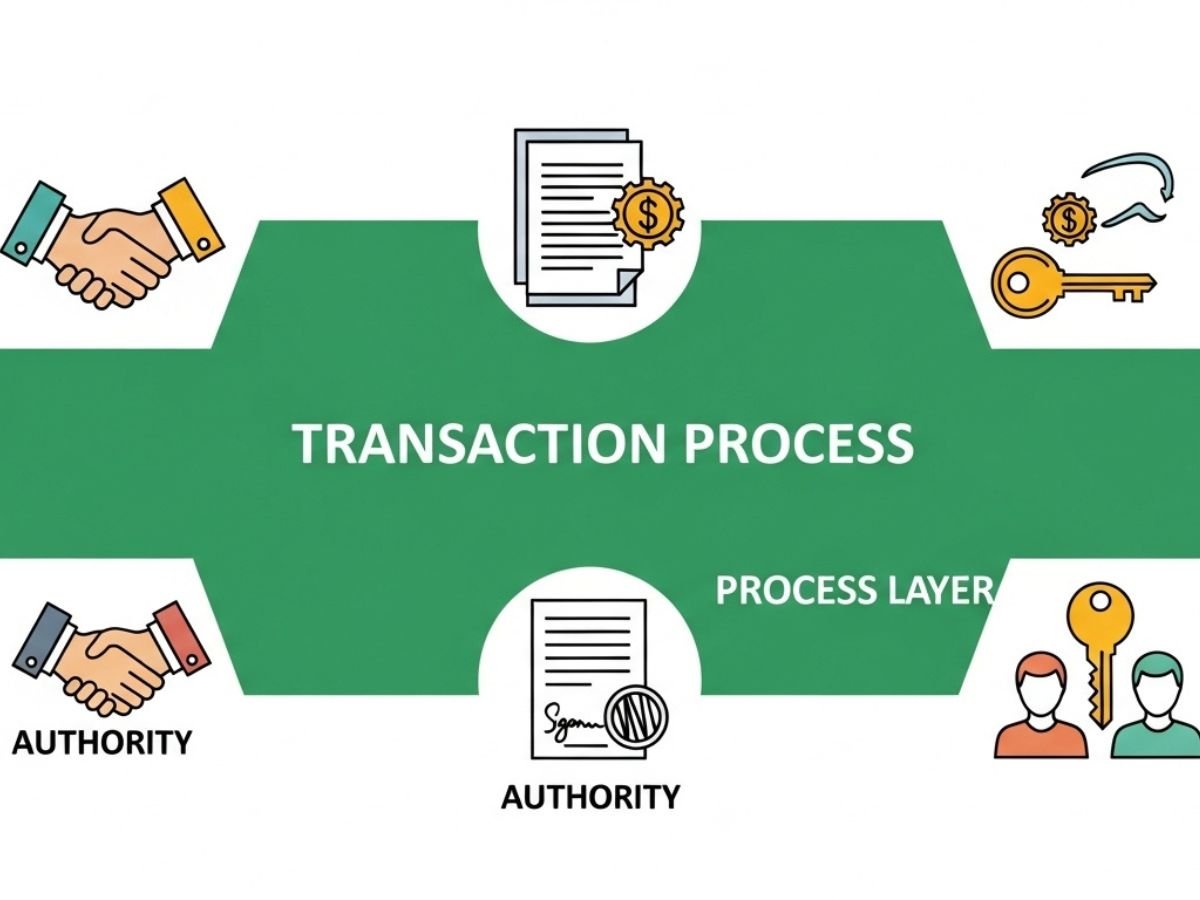
In practical terms, transaction cost means every rupee you need to spend to complete the deal and make the asset usable, transferable, and financeable. For industrial property in Navi Mumbai, that cost stack is wider than most buyers expect.
The first layer is statutory. This includes stamp duty and registration fee under the Maharashtra registration and stamp framework. The second layer is local authority or title-structure cost. This is where MIDC and CIDCO change the game. A simple freehold-style conveyance and a lease assignment are not the same transaction in real life, even if a broker casually calls both a “sale”.
The third layer is process cost. That includes title search, Index II and document checks, drafting, review, and sometimes adjudication or correction work. The fourth layer is finance-linked cost like bank valuation, processing charges, mortgage documentation, and related outgo.
That is the real budget frame. If you only count stamp duty and registration fee, you are not doing industrial cost planning. You are just counting the most visible part of the bill.
What will you usually pay first: stamp duty, registration fee, or something else?
In a clean freehold-style deal, buyers usually think the core payment stage is stamp duty and registration. In Navi Mumbai industrial property, that is often incomplete logic.
Stamp duty
For industrial conveyance or assignment-type transfers, buyers usually need to first understand the dutiable value. In Maharashtra, duty is generally computed on the higher of the agreement value or the market value under the ready reckoner framework. In municipal influence areas, that effective burden is commonly read as 6% for a standard male purchase, with a 1% concession pattern for eligible female ownership structures where applicable.
But do not hardcode that blindly into every deal. The exact result still depends on the instrument and the official calculator inputs.
Registration fee
Registration fee is separate from stamp duty. Many buyers still budget a raw 1% line item and stop there. That is not a safe method. The published fee table works on an ad valorem basis for instruments such as conveyance and transfer of lease by way of assignment, but the fee is also subject to the published cap structure. In many industrial deals above the threshold, the registration fee hits the cap and stops there.
That changes cost planning materially for larger deals.
Why the payable amount is not decided by the quoted price alone
Because the government does not simply accept verbal deal value as the final valuation base. If the eASR or valuation logic produces a higher market value than your negotiated number, the duty math shifts upward.
And in Navi Mumbai, one more layer matters even before that. In CIDCO- or MIDC-linked transfers, authority charges, NOC-linked amounts, or differential premiums may need to be dealt with before the registration stage becomes possible. So the real answer is this: in industrial property, you may have to solve the authority and title chain first, then the state tax payment, then the registration.
Why two industrial deals at the same quoted price can still have different registration outgo
Because the cost is driven by structure, not just the headline number.
Two units may both be quoted at ₹4 crore. One may be a completed resale shed in Taloja with a lower dutiable base because of the condition and valuation logic. Another may be a better-built unit in a stronger pocket where the government valuation comes higher. The buyer of the second asset may pay more stamp duty even though the negotiated price is the same.
The same problem appears in another way when you compare a resale unit with an under-construction unit. A completed resale asset does not carry the same GST burden as a developer sale before Occupancy Certificate. So two deals with the same base price can produce very different total acquisition cost.
Another difference comes from title nature. A rare clean conveyance of a freehold-like asset and a transfer of lease by assignment may both look like “purchase” in ordinary speech. But one can trigger authority-level permissions and transfer charges while the other may not.
That is the local trap. Buyers compare property price. The real cost difference usually sits in valuation base, document type, and authority chain.
Which document type changes the cost most in Navi Mumbai industrial deals?
This is where many industrial buyers make their biggest mistake. They allow broker language to replace document reality.
Straight sale / conveyance
If the asset is being transferred through a straight conveyance structure, the cost logic is relatively cleaner. Stamp duty and registration fee apply on the dutiable value, and the title transfer is document-led without the same leasehold complexity.
These deals are simpler to model.
Agreement to sale in an under-construction deal
If you are buying an under-construction industrial or industrial-commercial unit from a developer, your cost stack changes. The buyer must not assume the bill is only stamp duty plus registration. GST enters the picture before completion. Brochure-level price comparisons become misleading here.
This is common where buyers compare a ready gala with a newly launched industrial park unit and think both are similar because the “base rate” looks close.
Transfer or assignment of lease
This is the major industrial confusion point in Navi Mumbai. In MIDC and CIDCO ecosystems, what is being transferred is often not absolute land ownership in a simple freehold sense. It is leasehold rights or benefits under an authority-governed structure.
The stamp framework may still treat conveyance and transfer of lease by assignment on a similar ad valorem basis for registration fee purposes, but the business reality is completely different because authority approval, NOC, transfer charges, differential premium, or additional premium may come into play.
Resale of completed industrial unit
A completed resale gala or shed may look easy, but the real answer depends on title history. Is it inside a society-style industrial estate? Is it on authority land? Is there a previous lease chain? Is there a pending regularisation issue? Is there a separate lessor permission requirement?
That is why completed resale is not always the “simple” option people imagine.
Document type comparison that changes the bill
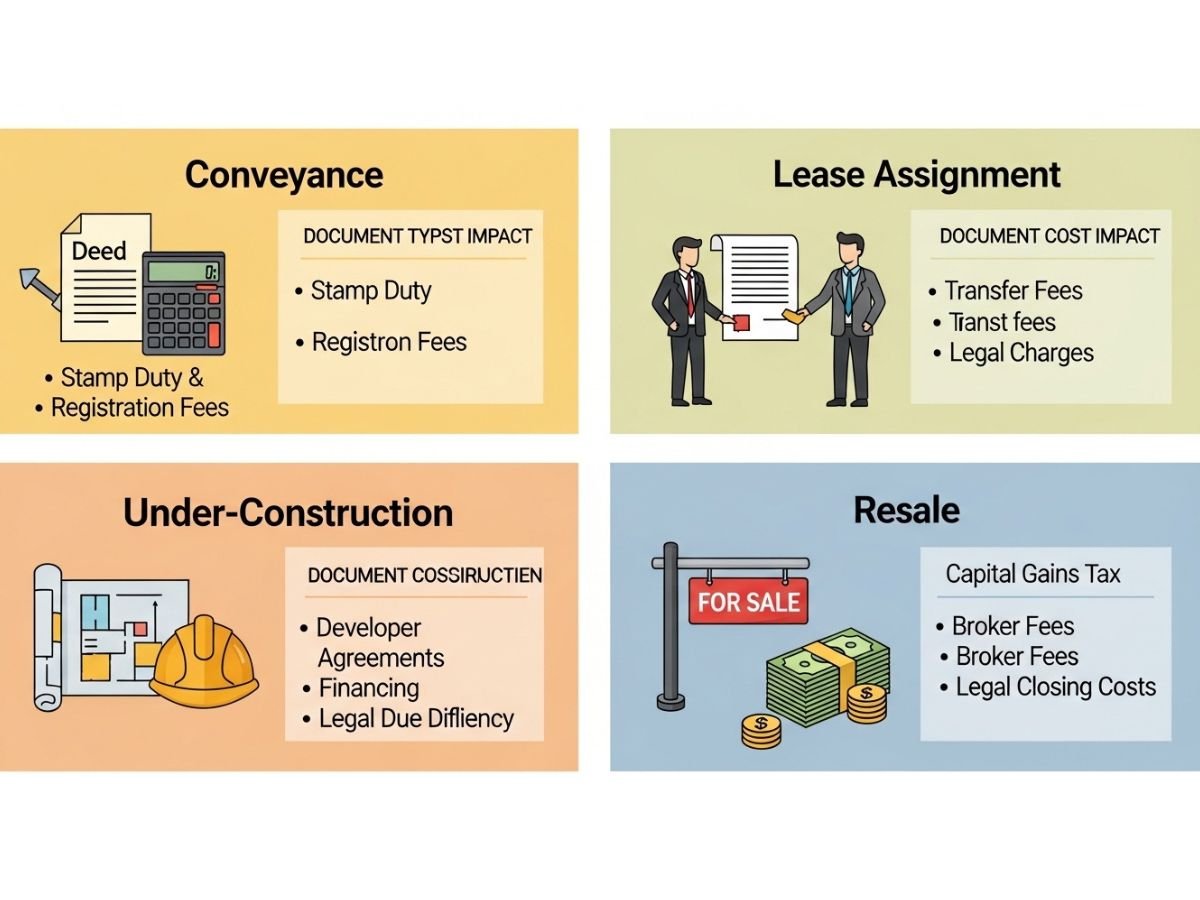
| Deal structure | Typical cost pattern | Main caution |
|---|---|---|
| Straight conveyance / sale | Stamp duty + registration + due diligence | Still check whether market value exceeds agreement value |
| Under-construction agreement | Stamp duty + registration + GST + project-stage risk checks | Do not compare brochure price with resale price blindly |
| Transfer of lease by assignment | Stamp duty + registration + authority NOC + transfer / premium layers | Biggest source of late cost shock |
| Resale completed industrial unit | May look cleaner, but depends on title chain and lessor structure | Completed does not always mean free from authority cost |
| CIDCO-linked transfer | Can attract transfer charges, additional premium, permission issues | Ask whether freehold conversion is actually completed |
| MIDC plot / shed transfer | Differential premium, ULC-linked or delay-linked cost may arise | Open plots can become far costlier than expected |
How CIDCO-linked and leasehold industrial property can change the total budget
This is the most Navi Mumbai-specific part of the answer.
Many industrial buyers still approach these deals with residential logic. That does not work here. In large parts of Navi Mumbai and nearby industrial belts, the governing authority remains central to the transfer structure. CIDCO’s estate and town services side itself makes clear that transfer charges, additional premium, lease-condition compliance, NOCs, and property transfers are real administrative layers, not optional side issues.
So if the property sits in a CIDCO-linked chain, ask a direct question early: has the property formally completed any required freehold conversion process, or is it still moving through a leasehold transfer framework?
That one answer can change your budget dramatically.
The same caution applies in MIDC territory. A plot with low FSI consumption, unresolved time-extension issues, or old ULC-linked history can produce transfer-stage demands that a first-time buyer never budgeted for. This is why industrial land that looks cheap in Taloja, Dronagiri, or Panvel-side stretches sometimes remains cheap. The discount is not always market inefficiency. Sometimes the hidden cost is sitting in the title and authority chain.
Local caution
In Navi Mumbai industrial property, the most dangerous sentence in a broker pitch is: “Sir, normal registration hi hai.” Sometimes it is. Often it is not. Always verify whether the deal is a conveyance, a lease assignment, or an authority-controlled transfer before paying token.
How to estimate the likely stamp duty and registration amount before paying token
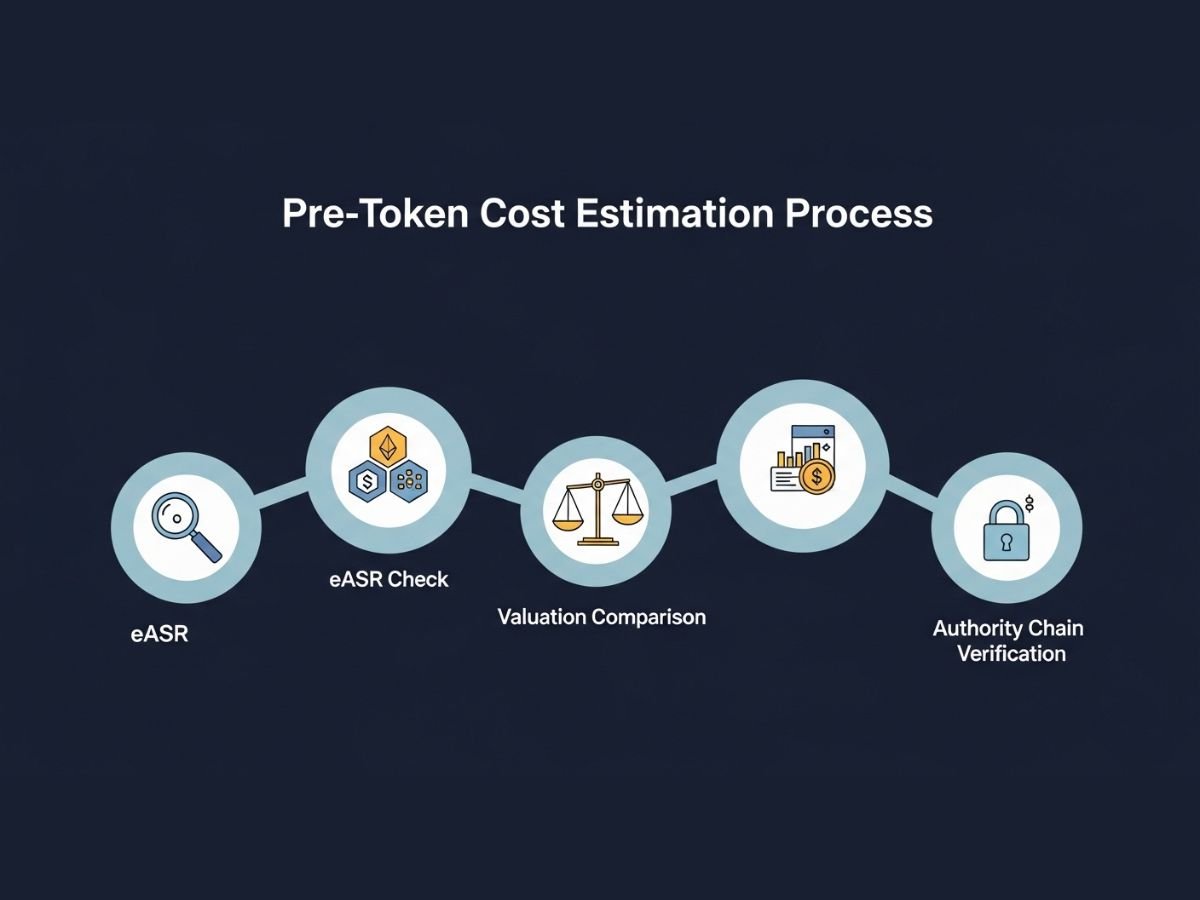
Use a pre-token workflow, not guesswork.
First, identify the asset correctly. Open plot, industrial gala, shed, warehouse unit, or industrial-commercial built-up unit are not always valued the same way.
Second, check the exact valuation geography in the Maharashtra eASR system. The district, taluka, village, zone, and property description must be correct. A wrong category or wrong micro-location can produce a wrong estimate.
Third, compare the agreement value with the government-side valuation logic. The higher value usually drives the duty base.
Fourth, identify the correct document type. This is not a drafting detail. It changes the process logic.
Fifth, check whether the property is inside a CIDCO or MIDC transfer chain. The IGR portal is excellent for state-side workflow such as ready reckoner, stamp duty calculator, PDE, payment, and registration path. But it does not automatically solve your authority premium problem.
Sixth, do not ignore title verification tools. The official workflow itself points users toward free and paid eSearch paths, including Index II and title-search support. For industrial property, that is not optional homework. That is cost protection.
What costs are commonly missed in industrial deals even when buyers budget for stamp duty
The biggest missed costs are not always taxes. They are the costs that appear after emotional commitment but before clean transfer.
Legal due diligence is the first one. In Navi Mumbai industrial transactions, especially old sheds, MIDC plots, CIDCO-linked assets, and transfer chains with multiple previous parties, title review is not a cosmetic exercise. It is often where the real risk is discovered.
Drafting and review is the second. A badly framed assignment deed or weak cost-sharing clause can push transfer-stage burdens onto the buyer later.
Authority-side transfer costs are the third and most serious. Differential premium, transfer charges, additional premium, time-extension penalty, or regularisation-linked cost can distort the final bill.
Then come bank-side charges, valuation fees, mortgage documentation, industrial association or estate transfer fees, and document retrieval costs. If the property has unauthorized mezzanine work, structural changes, or incomplete compliance, the correction cost can also enter the transaction.
One important practical point also needs updating: many people still repeat that 18% GST applies on assignment of long-term leasehold rights. As per the current Bombay High Court position, that interpretation has been struck down, and buyers should not casually carry old GST assumptions into secondary lease assignment math. Still, because tax litigation can evolve, serious buyers should have their tax advisor review the live position in larger transactions.
What documents should be ready before registration day
By registration day, the file should already be clean. Do not treat the Sub-Registrar visit as the stage where missing issues get solved.
At a practical level, the buyer should have:
- the final original deed in the correct document structure
- stamp duty and registration fee payment proof
- identity and PAN details of the parties
- witness details and their availability
- authority NOC or permission where the transfer chain requires it
- company authorisations if buyer or seller is an entity
- any property-specific supporting papers relevant to the asset class
For industrial deals, the important local rule is this: if the transaction depends on MIDC or CIDCO approval, do not assume registration can move cleanly without that layer being in place.
What buyers of under-construction industrial units should additionally check
Under-construction industrial and industrial-commercial units need a different kind of caution.
Check whether the project is registered where applicable. MahaRERA’s platform is useful here because it allows buyers to verify project details, promoter details, updates, and project status trails. It also gives a way to see whether the project is registered, updated, delayed, lapsed, or otherwise problematic.
Then check the pricing logic carefully. A brochure base number can feel attractive, but under-construction cost planning must account for GST, stage-based payment structure, timeline risk, and the possibility that the marketed figure is not the real acquisition number.
This matters in Panvel-side and emerging industrial clusters where buyers compare project-stage units with older ready stock and assume the accounting is similar. It is not.
Three practical Navi Mumbai examples that show how the final bill changes

Example 1: Resale industrial gala in a CIDCO-linked belt
Suppose a buyer negotiates a resale industrial gala at ₹2.5 crore. On paper, the buyer expects only stamp duty and registration. But the title sits inside a CIDCO-linked transfer chain and the seller has not resolved the relevant transfer stage properly. Now the buyer may face authority-side transfer or permission costs in addition to the state-side registration outgo.
Same gala, same price, but totally different closing experience.
Example 2: Industrial shed where market value is higher than negotiated value
A buyer negotiates an older shed in TTC or Taloja at ₹5 crore because the structure looks dated. But if the government valuation logic pushes the dutiable figure higher, the stamp duty math is done on that higher number, not on the emotional success of the negotiation.
The buyer thinks he saved money in negotiation. Registration math says otherwise.
Example 3: Under-construction industrial-commercial unit in Panvel-side belt
A buyer books a unit at ₹1 crore and mentally budgets stamp duty and registration only. Later, GST and project-stage payment reality change the total outgo. The base quote felt manageable. The actual capital requirement becomes much heavier.
This is why under-construction comparison based on only “rate per sq.ft.” is weak cost planning.
Who should be extra careful with transaction-cost math before buying?
Some buyers can absorb surprises. Many cannot.
Investors chasing yield should be very careful because even one unplanned authority premium can ruin the return math. Owner-users with tight capex must be even more careful because banks may finance the main purchase but may not comfortably fund every transfer-side burden. First-time industrial buyers face the highest confusion risk because they often rely on residential-style assumptions.
And anyone entering a CIDCO or MIDC chain should assume that authority structure matters until proven otherwise.
Conclusion
Industrial stamp duty, registration and transaction costs in Navi Mumbai cannot be understood through a generic Maharashtra property article. The real question is not “What is stamp duty?” The real question is “What is my full acquisition cost in this exact deal structure?”
That answer changes with the document, the valuation base, and the authority chain.
Before token, verify the asset type, eASR value, and whether the transaction is a clean conveyance or a lease assignment. Before agreement, check title history, authority permissions, and hidden transfer-side cost. Before registration, make sure the deed, payment trail, IDs, witnesses, and required NOCs are fully lined up.
If you remember only one line from this article, remember this: in Navi Mumbai industrial property, quoted price is almost never the final acquisition cost.