

Is Mahape a Good Real Estate Investment? 2026 Prices, ROI & Expert View
Mahape can be a good real estate investment in 2026, but mainly for commercial offices, industrial units, warehouses, IT/ITES spaces, and rental-income-focused buyers. It is not the strongest choice for pure family residential investment. For residential buyers, nearby Ghansoli, Kopar Khairane, Airoli, and Vashi usually offer better social infrastructure, station access, and resale comfort. In Mahape, ROI depends heavily on asset type, legal use, tenant demand, access, building condition, and exit liquidity.
Is Mahape a Good Real Estate Investment in 2026?
Mahape is not a normal residential market. It is an employment-led real estate market inside Navi Mumbai’s TTC-MIDC industrial and technology corridor. Its value comes from business activity, office demand, industrial operations, technical companies, warehouses, and the daily working population around Millennium Business Park, Mahape MIDC, Electronic Zone, and nearby Thane-Belapur Road.
So the correct answer is not simply “yes” or “no”.
Mahape is good for investors who understand commercial and industrial property. It can work well for someone buying a pre-leased office, an industrial gala for own business use, a warehouse with proper access, or a commercial unit with verified tenant demand.
But Mahape is only selective for residential flat investment. If the buyer wants peaceful family living, schools, large residential societies, malls, good station-side convenience, and stronger resale demand, then Ghansoli, Kopar Khairane, Airoli, Nerul, Seawoods, or Vashi may make more sense depending on budget.
In simple words, Mahape rewards practical investors. It does not reward blind investors.
Quick Summary: Who Should Invest in Mahape and Who Should Avoid It?
| Investor Type | Mahape Suitability | Best Asset Type | Main Caution |
|---|---|---|---|
| Small business owner | Good | Industrial gala, office, warehouse | Check permitted use, power load, road access, and NMMC dues |
| Commercial investor | Good | Pre-leased office, IT space, B2B office | Net yield may reduce after tax, maintenance, vacancy, and transfer costs |
| Industrial occupier | Good | MIDC unit, workshop, light industrial space | Check MIDC approvals, MPCB category, floor loading, and truck movement |
| Rental income investor | Selective to good | Office, warehouse, staff-linked rental asset | Tenant quality and vacancy risk matter |
| Family flat buyer | Selective | Residential property in nearby nodes | Core Mahape may lack lifestyle comfort compared with Ghansoli or Airoli |
| Short-term speculator | Weak | Usually not recommended | Transfer premium, tax dues, and narrow buyer pool can hurt exit |
| Long-term Navi Mumbai investor | Good if asset is right | Business-use asset with legal clarity | Must buy with 5 to 10 year view, not short-term hype |
Why Mahape’s Real Estate Market Works Differently from Pure Residential Nodes
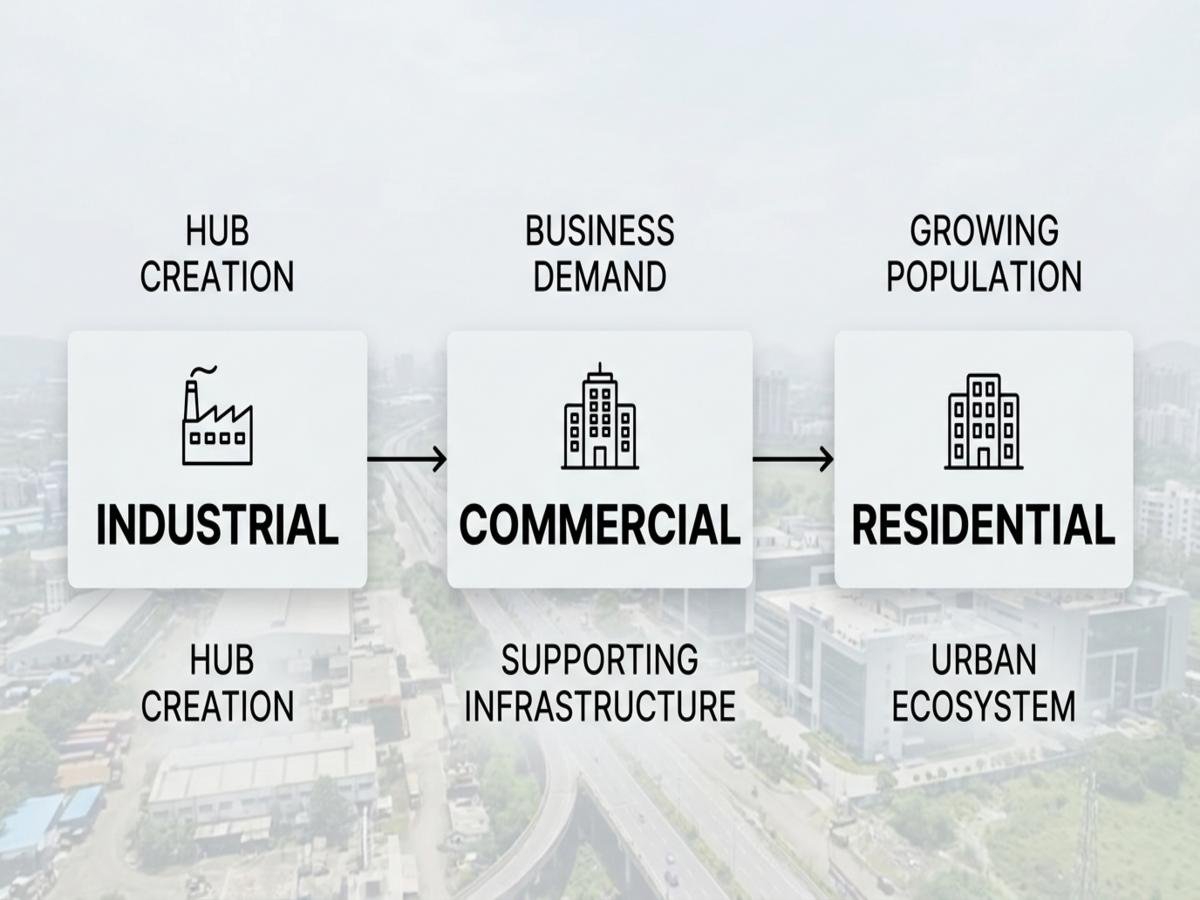
Mahape works differently because it is not built around residential lifestyle first. It is built around business activity. The area is part of the wider Trans Thane Creek industrial belt and is connected with Mahape MIDC, Millennium Business Park, Electronic Zone, Rabale, Ghansoli, Pawane, Turbhe, and Thane-Belapur Road.
This changes the investment logic completely.
In a residential node like Ghansoli or Airoli, a buyer may look at society quality, schools, station access, markets, hospitals, parks, and family convenience. In Mahape, a serious investor must look at different things: sanctioned use, floor loading, power availability, truck access, tenant type, drainage, parking, property tax clearance, and MIDC transfer conditions.
That is why two properties with the same square feet in Mahape can have completely different investment value.
A well-maintained office in Millennium Business Park may attract IT, B2B, consulting, support-service, or back-office tenants. An old industrial gala in a poor-access pocket may look cheap on paper but may struggle with vacancy, repairs, compliance, or resale.
Mahape Is Stronger as a Work Zone Than a Family-Living Zone
Mahape has strong employment demand because thousands of people work around offices, industrial units, warehouses, manufacturing setups, technical service businesses, and support operations. This gives the area strong daytime activity and business-linked rental demand.
But that does not automatically make it a strong family-living market.
Many people working in Mahape prefer living in Ghansoli, Kopar Khairane, Airoli, Vashi, or Rabale because these areas offer better railway access, food options, schools, supermarkets, clinics, and proper residential supply. This is the biggest difference many first-time investors miss.
Mahape creates residential demand, but a large part of that demand gets absorbed by nearby nodes.
Residential Demand Near Mahape Often Spills into Ghansoli, Kopar Khairane and Airoli
For someone working in Mahape, living near Ghansoli station or Kopar Khairane can feel more practical than living inside an industrial pocket. Daily food, transport, schools, medical access, auto availability, and society environment matter in real life.
This is why residential investors should not look only at Mahape’s lower entry price. A low price does not always mean higher appreciation. It may simply reflect weaker lifestyle demand.
For rental housing, Ghansoli and Kopar Khairane often benefit from Mahape’s workforce because they offer a more balanced residential environment. Airoli also works well for people who want stronger corporate connectivity and better residential comfort.
What Type of Property Gives Better ROI in Mahape?
The best ROI in Mahape usually comes from commercial, IT/ITES, industrial, warehouse, and business-use assets. Residential flats can work, but they need a different lens and should not be judged with the same expectation as office or industrial property.
Commercial offices in Millennium Business Park and nearby premium business spaces may command stronger rental demand if the building is maintained, legally clear, and suitable for corporate tenants. Indicative commercial office capital values in MBP-type spaces can range around ₹15,000 to ₹20,590 per sq ft on carpet basis, while standard rentals may fall around ₹70 to ₹95 per sq ft per month. Premium buildings and better-grade spaces can command higher rentals, sometimes around ₹85 to ₹140 per sq ft per month depending on building, fit-out, location, and tenant profile.
Industrial buildings and factories in Mahape MIDC may show lower capital values, commonly around ₹11,000 to ₹16,000 per sq ft on built-up basis in market references. Their rent may be around ₹40 to ₹60 per sq ft per month depending on access, floor, loading capacity, building condition, and use permission.
Residential apartments in core or peripheral Mahape are much lower in pricing compared with Ghansoli or Kopar Khairane. Indicative residential values around Mahape may fall near ₹4,796 to ₹7,247 per sq ft in some market references, while Ghansoli and Kopar Khairane can command much higher rates. This difference itself proves that the market values Mahape more as a work zone than as a premium residential node.
Commercial and Industrial Assets Usually Fit Mahape Better
Mahape’s strongest investment case is business utility. A unit that helps a company operate smoothly will always have better practical demand than a unit that only looks cheap.
For commercial and industrial property, investors should check whether the space has proper road approach, power load, parking, loading/unloading access, legal permitted use, drainage condition, and enough demand from the right tenant category.
A ground-floor industrial unit may be valuable if it supports loading, machinery, storage, or service operations. But if that same unit is in a waterlogging-prone pocket, the rent and resale value can suffer. Similarly, an upper-floor gala may avoid flooding but may be weak for heavy machinery if freight lift access and floor loading are poor.
This is why Mahape investment is not just about location. It is about workflow.
Residential Flats Can Work, But Usually Need a Different Lens
Residential investment in Mahape is not automatically bad. It can work for budget-conscious buyers, staff accommodation, rental demand from nearby workers, or buyers who specifically need proximity to Mahape MIDC and MBP.
But for pure appreciation and family living, the buyer must compare nearby options first.
A family that can stretch the budget may prefer Ghansoli because it has stronger residential character and better daily convenience. Kopar Khairane may work well for balanced pricing and connectivity. Airoli may appeal to corporate employees and families who want better planned residential surroundings.
So, if someone asks, “Should I buy a flat in Mahape only because it is cheaper?” the answer is: not without comparing the full lifestyle and resale value of nearby nodes.
Mahape Property Prices in 2026: What Should Buyers Understand Before Comparing Rates?
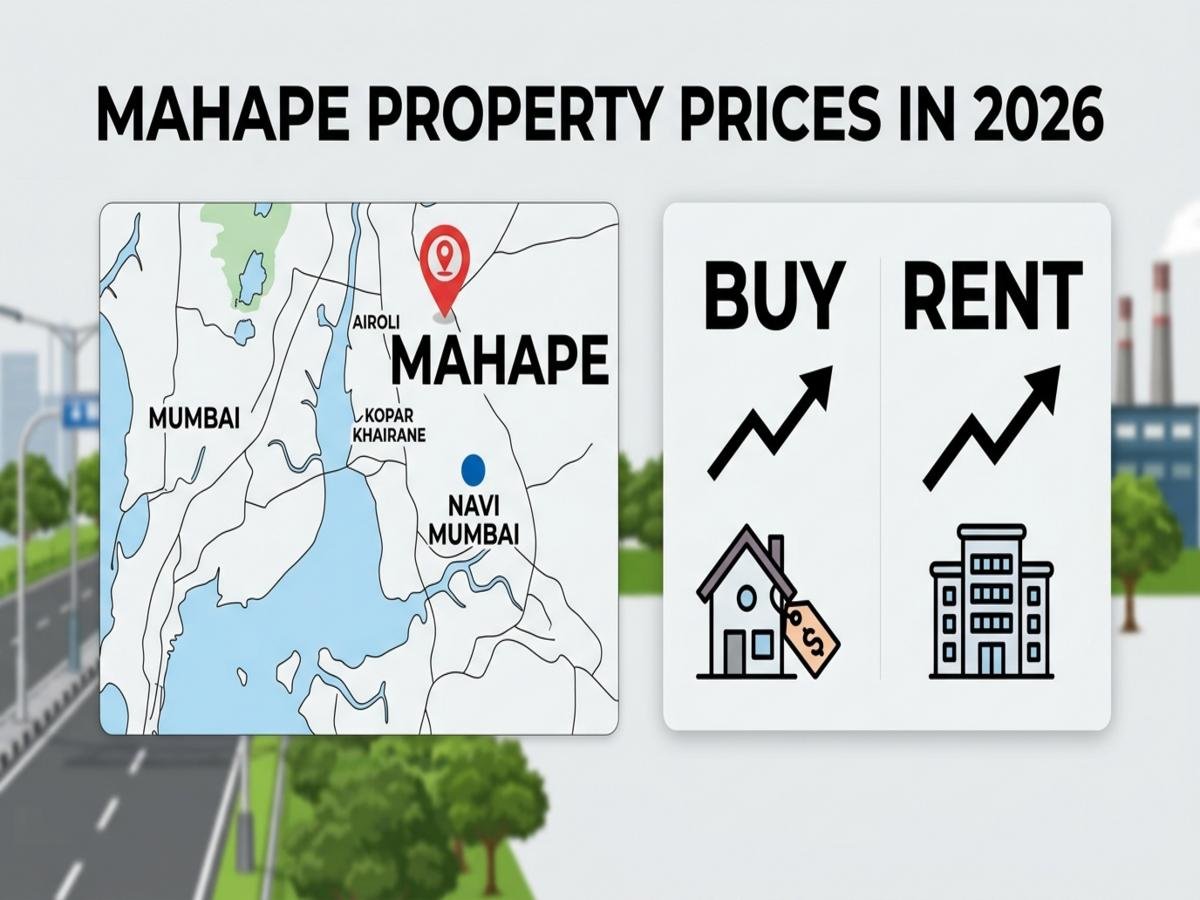
Mahape property prices are difficult to compare because different asset classes use different pricing logic. A commercial office may be quoted on carpet area. An industrial unit may be quoted on built-up or super built-up area. A residential flat may have a completely different buyer base. A plot or industrial land parcel may include MIDC leasehold conditions, transfer premiums, and approval-related costs.
This is where many buyers make expensive mistakes.
A ₹11,000 per sq ft industrial unit and a ₹18,000 per sq ft commercial office are not directly comparable. The office may have better carpet efficiency, corporate tenant demand, better maintenance, and easier leasing. The industrial unit may offer bigger space but may also carry compliance checks, higher maintenance, transfer costs, and operational limitations.
A cheap rate in Mahape can hide several issues:
- poor road approach
- weak parking
- old structure
- unclear permitted use
- pending NMMC property tax
- waterlogging risk
- low floor loading
- difficult MIDC transfer
- weak tenant demand
- poor exit liquidity
The correct question is not, “What is the lowest rate in Mahape?” The correct question is, “What is the real usable value of this asset after legal, tax, maintenance, tenant, and resale checks?”
Why Per-Sq-Ft Prices Can Mislead in Mahape
Per-sq-ft pricing is useful only when the comparison is fair. In Mahape, many comparisons are not fair.
A Grade-A office in a better business building near MBP cannot be compared with an old industrial gala in an interior MIDC pocket. A road-facing unit with proper loading access cannot be compared with an upper-floor unit without freight-friendly movement. A legally clear space with paid taxes cannot be compared with a property carrying old dues.
MIDC transfer premium can also change the real acquisition cost. In many MIDC leasehold transactions, transfer of rights may require a formal NOC and differential premium. In certain cases, built plots with consumed FSI may attract a lower percentage than large open plots, while special cases such as ULC-exempted land may carry additional costs for redevelopment or change of purpose.
The point is simple: the buying price is not the final cost.
Residential Price Comparison Should Include Nearby Nodes
Residential investors should compare Mahape with Ghansoli, Kopar Khairane, Airoli, Rabale, and Vashi before making a decision. Mahape’s lower residential rates may look attractive, but lower rates exist for a reason.
Ghansoli has stronger residential demand and better station-side convenience. Kopar Khairane offers a mature residential environment with good connectivity. Airoli has better corporate-residential balance. Rabale may work for tighter budgets and industrial workforce housing. Vashi is more established and premium, but prices are much higher.
For residential buyers, Mahape should be judged as a budget and proximity-led choice, not as the top lifestyle investment node of Navi Mumbai.
What Rental Yield Can Mahape Investors Realistically Expect?
Mahape can offer better rental yield than many residential markets, especially in commercial and industrial assets. But investors must separate gross yield from net yield.
Gross yield is simple. If a property is bought for ₹1.5 crore and earns ₹85,000 monthly rent, the annual rent is ₹10.2 lakh. That gives a gross yield of around 6.8 percent before expenses.
But this is not the money finally left in the investor’s hand.
Net yield reduces after NMMC property tax, maintenance, vacancy period, broker commission, repairs, society or common area charges, fit-out costs, and possible transfer-related cost recovery. A commercial asset showing 6.5 percent to 8 percent gross yield may settle much lower after real expenses.
In Mahape and the TTC industrial belt, commercial and industrial gross yields may often look attractive compared with residential yields. Some commercial cases may fall in the 6 percent to 11 percent gross range depending on asset, tenant, and purchase price. Residential yields are usually lower and may remain closer to the typical 2 percent to 4 percent range in many Navi Mumbai residential markets.
But yield without legal clarity is dangerous.
A property with a strong tenant but unresolved tax dues or wrong permitted use can become a headache. A warehouse with good rent but poor monsoon performance can lose both tenant and reputation. A high-rent office in an aging building can suffer if maintenance is weak.
Mahape’s Rental Demand Is Linked to Jobs, Not Luxury Lifestyle
Mahape’s rental demand comes from office employees, technical workers, business owners, small companies, warehouse operators, service vendors, IT support firms, and industrial users. This demand is practical, not lifestyle-driven.
A tenant in Mahape usually asks:
- Can my staff reach easily?
- Is the road approach workable?
- Is the building safe and functional?
- Is power supply suitable?
- Is internet and telecom connectivity reliable?
- Is parking available?
- Is the use legally allowed?
- Will monsoon disturb operations?
For commercial and industrial tenants, these questions matter more than decorative amenities.
Net ROI Can Reduce After Vacancy, Maintenance and Brokerage
Mahape investors must budget for vacancy. Commercial and industrial spaces may take longer to lease than small residential flats because the tenant pool is narrower.
If a residential flat is vacant, the next tenant may be a family, bachelor group, or working professional. But if an industrial unit is vacant, the next tenant must match the property’s use, size, access, compliance, power requirement, and rent expectation.
That is why a high rental quote is not enough. The investor must ask how easily the property can be re-leased if the current tenant leaves.
Is Mahape Better for Short-Term ROI or Long-Term Holding?
Mahape is better suited for long-term holding than short-term flipping. This is especially true for MIDC leasehold, commercial, and industrial assets.
Short-term flipping needs easy entry, low transaction friction, fast resale, and broad buyer demand. Mahape does not always offer that. The buyer pool is more specialized. Transfers may require formal authority processes. NMMC dues, MIDC transfer premium, tax clearances, lease conditions, and permitted-use checks can slow down resale.
For a serious investor, Mahape works better when the plan is to hold the asset, earn rent, maintain legal compliance, and benefit from gradual business-led appreciation.
Short-Term Flipping Is Not the Cleanest Strategy in Mahape
Short-term speculation in Mahape can go wrong if the investor buys only because the rate looks low. A low-cost property may remain stuck if the next buyer finds tax arrears, unclear permissions, weak access, or a narrow tenant base.
Industrial and commercial resale is not as emotionally driven as residential resale. A family may buy a flat because they like a view, society, or school access. A business buyer will calculate utility, compliance, cost, and risk. Sentiment plays a smaller role.
That makes short-term exit more difficult.
Long-Term Holding Can Work If the Asset Has Business Utility
Long-term holding can work well when the property has clear use. A pre-leased office, a well-located industrial unit, a warehouse with good loading access, or a legally compliant commercial space can generate steady income.
Future infrastructure such as the Ghansoli-Airoli Palm Beach Road extension may also improve movement around this belt over time. But investors should not buy only because of a future project. The asset must make sense today also.
A good Mahape investment should pass three tests: 1. Can the next tenant use it comfortably? 2. Can the next buyer transfer it without major legal or authority friction? 3. Can a lender or serious buyer accept the paperwork?
If the answer is weak, exit liquidity may be weak.
Mahape vs Nearby Areas: Where Does It Stand for Real Estate Investment?
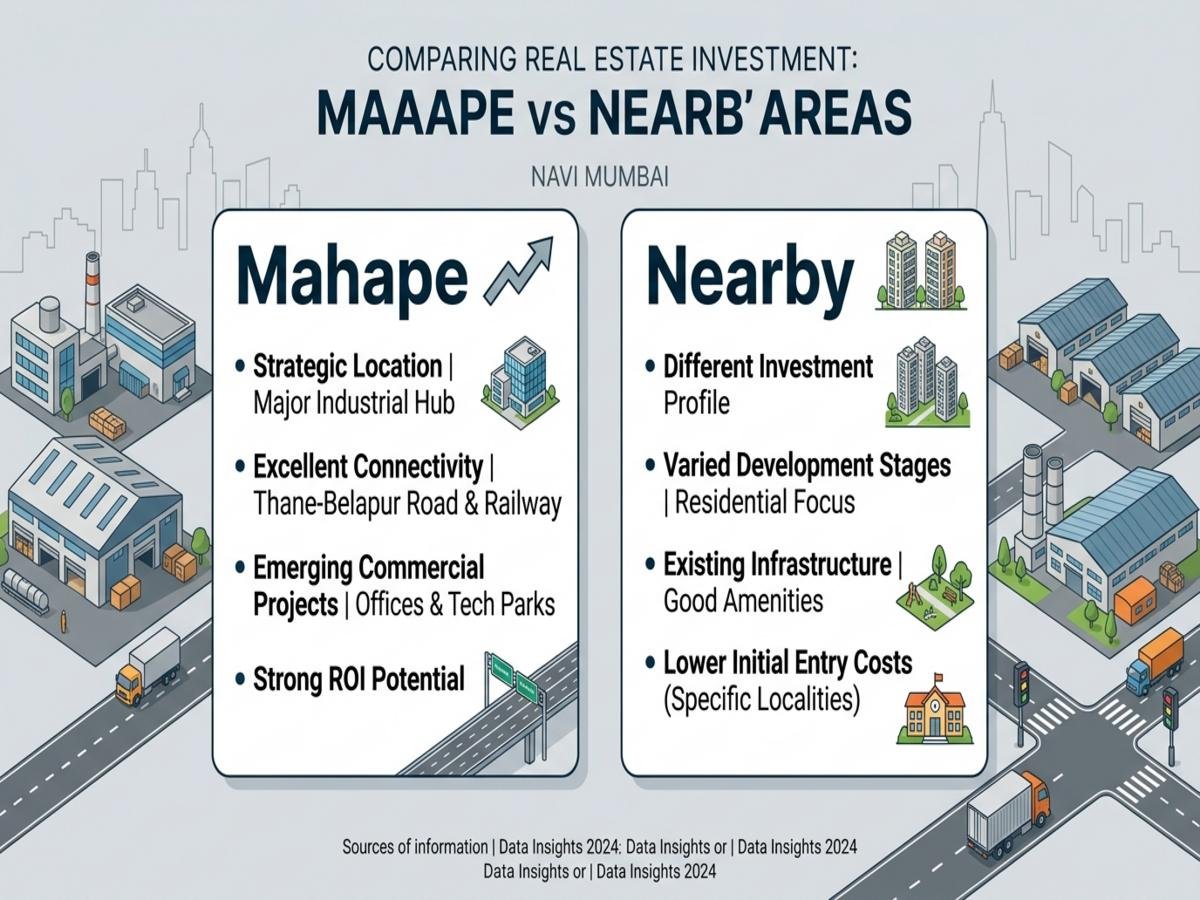
Mahape is stronger for business-use property. Nearby nodes are often stronger for residential investment.
Compared with Ghansoli, Mahape has better industrial and business utility, but Ghansoli is far better for residential living and rental housing. Ghansoli has stronger railway access, better social infrastructure, and more family-focused housing demand.
Compared with Airoli, Mahape is more of a functional workhorse. Airoli has a stronger corporate-residential mix and better perception for office campuses and residential living. Mahape may offer more practical B2B and industrial options at different ticket sizes.
Compared with Rabale and Pawane, Mahape is cleaner and more suitable for electronics, IT support, light industrial, backend office, and front-office-linked industrial activity. Rabale may suit heavier engineering and fabrication users. Pawane may suit logistics, chemical-linked, cold storage, and bulk-use occupiers depending on permissions and asset condition.
Compared with Vashi, Mahape is not a premium residential or retail lifestyle market. Vashi is mature, expensive, and better for established residential and commercial visibility. Mahape is more about function and rental utility.
For residential investors, the smarter strategy may be to invest near Mahape, not necessarily inside Mahape.
What Are the Biggest Risks in Mahape Real Estate Investment?
The biggest risks in Mahape are not lack of demand. The bigger risks are legal friction, tax dues, wrong asset selection, monsoon disruption, narrow resale liquidity, and mismatch between actual use and permitted use.
One serious local issue is property tax liability. NMMC has the right to collect property tax from TTC-MIDC units, and recent recovery action has made this issue impossible to ignore. If an investor buys a property without checking tax dues, old liabilities can damage the deal.
Another issue is monsoon performance. Certain low-lying industrial pockets and ground-floor units can face waterlogging during heavy rains, especially where natural drains are blocked or local drainage capacity is weak. This does not mean the whole of Mahape is bad. It means the exact pocket and building level matter.
Land-use and industrial permission also matter. An industrial-zoned property cannot be casually used as any type of retail, office, storage, food, chemical, or manufacturing activity without checking approvals. MPCB category, MIDC permitted use, fire safety, power load, and building approval should be checked before buying or leasing.
Legal Use Matters More Than Brochure Language
In Mahape, brochure language is less important than sanctioned use.
A seller may call a property “commercial suitable” or “office suitable”, but the buyer must check whether the land use, building approval, and permitted activity actually support that use. MIDC leasehold terms, NOC requirements, DCPR provisions, MPCB categorization, NMMC tax clearance, and building plan approvals can all affect the final value.
MahaRERA is relevant only where the property is part of a registered real estate project. It is not the only check for resale, industrial, or MIDC leasehold assets.
Exit Liquidity Should Be Checked Before Purchase
Before buying any property in Mahape, ask one uncomfortable question: who will buy this from me later?
If the answer is unclear, be careful.
A good exit market exists when the next buyer can understand the asset, finance it, use it, transfer it, and lease it without fear. If the property has old dues, unclear title, wrong use, poor access, or a difficult transfer process, the buyer pool becomes small.
This is where many investors make mistakes. They check entry price but ignore exit reality.
What Should You Check Before Buying Property in Mahape?
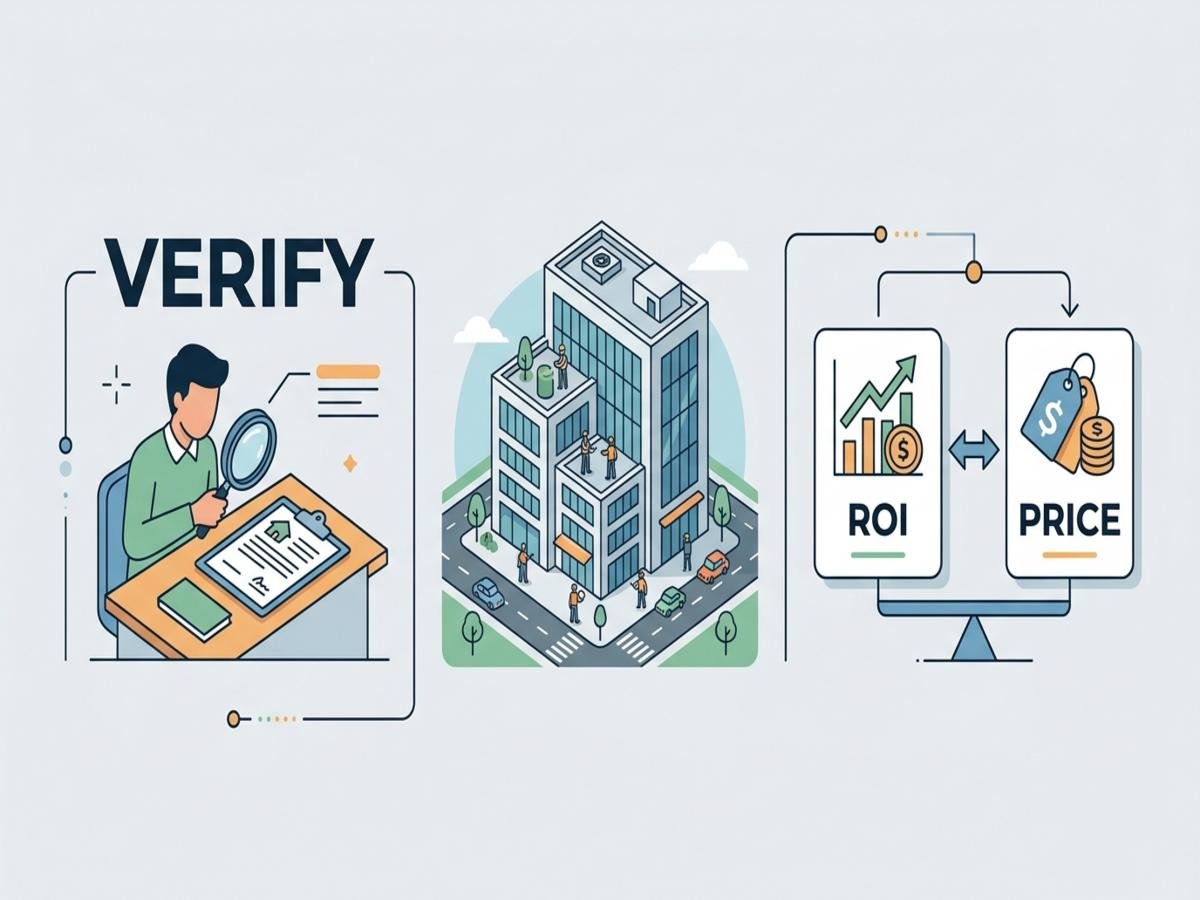
Before paying token amount for property in Mahape, the buyer should do a proper local due diligence check. This is even more important for MIDC, industrial, commercial, and pre-leased properties.
| Check | Why It Matters in Mahape |
|---|---|
| Title and ownership documents | Confirms whether the seller has valid rights to transfer the property |
| MIDC leasehold status and transfer process | Many assets are not simple freehold-style transactions |
| NMMC property tax clearance | Prevents the buyer from inheriting old dues or recovery risk |
| MIDC transfer premium responsibility | Buyer and seller must clearly decide who pays the applicable premium |
| Approved building plan and sanctioned use | Confirms whether actual use matches approved use |
| MahaRERA status, if applicable | Relevant for registered real estate projects, not every resale or industrial asset |
| MPCB category and consent requirements | Important for industrial tenants and permitted activities |
| OC/CC or completion-related documents | Helps verify legal building status |
| Power load and water supply | Critical for industrial and technical operations |
| Road width and truck access | Directly affects warehouse and industrial usability |
| Parking and loading/unloading space | Affects tenant demand and daily operations |
| Floor loading and freight lift access | Very important for upper-floor industrial galas |
| Monsoon and drainage condition | Ground-floor units in weak pockets can face operational losses |
| Existing tenant agreement | Needed for pre-leased investment and rent continuity |
| Market rent from local brokers | Helps avoid overestimating rental income |
| Resale demand in the exact pocket | Protects against illiquid assets |
This checklist should be completed before the deal, not after registration.
Expert View: Is Mahape a Buy, Hold or Avoid Market?
Mahape is a “buy” market only when the property has clear business utility, legal clarity, and realistic rental demand. It is a “hold” market for existing owners who already have usable commercial or industrial assets and can manage compliance. It is an “avoid” market for buyers who are entering blindly because someone said “Mahape will grow”.
Buy Mahape if the property is a pre-leased office in a good business building, an industrial unit with proper permissions, or a warehouse with strong access and no tax/legal surprises.
Hold Mahape if the asset is already functional, legally clean, and located in a business-relevant pocket. Owners of older industrial properties should review maintenance, lease conditions, tax status, and tenant quality before deciding to sell.
Avoid Mahape if the asset has unclear MIDC transfer conditions, pending NMMC dues, waterlogging exposure, poor access, weak structure, wrong use, or no clear future buyer profile.
Buy If the Property Has Clear Tenant or Business Use
The best Mahape properties are not always the most beautiful. They are the ones that solve a real business problem.
A good asset may have:
- stable tenant demand
- clean tax records
- proper permitted use
- workable road access
- reliable power and water
- strong building maintenance
- realistic rent
- clear transfer process
If these factors are present, Mahape can be a strong investment location.
Avoid If the Only Reason Is “Mahape Will Grow”
“Mahape will grow” is not a complete investment thesis.
Growth only helps if the exact property is useful, legal, rentable, and saleable. A poor-quality unit in a weak pocket will not automatically become a great investment just because Navi Mumbai is growing.
This is especially true for residential buyers. If the purpose is family living and long-term residential appreciation, Mahape should be compared honestly with Ghansoli, Kopar Khairane, Airoli, and Vashi.
Final Verdict: Should You Invest in Mahape Real Estate in 2026?
Mahape is a good real estate investment in 2026 for selected commercial, industrial, office, warehouse, and rental-income assets. It is not the best universal investment location for every buyer.
For business owners, Mahape can offer strong operational value. For commercial investors, it can offer attractive gross yields if the property is legally clear and tenant-ready. For residential buyers, Mahape is more selective, and nearby nodes often provide better lifestyle and resale comfort.
The best way to invest in Mahape is to avoid hype and check the asset properly. Look at entry price, net yield, tax dues, MIDC transfer costs, permitted use, monsoon risk, tenant demand, and exit liquidity.
If the property passes these checks, Mahape can be a practical and income-focused investment. If it fails them, even a cheap deal can become expensive.
FAQs
Frequently Asked Questions