

Gurudwara Baba Jorawar Singh Baba Kamothe – Timings, Langar, History & Samagam
Yet the story of this Gurudwara is not as simple as it appears. Over the past few years it has unexpectedly found itself at the center of conversations, searches, and even controversy. People began asking questions. Why was it closed for so long? What exactly happened behind the scenes? And what does the future look like for the community connected to it?
This article explores the full picture. The location, the history tied to Sikh heritage, the internal conflict that shook the institution, and the efforts to rebuild trust again. Because sometimes a place of worship reflects the story of an entire neighborhood. And in Kamothe, this Gurudwara has certainly done that.
Quick Summary Table
| Gurudwara Baba Jorawar Singh Baba – Quick Information | |
|---|---|
| Topic | Details |
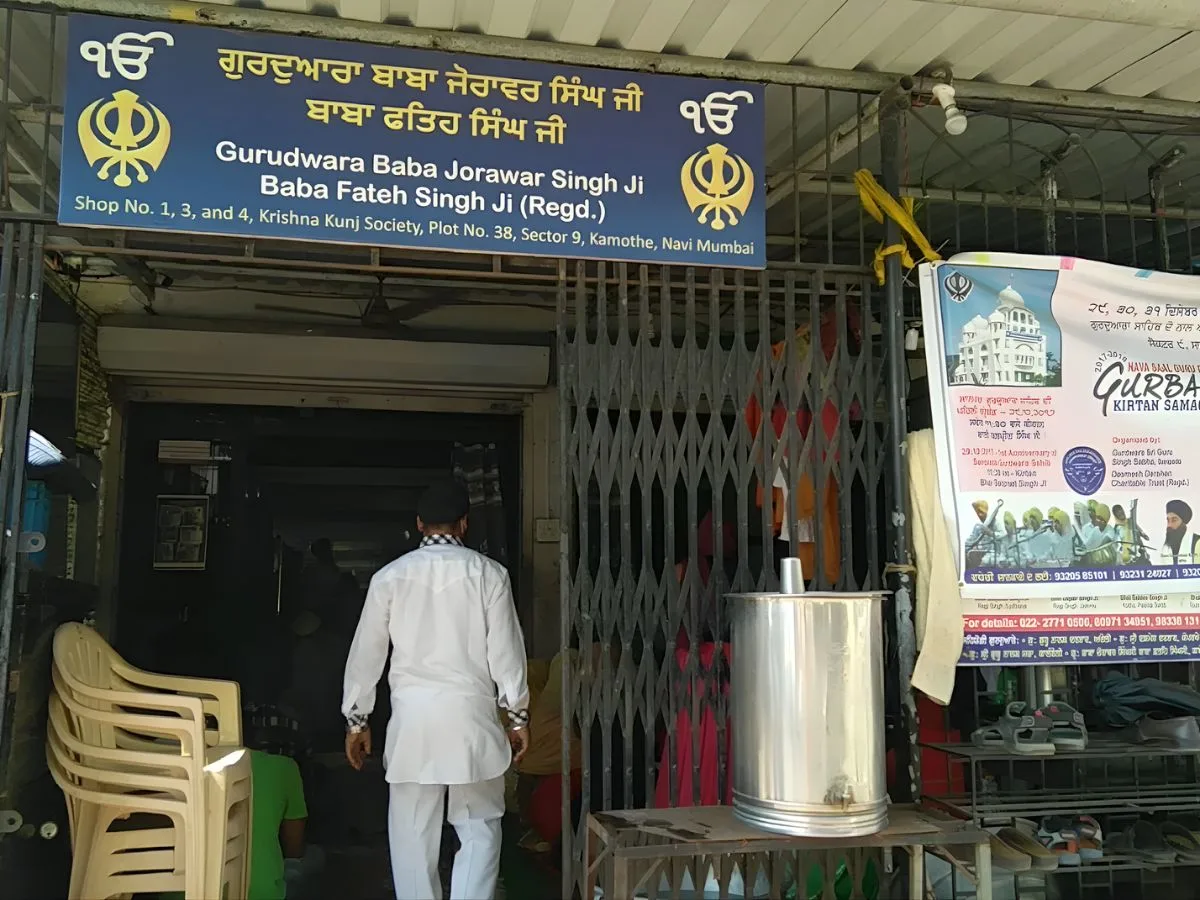
| Name | Gurudwara Baba Jorawar Singh Baba Kamothe |
| Location | Krishna Kunj, Plot No.4, Sector 9 / Sector 11, Kamothe |
| City | Navi Mumbai |
| Authority | Panvel Municipal Corporation |
| Developed By | CIDCO |
| Opening Hours | 4:00 AM – 10:00 PM |
| Nearby Landmark | Panvel–Sion Highway |
| Community | Sikh Sangat of Kamothe & Panvel |
Gurudwara Baba Jorawar Singh Baba Kamothe-Overview
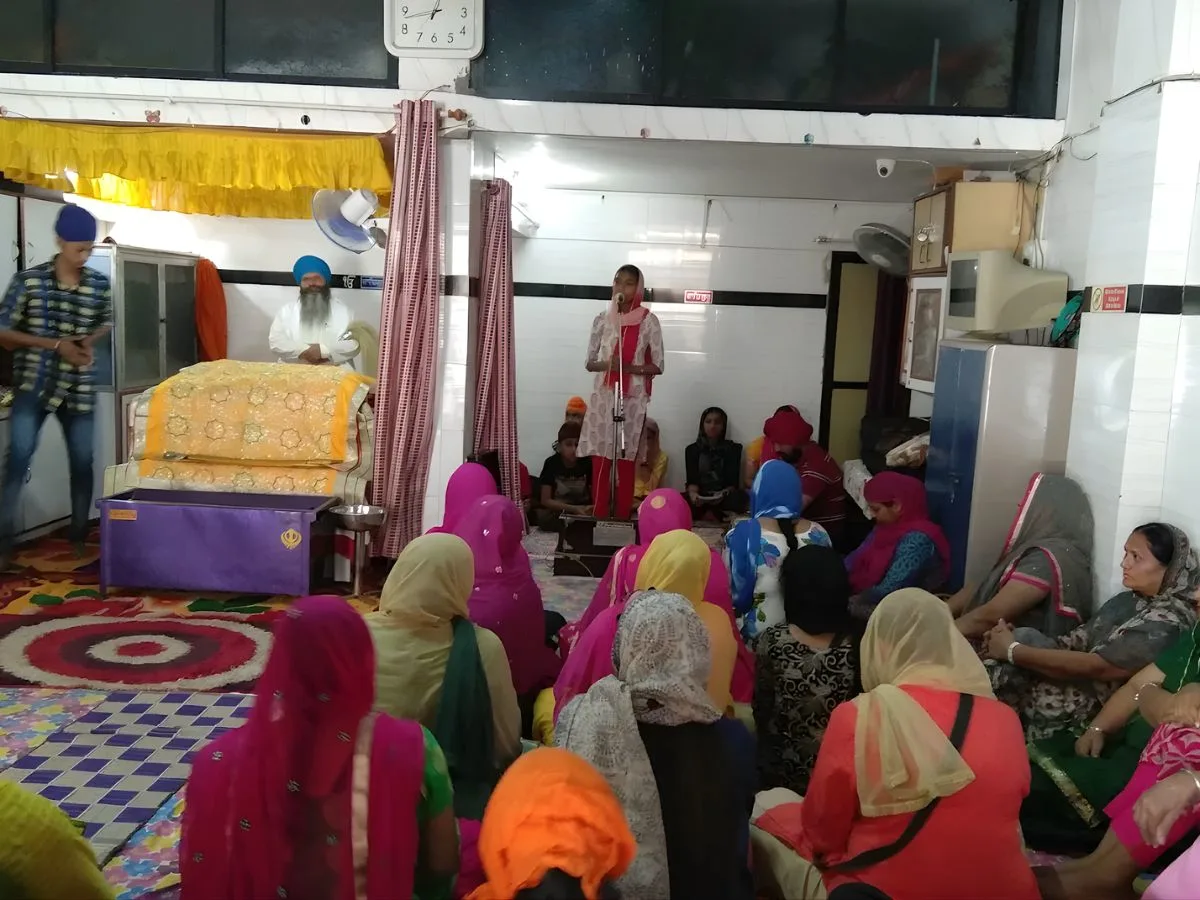
Kamothe is one of those places in Navi Mumbai that never really sleeps. Buildings keep coming up, new families arrive every month, and slowly a small town begins to feel like a full city. In the middle of all that movement stands Gurudwara Baba Jorawar Singh Baba, a place that quietly holds together a big part of the Sikh community living in this area.
If you’ve ever walked through Sector 11 early in the morning, you might have noticed the sound of Gurbani floating softly through the streets. It hits differently. For a moment the noise of traffic disappears. People slow down. Some even stop outside the gate, fold their hands, and continue walking. Small moments like that tell you something important about this Gurudwara. It’s not just a building. It’s part of the daily rhythm of Kamothe.
Where is it Located in Kamothe?
you try searching the address online, something interesting happens. Some listings say Sector 9. OtherIf s say Sector 11. And newcomers often get confused about where exactly the Gurudwara is located. The truth is actually quite simple but typical of Navi Mumbai’s sector planning.
The Gurudwara sits at Krishna Kunj, Plot No.4, right at the junction area where Sector 9 and Sector 11 practically blend into each other. Because of this overlap, directories list both sectors. Locals don’t really debate it though. Ask any rickshaw driver for “Kamothe Gurudwara” and they will drop you right outside the gate without even checking Google Maps.
Location
Another interesting detail many people don’t know is that there is also a listing connected to the Gurudwara in Sector 36, often referred to as Juikamothe. This location lies closer to the main Panvel road and is easier to access for people travelling from the outskirts or from the highway.
This doesn’t necessarily mean two completely separate institutions. In many Sikh communities, multiple facilities operate under the same trust or Sangat network. The Sector 11 site acts as the spiritual hub for nearby residents while the Sector 36 presence helps serve the wider Panvel and Kamothe population that keeps growing every year.
How to reach from Kamothe Gurudwara Baba Jorawar Singh Baba to NMIA
By Car
How to Reach Navi Mumbai International Airport by Car (From Gurudwara Baba Jorawar Singh, Kamothe)
| Step | Instruction | Distance |
|---|---|---|
| 1 | Head east (Restricted usage road) | 1.5 km (5 min) |
| 2 | Turn left at Sunil Hotel | 8 m |
| 3 | Turn right at Rohit Property | 54 m |
| 4 | Turn left at Ramesh Auto Garage (Pass by G.N. Motors) | 750 m |
| 5 | Turn right at Auto Stand onto Kamothe Marg | 230 m |
| 6 | Turn left at Jai Bhagwan Kamothe Taxi Stand | 400 m |
| 7 | Join Bengaluru–Mumbai Highway (NH348A towards Ulwe) | 13.9 km (20 min) |
| 8 | Keep right to take the flyover (Toll Road) | 1.7 km |
| 9 | Take exit toward NH348A | 350 m |
| 10 | Continue straight (Pass by Multi Level Car Parking – MLCP 11) | 1.2 km |
| 11 | Keep right, then keep left | 450 m |
| Destination | Navi Mumbai International Airport, Ulwe | Total ~ 17 km | Approx. 28–30 min |
By Bus
NMMT Bus Routes from Gurudwara Baba Jorawar Singh (Kamothe) to Navi Mumbai International Airport (NMIA)
| Route Option | First Bus | Boarding Stop | Intermediate Stop | Second Bus | Final Bus Stop | Operator | Total Time | Approx. Fare |
|---|---|---|---|---|---|---|---|---|
| Option 1 | 30 | Kamothe Highway | Central Bank C.B.D. | A-3 | NMIAL Terminal 1 | NMMT | 1 hr 12–19 min | ₹43–48 |
| Option 2 | 24AC | Kamothe Highway | C.B.D. Highway | A-3 | NMIAL Terminal 1 | NMMT | 1 hr 29 min | ₹48 |
| Option 3 | 48 | Kamothe Highway | Belapur Railway Station / Bus Depot | A-3 | NMIAL Terminal 1 | NMMT | 1 hr 27 min | ₹43 |
| Option 4 | 49 | Kamothe Highway | Belapur Railway Station / Bus Depot | A-3 | NMIAL Terminal 1 | NMMT | 1 hr 19 min | ₹43 |
| Option 5 | 50 | Kamothe Highway | C.B.D. Belapur / Konkan Bhavan | A-3 | NMIAL Terminal 1 | NMMT | 1 hr 17 min | ₹43 |
How to reach from Gurudwara Baba Jorawar Singh Baba To Khandeshwar Railway station
By Car
| Sr. No. | Transport Mode | Bus No. | Route Name | Starting Point | Destination | Distance | Duration | Via / Route Details | Operator | Fare | Remarks |
|---|---|---|---|---|---|---|---|---|---|---|---|
| 1 | Walking | Not Available | Direct Local Route | Gurudwara Baba Jorawar Singh Baba | Khandeshwar Railway Station (E) | 1.7 km | 25 Minutes | Via Khanda Colony, Hanuman Chauk | — | Free | No bus service mentioned in PDF |
| 2 | Car / Private Vehicle | Not Applicable | Direct Local Road | Gurudwara Baba Jorawar Singh Baba | Khandeshwar Railway Station (E) | 1.8 km | 6 Minutes | Via Greater Khanda Road, Hanuman Chauk | Private | Fuel Cost | No bus service mentioned in PDF |
By Bus
| Sr. No. | Bus No. | Bus Name / Type | Starting Point | Destination | Via / Route Details | Frequency | First Bus | Last Bus | Fare (Approx.) | Operator | Remarks |
|---|---|---|---|---|---|---|---|---|---|---|---|
| 1 | — | — | Gurudwara Baba Jorawar Singh Baba | Khandeshwar Railway Station (E) | No bus route mentioned in provided PDF | — | — | — | — | — | Only walking route available (1.7 km, ~25 mins) |
How to reach from Kamothe Gurudwara Baba Jorawar Singh Baba to Bus Depot
By Car
| Sr. No. | Transport Mode | Distance | Estimated Time | Starting Point | Destination | Main Route / Turns | Via Road | Landmarks Passed | Remarks |
|---|---|---|---|---|---|---|---|---|---|
| 1 | Car | 1.4 km | 5 Minutes | Gurudwara Baba Jorawar Singh Baba | Kamothe ST Stand | Sunil Hotel → Rohit Property → Ramesh Auto Garage → Auto Stand → Jai Bhagwan Kamothe Taxi Stand | Kamothe Marg | K.G.N Motors, Savita Enterprises | Shortest & fastest route |
| 2 | Car | 1.4 km | 8 Minutes | Gurudwara Baba Jorawar Singh Baba | Kamothe ST Stand | Sunil Hotel → Rohit Property → Bajrang Sweets → SG Food Zone → Auto Stand → Jai Bhagwan Kamothe Taxi Stand | Kamothe Marg | Sanjoo Decorators, Gourajyam A2 Milk, Janaushadhi Kendra | Alternate route |
By Bus
| Sr. No. | Bus No. | Route / Destination | Operator | No. of Stops | Fare | Approx. Total Time | First Boarding Point | Final Destination | Additional Info |
|---|---|---|---|---|---|---|---|---|---|
| 1 | 50 | Ghansoli Village | NMMT | 2 Stops | ₹7.00 | 16 Minutes | Near Gurudwara (Kamothe Village Stop) | Kamothe ST Stand | Service run by NMMT |
| 2 | 58 | Belapur Railway Station | NMMT | 2 Stops | ₹7.00 | 17 Minutes | Near Gurudwara (Kamothe Highway Stop) | Kamothe ST Stand | Service run by NMMT |
| 3 | A-53 | Ghatkopar Bus Station | BEST | Non-stop (1 min shown) | ₹12.00 | Approx. 17 Minutes | Nearby Stop (Stop ID: 11134) | Kamothe ST Stand | BEST Helpline: 1800 22 7550 |
| 4 | — | Walking Route | — | — | Free | 20 Minutes (1.4 km) | Gurudwara Baba Jorawar Singh Baba | Kamothe ST Stand | No bus required |
How to reach from Kamothe Gurudwara Baba Jorawar Singh Baba to CSMIA
By Car
| Sr. No. | Transport Mode | Route Option | Total Distance | Estimated Time | Major Highways / Roads | Toll Road | Starting Point | Destination | Remarks |
|---|---|---|---|---|---|---|---|---|---|
| 1 | Car | Via Atal Setu | 55.3 km | 1 hr 21 min | NH 548 → NH 348 → Atal Setu → Eastern Freeway → NH 48 | Yes | Gurudwara Baba Jorawar Singh Baba | Chhatrapati Shivaji Maharaj International Airport | Longer distance, express highway route |
| 2 | Car | Via Mumbai–Pune Highway | 37.1 km | 1 hr 21 min | Mumbai–Pune Hwy → Sion–Panvel Hwy → Thane Creek Bridge → Ghatkopar–Mankhurd Link Rd → NH 48 | Yes | Gurudwara Baba Jorawar Singh Baba | Chhatrapati Shivaji Maharaj International Airport | Shorter distance highway route |
By Bus
| Sr. | Bus No / Service | Operator | Bus Type | From | To | Stops | Duration | Interchange | Total Travel Time | Approx Cost |
|---|---|---|---|---|---|---|---|---|---|---|
| 1 | A-53 | BEST | City Bus | Kalamboli Colony | Ghatkopar Bus Station | 30 | 1 hr 21 min | A-507 → Line 3 Metro | 2 hr 22 min | ₹85 |
| 2 | A-507 | BEST | City Bus | Ghatkopar | Santacruz Station (E) | 19 | 32 min | Metro Line 3 (Aarey JVLR) | Included Above | Included |
| 3 | 24AC | NMMT | AC City Bus | Kamothe Highway | Chendani Koliwada (CIDCO) | 9 | 30 min | C-505 → Metro Line 3 | 2 hr 25 min | ₹75 |
| 4 | C-505 | BEST | City Bus | Chendani Koliwada | Santacruz Depot | 36 | 1 hr 24 min | Metro Line 3 | Included Above | Included |
| 5 | 312 | BEST | City Bus | BKC Telephone Exchange | Marol Depot | 19 | 29 min | Via Kurla (Train Route) | 2 hr 5 min | Rail + Bus Fare |
| 6 | 255 LTD | BEST | Limited Bus | J.V.P.D Bus Station | Dharavi Flyover | 11 | 16 min | Metro Line 3 | 2 hr 1 min | Rail + Bus Fare |
| 7 | Anand Travels | Anand Travels | Non AC Sleeper (2+1) | Kalamboli | Vile Parle East | 9 | 55 min | Walk to Airport | 1 hr 23 min | Private Fare |
| 8 | Dolphin Travel House | Dolphin Travel House | Bharat Benz AC Sleeper (2+1) | Panvel | Vile Parle East | 11 | 1 hr 10 min | Walk to Airport | 1 hr 37 min | Private Fare |
Timings, Daily Routine, and the Flow of a Normal Day
Visiting Gurudwara Baba Jorawar Singh Baba early in the morning is a completely different experience than walking past it in the afternoon. The Gurudwara opens around 4:00 AM, when the first soft rays of sun touch Kamothe’s quiet streets. At this hour, you’ll see a few early risers, elders, and volunteers quietly sweeping the courtyard or arranging the prayer hall. There’s a sense of calm purpose in every movement, a rhythm that feels almost meditative.
As the day progresses, more devotees arrive. Morning prayers and Nitnem are recited, with children softly following along while older members chant in unison. Around mid-morning, preparations for langar begin. Volunteers chop vegetables, knead dough, and heat large pots. By noon, the community gathers to sit together and share the meal, everyone on the same floor, no distinctions, just a shared sense of togetherness. Evenings bring another wave of visitors—professionals returning from work, families stopping by after errands, and students seeking a quiet space to reflect. Through all of this, the Gurudwara maintains a steady flow, balancing spiritual practice with community life in a way that feels both natural and deeply rooted in Sikh tradition.
What Happens Inside the Gurudwara
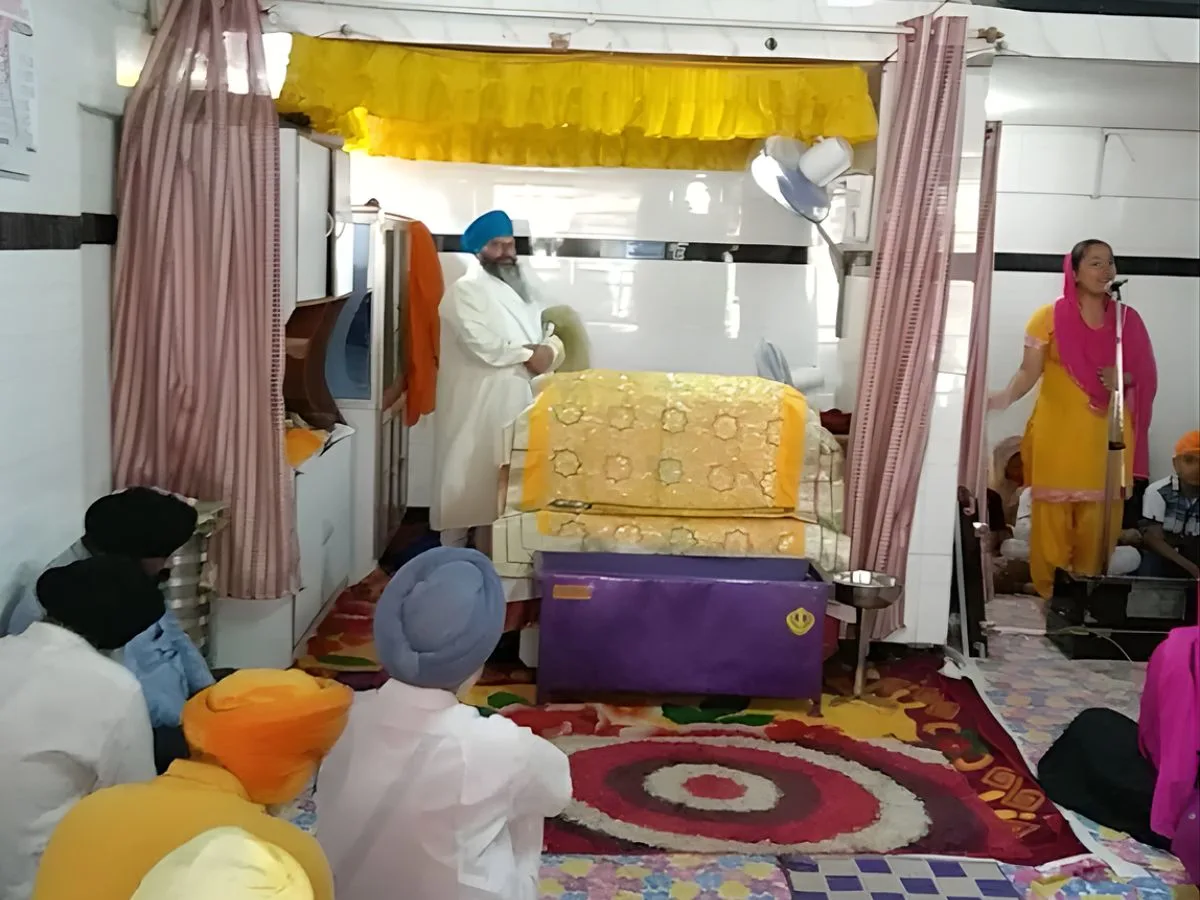
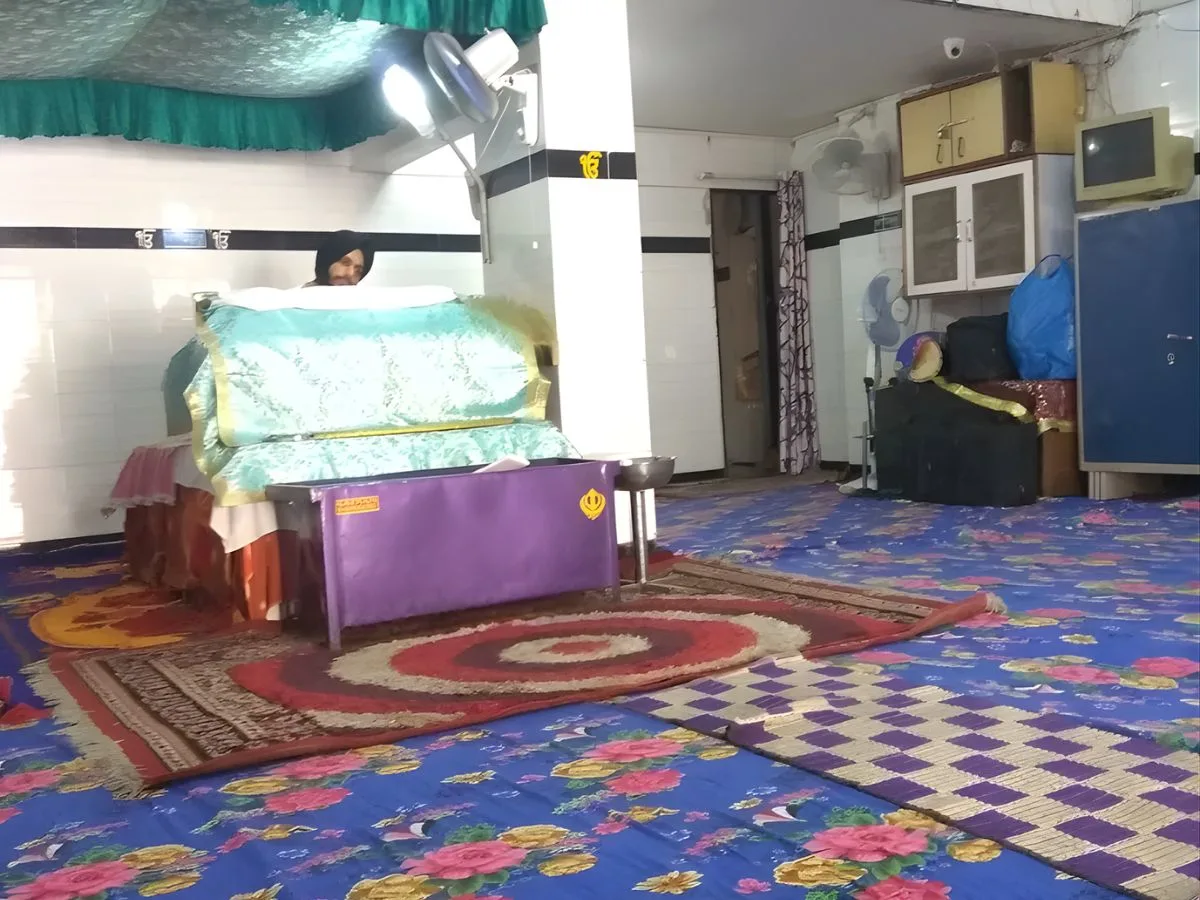
Stepping inside Gurudwara Baba Jorawar Singh Baba is like entering a small universe of devotion and community. The first thing you notice is the Darbar Sahib, where the Guru Granth Sahib sits elevated on a beautifully decorated platform. People gather quietly, removing their shoes, covering their heads, and settling in for prayer. There’s a sense of respect in the air, but also warmth—elders nod to newcomers, children move freely, and volunteers quietly guide everyone.
Meanwhile, in the Langar Hall, a different kind of devotion takes shape. Large vessels bubble with food prepared entirely by volunteers, who work without expecting anything in return. Meals are served to anyone who comes, Sikh or not, emphasizing the core principle of equality. Festivals like Gurpurab and Vaisakhi transform the Gurudwara even further—decorations, music, and collective prayers fill every corner, while community members come together to manage seating, food, and the logistics of hundreds of devotees. Every day is a balance of spiritual practice, social service, and maintaining the rhythm that has kept this Gurudwara at the heart of Kamothe’s Sikh community.
The Visitor Experience
Visiting Gurudwara Baba Jorawar Singh Baba is not just about seeing a building—it’s about feeling the pulse of the community. As you walk through the gates, the noise of Kamothe’s busy streets fades, replaced by the soft hum of prayers and the subtle aroma of simmering langar. There’s a calmness that instantly puts you at ease, whether you’re a first-time visitor or a local coming for routine prayers.
For newcomers, the volunteers are friendly and welcoming. They guide you on where to sit, how to participate in the prayers, and when to join langar. Children run around freely, learning small lessons of seva (selfless service) along the way. Even a brief visit gives a sense of belonging and connection. Many visitors leave with more than spiritual fulfillment—they carry a feeling of community, warmth, and an appreciation for the Gurudwara’s role as a social and cultural anchor in Kamothe.
How the Gurudwara Handles Large Crowds
During festivals like Vaisakhi or major Gurpurab celebrations, Gurudwara Baba Jorawar Singh Baba transforms into a vibrant hub of activity. Hundreds of devotees arrive from Kamothe, Panvel, and nearby nodes, filling the Darbar Sahib, Langar Hall, and surrounding courtyards. Volunteers coordinate meticulously, ensuring smooth movement of people and timely service of food. Every corner of the Gurudwara becomes a coordinated effort of prayer, service, and hospitality.
Outside, traffic management becomes essential. Local residents and volunteers often guide parking along nearby streets, while others help newcomers find seating inside. The Gurudwara’s administration relies heavily on community involvement—without the collective effort of Sangat members, managing these large gatherings would be nearly impossible. Through careful planning, a sense of order emerges even amid the joyful chaos, preserving both safety and the spiritual atmosphere that draws people to this Gurudwara.
Community Services Beyond Prayer
At Gurudwara Baba Jorawar Singh Baba, devotion extends far beyond daily prayers. The Gurudwara has become a hub for social welfare, providing support to families during difficult times, organizing charitable initiatives, and offering guidance for those in need. Volunteers regularly assist elderly members of the community, help distribute essentials during festivals, and maintain a steady flow of food for underprivileged residents in the area.
Education and cultural preservation are also key. Children and youth are encouraged to participate in learning sessions about Sikh history, the teachings of Guru Granth Sahib, and community values. These programs create a space where faith and practical life skills meet, nurturing the next generation of the Kamothe Sangat while fostering a sense of belonging and responsibility among all who visit.
Visitor Etiquette and Protocols
When you step into Gurudwara Baba Jorawar Singh Baba, it’s important to follow a few simple customs that reflect respect for the space and the community. Shoes must be removed before entering, and heads should be covered with a scarf or handkerchief—this applies to everyone, visitors and locals alike. Many first-time visitors are pleasantly surprised by how welcoming volunteers are, guiding you gently through these traditions.
Inside, maintaining a quiet and respectful demeanor is encouraged. Photography is usually restricted in the Darbar Sahib, and mobile phones should be kept on silent. Participating in Langar is not just about eating; it’s about sitting together with others, sharing the meal, and observing the principle of equality. Small gestures—like helping serve food or cleaning up afterward—are seen as acts of Seva, and they deepen the sense of connection with the community while honoring the Gurudwara’s spirit.
Historical Foundations
The roots of Gurudwara Baba Jorawar Singh Baba are deeply tied to the legacy of Baba Zorawar Singh Ji, one of the youngest sons of Guru Gobind Singh Ji. His story of courage, unwavering faith, and ultimate martyrdom alongside his younger brother Baba Fateh Singh Ji during the Mughal persecution is central to the Sikh identity. For the local Kamothe community, this Gurudwara is more than a prayer hall; it is a living monument to values like Chardi Kala (eternal optimism) and righteousness.
The establishment of the Gurudwara in Kamothe coincided with the urban expansion of Navi Mumbai in the early 2000s. As City and Industrial Development Corporation began allocating plots for social and religious facilities, the Sikh community organized to secure land and create a spiritual anchor for families relocating to this developing node. Over time, the Gurudwara grew into a center not only for worship but also for festivals, education, and social supportcementing its role in shaping the cultural fabric of Kamothe.
Trust Registration (December 2004) and the First Formal Step
The journey of Gurudwara Baba Jorawar Singh Baba from a community prayer spot to a formally recognized institution began in December 2004, when the local Sikh families took the important step of registering the Gurudwara as a trust. This move ensured that the Gurudwara could manage land, funds, and community programs in a structured way, providing legal recognition and accountability for its operations.
This formalization also allowed the trust to plan the construction of essential facilities like the Darbar Sahib and the Langar Hall with long-term sustainability in mind. Beyond the physical structures, the registration laid the foundation for governance mechanisms, volunteer coordination, and community engagement programs. It marked the beginning of a phase where devotion, administration, and community service started moving together, ensuring that the Gurudwara could serve generations of the Kamothe Sangat effectively.
CIDCO Plot Journey
The story of Gurudwara Baba Jorawar Singh Baba is closely tied to the urban planning of Kamothe by City and Industrial Development Corporation. In the late 1990s and early 2000s, CIDCO allocated land for social and religious facilities, and the Sikh community successfully secured a plot in Sector 11, which would become the Gurudwara’s primary location. This process was not instantaneous—it required documentation, community consensus, and repeated follow-ups with the authorities to ensure the land was designated correctly for a religious purpose.
Having a dedicated plot meant the Gurudwara could expand thoughtfully. The trust developed the site to include the Darbar Sahib, Langar Hall, and areas for community events, all while adhering to CIDCO’s regulations. This plot became the spiritual heart of Kamothe’s Sikh community, symbolizing both foresight and perseverance. It also laid the groundwork for handling future challenges, from municipal transitions to the pressures of a rapidly growing residential area.
Funding the Land (Early 2009) and the Power of Collective Support
Acquiring the CIDCO plot was only the first step; securing the funds to officially purchase and develop it was the next big challenge for Gurudwara Baba Jorawar Singh Baba. In early 2009, the local Sikh families came together in a remarkable display of community solidarity. Every family, regardless of size or income, contributed what they could. Some gave cash, others helped in-kind with construction support, organizing events, or managing paperwork.
This phase was about more than money. It demonstrated the collective spirit of the Kamothe Sangat, where each contribution was a personal investment in preserving faith and heritage. By pooling resources, the community not only met the financial requirements but also strengthened bonds, creating a sense of ownership that continues to shape the Gurudwara’s culture today. Even now, visitors can sense this shared effort in the warmth of the volunteers and the pride evident in every aspect of the Gurudwara.
Plot Possession (April 2009) and the Design Phase
By April 2009, the Gurudwara trust officially took possession of the CIDCO plot in Sector 11, marking a pivotal moment for Gurudwara Baba Jorawar Singh Baba. What was once just a piece of land now held the promise of a spiritual home for Kamothe’s Sikh community. The excitement among locals was palpable—people would visit the site daily, watching the empty plot transform into a vision of devotion and service.
The design phase balanced tradition with practicality. The Darbar Sahib was planned as the spiritual core, while the Langar Hall and community spaces were designed to handle large gatherings. Architects and volunteers worked closely with the trust to ensure that the space could support daily prayers, festivals, and social services. Even small details, like the flow of foot traffic and accessibility for elders and children, were considered—highlighting how deeply the community cared about creating a functional, welcoming, and spiritually resonant environment
Construction Timeline (2009 to 2013) and Key Milestones
The construction of Gurudwara Baba Jorawar Singh Baba was a gradual journey, spanning from 2009 to 2013, filled with both excitement and challenges. Early phases focused on laying a strong foundation and erecting the walls of the Darbar Sahib, ensuring that the central prayer hall could accommodate daily congregations as well as festival crowds. Volunteers frequently visited the site, helping coordinate labor, sourcing materials, and overseeing quality, giving the project a uniquely communal touch.
By 2011, attention shifted to the Langar Hall and auxiliary spaces—kitchens, storage, and areas for children’s activities. Each milestone, from installing the Guru Granth Sahib’s platform to setting up the community kitchen, was celebrated with small ceremonies, reinforcing the emotional investment of the local Sangat. By 2013, the Gurudwara was not just physically ready but had become a symbol of perseverance, collective effort, and the Kamothe Sikh community’s commitment to faith, service, and togetherness.
28 Feb & 1 March 2026 “Hind Di Chadar” Shaheedi Samagam in Kamothe
The 350th Shaheedi Samagam finale in Kharghar is planned for 28 February and 1 March 2026, and your research categorises it as a major state-level programme. It commemorates Guru Tegh Bahadur Sahib Ji’s martyrdom and is being positioned as the culmination of a year-long national observance that started in late 2025.
The scale is what changes everything. The city’s planning is built around an estimated 1.5 million devotees, which means Kharghar is not only hosting a religious gathering, it is hosting a full public movement event, with administration, safety systems, and route discipline working together.
Venue Plan: Owe Maidan Capacity and Why Kamothe Was Chosen
For the “Hind Di Chadar” Shaheedi Samagam at Gurudwara Baba Jorawar Singh Baba, organizers selected Owe Maidan to accommodate the anticipated crowd. The Maidan’s open space and central location made it ideal for large congregations, enabling easy access from Sector 9, Sector 11, and surrounding areas. Its natural layout allowed for organized seating, stage setup, and Langar distribution without overcrowding, ensuring both comfort and safety for attendees.
Kamothe itself was chosen because of its significance to the local Sikh community. Over the years, the Gurudwara has become a spiritual and cultural anchor for families in this node, making it the natural site for a large-scale Shaheedi Samagam. Hosting the event here allowed the Sangat to connect with their historic roots while fostering community cohesion, giving the younger generation a tangible experience of both faith and collective heritage.
Traffic and Transport Strategy
Managing traffic for large gatherings at Gurudwara Baba Jorawar Singh Baba requires meticulous planning, especially during major events like Shaheedi Samagam. Volunteers coordinate with local authorities to guide vehicles to designated parking areas, minimizing congestion along narrow Sector 11 and 9 streets. Temporary barricades and one-way routes are often established to keep the flow steady and ensure emergency access, while shuttle services help attendees coming from farther sectors reach the Gurudwara efficiently.
Public transport also plays a crucial role. Many devotees use local buses or shared auto-rickshaws from Panvel and Kharghar, which are timed to coincide with major prayer sessions and langar schedules. Signage and volunteers are positioned strategically to assist first-time visitors, ensuring they find entrances, prayer halls, and food distribution points without confusion. This careful coordination allows the Gurudwara to maintain its welcoming environment while safely accommodating hundreds, sometimes thousands, of visitors in Kamothe’s busy residential zones.
Parking, Drop Points, and the Pedestrian Corridor to Owe Maidan
For events at Gurudwara Baba Jorawar Singh Baba, managing parking efficiently is crucial to avoid congestion in Kamothe’s narrow residential streets. Dedicated parking areas are arranged near Sector 11 and Sector 9, with volunteers guiding vehicles to these spots. Drop-off points are positioned closer to Owe Maidan, allowing elderly devotees and families with children to enter without a long walk. These measures help maintain order and reduce traffic snarls during large gatherings.
The pedestrian corridor from the drop points to Owe Maidan is carefully organized, marked with signage and staffed by volunteers to ensure safe and smooth movement. Temporary barricades keep vehicles separate from foot traffic, while shaded pathways and water stations offer comfort during longer walks. This structured approach not only ensures safety but also enhances the visitor experience, letting devotees focus on prayer, reflection, and community connection rather than worrying about logistics.
Medical and Safety Readiness
Ensuring the safety of attendees at Gurudwara Baba Jorawar Singh Baba events is a top priority, especially during large congregations like festivals or the Shaheedi Samagam. First aid stations are set up at multiple points around the Gurudwara and Owe Maidan, staffed with trained volunteers and equipped with basic medical supplies. Nearby hospitals and ambulance services are also notified in advance, providing a rapid response option in case of emergencies.
Safety protocols extend beyond medical readiness. Crowd management teams monitor the flow of devotees, ensuring that entrances, exits, and prayer halls remain accessible. Fire extinguishers, temporary barricades, and designated evacuation routes are part of the planning, creating a secure environment without disrupting the spiritual atmosphere. These measures allow the Kamothe Sangat to participate fully in prayers and community activities, knowing that both health and safety are carefully managed.
Who is Coordinating the Operation
The smooth functioning of events at Gurudwara Baba Jorawar Singh Baba depends on a coordinated effort between the Gurudwara trust, local volunteers, and community members. The trust oversees overall planning, schedules, and compliance with municipal guidelines, while senior volunteers handle on-ground logistics such as seating arrangements, langar distribution, and crowd guidance. Every task, from parking management to emergency readiness, is assigned to a small team to ensure accountability and efficiency.
Local community members, including youth and families, play a crucial role in executing this plan. They act as guides for visitors, assist with transport drop-offs, and manage the flow of devotees through prayer halls and pedestrian corridors. This decentralized coordination ensures that even during large events, operations remain smooth, safe, and respectful, allowing the Sangat to focus fully on devotion, reflection, and collective celebration.
Nearby Hospitals and Emergency Options Around Kamothe To Panvel
For devotees visiting Gurudwara Baba Jorawar Singh Baba, having quick access to medical facilities is essential, especially during large gatherings. Kamothe is served by several hospitals and clinics within a 10–15 minute radius, providing emergency care, outpatient services, and ambulance facilities. Key options include Kamothe Hospital, Panvel District Hospital, and private clinics along the Panvel–Kharghar route, all of which are familiar with managing crowds during festival seasons.
In addition to hospitals, temporary first aid stations are set up at the Gurudwara and at Owe Maidan during major events. These stations are staffed with trained volunteers, basic medical equipment, and communication links to nearby hospitals for rapid response. Ambulances are placed strategically to handle any serious medical situation, ensuring devotees feel safe and supported while participating in prayers, Langar, and community activities.
| Hospital / Clinic Name | Type | Distance from Gurudwara | Services Available | Contact / Notes |
|---|---|---|---|---|
| Kamothe Hospital | General | ~5 min (2 km) | Emergency care, OPD, ambulance | Local private hospital |
| Panvel District Hospital | Government | ~12 min (5 km) | 24×7 emergency, inpatient, ambulance | Larger facility for serious cases |
| Sai Hospital & Diagnostics | Private | ~10 min (4 km) | OPD, minor emergencies, lab services | Quick treatment for minor issues |
| Apollo Clinic, Kamothe | Private | ~6 min (2.5 km) | OPD, consultation, first aid | Walk-in support for visitors |
| Temporary First Aid at Owe Maidan | On-site setup | Event duration only | First aid, minor injuries, volunteer-staffed | Linked with Gurudwara for events |
Practical Tips for Families Visiting During the 2026 Samagam Days
Visiting Gurudwara Baba Jorawar Singh Baba during the 28 Feb & 1 March 2026 Samagam can be an overwhelming experience without a little preparation. Families are advised to arrive early, especially if they want seating near the Darbar Sahib, as the crowds grow quickly during key prayer times. Carrying water bottles, light snacks for children, and a small bag with essentials makes navigating the event easier, particularly for elders and toddlers.
It’s also helpful to coordinate with volunteers and use designated drop points to avoid traffic congestion. Parents should keep young children close and explain the importance of respectful behavior inside the prayer halls. Participating in Langar is a great family activity—sit together with other devotees, serve when possible, and embrace the experience of communal service. Planning ahead and staying patient ensures a spiritually enriching experience while keeping everyone comfortable and safe throughout the two days of the Samagam.
FAQ's
Frequently Asked Questions