

Kharghar–Belapur Coastal Road – New Connector for NMIA Region
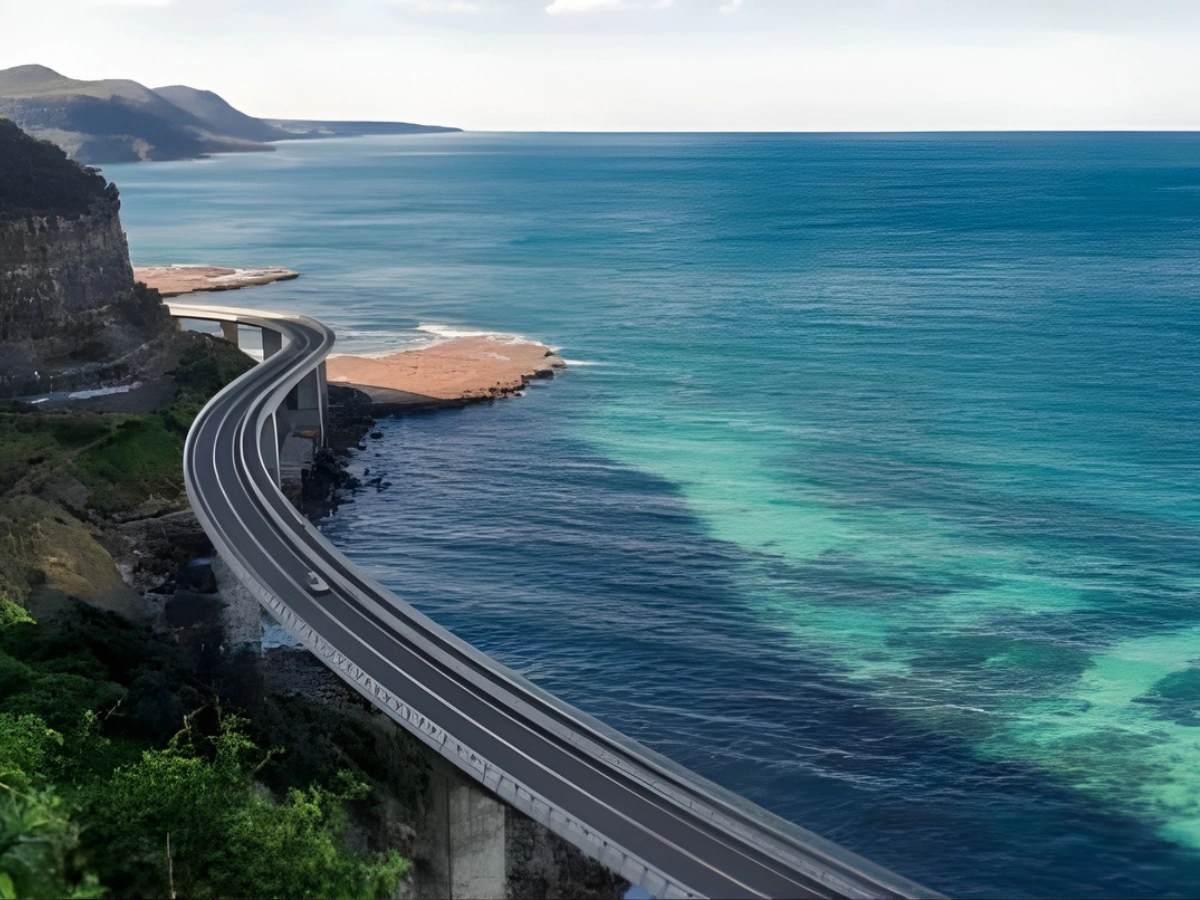
Peak hours between Kharghar and Belapur have a way of testing patience. Especially near the Sion–Panvel Highway, where time just… stops. That everyday frustration is the real reason this road exists.
CIDCO’s Kharghar–Belapur Coastal Road is a 9.68 km, six-lane corridor connecting Sector-16 Kharghar directly to CBD Belapur and Palm Beach Road near Nerul. On paper it’s an infrastructure project. In real life, it’s a second option for commuters who’ve relied too long on one overloaded route. Six lanes here mean smoother flow, fewer signals, and more predictable travel. Not a shortcut. A backbone.
"Project at a Glance"
| Feature | Detail |
|---|---|
| Total Length | 9.68 km (6-lanes) |
| Connecting Points | Kharghar Sec-16 to CBD Belapur (Palm Beach Rd) |
| Key Benefit | Travel time reduced from 40 mins to ~15 mins |
| Completion Target | Late 2028 |
Route & Design: Connecting Real Life
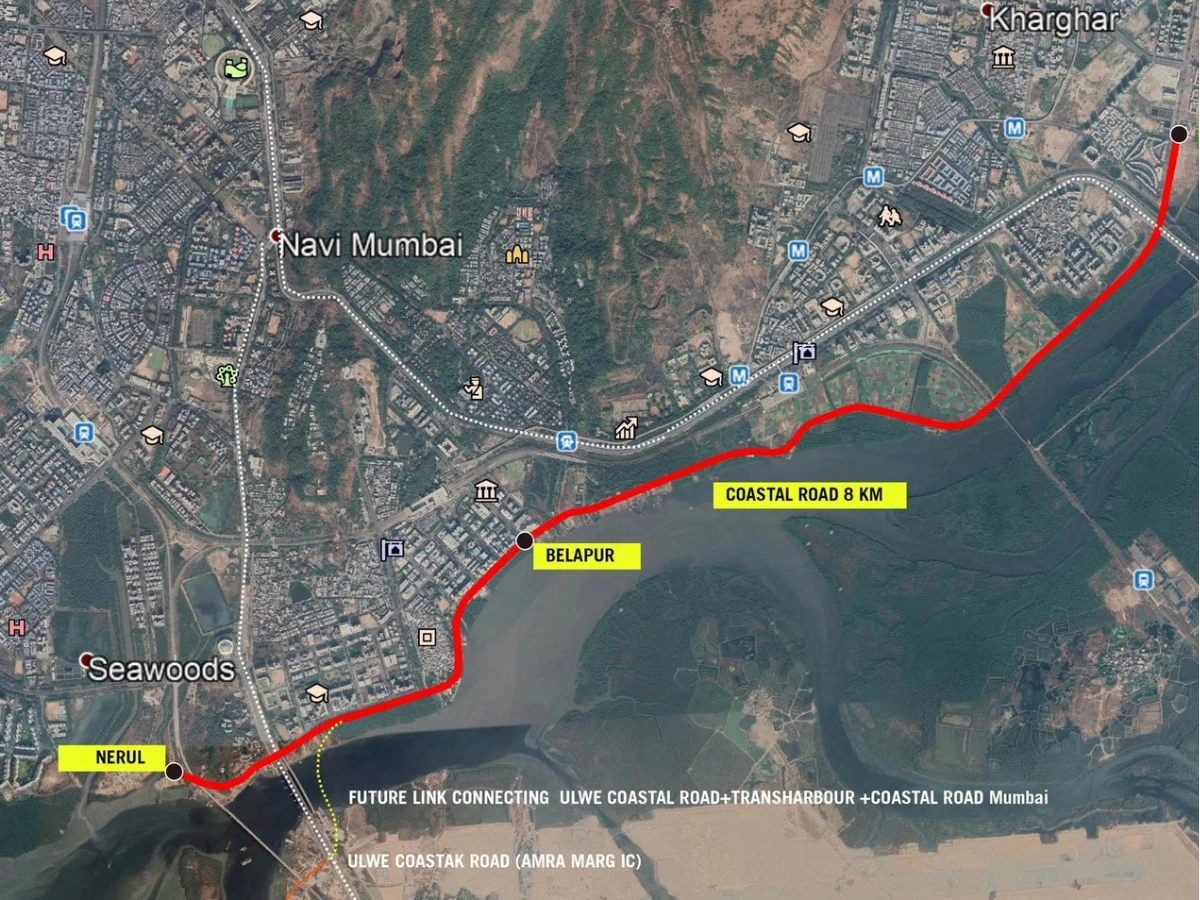
The road starts at Jalmarg in Sector-16, passes Kharghar Railway Station, and heads towards Nerul. Its most important feature is the grade-separated interchange over the Sion-Panvel Highway. Instead of mixing with highway traffic, vehicles simply cross over it.
The alignment ends near DPS Nerul, merging into Palm Beach Road. This gives direct access to one of Navi Mumbai’s fastest corridors, without dragging residential roads into heavy traffic. The design is simple, wide, and future-ready. Built for flow, not chaos.
Interchange for NMIA – The quiet hero of airport connectivity
This interchange deserves its own moment. From Kharghar, once you cross the Sion-Panvel Highway using this flyover, the route suddenly becomes logical. Palm Beach Road. Then the coastal corridors. Then the airport road network. No Kalamboli Circle. No container trucks crawling at walking speed. No unpredictable choke points that ruin schedules.
For anyone heading to the Navi Mumbai International Airport, this changes the mental math entirely. You stop adding buffer time based on fear. You start planning based on distance. That shift matters more than we like to admit. Especially when flights are involved.
It also quietly improves things for everyone else. Airport-bound traffic gets separated from freight-heavy highway traffic. Less conflict. Fewer accidents. Smoother movement. This isn’t infrastructure built only for today’s traffic. It’s built for the version of Navi Mumbai that comes alive once NMIA is fully operational.
Purpose and Benefits – Cutting travel time, easing pressure, restoring sanity

Commuters trust only one promise. Time saved. Reducing Kharghar–Belapur travel time from thirty to forty minutes down to roughly fifteen minutes sounds optimistic until you remove signals, highway merges, and freight interference from the equation. Then it starts to feel realistic.
This road doesn’t fight congestion. It avoids it. The Sion–Panvel Highway currently carries office commuters, port-bound trucks, intercity buses, and emergency vehicles. It was never designed for this kind of load, yet it’s been forced to carry it for years. By pulling local Kharghar–Belapur traffic away, the coastal road eases pressure on Navi Mumbai’s busiest artery.
That relief spreads outward. Less congestion near Kalamboli. Better flow towards Panvel. Slightly calmer peak hours. Maybe even fewer road rage moments, which honestly feels like a public service.
Where this road quietly changes everyday life:
- Daily commute clarity: Morning office travel from Sector-16 Kharghar to CBD Belapur, Nerul, or Palm Beach Road stops feeling like a gamble. Fewer signals, fewer truck conflicts, and a more predictable door-to-door travel time during peak hours.
- Mental relief, not just distance: When people stop calculating routes based on fear of traffic and start trusting the road, it reduces daily stress. This coastal road does that quietly, without announcing it loudly.
Supporting key developments – Corporate Park, Golf Course, Football Centre
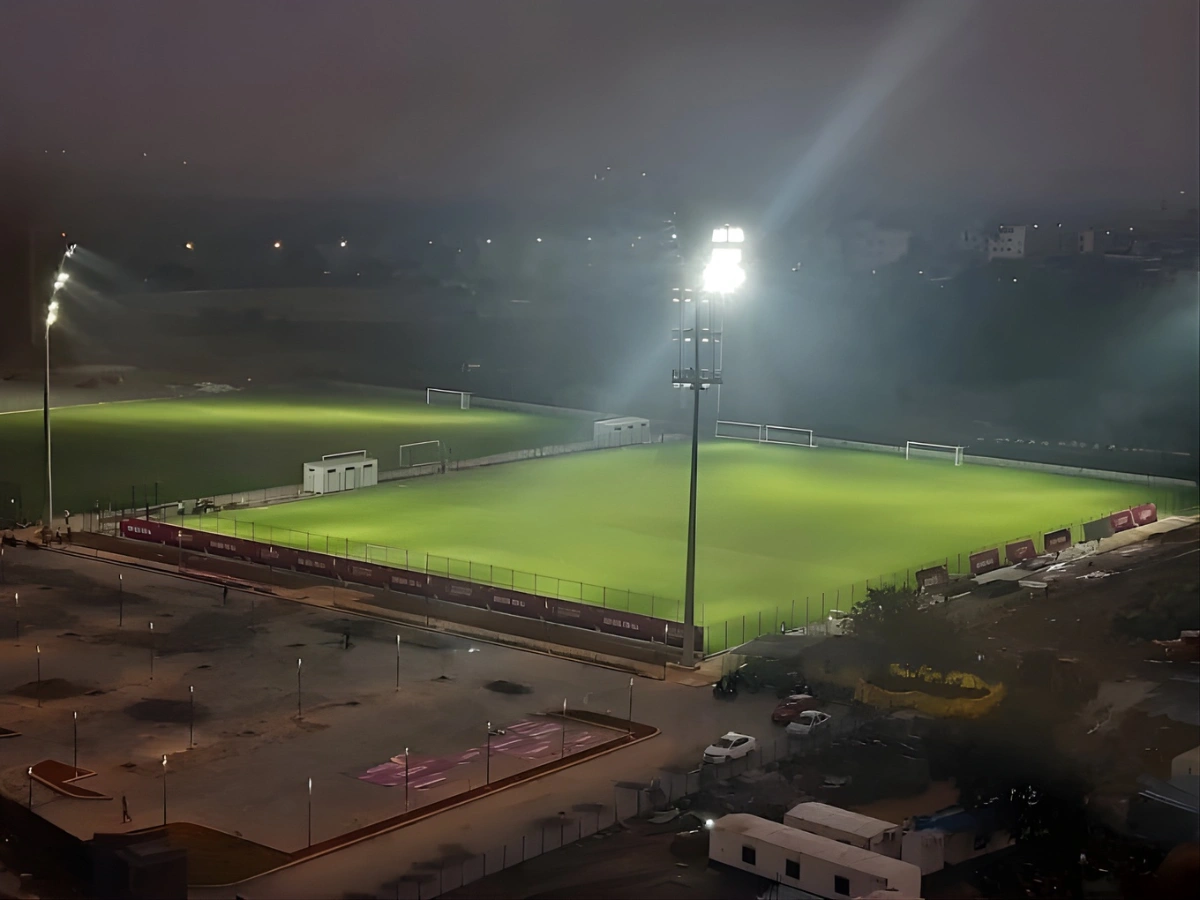
This road isn’t being built in isolation. Its timing is deliberate. Kharghar’s upcoming International Corporate Park is planned as a serious employment hub, not a token office cluster. Thousands of daily commuters will depend on reliable access. Alongside it are high-profile developments like the golf course and football centre, facilities that attract professionals, events, and visitors.
None of these survive on poor connectivity. The coastal road becomes the invisible support system that keeps these projects functional. Without it, accessibility remains theoretical. With it, the vision becomes viable. In many ways, this road is the backbone project for the International Corporate Park.
Airport connectivity – Indirect, but finally dependable
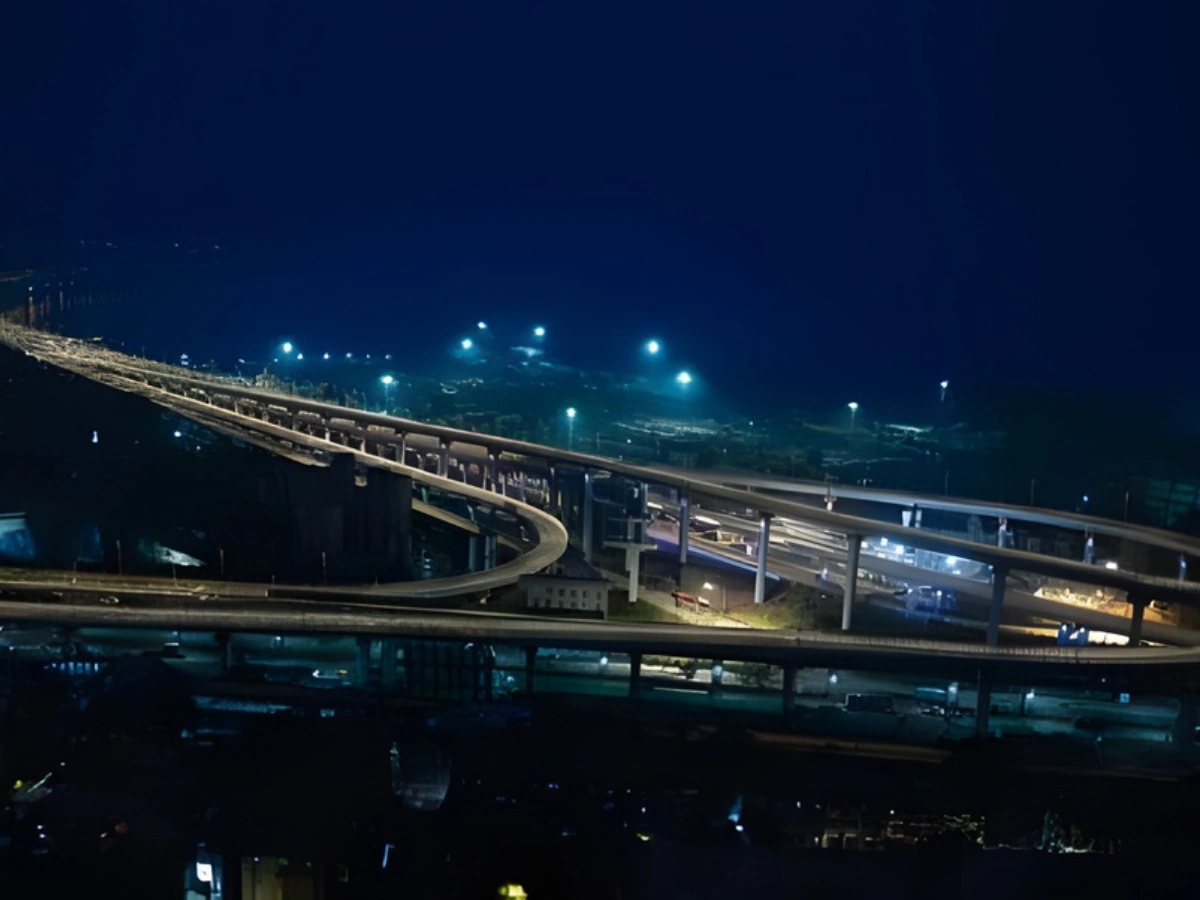
The coastal road doesn’t go straight into the airport. And that’s perfectly fine. What it offers instead is reliability. A predictable, signal-free path that connects Kharghar and even Taloja beyond to the airport road network. When flights are involved, nobody cares about the shortest distance. They care about not missing boarding. Reliability beats directness every single time.
Environmental & Social Aspects – Progress, resistance, and uncomfortable trade-offs
This is where the story gets complicated. And it should. The original alignment ran closer to the creek along mangrove belts, triggering environmental clearance issues. The alignment was shifted inland, solving one problem while creating another.
Residents in parts of Belapur raised genuine concerns. Tree loss. Jogging tracks being cut. Green pockets disturbed. These are not abstract complaints. They affect daily routines, morning walks, and community spaces.
CIDCO has responded with assurances. Green belt protection. Compensatory afforestation. Replantation of mangroves across 8.22 hectares. Environmental management plans. Will this perfectly replace what’s lost? Probably not. Urban development has never been about perfect choices. It’s about trade-offs. The real test will lie in execution, transparency, and whether promises survive beyond press releases.
Timeline & Status – Where the project stands today

The project has crossed its toughest hurdles. Forest and MCZMA clearances are in place. The contract has been awarded to the J Kumar–J M Mhatre joint venture. Construction is expected to begin in early 2026, with completion targeted by the end of 2028.
It’s still a long wait. But at least it’s a defined one. Not a vague promise floating endlessly into the future.
Relation to Other Roads – Part of a larger coastal network
The Kharghar-Belapur Coastal Road does not stand alone. Northwards, it integrates seamlessly with Palm Beach Road and extends connectivity towards Vashi. Southwards, it complements the Ulwe Coastal Road, forming a continuous coastal connectivity spine. There is also future potential integration with larger projects like the Airoli–Katai Naka freeway, placing this road firmly within a region-wide mobility strategy rather than a local fix.
City Development Impact – Property prices, shops, and daily life
This is where the impact becomes visible on the ground. With this road and the metro, Kharghar stops feeling far. Psychologically, that shift is powerful. Residential demand has already responded. As of now, average residential property prices in Kharghar range between ₹11,000 to ₹15,000 per square foot, depending on sector and proximity to metro stations. Sector-16 and nearby pockets closer to the coastal road alignment tend to sit on the higher end of that range.
CBD Belapur, especially near Palm Beach Road, commands even stronger numbers, often ranging from ₹18,000 to ₹25,000 per square foot for premium developments. Improved connectivity only strengthens these figures over time.
Daily life here already reflects this growth. Local commerce thrives around areas like Little World Mall, Reliance Smart, D-Mart Kharghar, Decathlon, and everyday essentials from stores like More Supermarket and local vegetable markets near Sector-35. Cafés, clinics, gyms, and coaching centres have quietly filled in the gaps.
Fifteen minutes to the airport area changes how people choose where to live, work, and invest. This road doesn’t just move vehicles. It moves perception.
Why this corridor matters beyond traffic numbers:
- Stronger link between work, lifestyle, and housing: With the International Corporate Park, golf course, football centre, and airport all tying into one corridor, Kharghar starts functioning as a complete urban ecosystem rather than a dormitory suburb.
- Real estate confidence, not speculation: Buyers and businesses respond faster to visible infrastructure than future promises. A six-lane coastal road under construction creates confidence that translates into sustained demand, not just short-term hype. And in urban development, perception often arrives before reality. When combined with metro connectivity and the International Corporate Park, Kharghar steps into a new role. Not flashy. Not overnight. But inevitable.
FAQ's
Frequently Asked Questions