How Metro, Station Access and Mall Ecosystem Affect Kharghar Commercial Demand
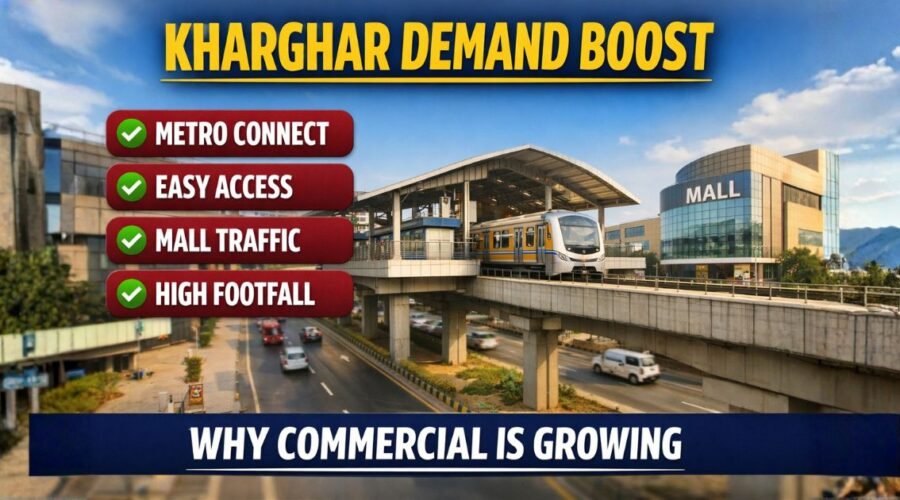
Kharghar commercial demand is influenced by metro access, railway station access, and the mall ecosystem, but not in the same way and not in every pocket. The railway station still drives the broadest everyday business demand. The metro has made selected office and appointment-based locations stronger, especially after Line 1 became operational in November 2023 and built real ridership. The mall ecosystem adds visibility, but its spillover is often overstated. In Kharghar, micro-location still matters more than sales phrases like “near station” or “near mall.
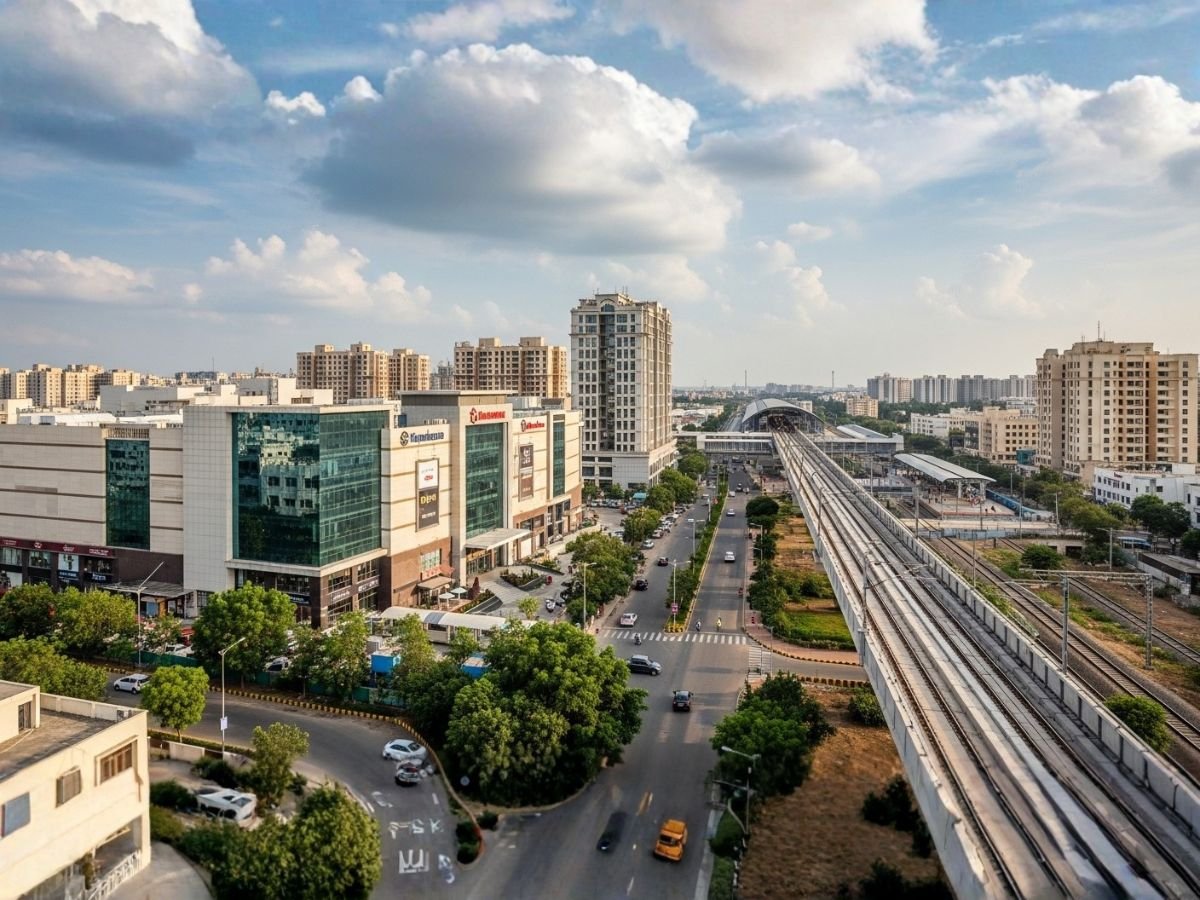
Kharghar is no longer just a residential-and-student node. It is moving toward a more layered commercial identity because of Metro Line 1, the established commuter base around Kharghar railway station, the retail gravity of Little World Mall on Pravesh Marg, and the wider long-term sentiment created by the Navi Mumbai International Airport and CIDCO’s International Corporate Park push. But those big drivers do not benefit every shop and office equally.
What metro, station access and the mall ecosystem actually do to Kharghar commercial demand
The cleanest way to understand Kharghar is this:
- Railway station access supports commuter-led daily demand
- Metro access supports movement-led office and appointment demand
- Mall adjacency supports destination-led visibility and brand recall
That distinction changes everything.
A shop selling daily-needs items, fast food, medicines, quick printing, or low-ticket convenience services needs a steady stream of people who are already moving through the area every day. That is why railway station influence remains powerful. A small office, clinic, consultant, coaching setup, or premium salon may benefit more from metro-led route certainty, easier employee travel, and a cleaner client-access story. A showroom or brand-facing business may use the mall ecosystem more as a landmark and visibility anchor than as a source of walk-in conversion.
Quick summary
| Location Driver | Core Impact | Best Fit Formats | Where Premium Pays Off | The Common Pitfall |
|---|---|---|---|---|
| Railway Station Access | Everyday movement & staff commuting | QSR, Pharmacy, Diagnostics, Offices | Walkable station approaches (Mature streets) | Units with poor frontage or difficult crossing |
| Metro Access | Route certainty & office usability | Small offices, Clinics, Consultants | Utsav Chowk, Central Park, Pethpada belt | Ground-floor retail in low-density belts |
| Mall Ecosystem | Landmark value & destination pull | Showrooms, Branded services, Dining | Strong frontage roads with usable parking | Small shops expecting "automatic" spillover footfall |
Why railway station access still matters more than most other commercial demand drivers in Kharghar
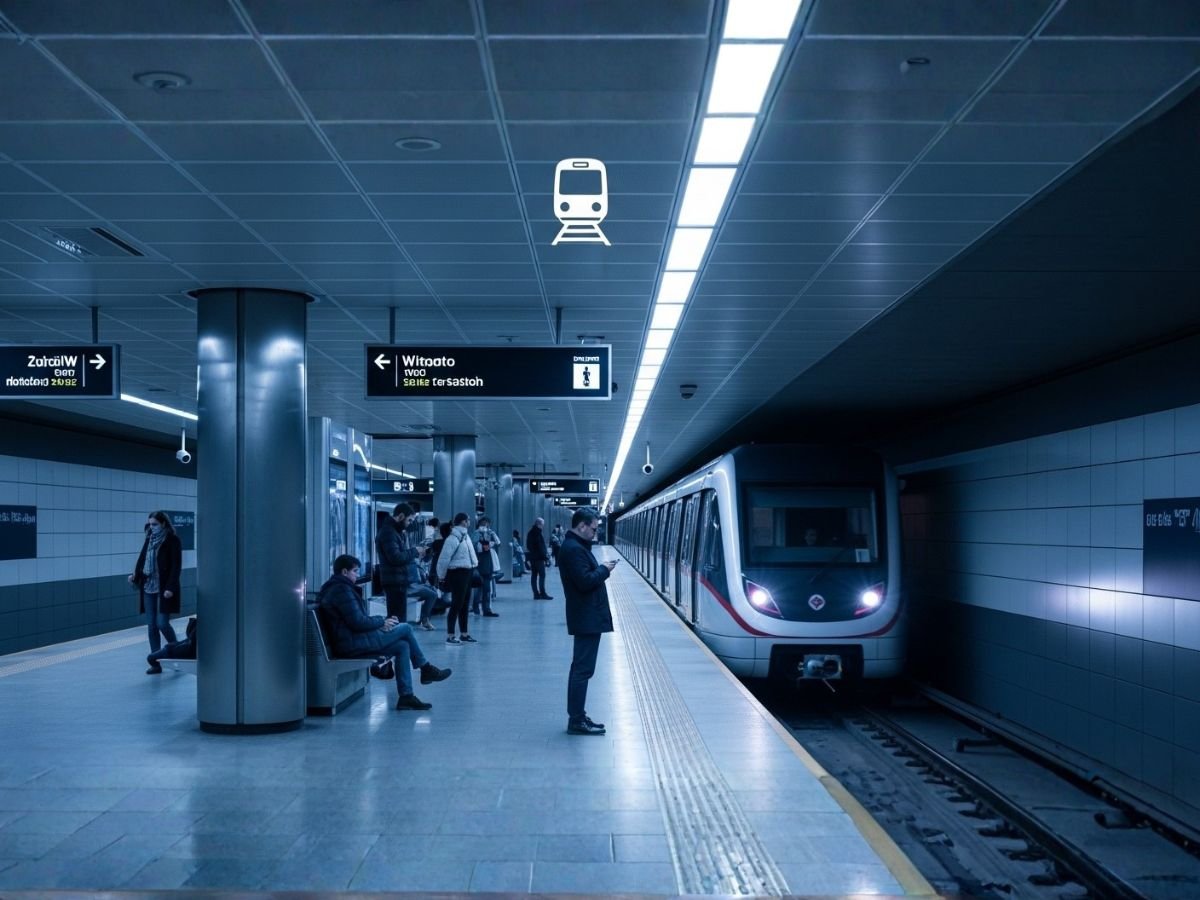
Even after the metro, the railway station remains the everyday backbone of commercial movement.
The reason is simple. The railway station is not just transport infrastructure. It is a habit zone. People pass through it on workdays, college days, errand days, and service visits. That creates broad, repetitive demand. Businesses that depend on convenience, quick decision-making, and frequent repeat visits usually perform better around a railway-led ecosystem than around a purely future-facing infrastructure story.
Why station-led demand is broader than just retail footfall
Station-led demand is not only about people walking. It is about the type of people walking and why they are there.
A commuter buying breakfast, a student printing notes, a patient visiting a diagnostic centre, a sales executive using a small office, a resident stopping for medicines, or a family using an ATM all belong to different spending categories. Yet they can coexist in the same station-side ecosystem. That is why railway-linked commercial zones often feel more resilient than over-marketed isolated high streets.
Which business types benefit most from railway access
In Kharghar, station influence usually supports:
- quick-service food
- pharmacy and basic healthcare services
- convenience-led retail
- small logistics or support offices
- diagnostic or utility-led businesses
- everyday service formats that do not need long browsing time
This is also why some modest-looking units can outperform more polished spaces elsewhere. A flashy unit does not beat habit-driven demand automatically.
Where station access helps offices more than many buyers assume
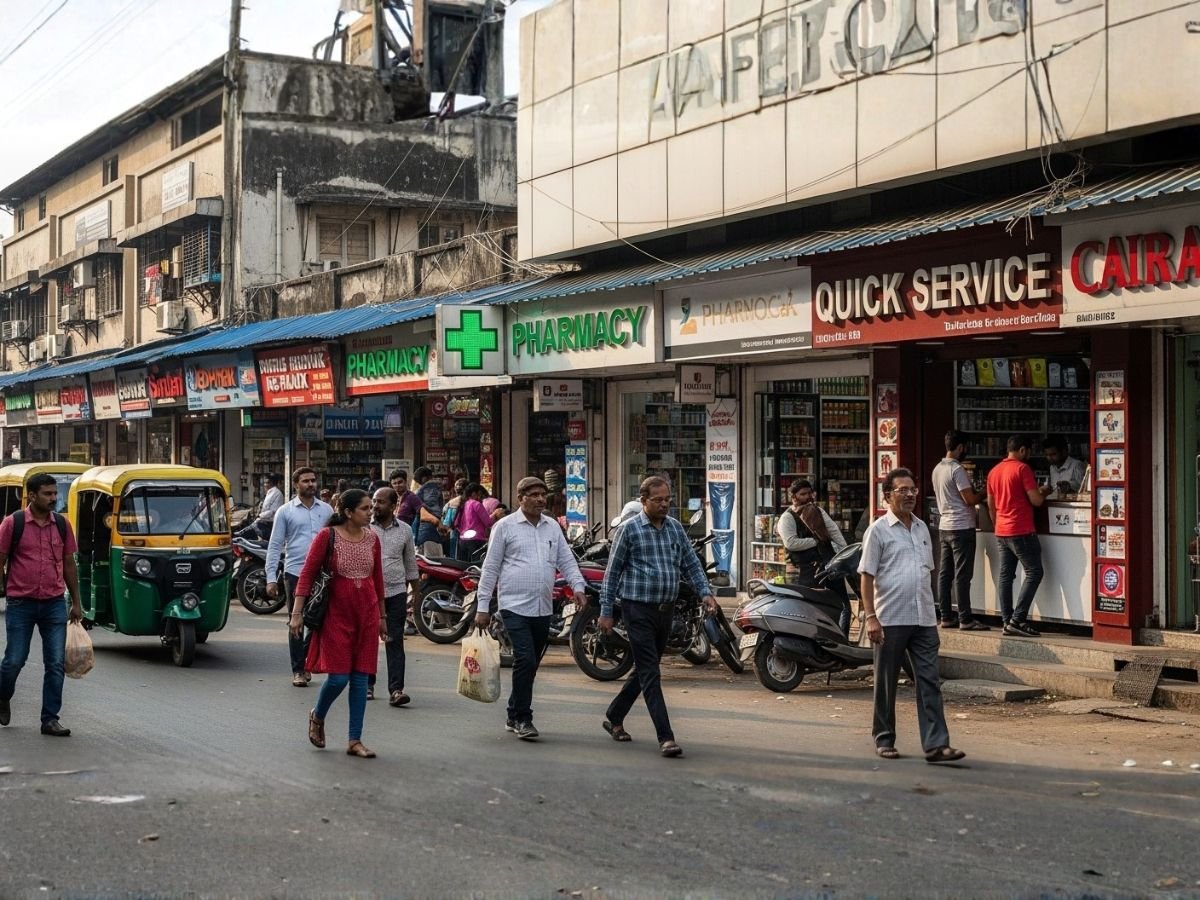
Many buyers think station access matters only for retail. That is incomplete.
A lot of smaller offices do not need a glamorous address. They need predictable employee access and easier client reach. In such cases, station-side usability can matter more than premium branding. If staff can reach the office comfortably and clients do not struggle to locate it, that office has leasing value even without “luxury commercial” positioning.
Does metro connectivity change commercial demand in Kharghar in a real way or mainly on paper
It does change demand in a real way. But it changes which kind of demand becomes easier to support.
Metro Line 1 from Belapur to Pendhar began commercial operations on November 17, 2023. By September 6, 2025, the line had crossed 1 crore riders, which is strong proof that the corridor moved from brochure language to actual commuter behaviour. In Kharghar, this matters because the active line includes stations like Utsav Chowk, Kendriya Vihar, Kharghar Village, Central Park, and Pethpada.
Where metro improves commercial logic
Metro access improves commercial demand most where businesses depend on:
- reliable movement rather than random footfall
- appointment-based visits
- employee convenience
- client confidence in reaching the location
- internal-sector accessibility that earlier felt weaker
That is why metro access can support boutique offices, clinics, financial consultants, coaching centres, and other structured businesses better than it supports impulse retail in quiet sectors.
Where metro is still not enough to make a weak pocket work
This is where buyers make mistakes.
A ground-floor shop in a mostly residential, low-activity, low-frontage pocket does not become a great retail investment just because a metro station is nearby. If the area still lacks stopping ability, visible frontage, daily convenience movement, and a lived-in catchment, the shop can struggle. Metro improves mobility. It does not manufacture retail conversion out of thin air.
Why metro helps movement confidence differently from railway demand
Railway demand is volume-heavy and routine-heavy. Metro demand is cleaner, more structured, and often more suitable for office and appointment traffic.
This difference matters in Kharghar. Metro can make upper or internal stretches more commercially acceptable for selected formats, especially when buyers are thinking beyond pure walk-in retail. That is a real advantage. But it should not be confused with instant high-street success.
> Caution: Paying a “metro premium” for a shop only makes sense when the shop also has real commercial basics: frontage, approach quality, stopping space, nearby occupied catchment, and a tenant profile that can actually use that location.
How the mall ecosystem influences nearby commercial demand in Kharghar
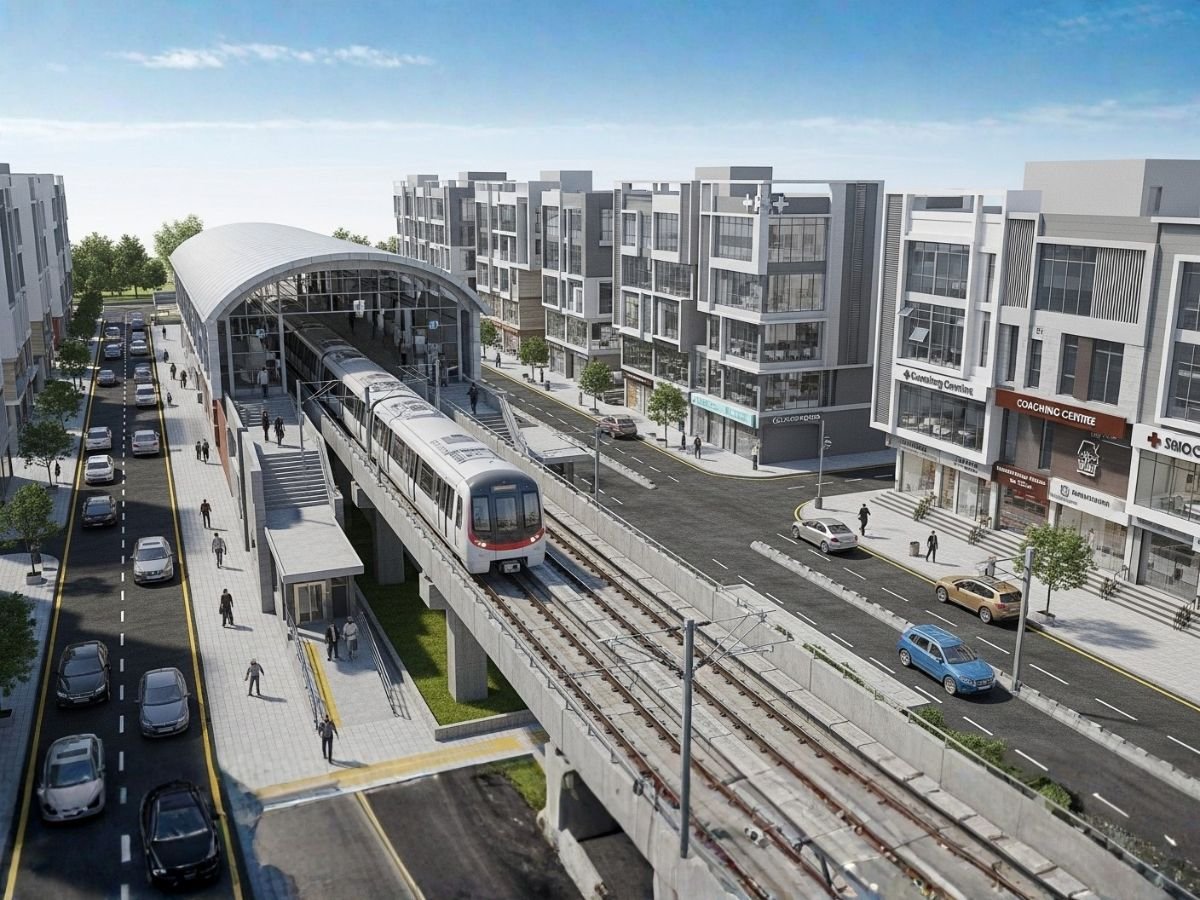
The mall ecosystem helps, but in a selective way.
Little World Mall is a real retail anchor in Kharghar, located in Sector 2 on Pravesh Marg. That gives nearby property a landmark advantage. It improves recall. It makes directions easier. It helps some businesses say, “we are next to Little World,” and that alone has practical value.
But that does not mean every nearby shop benefits equally.
What a mall ecosystem can do for nearby businesses
A mall ecosystem can help by creating:
- a known destination
- higher area visibility
- stronger brand recall for nearby units
- weekend and evening movement
- better suitability for destination-led businesses
This is useful for formats like showrooms, furniture, branded classes, destination dining, and some branded service businesses.
Which business formats actually benefit from mall adjacency
The formats that usually benefit most are the ones that do not depend on accidental spillover alone. They either have a strong brand, a destination reason, or a pre-decided visit.
That means:
- showrooms
- larger-format retail
- established brands
- appointment-led services
- coaching or institutional setups that people intentionally visit
Where the mall halo gets overpriced or misunderstood
A mall is built to keep spending inside the mall.
That is the core mistake many small buyers miss. They assume the mall crowd will automatically step outside and enter their shop. In reality, malls internalise attention, parking, browsing, food, and leisure. Outside them, congestion, awkward stopping, and pedestrian friction can reduce independent retail conversion. In Kharghar, that becomes more important because parking and street usability already affect commercial performance in a big way.
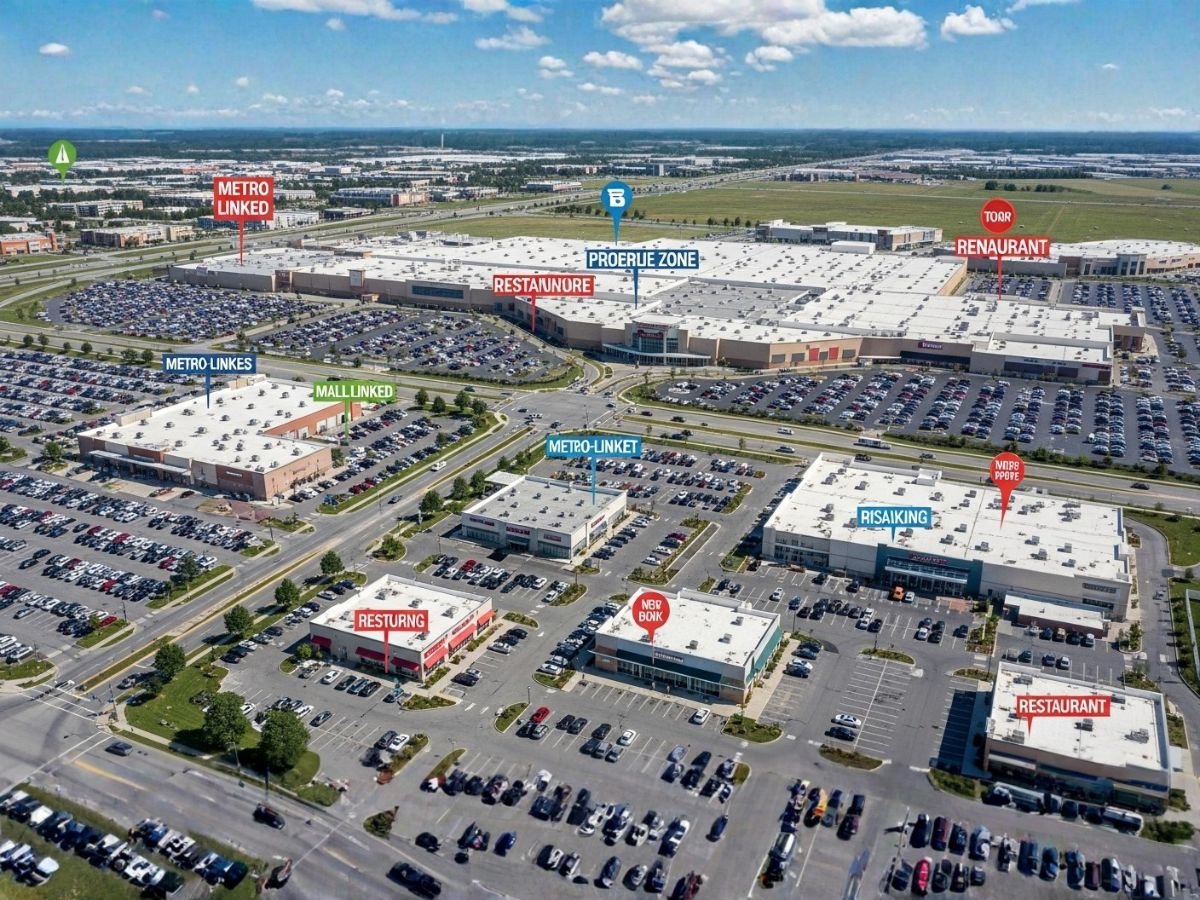
Which matters more in Kharghar commercial property: station access, metro access or mall adjacency
| Your Use Case | Priority Driver | The Strategy |
|---|---|---|
| Retail, Pharmacy, QSR | Railway Station Access | Focus on daily movement and repeat customer needs. |
| Offices, Clinics, Coaching | Metro Access + Catchment | Prioritize ease of access for staff and clients over footfall. |
| Showrooms & Brand Outlets | Mall or Landmark Roads | Visibility and easy recall are key for destination businesses. |
| Long-term Investment | Metro Growth Corridor | Bet on mobility to drive future office and mixed-use demand. |
| Impulse Retail | Station / Dense Catchment | Needs existing flow of people moving through the stretch. |
Which Kharghar commercial pockets respond best to these demand drivers
Kharghar does not respond as one commercial market. It behaves as a set of micro-markets.
Station-linked and approach-facing pockets
These are usually the most naturally commercial because they benefit from commuter movement and easier daily utility demand. Station-linked streets and mature approach zones can support convenience retail, small food formats, medicines, and practical services more reliably than newly marketed pockets elsewhere.
Mall-influenced pockets around Sector 2 and Pravesh Marg
This belt benefits from visibility and a recognisable destination effect because of Little World Mall. But the format has to match the area. Bigger brands, destination businesses, and units with proper frontage can benefit. Small retail depending only on vague spillover may not.
Utsav Chowk, Central Park side and metro-linked internal belts
These pockets matter because metro access has made them more acceptable for office, clinic, education, and service-led commercial use. They do not need to behave like station retail to become valuable. Their strength can come from better route confidence, centrality within Kharghar, and growing movement patterns around active stations.
Sectors where access looks good but conversion can stay selective
This is the most important filter.
Some stretches look attractive on a map. Some look close to transit. Some sound premium because of future projects like NMIA or the International Corporate Park. But unless the immediate catchment, frontage, parking, and tenant fit are right, the real commercial result can still be weak. NMIA has been operational for commercial flights since December 25, 2025, and CIDCO is actively pushing the International Corporate Park, but both are wider structural demand drivers, not instant proof that every Kharghar shop or office has become a strong asset overnight.
What this means for shop buyers, small office investors and self-use business owners
The biggest practical lesson is this: buy the right format for the right driver.
If you are buying a shop
Prioritise proven catchment, actual stopping ability, visible frontage, and daily-use logic. “Near metro” alone is not enough. “Near mall” alone is definitely not enough.
If you are buying a small office
Metro-linked or well-connected internal sectors can make a lot of sense if the building quality, access, and tenant category are aligned. Office demand is more forgiving than retail when frontage is average, but less forgiving when access, maintenance, or professional feel is poor.
If you are leasing for self-use
Choose based on your business model, not resale fantasies. A clinic or consultant may do better in a calmer but accessible pocket. A QSR or daily-needs format may need commuter-led movement.
If you are investing only for rental income
Do not pay a premium just for a label. Pay only when the asset has a believable tenant story.
Why footfall, frontage and parking still matter even when metro or station access is strong
This is where many commercial decisions go wrong.
Footfall is not the same as conversion. A crowded road does not automatically mean a profitable shop. People may be passing fast, struggling with traffic, unable to park, or simply headed somewhere else.
In Navi Mumbai, parking has become a more serious compliance and usability issue. NMMC announced stricter parking norms for residential and commercial buildings in January 2025. That matters because older and poorly planned buildings can become harder to lease when basic visitor and staff parking is weak.
A property can therefore be:
- visible but inconvenient
- busy but hard to stop at
- close to a landmark but annoying to use
That is why some polished units suffer churn while simpler units in more practical locations stay occupied.
How to judge whether a connectivity premium in Kharghar is actually justified
Before paying extra for a “metro-near”, “station-side”, or “mall-adjacent” asset, use this quick check:
Practical connectivity checklist
- Is the walking route genuinely usable in summer and monsoon?
- Can a client or customer reach the unit without crossing chaotic stretches?
- Is the frontage visible from the correct direction of movement?
- Can a two-wheeler or car stop safely nearby?
- Is the nearby catchment already occupied and active, or still mostly future-facing?
- Does the building suit the intended tenant type?
- Is parking legal, practical, and sufficient for the format?
- Is the premium supported by likely rentability, not just developer storytelling?
If the answer is weak on three or four of these, the premium is probably more marketing than value.
The real mistake buyers make when they hear “near station”, “near metro” or “near mall”
The real mistake is believing proximity cancels bad fundamentals.
It does not.
A weak shop does not become strong just because a metro station is close. A poor office floorplate does not become Grade A because the airport story sounds exciting. A small unit next to a mall does not become a retail winner if customers cannot stop, see it properly, or find a reason to enter.
In Kharghar, the strongest commercial assets are usually the ones where macro connectivity and micro practicality meet each other. When only one of those exists, buyers often overpay.
Conclusion
Metro, station access, and the mall ecosystem all affect Kharghar commercial demand, but they do different jobs. The railway station still supports the widest everyday demand. The metro has made Kharghar stronger for offices, clinics, coaching, and other movement-dependent formats. The mall ecosystem improves visibility, but its commercial spillover is often exaggerated.
So the best Kharghar commercial buy is not the one with the loudest infrastructure label. It is the one where access, frontage, parking, catchment, and tenant fit all work together in the real world.
FAQs
Frequently Asked Questions