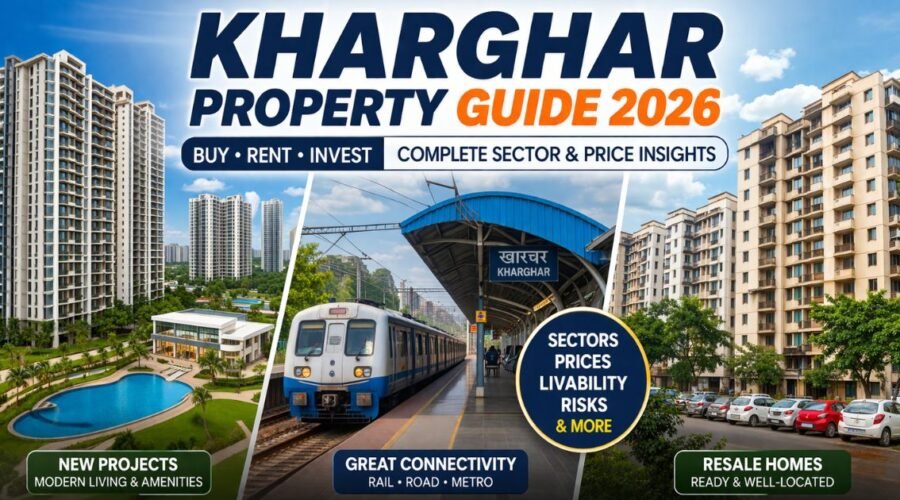
Kharghar Property Guide: Is Kharghar the Right Place to Buy, Rent or Invest?
Kharghar is still one of the strongest residential choices in Navi Mumbai in 2026, but only if you understand one basic truth: Kharghar is not one single property market. Some pockets are genuinely established, family-friendly, and easy to live in. Others are cheaper but come with more construction activity, weaker walkability, uneven surroundings, and a bigger gap between brochure promise and daily reality. So yes, Kharghar can be a very good place to buy, rent, or invest, but the right answer depends heavily on your sector, budget, commute, and purpose.
That is what most generic articles miss. They speak about Kharghar as if Sector 7, Sector 20, Sector 35, and the more heavily marketed “Upper Kharghar” side all behave the same. They do not. A buyer who understands this early usually makes a much better decision.
Kharghar property in 2026: what is the short answer for buyers, renters, and investors?
The practical summary is simple. Kharghar remains one of Navi Mumbai’s most balanced residential nodes, but it rewards selective buying, not blind buying.
Why does Kharghar attract so much property interest in Navi Mumbai?
Kharghar keeps coming back into buyer conversations because it offers something many other nodes only partly offer: a more planned feel. Wide roads, larger open spaces, major institutions, Central Park influence, the golf course belt, and its long-standing reputation as an education-friendly location all give it a stronger identity than a typical “just another housing node” market.
It also appeals to different types of people for different reasons.
A family may like Kharghar for schools, open feel, and a slightly calmer residential rhythm. A professional may like it for the idea of better long-term urban value. An investor may like it because Kharghar still carries brand value in the Navi Mumbai market. And renters often shortlist it because it feels more livable than many dense budget alternatives.
But attraction is not the same as suitability. Kharghar’s strength is real, yet its price, convenience, and comfort level change sharply from one pocket to another.
Is Kharghar one property market or several different micro-markets?
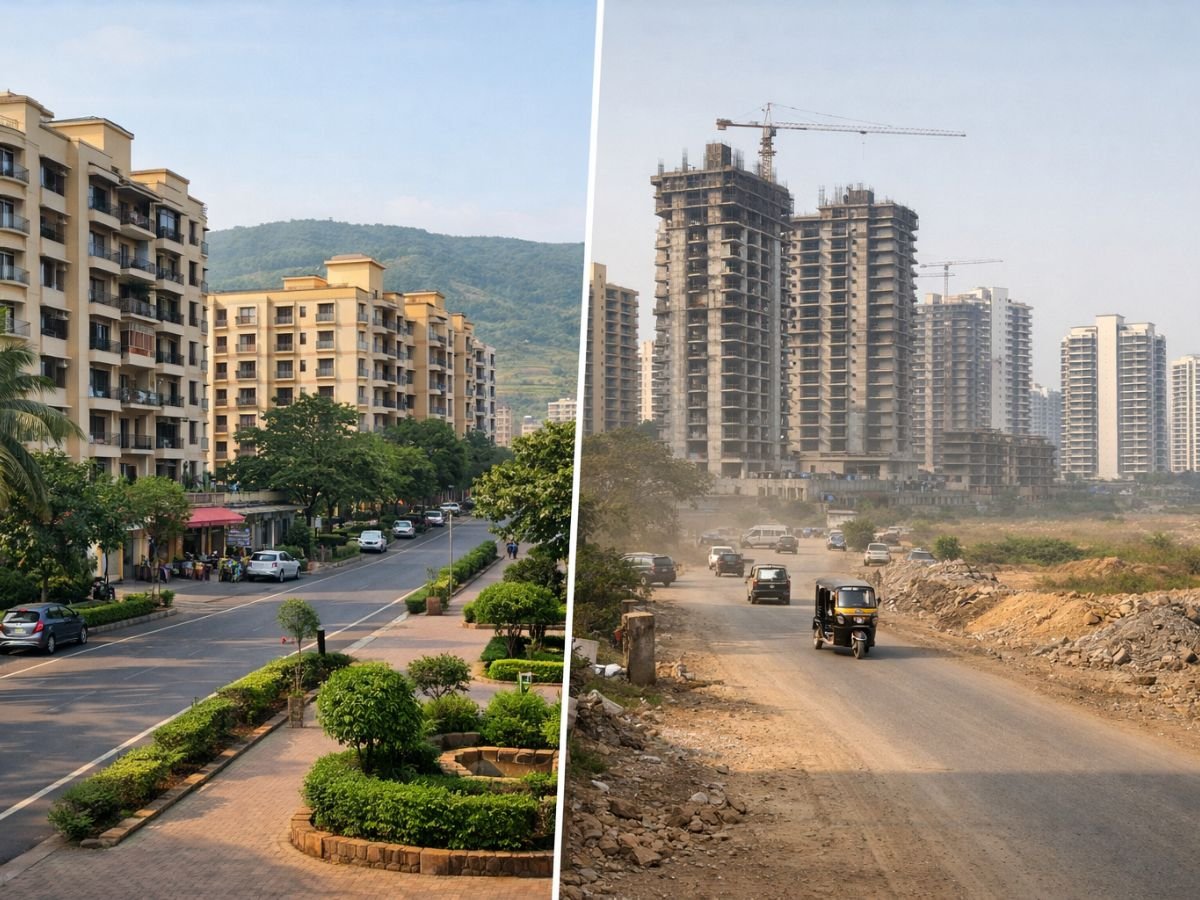
Kharghar is several micro-markets hiding under one name. This is the single most important thing to understand before you shortlist even one flat.
Established residential sectors vs growth-edge pockets
Broadly, established Kharghar usually means the more settled sectors where roads, societies, retail presence, and day-to-day habitability are already proven. These pockets tend to feel more complete. You can judge them by how the building has aged, how the society functions, how quickly you reach grocery stores or clinics, and whether the street actually feels used and maintained.
Growth-edge pockets are a different game. They may look attractive on paper because the apartment is newer, the amenity list is longer, and the entry price seems more manageable. But the trade-off often appears outside the flat: dust, incomplete surroundings, weaker walkability, water uncertainty in some cases, patchier local retail depth, or more dependence on private transport.
Station-linked convenience vs deeper internal sectors
A second layer of difference is station logic. Some parts of Kharghar benefit from easier station access and better daily movement. Others may still be “in Kharghar” officially, but in practical life they feel far more vehicle-dependent.
This matters a lot more than people think. A brochure saying “near station” is not enough. You need to test the actual road route, traffic behavior, monsoon movement, auto availability, parking stress, and how much time it really takes in ordinary weekday conditions.
Premium perception vs practical livability
Some pockets command a premium because of image, open views, better roads, proximity to better-known landmarks, or stronger society quality. That premium is not always wrong. But it should be earned by daily usefulness, not only by branding.
A road-facing tower with more visible prestige but poor internal layout, noisy surroundings, or awkward access can still be a weak buy. Meanwhile, a slightly less glamorous but more stable resale building in a better-functioning sector may deliver a better life.
Established Kharghar vs growth-edge Kharghar
Which parts of Kharghar usually work better for families, and which need more caution?
For most families, Kharghar works best where life is easy, not where marketing is exciting.
Established and more practical sectors usually perform better for families because they reduce friction. Children’s schooling, grocery access, clinics, tuition runs, walkability, and evening movement all become easier in a settled pocket. In local discussion, central and better-established sectors such as the stronger family-preferred belts around sectors like 12, 19, and 20 are often seen as safer family shortlists, though the final answer still depends on your building, road, and budget.
The caution side begins when the buyer falls in love only with a flat, not with the micro-location. A beautiful apartment in a weak daily-life pocket can create hidden strain: longer internal travel, more dust, more auto dependency, weaker street activity, and less convenience for older family members.
What do Kharghar property prices really mean in 2026?
Kharghar price discussion becomes misleading the moment people treat one single ₹ per sq ft number as the answer.
Portal snapshots in 2026 show that broad Kharghar-wide averages vary materially by platform, with overall market readings clustering around roughly the low-₹10,000s to mid-₹15,000s per sq ft depending on methodology, listing mix, and whether the number reflects asking trends or transaction-oriented snapshots. But that broad view hides the real story. Prime sectors can sit much higher, while weaker, less mature, or more fringe pockets can sit meaningfully lower.
Why headline "₹/sq ft" figures can mislead
The first problem is that not every seller is quoting the same area basis. Some buyers compare builder language, some compare carpet area, some compare old super-built-up habits, and some compare resale asking price without checking whether the building is actually equivalent.
The second problem is false comparison. A premium sector with better roads, stronger society maintenance, less construction spillover, and proven livability should not be judged the same way as a cheaper pocket whose surroundings are still catching up.
The third problem is that Kharghar has both image premium and real premium. You must separate them.
New project, near-ready, and resale pricing logic
New projects usually cost more for promise, presentation, and amenities. Near-ready projects often sit in an awkward middle zone where the buyer pays almost-new pricing but still carries completion or final-use uncertainty. Resale stock may look older on paper, but in many cases it gives the buyer the most honest picture of actual life.
That is why the best pricing question is not “What is Kharghar rate?” It is “What am I paying for in this exact sector, this exact road, and this exact building?”
Sample price interpretation box
- A lower price in fringe Kharghar is not automatically a bargain.
- A higher price in an established sector is not automatically overpricing.
- A new tower with club amenities can still be weaker than a plain resale building if the surroundings are not mature.
- A strong society with proven maintenance, stable water, and better daily convenience may justify a premium.
Should you buy a new project or a resale flat in Kharghar?
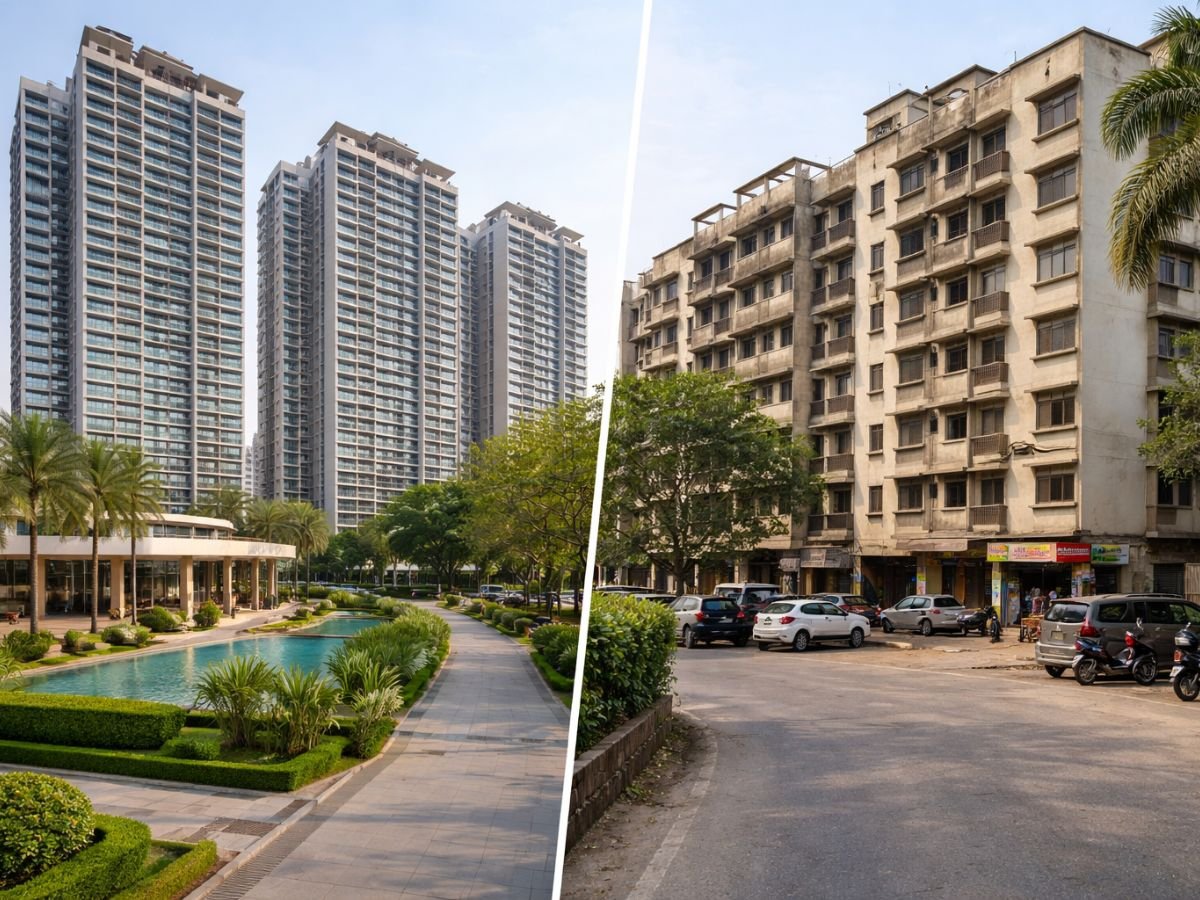
In Kharghar, this is not a simple old-versus-new choice. It is a risk-versus-clarity choice.
A new project may make sense if you are buying with full awareness of possession timing, MahaRERA status, approvals, infrastructure lag, and the true condition of the surrounding pocket.
A resale flat often makes more sense for practical buyers because it reveals reality. You can inspect the society, water setup, lift condition, parking behavior, resident profile, leakage issues, market access, and what daily life feels like at 8:30 am or 8 pm. That visibility is worth a lot.
Is Kharghar better for end users, investors, or renters right now?
Kharghar still works for all three groups, but not in the same way.
Family end-user fit
Kharghar is strongest today as an end-user market for people who want a more balanced residential environment. Its best value comes from everyday livability, not only from return expectations.
Appreciation-focused investor fit
Investors can still find logic in Kharghar, especially when they understand entry timing and pocket difference. But 2026 is not the stage to buy blindly assuming every sector will rise equally because of metro, airport, or regional infrastructure. Much of that broad narrative is already known to the market.
Rental-demand and tenant-profile reality
Kharghar does have a healthy rental ecosystem because of institutions, professionals, and general residential demand. But rental strength is not uniform. Buildings with awkward access or weaker everyday convenience can still struggle relative to better-located stock.
Decision matrix
How good is Kharghar’s connectivity in daily life, not just on paper?
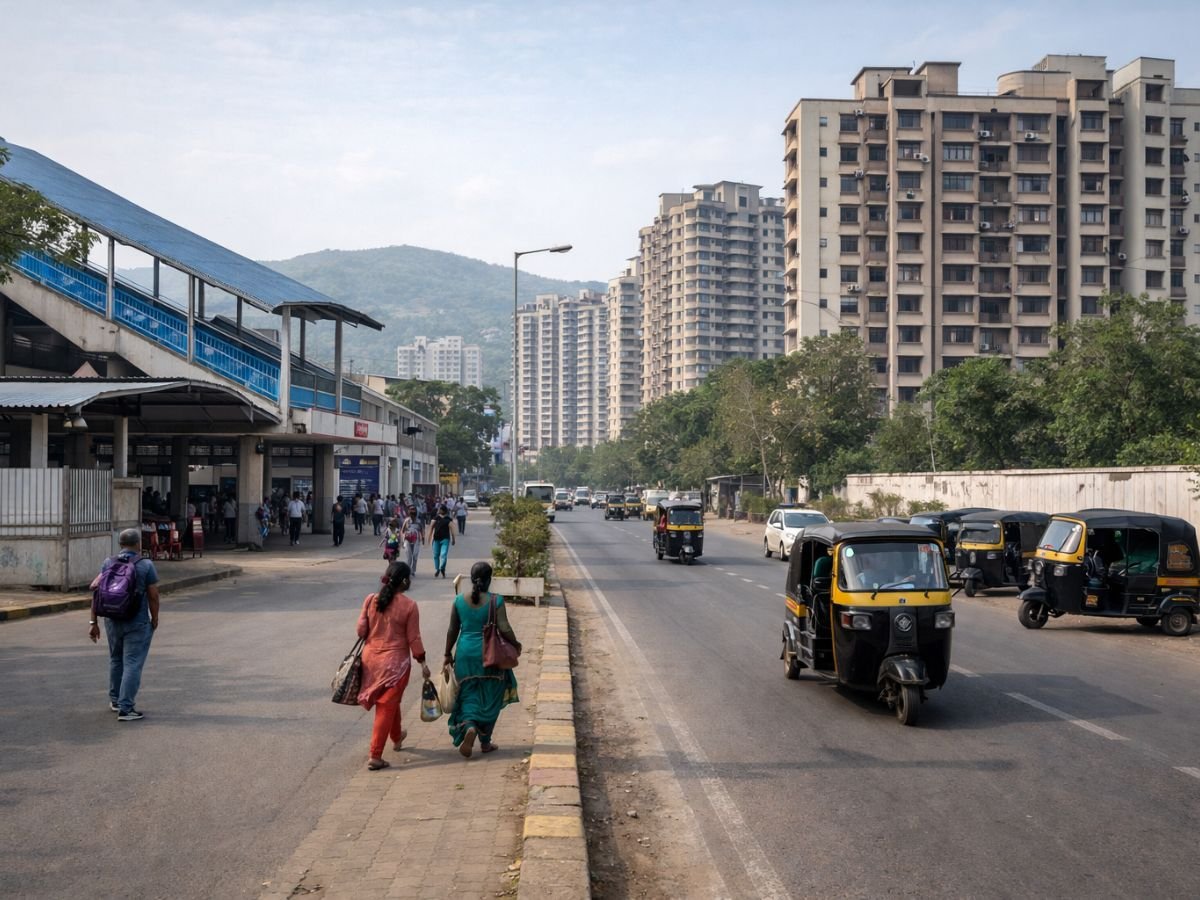
Kharghar’s connectivity is good enough to stay attractive, but not so magical that every pocket becomes easy.
The rail network matters. The metro corridor matters. Road connectivity matters. But the buyer must still ask a tougher question: how easy is this exact building to live from every day?
A station-linked or better-connected sector can feel far more efficient than a deeper internal or fringe pocket, even if both are within Kharghar. Internal movement, road width, bottlenecks, and dependence on rickshaws or private vehicles all shape the real answer.
Quick connectivity checklist
Before shortlisting a property, test these:
- Actual morning time to railway station, not map estimate
- Auto availability during rain and peak hours
- Whether family members can move independently without one car
- Whether the road feels practical after dark
- How close daily essentials really are
- Whether the metro improves your route meaningfully or only sounds good in marketing
Kharghar is well-positioned in the regional Navi Mumbai conversation. But inside Kharghar, convenience still depends heavily on micro-location.
What is everyday life in Kharghar actually like for residents?
This is where Kharghar justifies much of its appeal.
For many residents, everyday life in the right part of Kharghar feels more open, less compressed, and more breathable than in several denser alternatives. The node has an established educational identity, respectable grocery and daily-needs coverage, large open-space influence, and enough social infrastructure to support long-term residence.
But the comfort level is uneven.
A stronger sector can feel organized, calm, and family-friendly. A weaker edge pocket can feel unfinished, dusty, or too vehicle-dependent. That difference may not show in a brochure photo, but it shows in life.
Livability score box
What are the biggest property risks buyers miss in Kharghar?
Kharghar is a strong node, but that can make buyers careless. They assume the node itself will protect them. It will not.
1) Overpaying for future potential already priced in
Airport stories, metro stories, and future-growth stories are powerful. But once the market already knows them, they stop being secret advantages. Buyers often pay premium prices for a future narrative that the seller has already fully baked into the deal.
2) Buying in a pocket that looks premium online but feels weak on the ground
A glossy tower in a dusty or weakly connected pocket is still a weak daily-life decision for many buyers. This is one of the most common Kharghar mistakes.
3) Ignoring building-specific reality
Two buildings in the same sector can perform very differently. Society management, maintenance, water arrangement, parking friction, façade ageing, seepage, and resident mix all matter.
4) Mixing up “Kharghar image” with “Kharghar usability”
Some buyers buy the story of Kharghar without verifying the exact road, slope, street, and support ecosystem of the actual property.
Which documents and authority-side checks matter before buying property in Kharghar?
This section matters more than any sales pitch.
Kharghar falls under Panvel Municipal Corporation for civic context, while project, land, registration, and authority-side checks may involve different bodies depending on the property and transaction stage. That is why buyers should not do surface-level checking.
Due diligence checklist before token money
For under-construction or near-ready projects
- Check MahaRERA registration and project details
- Verify promised completion stage against visible ground progress
- Check sanctioned plan and unit layout match
- Check whether “near ready” is actually near ready
- Ask for clarity on all extra charges, not just base rate
For resale flats
- Verify chain of title and registered documents
- Check Occupancy Certificate status where applicable
- Verify society paperwork and dues position
- Confirm parking understanding in writing
- Ask whether any authority-side transfer process or NOC issue may delay transfer
For both
- Check exact micro-location in person, more than once
- Ask about water source and summer reality
- Inspect approach road and surrounding construction intensity
- Compare the deal against real livability, not just flat finish
- Use IGR Maharashtra tools and process context for valuation and registration-side preparation, but do not confuse ASR value with the seller’s market asking price
What buyers should remember about authority-side checks
- MahaRERA is a verification layer, not a substitute for common sense.
- IGR-side valuation helps on registration and stamp-duty process, but it does not prove a property is a good buy.
- Authority context can differ from what the buyer casually assumes. Even basic confusion like PMC versus NMMC can mislead first-time buyers about taxes, civic expectations, and complaint channels.
When does Kharghar make sense, and when should you look at another node instead?
Kharghar makes sense when you want a balanced residential environment, value open feel, and can afford the right micro-location without forcing a compromise that damages daily life.
Kharghar may not be the best answer when:
- your budget is pushing you only into the weakest fringe compromise,
- your work commute demands a more directly convenient node,
- you want denser commercial energy more than residential quality,
- or you expect very high short-term upside from a market that is already well-recognized.
Conclusion
Who should seriously consider Kharghar in 2026?
Kharghar deserves serious consideration in 2026 if you fall into one of these categories:
- A family buyer who wants a more balanced residential environment and can afford an established, genuinely usable sector
- A first-time buyer who is ready to choose practicality over brochure glamour
- A long-term holder who valazues location strength but will still buy selectively
- A renter who wants a better overall residential experience and is willing to match pocket with budget
Kharghar is not the right answer for everyone. It is not a magic pin code. It is a market of strong advantages and equally real differences. If you buy the right sector, the right building, and the right level of convenience, Kharghar canazbe one of the best residential decisions in Navi Mumbai. If you buy only the name, it can become an expensive compromise.
For most people, the smartest Kharghar strategy in 2026 is this: do not ask “Is Kharghar good?” Ask “Which Kharghar am I actually buying?”
FAQs
Frequently Asked Questions