

Navi Mumbai Industrial Land Values, Rents and Yield Guide: Area-Wise Practical View
There is no single Navi Mumbai industrial land rate, and there is definitely no single industrial yield. TTC, Taloja, and Panvel-side corridors behave very differently. Land value, rent, and yield do not move together here. In many cases, open industrial land looks expensive but produces weak real income. The right comparison starts with belt, authority, transfer terms, utilities, and actual industrial usability, not just a quoted price per sq ft. Official MIDC base rates themselves show how different belts already are, and the state eASR portal must be read as a benchmark, not as final market truth.
Quick summary
| Belt | Typical pricing logic | Rent logic | Yield tendency | Best for | Main caution |
|---|---|---|---|---|---|
| TTC belt such as Turbhe, Pawne, Rabale, Mahape | High scarcity and strong urban-industrial positioning | Built, usable industrial stock is easier to rent than raw land | Often compressed because capital values are heavy | Established owner-users, urban industrial occupiers, logistics-linked users | Taxes, transfer costs, and inflated expectations can crush clean yield |
| Taloja | Lower entry than TTC in official rate terms, stronger manufacturing logic | Good sheds and power-ready industrial setups rent better than plain plots | Can work better than TTC if entry is rational and utility is real | Manufacturing, engineering, users who may build or upgrade | Open land alone is not the same as a rent-ready asset |
| Panvel-side / JNPA-linked / airport-influenced corridors | Future-driven pricing and logistics speculation | Rent works only where access and actual industrial use are ready | Usually weaker as an immediate income play | Land banking, specialized logistics, long-horizon buyers | Future story can overpower present utility |
Navi Mumbai industrial land values, rents and yields do not move together
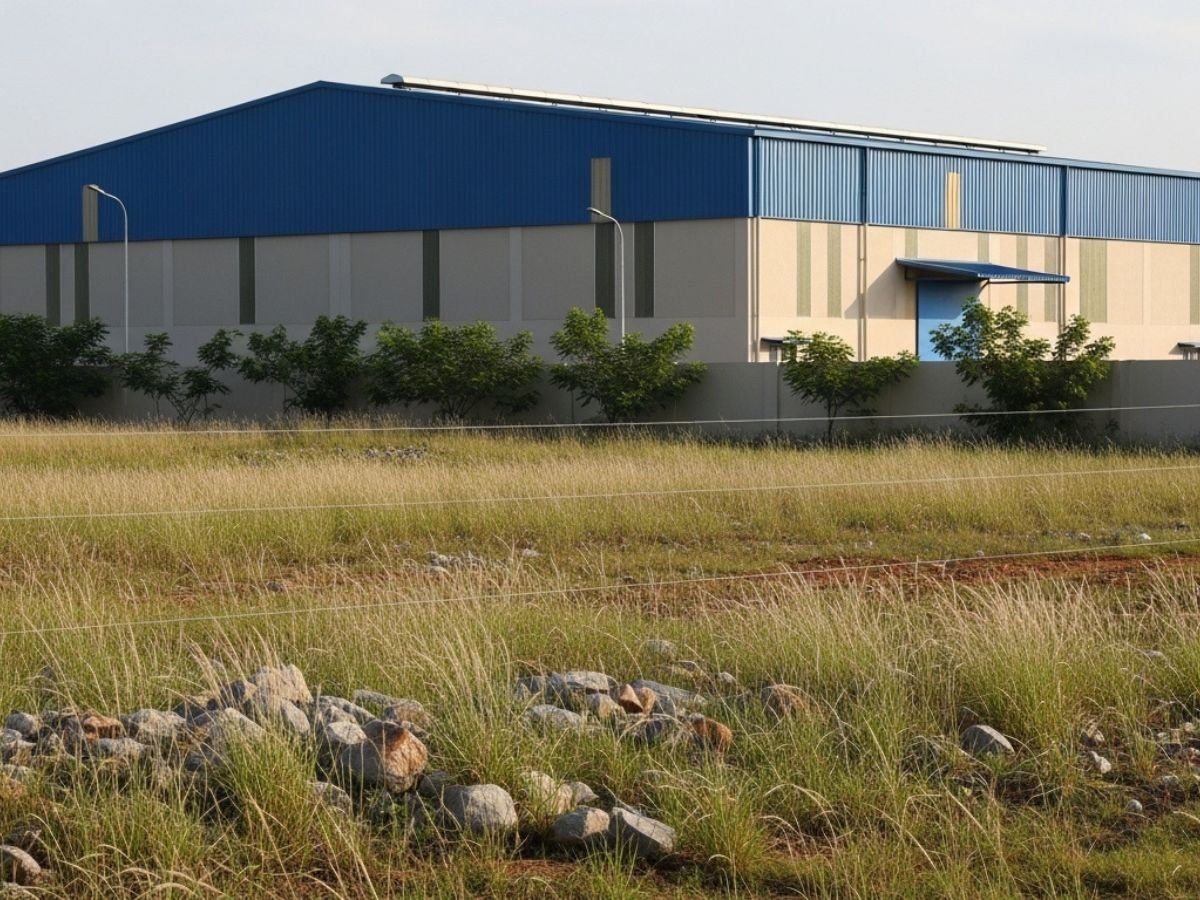
This is the first thing most buyers get wrong. A plot can be very valuable and still be a poor income asset. It can also show decent rent on paper and still leave a disappointing net yield after taxes, vacancy, permissions, maintenance, and, where applicable, MIDC subletting costs. That is why industrial land in Navi Mumbai should never be read like a simple shop or office investment.
What “value” means here
Value is what the market is willing to pay to control a particular industrial location under a particular authority structure. In Navi Mumbai, that value is shaped by scarcity, belt reputation, access for trucks, available power, water, discharge logic, and future strategic relevance. Official MIDC land-rate data already shows a big gap between TTC and Taloja at the base-rate level itself, with the public MIDC rate portal showing TTC around ₹31,390 per sq m and Taloja around ₹12,100 per sq m in the cited rate context.
What “rent” actually means in industrial land deals
Rent is about present operational utility, not future promise. A manufacturer, transporter, yard user, or industrial occupier pays for what can be used now. That means entry and exit movement, loading space, road width, sanctioned power, water availability, compliance comfort, and sometimes crane-ready or shed-ready utility. A plot near a hot future corridor may still earn weak rent today if it is only a piece of land with no real operating advantage.
Why yield can look attractive on paper and weak in reality
Headline yield is usually gross yield. Real money is net yield. In Navi Mumbai, that net figure can be hit by property tax, vacancy, repairs, compliance costs, and authority-linked charges. NMMC property tax in industrial and commercial categories is commonly calculated at 68.33% of rateable value, and rateable value is linked to expected annual rent after statutory deduction. So even before you think about vacancy or MIDC-related leakage, the tax side alone can materially change the return profile.
Value vs rent vs yield in one minute
- Value answers: what does control of this land cost?
- Rent answers: what will an occupier pay for using it now?
- Yield answers: after all leakages, what does the owner actually get relative to capital deployed?
That is why a costly plot can still be a weak income asset.
Which industrial belt are you actually measuring: TTC, Taloja, Panvel-side or port-linked land?

A lot of bad advice starts by treating Navi Mumbai as one industrial market. It is not. The right answer changes sharply by belt.
TTC belt: Turbhe, Pawne, Rabale, Kopar Khairane, Mahape
TTC is the tight, urban, scarcity-heavy industrial belt. It works for occupiers who need strong Mumbai-side access, faster staff movement, better surrounding business ecosystems, and more city-facing logistics logic. This is also where official MIDC base rates are much higher than Taloja. On the ground, buyers usually feel TTC as an expensive control market, not an easy-yield market. It often makes the most sense for serious owner-users or buyers who need the location badly enough to justify the premium.
Taloja belt
Taloja is more naturally an industrial production belt. It suits engineering, fabrication, process-heavy users, and occupiers who can benefit from larger-format industrial logic rather than urban scarcity logic. In the official MIDC rate context, the entry level is lower than TTC, which is one reason Taloja can produce a more sensible value-to-rent equation when the asset is a real operating unit and not just open land. But even here, land alone is not the same as a usable income asset.
Panvel-side, JNPA-linked and airport-influenced corridors
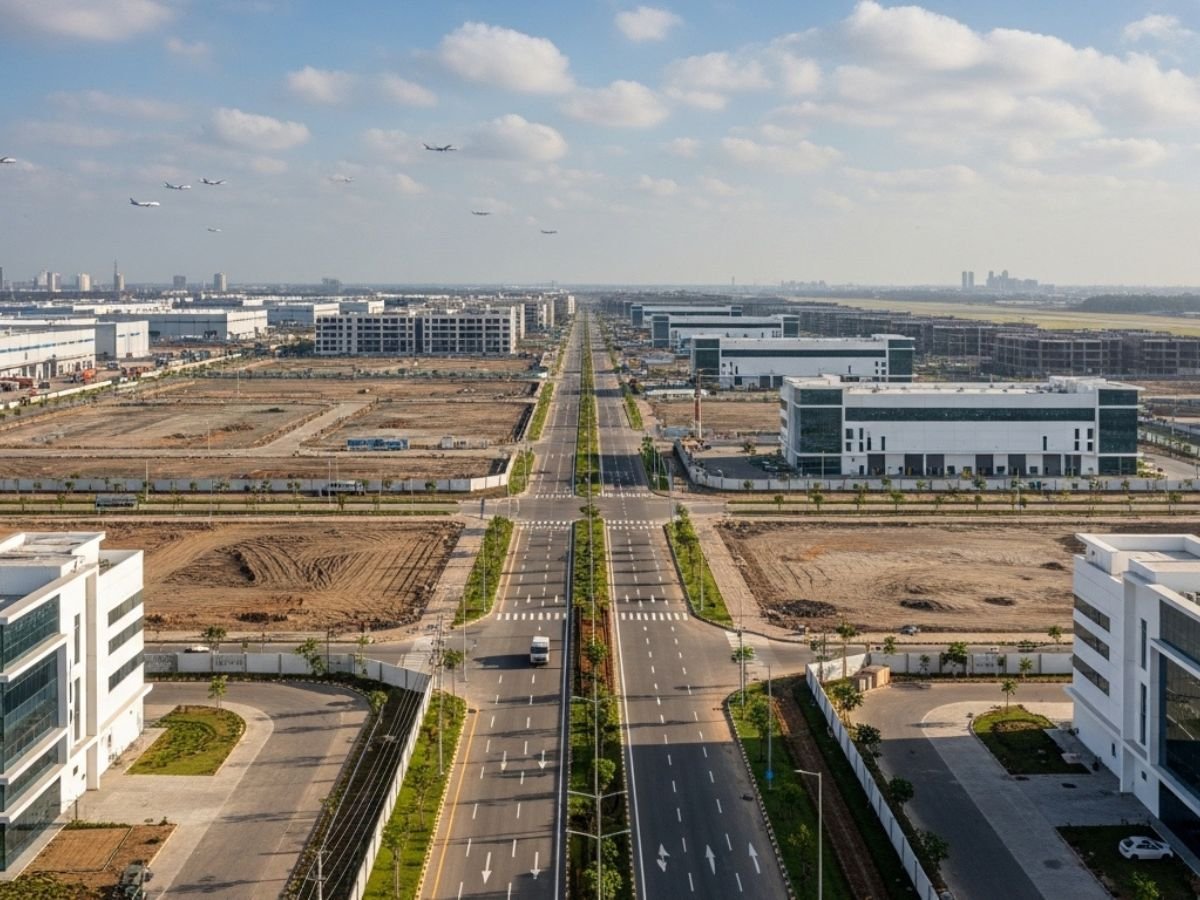
This side is often driven by future logistics positioning, port relevance, and airport-led sentiment. That matters. But it can also distort decision-making. Buyers who want immediate rent or reliable clean yield should be careful here. Future growth can lift value expectations long before present rent catches up. So this corridor often behaves better as a strategic long-term control or appreciation story than as a clean short-term yield play.
What makes one industrial plot cost far more than another even in the same belt?
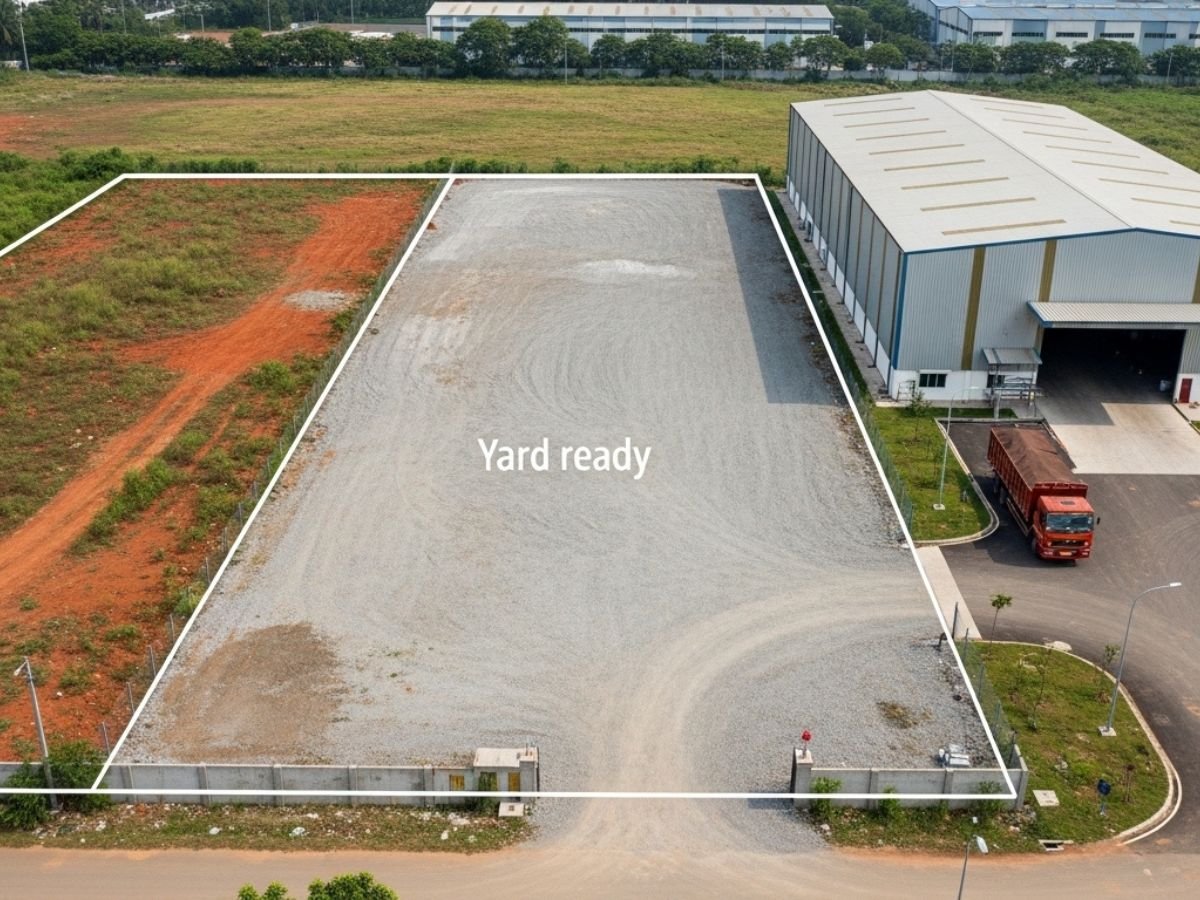
Two plots in the same industrial area can have completely different economics. The difference is usually not just “location.” It is a mix of authority, physical usability, and hidden transfer liability.
Authority and tenure
MIDC allotments are on leasehold terms, commonly for 95 years, not simple freehold ownership. The lease structure matters because the use of the land, permission conditions, renewal framework, and compliance obligations shape both value and exit ease. MIDC’s own standard lease documents also make it clear that the land must be used only for the approved purpose and that using it differently without prior permission can trigger action, including resumption in line with policy.
Transferability and subletting position
The transfer layer is one of the most under-discussed parts of industrial land pricing. MIDC guidelines and market practice make transfer and subletting far more controlled than many first-time buyers expect. MIDC’s land allotment guidelines also state that, in the initial allotment framework, no permission is given for transfer or subletting for five years, and change of use is also restricted for that period. That tells you something important: industrial land in Navi Mumbai is a permission-heavy asset class, not a casual flip product.
Road width, truck movement and frontage
A plot on a proper industrial road with comfortable truck turning and loading logic is not the same thing as an awkward inside plot. In industrial real estate, 25-metre road logic, turning convenience, entry radius, loading movement, and frontage matter much more than they do in residential property. A cheaper plot can become expensive very fast if operations feel cramped.
Power, water and industrial usability
Sanctioned power is not a side detail. Neither is water. For many occupiers, especially in engineering or process-linked use, the real question is whether operations can start without months of friction. A cheaper plot without practical utility can become a bad buy.
Shape, level difference and usable area
Irregular shape, slope, low-lying condition, drainage problems, and cut-and-fill requirements all affect value. A 20,000 sq ft plot on paper may not behave like 20,000 sq ft in operations or in development cost.
Open land, yard-ready land and land with a usable structure are not the same product
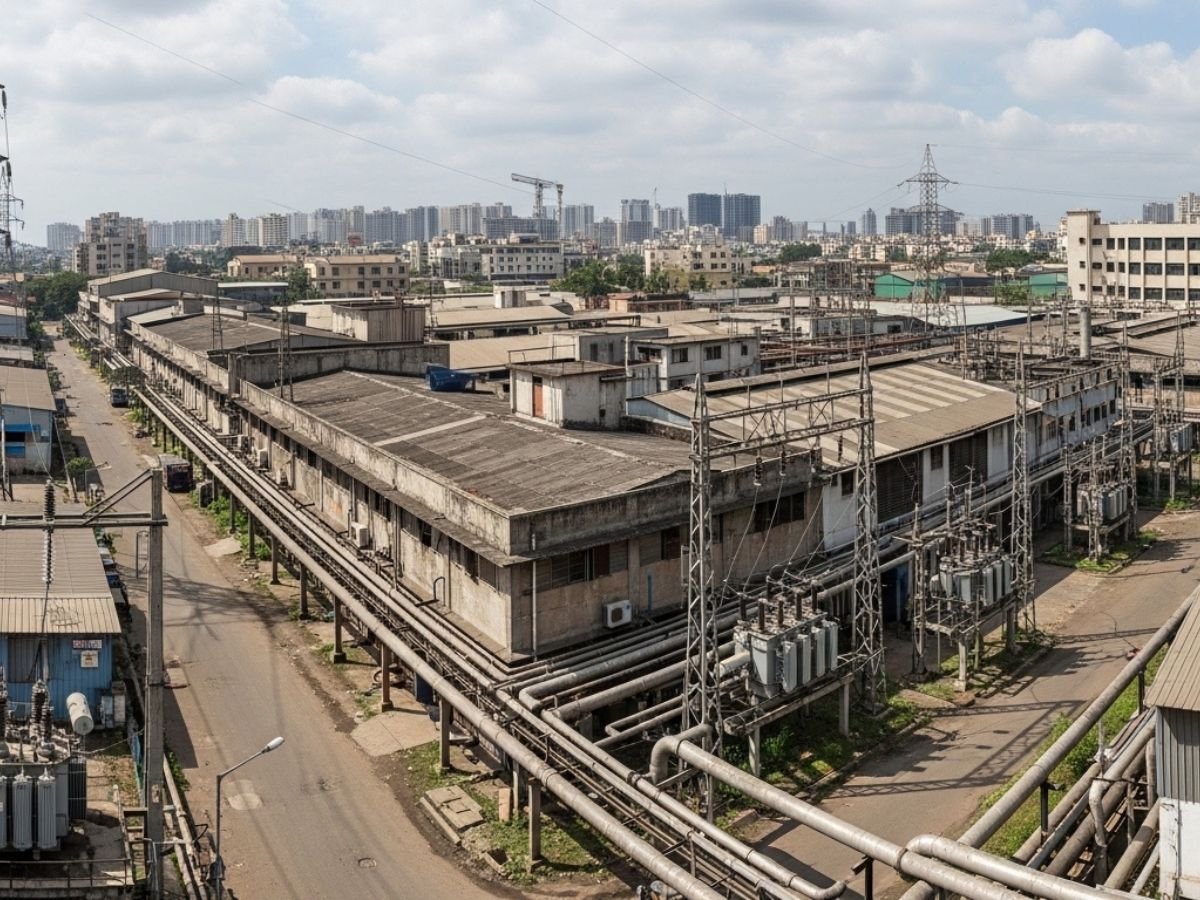
This is where many comparisons break. Plain open industrial land, compacted and walled yard land, and land with a real industrial shed should not be compared as one asset class. The market does not rent them the same way, value them the same way, or reward them with the same yield logic.
Before believing the quoted rate, check these six things
1. Authority: MIDC, CIDCO-side, or another structure 2. Lease and transfer position: Is there any hidden premium, permission burden, or transfer friction? 3. Current usable condition: raw land, yard-ready land, or land with real industrial structure 4. Road and movement quality: road width, turning radius, dock comfort, loading practicality 5. Utilities: sanctioned power, water, drainage, pollution-control practicality where relevant 6. Tax and dues position: NMMC or local civic dues, arrears, and operating leakage
What do industrial land rents in Navi Mumbai really look like?
Industrial rent in Navi Mumbai only makes sense when you first define the asset properly.
For large open industrial land, asking rents can be modest relative to capital value. Current listing evidence in Navi Mumbai includes large Taloja industrial land being advertised at roughly ₹10 per sq ft per month, which is a good reminder that raw open land usually does not command the kind of rent buyers imagine when they first hear “industrial.”
For better built industrial sheds in Taloja, asking rents can sit much higher. Current listing pages show multiple Taloja industrial sheds being marketed around the mid-30s per sq ft per month, with rent level linked to factors like location, readiness, power, crane provision, and frontage. That is exactly why a simple “industrial rate” conversation is misleading. A proper shed and a plain plot do not live in the same rent bracket.
A practical rule works well here: open land gets rented for utility, yard land gets rented for operational convenience, sheds get rented for productive use.
That also explains why deposits can distort the visible monthly rent. Some landlords keep the monthly number softer but load the deal through a heavy security deposit. So while reading listings, never compare rent alone. Read the full structure.
What is a realistic yield for industrial land in Navi Mumbai?
The honest answer is this: open industrial land usually does not give the kind of passive clean yield many buyers expect.
If the asset is just open land, gross yield is often weak because rent is modest while capital value can be high. If the asset is formalized yard space or a properly built industrial shed, the picture improves. But even then, gross yield is not take-home yield.
A simple way to think about it:
- Open land: often appreciation-led or control-led, not income-led
- Yard-ready land: better if a real operational use exists
- Built industrial shed: strongest candidate for income, but only if the entry price is rational and the unit is actually occupier-friendly
This is where Navi Mumbai gets unforgiving. NMMC-side tax leakage is real, and rateable value is linked to expected annual rent. MIDC-side economics can also get affected by subletting charges and permission conditions. So a gross 8% to 9% story can become much thinner once real leakage begins. That is why industrial yield here should always be written as indicative gross yield and estimated net yield after statutory and operating leakage, not as a clean fixed return promise.
Should you buy industrial land for self-use, for rental income, or lease instead?
This depends on who you are.
When self-use buying makes more sense
Buying makes sense when the business genuinely needs location control, specialized fit-out, long operating continuity, or infrastructure that is too expensive to keep redoing in leased premises. Heavy engineering, process-linked activity, and long-horizon manufacturers often fit this category better than casual investors.
When leasing is smarter
Leasing is usually smarter for MSMEs, expanding businesses, first-time industrial occupiers, or logistics users testing a belt. It protects working capital. It also shifts a meaningful part of the maintenance and tax headache away from the occupier. In a market where value can rise much faster than rent, leasing often makes more business sense than buying.
When income-focused buying is reasonable and when it is not
If the plan is rental income, buying plain open land is usually the weaker idea. Income-focused buying is more logical when the buyer is entering at a rational basis and the asset is a real industrial utility product, not just a future story. In practical terms, that often means a usable industrial shed or a genuinely rent-ready yard, not raw land bought only because the surrounding story sounds exciting.
How should you read asking prices, ready reckoner guidance and local deal logic together?

In Navi Mumbai industrial property, these are three different things.
Asking price is what the broker, seller, or portal is quoting. It may reflect optimism, scarcity, airport sentiment, or plain testing of the market.
Ready Reckoner or eASR is the state benchmark used for stamp-duty valuation logic. It matters, but it is not the same thing as the correct deal price. Maharashtra’s official eASR portal is the right benchmark source to check node-wise rate context before you negotiate. :contentReference[oaicite:10]{index=10}
Real deal logic is what remains after you account for the hidden frictions: transfer permission, premium impact, tax burden, shape correction, level correction, utility cost, and actual use fit.
So if one plot looks cheaper than another, do not stop at the number. Ask:
- Is the land raw or ready?
- Is the authority risk the same?
- Is the transfer cost the same?
- Is the actual industrial usability the same?
Very often, the apparently cheaper deal is only cheaper before reality starts billing you.
Which local authority checks can change industrial land value or rent overnight?
In Navi Mumbai, you are not just buying land. You are buying a relationship with an authority framework.
For MIDC land, the lease structure, use conditions, transfer restrictions, and development obligations matter directly. MIDC documents show 95-year leasehold structure, approved-use conditions, and strong control over how plots are used and transferred.
For CIDCO-side plots or premises, transfer permission and transfer charges are not side issues. CIDCO’s Town Services framework makes it clear that plot and premises transfers require CIDCO’s permission and payment of transfer charges. So if you are buying a CIDCO-linked industrial or commercial-industrial property, do not model it like a frictionless freehold transfer.
For NMMC-side industrial assets, property-tax economics matter more than many investors first assume. If the asset falls in NMMC jurisdiction, tax modelling should be part of your yield calculation from day one.
One more caution: do not casually assume that plain industrial land gives you the same buyer-protection framework that people usually associate with residential RERA conversations. Industrial assets often need deeper contract, title, permission, and authority checking.
Where do Navi Mumbai industrial land deals usually go wrong?
Most bad industrial land deals in Navi Mumbai fail in predictable ways.
Buyers compare raw land to built industrial assets and expect similar rent.
They buy into future growth stories and forget that present yield comes only from present utility.
They treat official benchmarks, asking prices, and real deal value as if they are the same number.
They ignore the fact that MIDC and CIDCO are permission-heavy ecosystems.
And they underestimate how much tax, transfer, vacancy, and compliance can eat into the return.
The most expensive mistake is not overpaying by a few percent. It is buying the wrong industrial product for the wrong objective.
A simple way to compare two industrial land opportunities in Navi Mumbai
If you are confused between two opportunities, this five-step method helps.
Step 1: Normalise the unit
Convert both deals into the same unit. In industrial property, square metre comparison is often more useful because MIDC and authority-side logic usually works that way.
Step 2: Separate land value from structure value
If one asset includes a shed, office block, compound wall, or yard preparation, strip that out mentally before comparing the land itself.
Step 3: Check industrial usability, not just location
Which one has better truck movement, road width, utility readiness, and immediate operational fit? The better industrial asset is not always the one with the better pin code.
Step 4: Estimate income honestly
Model a realistic rent, not a dream rent. Then deduct likely leakage. If the asset is open land, stay conservative. If it is a shed, check whether the quoted rent is backed by actual occupier depth.
Step 5: Score exit ease
Ask which asset will be easier to sell, assign, or re-lease later. Clean authority position, proper utility, and straightforward use logic usually exit better than speculative stories.
Navi Mumbai industrial land should never be bought on one number alone. A quoted rate can look cheap and still be wrong. A high-value plot can still be a weak income asset. TTC, Taloja, and Panvel-side corridors solve different business problems, and MIDC, CIDCO, and NMMC each change the economics in their own way. If you want the safest working rule, use this one: buy industrial land here only after you decide whether your real goal is control, operations, appreciation, or income. Once that is clear, the right belt and the right asset type usually become much easier to identify.
FAQs
Frequently Asked Questions