

Nerul Commercial Rates and Rents: Offices, Shops, Prices and Local Market Reality
Nerul commercial rates and rent trend are strong, but they are not moving as one market. In early 2026, better office towers, older mixed-use offices, and internal-sector shops are pricing and renting very differently. Prime retail still commands a clear capital premium, but better office stock can offer steadier leasing logic. So the real answer is simple: do not read Nerul through one average rate. Read it by asset type, pocket, building quality, and hidden holding cost. :contentReference[oaicite:0]{index=0}
That is where many buyers go wrong. A broker says Nerul commercial is rising. A portal shows one blended average. A seller quotes a yield. None of that is enough. A fitted office in a newer business park, an older unit in Great Eastern Galleria, and a small ground-floor shop inside a dense sector are not the same market. They attract different tenants, produce different rent behaviour, and carry different risk.
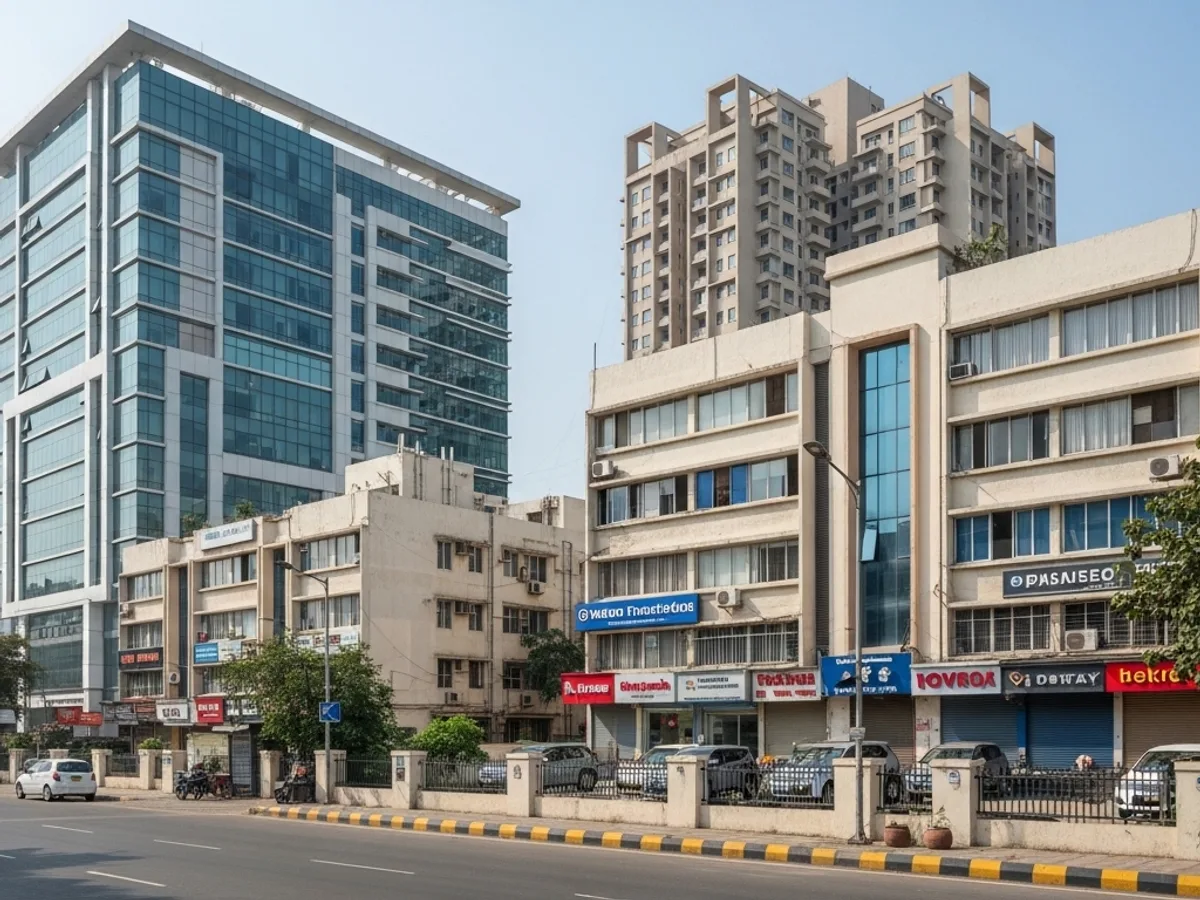
What do Nerul commercial rates and rents actually look like right now?
The most practical way to read Nerul is to split it into four buckets: newer office stock, older mixed-use office stock, visibility-led retail, and internal-sector neighbourhood shops. Current live listings in Nerul show newer office stock quoting far above older office inventory in some buildings, while small retail units in dense sectors can show very high per-square-foot rent because footfall and convenience matter more there than carpet size alone. :contentReference[oaicite:2]{index=2}
| Asset type | Indicative asking sale band | Indicative asking rent band | What pushes premium | Main caution |
|---|---|---|---|---|
| Newer / Grade-A style office stock | ₹15,000 to ₹24,000 per sq. ft. in many quoted examples, sometimes wider depending on fit-out and building | Around ₹110 to ₹130 per sq. ft. per month on carpet-equivalent asking for fitted units in stronger buildings | Corporate lobby, parking, power backup, better floor plates, cleaner building image | Heavy loading, CAM charges, and optimistic resale pitch |
| Older mixed-use office stock | Usually more practical than newer towers | Often around ₹70 to ₹100 per sq. ft. per month depending on building and layout | Lower entry cost, known local location, smaller ticket size | Aging infrastructure, weaker parking, slower premium tenant absorption |
| High-visibility retail / showroom stock | Usually well above offices, often around ₹20,000 to ₹30,000+ per sq. ft. in stronger pockets | Often ₹150 to ₹250+ per sq. ft. per month where frontage is proven | Main-road visibility, brand signage, glass frontage, walk-in potential | Capital premium can outrun actual business demand |
| Internal-sector neighbourhood shops | Commonly around ₹18,000 to ₹24,000 per sq. ft. in practical market bands, but tiny trophy units can quote much higher | Often around ₹110 to ₹180 per sq. ft. per month, sometimes more in small units | Dense residential catchment, daily-needs demand, clinic/service suitability | High turnover of small tenants, waterlogging or ground-level operating issues in some pockets |
These are indicative asking bands, not guaranteed deal rates. Live listings in Vishwa Plan S, Great Eastern Galleria, Nerul sector shops and current sale pages show wide dispersion, which is exactly why one blended “Nerul average” is misleading. :contentReference[oaicite:3]{index=3}
One more reality matters here. MahaRERA’s framework is built around carpet-area clarity, but large parts of the secondary commercial market still get discussed in super built-up language. That means a unit that looks cheap on paper can become much less attractive when you convert it into real usable area and add maintenance on inflated chargeable area. :contentReference[oaicite:4]{index=4}
Which parts of Nerul command premium commercial pricing, and which stay more practical?
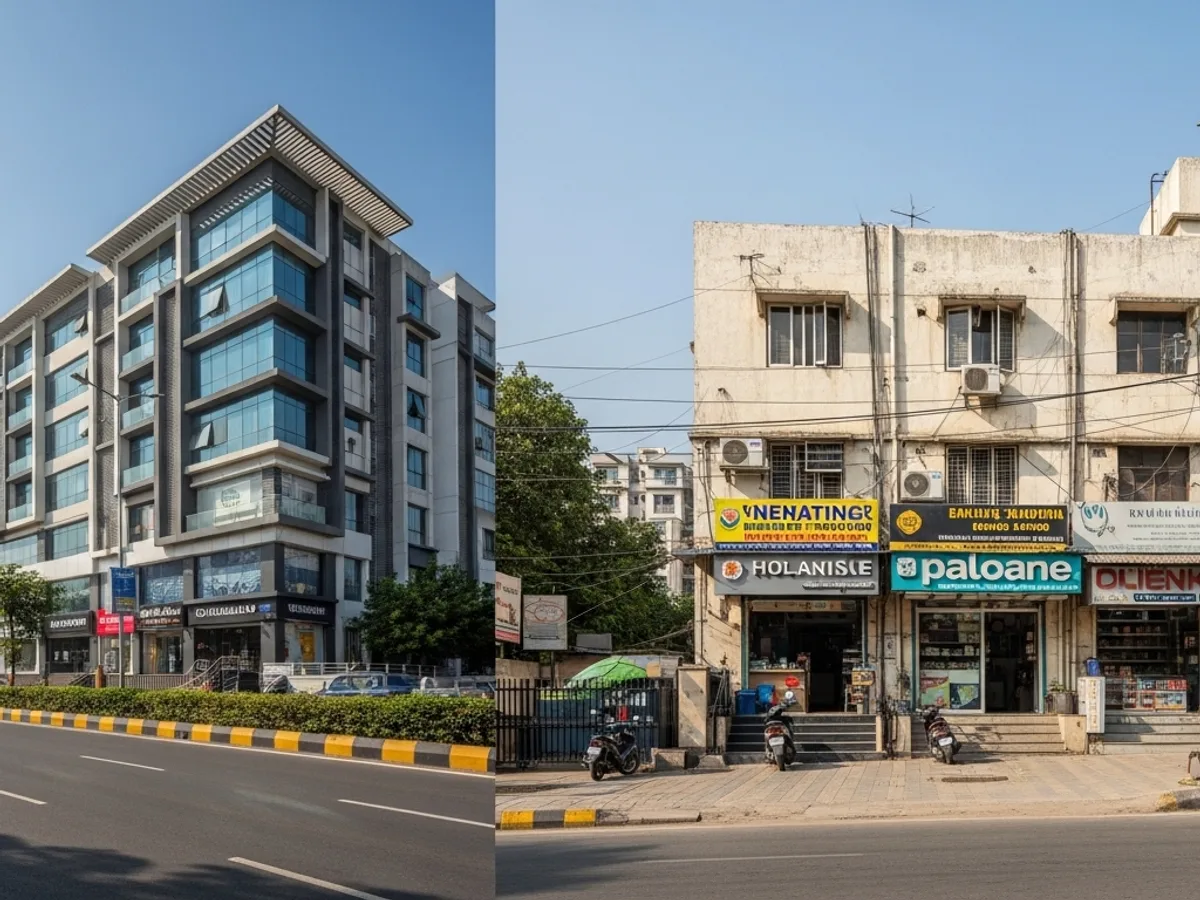
Nerul premium is not just about “east” or “west.” It is about what the location does for the business.
Station-linked and major approach locations
If a business depends on daily staff movement, client visits, or commuter convenience, station-linked locations and better-connected approach corridors usually command higher office rent. This is why better office buildings with stronger infrastructure and cleaner access tend to hold rent better than older stock, even when both sit under the same broad Nerul label. In the wider Navi Mumbai office market, lower rental cost than tier-I city averages is also helping corporate occupiers look harder at this side of the region, which supports demand for better office product. :contentReference[oaicite:5]{index=5}
Palm Beach frontage and visibility-led commercial stock
Palm Beach-facing or strong roadside visibility stock behaves like branding space, not just usable area. That matters more for showrooms, premium services, and businesses that want high-income catchment plus road presence. Great Eastern Galleria’s positioning near Palm Beach helps explain why it remains relevant despite being older than newer business park supply. :contentReference[oaicite:6]{index=6}
Internal sectors such as 15, 20, and nearby practical-density pockets
This is where many local businesses quietly do well. Clinics, diagnostic operators, coaching classes, daily-needs retail, local finance professionals, and service businesses often do not need prestige pricing. They need dense households, repeat walk-ins, short-distance convenience, and familiarity. That is why a small internal-sector shop can show surprisingly strong rent despite not looking glamorous on a portal. Current sector-level shop listings in Nerul support that practical-rent logic. :contentReference[oaicite:7]{index=7}
Older mixed-use commercial stock
Older mixed-use commercial stock is usually where buyers get tempted by lower ticket size. Sometimes that works. Sometimes it does not. If visitor parking is weak, lift condition is poor, signage is messy, and the building image feels dated, premium rent gets capped very quickly. A cheaper commercial unit is not automatically a better commercial deal.
Are office rates and shop rents moving in the same direction in Nerul?
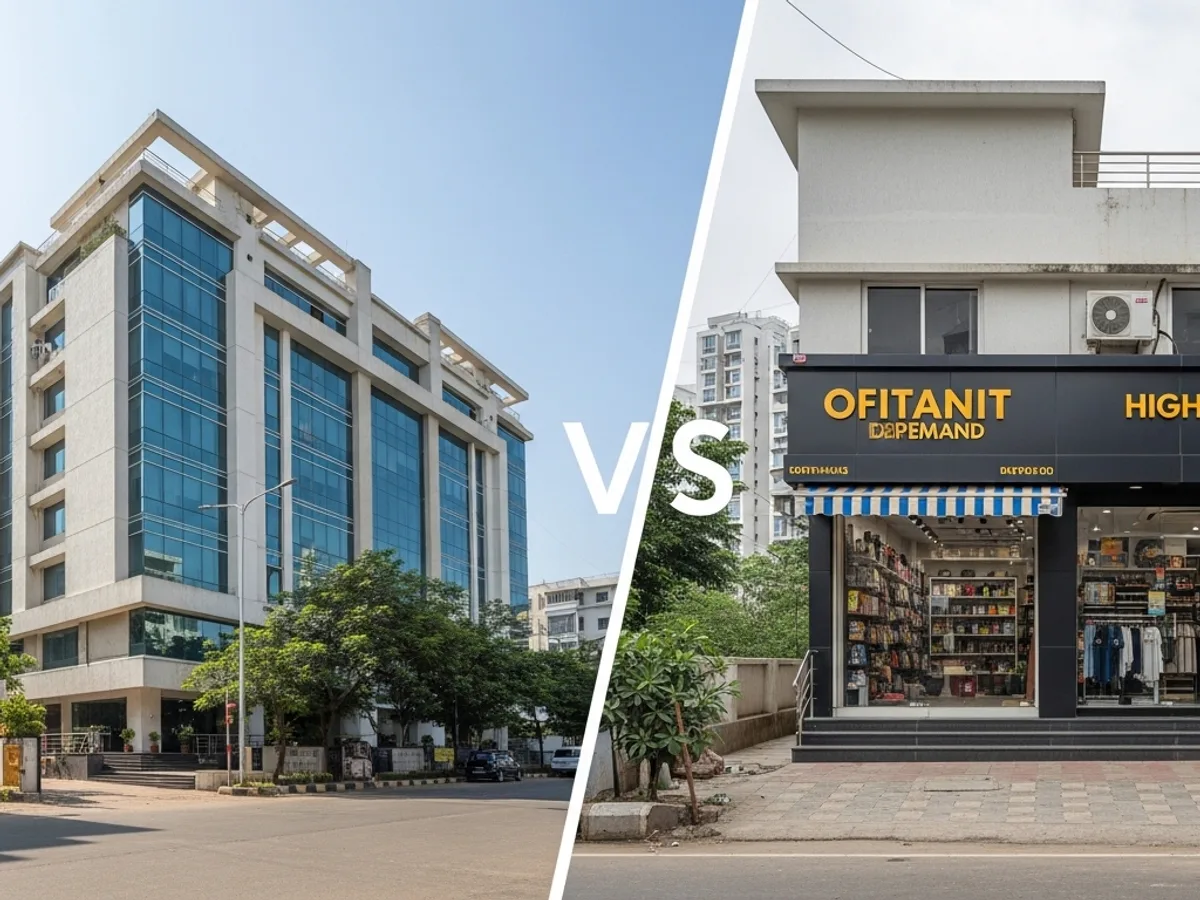
No. That is one of the most important takeaways from this topic.
Where offices hold value better
Office value in Nerul is increasingly tied to building systems and occupier comfort. Good parking, better floor plates, backup power, cleaner lobbies, easier staff commute, and better operational image matter a lot. This is why better-positioned office stock can still find occupiers even when older office buildings struggle to push rent meaningfully higher. Vishwa Plan S-style listings show how newer-format office inventory can ask materially stronger rates than older office stock. :contentReference[oaicite:8]{index=8}
Where shops can outperform offices
Retail can still beat office in rent intensity and sometimes in yield narrative, but only when the shop has a real business reason to exist. Ground-floor visibility, thick residential catchment, frontage, and repeat neighbourhood spending matter more than brochure language. In short, a small shop can look brilliant if it sits in the right local pocket, and terrible if it sits in a weak one.
Why small-unit retail looks stronger on paper than in practice
This is where many first-time investors get trapped. A tiny pre-leased shop can show a dramatic price per square foot and a nice-sounding yield, but small businesses fail more often than corporate occupiers. One vacancy period can damage the full-year return. That is why small-ticket retail should be underwritten with more caution, not less. Current listings in Nerul already show tiny pre-leased units asking extremely high per-square-foot numbers, which proves how easy it is to overpay for the comfort of an existing tenant. :contentReference[oaicite:9]{index=9}
What is actually pushing Nerul rents up, and what is capping them?
Rents in Nerul are being pushed up by three broad things: better citywide connectivity, stronger occupier interest in Navi Mumbai offices because of cost advantage, and the simple fact that better commercial buildings are limited compared with the number of people who want clean, usable stock. CRE Matrix’s 2026 Navi Mumbai view says office rents in the market remain about 21% lower than average tier-I city levels, which is one reason GCC and corporate attention has increased. :contentReference[oaicite:10]{index=10}
But rents do not rise freely forever. They get capped by local reality. Older buildings cannot charge like newer ones just because the pin code is Nerul. A weak lobby, poor visitor parking, awkward loading, bad frontage, or inefficient usable area quickly limits what serious tenants will actually pay. That is why landlord optimism and tenant willingness often diverge.
The other cap is financial, not physical. Commercial ownership math in Navi Mumbai is tighter than many buyers realise. Commonly cited NMMC property tax breakdowns place commercial tax at about 68.33% of rateable value versus 38.67% for residential. That does not mean every owner experiences the same net drag, but it does mean headline rent has to be read more carefully in commercial property than in a simple residential comparison. :contentReference[oaicite:11]{index=11}
> Quick reality check: The strongest Nerul commercial rents usually go to spaces that reduce business friction. Easy access, clearer layout, parking, better frontage, better fit-out readiness. Not just a famous road name.
When does buying commercial property in Nerul make sense, and when is leasing smarter?
Buying in Nerul makes sense when the business is stable, location-sensitive, and likely to stay put for years. A diagnostic lab, speciality clinic, branded service centre, or long-horizon office occupier may justify ownership because rent escalation over time can become painful, and strong locations do not get cheaper once the market matures.
Leasing makes more sense when the business is still finding its scale, when capital is better used in operations, or when the occupier is still testing whether Nerul is the right catchment. This is especially true for startups, smaller service operators, and first-time businesses. In commercial property, wrong location plus locked capital is a much more expensive mistake than paying rent for a few years.
There is another reason to think harder before buying: Navi Mumbai commercial deals do not happen in a frictionless freehold world. CIDCO’s own city-services guidance makes clear that transfer procedure applies to shops, flats and plots, and the 2025 revision raised property transfer fees, with commercial shops among the categories seeing a sharp hike. That makes short-term flipping much less attractive and strengthens the case for long-hold buying only. :contentReference[oaicite:12]{index=12}
How should investors read yield, vacancy risk, and exit comfort in Nerul?
This is where commercial storytelling often becomes dangerous. A seller says 8% yield. A brochure says assured return. A portal says pre-leased. None of that is enough.
Net yield is what matters, not gross yield. Once you account for property tax burden, maintenance on chargeable area, vacancy periods, fit-out sensitivity, and lease quality, the “great” return on paper can shrink quickly. Even current office resale pages in Nerul openly market assured-return language, which is exactly why investors need to read the lease, not the headline. :contentReference[oaicite:13]{index=13}
Vacancy risk is not equal across assets. A small retail unit can fall vacant because the specific business failed. An older office can stay empty because the building itself is no longer attractive enough to premium tenants. Exit comfort also differs. Better, cleaner, easier-to-lease assets usually resell better than awkward stock, even when both are “commercial in Nerul.”
If you are investing, the better question is not “What is the yield?” It is “How re-leasable is this asset at honest rent after the current tenant leaves?”
What can make Nerul commercial stock look stronger on portals than it really is?
This section matters because many mistakes start online.
First, asking price is not transaction truth. It is a starting position. Some live office and shop listings in Nerul are practical. Some are plainly aspirational.
Second, area quoting can distort the entire deal. If a listing looks cheap but is being discussed on super built-up area while your rent, maintenance, or business plan depends on usable space, you may be underwriting the wrong number. MahaRERA’s carpet-area framework exists for clarity, but the commercial resale and leasing market still uses looser quoting habits. :contentReference[oaicite:14]{index=14}
Third, pre-leased premium can be a trap. A tenant sitting inside a shop or office does not automatically make the asset safe. You need to see lock-in period, escalation, exit clause, deposit, fit-out ownership, and actual tenant quality.
Fourth, tiny-unit yield can fool beginners. A 100 to 250 sq. ft. unit can show an exciting price per square foot and a nice monthly rent, but one vacancy cycle can break the full-year math.
What should a buyer or tenant check before paying Nerul premium rates?

Before paying commercial premium in Nerul, check these things properly:
- Title and transfer path: In Navi Mumbai, transfer procedure and leasehold paperwork matter. Do not treat CIDCO transfer clearance as a minor afterthought. :contentReference[oaicite:15]{index=15}
- Area honesty: Ask for carpet, chargeable, super built-up, maintenance basis, and parking basis separately.
- Use legality: If the property is in an older mixed-use or society-type environment, confirm that the intended commercial use is actually workable.
- Building operations: Power backup, lift count, visitor parking, loading access, signage rules, washroom provision, and water line matter more in commercial property than buyers admit.
- Tenant reality: If buying pre-leased, read the lease. If leasing vacant space, ask what type of tenant the building has historically attracted and lost.
- MahaRERA status for newer stock: If the project is under construction or recently delivered, verify registration and timeline rather than trusting verbal promises. MahaRERA’s official platform remains the right place to check that. :contentReference[oaicite:16]{index=16}
A simple Nerul commercial decision guide: which type of space suits which type of user?
| User type | Best-fit Nerul commercial format | Usually smarter move | Why |
|---|---|---|---|
| Premium office occupier | Newer office tower / business-park style stock | Lease first, buy later if business is stable | Keeps capital free while testing team size, commute fit, and operating cost |
| Clinic / medical / professional service | Internal-sector ground or first-floor practical commercial unit | Buy if long-term patient base is clear | Stability matters more than prestige, and repeat local catchment can justify ownership |
| Retail brand / premium service brand | Visibility-led main-road or Palm Beach-side frontage | Buy only if frontage is proven | Retail premium is expensive, so branding logic must be real |
| Investor seeking stable rent | Better-quality pre-leased office with genuine lease audit | Selective buy | Corporate-style leasing can be steadier than fragile small retail |
| Budget business / local service | Older mixed-use office or neighbourhood shop | Lease | Lower risk if catchment underperforms |
| First-time commercial buyer | Small, seemingly safe pre-leased shop | Usually avoid rushing | This is where small-unit yield illusion and overpricing often hurt most |
The practical verdict is simple. Nerul is strongest for people who know exactly what kind of commercial user they are. It is weakest for buyers who only know they want “something commercial.”
conclusion
Nerul is a strong but selective commercial node. It is not a one-number market, and that is the real story behind Nerul commercial rates and rent trend.
If you want clean office logic, focus on building quality, access, parking, and usable area. If you want retail logic, focus on frontage, footfall, and catchment, not just brochure premium. If you want investment, forget headline yield and study net yield, lease quality, tax drag, and exit comfort. And if you are buying only because a portal says “prime Nerul commercial,” slow down. In this market, the winner is usually not the person who buys fastest. It is the person who understands what kind of commercial asset they are actually buying.
FAQ's
Frequently Asked Questions
