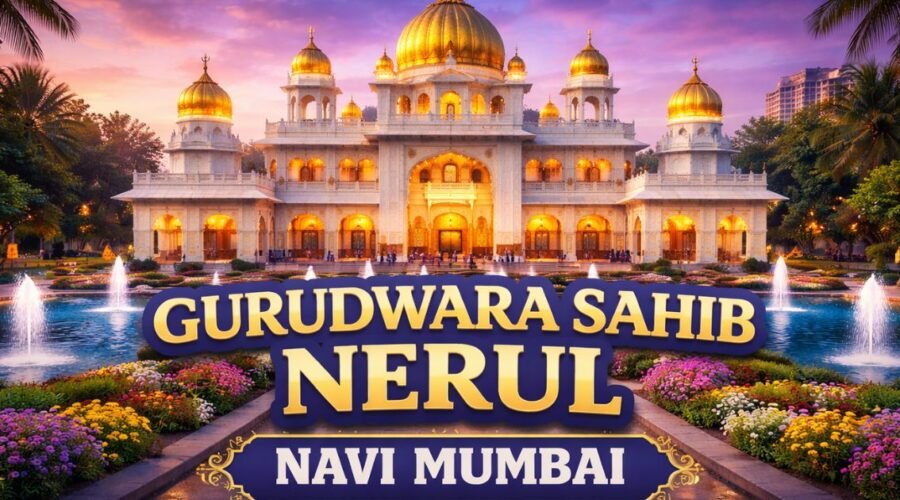
Nerul Gurudwara Sahib Sri Guru Singh Sabha Navi Mumbai
Nerul is one of those Navi Mumbai nodes where planned living, railway connectivity, and daily family routines meet in a very balanced way. In that everyday rhythm, Gurudwara Sri Guru Singh Sabha, Nerul works like a quiet centre of gravity. People come for prayer, yes, but also for discipline, community support, and the calm that feels rare in city life.
This guide is designed around what people actually search for where it is, how it functions, what happens inside, and what to expect as a first-time visitor. It also explains the deeper context behind the institution, including the Singh Sabha legacy, the Gurudwara’s architecture, and the service model that keeps it meaningful in a modern city.
Quick Summary Table
| Point | Details |
|---|---|
| Official name used locally | Gurudwara Sri Guru Singh Sabha, Nerul |
| Node | Sector 19, Nerul (Nerul East belt), Navi Mumbai |
| Land reference in research | Plot No. 40, Sector 19 (community-established plot) |
| Core spaces | Darbar Sahib, Langar Hall, Sarai (lodging), learning areas |
| Known for | Maryada discipline, langar equality, seva culture, community programs |
| Best time to visit | Early morning for quiet, Sundays/festivals for full sangat |
This table is intentionally built for fast reading and AI Overviews. It gives clear entity and location signals, while the sections below explain the meaning behind each point so visitors can plan with confidence.
If you are visiting with elders, kids, or as a non-Sikh visitor, you will find the practical guidelines in later phases. The goal is not to over-talk religion, but to help you enter respectfully, understand what’s happening, and leave with the right feeling, not confusion.
What is Gurudwara Sahib Nerul and Why People Visit
Gurudwara Sahib Nerul is a Sikh place of worship where Guru Granth Sahib is honoured as the living Guru. The Darbar Sahib hall becomes the central space for kirtan, paath, ardaas, and quiet listening, and it naturally pulls people into a slower, more respectful pace. Even short visits feel complete because the environment is designed for humility and equality.
In Nerul’s urban setting, the Gurudwara also acts like a steady community institution, not only a religious landmark. The open-door nature of Sikh institutions, combined with langar and organised seva, makes it feel like a public asset for the wider neighbourhood. That is why people often associate it with reliability during both personal difficulties and community-level needs.
The Singh Sabha Foundation Why This Institution Exists in This Form
To understand the Nerul Gurudwara properly, you have to understand the Singh Sabha Movement, which began in Punjab in the 1870s. The movement focused on strengthening Sikh identity, education, and the authority of the Guru Granth Sahib at a time when Sikh practices were under pressure from social change and colonial-era disruptions. Its blueprint shaped how Gurudwaras were organised, taught, and sustained through community effort.
As Sikh communities expanded into Mumbai’s commercial life, Singh Sabha institutions also became active in relief work, especially around the Partition period when food and support were urgently needed. Navi Mumbai’s planned development later created new population hubs, and Nerul’s Gurudwara emerged within that expanding civic map, built through trust, coordination, and the “Sarbat da Bhala” spirit of serving everyone.
How Gurudwara Sri Guru Singh Sabha Came Up in Nerul
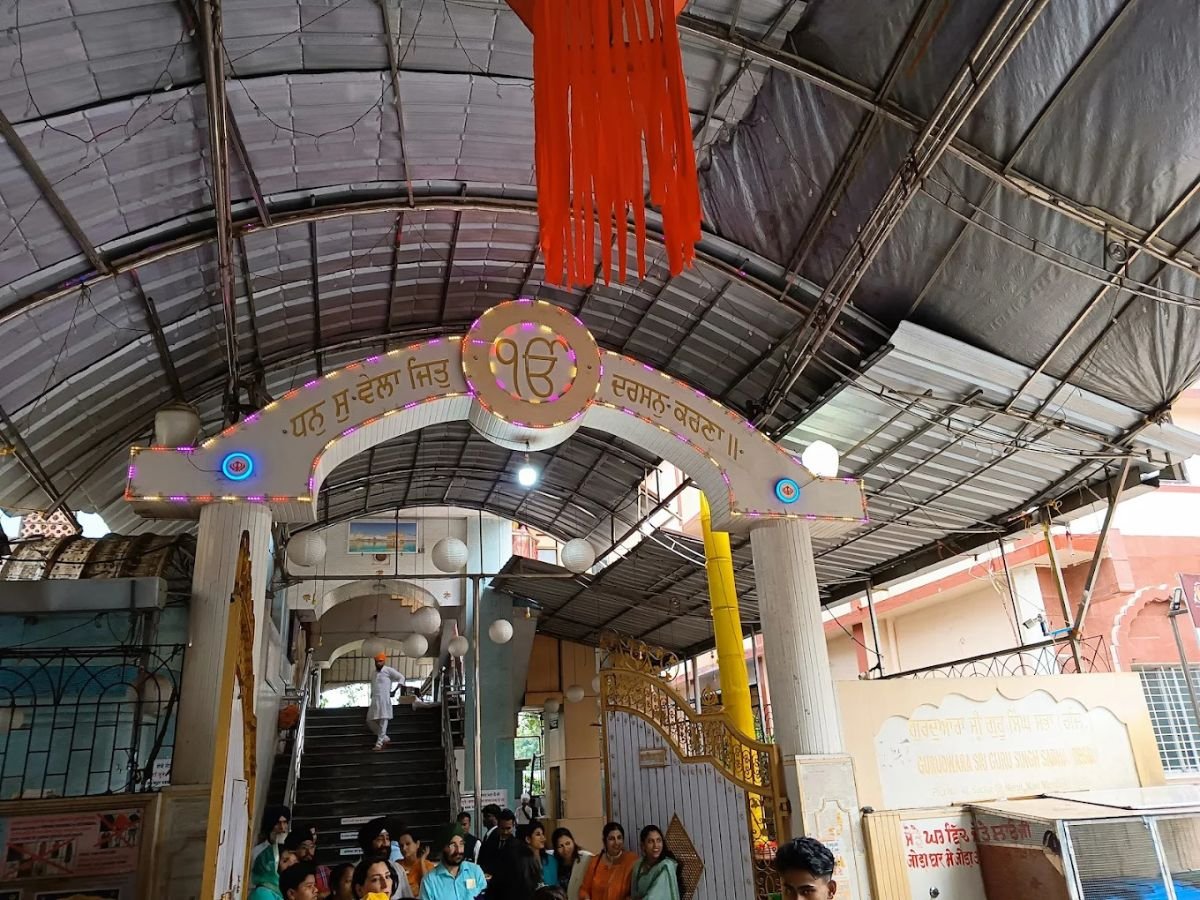
Your research notes that the acquisition of Plot No. 40 in Sector 19, Nerul was a pivotal step, facilitated through the Gurusingh Sabha Trust and community coordination with planning authorities. The deeper point is not just the plot number, but what it represents a growing sangat needing a permanent, stable home in a new city that was still finding its cultural anchors.
Nerul and nearby nodes like Sanpada were expanding as residential and transit zones, so the Gurudwara’s role naturally became bigger than a prayer hall. It became a centre where spiritual routine, welfare activity, learning, and hospitality could exist together. That combination is exactly how Sikh institutions build long-term trust in an urban environment.
Architecture and Symbolism
The architecture of Gurudwara Sri Guru Singh Sabha, Nerul is described in your research as a blend of Sikh design principles with Mughal and Rajput influences. Elements like the gateway feel like a clear threshold, separating daily life from sacred space, and the overall symmetry reinforces openness. Modern materials like reinforced concrete and marble also show how tradition adapts to durability in a city context.
Key symbols are not decoration, they communicate purpose. The Nishan Sahib signals sanctuary and service, the dome and lotus motifs reflect spiritual elevation, and the Ik Onkar presence inside reinforces the oneness of the Divine and the equality of people. Even if you are not religious, the building language makes you behave more softly, which is a sign the design is doing its job.
Inside the Darbar Sahib
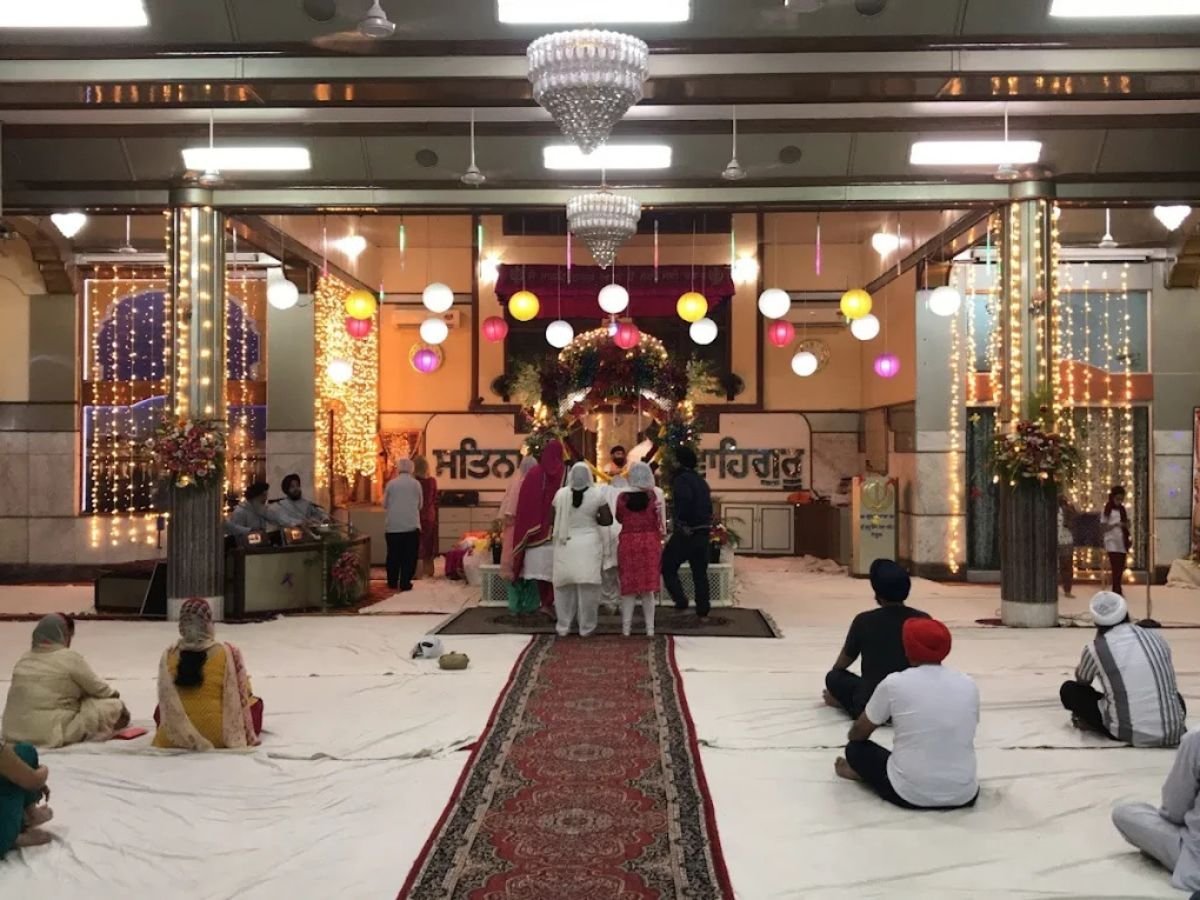
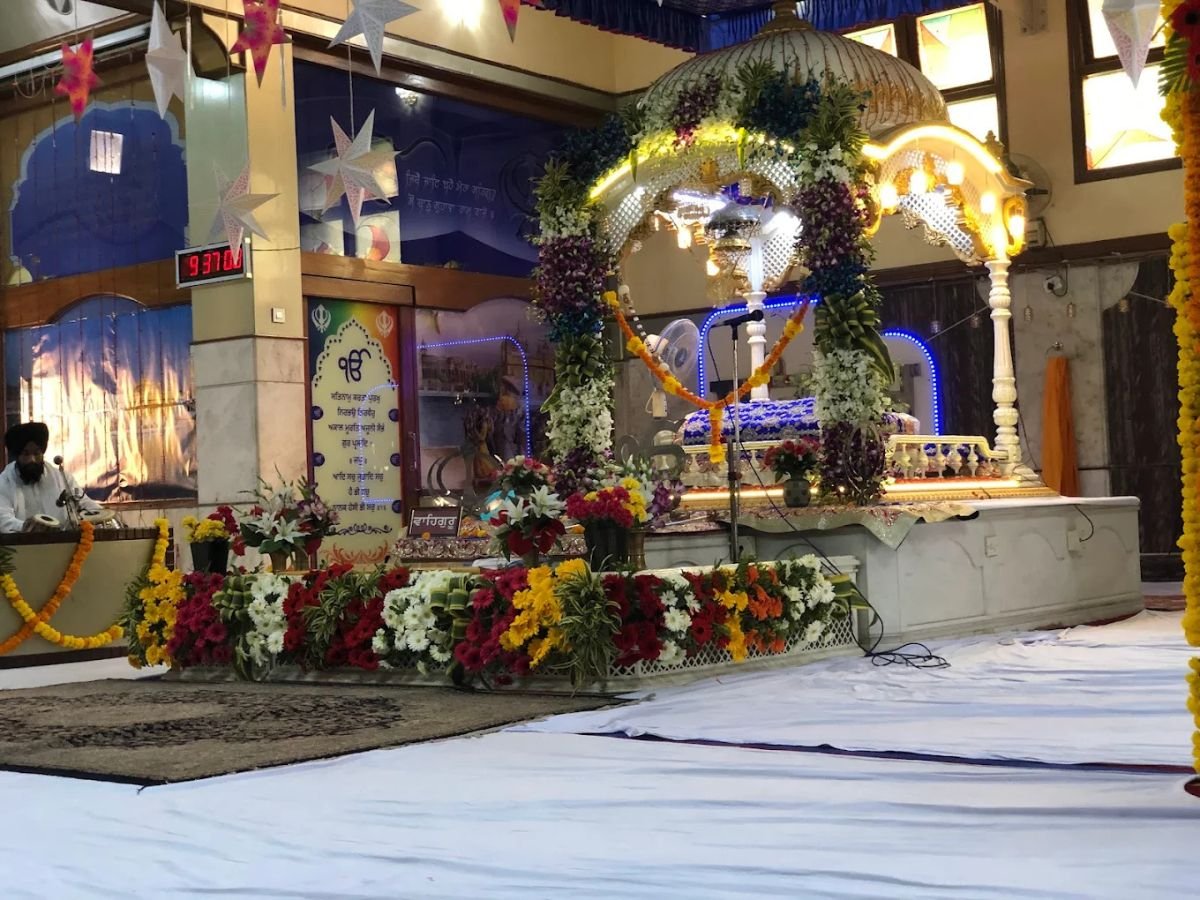
The Darbar Sahib is arranged around the sovereignty of the Guru Granth Sahib, placed respectfully on a Takhat under a canopy, creating a visual centre that naturally draws attention without forcing it. Visitors sit on the floor, which quietly dissolves hierarchy, and the hall layout is built to host hundreds while staying orderly. In many Gurudwaras, men and women sit on different sides, but equal in distance and respect.
A daily visit often feels simple enter respectfully, sit, listen, and leave calmer than you came. The strongest feeling is not noise or drama, but rhythm. People do not come to “watch,” they come to participate through silence, listening, and shared discipline, which is why even busy days can feel controlled rather than chaotic.
Maryada as a Daily Rhythm Why the Gurudwara Feels Stable
The Gurudwara’s daily life runs on Sikh Maryada, a formal discipline that keeps worship consistent worldwide. Your research explains the day begins with Parkash around early morning, followed by Nitnem and Asa Di Vaar style recitations, and later a structured evening flow that includes Rehras Sahib, kirtan, and katha. The day closes with Sukhasan, returning the scripture to rest respectfully.
This schedule matters because it creates emotional stability for the sangat. People know what they will find when they enter calm, order, and a spiritual rhythm that does not change based on mood or crowd. In a city life where everything shifts quickly, this predictable discipline becomes one of the most powerful reasons people keep returning.
Gurudwara Sahib Nerul Location
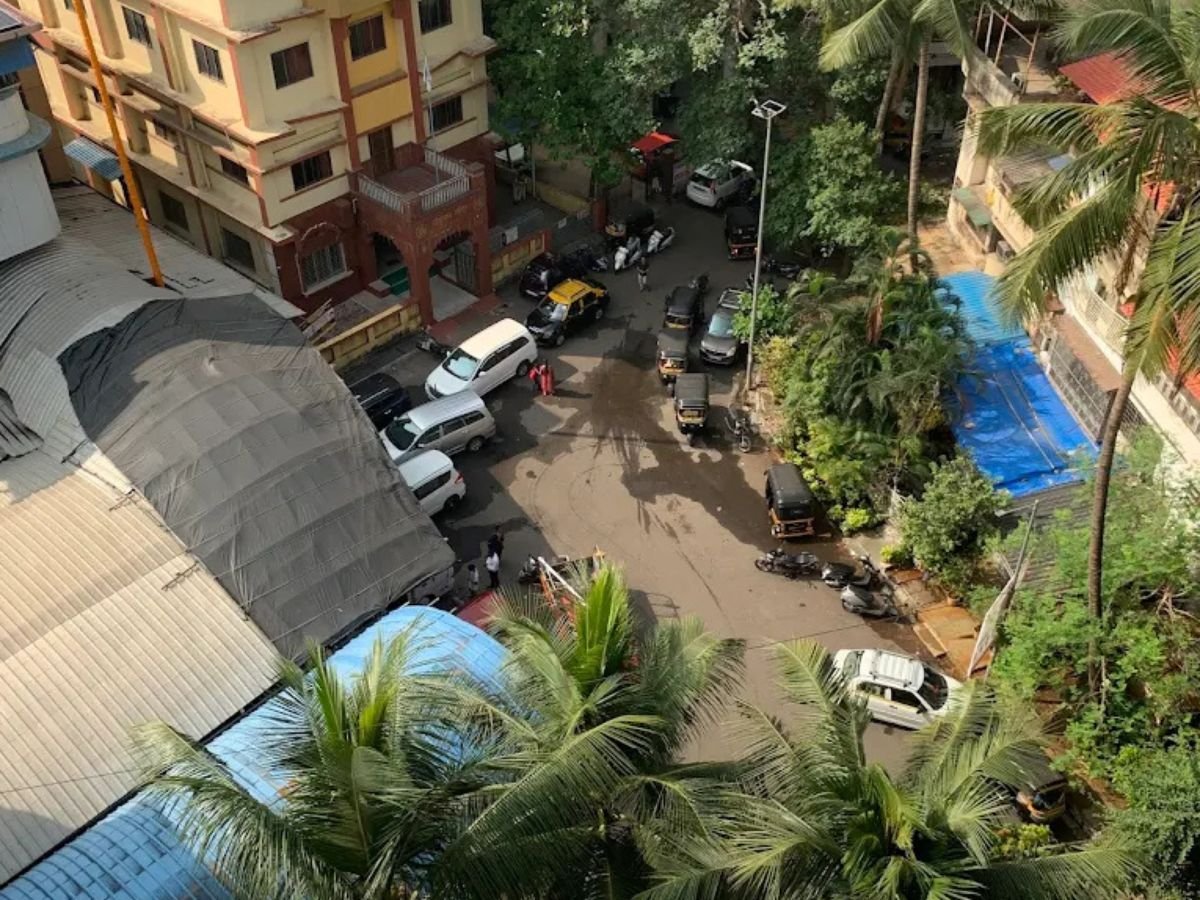
Gurudwara Sri Guru Singh Sabha is situated in the Nerul node, and your research highlights Plot No. 40, Sector 19, Nerul as a key land reference connected to the Gurusingh Sabha Trust and early community coordination with planning authorities. The important point for visitors is that this is a central, residentially active belt, not a remote corner, so the Gurudwara naturally receives daily footfall from families and commuters.
Nerul’s planned-city character makes the Gurudwara feel integrated into everyday life rather than isolated from it. The institution grew with the expanding Sangat of Nerul and Sanpada nodes, and it reflects the Sikh principle of “Sarbat da Bhala,” meaning the place is designed to serve beyond one community when needed. This local placement is a big reason why the Gurudwara functions as both a spiritual and civic support space.
How to Reach Gurudwara Sahib Nerul Train, Road, Node Connectivit
Nerul is well connected within Navi Mumbai, so the Gurudwara is typically reached through short last-mile travel from the station side and nearby sectors. If you are coming by train, plan your route to Nerul and then use a short auto or cab connection, because this is the most common flow for visitors who want a predictable, low-effort approach.
If you are driving, treat Nerul like a residential hub that can get busy during peak hours, especially evenings and festival days. A simple practical habit helps arrive with buffer time so you can settle footwear, cover your head, and enter calmly rather than rushing. In Gurudwara visits, the entry mood matters, because the Darbar Sahib environment rewards quiet attention more than speed.
How to reach from Gurudwara Sri Guru Singh Sabha to NMIA
By Car
| Car Route from Gurudwara Sahib, Nerul (Sector 19) to Navi Mumbai International Airport (8.0 km | 15 Minutes) | |||
|---|---|---|---|
| Step | Instruction | Distance | Landmark / Notes |
| 1 | Head east | 1.0 km | Local internal road (3 min) |
| 2 | Turn right at Dr Swapnil – Dental Surgeon | 32 m | Pass by Guru Gobind Singh Playground (Right) |
| 3 | Continue onto Nutan Marathi Vidyalaya Marg | 220 m | At RH-8 junction |
| 4 | Continue onto Hari Bhakt Parayan Late Shankarrao Yashwant Hande Rd | 650 m | Pass by Illionsoft Technologies (Right) |
| 5 | Turn left at Institute of Marine Engineers (India) onto Jagatguru Adi Shankaracharya Marg | 400 m | Pass by Fire Station (DIDI) (Left) |
| 6 | Keep right to stay on Jagatguru Adi Shankaracharya Marg | 76 m | – |
| 7 | Turn right at Anchor Swapnali onto NH348A | 950 m | Pass by Petrol Pump (Left) |
| 8 | Keep right to take flyover | 1.5 km | Pass by Yacht Building (Right) |
| 9 | Keep right to take flyover | 1.1 km | – |
| 10 | Take the exit | 1.2 km | – |
| 11 | Continue straight | 1.2 km | Pass by MLCP 11 (Right) |
| 12 | Keep right | 100 m | – |
| 13 | Keep left to reach NMIA | 350 m | Destination Ahead |
By Bus
| Bus Routes from Gurudwara Sahib, Nerul (Sector 19) to Navi Mumbai International Airport (NMIA) | |||||||||
|---|---|---|---|---|---|---|---|---|---|
| Route | Initial Walk | Bus 1 | Transfer Stop | Bus 2 | Operator | Stops | Final Walk | Total Duration | Approx Cost |
| Route 1 | 850 m (12 min) | 31 | Targhar Railway Station | A-2 (NMIAL T1) | NMMT | 6 + 5 | 900 m (17 min) | 1 hr 6 min | ₹36 |
| Route 2 | 850 m (12 min) | 17AC | Reti Bandar | A-2 (NMIAL T1) | NMMT | 7 + 2 | 900 m (17 min) | 55 min | ₹35 |
| Route 3 | 850 m (12 min) | A-4 | Direct to NMIAL T1 | – | NMMT | 7 | 900 m (16 min) | 47 min | ₹30 |
| Route 4 | 850 m (12 min) | 31 | Ekta Vihar → Targhar | A-2 | NMMT | 6 + 5 | 900 m (17 min) | 1 hr | ₹36 |
How to reach from Gurudwara Sri Guru Singh Sabha to Nerul Railway Station
By Car
Gurudwara Sri Guru Singh Sabha to Nerul Railway Station (E) – Route Options
| Feature | Route Option 1 (Shortest) | Route Option 2 (Alternative) |
|---|---|---|
| Total Distance | 900 m | 1.4 km |
| Estimated Time | 3 min | 5 min |
| Key Landmarks | Elite Park, Meenatai Thackeray Hospital, Master Naresh Chowk | Elite Park, Savitribhai Phule Marg, Ayyappa Temple Rd, Chhatrapati Sambhaji Chowk |
| Main Road Used | Kamaladevi Birajdar Marg | Ayyappa Temple Rd & Kamaladevi Birajdar Marg |
| Final Destination | Nerul Railway Station (E) – Left side | Nerul Railway Station (E) – Left side |
By Bus
| Bus No. | Operator | Route / Destination | Key Stops | Frequency / Timing |
|---|---|---|---|---|
| 15AC | NMMT | Nerul Sector 46/48 to Dr DY Patil College | D-Mart Nerul Sector 21, Meenatai Thakare Hospital, Nerul Station (E) | 07:00 AM – 09:05 PM (Daily) |
| 20AC | NMMT | Ghansoli Depot to Nerul Sector 46/48 | Nerul Sector 21, Nerul Railway Station (W) | Regular intervals |
| A-502 | BEST | Shivaji Nagar Depot to Nerul Sector 46/48 | Nerul Sector 2, Nerul Railway Station (W) | 06:55 AM – 08:33 PM (Daily) |
| 14AC | NMMT | Turbhe Depot to Dr DY Patil Vidyapeeth | Nerul Village, Nerul Railway Station (W) | 06:45 AM – 07:42 PM (Daily) |
| 13 | NMMT | Sanpada Station to Nerul Railway Station (E) | Bank of Maharashtra, Nerul Bus Station (E) | 07:10 AM – 08:50 PM (Mon-Sat) |
How to reach from Gurudwara Sri Guru Singh Sabha to bus depot
By Car
Driving Directions: Gurudwara Sri Guru Singh Sabha to Nerul Locations
| Route Option | Distance | Time | Key Landmarks & Directions | Final Destination |
|---|---|---|---|---|
| Option 1 (Shortest) | 900 m | 3 min | Elite Park, Meenatai Thackeray Hospital, Master Naresh Chowk (1st exit). | Nerul Railway Station (E) |
| Option 2 (Alternative) | 1.4 km | 5 min | Ayyappa Temple Rd, Chhatrapati Sambhaji Chowk, Kamaladevi Birajdar Marg. | Nerul Railway Station (E) |
| Option 3 (Sector 9) | 1.5 km | 5 min | Jagatguru Aadi Shankracharya Marg, Bhawani Chowk, Best Bus Depot Rd. | Nerul Sector 9 |
By Bus
| Bus No. | Boarding Point | Stops/Duration | Arrival Time | Cost | |Service |
|---|---|---|---|---|---|
| 15AC | Meenatai Thackeray Hospital | 5 stops (4 min) | 11:33 AM | ₹10.00 | NMMT |
| 13 | Datta Mandir | 2 stops (2 min) | 11:41 AM | ₹7.00 | NMMT |
| 15AC | Meenatai Thackeray Hospital | 5 stops (4 min) | 11:58 AM | ₹10.00 | NMMT |
| 15AC | Meenatai Thackeray Hospital | 5 stops (4 min) | 12:23 PM | ₹10.00 | NMMT |
How to reach from Gurudwara Sri Guru Singh Sabha to CSMIA
By Car
Navi Mumbai (Nerul) to Mumbai Airport – Route Options
| Route Options | Distance | Estimated Time | Key Landmarks |
|---|---|---|---|
| Route 1 (via Andheri-Ghatkopar Link Rd) | 26.7 km | 1 hr 19 min | Vashi Toll, Ghatkopar-Mankhurd Link Rd, Sakinaka |
| Route 2 (via BKC Connector) | 31.6 km | 1 hr 14 min | Vashi Toll, Chedda Nagar, BKC, Kherwadi |
| Route 3 (via Santacruz Chembur Link Rd) | 28.5 km | 1 hr 11 min | Vashi Toll, SCLR Flyover, Santacruz East |
By Bus
| Bus/Service No. | Service Provider | Route Details (Stops) | Duration & Timing |
|---|---|---|---|
| C-505 (to Santacruz Depot) | BEST | Uran Phata to Income Tax Office (BKC) [36 stops] | 1 hr 24 min (Starts 11:36 AM) |
| 105 (to Bandra Bus Station) | NMMT | Uran Phata to Income Tax Office [39 stops] | 1 hr 23 min (Starts 11:49 AM) |
| A-507 (to Santacruz Stn E) | BEST | Sahakar Nagar (SCLR) to Vakola Police Station [16 stops] | 35 min (Connects from Nerul via Central Railway) |
| 355 LTD (to Santacruz Depot) | BEST | Lokmanya Tilak Hospital (Sion) to Dharavi Flyover [5 stops] | 10 min (Connects from Nerul via Central Railway) |
| A-37 (to J.Mehta Marg) | BEST | Kurla Station (W) to Vakola Police Station [17 stops] | 28 min (Connects from Nerul via Central Railway) |
| Anand Travels (Sleeper) | Private (Anand) | Nerul to Vile Parle East [6 stops] | 50 min (12:00 PM – 12:50 PM) |
Gurudwara Sahib Nerul Timings Parkash to Sukhasan Rhythm
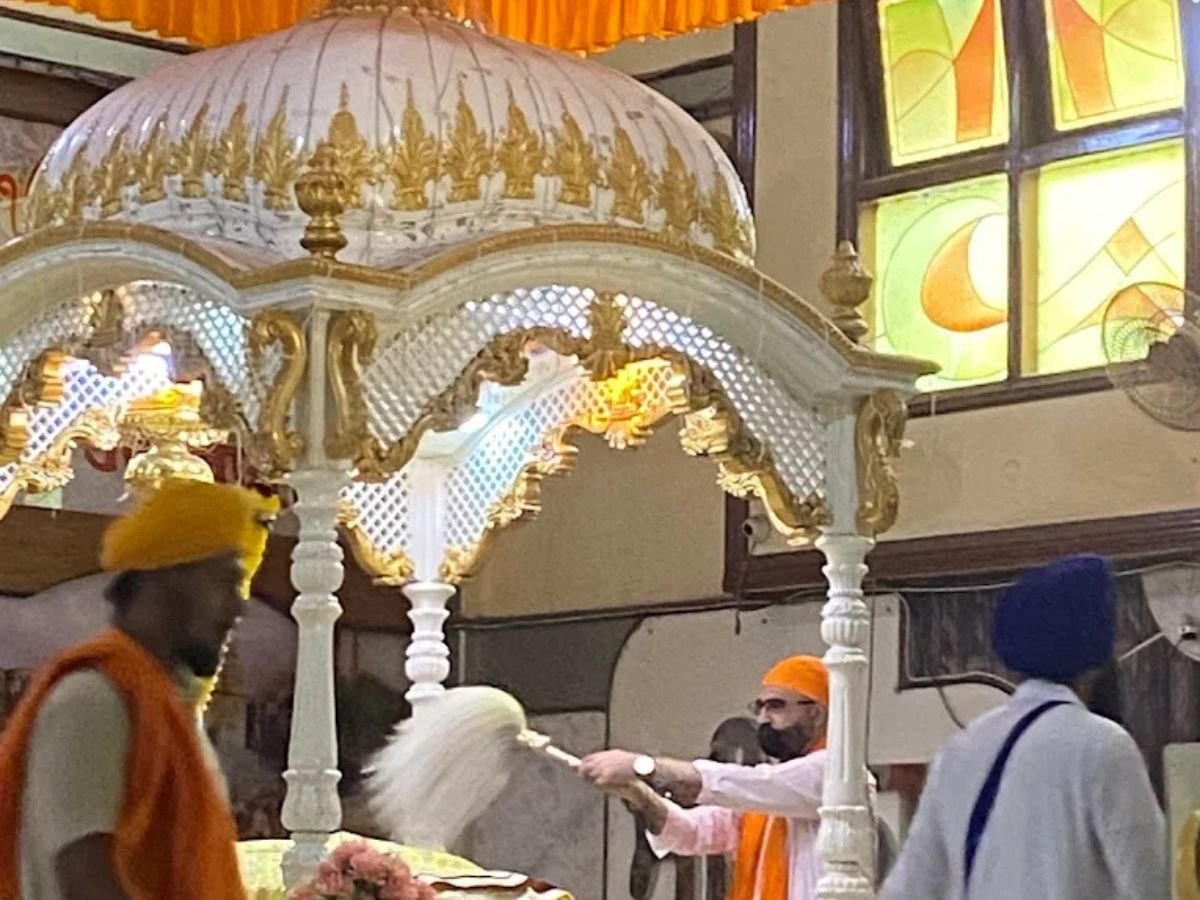
Your research gives a clear spiritual time pattern rather than just “open and close” hours. The day begins with Parkash between 400 am and 430 am, when Guru Granth Sahib is brought from its resting place to the Darbar Sahib, followed by Nitnem including the Panj Bania. Morning also includes Asa Di Vaar, which shapes the early hours into a steady, devotional atmosphere.
Evenings typically begin around sunset with Rehras Sahib, followed by kirtan and katha, and the day closes with Sukhasan, when the scripture is respectfully returned to its resting chamber for the night. For visitors, this is the most helpful way to plan mornings feel quiet and inward, evenings feel collective and community-focused. If someone wants the most peaceful experience, early morning is usually the best window.
Hukamnama and Daily Guidance What It Means for Visitors
A central part of daily Maryada is the Hukamnama, the “order of the day.” After morning prayers, the scripture is opened and the first verse on the left-hand page is read aloud as guidance for ethical living and spiritual direction. This is not treated like a random quote, it is treated like a daily instruction from the Guru that the Sangat carries into normal life.
For first-time visitors, Hukamnama is one of the simplest ways to feel connected even without deep background. You can sit quietly, listen, and absorb the tone, and it still feels meaningful because the environment is built for reflection. This is also why the Gurudwara’s routine feels stable across years, it is not “event-based,” it is discipline-based.
Langar at Gurudwara Sahib Nerul Equality You Can See
Langar at Nerul Gurudwara is not presented as a “free food facility,” it is a living expression of Sikh equality. Your research explains the system clearly everyone sits in pangat, receives the same vegetarian meal, and the act of eating together becomes a social reset. In a city where social lines can quietly exist, langar removes those lines for a while.
The langar hall is also designed for real scale, because the Gurudwara hosts regular Diwan and festival footfall. Volunteers cook, serve, and clean with discipline, so the experience stays dignified even when the crowd is higher. For visitors, the best approach is simple come with patience, take only what you need, and treat the meal as shared seva work, not a service transaction.
Seva in Nerul Gurudwara Tan, Man, Dhan Explained Simply
Your research frames seva in three forms Tan seva is physical work like cooking, serving, cleaning, and helping elders; Man seva is mental discipline like humility, listening, and keeping the atmosphere respectful; Dhan seva is financial support that sustains langar, maintenance, and welfare programs. This clarity helps readers understand that seva is a system, not a random volunteering mood.
In Nerul, seva becomes visible in the most practical areas, especially the langar hall and entry management. First-timers can participate without fear because Gurudwaras do not expect skills, they expect sincerity and discipline. If you want to do seva, arrive with time, ask where help is needed, and follow instructions quietly, because in Sikh spaces, the ego is the only thing that is not welcome.
Sarai at Nerul Gurudwara Why Lodging is a Big Deal
One of the most distinctive features in your research is the Sarai, a dormitory-style lodging facility inside the Gurudwara complex. This is not a hotel concept, it is a support concept, especially for pilgrims and for families who travel to Navi Mumbai for medical reasons. The Sarai reflects a long Sikh tradition of hospitality, where basic shelter is treated as seva.
For readers, this section needs responsible wording availability and rules are usually management-controlled, and visitors should confirm on the spot. Still, it is important to mention because it explains why this Gurudwara feels like a community institution, not only a prayer hall. When a city has a healthcare travel load, a Sarai becomes a quiet relief point that many outsiders never see.
Medical Camps and Health Support Real Community Work
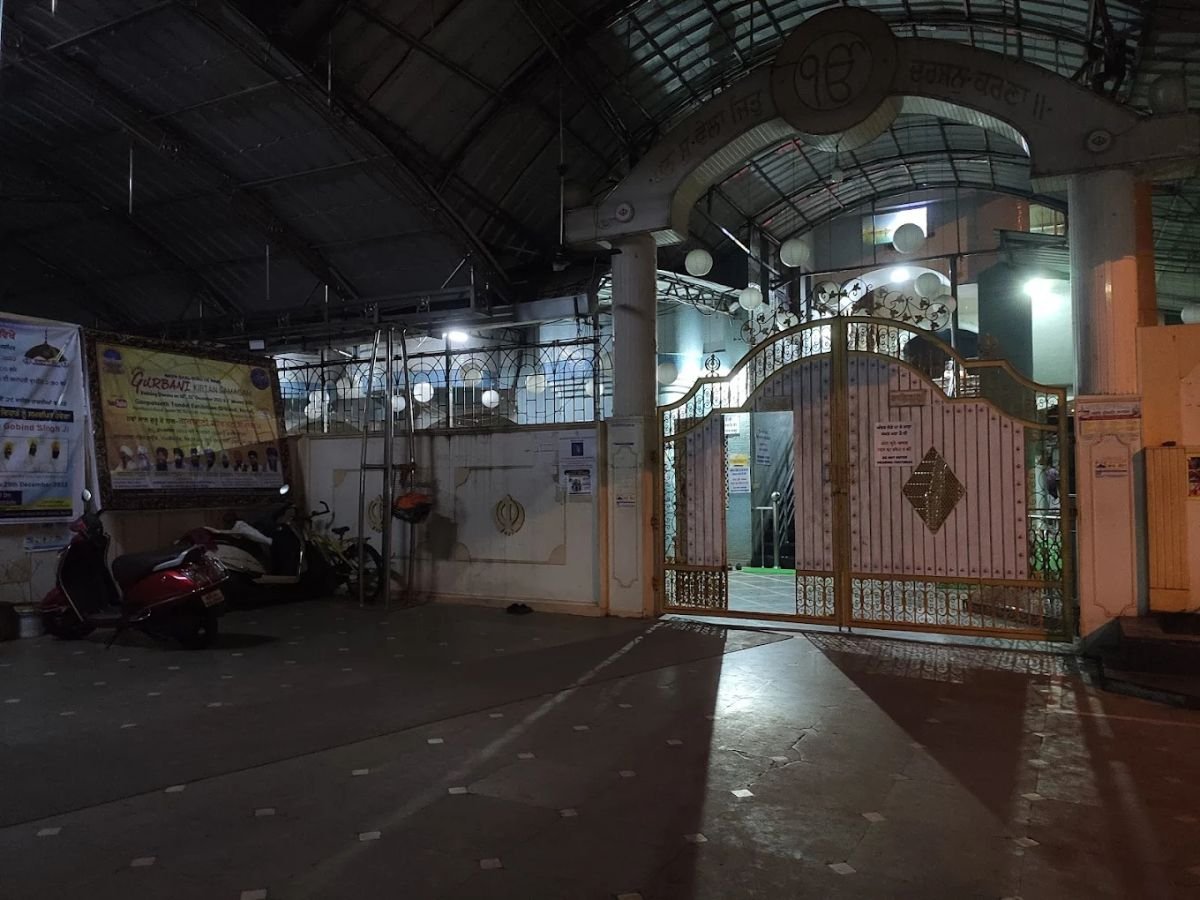
Your research mentions that the Gurudwara has supported health-focused seva through medical camps, including blood donation drives. In an urban node like Nerul, these initiatives matter because they connect religious institutions to civic wellbeing without discrimination. It also matches the broader Sikh emphasis on service, where healing and help are part of spiritual life.
For SEO and trust, write this section with careful, non-exaggerated language mention that health camps are organised periodically and details are announced by the Gurudwara. The practical value for readers is knowing that the institution participates in public welfare, and that they can contribute through volunteering or donation when such drives are active. This is the kind of local credibility that directories cannot explain well.
Festivals at Nerul Gurudwara Gurpurab, Vaisakhi, Nagar Kirtan
Your research notes that major Sikh festivals are celebrated here, including Gurpurab and Vaisakhi, and the Gurudwara becomes more vibrant and crowded during these days. Visitors should expect extended kirtan sessions, higher sangat participation, and larger langar operations. The environment remains disciplined, but it feels more collective, like the whole community is moving together.
You also reference community traditions like Nagar Kirtan, where kirtan is carried in a procession, often accompanied by organised seva, security, and crowd management. Because the exact date and route depend on local planning, the responsible approach is to explain what Nagar Kirtan is and then advise checking the Gurudwara’s latest announcements. This keeps your blog accurate and avoids making fixed claims that may change year to year.
Gatka and the Sikh Martial Tradition Why It’s Still Relevant
Your research notes that Gurudwaras often preserve Sikh martial heritage through Gatka, which is more than a sport. It carries values like discipline, alertness, and courage, and it reminds the community that spirituality in Sikh tradition also includes the responsibility to protect the vulnerable. In modern city life, this heritage keeps the youth connected to identity without turning faith into only rituals.
Gurudwara Nerul Research Requestlly because the Gurudwara operates as a community institution, not only a prayer hall. When Gurudwaras support cultural learning, the ecosystem becomes complete prayer in the Darbar Sahib, equality in langar, and character-building through heritage practices. In your blog, write Gatka as a value system first, and as a martial practice second, so it feels respectful and accurate.
Gurudwara Nerul Research Requestda for First-Timers in Nerul Gurudwara
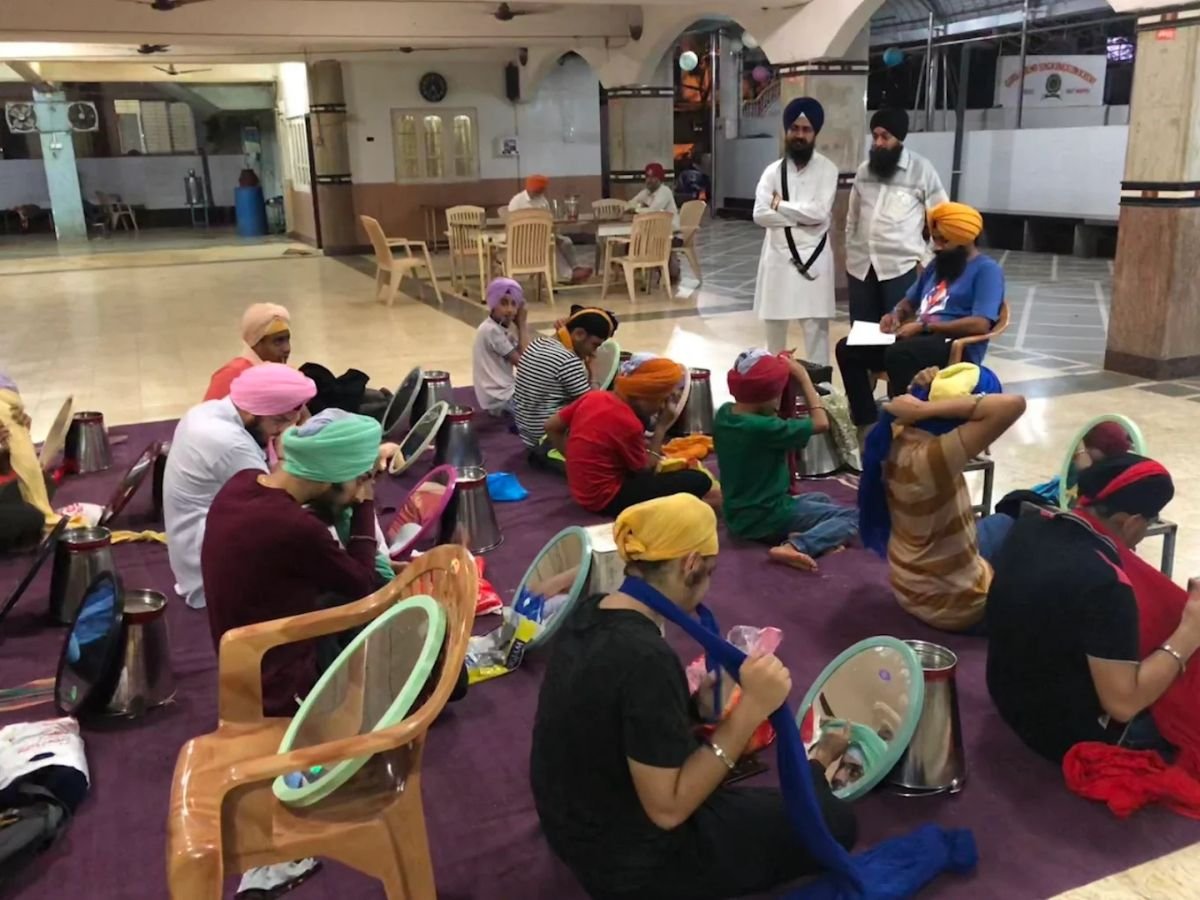
The basics of visiting are simple, but they matter because they protect the prayer atmosphere. Cover your head before entering, remove shoes at the shoe area, and keep your phone silent inside the Darbar Sahib. Sit on the floor with the sangat, avoid loud conversation, and let the ongoing kirtan or paath remain the centre, not the visitor’s curiosity.
Gurudwara Nerul Research RequestGurudwara runs on structured Maryada, so the environment feels stable even on crowded days. That stability depends on visitors behaving with discipline, especially during Parkash, evening Rehras time, and Sukhasan flow. If you are unsure about any practice, the safest move is to observe quietly for a minute and follow the sangat rhythm.
What is Respectful in a Darbar Sahib
Taking a photo of the exterior or entry area is usually the least sensitive part, because it helps people locate the place and remember the visit. The sensitive zone is inside the Darbar Sahib, especially during prayers, where filming or selfies can disturb others and dilute the sanctity of the space. A respectful visitor treats the hall like a place of deep listening, not a recording studio.
Gurudwara Nerul Research Requestapproach is permission-first and atmosphere-first. Avoid blocking movement, do not point cameras towards people who are praying, and never interfere with areas reserved for religious handling of the Guru Granth Sahib. In your blog, this section improves trust because it prevents first-timers from making accidental mistakes that feel small to them but heavy to the sangat.
28 Feb & 1 March 2026 Hind Di Chadar Shri Guru Teg Bahadur Sahib Ji 350th Shaheedi Samagam
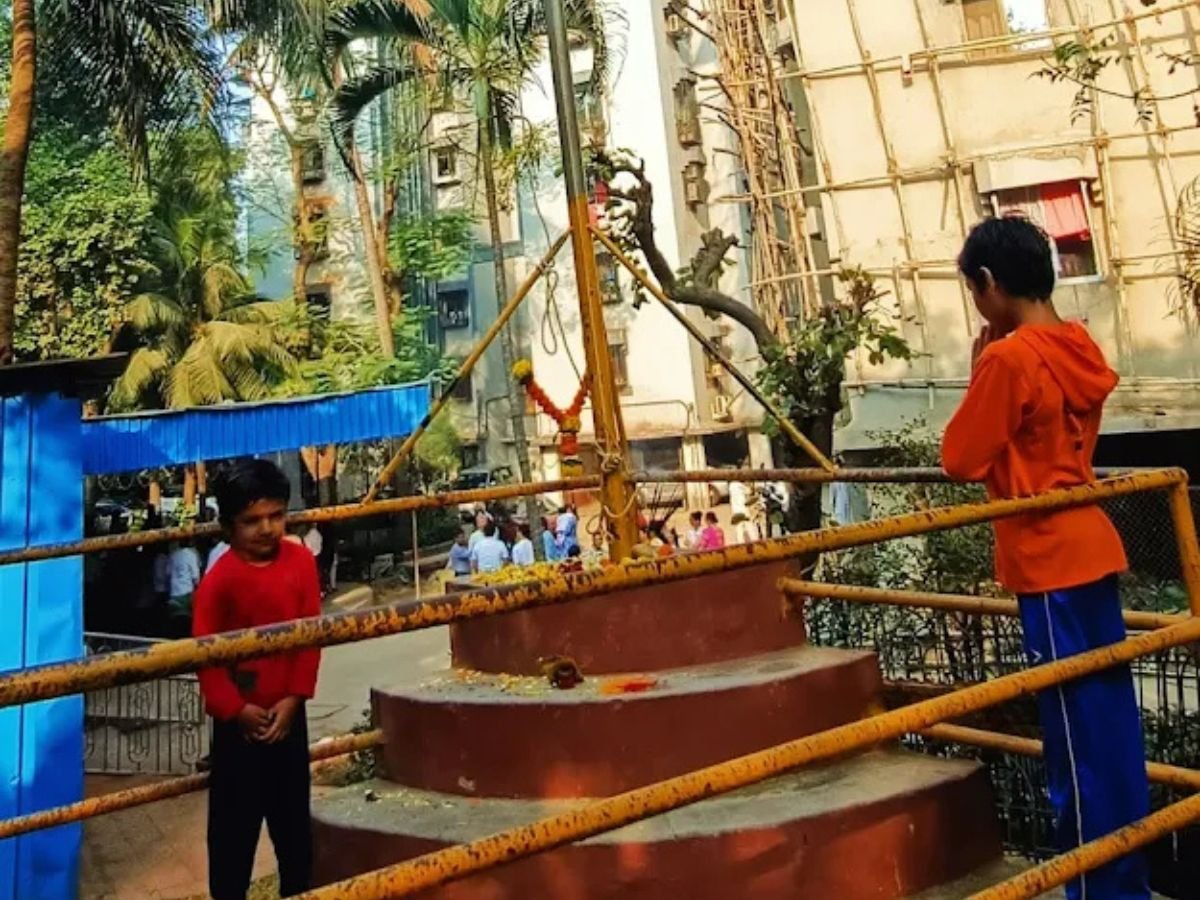
On 28 February and 1 March 2026, Navi Mumbai is hosting a large-scale “Hind Di Chadar” 350th Shaheedi Samagam in remembrance of Shri Guru Teg Bahadur Sahib Ji. Public reports highlight major preparations and heavy expected attendance, with the main programme scheduled in the Kharghar belt, which directly affects travel planning for people coming from Nerul, Seawoods, and Belapur corridors.
For your Nerul Gurudwara blog, treat this as a practical planning section for devotees who may attend prayers in Nerul and then travel towards the main venue area. Advise readers to keep buffer time, expect traffic and crowd management, and check the latest official updates before leaving. A responsible line also helps “We will update this section when organisers publish a detailed programme timetable or route advisory.”
Facilities and Accessibility What Visitors Actually Need
A Gurudwara feels truly welcoming when the basics are handled smoothly, and Nerul Gurudwara is structured as a full community campus in your research. Visitors usually rely on clean entry flow, footwear management, drinking water arrangements, wash areas, and seating comfort that does not pressure elders. These “small” elements decide whether a first-time visitor feels relaxed or awkward.
Accessibility is not only about ramps, it is also about how calmly a space manages crowd movement during busy diwans and festivals. For families visiting with seniors, it helps to arrive a little earlier so you can settle the entry steps without hurry. In a spiritual space, comfort is not luxury, it is respect, because it helps people focus on prayer rather than logistics.
Sarai Rules and Practical Guidance How to Mention It Responsibly
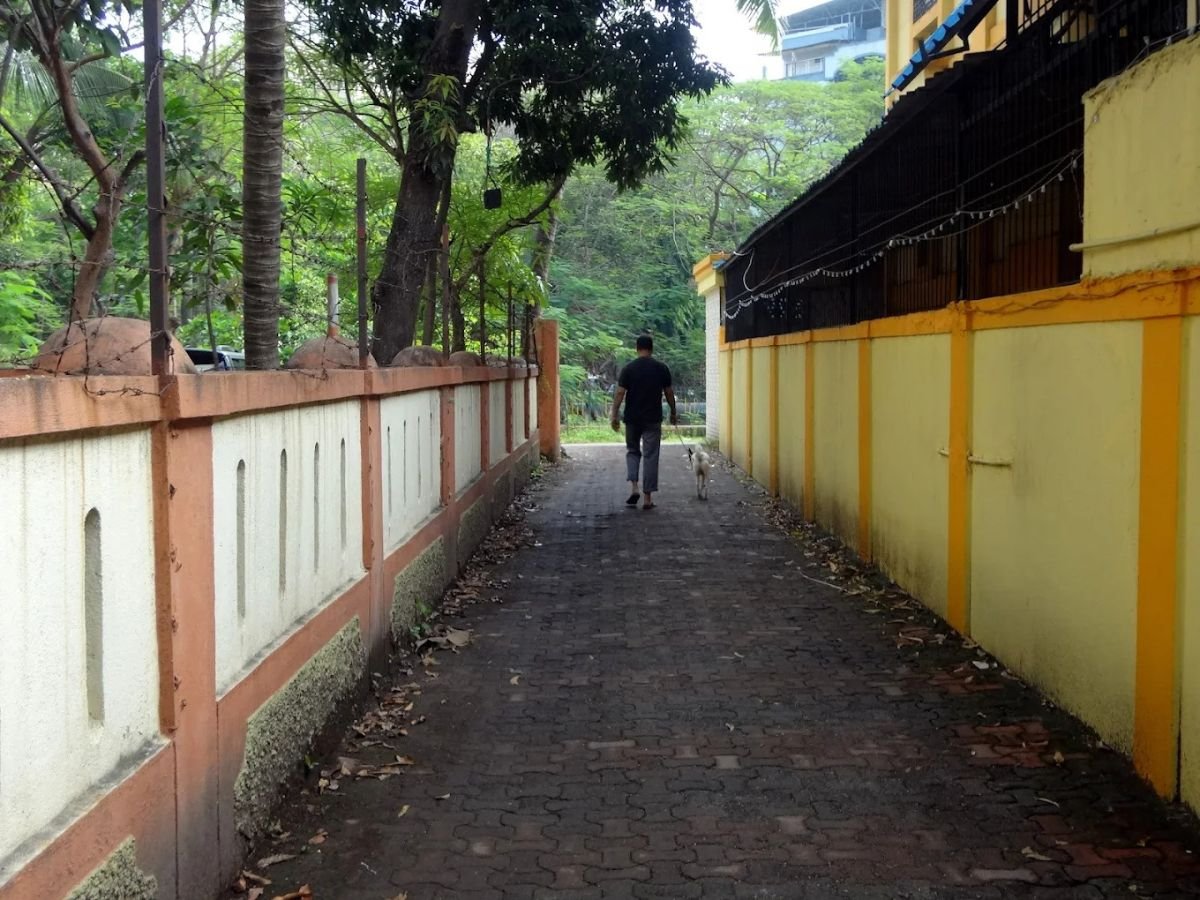
Your research highlights the Sarai as a major feature of the Nerul Gurudwara complex, designed to support pilgrims and families who may travel for medical or religious reasons. The correct way to present it is as “dormitory-style lodging support,” not as a commercial stay. That framing keeps the tone respectful and matches the Sikh hospitality tradition that your research references.
At the same time, Sarai availability is usually controlled by management, and rules can change based on demand and programme days. So your blog should guide visitors to confirm directly at the Gurudwara rather than assuming a guaranteed bed. This is important for trust, because nothing breaks local credibility faster than a visitor showing up with wrong expectations.
Nearby Nodes and Practical Itinerary Nerul, Seawoods, Belapur Belt
Nerul sits in a corridor where Seawoods and CBD Belapur are close enough that visitors often combine errands and spiritual visits in one trip. This matters because many people search “nearby places” after they search for a Gurudwara, especially families who want a calm half-day plan. In your blog, keep this section practical and safe, focusing on short travel logic rather than naming random businesses.
If someone is coming from Vashi or from the Mumbai side, Nerul is a sensible stop because the node is transit-friendly and planned. The key visitor advice is to keep the Gurudwara visit as the calm anchor of the day, and then add other stops after langar, not before. This order helps people enter with the right mood and avoid a rushed, distracted Darbar Sahib experience.
Conclusion
Gurudwara Sahib Nerul works because it is consistent. The Darbar Sahib is built around calm discipline, the langar is built around equality, and the seva culture makes the institution feel reliable, not ceremonial. In a planned city node like Nerul, that reliability becomes a quiet strength, because people know they will find the same dignity every time they enter.
If you are visiting for the first time, keep it simple and respectful cover your head, slow down, sit quietly, and let the environment guide you. If you want to plan around Sunday Diwan or special programmes, check the latest official updates before you leave home. When a place is built on maryada, your best experience comes from matching that same discipline.
FAQs
Frequently Asked Questions