Nerul Property Guide 2026: Should You Buy, Rent or Wait?
Nerul is still one of the most complete residential markets in Navi Mumbai in 2026. It usually makes sense for families, commuters, and stable-rent investors because it combines mature infrastructure, multi-line rail connectivity, education and medical anchors, and strong lifestyle value. But Nerul is not one uniform market. Old internal-sector CIDCO stock, east-side commuter pockets, and Palm Beach-facing premium towers behave very differently on price, rent, and buyer fit.
Quick Summary
The snapshot below combines current portal data with your uploaded Nerul research brief, which correctly frames Nerul as a mature, low-regret node rather than a speculative one.
| Decision point | Practical answer |
|---|---|
| Best for | Families, BKC/South Mumbai commuters, education-focused buyers, stable-rent investors |
| Less suitable for | Pure speculators chasing fast upside or buyers who want only brand-new stock at a moderate budget |
| Headline sale reality | Current portal averages are split: Housing shows about ₹18,652/sq ft for Nerul, while 99acres shows about ₹21,666/sq ft average transaction rate for flats |
| Main strength | Mature residential ecosystem with rail connectivity, institutional demand, Palm Beach premium pockets, hospitals, and family-friendly social infrastructure |
| Main risk | Old building stock in internal sectors, parking stress, event-day traffic near DY Patil, and confusion between Nerul and Seawoods-border inventory |
| Rent reality | Rent is supported not only by families but also by medical, education, and professional demand around DY Patil, SIES, and connected office belts |
Why Nerul Still Matters in 2026
Nerul matters because it already works. It is not a “wait for five years” location story. Central Railway’s own information shows Nerul sits on the Harbour Line, the Trans-Harbour route, and the Nerul/Belapur–Uran line, which gives it one of the strongest practical rail positions in Navi Mumbai. A December 2025 Central Railway update also noted more services added on the Nerul/Belapur–Uran line and commissioning of additional stations on that corridor.
Road connectivity has also improved structurally. MMRDA states Atal Setu opened for public traffic on 13 January 2024 and has enhanced regional mobility between Mumbai and Navi Mumbai. That matters to Nerul because it strengthens the wider east-west and Mumbai-facing access story, especially for users who care about multi-modal travel rather than only one commute route.
Nerul also benefits from powerful non-transport anchors. DY Patil Hospital and the DY Patil campus are in Nerul, and the SIES Nerul campus cluster sits in Sector V. These are not small lifestyle extras. They create daily movement, student demand, staff housing demand, and long-term residential relevance.
Nerul Price Reality in 2026: Why the Average Rate Can Mislead You
The first rule in Nerul is simple: do not trust one average rate. Housing currently shows Nerul at about ₹18,652 per sq ft, while 99acres shows the average flat transaction rate around ₹21,666 per sq ft. That is already a big enough gap to prove the market is mixed.
Your uploaded dossier explains the reason well. Nerul contains old internal-sector stock, CIDCO-type and gaothan-adjacent inventory, regular mid-market buildings, and much more premium Palm Beach and Seawoods-overlap stock. When all of that gets blended into one “Nerul average,” the number becomes useful only as a rough signal, not as a real buying benchmark.
Even within sectors, the spread is real. Housing currently shows Sector 19 at around ₹20,674/sq ft, Sector 15 at about ₹19,410/sq ft, and Sector 28 at about ₹21,200/sq ft. On 99acres, Nerul East is shown around ₹26,650/sq ft, Nerul West around ₹25,300/sq ft, and Sector 29 around ₹25,272/sq ft. These are not interchangeable submarkets.
So the correct question is not “What is Nerul rate?” It is: Which side of Nerul, which sector, which building age, how much usable carpet, and how close is the unit to real daily demand?
Nerul East vs Nerul West: This Is the First Real Buying Decision
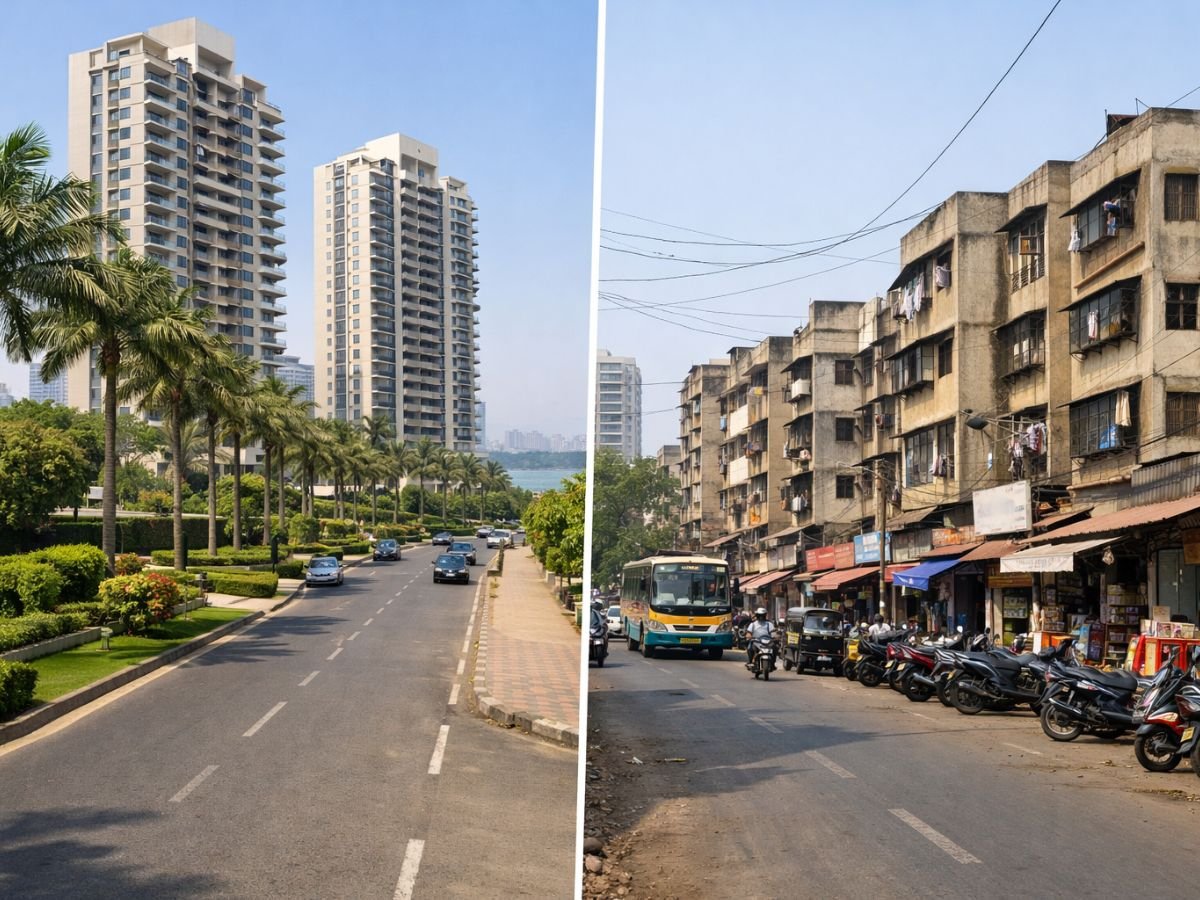
Nerul West is usually the premium side
Nerul West generally carries stronger lifestyle and Palm Beach-related premium. The west side includes more of the creek-facing, Palm Beach-linked, and upper-mid to premium residential character that many buyers associate with the “good part” of Nerul. Your uploaded research brief identifies sectors like 4, 6, 8, and 11 as part of the premium west belt, and that matches how the market is typically discussed on the ground.
This does not mean every west-side property is premium. It means the west side contains more of the premium narrative, and buyers often pay for that address logic even when the building itself is average.
Nerul East is usually more commuter- and institution-driven
Nerul East is often more practical, more active, and more directly connected to education and medical movement. The uploaded dossier identifies sectors like 15, 17, 19, and 21 as the east-side commuter and student belt, with rental pull from DY Patil, SIES, and related institutions. Current listings support that logic: Housing shows active rental stock in Sector 15, including 1 BHK around ₹30,000 and 2 BHK examples from roughly ₹40,000 to ₹75,000, while broader Nerul listings show many east-side units marketed on proximity to DY Patil Hospital, stations, and educational landmarks.
For many renters and smaller investors, that institutional pull is Nerul’s hidden strength. It is one reason rent can stay firm even when the wider market mood cools.
The Nerul-Seawoods Overlap: Why Some “Nerul” Listings Feel Expensive
A major source of buyer confusion is the Nerul-Seawoods border. Your uploaded brief calls this out clearly: Sector 28 is often marketed emotionally as Seawoods, priced with Seawoods influence, but still appears inside Nerul datasets often enough to distort the locality story.
Current rental listings support that point. Housing shows Sector 28 inventory linked to L&T Seawoods Residences and related towers, with 2 BHK asking rents commonly around ₹70,000 to ₹91,000 and 3 BHK around ₹95,000 or more in active listings. That is not normal old-Nerul pricing. That is border-premium inventory.
This is why buyers should not compare a Sector 28 tower with an internal older society and then say, “Nerul is overpriced.” They are often comparing two very different products under one locality label.
Rent Reality in Nerul: Families Are Not the Only Demand Driver
Nerul rental demand is broader than many buyers assume. It is driven by families, yes, but also by doctors, hospital staff, students, visiting faculty, and working professionals who value rail access and institutional proximity. The DY Patil Hospital and campus cluster and the SIES educational ecosystem are central to this.
Live portal examples show the spread. Housing’s broader Nerul rental page includes listings such as 1 BHK in Sector 19A at ₹28,000, 2 BHK in Sector 21 at ₹60,000, 2 BHK in Sector 16A at ₹50,000, 2 BHK in Sector 29 at ₹60,000, and 2 BHK in Sector 28 at ₹70,000. These are listing examples, not final transacted rents, but they show the active-market pattern clearly.
That makes Nerul attractive for investors who want practical rental demand. But it is usually better for steady occupancy logic than for chasing the highest possible yield headline.
What Makes Nerul Strong for Families
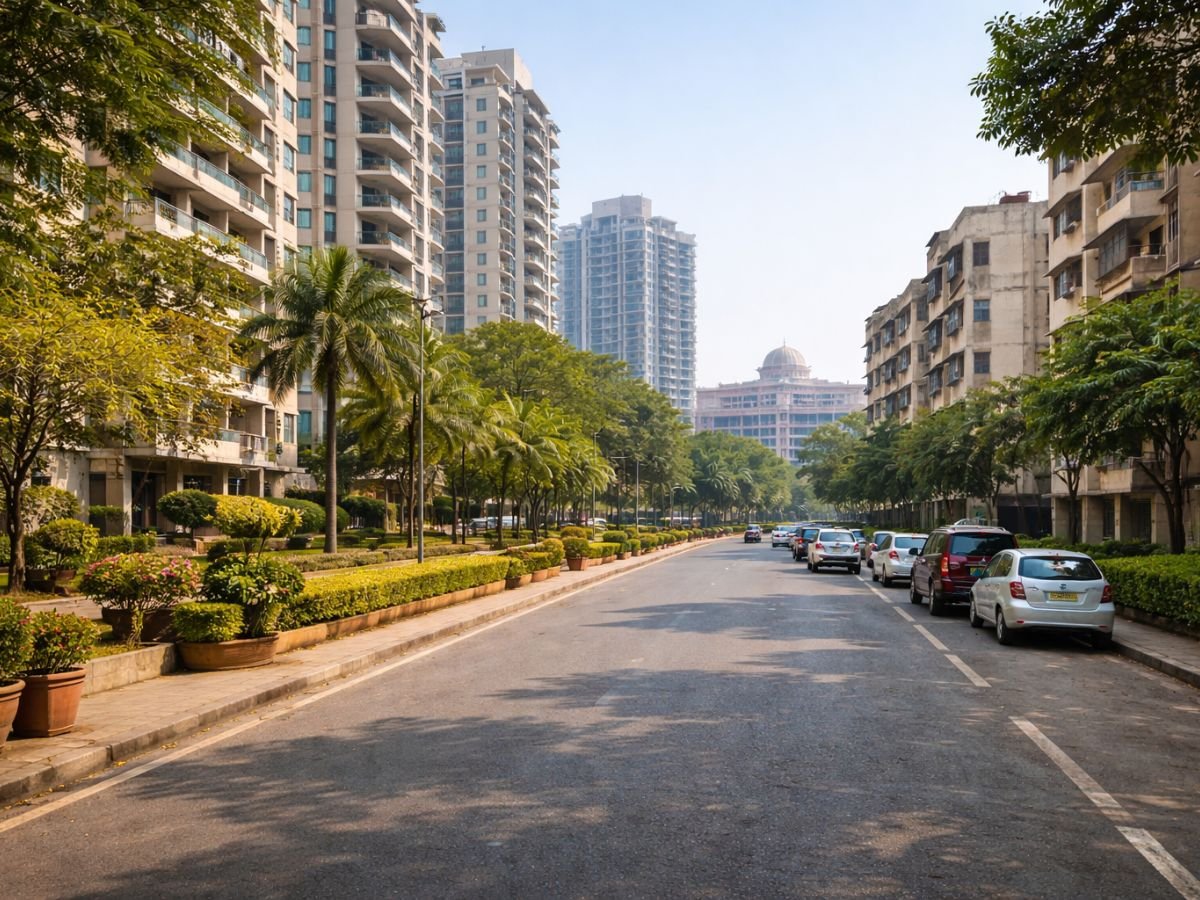
Nerul works especially well for families because it combines city convenience with a more residential feel than some other mature nodes. Your uploaded research brief describes it as a place that feels like a city but breathes like a suburb, and that is close to the lived reality.
The family appeal is not theoretical. DY Patil, SIES, and other educational landmarks give the node institutional depth. Public-realm landmarks such as Wonders Park and the Rock Garden add real lifestyle value, especially for families with children. While the official NMMC homepage is broad rather than park-specific, third-party project documentation identifies Wonders Park in Nerul as an NMMC project spread over 22 acres, which aligns with its role as a significant local family anchor.
The Practical Risks Buyers Should Not Ignore
Nerul is strong as a locality, but that does not mean every building is a good buy.
1. Old-building risk is real
Internal sectors still contain aging stock. Older buildings can mean seepage, weaker parking layout, lift issues, or maintenance stress. Your uploaded dossier is explicit that many older CIDCO-style 1 BHK and 2 BHK buildings have little or no properly allotted parking.
2. Event-day traffic near DY Patil is not a small issue
The same anchors that make Nerul attractive can also create friction. The uploaded brief notes the “stadium effect,” especially around Sectors 7 and 9 during IPL matches or large concerts. That is a useful local warning many generic property pages completely miss. DY Patil Stadium’s official page confirms the stadium’s location in Sector 7 and its active events profile.
3. Creek-side and west-side checks need more care
If you are looking at creek-side or west-side properties, the uploaded research dossier advises checking coastal and regulatory implications carefully rather than assuming all plots and all future changes are equally straightforward. That does not mean every west-side property has a problem. It means extra diligence matters more there.
4. Redevelopment is not automatic upside
Older Nerul buildings naturally create redevelopment talk. CIDCO’s nodal plans and broader urban-renewal framework show that redevelopment exists as a real planning theme in Navi Mumbai, but that is not the same as saying any one society will redevelop quickly. Treat “future redevelopment” as a bonus only after documents, society status, and process clarity are verified.
The Pre-Token Nerul Audit
| Check | Why it matters in Nerul |
|---|---|
| Parking reality | Older internal buildings may have weak or informal parking arrangements |
| Actual carpet usability | Older stock can look larger on paper than it feels in daily use |
| Seepage and facade condition | Important in aging societies and more exposed belts |
| Society maintenance discipline | Mature nodes reward well-run societies and punish neglected ones |
| East vs west fit | Lifestyle, premium, rent logic, and traffic patterns are different |
| Seawoods-border pricing effect | Some "Nerul" stock carries premium because it behaves like Seawoods-border inventory |
| Institutional proximity | Closeness to DY Patil or SIES can genuinely improve rentability |
| Event-day disruption | Important if you are buying near the stadium belt |
Before paying token money in Nerul, these are the checks that matter most.
This checklist is based on the uploaded research dossier plus current listing patterns and locality segmentation.
Who Should Buy in Nerul in 2026?
Nerul is usually a good buy for three kinds of people.
First, families who want a mature, everyday-usable node with schools, hospitals, parks, and rail access. Second, commuters who value strong suburban connectivity and do not want to depend on one transport corridor alone. Third, stable-rent investors who understand that institutional demand can protect occupancy better than a purely speculative area.
Who Should Probably Look Elsewhere?
Nerul may be the wrong fit if your main goal is sharp short-term appreciation, brand-new budget housing, or very low entry cost. It may also disappoint buyers who assume all Nerul stock is premium just because the locality name is strong. The product matters more than the postcode.
Conclusion
Nerul remains one of Navi Mumbai’s strongest all-round residential markets in 2026. Its biggest advantage is not glamour. It is depth. Rail connectivity, education, medical anchors, family infrastructure, and stable rental logic all come together here in a way few nodes manage as consistently.
But Nerul is only a great buy when you choose the right micro-market. Old internal-sector stock, east-side institutional demand belts, and west-side premium or Seawoods-overlap towers should never be treated as one market. If you separate those properly and audit the building, not just the locality name, Nerul can still be one of the safest and most satisfying property decisions in Navi Mumbai.
FAQs
Frequently Asked Questions