

New Projects vs Resale Flats in Seawoods: What Makes More Sense in 2026?
In Seawoods, resale flats usually make more sense for buyers who want immediate possession, exact location certainty, lower execution risk, and better usable space for the money. New projects make more sense only for a narrower group of buyers who strongly value newer layouts, resort-style amenities, fresh construction, and can comfortably absorb the higher premium, higher maintenance burden, and possible waiting period. That is the real answer. Seawoods is already a mature premium market, so “new” is not automatically “better.”
Seawoods is not like a developing node where buyers mainly bet on future infrastructure. The infrastructure here is already working. The station is active, Nexus Seawoods Grand Central already shapes local lifestyle, Palm Beach Road already supports premium positioning, and the area already has strong daily-use value. So when a buyer compares new projects vs resale flats in Seawoods, the real question is not old versus new in theory.
The real question is simpler and more practical: do you want proven location value and immediate use, or do you want premium-priced freshness badly enough to justify the extra cost, extra wait, and extra recurring burden?
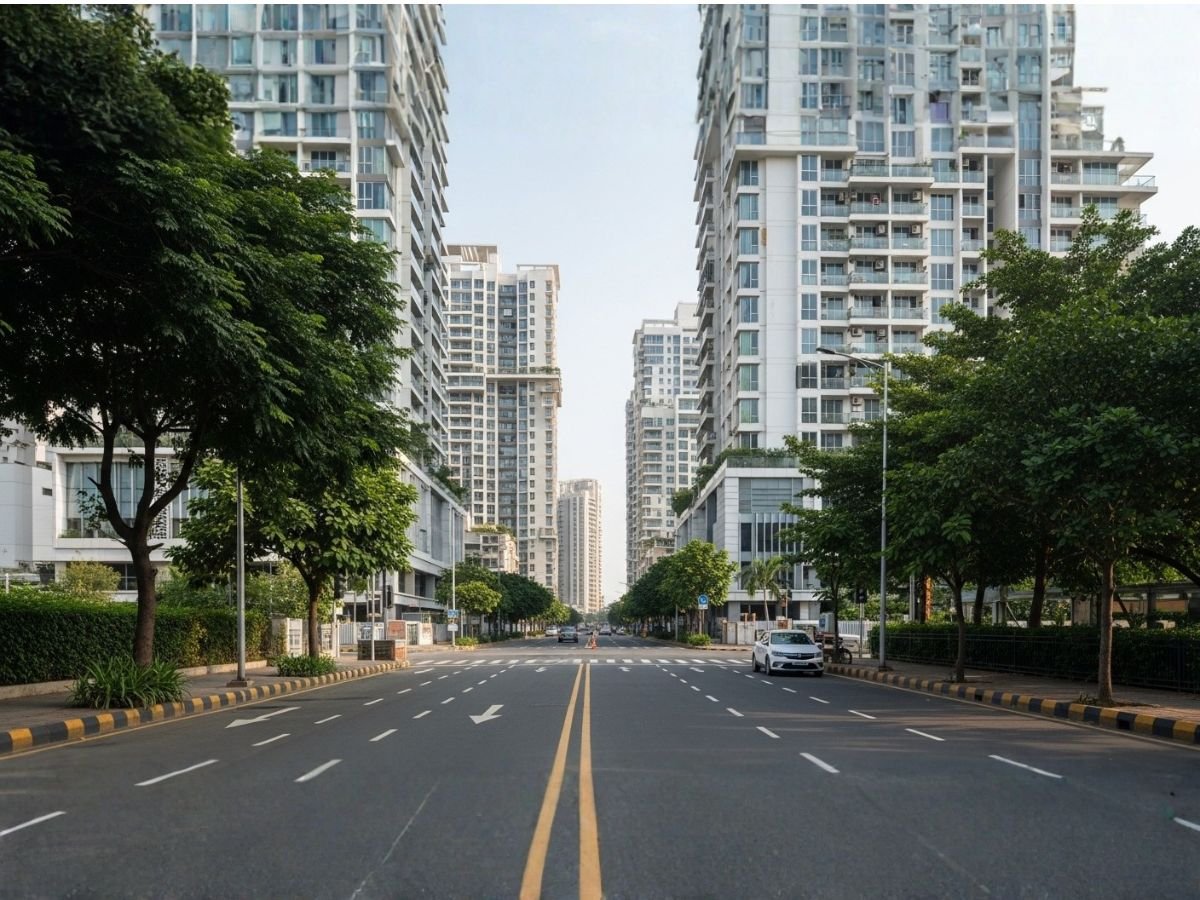
Why this comparison works differently in Seawoods than in newer Navi Mumbai markets
This comparison becomes sharper in Seawoods because the node is already established. In a place like this, the value of the location is already visible on the ground. Buyers are not waiting for the neighbourhood to become livable. It already is.
That changes the entire logic. In many emerging markets, buyers choose under-construction projects because the area itself is still building up, so waiting is part of the game. In Seawoods, waiting is usually only about the building, not the neighbourhood. The neighbourhood has already proven itself.
That is why resale flats are stronger here than many buyers first assume. A ready home in a well-located Seawoods society can give immediate access to station convenience, mall access, schools, daily markets, Palm Beach Road connectivity, and an already functioning residential ecosystem. That is a big deal in a high-ticket market.
Quick summary: how Seawoods changes the new-vs-resale answer
| Factor | New Projects in Seawoods | Resale Flats in Seawoods |
|---|---|---|
| Area maturity | Buying into an already premium market with fresh construction | Buying into an already premium market with proven daily utility |
| Possession | Often delayed or future-dated | Immediate |
| Location certainty | Good, but depends on exact project and approach | Fully visible and testable before purchase |
| Value logic | Pay more for freshness and amenities | Pay for actual usable value and known reality |
| Better fit for most buyers? | Selectively | Usually yes |
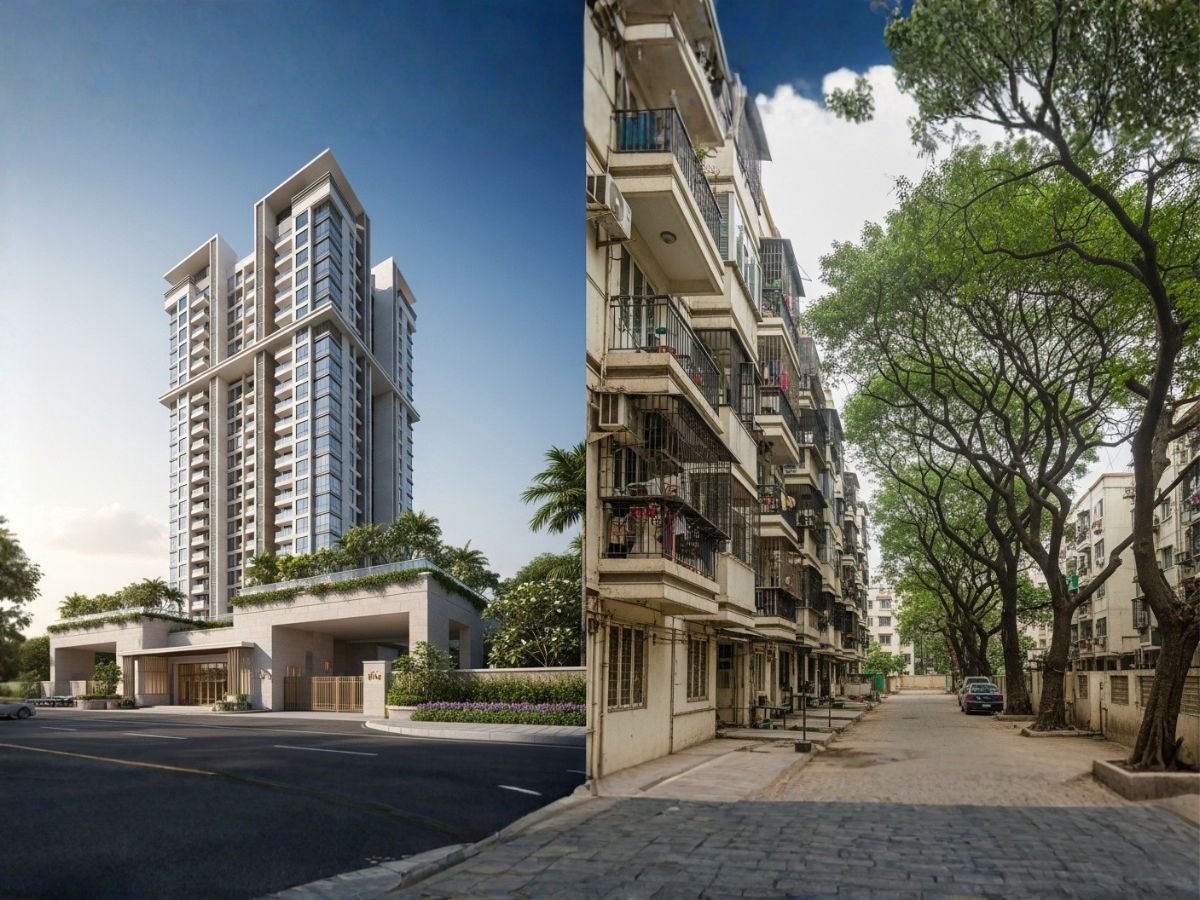
New projects and resale flats in Seawoods solve different buyer problems
New projects and resale flats are not just two property types. In Seawoods, they solve two different buyer problems.
What new projects usually offer in Seawoods
New projects in Seawoods usually appeal to buyers who want a polished premium product. They offer newer towers, newer lobbies, better branding, modern security systems, fresh design language, and lifestyle-heavy amenities like pools, clubhouses, gym zones, landscaped decks, EV-related features, and curated common areas.
They also suit buyers who prefer phased payment structures linked to construction milestones instead of paying full value for a ready property upfront. For some buyers, especially highly capitalized premium end users and certain NRIs, this feels more convenient and emotionally cleaner.
But there is a cost to that freshness. In Seawoods, new premium projects typically sit in a very high pricing band. Current market patterns suggest carpet-area pricing often ranges around ₹30,000 to ₹34,000+ per sq. ft. in premium launches, depending on project, tower, floor, and exact positioning. That is not a small premium. That is a serious pricing difference.
What resale flats usually offer in Seawoods
Resale flats usually solve a more practical problem. They give certainty. The building is already there. The approach road is already there. The society culture is already visible. The actual room sizes, ventilation, light, parking reality, lift condition, and maintenance quality can all be checked before money moves.
This matters a lot more in Seawoods than brochure-led buyers sometimes realise. Because the area is mature, an older but well-located flat can still be a very strong purchase. In many resale societies, especially older CIDCO-era or early private developments, space efficiency is often better than in newer towers with heavier loading. So the buyer may get more physically usable home for the same or lower budget.
Resale pricing also has a wider range. Based on current patterns, standard resale inventory in more commuter-friendly sectors can sit around ₹14,900 to ₹18,000+ per sq. ft., while stronger premium resale stock in better western pockets can range roughly from ₹20,000 to ₹27,000+ per sq. ft. Again, exact pricing varies sharply by sector, society quality, age, tower reputation, floor, and condition.
Which option usually gives better value for money in Seawoods right now?
For most normal buyers, resale flats usually give better value for money in Seawoods right now. Not always, but usually.
That is because Seawoods is already expensive as a location. So if you also add a large “newness premium” on top of an already premium node, the buyer can end up paying a lot more without getting proportionately better real-life value.
A buyer with a fixed budget often faces a very clear trade-off here. The same money can either buy a more compact new apartment with attractive amenities, or a larger resale apartment in a proven location, sometimes with enough leftover budget for meaningful renovation.
When the new-project premium is justified
The premium for a new project can be justified when the buyer truly values the product, not just the brochure.
That usually means:
- the buyer wants a modern premium lifestyle experience, not only a flat
- the buyer is comfortable with future possession timelines
- the buyer can afford higher maintenance without stress
- the buyer wants a professionally positioned premium tower with brand-led appeal
- the buyer is less sensitive to carpet efficiency and more sensitive to finish quality, status, and amenity environment
In this case, a new project is not a bad decision. It is just a specialized one.
When resale is clearly the smarter buy
Resale is the smarter buy when the buyer is thinking in terms of total ownership logic instead of brochure excitement.
That usually means:
- the buyer wants immediate possession
- the buyer wants exact visibility before purchase
- the buyer values bigger usable rooms
- the buyer wants to avoid waiting while paying rent elsewhere
- the buyer is comfortable improving interiors over time
- the buyer cares more about real location efficiency than branded freshness
One more point matters here. A lot of buyers compare new and resale only on the base purchase price. That is incomplete. In Seawoods, the true comparison is total cost of ownership.
| Cost Layer | New Project | Resale Flat |
|---|---|---|
| Base price | Higher | Lower to moderate |
| GST on under-construction | Applicable | Not applicable in the same way on resale |
| Possession delay cost | Possible rent outflow for years | None if ready possession |
| Monthly maintenance | Often high in premium towers | Usually lower in older societies |
| Interior work | New unit may still need fit-outs | Can need full renovation |
| Transfer / legacy process costs | Different builder-led structure | CIDCO / society / title checks may apply |
A resale flat is not automatically cheap. Renovation can be substantial. A mid-to-premium interior redo can cost roughly ₹1,500 to ₹3,000 per sq. ft. in many practical cases, and deeper luxury work can go beyond that. A standard 2BHK redesign can easily run from around ₹3.5 lakh to ₹8 lakh, while more serious overhaul budgets can rise sharply depending on plumbing, electrical rewiring, carpentry, tiling, and structural corrections.
Still, even after accounting for renovation, many resale options in Seawoods remain financially smarter than paying the full premium for a new launch, provided the building itself is structurally sound and legally clean.
Is immediate possession more important than newer amenities in a place like Seawoods?
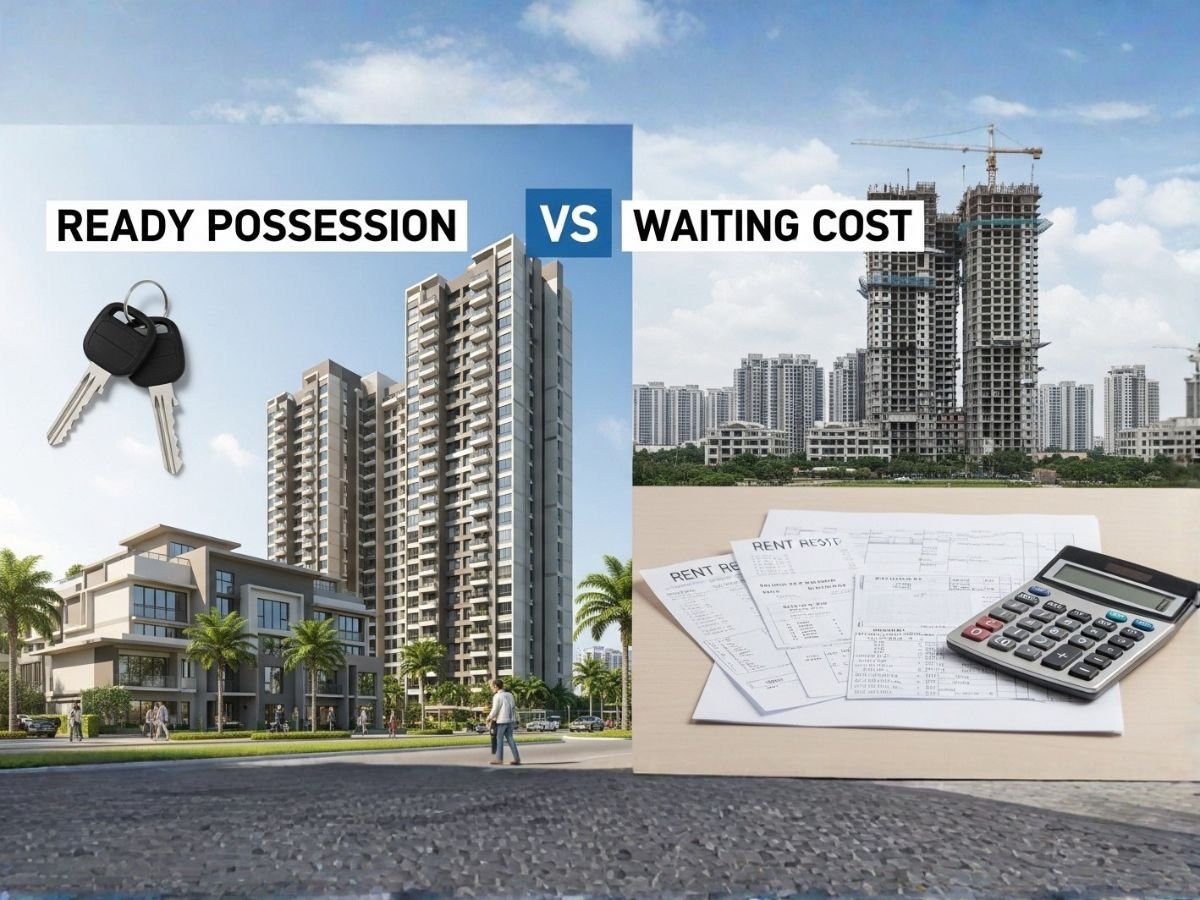
In many cases, yes. In Seawoods, immediate possession is often more important than newer amenities, especially for self-use buyers.
This is where many comparisons become unrealistic. A buyer sees a beautiful new tower, assumes it is automatically better, and forgets the cost of waiting. But if possession is late 2028, 2029, or even beyond, the buyer may spend years paying rent somewhere else while also carrying emotional and financial uncertainty.
That waiting cost is not theoretical. Premium 2BHK rentals in Seawoods often move around the ₹35,000 to ₹45,000 per month band depending on exact location, furnishing, and building profile. Over four years, that can mean roughly ₹16.8 lakh to ₹21.6 lakh of rental outflow. That is a major hidden cost.
Example: where ready possession changes the math
Imagine one buyer books a new project and gets possession after four years. Another buyer purchases a ready resale flat in a good Seawoods society and moves in after registration plus basic work.
The first buyer may get a newer tower eventually. But the second buyer starts living in Seawoods now, stops paying outside rent sooner, starts using the location immediately, and owns a visible asset from day one. In a mature node, that is powerful.
This does not mean amenities do not matter. They do. But in Seawoods, ready use often beats delayed polish for families, practical end users, and buyers who do not want long uncertainty.
How station access, mall convenience, and micro-location change the answer
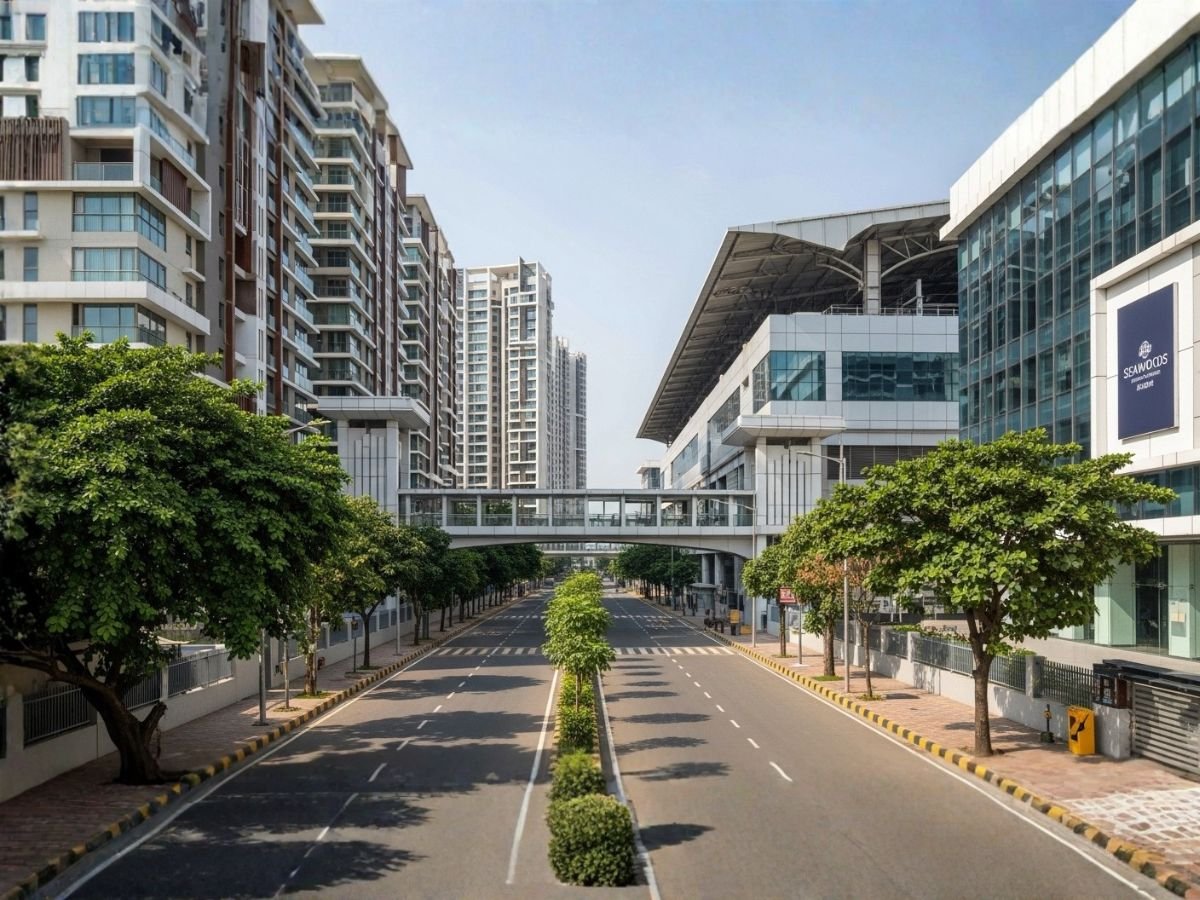
In Seawoods, micro-location can matter more than building age. That is one of the biggest local truths buyers should understand.
The node is not one flat market. The railway line and sector logic create very different purchase experiences. Seawoods East, especially around Sectors 40, 42, and 44, tends to attract stronger commuter logic because of easier access to Seawoods-Darave station, Nexus mall, and everyday convenience. Seawoods West, including sectors like 46, 48, 50, and 54, carries more premium Palm Beach Road-side character, quieter stretches, and stronger luxury positioning.
Closer-to-station and lifestyle-heavy pockets
If a buyer wants real daily convenience, a well-located resale flat near the station and mall can be extremely hard to beat. That kind of location creates practical end-user value and strong rental logic.
A five-minute to ten-minute convenience difference matters in Seawoods. It affects school runs, train commutes, dependency on private vehicles, and how often the family actually uses the mall, retail, and public-facing lifestyle assets nearby.
Buildings where society quality matters more than building age
In Seawoods, buyers should not reduce the choice to “old building bad, new building good.” That is too shallow.
A well-maintained older society with decent parking management, stable resident governance, functioning lifts, proper water storage, and visible upkeep can be a much smarter buy than a newer building in a weaker location or a project that is still years away from becoming fully lived-in.
This is especially important because some older societies have better space efficiency and stronger location placement, while some new projects price in luxury positioning very aggressively.
Caution
A-grade location in an older building can easily be a better asset than B-grade location in a new tower. In Seawoods, daily usability is not a small factor. It is part of the asset value itself.
Who should choose a new project in Seawoods and who should avoid it?
New projects in Seawoods are not for everyone, and that is fine. They are best for a specific buyer profile.
You should consider a new project in Seawoods if:
- you are a premium end user who genuinely values modern amenities and fresh construction
- you want a newer gated environment with curated lifestyle positioning
- you can comfortably absorb premium pricing without stretching your finances
- you do not need immediate possession
- you are comfortable evaluating MahaRERA timelines and project execution risk
- you do not mind high recurring maintenance if the overall lifestyle feels worth it
- you want a home that feels current in design, services, and community infrastructure
You should avoid new projects in Seawoods if:
- you are stretching your budget just to enter a premium branded tower
- you need a home soon for school, family shift, or self-use
- you cannot tolerate the risk of waiting longer than expected
- you are sensitive to high monthly maintenance outgo
- you are comparing on brochure appeal instead of real usable value
- you are a yield-focused investor expecting easy rental returns from a very expensive purchase price
For many buyers, that last point matters. Seawoods is already a costly node. So very expensive new inventory may not always produce the most attractive rental yield relative to acquisition cost.
Who should choose a resale flat in Seawoods and who should avoid it?
Resale flats are often the better fit for a broader set of buyers in Seawoods, but not automatically for all.
You should consider a resale flat in Seawoods if:
- you want immediate possession
- you want to physically inspect the exact flat, view, building, and society before purchase
- you value carpet efficiency and larger usable rooms
- you are a family buyer who wants settled living in a known neighbourhood
- you want lower execution risk than under-construction buying
- you are comfortable handling interior upgrades or phased renovation
- you prefer proven location value over brochure-led freshness
You should avoid resale flats in Seawoods if:
- you do not want to deal with renovation planning at all
- you are uncomfortable verifying society documents, title history, and transfer processes
- you want large-format luxury amenities from day one
- parking is a major non-negotiable issue and the target society has weak parking design
- you want a fully modern premium product without post-purchase effort
- you are not prepared to check plumbing, electrical condition, and long-term building upkeep properly
One very local caution here: parking shortages in older societies can become a daily headache. Buyers should verify exact parking rights and actual on-ground practice, not just assume everything will be sorted later.
What legal and due diligence checks are different for new projects and resale flats?

This is one of the most important parts of the entire decision. New and resale properties in Seawoods carry different risk types.
New projects mainly carry execution risk. Resale flats mainly carry condition risk and documentation risk.
What to check in a new project
For a new project, the first major authority to check is MahaRERA. Buyers should verify the project registration, possession timeline, approved plans as disclosed, and the status of progress updates.
That said, MahaRERA should not be misunderstood. It creates legal accountability and a grievance framework, but it does not magically eliminate all delay risk or guarantee perfect build quality. Buyers still need to study the developer’s track record, financial discipline, phase-wise delivery history, and agreement terms.
Buyers should also account for GST on under-construction property and understand future maintenance liabilities clearly before booking.
What to check in a resale flat
For resale, the checklist is completely different. The buyer must verify title chain, society NOC requirements where applicable, outstanding dues, actual ownership status, conveyance-related clarity, and whether the property sits on leasehold or freehold land.
This is where CIDCO becomes highly relevant in Navi Mumbai. Many older properties trace back to the city’s leasehold structure. The current leasehold-to-freehold conversion initiative is especially important because it can materially improve the liquidity and future transfer ease of older assets.
If a society or plot has already converted from leasehold to freehold by paying the required premium, future transfer friction reduces significantly. If not, CIDCO transfer charges may still apply depending on size and category. Current examples from the available framework show that transfer charges for developed nodes can be substantial, with certain flat size bands already crossing six-figure amounts.
Buyers must also factor NMMC-linked realities such as Occupancy Certificate position in the broader compliance chain and building safety. Older buildings may require structural audit compliance, especially where 30-year thresholds become relevant.
Process checklist before paying token
- Verify whether the flat is new-project inventory or resale, then follow the correct due diligence path
- For new projects, check MahaRERA registration, timeline, sanctioned disclosures, and builder execution history
- For resale, verify title chain, society documentation, dues, and transfer permissions
- Check whether the land or society remains under CIDCO leasehold or has moved to freehold status
- Budget for stamp duty and registration. Current framework suggests 7% stamp duty for male buyers and 6% for female buyers in such property transactions, with registration at 1% subject to the prevailing cap rules
- Independently verify structural condition, especially in older buildings
- Use a qualified property lawyer or document professional before paying token money
A share certificate or society paperwork alone should never be treated as full comfort without wider legal verification.
Which option is safer for families, premium end users, and investors?
Safety depends on who the buyer is. There is no single answer for all buyer types.
| Buyer Type | Safer Choice in Seawoods | Why |
|---|---|---|
| Families | Resale flats | Immediate possession, known community, larger practical space, easier school and daily-life planning |
| Premium end users | New projects or premium resale, depending on priorities | New wins for lifestyle curation, resale wins for certainty and often better value |
| Investors | Usually selective resale | Better entry logic, stronger commuter demand in some pockets, less pressure from extreme acquisition premium |
For families, resale is usually the safer route. Families benefit from certainty. They can see room sizes, daily commute practicality, society condition, and surrounding environment before committing crores.
For premium end users, the answer splits. If they deeply value new-age amenities and polished premium living, new projects can make sense. But if they care more about exact fit, immediate utility, and not overpaying for brand-led freshness, premium resale can still be the stronger call.
For investors, caution is necessary. Seawoods is a mature, expensive market. That means rental yield on a very high-ticket new property can get compressed. A smartly bought resale flat in a practical micro-location, renovated well and leased properly, may offer more sensible economics than an ultra-expensive new tower bought on emotion.
The most common mistakes buyers make when comparing new and resale in Seawoods
The most common mistake is confusing price with value. In Seawoods, these are not the same thing.
Many buyers assume a more expensive new project must automatically be a better long-term asset. But if the buyer gets less usable space, waits years, pays high maintenance, and still ends up depending on a slightly weaker daily-use location, the premium may not be justified.
Another common mistake is ignoring loading. A new apartment can look large on paper, but the real usable carpet area may feel much tighter than an older, more efficient flat. Buyers should compare real internal livability, not just marketing numbers.
Resale buyers also make mistakes. The biggest one is under-budgeting renovation. Cosmetic paintwork is not the real risk. The bigger shock often comes from plumbing changes, electrical rewiring, waterproofing, bathroom rebuilds, or hidden repair work.
One more local mistake is ignoring building infrastructure limits in older societies. Parking, water storage, lift upgrades, and general maintenance culture matter. Some Seawoods societies are excellent. Some are average. The difference is visible only when the buyer inspects properly.
Caution box: what buyers should not ignore
- Do not compare only brochure specs
- Do not assume all older buildings are weak or all new buildings are superior
- Do not ignore monthly maintenance in premium towers
- Do not ignore structural audit and upkeep in older buildings
- Do not assume CIDCO leasehold/freehold status is a small technicality
- Do not pay token money without proper legal and document verification
Conclusion
The smartest way to compare new projects vs resale flats in Seawoods is not to ask which one looks better. It is to ask which one solves your real problem better.
If your priority is certainty, immediate use, real space, and practical value in a proven premium location, resale is usually the stronger path. If your priority is fresh construction, premium amenities, and a more curated luxury experience, and you can pay for that without financial strain, then new projects can still make sense.
In Seawoods, the area is already established. That is why the building choice matters so much. Buy with clarity, check the documents properly, inspect the society honestly, and do not let premium branding make the decision for you.
FAQs
Frequently Asked Questions