
Office Space in Navi Mumbai: Complete Guide for Buyers, Investors and Businesses
Office space in Navi Mumbai is a good option, but not for the same reason in every area. Vashi and Belapur work best for visibility and client-facing businesses, Airoli and Ghansoli suit IT and large corporate demand, the TTC belt is more value-led and operations-focused, and Panvel-side markets are still selective, longer-term plays. In simple words, the right office here depends less on headline rate and more on business type, employee commute, building quality, and actual tenant demand.
If you are planning to buy, lease, or invest in office space in Navi Mumbai, this is the main thing to understand first: Navi Mumbai is not one office market. A small CA firm, a tech company, an investor looking for yield, and a logistics-linked business should not shortlist the same areas, the same building type, or even the same unit size.
That is where many buyers go wrong. They compare only price per sq ft, see a “cheap” commercial unit, and assume it is a good deal. In office real estate, that approach can become expensive very quickly.
Quick Summary
| Need / Buyer Type | Best Fit Areas | Why It Works |
|---|---|---|
| Client-facing office | Vashi, CBD Belapur | Strong access, better image, easier meetings, mature commercial ecosystem |
| IT / back office / GCC style demand | Airoli, Ghansoli | Large campuses, strong commuter catchment, institutional-grade stock |
| Operations-led or value-driven business | Turbhe, Mahape, Rabale, Pawne | Practical road access, lower entry logic, functional commercial use |
| Small firm or startup | Belapur, Turbhe, Mahape, parts of Kharghar | Smaller units, flexible formats, relatively easier cost control |
| Yield-focused investor | Airoli, Ghansoli, select Belapur assets | Better occupier demand and lower structural vacancy risk |
| High-risk long-term commercial bet | Kharghar, Panvel, Ulwe-side emerging pockets | Future-led story, but current Grade A office demand is still limited |
Office space in Navi Mumbai is not one market, so what should buyers, investors, and businesses understand first?
The biggest mistake is to think that “office space in Navi Mumbai” is a single category. It is not. The commercial logic of Vashi is very different from Belapur, Airoli behaves differently from Ghansoli, the TTC belt has its own rules, and Panvel-side commercial markets still need careful filtering.
This matters because each zone attracts different occupiers. Vashi and Belapur are more natural for businesses that depend on regular client movement, prestige, administration, finance, or legal work. Airoli and Ghansoli are far stronger for IT, ITES, GCC-style operations, and larger corporate setups. Turbhe, Mahape, Rabale, and Pawne work better where businesses want value, road-led access, backend operations, or functional mixed use. Panvel, Kharghar, and nearby emerging zones are more future-facing and selective today.
Navi Mumbai also does not run under one clean commercial framework. Depending on the location, the transaction and holding experience can be shaped by CIDCO, NMMC, PMC, MIDC, MahaRERA, and IGR Maharashtra. That changes taxes, transfer costs, use permissions, approvals, and even how safe a “cheap” deal really is.
So before buying or leasing any office here, the real question is not “Which is the cheapest office?” The better question is, “Which office location fits my business model, my team, and the kind of tenant or customer I actually need?”
Which parts of Navi Mumbai are actually the strongest office markets today?
The strongest office markets are the ones where supply, demand, commute, and business ecosystem already work on the ground.
Vashi and CBD Belapur for established business visibility
Vashi and CBD Belapur are still among the strongest and most practical office locations in Navi Mumbai for established business use. These areas feel commercially alive. They have recognisable business presence, strong access, and easier day-to-day movement for clients and employees.
Vashi remains one of the premium commercial addresses in the city, with average capital values around ₹21,000 per sq ft and prime Grade A assets touching about ₹25,000 per sq ft. It works especially well for businesses that care about visibility, brand perception, and quick connectivity to Mumbai.
CBD Belapur is slightly more accessible on pricing, around ₹17,000 per sq ft on average, and suits smaller professional offices very well. It is practical for CA firms, consultants, lawyers, administrative setups, and businesses that need to stay close to government or institutional offices. The smaller office unit format in Belapur also improves liquidity for buyers and investors.
Airoli and Ghansoli for corporate and IT-led demand
If the question is where stronger institutional office demand sits in Navi Mumbai today, Airoli and Ghansoli are central to that answer. These nodes are shaped more by corporate campuses, tech occupiers, back-office setups, and large-format office demand than by small professional firms.
Airoli averages around ₹16,000 per sq ft, while Ghansoli sits around ₹14,500 per sq ft. The advantage here is not just price. It is ecosystem. These areas already support larger tenant formats, better corporate absorption, and strong commuter access from Thane and central suburban catchments through the rail network.
For investors, this is important because real office investment works best where occupier demand is deep and repeatable. Airoli and Ghansoli are among the better answers to that in Navi Mumbai.
Turbhe, Pawne, Mahape, Rabale and TTC-linked pockets for value and operations
The TTC belt is not the prettiest commercial story, but it can be one of the more practical ones. These belts work for businesses that want value, road connectivity, backend operations, R&D, tech hardware, or a blend of office and operational use.
But this is also where diligence matters more. These zones are tied closely to MIDC rules in many pockets. If a plot or building has moved from industrial logic toward commercial or IT/ITES use, buyers must verify conversion status, applicable premiums, and allowed use. This is not a place for casual buying based on brochure language.
When properly verified, though, this corridor offers something many glossy office nodes cannot: operational practicality.
Panvel-side and emerging markets for selective, higher-risk plays
Panvel, Kharghar, and nearby emerging southern belts are the markets people discuss when they are thinking ahead. The airport story has strengthened interest here, and projects like the International Corporate Park in Kharghar add long-term commercial ambition.
Panvel is one of the lower entry commercial markets among recognised nodes, around ₹12,900 per sq ft on average, while Kharghar is around ₹17,500 per sq ft. But this does not automatically make them better office markets today than Airoli, Ghansoli, Vashi, or Belapur.
These are selective markets. They may suit aviation-adjacent businesses, logistics-linked users, or patient investors with a longer horizon. They are not the safest answer for someone who needs immediate, deep, proven office demand.
Which office location fits which business type best?
This is where the decision becomes practical.
Client-facing office
If your business depends on meetings, trust, branding, and easy client access, Vashi and CBD Belapur are the stronger choices. A wealth management office, legal firm, boutique consultancy, training company, or advisory practice usually benefits more from these mature nodes than from an operations-heavy corridor.
Clients do not judge an office only by carpet area. They notice the location, building environment, parking, access, and the overall seriousness of the address.
Back office or operations team
For back-office teams, processing units, IT setups, and larger office requirements, Airoli and Ghansoli are more natural fits. These nodes are better aligned with institutional-grade office demand and large-format space logic.
This is where commute becomes a serious factor. If a business has a growing employee base, daily access matters more than impressive brochures.
Startup or small professional firm
A startup or smaller firm usually needs balance, not prestige at any cost. It needs decent access, workable overheads, and some flexibility. In that sense, Belapur, Turbhe, Mahape, and selected Kharghar pockets can make more sense than blindly chasing a premium Vashi address.
This is also where smaller strata units and flexible office formats become useful. The right office for a startup is not the flashiest one. It is the one that does not damage cash flow in year one.
Investor looking for rental demand
A commercial investor should think first like a tenant, not like a buyer. Ask: who will rent this office, how quickly, and why?
That is why pre-leased or proven demand zones in Belapur, Airoli, and Ghansoli are usually safer than empty office inventory in newer speculative markets. Smaller units in mature demand pockets can often move faster than large awkward units in the wrong micro-market.
Should you buy office space in Navi Mumbai, lease it, or invest for rental income?


These are three different decisions. Many articles mix them. They should not be mixed.
When buying for self-use makes sense
Buying works best for businesses with stable headcount, long-term presence, and enough capital to lock into real estate without hurting business growth. The advantage is control. You are not exposed to future rent escalation in the same way, and high fit-out spending can be spread over a longer ownership horizon.
This is usually more sensible in mature office markets like Vashi and Belapur, where downside risk is relatively lower.
When leasing is the better business decision
Leasing is often the smarter choice for startups, growing firms, and companies that still need flexibility. It protects working capital and lets the business scale up, down, or relocate more easily.
This matters in Navi Mumbai because the market is wide enough to offer different formats across corporate campuses, smaller commercial buildings, and flexible office setups. A growing company usually benefits more from agility than from early ownership pride.
When office investment works and when it becomes a trap
Office investment works when the building, unit size, location, and tenant demand all match. It becomes a trap when the investor buys only because the rate looks low.
A cheap bare-shell office in a weak building with high vacancy, weak parking, poor lift service, and no serious occupier ecosystem is not a bargain. It is a holding cost problem waiting to happen.
What actually drives office demand in Navi Mumbai beyond price?
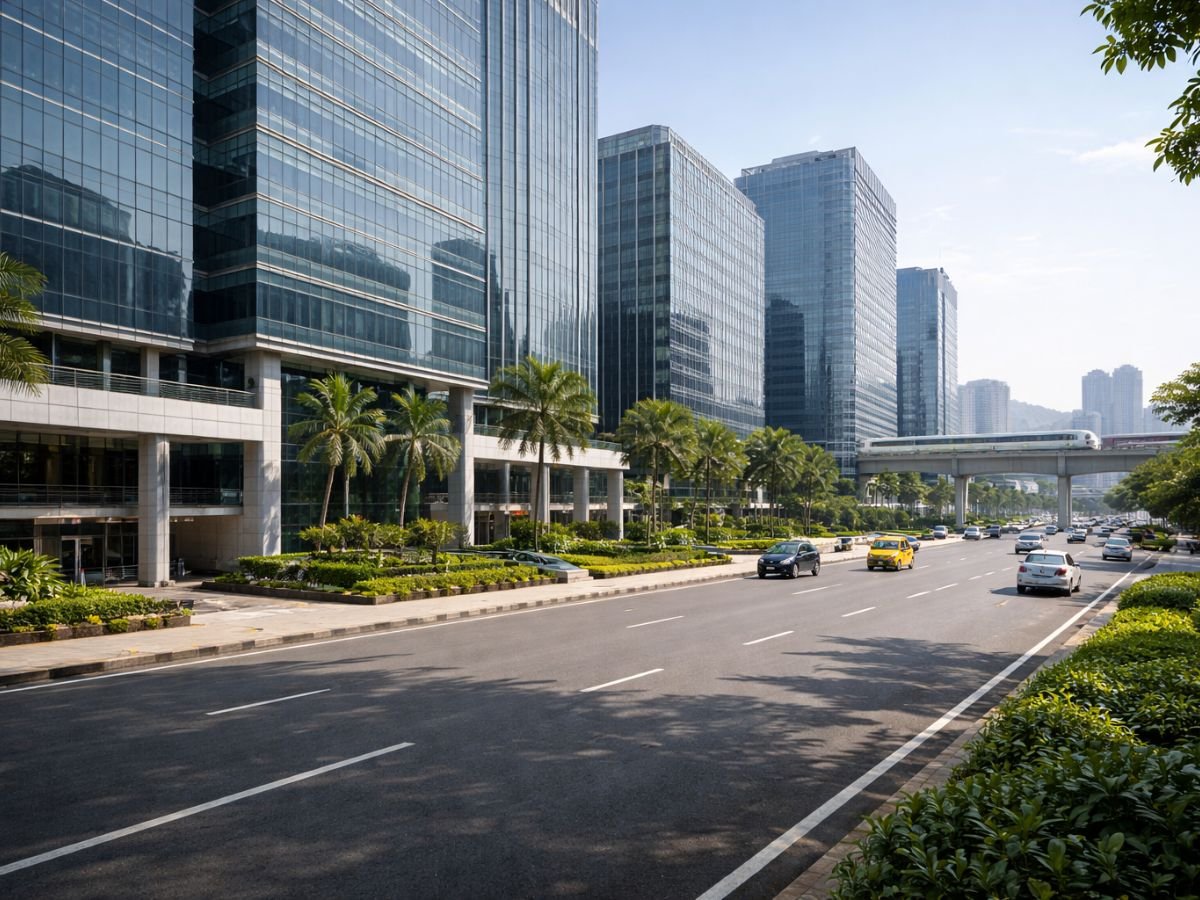
Price gets attention, but demand gets occupancy. And occupancy is what matters.
The first driver is connectivity. Buildings that are easier to reach from the rail network, major roads, or strong daily commute routes perform better. A 10-minute walkable office and an office that needs a messy last-mile ride are not equal in the eyes of tenants.
The second driver is employee catchment. If a company’s staff can live in nearby residential belts and commute without daily stress, the office becomes easier to retain. That is why some commercial zones hold demand better than others.
The third driver is ecosystem. Offices lease better where there are nearby banks, food options, hotels, services, and other businesses. A building in an isolated zone often underperforms even if the unit itself looks decent.
The fourth driver is building quality. Parking, maintenance, lobby condition, HVAC quality, power backup, and occupancy mix are not secondary details. They are part of the product.
How should buyers judge an office building before shortlisting a unit?
A commercial office should be inspected like an income-producing asset, not admired like a showroom.
Commercial Office Shortlist Checklist
- Check whether the building’s actual use is office-friendly and legally clear for that purpose
- Inspect lobby, lifts, washrooms, parking management, and common areas
- See whether the floor plate is practical or heavily wasted by awkward layout
- Verify real occupancy, not just broker claims
- Ask who the current tenants are and how stable they are
- Check historical CAM charges and how they have changed
- Inspect facade condition, leak risk, and coastal weather impact
- Review power backup, HVAC, fire safety, and general maintenance quality
- Match unit size to market demand in that location
- Confirm whether the building feels active, usable, and professionally managed on a normal working day
One more important point: a 300 to 800 sq ft office may make sense in Belapur, but the same size logic may not be ideal inside a market built around larger corporate plates. Unit size must match the micro-market.
What are the biggest differences between Vashi, Belapur, Airoli, Ghansoli, and TTC belt office markets?
| Market | Best For | Price Logic | Core Strength | Main Caution |
|---|---|---|---|---|
| Vashi | Premium client-facing business | Higher capital values | Visibility, access, commercial maturity | Higher entry cost |
| CBD Belapur | SMEs, consultants, legal and admin work | Moderate to premium | Smaller unit liquidity, institutional ecosystem | Older stock in some pockets |
| Airoli | IT, GCCs, large offices | Moderate to high | Strong corporate demand, campus style stock | Not ideal for every small business format |
| Ghansoli | Tech and value-led corporate demand | Slightly lower than Airoli | Good institutional demand with some value advantage | Must filter building quality carefully |
| TTC Belt | Operations, backend, value-driven use | Variable | Road access, functional utility, hybrid use logic | MIDC and conversion diligence is essential |
When does an office space in Navi Mumbai become a weak investment even if the price looks attractive?
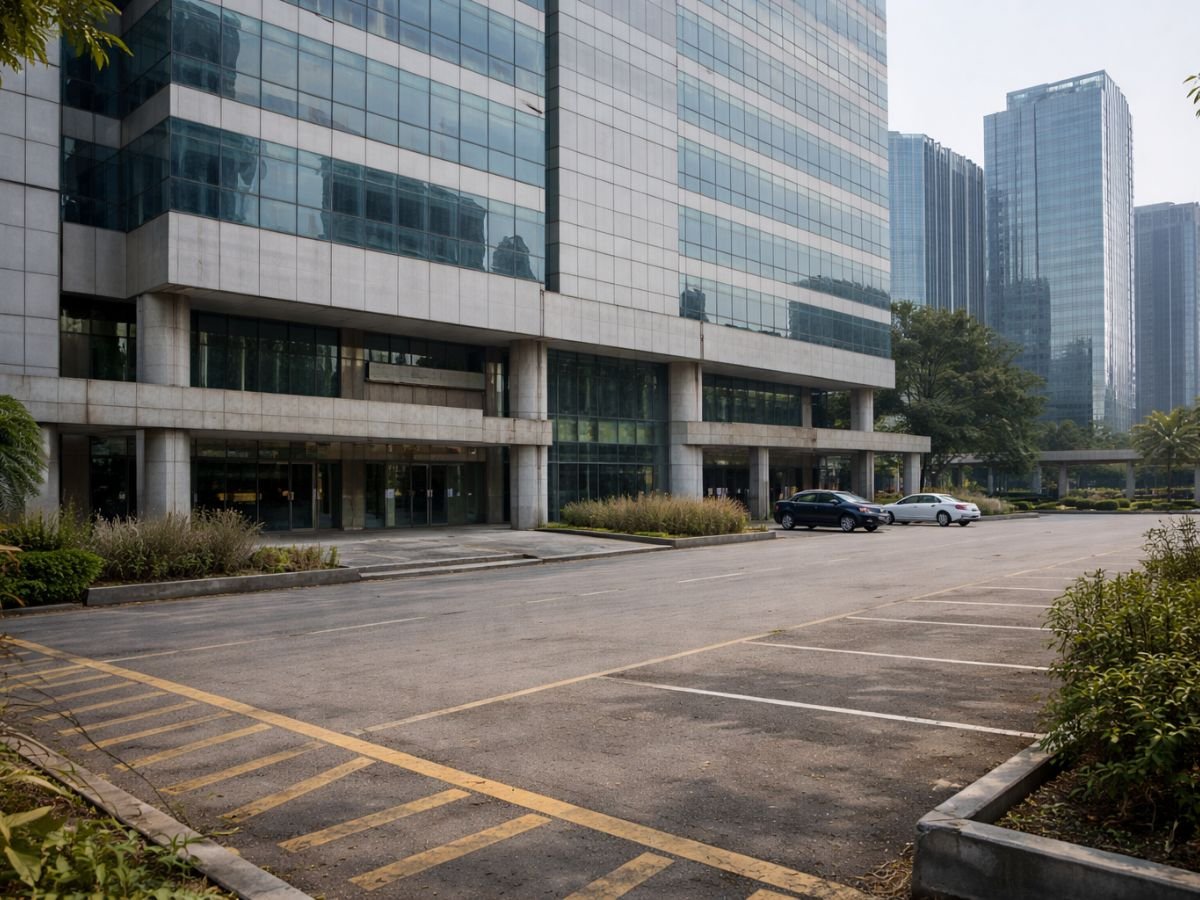
It becomes weak when real demand is weak.
A low-rate office is risky if the building is far from practical commuter logic, if the area lacks business ecosystem, if the unit size is mismatched to local demand, or if the building is poorly maintained. It is also risky when the entire investment story depends on future infrastructure instead of present occupier demand.
This is especially relevant in emerging southern belts. The airport story is real, but not every nearby office asset becomes a good investment just because the airport is operational. Mature tenant behaviour still matters more than hope.
What legal and document checks matter before buying a commercial office unit here?
Commercial buying in Navi Mumbai needs careful due diligence because the structure can be more layered than many first-time buyers expect.
For newer or under-construction commercial projects, check MahaRERA status where applicable. Verify registration validity and available project documents. This helps on regulatory compliance, but it does not guarantee business success or future tenant demand.
Check title chain properly, especially because leasehold structures are common in Navi Mumbai and CIDCO relevance can be important in many transactions. Confirm that the unit is actually approved for commercial office use. In TTC belt locations, conversion from industrial to commercial or IT/ITES use must be checked carefully where relevant.
On the registration side, transaction cost planning matters. As per the Step 2 dossier, stamp duty in Navi Mumbai is 7% for male buyers and 6% for women buyers in the stated structure, with 1% registration charge capped at ₹30,000 for properties above ₹30 lakh. Index II remains a basic ownership document after registration.
CIDCO transfer charges can be a major cost in leasehold commercial transactions. They are not small side expenses. In some cases, they can run into very large amounts depending on the size and location of the commercial property, and an added surcharge may apply if transfer happens before full or part Occupancy Certificate.
Commercial property tax also needs checking. The dossier notes that NMMC-side commercial taxation is significantly higher and resale buyers must verify arrears carefully. That step should not be skipped.
How should businesses compare office space for self-use in Navi Mumbai in a practical way?
A business should compare shortlisted offices using total operating reality, not only sale value or rent.
Score each option on:
- total cost of occupancy
- employee commute ease
- client access
- fit-out burden
- parking
- building maintenance
- growth flexibility
A beautiful office that causes staff fatigue, parking chaos, and high CAM pain is not really better than a simpler but better-functioning office.
In real terms, many businesses in Navi Mumbai do better when they choose the office that supports operations smoothly, even if it looks slightly less glamorous on day one.
What kind of office buyer or investor is each Navi Mumbai micro-market best suited for?
CBD Belapur suits the established CA, legal, advisory, or documentation-heavy business that needs access, seriousness, and smaller unit practicality.
Vashi suits the business that wants a stronger front-facing commercial image and does not mind paying more for that advantage.
Airoli and Ghansoli suit the pure commercial occupier or investor who wants deeper tech and corporate demand rather than only local visibility.
Turbhe, Mahape, Rabale, and Pawne suit businesses that think in terms of function, cost discipline, and operations rather than front-office prestige.
Kharghar and Panvel-side commercial markets suit businesses tied to future airport, logistics, or longer-horizon growth themes, but they need more patience and more caution.
Conclusion
Office space in Navi Mumbai can be an excellent business or investment decision, but only when the area, building, and use case match properly. Vashi and Belapur remain the safer answers for visibility and client-facing use. Airoli and Ghansoli are stronger where real corporate demand matters. The TTC belt can work very well for value and operations, but needs sharper diligence. Panvel-side and emerging southern markets have potential, but they are not automatic office winners just because future infrastructure looks exciting.
So the smartest way to approach office space in Navi Mumbai is simple: choose the market by business fit, commute logic, and real occupier demand first. Only after that should you compare rate per sq ft.
FAQs
Frequently Asked Questions