How Palm Beach Road and Station Access Affect Nerul Housing Demand
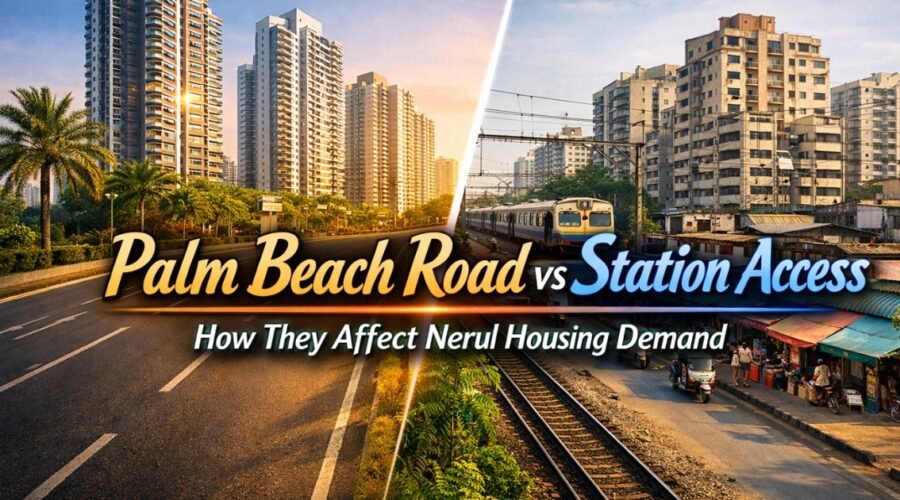
In Nerul, station access usually drives stronger immediate housing demand because it directly affects daily commute, tenant demand, and resale speed. Palm Beach Road access, on the other hand, supports premium pricing, smoother car-based travel, and stronger preference in select luxury pockets. So the real answer is not just “which is better.” It depends on which part of Nerul you are buying in, what kind of buyer you are, and whether you care more about utility, rental flow, or prestige-led value.
Quick Answer
| Access type | What it usually drives | Strongest for | Typical effect on demand |
|---|---|---|---|
| Station access | Immediate buyer interest, tenant absorption, resale liquidity | Commuters, students, working professionals, mid-budget buyers | Broader and faster demand |
| Palm Beach Road access | Premium positioning, road comfort, luxury preference, high-value pricing | HNIs, executives, multi-car families, long-hold premium buyers | Selective but high-value demand |
| Inner sectors with weaker direct access | Budget-led buying, entry affordability | First-time buyers, price-sensitive investors | Demand exists, but usually with more friction |
The simplest way to understand Nerul housing demand is this: the station moves volume, Palm Beach Road moves premium.
Why Station Access Usually Creates Stronger Immediate Housing Demand in Nerul
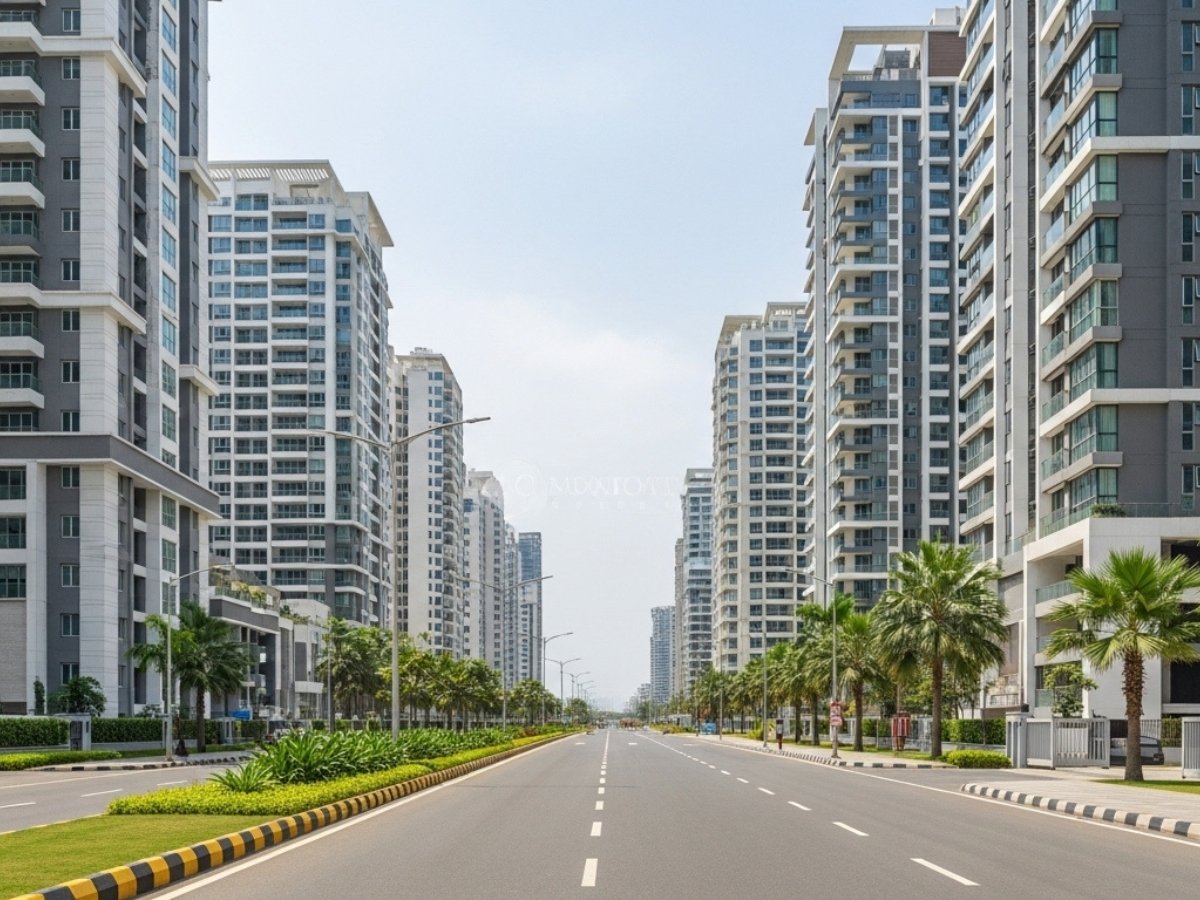
Station access matters more for the larger part of the market because it solves a daily problem. That is why homes closer to Nerul station, Seawoods-Darave station influence, and connected mid-segment pockets usually attract attention faster than similar homes deep inside the node.
For a normal buyer or tenant, the biggest value of a location is not branding. It is time saved every day. In Nerul, that means whether a person can walk to the station, reach work without depending on multiple autos, and manage daily life with less friction.
This is especially important because Nerul is not just a residential node. It also has a strong education-and-commute economy. The presence of institutions such as D.Y. Patil, SIES, Apeejay, and other schools and colleges supports a large student and young-working population. That creates a continuous rental base, especially for smaller flats near transit-friendly pockets.
A 1 BHK or compact 2 BHK near a real station-access zone can often see quicker tenant absorption than a better-looking flat in a less connected inner pocket. In practical terms, many tenants would rather accept a slightly older building if it saves them a daily auto bill and 20 to 30 minutes of travel friction.
That is why Nerul station access property value is not only about sale price. It is also about:
- faster shortlisting
- lower vacancy risk
- better rental continuity
- easier resale in the mid-budget category
There is one important caution here. “Near station” and “walkable to station” are not the same thing. In Nerul, a property may be marketed as station-close but still require a shared auto or a congested internal route. That difference changes demand more than many buyers realise.
Where Palm Beach Road Changes the Housing Equation in Nerul
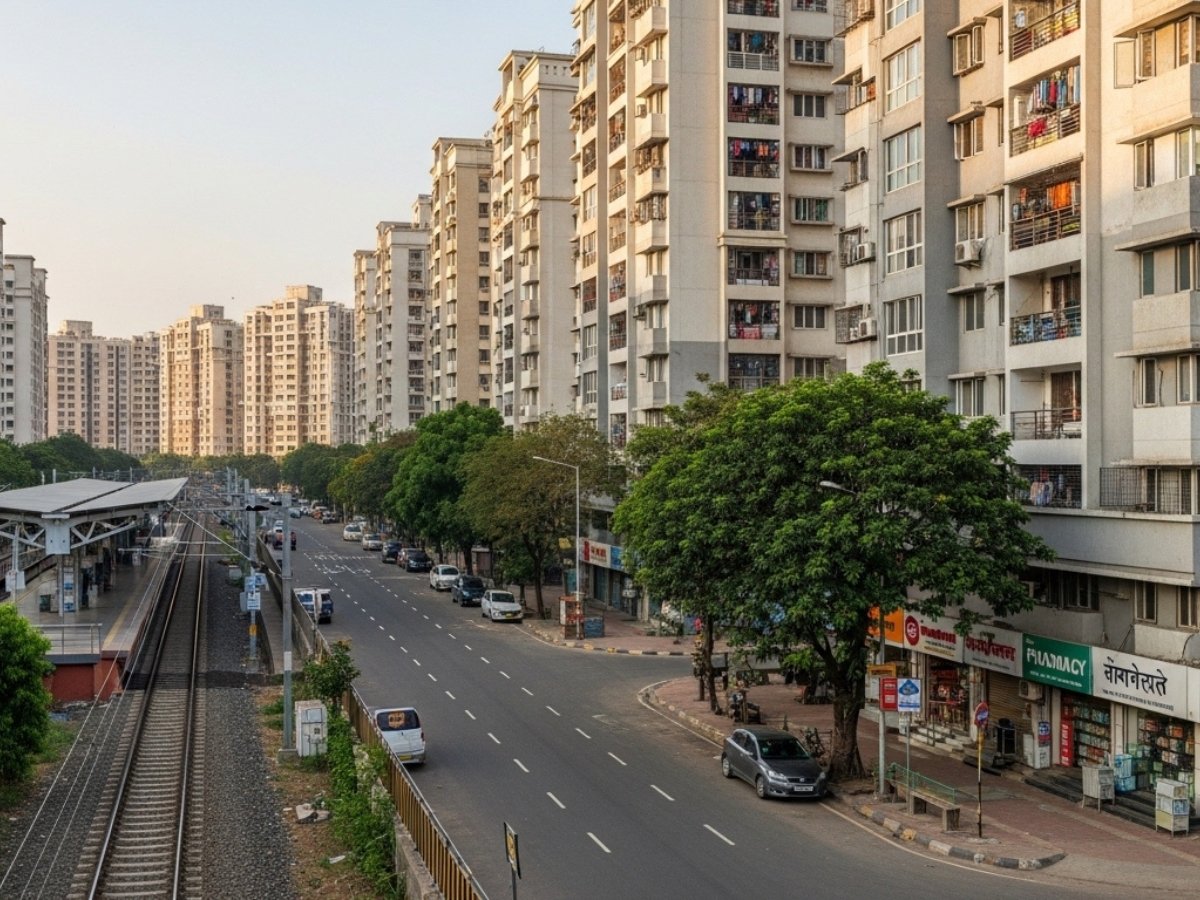
Palm Beach Road affects Nerul demand in a very different way. It does not usually create the widest mass-market demand. It creates premium demand, road-led demand, and aspirational demand.
This matters because Palm Beach Road is not just another road. In Navi Mumbai, it has long carried a prestige effect. In Nerul, that effect becomes stronger when it combines with:
- sea-facing or open-frontage premium towers
- better air and visual openness
- smoother car movement toward Vashi, Belapur, and MTHL-linked travel patterns
- stronger appeal for executive families and wealth-preservation buyers
This is why some Palm Beach Road-facing or Palm Beach-linked Nerul pockets command much higher pricing bands than inner sectors. Based on the research dossier, premium sectors such as 14, 16, 18A, and 28 can move in a very different price universe from the more affordable inner zones.
But this is where many buyers get confused. A “Palm Beach Road Nerul property” does not automatically mean:
- sea view
- low-noise environment
- direct easy entry to the corridor
- better practical demand than station-side housing
Only first-line or properly linked properties capture the full premium. A second-line building buried behind another tower or reached through narrow internal lanes may not deserve the same premium even if the broker uses the same location label.
So yes, Palm Beach Road can push the ceiling of Nerul real estate demand. But it does so in a selective way, not in a broad way.
Station-Side Demand and Palm Beach Road-Side Demand Are Not the Same Thing
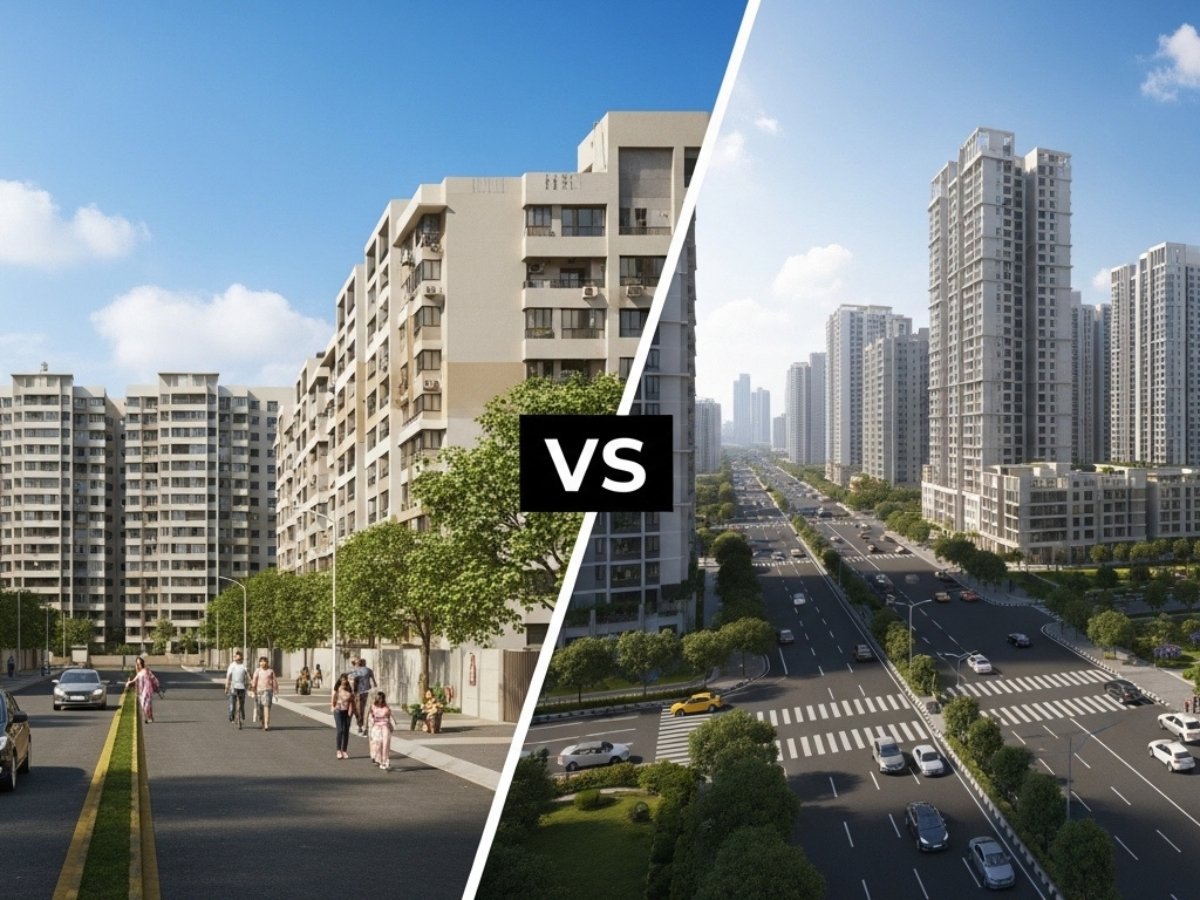
A lot of weak real estate content makes the mistake of putting both in one bucket called “good connectivity.” That is too simplistic. These are two different demand engines.
What station-side demand usually looks like
Station-side demand in Nerul is mostly utility-led. It is practical, frequent, and price-sensitive. It usually works best for:
- 1 BHK and 2 BHK homes
- working families
- daily train commuters
- students and young professionals
- buyers who care about resale speed
This market is driven by convenience. If a home saves time every day, demand becomes easier to sustain.
What Palm Beach Road-side demand usually looks like
Palm Beach Road-side demand is more prestige-led and car-led. It is usually stronger in:
- larger 3 BHK and 4 BHK homes
- premium towers
- sea-facing or open-view buildings
- executive and NRI profiles
- long-hold buyers who care about address strength and lifestyle insulation
This market does not behave like a station-side market. The demand is narrower, the ticket sizes are much higher, and deal cycles can be slower. But the pricing ceiling is much higher too.
Which one is broader, faster, and more price-sensitive
Station-side demand is usually broader and faster because more buyers can afford it and more tenants need it.
Palm Beach Road-side demand is usually more selective and less price-sensitive at the top end, but it depends heavily on true premium quality. If the building, access, or view is weak, the “Palm Beach” tag alone is not enough.
Which Parts of Nerul Benefit More From Each Access Advantage
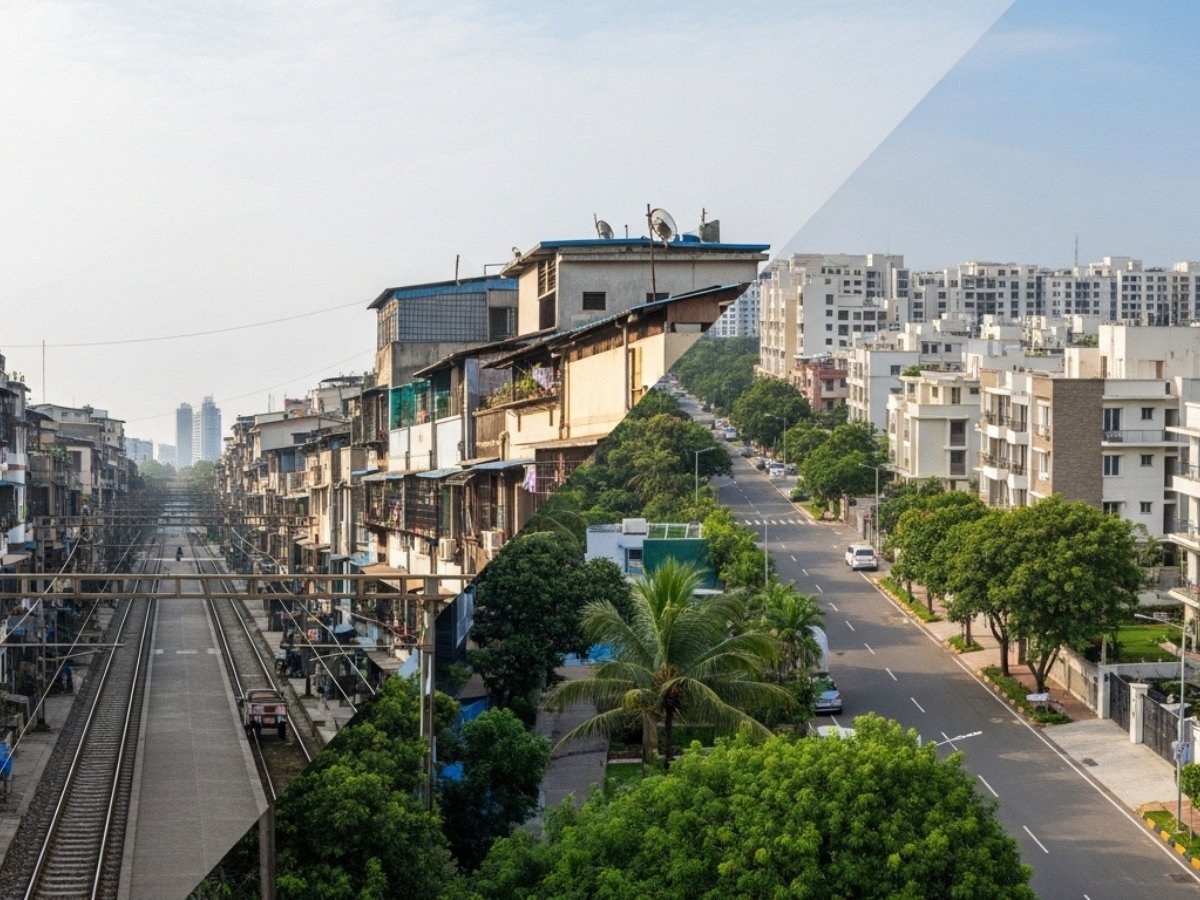
Nerul is not one uniform property market. That is one of the most important things a buyer must understand.
Pockets closer to Nerul station
Sectors influenced more by station access, education, and daily utility tend to benefit from:
- stronger commuter demand
- better rental continuity
- faster turnover in compact and mid-sized flats
Based on the dossier, Sector 15, Sector 19, and Sector 25 stand out in this broad station-and-utility-led ecosystem. Sector 25 also gets support from the wider Seawoods influence and surrounding retail convenience.
Pockets with better Palm Beach Road linkage
Premium, road-led demand is more visible in Sector 14, Sector 16, Sector 18A, and Sector 28. These sectors are more likely to benefit from:
- premium address perception
- better car-based regional connectivity
- stronger luxury demand
- interest from executive families and long-hold investors
But even inside these sectors, building-level differences matter. Not every project gets the same benefit.
Inner sectors where both advantages weaken or combine differently
Then there are inner or more affordable pockets such as Sector 20, Sector 22, Sector 30, and the Shiravane belt. These areas may still work for many buyers, but their demand usually depends more on:
- entry affordability
- building-level value
- local internal road condition
- auto dependency
- civic maintenance quality
This is where CIDCO planning and present-day civic realities start diverging in practical terms. A neatly planned grid on paper does not always mean equal daily convenience on the ground.
How These Two Access Factors Affect Renters, End-Users, and Investors Differently
A location is not good or bad by itself. It becomes good or bad depending on who is using it.
For tenants and rental-focused buyers
Tenants usually prefer station access more than Palm Beach prestige. That is because tenants are often solving immediate daily-life problems:
- reaching office or college
- reducing commute time
- avoiding last-mile costs
- living close to active retail and transit support
That is why Nerul rental demand near station-linked pockets often stays stable, especially for smaller units.
A landlord buying a compact flat near the station or education belt is usually buying a high-velocity asset. The gross rental yield may not always look glamorous, but occupancy and reletting can be much easier.
For families buying for self-use
Families often split into two groups. One group wants station convenience because school, work, and everyday movement matter more than luxury image. The other group, especially if car-reliant and financially stronger, prefers the Palm Beach side for:
- calmer environment
- bigger layouts
- more premium societies
- better road movement
- stronger lifestyle comfort
This is where the answer becomes very personal. A family using the train daily may regret overpaying for a Palm Beach-side address. A family with two cars may regret living too close to the station chaos.
For investors looking at exit confidence
Investors also split into two clear camps.
The first camp wants liquidity. They usually prefer station-linked or mid-segment locations where more buyers and tenants exist.
The second camp wants wealth preservation and premium upside. They may prefer Palm Beach-side assets, especially if the building quality, view, and road access are strong.
Neither approach is automatically better. One is more transaction-friendly. The other is more capital-heavy and selective.
Does Palm Beach Road Access Justify Paying More in Nerul?
Yes, but only in the right kind of Nerul property.
Palm Beach Road access usually justifies a premium when most of these conditions are true:
- the building has genuine and easy road linkage
- the project quality is strong
- the approach road is not frustrating
- the view, openness, or frontage is real
- the buyer is actually going to use car-based regional movement
- the premium is tied to a real lifestyle advantage, not just a broker phrase
It becomes much harder to justify the premium when:
- the building is only loosely “near” Palm Beach Road
- the access is awkward or signal-heavy
- the project has no real view advantage
- the flat is deep inside an internal lane
- the buyer depends more on train movement than road movement
- the same budget could buy much stronger practical value elsewhere in Nerul
That is where buyers often make a costly mistake. They pay a Palm Beach-style premium without getting a Palm Beach-level living experience.
Does Being Closer to the Station Always Improve Demand, or Can It Reduce Livability?
Closer to the station usually improves demand, but it does not always improve quality of life.
That is the trade-off many generic articles ignore. A station-proximate home may be easier to rent or resell, yet still be less comfortable for full-time self-use, especially for a car-owning family.
Common livability trade-offs near heavily active station zones include:
- noise
- traffic
- auto-rickshaw clustering
- parking stress
- crowd movement
- local commercial spillover
- monsoon inconvenience in some stretches
In practical terms, there is often a better middle zone than the absolute closest zone. A home that is around a realistic 500 to 800 metres away from the station may offer a better balance than one directly facing a chaotic approach road.
That is why Nerul livability vs connectivity is not a theoretical debate. It is a real decision. A student or office-goer may happily accept that trade-off. A family with elderly parents, children, and multiple vehicles may not.
What Actually Drives Faster Resale in Nerul: Road Visibility, Rail Convenience, or Overall Micro-Location Quality?
Faster resale in Nerul usually comes from a combination, not a single label.
Connectivity gets the buyer interested. Micro-location quality closes the deal.
In many cases, a sensible 2 BHK in a decent building with:
- reasonable station access
- functional parking
- acceptable building age
- proper lift
- decent water reliability
- manageable internal road access
will resell faster than a more “premium” property that has a better address label but weaker practical usability.
This is especially true in a mature node like Nerul, where many buyers already understand the difference between brochure value and daily value.
Aging building stock also matters. Some parts of Nerul have older societies. So resale is not only about Palm Beach Road or railway convenience. Buyers also look at:
- society condition
- maintenance quality
- structural age
- approach road width
- everyday civic comfort
- reputation of the micro-pocket
That is why Nerul property demand drivers cannot be reduced to one road or one station.
A Practical Example: Two Nerul Investors, Two Very Different Outcomes
Consider two buyers.
The first buys a compact flat near the education-and-station ecosystem in Sector 19 or a similar pocket. The goal is predictable rent and easier reletting. This buyer is not chasing luxury. They are buying a product that many students, young professionals, and smaller households can absorb.
The second buys a large Palm Beach-side premium apartment expecting strong executive rental demand. The rent per month may be much higher. But the tenant pool is much narrower, and the waiting period for the right tenant can be longer.
On paper, the premium apartment may look more impressive. In practical investment terms, the smaller station-linked asset may feel much more liquid and manageable.
That difference matters a lot.
How to Judge a Nerul Property Correctly if the Broker Is Selling Only on “Connectivity”
If a broker is repeating only “station close” or “Palm Beach access,” slow down. In Nerul, those phrases need checking.
What to check on map
See the real route, not just the pin. Ask:
- Is it truly walkable to the station?
- Is the route comfortable for daily use?
- Does the road link to Palm Beach feel direct or awkward?
- Are there U-turns, service roads, or congestion-heavy exits?
What to check on ground
Visit at real peak times, not only on a quiet afternoon. Morning school traffic and evening office return traffic show the truth.
Look at:
- station-side crowding
- internal road width
- parking overflow
- auto availability
- road noise
- waterlogging signs if visible in monsoon-sensitive pockets
What to ask before paying a location premium
Use this short checklist before agreeing to a higher price:
| Check | Why it matters |
|---|---|
| Is the station actually walkable without daily auto use? | Changes demand, tenant appeal, and daily convenience |
| Is Palm Beach access direct or only a marketing phrase? | Affects whether the premium is real |
| Does the building have good parking and society upkeep? | Important in a mature node like Nerul |
| Is the approach road wide and usable at peak hours? | Daily livability depends on this |
| Is the premium due to sea view, road comfort, or just brand language? | Prevents overpaying |
| Does your own lifestyle match the access advantage? | Best location is buyer-specific |
In Practical Terms, Who Should Prioritise Station Access and Who Should Prioritise Palm Beach Road Access?
If your daily life depends on the train, station access should usually come first. That includes:
- daily commuters
- students
- budget-conscious families
- landlords targeting reliable smaller-ticket rentals
- buyers who care about broader resale demand
If your daily life depends more on road travel and you have the budget to buy into the premium segment, Palm Beach Road access may matter more. That includes:
- executive families
- HNIs and NRIs
- multi-car households
- buyers prioritising sea-facing or insulated premium living
- investors parking capital in higher-end assets
If you are somewhere in between, do not chase either extreme blindly. A balanced micro-location in Nerul with good internal roads, manageable station reach, and decent society quality may serve you better than a technically premium or technically station-close property that creates daily compromise.
Conclusion
Nerul housing demand is split between two very different forces.
Station access drives the wider, faster, and more practical market. It supports commuter demand, student rental demand, mid-budget family buying, and better liquidity in many normal-use cases. That is why it usually has a stronger effect on immediate housing demand.
Palm Beach Road access drives the premium market. It supports higher capital values, stronger executive and luxury appeal, better car-led regional movement, and a different class of buyer altogether. It does not replace station utility. It serves a different purpose.
So the real answer is simple, even if the market is not. If you want everyday practicality, rental continuity, and easier mass-market demand, station access usually matters more. If you want premium lifestyle value, road-led comfort, and aspirational positioning, Palm Beach Road matters more. In Nerul, both shape housing demand. They just do not shape the same kind of demand.
FAQs
Frequently Asked Questions