

Panvel Commercial Property Guide: Best Areas, Prices, Risks and Buyer Checks
Panvel can work very well for commercial property, but only if the location matches the business. Old Panvel works differently from New Panvel, and both behave very differently from airport-influence or highway-led belts. In 2026, Panvel is no longer just a future story. The airport, Atal Setu connectivity, and planned transit upgrades have made it a serious commercial zone, but blind buying is still risky. The real decision depends on footfall, access, surrounding density, authority context, and whether demand already exists on the ground.
Is Panvel actually a good place for commercial property in 2026?
Yes, Panvel is now one of the more important commercial growth locations on the Navi Mumbai side, but not for every asset type and not in every pocket. Its strength comes from a combination of old market activity, a large residential catchment, improving regional connectivity, and airport-led expansion. At the same time, some parts are already usable and liquid, while others still depend on future development catching up.
Here is the simple version:
| Commercial question | Practical answer |
|---|---|
| Is Panvel good for shops? | Yes, especially in established catchment-led zones with daily movement and proven footfall |
| Is Panvel good for offices? | Yes, selectively. Better for boutique offices, professional spaces, and some organized office projects than for blindly buying generic office stock |
| Is Panvel good for warehouses and transport-linked commercial use? | Stronger than many readers expect because of airport, port-region logic, highways, and freight movement |
| Is Panvel good for pure speculation? | Only in selective pockets. Some areas still look stronger in brochure than in actual business activity |
| Is leasing better than buying? | In many cases, yes, especially where the business model is untested or the area is still maturing |
Panvel’s biggest advantage is that it is no longer isolated. Atal Setu has materially improved access between Mumbai and the Panvel side, and the wider airport and metro narrative has made this belt commercially more relevant than it was even a few years ago.
Which kinds of commercial property make the most sense in Panvel?
Not all commercial products perform the same way in Panvel. That is where many weak articles fail. They talk about “commercial property” as if a high-street shop, a clinic, a boutique office, and a warehouse are all one category. They are not.
Shops and retail units
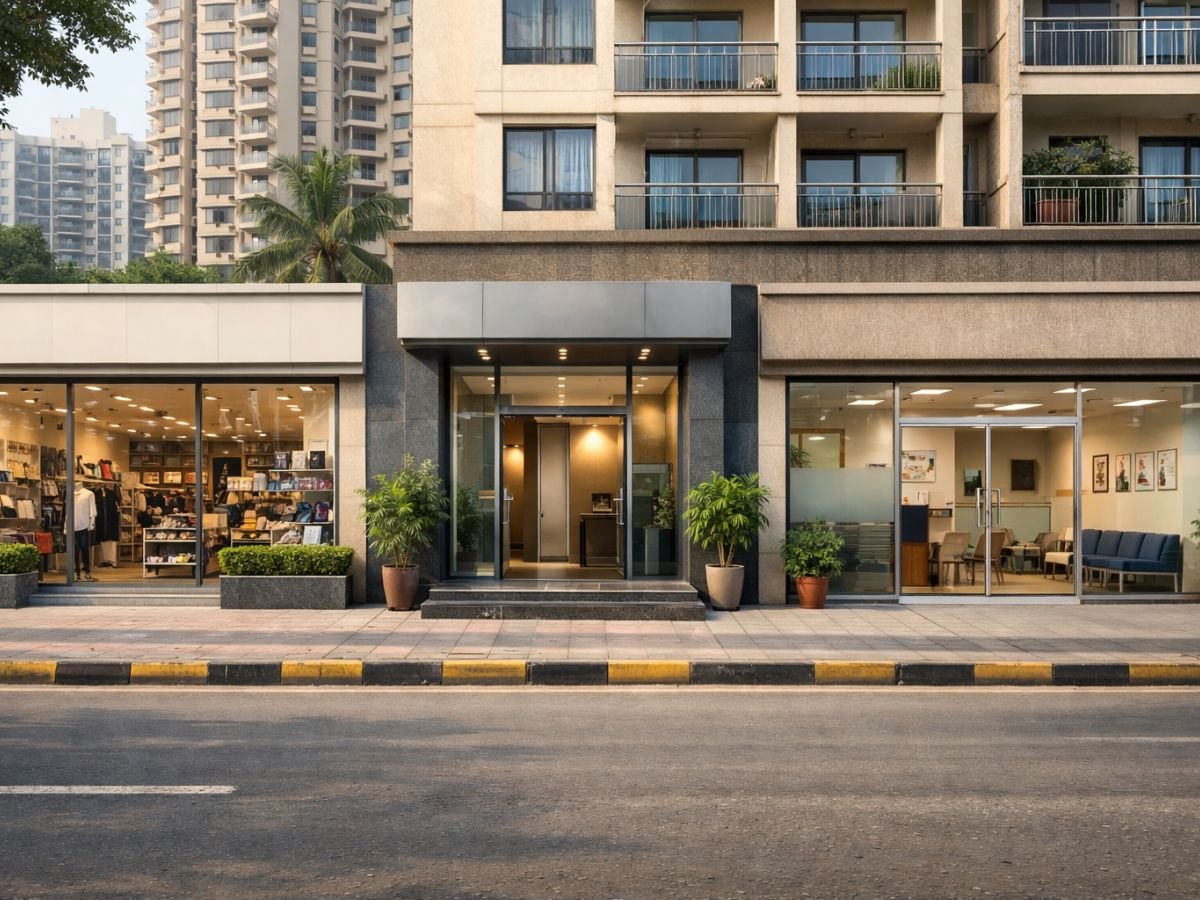
Retail works best where there is regular human movement, nearby housing, and real consumption. That is why old market influence and dense residential catchment matter more than glossy building elevation. A shop in an active retail stretch can outperform a better-looking unit in a weak corridor.
For daily-need retail, apparel, jewellery, medical, food, and service-led shops, established Panvel pockets usually make more sense than isolated new launches.
Offices and professional spaces
Panvel is not BKC, and buyers should not judge it by that standard. Office demand here is more practical. Think CA firms, consultants, clinics, coaching, legal offices, back-office setups, and selective corporate spillover in planned projects. New Panvel and organized township-led developments make more sense here than random frontage units.
Clinics, coaching, and service-led businesses
These uses often do well in mixed residential-commercial environments where people already live and move daily. Wide roads help, but catchment matters more. A clinic or coaching class does not need the same logic as a premium showroom.
Warehousing, storage, and transport-linked commercial use
This is one of Panvel’s biggest commercial strengths. The wider belt benefits from airport logistics, regional road access, freight movement, and western India distribution logic. That is why logistics and warehousing around the broader Panvel-side corridor have become much more relevant.
Which parts of Panvel behave differently for commercial buyers and why?
This is the most important section in the whole article. Panvel is not one commercial market.
Near Panvel station and old market influence
Old Panvel remains the most naturally commercial part of the area because it has what new projects cannot manufacture overnight: habit, movement, memory, and established buying patterns. This is where high-street retail logic is strongest. It suits shop buyers, local brands, professional service providers, and businesses that need daily visibility.
It is usually less about futuristic appreciation and more about present usability.
New Panvel and organized residential catchment
New Panvel works better for structured commercial formats. The layout is more organized, roads are wider, and some pockets are better suited for offices, clinics, branded retail, and mixed-use business activity. This is where planned node logic helps.
For buyers who want cleaner entry, better building format, and a more organized commercial environment, New Panvel often makes more sense than pure old-market stock.
Highway-facing and connector-road commercial belts
These locations attract buyers because they sound strategic, and sometimes they are. But they need careful reading. Highway visibility is not the same as usable demand. Some corridors are stronger for logistics, transport-linked storage, auto-related trade, or showroom formats than for standard daily-use retail.
A road-facing unit only works if access, parking, stopping ability, and surrounding activity support the business.
Growth corridors where future promise is stronger than present demand
This is where buyers need to slow down. Panvel has areas benefiting from the airport-influence and NAINA story, and that macro story is real. But not every commercial unit in a future-growth belt is a good investment today.
Some locations may still be waiting for occupancy, employment concentration, and stable end-user movement. These are better treated as selective long-hold bets, not easy rental-yield promises.
Who should buy commercial property in Panvel, and who should be more careful?
| Buyer type | Panvel fit | Why |
|---|---|---|
| Small self-use business owner | Strong in the right micro-location | Panvel can offer practical entry compared with more expensive mature business districts |
| Shop investor chasing rental income | Selective | Works better in proven footfall areas, not in empty commercial inventory |
| Office investor | Moderate and location-sensitive | Better in organized, credible projects with real tenant logic |
| Warehouse or logistics investor | Stronger than average | Panvel-side connectivity gives this segment real structural support |
| Pure speculative investor | Needs caution | Too many buyers confuse infrastructure headlines with immediate tenant demand |
Panvel suits some buyer profiles more than others.
If the business depends on walk-ins, visibility, and daily demand, choose mature catchment first. If the strategy is long-hold appreciation, then future-growth corridors can make sense, but only with patience and clean documents.
Is it better to buy or lease commercial space in Panvel right now?
For many users, leasing is the smarter first move.
Buying makes sense when the location is clearly right, the asset has strong long-term usability, and the business needs control over branding, fit-outs, or permanence. Leasing makes sense when you are still testing the market, when the footfall pattern is uncertain, or when the area is improving but not yet fully proven.
A simple way to think about it:
- Buy when the location is already working and the property quality is defensible
- Lease when the area has promise but your revenue model still needs proof
- Wait when the entire story depends on future infrastructure without current business support
A local example helps. A boutique clinic, coaching centre, or office near an organized residential catchment may justify buying sooner than a speculative retail unit in a new commercial block that still has weak occupancy.
What drives commercial demand in Panvel beyond the usual growth headlines?
The airport story matters, but Panvel does not work only because of the airport.
Residential catchment and daily-use demand
Real commercial value usually starts with people already living nearby. Daily-use retail, clinics, coaching, food, banking, and service businesses need residential density more than abstract growth narratives.
Station, road, and bus connectivity
Panvel benefits from railway connectivity, regional bus movement, highway access, and stronger cross-region connection because of Atal Setu. This improves movement and liquidity, but the effect is not equal everywhere. A location still has to be practical at the last-mile level.
Business spillover from the wider Mumbai region
As movement improves, Panvel becomes more viable for businesses that do not need a South Mumbai or BKC address but still want access to the larger MMR economy. That supports offices, service businesses, logistics, hospitality-linked activity, and mixed-use townships.
Airport and infrastructure impact, but with timing caution
The airport is a genuine structural catalyst. But infrastructure alone does not guarantee immediate tenant demand in every nearby pocket. Some value is already priced in. Some value will come only when employment ecosystems, business parks, hospitality, and sustained movement deepen further.
That distinction matters. It separates a good buy from an expensive story.
What are Panvel commercial property rates really telling you, and what can they hide?
Rate is only the starting point. In Panvel, price bands vary widely because the market itself is uneven. Broadly, the market has moved far above its earlier 2020 levels, with stronger sub-markets and airport-proximity or organized pockets commanding much higher values than weaker or less mature areas.
That sounds impressive, and it is. But price can hide problems:
- weak frontage
- upper-floor commercial stock with poor usability
- limited tenant demand
- difficult access or parking
- low surrounding occupancy
- leasehold complications not fully understood by the buyer
So when someone says a Panvel commercial unit is “cheap” or “premium,” ask: premium for what? Footfall? office quality? future appreciation? logistics access? branding? rental stability? Without that context, raw rates are not decision-ready.
What should you check before buying a shop, office, or commercial unit in Panvel?
This is where practical buyers separate themselves from brochure buyers.
Commercial Property Due Diligence Checklist for Panvel

- Check whether the property is in an established business zone or only in a future-growth pitch
- Verify the exact land and title structure
- Confirm whether the property is leasehold or otherwise subject to CIDCO permissions
- Check project approvals and Commencement Certificate status where relevant
- Verify sanctioned commercial use, not just marketing language
- Ask about Fire NOC and operational compliance for larger commercial buildings
- Check parking, loading, and visitor handling
- Study surrounding occupancy, not just the subject unit
- Understand maintenance charges and CAM burden
- Ask whether the building attracts the type of tenant or user you actually need
- Cross-check registration and document flow through normal Maharashtra property process, including IGR-linked record logic where applicable
- For under-construction or project inventory, verify MahaRERA status when relevant
The local reality is simple: a legal commercial unit in a weak building can still underperform, and a strong location with document confusion can still become a headache. Both business logic and legal clarity matter.
What local authority and document issues matter more in Panvel than buyers expect?
Panvel often confuses buyers because planning, lease structure, and civic reality do not always sit under one simple label.
CIDCO remains critical in large parts of the Navi Mumbai and airport-influence planning structure, especially in NAINA-related development context. Panvel Municipal Corporation handles civic and municipal matters on the ground. That means buyers should not casually assume that one approval, one tax receipt, or one marketing statement tells the full story.
One more important point: the freehold conversion discussions many buyers have heard about in the Navi Mumbai context should not be casually extended to commercial assets. Commercial property in the Panvel-side belt still often requires careful checking of leasehold conditions, transfer permissions, NOC requirements, and associated charges.
This is exactly why commercial due diligence in Panvel should include:
- authority context
- leasehold status
- transfer conditions
- sanctioned use
- document chain
- actual site usability
Which Panvel commercial opportunities are practical, and which ones are mostly brochure stories?
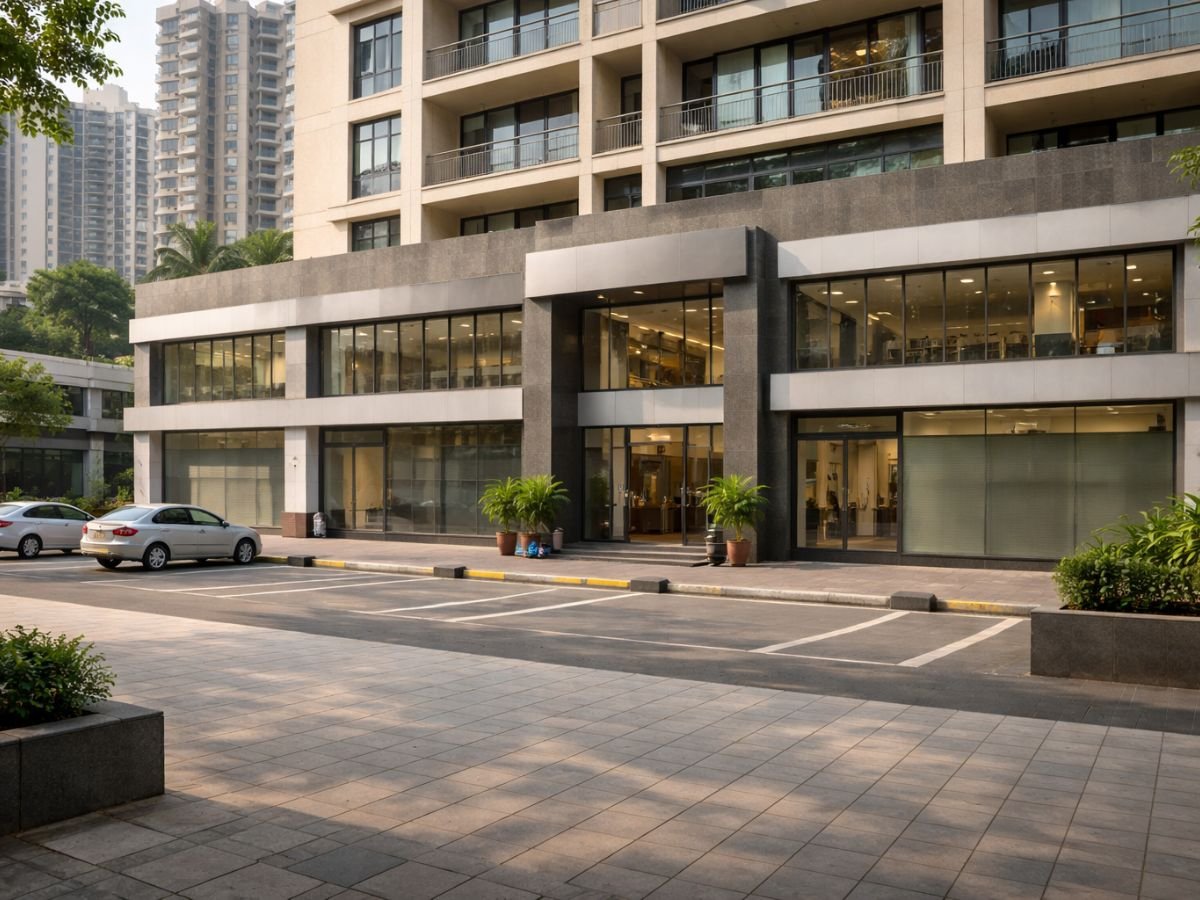
Practical opportunities usually share three qualities: real movement, a believable user base, and property format that matches local demand.
That means:
- retail in proven catchment-led pockets
- professional spaces in organized New Panvel-type areas
- logistics and storage in the broader transport-linked corridor
- selective mixed-use projects where the surrounding ecosystem is genuinely forming
Brochure stories usually sound like this:
- “airport nearby, therefore guaranteed high returns”
- “main road frontage, therefore perfect retail”
- “future metro, therefore instant appreciation”
- “big township, therefore automatic commercial success”
None of those statements is enough on its own. In Panvel, future growth is real, but future growth and present usability are not the same thing.
What does a sensible Panvel commercial property decision look like for different buyer types?
Small self-use business owner
Choose present practicality over future storytelling. Look for catchment, access, visibility, and rent-or-buy affordability. A slightly less glamorous but active market is often better than a cleaner but weaker location.
Yield-focused investor
Do not chase headline yields without checking tenant realism. Panvel commercial yields can beat residential yields, but only when the asset is truly lettable. Empty stock is not yield.
Long-hold appreciation investor
This buyer can consider airport-influence and future-growth belts, but only with patience. The best long-hold bets are usually the ones where infrastructure, planning, and gradual occupier demand can actually meet over time.
Service professional or clinic operator
Prioritize residential catchment, access, parking, and ease of reach. A clinic or advisory office often performs better in an area people can easily access than in a flashy but awkward project.
Conclusion
Panvel is now a serious commercial property market, not just a hopeful one. But it still rewards selective buyers, not emotional ones. If the goal is shop investment, self-use business space, boutique offices, or logistics-linked commercial exposure, Panvel can make strong sense in 2026. The mistake is treating all of Panvel as one uniform opportunity.
The best commercial decisions here come from matching the property to the business, the micro-location to the demand, and the headline story to actual ground reality. That is the difference between buying into Panvel’s growth and simply buying into marketing.
FAQs
Frequently Asked Questions