Panvel Property Guide 2026: Where to Buy, What to Check and Which Pockets Make Sense Now
Panvel still makes sense in 2026, but not for the old reason. Earlier, many buyers came only for future infrastructure hope. Now the airport is operational, Atal Setu is already open, and the Panvel–Karjat rail corridor is moving toward completion, so the market is no longer about a blind future bet. The real question now is simpler: which part of Panvel actually suits your budget, travel pattern and risk tolerance?
Quick Summary
| Question | Practical Answer |
|---|---|
| Is Panvel a good place to buy in 2026? | Yes, but pocket selection matters more than the Panvel name itself. |
| Best for end-users | New Panvel East and Khanda Colony usually feel more settled and easier to live in. |
| Best for commuters | Khandeshwar and selected parts of Karanjade can work better on budget plus station logic. |
| Best for long-hold infrastructure-led buyers | Palaspa and larger growth-corridor township belts can make sense, but only with strong due diligence. |
| Biggest mistake | Paying a premium for "airport" or "Atal Setu" without checking internal roads, authority approvals, water, and actual resale depth. |
| Most important legal check | Do not stop at brochure promises. Verify the correct planning authority, the project on MahaRERA, and the approval chain before paying token money. |
Why Panvel Matters More in 2026 Than It Did Earlier
Panvel’s importance is now grounded in real infrastructure, not just brochure language. Navi Mumbai International Airport began commercial operations on 25 December 2025, and in its first summer schedule the airport is scaling up to 78 average daily departures and 46 domestic destinations. Atal Setu has been open to traffic since 13 January 2024 and MMRDA says it has already improved regional mobility between Mumbai and Navi Mumbai. The Panvel–Karjat suburban corridor has also advanced sharply, with recent reporting citing 85% physical completion and an expected commissioning window in 2026.
That changes the Panvel story. It is no longer just “buy before the airport comes.” The airport has come. The bridge is already working. The rail upgrade is visible. So buyers should now judge Panvel like a lived market: commute, civic quality, legal clarity, resale depth, and whether the specific pocket feels mature or still too early.
Panvel Is Not One Market
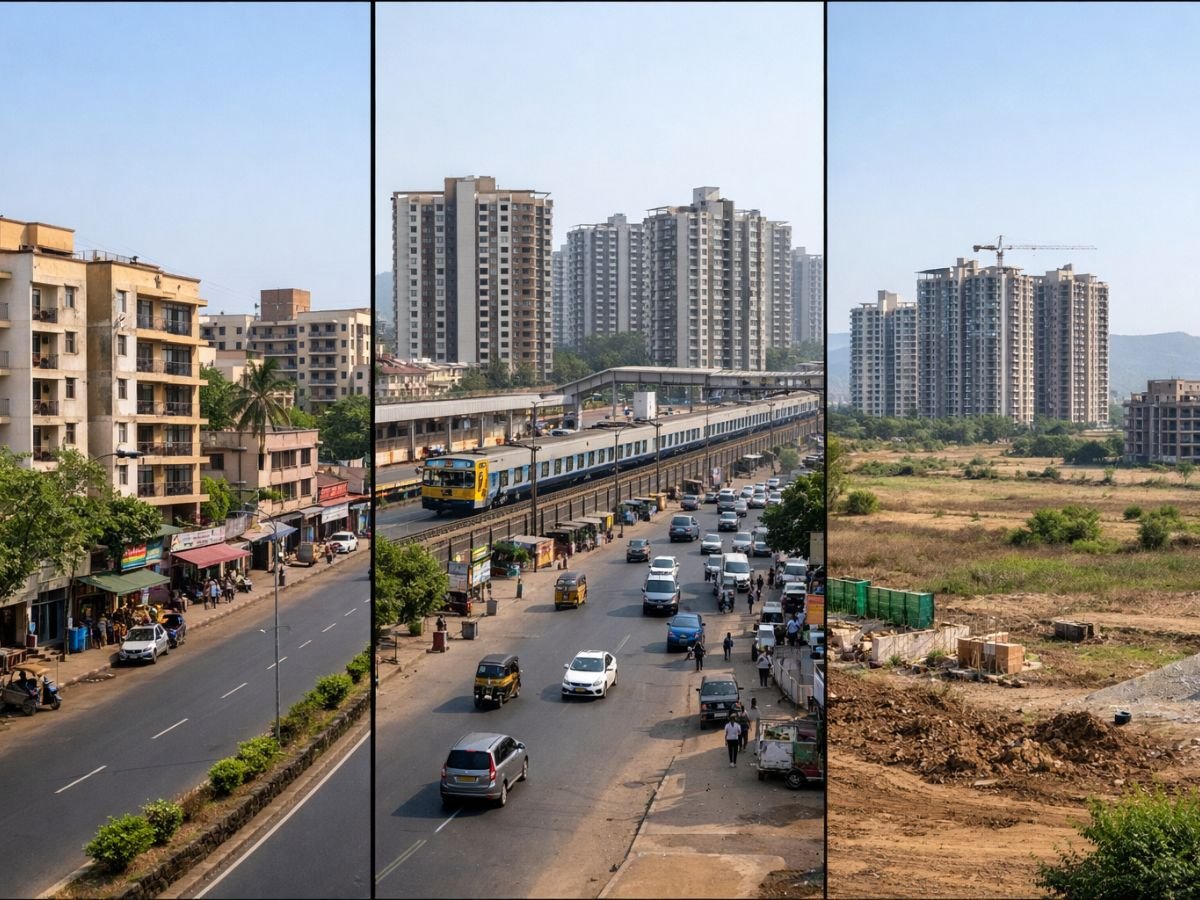
This is where many buyers go wrong. They search “Panvel property price” and assume one average tells the whole story. It does not.
Panvel today behaves like at least three different residential markets: established Panvel, commuter-oriented transit belts, and growth-corridor township zones. Even portal averages show the spread. Housing.com’s 2026 trend pages show Panvel overall at about ₹8,499/sq ft, but locality averages vary from around ₹6,876 in Karanjade to ₹9,772 in Khanda Colony, while Palaspa sits around ₹7,106, Khandeshwar around ₹9,413, and New Panvel East around ₹9,520. These are asking/portal trend indicators, not final deal truth, but they are enough to prove that “Panvel average” is a weak decision tool.
Panvel Pocket Comparison
| Typical 2026 Portal Trend Level | Best For | Main Strength | Main Caution | |
|---|---|---|---|---|
| New Panvel East / Khanda Colony | Mid-to-higher Panvel band | Families, stable end-users, better resale comfort | More settled environment and stronger day-to-day livability | Less "cheap entry" than outer belts |
| Khandeshwar / Karanjade | Mixed budget-to-mid band | Budget buyers and train-linked commuters | Better entry price in selective areas | Quality, civic consistency and micro-location matter a lot |
| Palaspa / growth-corridor township side | Lower average at portal level, but premium projects can quote much higher | Long-hold buyers, township seekers, infra-led investors | Larger supply, future ecosystem upside | Last-mile reality and project-level variation are huge |
Source note: overall Panvel and locality averages above are based on 2026 Housing.com trend pages for Panvel, New Panvel East, Khanda Colony, Khandeshwar, Karanjade and Palaspa.
1) Established Panvel: New Panvel East and Khanda Colony
For many serious end-users, this is the safest Panvel answer.
Why? Because these pockets are usually judged less on dream infrastructure and more on ordinary life. Schools, station access, internal movement, older resale stock, daily shopping, social familiarity, and a generally more settled feel all matter here. This is the part of Panvel where buyers often pay a bit more gladly because the “what happens after possession?” question feels less uncertain.
Khanda Colony’s current portal trend average is around ₹9,772/sq ft, while New Panvel East on Housing’s trend page sits around ₹9,520/sq ft. That does not mean every building deserves that rate. It means the market is already treating these belts as more established than pure peripheral bets.
This is the better fit for:
- families wanting a more liveable daily base
- buyers who may need resale flexibility later
- people who do not want to depend entirely on one future project or corridor for value creation
2) Transit Hubs: Khandeshwar and Karanjade
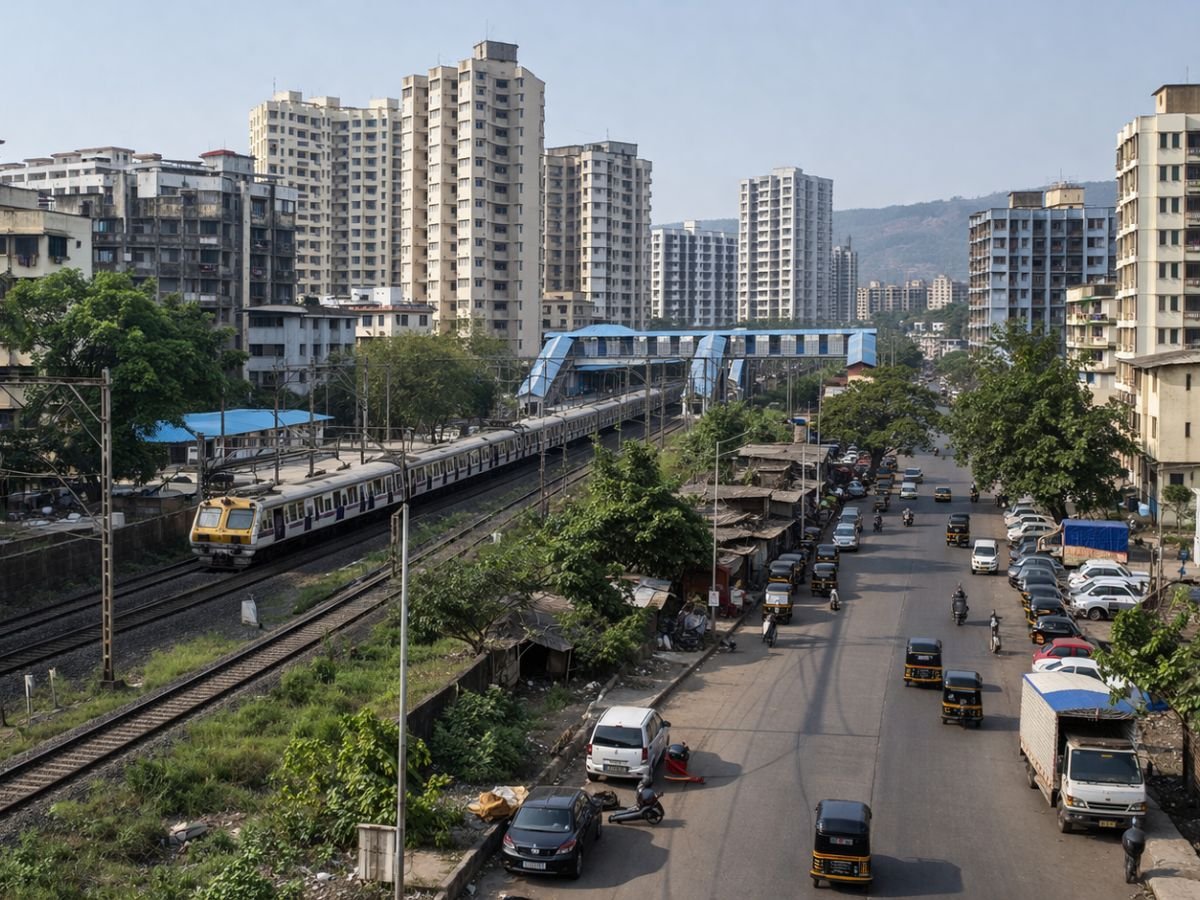
This is where Panvel becomes more tactical.
Khandeshwar and Karanjade appeal to buyers who want a lower or more negotiable entry point but still want real commuter logic. Housing’s 2026 trend pages show Khandeshwar at roughly ₹9,413/sq ft and Karanjade closer to ₹6,876/sq ft, which immediately tells you these two are not interchangeable even if they are often clubbed together in casual conversations.
Karanjade especially can attract buyers who feel established Panvel is already too expensive. But this is also where discipline matters. A cheaper price is not automatically better value. In this belt, one building can feel practical and rentable, while another just a few minutes away can feel weak on road approach, open space, water reliability, parking, or resale appeal.
For budget buyers, this zone can work. For careless buyers, it can also become the classic regret purchase.
3) Growth Corridors: Palaspa and the Township-Led Side of Panvel
This is the most misunderstood Panvel segment.
Portal data for Palaspa shows an average around ₹7,106/sq ft, but that does not mean all growth-corridor inventory is “cheap.” In reality, larger branded township projects and better-positioned parcels can quote much higher depending on launch phase, amenities, brand premium and airport-access story.
This is the right zone for a very specific buyer:
- you are comfortable with a longer holding period
- you understand that civic maturity may lag behind brochure quality
- you are buying a project, not just a locality name
- you are willing to verify roads, approvals, water, and completed ecosystem, not just clubhouse renders
This is not the zone to buy blindly because someone said “airport side hai.”
The Real Panvel Buyer-Fit Matrix
Buy in established Panvel if you are an end-user first
If daily life matters more than story value, choose settled pockets. New Panvel and Khanda Colony usually suit families, working couples and buyers who want lower uncertainty after possession.
Buy in the transit belt if budget and commute both matter
Khandeshwar and selected Karanjade stretches suit buyers who still want railway logic and lower entry pricing. But you need sharper micro-location screening.
Buy in the growth corridor only if you are comfortable with development lag
Palaspa-side and township-led corridors can reward patience, but they demand far better due diligence. This is not a passive purchase.
The Legal Side Buyers Must Not Ignore
Panvel confuses many buyers because civic identity and planning authority are not always the same thing.
Panvel Municipal Corporation’s own history page says the corporation includes 29 revenue villages and CIDCO colonies such as Taloja, Kharghar, Kalamboli, Kamothe and New Panvel. But CIDCO’s NAINA section separately shows its own development plan, DCPR, building permission, and CC/OC lists for notified airport-influence areas. In simple words: a PMC address does not automatically answer every planning or approval question. You must verify who controlled the planning and permission side for that project.
Then check the project on MahaRERA. MahaRERA’s buyer guidance tells homebuyers to search the project on its portal before buying, and its possession-stage guidance specifically says buyers should check the project work status and amenity timelines on the portal if amenities are delayed or not usable at possession. That is important in Panvel, especially in phased or township-style projects where landscaping, clubhouses, or internal ecosystem often get marketed aggressively.
Why ASR and Portal Rates Should Not Be Confused With Your Actual Deal
Many buyers compare only brochure rate and nearby asking rate. That is incomplete.
Maharashtra’s eASR system clearly states that the Annual Statement of Rates is used to assess the true market value of property for the purpose of stamp duty. For FY 2026–27, Maharashtra kept ready reckoner rates unchanged statewide, although zoning and development-plan related corrections may still matter locally. So ASR is important, but it is not the same as a builder’s all-in quote or your final negotiation value.
The practical use is this:
- portal average tells you the visible market mood
- ASR tells you the government valuation reference for stamp-duty purposes
- your real deal value depends on floor, building quality, age, amenities, parking, authority exposure, and project trust
If you ignore this difference, Panvel can look cheaper or costlier than it actually is.
What You Should Physically Check Before Booking in Panvel
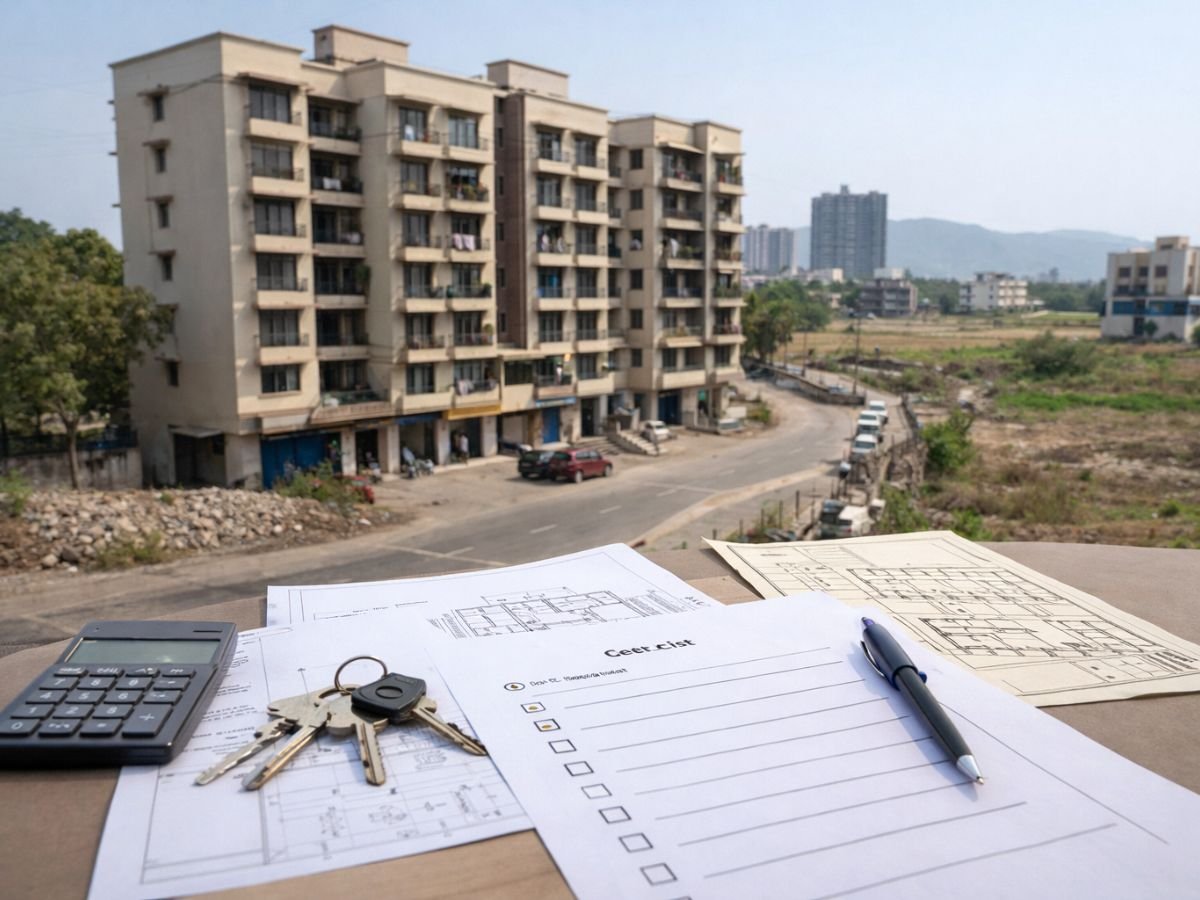
This part is very local, very real, and often more important than the brochure:
Check the internal road, not just the highway or bridge map
A project can look “well connected” on a sales map and still feel weak on the last mile.
Check water reality
Do not assume every fringe or semi-growth pocket has the same reliability as a mature CIDCO-style belt.
Check the building around it, not only the sample flat
Ask what the surrounding area feels like at 8 AM, 2 PM and 9 PM. A project can look premium in isolation but still sit in a half-finished ecosystem.
Check resale depth
A settled secondary market is a major protection in uncertain conditions. If nobody wants to buy there except first-launch buyers, that is a warning.
Common Panvel Buying Mistakes in 2026
The first mistake is buying generic airport hype. The airport is real now. So the question is no longer whether NMIA exists. The question is whether your project genuinely benefits from that ecosystem in a livable, rentable and financeable way.
The second mistake is assuming “Panvel” means one price. It does not. The gap between Karanjade-level entry and stronger established pockets is too large for lazy comparisons.
The third mistake is buying on future rail completion as if it is already fully available. The Panvel–Karjat corridor is progressing strongly, but buyers should still treat it as an improving project until operations are actually live.
Conclusion
Panvel is still one of the most important property markets in the Navi Mumbai side of the region, but in 2026 it should be bought with more maturity. The big infrastructure triggers are no longer distant headlines. They are either operating already or visibly nearing completion. That makes Panvel more credible, but it also removes the excuse for careless buying.
FAQs
Frequently Asked Questions