

Panvel Property Rates and Market Trend: When Is the Right Time to Buy?
If you are asking whether this is the right time to buy property in Panvel, the practical answer is this: yes, but only in the right kind of Panvel and only at the right kind of deal. In 2026, Panvel is no longer a cheap “future story” market. A lot of the infrastructure excitement is already priced in. So the better question is not just “Is Panvel good?” but “Which Panvel pocket, which project stage, and at what total cost?”
Panvel is now one of the most watched property belts in the Navi Mumbai side of the MMR. The airport story, Atal Setu access, and rail-led growth have made it more expensive and more visible. But visibility and value are not the same thing. Some buyers can still make a smart entry here. Others should negotiate hard, wait, or even shift to a different belt.
That is why this guide focuses on Panvel property rates and market trend in a decision-first way. Not just average prices. Not just broker optimism. Not just “growth potential.” The real issue is whether current rates, civic reality, project readiness, and buyer purpose are aligned.
Quick summary: what Panvel property rates are telling buyers right now
Panvel Market Signals – What Buyers Should Understand (2025)
| Panvel Market Signal | What It Means in Practice |
|---|---|
| Rates are much higher than they were a few years ago | The easy appreciation phase is largely behind the market, not in front of it. |
| Public portal numbers vary a lot | Buyers should treat them as directional benchmarks, not final deal truth. |
| Old Panvel, New Panvel, and outer Panvel-side pockets behave differently | There is no single “Panvel rate” that answers every buying decision. |
| Ready stock and resale logic matter more now | In a moderated market, usable property is often safer than promise-heavy launches. |
| Hidden acquisition costs can distort a “cheap” deal | CIDCO-linked transfer charges, stamp duty floor values, and maintenance realities matter a lot. |
What Panvel property rates are really telling buyers right now
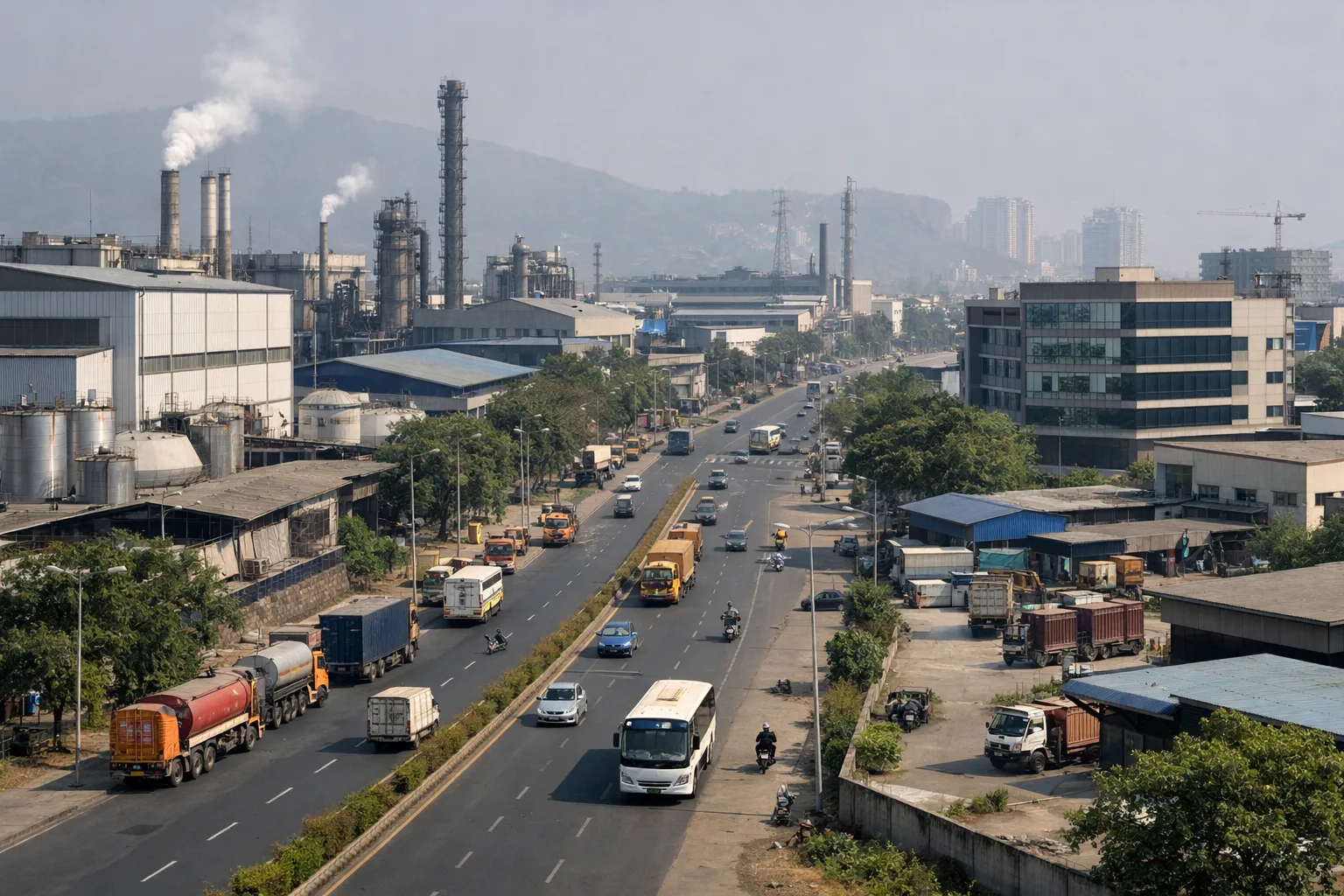
The first thing buyers need to understand is that Panvel does not have one clean, trustworthy average rate. Public platforms already show that problem very clearly. For example, 99acres currently shows Panvel at around ₹13,800 per sq ft, Old Panvel around ₹11,550 per sq ft, and New Panvel around ₹12,163 per sq ft, while Housing shows a much lower Panvel average of about ₹8,499 per sq ft. That gap alone is a warning sign: quoted market data is useful, but it is not the same as the final transacted value.
This is exactly where many buyers get confused. They see a high portal rate and assume every Panvel flat has become equally expensive. That is not how the market works on the ground.
A premium new launch near a strong connectivity narrative may quote aggressively because the builder is pricing in future expectations. An older resale flat in an established sector may actually close at a much more practical number after negotiation. A peripheral project with airport marketing may look cheaper on paper, but still be a weaker buy if civic readiness is poor.
In simple terms, Panvel property price trend is now a story of fragmentation:
- Old Panvel and established New Panvel pockets are more expensive because they already offer usable daily life.
- Township and expressway-side products may justify a premium if delivery and internal infrastructure are strong.
- Outer Panvel-side belts can look affordable, but that affordability often comes with delayed usability, weaker resale confidence, or higher project risk.
So when someone asks, “What are Panvel property rates right now?”, the honest answer is: there is a range, not a rate.
Is this actually a good time to buy in Panvel or just a noisy market phase?
This is still a workable buying window, but not for the reasons many advertisements suggest.
The strongest part of the Panvel story between 2022 and 2025 was infrastructure-led re-rating. Your research dossier notes that capital values in the Panvel influence zone rose more than 53% in that period. That matters because buyers entering in 2026 are not entering the same early-stage market. They are entering a market that has already absorbed a lot of future optimism.
That sounds negative, but it is not fully negative. In fact, it creates a more practical market. Once the frenzy cools slightly, serious buyers get more negotiation power. Builders and sellers cannot rely only on buzz. They have to sell product, not just promise.
That is why the current phase can still be good for these buyers:
- people buying for self-use in mature Panvel pockets
- buyers targeting ready or near-ready homes
- families who want to stop paying rent soon
- selective long-term investors with patience and area discipline
But it is not a great phase for blind speculative buying. If the only logic is “airport ke paas hai, le lo,” that is weak logic in 2026.
Signals that usually support buying now

A Panvel purchase makes more sense now when the following align:
- your budget is already ready
- the flat is in a usable micro-market, not just a future zone
- water, commute, and surrounding services are workable today
- the builder or society paperwork is clean
- you can negotiate meaningfully on the deal
- you are buying for 5+ years or for actual end-use
Signals that suggest waiting or negotiating harder
You should slow down if:
- the project is still too dependent on future infrastructure
- the builder’s quoted rate assumes perfect future delivery
- you are stretching your budget just to “enter Panvel somehow”
- resale demand in that exact micro-market looks thin
- the area still lacks basic daily support like stable water, transport convenience, and functioning retail
- the project has a weak MahaRERA delivery pattern or repeated timeline shifts
So yes, this can be a good time to buy in Panvel. But only if you are buying reality, not marketing.
Which market signals matter more than the headline rate per sq ft?
The biggest mistake buyers make is watching only one signal: price per sq ft.
That number matters, of course. But it is not the number that decides whether your purchase will feel smart after six months of living there, or two years of holding it.
Ready-possession demand vs under-construction supply
In a market like Panvel, ready or near-ready property has a very different risk profile from a project that still has a long execution path ahead.
A low launch price may look attractive, but if the project timeline slips badly, the hidden cost is huge. Your EMI may start later, but your capital gets trapped. Your rental savings get delayed. Your exit option becomes weak.
That is why Panvel ready possession vs under construction is not a small side issue. It is one of the main timing filters.
Resale movement and seller flexibility
A healthy market is not just one with rising brochure rates. It is one where resale deals actually move. In the current Panvel phase, some resale and older ready stock can be more sensible than new glossy launches because the deal is more real, the locality is already visible, and negotiation is often better.
Infrastructure usability, not just announcement value
This is where local buyers usually think more clearly than outstation investors.
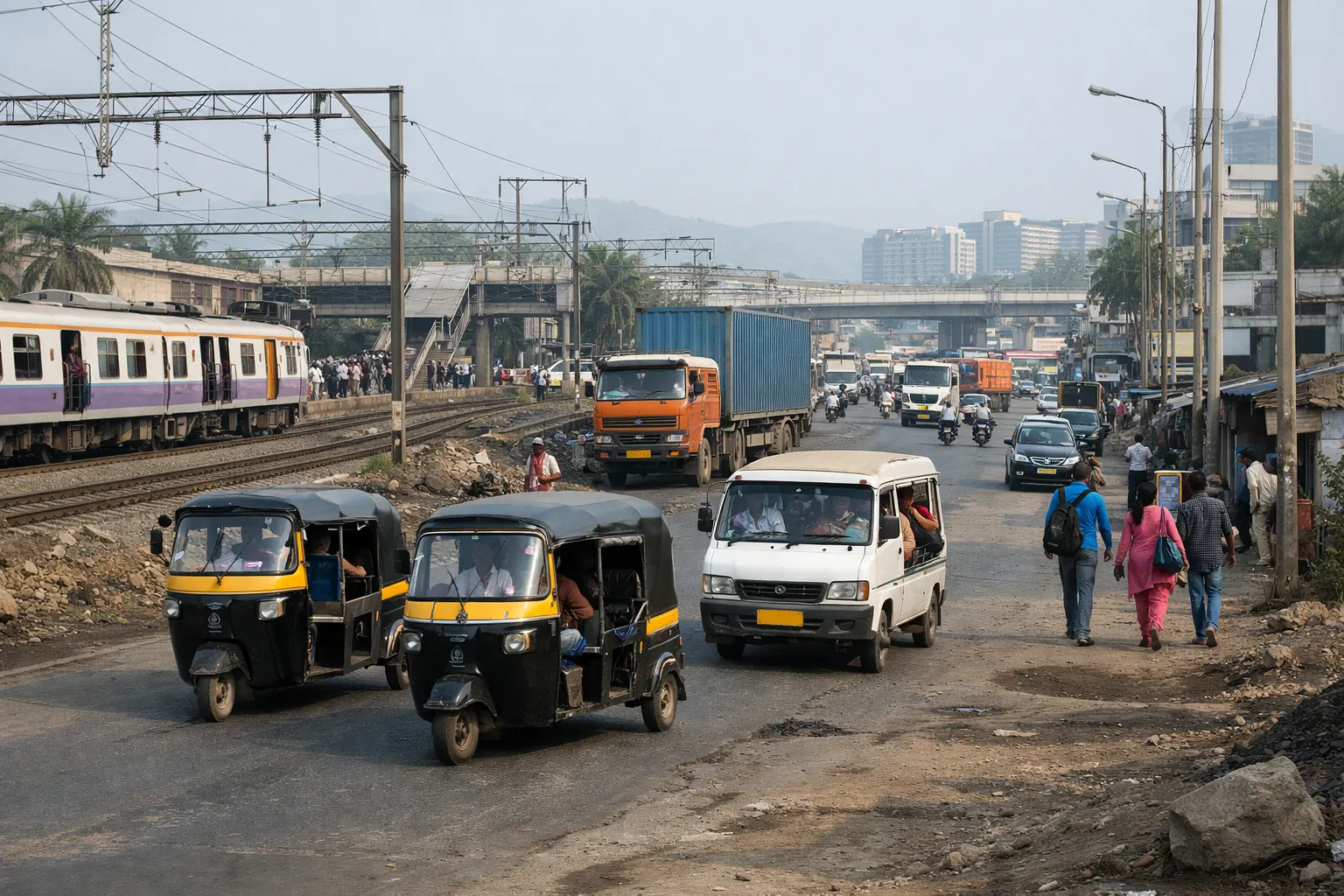
A new bridge, airport, or rail project can support long-term pricing power. But usable connectivity matters more than infrastructure headlines. A buyer living in Panvel will care about station access, road bottlenecks, internal roads, bus flow, and everyday travel time far more than brochure language.
The Panvel-Karjat suburban corridor is a real example. It is a meaningful project and recent reporting says the 29.6 km corridor is about 85% complete, with operations expected within 2026. That supports long-term eastern expansion logic. But that does not mean every project in the broader belt becomes a good immediate buy.
Rental demand and livability proof
A simple question helps here: Would a real tenant or real family comfortably live here today?
If the honest answer is no, then the current rate should be viewed more cautiously, even if the entry price looks attractive.
Why Panvel timing is different for end users and investors
This is one of the most important distinctions in the whole article.
Two buyers can look at the same Panvel project and reach opposite conclusions. Both may be right.
End-user timing logic
If you are buying for your own family, Panvel can still make sense sooner than later in selected pockets. Why? Because your benefit is not only future appreciation. Your benefit also includes:
- immediate use
- savings on rent
- access to schools, station links, hospital support, and daily convenience
- more control over where you live long term
A family buyer may rationally pay more for an established Old Panvel or New Panvel pocket because the value is partly lifestyle value, not just financial return.
Investor timing logic
Investors need cleaner math.
A short-term investor entering after a strong 2022–2025 run-up is not in the same position as someone who bought before the story became mainstream. The future upside may still exist, but the easy upside is not the same. That means short-horizon flipping is much riskier now.
A long-term investor can still act selectively, especially in places where future infrastructure is moving from paperwork to physical execution. But that buyer needs patience, stronger risk tolerance, and a willingness to hold through slow periods.
Which Panvel-side areas may justify buying sooner, and which require more caution
This is where the article must stay practical.
Better for immediate livability
If your priority is daily living, stronger resale confidence, and less friction, the safer logic is usually in:
- established Old Panvel pockets
- selected New Panvel sectors
- stronger township-style projects with visible internal infrastructure
- areas with easier access to Panvel station or major road links
These locations may cost more, but they reduce uncertainty.
Better for longer-horizon buyers
Long-term buyers who understand risk may look at:
- edge growth belts in the wider Panvel side
- selected future-linked locations benefiting from NAINA-side planning
- areas that may improve after corridor, road, or township infrastructure matures
But this is not “buy anything cheap and wait.” This is selective and patient capital.
Areas where project-level filtering matters more than area hype

Some Panvel-side areas are heavily sold through future narrative. That does not automatically make them bad. It just means the buyer has to filter harder.
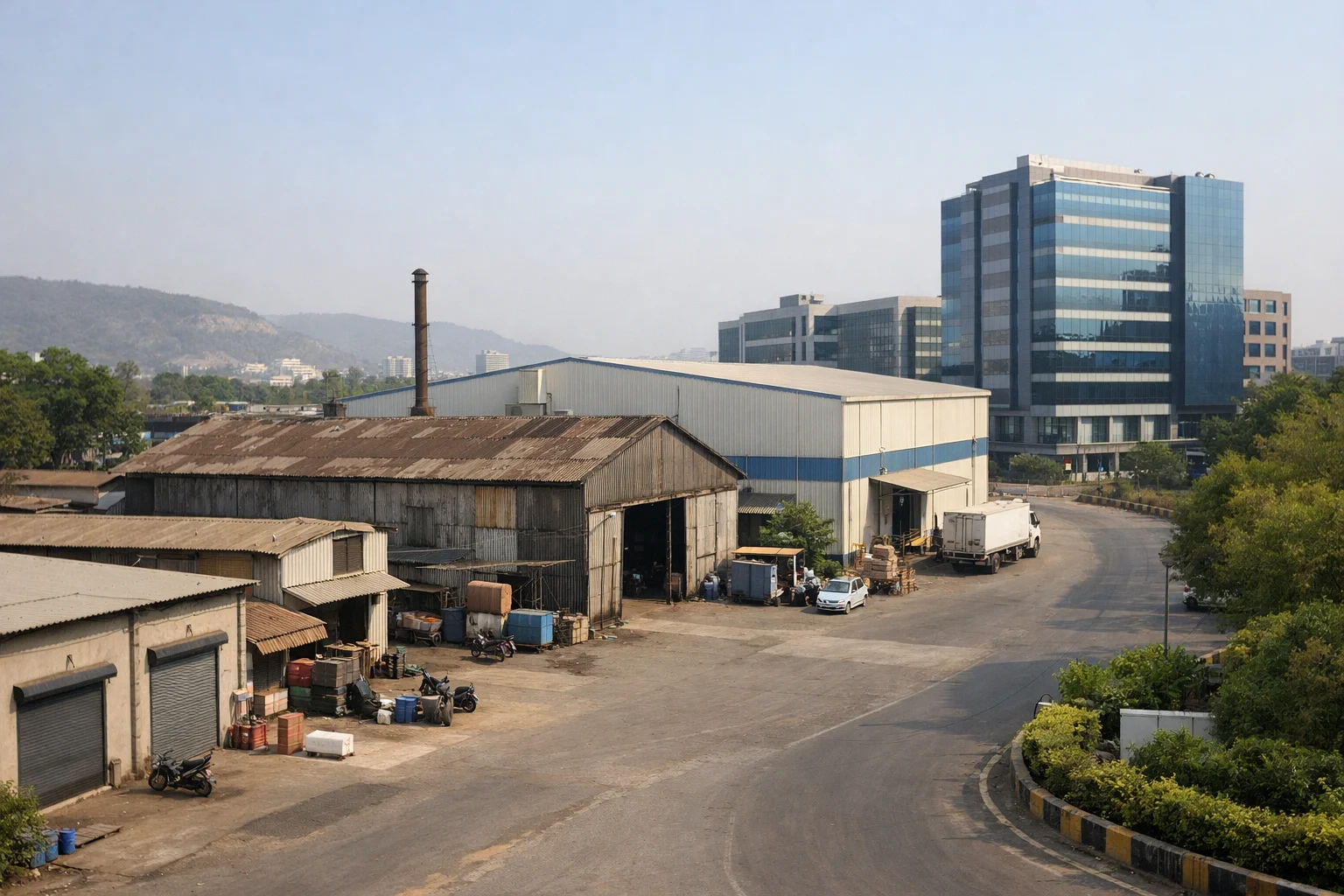
Karanjade, Palaspe, and other outer or developing pockets can look attractive on rate, but the quality of buy decision there depends much more on project-specific reality than on the area label alone.
When higher Panvel rates may still be worth paying
A higher price is not always overpricing.
Sometimes, paying more is simply paying to remove future trouble.
Higher Panvel flat rates in 2026 may still be rational when they buy you one or more of the following:
- better station convenience
- clearer civic maturity
- stronger resale liquidity
- lower builder execution risk
- better internal township infrastructure
- less dependence on future promises
This is especially true in a market where utility problems can change the whole ownership experience.
The best example is water. Several reports and local coverage point to a supply gap in the wider region, with around 342 MLD supply against about 365 MLD requirement, affecting nodes that already feel the pressure of fast growth. If a project or township is better insulated through internal storage, recycling, or stronger management, that practical difference can justify a higher rate.
In other words, a premium that buys reliability can be wiser than a discount that buys friction.
When a lower entry price in Panvel is not actually a better deal
This is where many buyers make costly mistakes.
A “cheap” Panvel purchase is not automatically a value buy. Sometimes it is just a weak asset with a low sticker price.
Cheap pricing with delayed usability
If the project is still dependent on delayed infrastructure, incomplete surroundings, or uncertain delivery, then the lower rate is not really cheap. It is just compensation for higher risk.
Cheap pricing with weak resale exit confidence
If you buy into a pocket where future buyer demand is still thin, your exit becomes harder. That matters even if you are not planning to sell soon. A home is safer when it is liquid enough.
Cheap pricing with legal or transfer friction
This point is hugely important in the Panvel belt.
For 2025–26, the state’s ready reckoner framework for Raigad is available on the IGR Maharashtra e-ASR system, and Panvel-side registration values were revised upward for the year. That means your tax and registration side of the purchase is tied to official floor values, not only to what you negotiate verbally.
On top of that, CIDCO-linked transfer charges can materially change the total cost of some resale transactions. So a resale flat that looks cheaper at first glance may become less attractive once you add transfer charges, stamp duty, registration, society-level process costs, and any repair or upgrade expense.
And one more important distinction: society transfer premium and CIDCO transfer charges are not the same thing. The housing society side has a legal cap, generally ₹25,000 in Maharashtra. But CIDCO transfer charges are separate and can be far more significant depending on the asset and tenure structure.
How buyers should read Panvel market trend before making a booking decision
Before paying a token amount or signing anything, use this simple filter.
Practical Panvel buyer checklist
| Check | What to verify | Why it matters |
|---|---|---|
| Rate reality | Compare quoted rate, nearby resale reality, and final all-in cost | Prevents overpaying just because the launch looks premium |
| Project stage | Ready, near-ready, or early-stage under construction | Timing risk changes sharply by stage |
| MahaRERA history | Registration, timelines, past extensions, complaint pattern | Registration alone is not enough |
| IGR value | Current ready reckoner benchmark for the location | Helps estimate stamp duty and registration correctly |
| Transfer cost | CIDCO transfer rules, society transfer premium, NOC workflow | Hidden cost can distort deal economics |
| Water and utilities | Daily supply pattern, tanker dependence, storage setup | Directly affects livability and monthly cost |
| Commute logic | Real travel to station, highway, work corridor, school | Brochure distance is not the same as daily convenience |
| Maintenance burden | Society charges, township CAM, club fee, sinking fund | A low purchase price can still become an expensive home |
Verify project stage and MahaRERA discipline
Many retail buyers think a MahaRERA number means the project is safe. That is too simple. It means the project is under the regulatory system. It does not mean delay is impossible.
Recent MahaRERA precedent also matters here. A 2025 appellate ruling reinforced that buyers can still claim interest for delayed possession based on the original agreement timeline, even where the authority has granted a project extension. That is important because it protects buyers from a very common misunderstanding: extension for the builder does not automatically erase the buyer’s financial rights.
So when you check MahaRERA, do not stop at “registered hai.” Check the history.
Cross-check valuation and charges before emotional commitment
A lot of bad property decisions happen after the site visit, not before it.
The flat looks nice. The sample apartment works. The sales team pushes urgency. Then the buyer calculates only the base amount and forgets the rest.
In Panvel, that is dangerous. Always calculate:
- base price
- floor rise or PLC, if any
- stamp duty and registration
- CIDCO transfer charges where relevant
- society transfer premium where relevant
- parking
- GST if applicable
- maintenance deposit
- interior and fit-out cost
- moving timeline cost
Only after that should you decide whether the rate is actually attractive.
Buy now, wait, or keep watching? A practical Panvel timing framework
| Buyer type | What usually makes sense now | Why |
|---|---|---|
| End-user family with budget ready | Buy now in established Panvel or selected New Panvel pockets, but negotiate hard | Daily usability matters more than chasing the lowest entry rate |
| First-time buyer stretching budget | Be cautious, compare resale and ready stock first | Overpaying in a front-loaded launch can create long-term pressure |
| Short-term investor | Usually wait or shift focus | A lot of the quick re-rating phase is already behind the market |
| Long-term investor with 5–10 year patience | Can act selectively in future-linked belts | Only if the area and project have real execution support |
| Budget buyer below core Panvel affordability | Consider eastern or deeper value belts carefully | But do not confuse affordability with automatic value |
conclusion
The right time to buy property in Panvel is not when the market sounds exciting. It is when the property itself makes sense.
In 2026, Panvel is a serious market, but not a simple one. Rates are higher, infrastructure is real, and the city’s long-term position is stronger than before. At the same time, not every Panvel-side project deserves the same confidence, and not every lower rate is a bargain.
For most buyers, the smartest path is this:
- buy usable Panvel, not brochure Panvel
- prefer ready or near-ready clarity over distant promise
- calculate total cost, not just headline rate
- respect water, commute, and paperwork reality
- negotiate harder than the portal numbers suggest
If you are a family buyer with a genuine end-use need, this can still be a good time to enter selected Panvel pockets. If you are chasing fast upside, the market now demands much more discipline. The easy money phase has cooled. The smart buying phase has begun.
FAQs
Frequently Asked Questions