

What Is a Possession Letter in Navi Mumbai?
A possession letter in Navi Mumbai usually means the builder or seller is handing over physical possession of the flat to you. It is an important handover document, but it does not by itself make you the final legal owner. In most cases, you still need to check the registered Agreement for Sale or Sale Deed, Occupancy Certificate where applicable, payment clearance, and later society or mutation follow-up before treating the purchase as fully complete.
For many buyers, this is the most confusing stage of the whole property journey. The builder calls, asks for final payment, says possession is ready, and suddenly you are expected to take keys, inspect the flat, clear dues, and sign papers quickly. In Navi Mumbai, especially in areas like Kharghar, Taloja, Ulwe, Panvel-side projects, Nerul, Seawoods, Belapur, and Vashi, that is exactly the stage where small document confusion can become a big mistake.
A possession letter matters. But it matters for the right reason. It is mainly proof of physical handover, not complete title proof.
Possession letter in Navi Mumbai
| Question | Practical answer |
|---|---|
| What is a possession letter? | A document showing that physical possession of the flat is being handed over by the builder or seller to the buyer |
| Does it make you the legal owner? | Not by itself |
| What does it usually help with? | Taking keys, showing handover date, starting inspection, recording defects, beginning fit-out or occupation subject to approvals |
| What does it not replace? | Sale Deed, registered ownership documents, Occupancy Certificate, society paperwork |
| Can you move in after getting it? | Often in practice yes, but only safely and lawfully if the approval and occupancy position is proper |
| Why is it important? | The handover date can matter for defects, delay disputes, possession proof, and post-handover responsibilities |
| Biggest buyer mistake | Treating possession letter like final ownership proof or accepting possession before the project is truly ready |
What exactly is a possession letter in a Navi Mumbai flat transaction?
A possession letter is usually the document issued when the builder says the flat is ready for handover and the buyer can take physical possession. In a resale transaction, a similar handover record may come from the seller rather than a builder. Either way, the core function is the same: it records the transfer of actual control of the flat.
Who usually issues it
In a new project, it is generally issued by the promoter or builder after construction reaches the handover stage and the buyer has cleared the required dues. In a resale matter, the handover may be recorded through possession-related papers between buyer and seller along with the broader transfer documents.
When in the buying process it is given
It is usually given near the end of the transaction, after the builder raises the final demand and says possession is ready. But this is exactly where buyers must be careful. “Ready for possession” and “fully safe to treat as complete” are not always the same thing.
What details a proper possession letter usually contains
A proper possession letter usually identifies the project, flat number, buyer’s name, date of handover, and the fact that possession is being delivered. In a well-managed handover, it should also match the agreed unit details such as tower, floor, and carpet area, and it should align with the broader transaction papers.
That date is not just paperwork. It can become important later for defect liability, dispute timing, and proof of when physical control actually changed hands.
Does a possession letter make you the legal owner? Not by itself
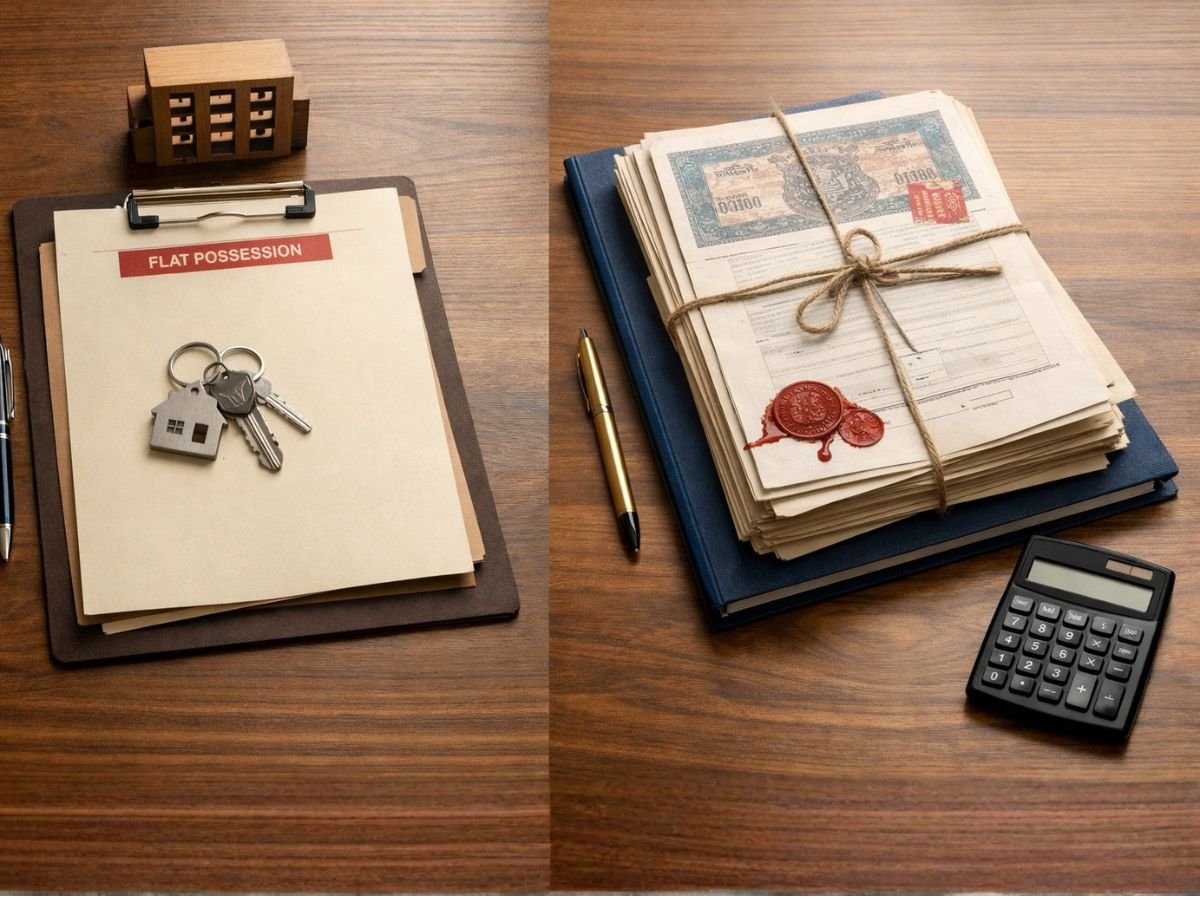
This is the biggest confusion, so it should be settled clearly.
A possession letter usually proves physical handover. It does not, by itself, create final legal ownership title. Legal ownership in property transactions depends on the registered transaction documents, especially the Sale Deed where applicable, and the overall chain of title.
Physical possession vs legal ownership
Physical possession means you got control of the flat. You may have keys. You may enter the unit. You may inspect it, do interior work, and in some cases begin occupation depending on approvals and readiness.
Legal ownership is different. That comes from the proper registered documents and the legal transfer structure of the transaction. A buyer who only waves a possession letter but has weak registration or title papers is not in the strongest legal position.
Why registration and title documents still matter
In Navi Mumbai, this matters even more because project structures can vary. Some properties sit within CIDCO-linked planning contexts. Some are society-managed. Some are in NMMC zones, some in PMC areas. Some are under-construction handovers, and some are resales in older buildings.
In all such cases, the possession letter is useful, but it sits lower in the document ladder. It supports handover. It does not replace proper title documentation.
What rights does a possession letter usually give you as a buyer?
A possession letter does give you meaningful practical rights. It is not a useless paper. It simply has to be understood correctly.
Right to take physical handover
The most basic right is physical control of the flat. Once possession is actually handed over, you are no longer merely waiting for delivery. You can access the premises and start treating it as a handed-over unit, subject to the larger approval position.
Right to inspect and record defects
This is one of the most important buyer rights at the handover stage. Before and at the time of possession, you should inspect the flat carefully and note down defects. Cracks, seepage, poor waterproofing, broken fittings, alignment issues, unfinished electrical points, drainage problems, and poor finishing should be recorded properly.
This is not overreacting. In Navi Mumbai, especially in fast-developing belts like Taloja and Ulwe, buyers should be especially alert to seepage, plumbing quality, and moisture issues that may only worsen after the monsoon.
Right to occupy, fit out, or prepare for occupation subject to approvals
A possession letter often allows the buyer to practically begin interior work or prepare the flat for occupation. But this right is not unlimited. Lawful occupation still depends on the project’s approval and occupancy status. A builder handing you keys does not automatically cure missing compliances.
Right to demand promised handover condition
If the builder has promised a completed handover condition, then possession should not mean accepting an obviously unfinished or defective unit without protest. Handover should broadly match the agreed specifications, the promised unit identity, and the condition represented at the time of final demand.
Right to preserve proof for delay, defects, or dispute
The possession date can matter in disputes. It can help establish when handover actually happened, when delay stopped, and when the post-possession defect liability period begins to run. That makes the possession letter relevant in a very practical way.
What a possession letter usually does not give you
This is where buyers need discipline.
It is not the same as sale deed or registered title
A possession letter is not the same as a registered Sale Deed. It should never be treated as your final ownership weapon in a title dispute.
It is not always proof that all approvals are complete
A buyer should not assume that all project approvals are complete merely because the builder is calling for possession. The Occupancy Certificate issue remains critical. If the project is not lawfully ready for occupation, possession pressure should be treated carefully.
It does not automatically mean society paperwork is done
In a society-linked building, possession is only one stage. Society formation, membership updates, share certificate issues, and related records are separate follow-up matters.
It does not erase unpaid dues, defects, or compliance issues
A possession letter does not magically remove disputes over dues, defects, parking, incomplete amenities, or pending civic issues. If something is unresolved, it remains unresolved unless clearly handled in writing.
What should you verify before accepting possession in Navi Mumbai?
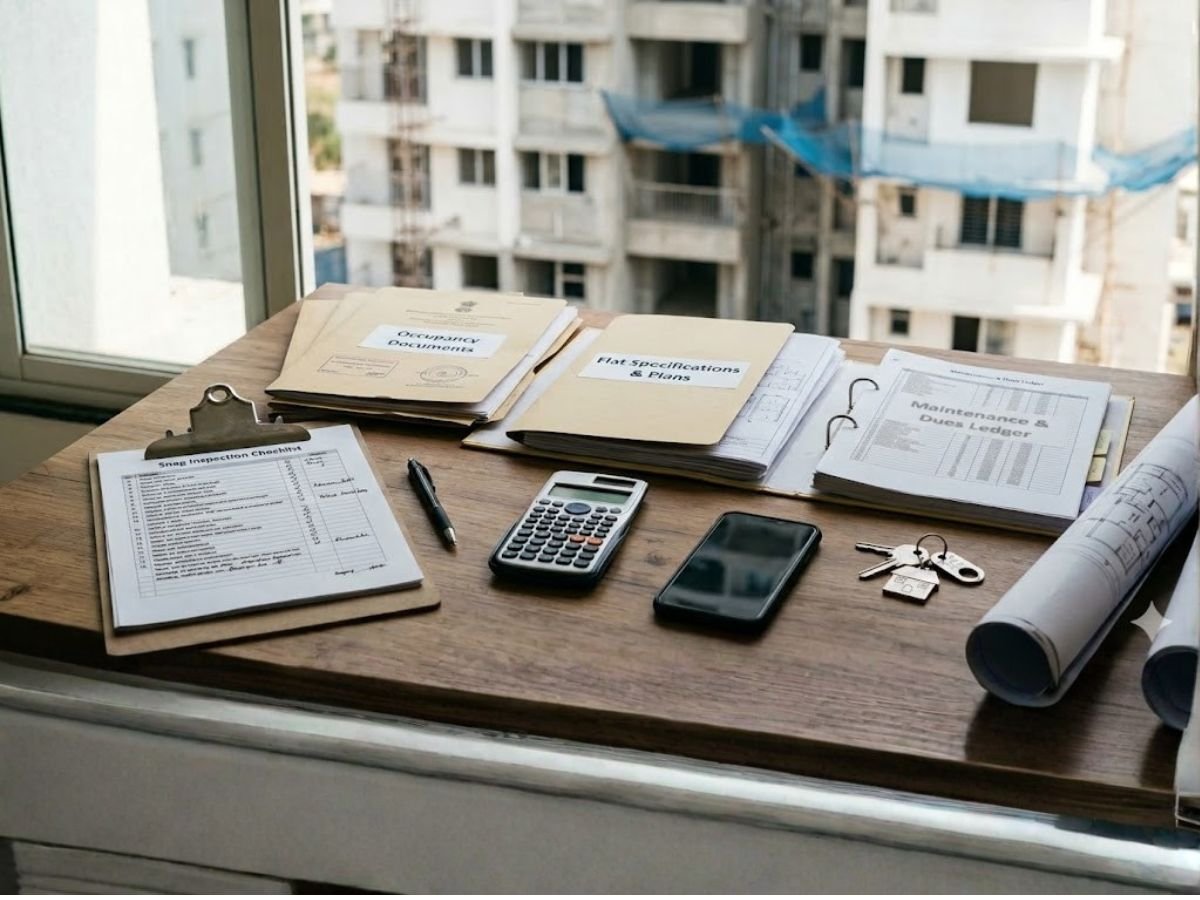
This is the most practical part of the article. Before you accept possession, slow down and verify the basics properly.
| What to verify before possession | Why it matters |
|---|---|
| Occupancy Certificate or lawful occupancy status | Possession without proper occupancy status can become risky and misleading |
| Flat identity and specs | Check tower, floor, flat number, carpet area, layout, and promised specifications |
| Final demand and dues | Verify maintenance, deposits, parking charges, taxes, and whether anything looks improper |
| Physical snag inspection | Check seepage, cracks, plumbing, switches, doors, windows, tiles, drainage, waterproofing |
| Common area readiness | Lifts, access, fire systems, lighting, parking, entry-exit, and basic usability matter |
| Meter and utility position | Ask about electricity, water, and practical service readiness |
| Handover paperwork | Ensure the possession letter matches the transaction papers and handover reality |
Occupancy Certificate or lawful occupancy status
This should be one of the first checks, not the last. A buyer should be very careful about taking possession merely because the builder says the flat is ready. The real question is whether lawful occupancy is in place.
This point matters across Navi Mumbai, but it becomes especially important in newer project zones where infrastructure or approvals may still be catching up.
Flat number, carpet area, tower, floor, and promised specs
Never assume the paperwork is automatically consistent. The handed-over flat should match the agreed unit details. Check the carpet area and the basic layout logic against your agreement.
Final demand, maintenance, deposits, meter status
This is where buyers often become tired and simply pay. That is risky. Read the final demand properly. Understand what you are paying for. Check whether the maintenance demand, deposits, charges, or tax components appear properly explained.
Snag list, seepage, fittings, doors, windows, drainage, power backup
Do a serious inspection. Open taps. Check drainage. Test switches. Look at bathroom corners, window edges, ceilings, plumbing lines, and wall joints. If possible, inspect in daylight. In Navi Mumbai’s coastal and monsoon-heavy conditions, waterproofing weakness is not a minor issue.
Common areas, lifts, access road, parking, fire systems
A flat can look ready while the project still feels incomplete in substance. If lifts are unreliable, access roads are unfinished, parking is unclear, or fire systems are not practically in order, the buyer should not blindly act as though handover is fully satisfactory.
Possession letter vs possession notice vs handover memo vs sale deed
This comparison clears up a lot of confusion.
| Document | Usually issued by | Main purpose | Legal weight | What buyer should understand |
|---|---|---|---|---|
| Possession Notice | Builder/promoter | Tells buyer possession is proposed or ready and often asks for final steps | Limited by itself | It is a call for handover, not the actual final ownership proof |
| Possession Letter | Builder/seller | Records physical handover of the unit | Useful but limited | Good for proving handover date and control, not full title |
| Handover Memo | Builder/seller | Practical handover acknowledgment, often with condition notes | Practical support document | Can help record keys, meter readings, and snag condition |
| Occupancy Certificate | Competent authority | Shows the building is approved for occupation | Very important for lawful occupancy | This is not optional background paperwork |
| Sale Deed | Transfering owner/builder through registration | Legally transfers ownership | Highest among these for title | This is the core ownership document |
Can you move in, do interiors, rent out, or sell the flat after getting a possession letter?
The honest answer is: sometimes yes in practice, but not automatically and not safely in every case.
Moving in
Many buyers think possession means immediate shifting. Practically, that may happen. But from a legal and risk perspective, moving in should be tied to proper occupancy status and overall readiness. A possession letter alone is not enough comfort.
Interior work
Interior work often begins after possession. This is common. But buyers should still confirm whether the builder is giving proper handover in a legally and practically ready project, not just pushing “fit-out possession” to shift pressure onto the buyer.
Renting out
Renting may be possible once possession is handed over and the flat is usable. But if the title, occupancy position, utility readiness, or society stage is unclear, practical problems can follow quickly.
Resale
Trying to resell a flat based only on possession paperwork is weak. Serious buyers and banks usually want stronger registered documents and a cleaner legal chain. A possession letter can support the file, but it usually cannot carry the whole file.
Home loan and utility-related use
A possession letter can be part of the document set in practical follow-up matters, but it is not the main ownership document. Buyers should not assume it will substitute for registered transfer documents in loan or authority-facing matters.
How this plays out differently in CIDCO areas, society buildings, and Panvel-side projects

This is where Navi Mumbai stops being generic.
CIDCO-linked layouts and authority context
In many Navi Mumbai areas, especially in developing belts such as Ulwe, Dronagiri, and Taloja-side contexts, CIDCO’s planning and land structure can affect how buyers should think about possession and later transfers. Many properties have historically sat in leasehold structures, and transfer logic can involve additional formalities.
So if you are taking possession in a CIDCO-linked project, do not think only about the builder’s handover paper. Think about the broader chain: agreement, approvals, later society position, and long-term transfer clarity.
Co-operative society follow-up
In existing society buildings, especially in established nodes like Vashi, Nerul, Seawoods, and Belapur, possession is only one part of the post-purchase journey. Society recognition, membership updates, and share certificate follow-up matter too.
A buyer should not assume that because possession is taken, all society-side paperwork is automatically settled.
NMMC vs PMC or Panvel-side practical differences
Post-possession reality can vary by authority area. NMMC-side and PMC-side processes can differ in how civic records, tax mutation, and practical local follow-up play out. In Panvel, Kharghar, Kamothe, Kalamboli, and Taloja-side areas, buyers should be especially careful not to reduce the whole process to “builder gave keys, so work is done.”
Two practical Navi Mumbai examples buyers actually face
New builder flat in Taloja or Ulwe nearing handover
A buyer gets a call from the builder saying possession is ready and final payment must be made quickly. The flat looks mostly complete, but the buyer notices minor seepage marks near one bedroom window and unfinished common-area details. The correct approach is not to panic and not to blindly sign. The buyer should verify the occupancy position, inspect the flat properly, record defects in writing, and treat possession as handover proof, not final legal closure.
Resale flat in Nerul, Vashi, or Belapur where possession is already with the seller
In an older society building, the seller has been living in the flat for years, so “possession” is not the dramatic builder-handover event seen in under-construction projects. Here, the buyer’s real issue is whether the chain of documents, society records, and transfer logic are proper. A possession-related paper may help record handover, but it is not the main due diligence point. In resale, title history, society documentation, dues position, and proper registration matter more.
Red flags when the builder pushes possession too fast
This section can save a buyer from a bad decision.
If the builder is rushing possession but avoiding clear answers on approvals, that is a red flag. If the builder does not allow full inspection, that is a red flag. If the common areas are visibly unfinished but you are being told to sign final acceptance, that is a red flag. If charges are unclear or pressure tactics begin, slow down.
One of the biggest traps is “take possession now, approvals will come shortly.” That may sound routine. It is still risky. A buyer should not casually accept a weak handover just because everyone in the sales office is speaking confidently.
Conclusion
A possession letter in Navi Mumbai is an important handover document, but it is not the final proof of ownership. It usually gives you practical rights connected to physical possession, inspection, defect recording, and handover evidence. What it does not give you is automatic clean title, automatic approval certainty, or automatic completion of all society and civic formalities.
So if a builder says, “possession ready,” do not react like the deal is fully over. React like you are entering the most document-sensitive final stage of the transaction. Take the keys only with open eyes. Check the approvals. Inspect the flat properly. Match the paperwork. And remember the basic rule that protects buyers from expensive confusion: physical possession is important, but legal ownership is bigger.
FAQs
Frequently Asked Questions