Property Tax in Navi Mumbai: How NMMC Calculates It, What You Need for Payment, and Common Billing Issues
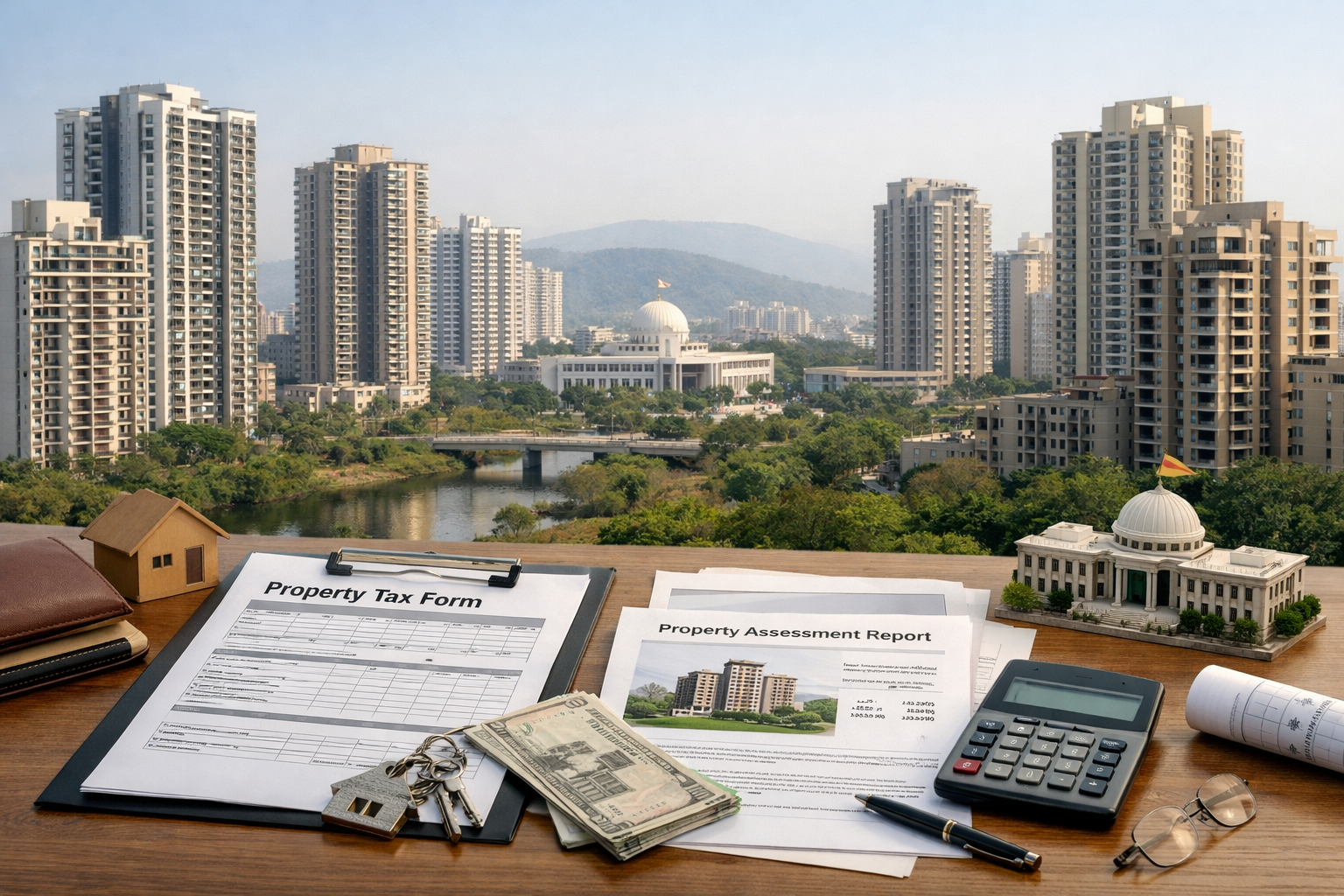
Property tax in Navi Mumbai is collected by the Navi Mumbai Municipal Corporation (NMMC). The municipal corporation uses this tax to maintain city infrastructure, roads, drainage, public health services, and other civic facilities.
This guide specifically applies to areas under NMMC jurisdiction such as Vashi, Nerul, Belapur, Ghansoli, Airoli and nearby nodes. Some nearby areas like Panvel or parts of Kharghar fall under PMC or CIDCO, where the tax system may be different.
How NMMC Calculates Property Tax for Residential Properties
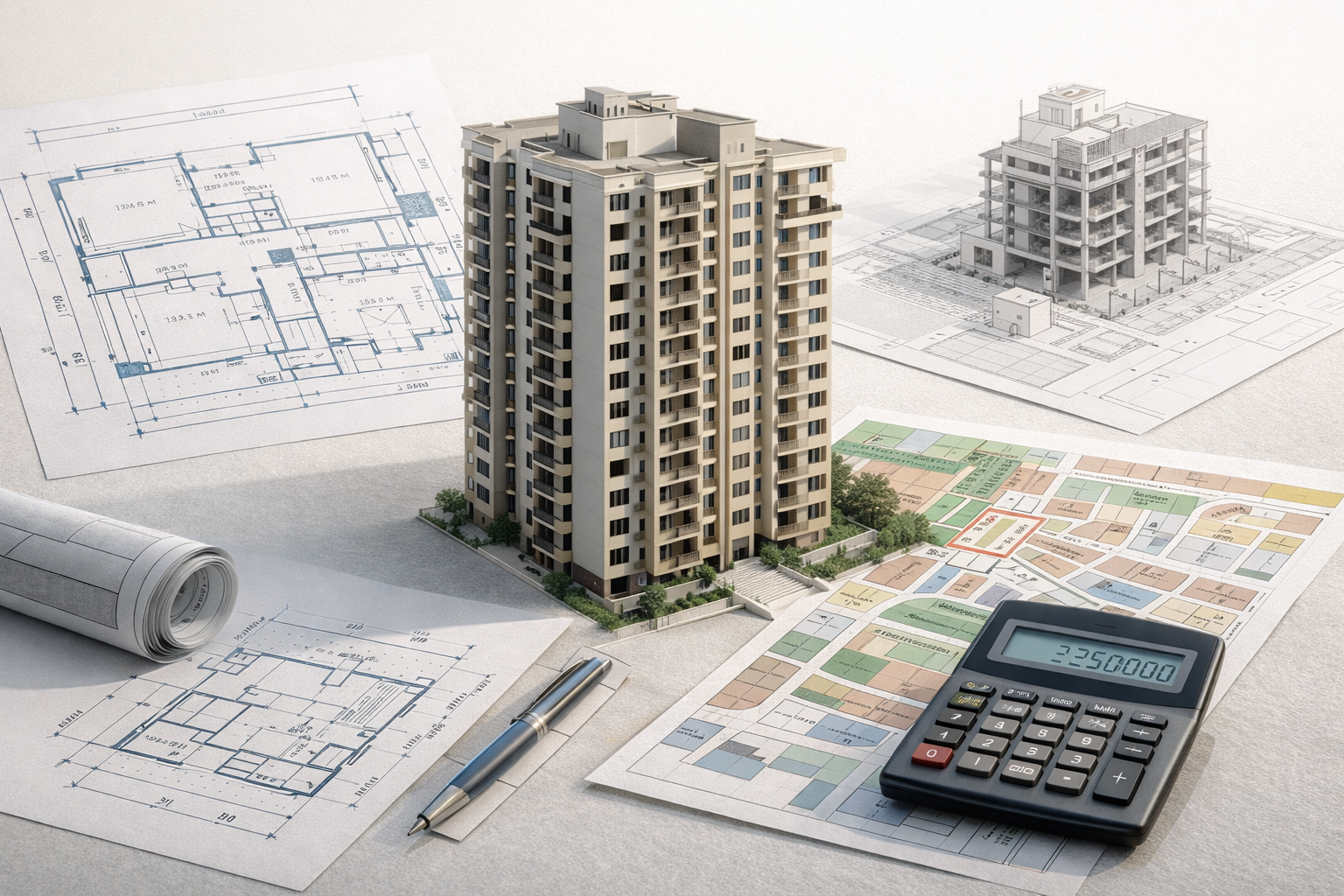
NMMC calculates property tax based on several factors related to the property. The calculation considers the size of the property, the location, the type of building, and how the property is used.
Main factors used in NMMC property tax calculation
- Property area
- Property use (residential or commercial)
- Location / zone
- Construction type
- Age of building
(Table: Simple example of factors affecting tax)
| Factor | How it affects tax |
|---|---|
| Property area | Larger area usually increases tax |
| Property use | Commercial properties usually pay higher tax |
| Location / zone | Prime areas may have higher valuation |
| Construction type | RCC or permanent structures may have higher assessment |
| Age of building | Older buildings sometimes have lower assessed value |
What Information You Need Before Paying Property Tax

Before paying property tax, it helps to keep a few details ready. These details make it easier to find your property record and complete the payment process.
Checklist example:
- Property account number
- Owner name
- Property address
- Previous tax bill
- Mobile number for online payment
Property ID / Consumer Number
The Property ID (sometimes called Property Code or Consumer Number) is the most important detail for any property tax search or payment. This number is usually a 10-digit or 12-digit code assigned by NMMC to every property.
You can usually find this number on:
- Your previous property tax receipt
- Old tax bills issued by NMMC
- The property tax section on the NMMC website
Without this number, it can be difficult to search for your property record or submit a complaint about a billing issue.
How to Pay Property Tax in Navi Mumbai
Online payment through NMMC website
Residents can pay property tax online through the official NMMC website: [https://www.nmmc.gov.in](https://www.nmmc.gov.in/).
Basic steps usually include:
1. Visit the NMMC website. 2. Go to the Property Tax section. 3. Enter your Property ID / Consumer Number. 4. Verify the owner and property details. 5. Pay using online payment options such as net banking, debit card, or UPI.
After payment, residents should download or save the receipt for future reference.
Offline payment options
Residents who prefer offline payment can usually pay property tax at:
- NMMC ward offices
- Authorized collection centers
- Bank counters (if applicable)
It is recommended to carry your previous tax bill or property account number when paying offline.
Rebates and Penalties on NMMC Property Tax
NMMC may offer rebates for early tax payments and apply penalties if the tax is paid late.
| Situation | What happens |
|---|---|
| Early payment | Possible rebate |
| Late payment | Penalty or interest |
| Long unpaid tax | Recovery action |
Residents should also keep an eye on special schemes such as the NMMC Property Tax Amnesty Scheme (often called Abhay Yojana). Under these schemes, the municipal corporation may allow property owners to clear old dues with reduced or waived penalty interest for a limited time.
Common Property Tax Billing Issues in Navi Mumbai

Residents sometimes face billing problems with their property tax records. These issues usually happen because property details in municipal records are outdated or incorrect.
Incorrect property area in tax record
Sometimes the property area mentioned in the NMMC record does not match the actual flat size.
Wrong owner name or outdated records
If ownership transfer is not updated with NMMC, the previous owner’s name may still appear on the tax bill.
Double billing after redevelopment or transfer
In some redevelopment cases or resale transactions, property records may temporarily show duplicate billing.
Property marked commercial instead of residential
If a residential property is incorrectly categorized as commercial, the tax amount can become significantly higher.
What To Do If Your Property Tax Bill Looks Wrong
If your tax bill looks incorrect, it is better to check the details early and request correction.
Checklist:
- Verify property details
- Compare with previous bill
- Contact NMMC property tax department
- Submit correction request
Residents may need to submit supporting documents if the property details need correction.
Tips for Navi Mumbai Property Owners to Avoid Property Tax Problems
Practical local advice.
Examples:
- Keep property records updated
- Inform NMMC after ownership transfer
- Check tax bill every year
- Save payment receipts
Conclusion
Property tax is a yearly responsibility for property owners in Navi Mumbai. Understanding how NMMC calculates the tax, what information is required for payment, and how to handle billing issues can help residents avoid confusion, penalties, and unnecessary disputes.
FAQs
Frequently Asked Questions