

10 Important Questions to Ask Before Buying a Flat in Navi Mumbai
Introduction
Buying a flat in Navi Mumbai in 2026 looks exciting from the outside. New airport. Better connectivity. Metro expansion. Atal Setu changing commute patterns. Prices rising in Panvel, Ulwe, Kharghar, and other growth pockets. Everything looks like opportunity. And honestly, it is. But this is also the kind of market where buyers make expensive mistakes because the pace feels fast and the pressure feels real.
That is why asking the right questions matters more than ever. Between 2021 and 2025, apartment prices in Panvel reportedly climbed sharply, and land values around the airport influence zone moved even faster. In a market like this, brochures, model flats, and sales promises are not enough. A smart buyer has to check legal approvals, final cost, water supply, possession reality, and future resale strength before paying token money.
Quick Summary
Here is the short version before we go deeper.
| Question | Why It Matters | What You Should Check |
|---|---|---|
| Is the project RERA registered? | Legal safety starts here | MahaRERA number, project status, approvals |
| What is the total cost? | Final bill is much higher than base price | Stamp duty, GST, registration, deposits, premiums |
| What is the actual carpet area? | Usable space affects value | RERA carpet area, layout efficiency |
| How good is the builder? | Delivery and quality depend on this | Past projects, delays, reviews, reputation |
| Is the location right? | Daily life and appreciation both matter | Connectivity, schools, hospitals, growth drivers |
| What is the possession timeline? | Delays create financial stress | MahaRERA date, construction stage, OC readiness |
| What are the monthly costs? | Ownership cost continues after purchase | Maintenance, parking, water, taxes |
| Is the project bank approved? | Banks do legal filtering too | Loan tie-ups, approval status, eligibility |
| What is the resale and rental potential? | Future liquidity matters | Rental demand, node maturity, end-user demand |
| Are there hidden site-level risks? | Ground reality can ruin a good deal | Waterlogging, title issues, access, water supply |
1. Is the Project RERA Registered and Legally Approved?

In 2026, this is the first question. Not the builder name. Not the launch offer. Not the view from the balcony. If the project is not properly registered and approved, nothing else matters. Under MahaRERA, projects above the prescribed threshold need registration before marketing or sale. That makes RERA the basic legal filter, not an optional comfort point.
Navi Mumbai buyers also need to be more alert now because the market has become more technical. QR codes on project advertisements, mandatory disclosures, and stricter compliance norms have made verification easier, but only for buyers who actually check. The problem is many still do not. They hear “RERA approved” and stop there. That is not enough.
What documents should you check?
Start with the MahaRERA portal and verify whether the project is active, ongoing, and compliant. Then check the title deed, legal title report, sanctioned layout plans, commencement certificate, non-agricultural permission where required, fire and environment clearances for taller towers, and the draft agreement for sale. The allotment letter should clearly mention the unit number, total consideration, and payment schedule.
This matters even more in emerging belts like Panvel, Ulwe, Dronagiri, and NAINA-linked zones where land history can get complicated. A buyer should not rely only on the sales team’s PDF. An independent lawyer should review the title trail and the agreement terms before serious payment begins.
Why RERA matters for buyers
RERA protects buyers in practical ways. It forces developers to disclose quarterly progress, follow carpet-area based pricing, and keep 70 percent of collections in a dedicated escrow account for that specific project. That reduces the risk of money getting diverted elsewhere. In a volatile market, that is a big deal.
It also matters because the regulator is no longer passive. When hundreds of non-compliant projects faced action in Maharashtra, buyers got a clear message that registration alone is not enough, ongoing compliance matters too. In simple words, RERA gives buyers visibility, accountability, and a legal path when things go wrong.
2. What Is the Total Cost of the Flat?

This is where many buyers get trapped. The quoted price sounds manageable, the home loan estimate looks possible, and suddenly the deal feels within reach. Then the cost sheet arrives properly. Stamp duty, registration, GST, maintenance deposit, legal charges, possession charges, parking, clubhouse fees, corpus fund. The gap between “price” and “actual cost” becomes painfully clear.
In Navi Mumbai, that gap is often large enough to change the entire buying decision. A flat that looks like a ₹1 crore purchase can end up costing much more once all statutory and builder-linked additions are included. That is why asking for a full written cost sheet is not overthinking. It is basic buying discipline.
Base price vs final price
The base price usually refers only to the apartment value. The final cost includes stamp duty, registration fee, applicable GST on under-construction projects, maintenance deposits, utility connection charges, legal processing, and society-related charges. In 2026, even stamp duty compliance has become more sensitive, with stronger penalties discussed for underpayment.
In many cases, buyers focus too much on EMI and too little on upfront outflow. That is a mistake. Before booking, calculate the total cash requirement from token to agreement to registration to possession. Otherwise, the purchase becomes stressful before it even begins.
Hidden charges to ask about
A flat’s base price is almost never the final price. In Navi Mumbai, buyers often discover the real cost only when the detailed cost sheet is shared properly. That is why this question should be asked early and very clearly: What is my exact all-inclusive cost if I book this flat today? In many cases, the difference between quoted price and actual payable amount becomes large enough to change affordability completely. Stamp duty, registration, GST on under-construction homes, maintenance deposits, and possession-level charges already increase the budget before builder premiums even begin.
The most common add-ons buyers should ask about are:
- floor rise premium
- preferential location charges
- parking charges
- clubhouse or amenity fees
- corpus fund
- advance maintenance
- legal and possession charges
3. What Is the Actual Carpet Area?
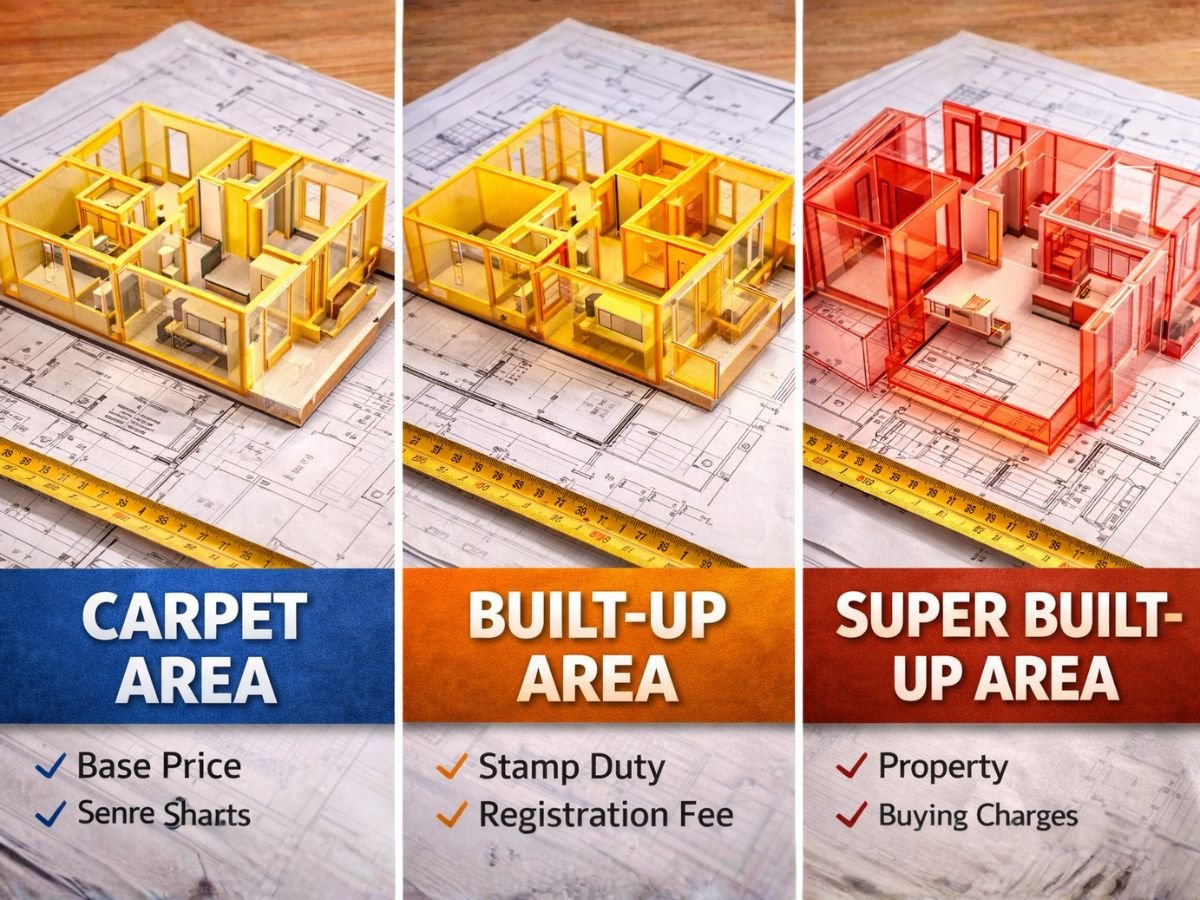
In a city where every square foot matters, carpet area is not a technical side note. It is the real value of what you are buying. The living room, bedrooms, kitchen, internal usable space, that is what affects comfort, furniture planning, and long-term satisfaction. Yet many buyers still get influenced by bigger-looking saleable numbers.
This confusion has reduced after RERA, but it has not disappeared. The words still sound similar. Carpet area. Built-up area. Super built-up area. The difference looks small on paper, but the financial impact is not small at all.
Carpet area vs built-up area
RERA carpet area is the net usable floor area of an apartment, excluding external walls, service shafts, balconies, verandahs, and open terraces, but including internal partition walls. Built-up area is the carpet area plus the thickness of walls and balcony area. Super built-up area goes further and includes a proportionate share of common spaces such as lifts, lobby areas, and staircases.
This distinction matters because buyers do not live inside “saleable area” figures. They live inside the usable part of the flat. In a market where each square foot carries serious value, even a modest difference between advertised size and practical living space can change the deal quality significantly.
Why usable space matters
A small gap in usable space becomes a big money issue in Navi Mumbai’s 2026 price environment. If rates are high and the layout is inefficient, you may pay premium pricing for a home that does not feel spacious in daily use. That becomes obvious only after possession, when the dining table does not fit the way you imagined.
During site visits, ask for the RERA carpet area and the actual layout dimensions. If possible, measure sample spaces mentally or physically. Serious buyers do this. And honestly, they should. The flat is not bought on brochure emotion alone. It is lived in every day.
4. How Good Is the Builder’s Reputation?

Builder reputation in Navi Mumbai is not just about branding. It is about delivery record, structural quality, post-possession response, and financial discipline. In 2026, buyers are not only comparing national names with local developers, they are comparing reliability. That is the real benchmark.
A well-known name helps, but it should not replace verification. Some regional builders know local nodes better and have stronger delivery history in specific micro-markets. On the other hand, large developers often bring stronger systems and better execution standards. The answer depends on project-specific reality.
Past projects and delivery record
Check how many projects the developer has completed, how many are ongoing, and whether there is a pattern of delay. MahaRERA records, past possession timelines, and completed site visits tell a lot. A builder active across Kharghar, Taloja, Panvel, Ghansoli, or Ulwe should be judged by actual handovers, not by launch volume.
Also look at how old completed projects are aging. Does the construction still look solid after a few monsoons? Are common areas maintained properly? Navi Mumbai weather tests buildings honestly. A tower can look impressive in year one and disappointing in year three.
Buyer reviews and trust factors
Online reviews help, but local society feedback helps more. Talk to residents of a completed project by the same builder. Ask about water issues, seepage, lift maintenance, service response, and promised amenities. Buyers often discover the truth in the parking lot, not in the sales lounge.
Bank approvals, industry memberships, and clean paperwork also improve confidence. Still, real trust comes from lived feedback. In property, reputation is not what the brand says about itself. It is what residents say after possession.
5. Is the Location Right for Daily Life and Future Value?

A flat can be good and still be wrong for you because the location does not fit your daily life. This happens often in Navi Mumbai. Buyers get impressed by future growth and ignore present reality. Then everyday life becomes tiring. Long travel. Weak social infrastructure. Inconsistent water. Poor access during rains.
A good location is not just about “which node.” It is about which sector, road connection, station access, school radius, hospital availability, and future infrastructure impact. In 2026, micro-location matters more than ever.
Connectivity, schools, hospitals, market
Established nodes like Vashi, Nerul, Seawoods, and Belapur offer stronger daily convenience. Kharghar remains attractive for lifestyle, education, and open planning. Ulwe and Panvel are benefiting from airport and Atal Setu momentum. Airoli and Ghansoli continue to hold value for IT and corporate professionals.
The right choice depends on your real routine. Someone working toward South Mumbai may see Ulwe very differently now because Atal Setu has changed travel logic. Someone tied to the Thane-Belapur belt may still prefer Airoli or Ghansoli. A location that saves one hour every day becomes more valuable than a glossy clubhouse.
Future growth potential
The airport effect is real, but not every nearby project benefits equally. Some areas will grow because of better commercial integration, better infrastructure completion, and stronger end-user demand. Others may rise only because of launch noise and speculative pricing. Those are not the same thing.
Panvel, Ulwe, and Dronagiri remain high-interest zones for future appreciation in the 2026 context. Kharghar continues to balance end-use strength with long-term value. Prime nodes offer stability and liquidity, while growth nodes offer upside with higher risk. A buyer has to know which game they are playing.
6. What Is the Possession Timeline and OC Status?

Possession is where dream and reality finally meet. Buyers hear “handover soon” all the time, but the only date that really matters is the one backed by records and construction progress. In under-construction projects, this question should be asked without hesitation and followed by another one: what is the current on-ground stage?
This matters more now because infrastructure-led launch activity has increased, but not every project moves at the same speed. Some look ambitious. Some are ambitious. There is a difference.
Promised possession vs actual readiness
The promised date in sales conversations may not match the registered completion timeline or actual site progress. Always compare the marketing promise with the MahaRERA date and the real construction stage. A project at a very early stage promising near-term possession deserves caution.
Delays create double pressure. Buyers keep paying rent and EMIs mentally, and sometimes literally. That is why a realistic timeline is better than an attractive one. It is less exciting, but far more honest.
Why Occupancy Certificate matters
The Occupancy Certificate is not a formality. It confirms that the building is complete as per sanctioned plans and is fit for occupation. Without OC, buyers can face problems with water connection, utility regularization, resale, and future home loan transfer to another buyer.
In Navi Mumbai, this is especially important because many buyers assume physical possession means legal readiness. It does not. A home without proper OC status may look complete, but the risk stays alive quietly in the background.
7. What Are the Maintenance and Other Monthly Costs?

Buying cost is one side of the story. Ownership cost is the other. Many people calculate the EMI carefully and then underestimate the monthly burden that starts after possession. In modern Navi Mumbai projects, this can be significant, especially in amenity-heavy societies.
That is why maintenance should be discussed before booking, not after handover. Ask what is included, what is billed separately, and whether the area faces tanker dependence or higher utility pressure.
Society charges
Maintenance rates vary sharply depending on the node and the project profile. Affordable and mid-segment projects in areas like Taloja or Ulwe may be lighter, while premium towers in Seawoods, Nerul, or Vashi can have much higher monthly charges. Clubhouse-heavy developments often push recurring costs upward.
There is also the practical issue of GST on maintenance beyond certain thresholds, along with society administration expenses. Buyers planning for long-term ownership should factor this seriously, especially if the purchase budget is already stretched.
Parking, amenities, extra expenses
Parking, corpus fund, utility deposits, property tax, and water-related expenses can quietly raise the monthly or annual burden. In some sectors of Kharghar and Taloja, tanker dependency has already shaped resident spending patterns. That is not a small issue. It affects both comfort and cost.
Amenities also come with maintenance logic. The bigger the lifestyle promise, the bigger the upkeep bill. Pool, gym, landscaped deck, tower lobby, smart systems, all of it sounds great. Someone has to pay for it every month.
8. Is the Project Approved by Banks for Home Loan?
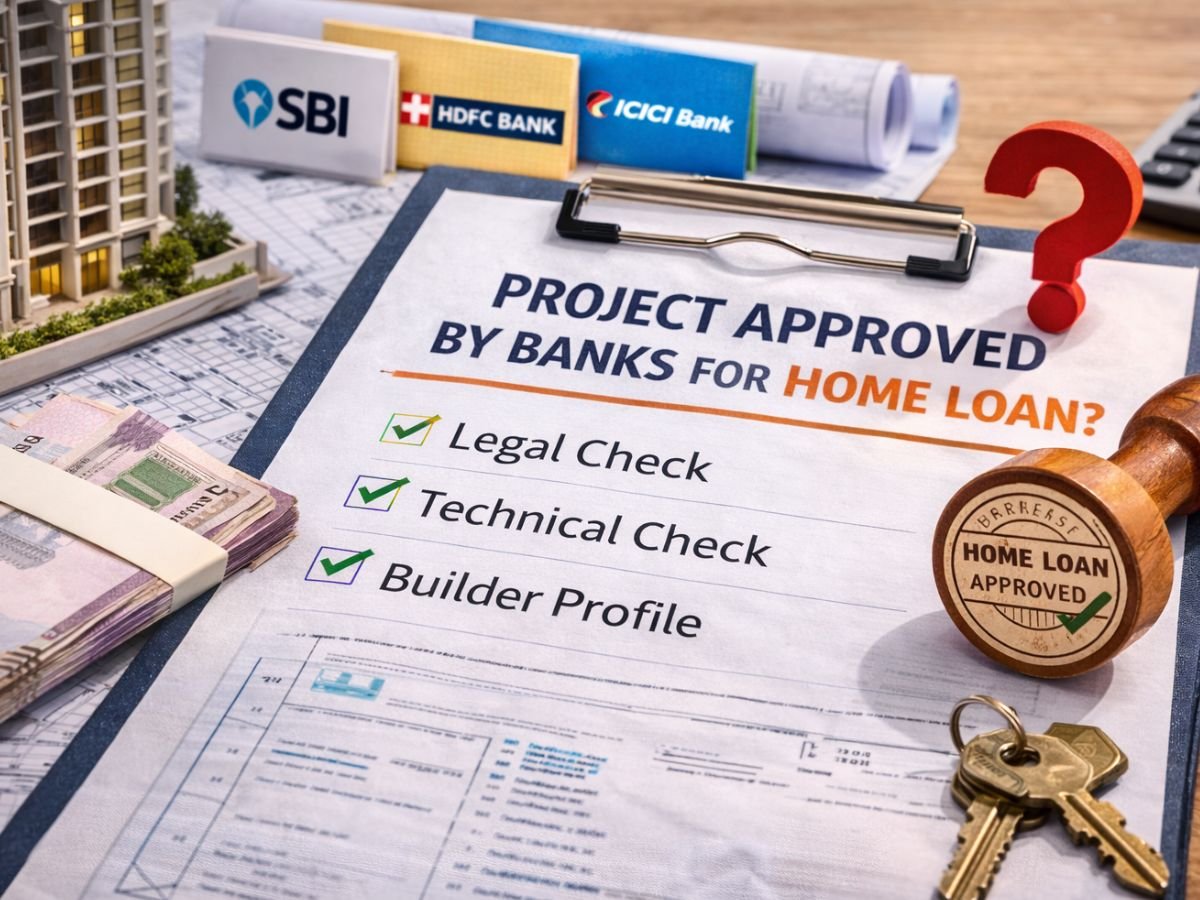
Bank approval is one of the easiest filters available to buyers. If reputed banks are comfortable funding the project, it usually means they have already reviewed important legal and technical aspects. It is not a full substitute for personal due diligence, but it is a strong positive signal.
In a fast-moving market, buyers often ask about loan EMI first. A better question is this: which banks have approved the project, and on what basis? That changes the quality of the conversation immediately.
Loan eligibility
Home loan eligibility depends on income profile, credit score, repayment capacity, property stage, and project approval status. Salaried buyers, self-employed professionals, and NRIs may all get different rates and conditions. In 2026, rates and lender appetite can vary meaningfully across profiles.
That means the flat should fit both your aspiration and your finance profile. A project that looks affordable in brochure form may become difficult once margin money, processing timeline, and disbursement pattern are factored in.
Why bank approval matters
Projects with bank tie-ups often move faster in loan processing because legal and technical checks are already partly completed. That saves time and reduces uncertainty. It also adds one more layer of validation around approvals, title clarity, and construction status.
Still, buyers should ask whether the approval is project-wide or just selective. A general tie-up sounds good, but specific tower, wing, or stage-level approval is what matters in actual financing.
9. What Is the Resale and Rental Potential?

Not every buyer is an investor, but every buyer should think like one at least once before purchasing. Resale and rental strength decide how flexible the asset remains in future. Jobs change. Family size changes. City patterns change. A flat that cannot exit well becomes a burden.
Navi Mumbai does offer a balanced story here. Some nodes give stability and easy liquidity, while others offer stronger upside because infrastructure is still unlocking value. The right choice depends on your time horizon.
Investment value
Stable nodes like Vashi, Nerul, and Seawoods usually offer stronger end-user demand and smoother resale visibility. Growth zones like Ulwe, Dronagiri, Panvel, and parts of Kharghar may deliver stronger appreciation if infrastructure and demand continue maturing as expected.
The key is to avoid buying only on “future promise.” Real investment value comes when future infrastructure meets actual livability, not when launch marketing gets loud.
Rental demand in the area
Rental demand in Navi Mumbai is being shaped by IT parks, educational hubs, logistics growth, airport-linked employment, and inter-city connectivity. Airoli and Ghansoli attract corporate and IT tenants. Kharghar draws families and students. Ulwe and Panvel are gaining relevance because of airport and access shifts.
Furnished units can command better rent in some pockets, especially where short-stay or professional demand is rising. Buyers planning investment should check current rent, vacancy time, and tenant profile in that exact micro-market, not just the wider node name.
10. Are There Any Hidden Legal or Site-Level Problems?

This is the question buyers ask last, but it should be asked much earlier. Because many problems are not visible in brochures at all. Waterlogging. Title complications. Road access. Tanker dependence. Dust exposure. Flood-prone entries. Industrial disturbance. These things show up only on the ground.
And Navi Mumbai has enough local variation that one sector can feel smooth while another nearby pocket feels frustrating. Same node. Completely different experience. That is why ground truth matters.
Waterlogging, access, disputes, title issues
Some pockets across Kharghar, Taloja, Airoli, Mahape, Vashi, and Ghansoli have faced site-level challenges ranging from drainage issues to access stress during monsoon periods. In emerging and land-transition zones like Dronagiri or NAINA-influenced areas, title and local land complexity can also demand extra care.
Water supply is another serious point. Where municipal supply is weak, tanker dependence becomes a recurring cost and a lifestyle issue. A flat may be premium in pricing but still basic in service quality. That contradiction is more common than many first-time buyers expect.
Why site visit is important
A site visit reveals what the brochure hides. You can check road approach, nearby nullahs, stilt elevation, surrounding land use, traffic bottlenecks, and the actual social environment. You can also speak to guards, shopkeepers, nearby residents, and existing society members. They often tell the truth much faster than formal presentations do.
Visit once on a normal day and once, if possible, during peak traffic or monsoon conditions. That second visit changes buying decisions more often than people admit.
Quick Checklist Before Booking a Flat in Navi Mumbai
Legal and practical checks
Before paying token money, confirm these points
- MahaRERA registration is active and documents are visible
- Title and legal papers are checked by an independent lawyer
- Cost sheet includes all statutory and builder-level charges
- RERA carpet area is clear and layout is practical
- Builder’s past projects and delays have been reviewed
- Location suits your daily travel and future plans
- Possession timeline matches construction reality
- OC and municipal readiness are properly clarified
- Maintenance, parking, and water-related costs are disclosed
- Site visit has been done with attention to drainage and access
Final Thoughts
Buying a flat in Navi Mumbai in 2026 can be a strong move. The city has genuine momentum. Airport-led growth, Atal Setu connectivity, metro expansion, and rising economic relevance have changed the market completely. But momentum alone does not make a property right for you. Due diligence does.
The smartest buyers are not always the richest buyers. They are the ones who ask uncomfortable questions before booking, not after facing problems.That is the difference. A flat is not just a purchase. It becomes your home, your liability, your security, and sometimes your biggest financial bet.
FAQs
Frequently Asked Questions