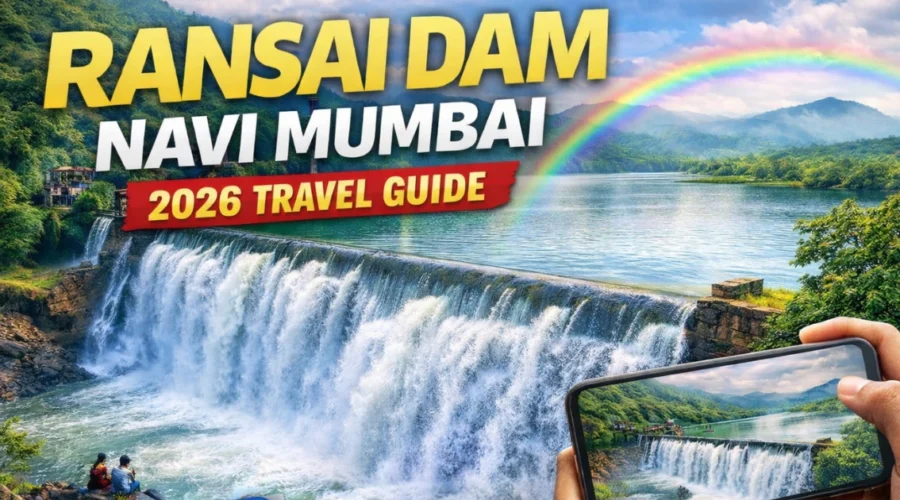
Ransai Dam Navi Mumbai – Location, History & Timings
Quick Summary Table
“Ransai Dam is located in Raigad district near Panvel, built in 1971, 36.6 meters high, and primarily supplies water to Uran and surrounding villages.”
| Detail | Information |
|---|---|
| Dam Type | Earthen / Gravity Dam |
| Coordinates | 18.8955° N, 73.0538° E (Approx.) |
| Max Height | 36.60 meters (120 ft) from foundation |
| Storage Capacity | 10 Million Cubic Meters (MCM) |
| Built Year | 1971 |
| Built By | Maharashtra Industrial Development Corporation (MIDC) |
| Primary Water Supply | Uran Taluka, Panvel City & 25–35 Gram Panchayats |
| Major Beneficiaries | ONGC, Indian Navy, JNPT, Industrial Units |
| Last Major Water Stop | Dighode Village / Panvel Distribution Line |
| Network Connectivity | Jio (Fair), Airtel (Fluctuating), Others (Weak) |
Ransai Dam Navi Mumbai – The Hidden Water Giant Behind Uran & Panvel
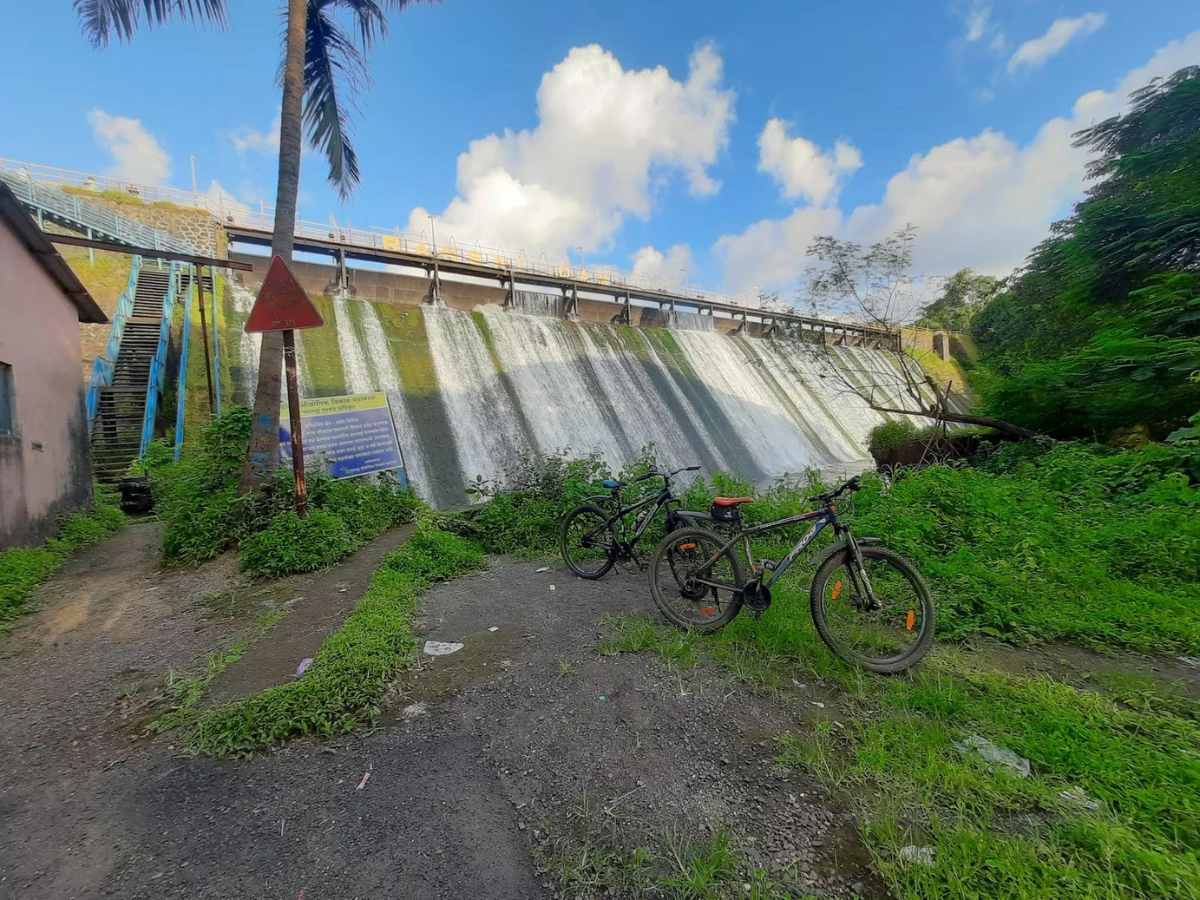
There are places we visit for peace. And then there are places that quietly keep entire cities alive. Ransai Dam falls into the second category. Most people scrolling Instagram see it as a monsoon overflow spot near Panvel. But behind those dramatic water spill visuals, this dam literally supplies water to lakhs of people across Uran and Panvel.
What is Ransai Dam? (Quick Overview for First-Time Visitors)
Ransai Dam is a 1971-built earthen gravity dam located near Panvel in Raigad district, primarily constructed for irrigation and industrial water supply. Built by MIDC, it captures monsoon runoff from the Karnala hills and supplies water to Uran town, nearby villages, and major installations. During monsoon, the overflowing spillway turns it into a scenic attraction.
Most first-time visitors search “Ransai Dam near Panvel” thinking it’s just another weekend picnic spot. But it’s actually the prime water source for around 2.5 lakh people, including villages, Uran Municipal Council, ONGC facilities, naval establishments and even JNPT-linked zones. That’s not a small responsibility for one reservoir.
Where is Ransai Dam Located? (District, Village & Map Details)
Ransai Dam is located in Ransai Village, under Panvel Taluka, in Raigad District, Maharashtra. It lies within the forested belt near the Karnala Wildlife Sanctuary region, close to Thumb Mountain. The area is rural, green, and surprisingly quiet compared to central Navi Mumbai.
If you’re searching “Ransai Dam Raigad district” or “Ransai Dam near Panvel,” here are the real distances. It is approximately 20 km from Panvel city, around 45–50 km from Navi Mumbai, and roughly 60–65 km from Mumbai depending on traffic. The nearest railway junction is Panvel, and from there the interior stretch becomes more raw and village-like.
History of Ransai Dam – When Was It Built & Why?
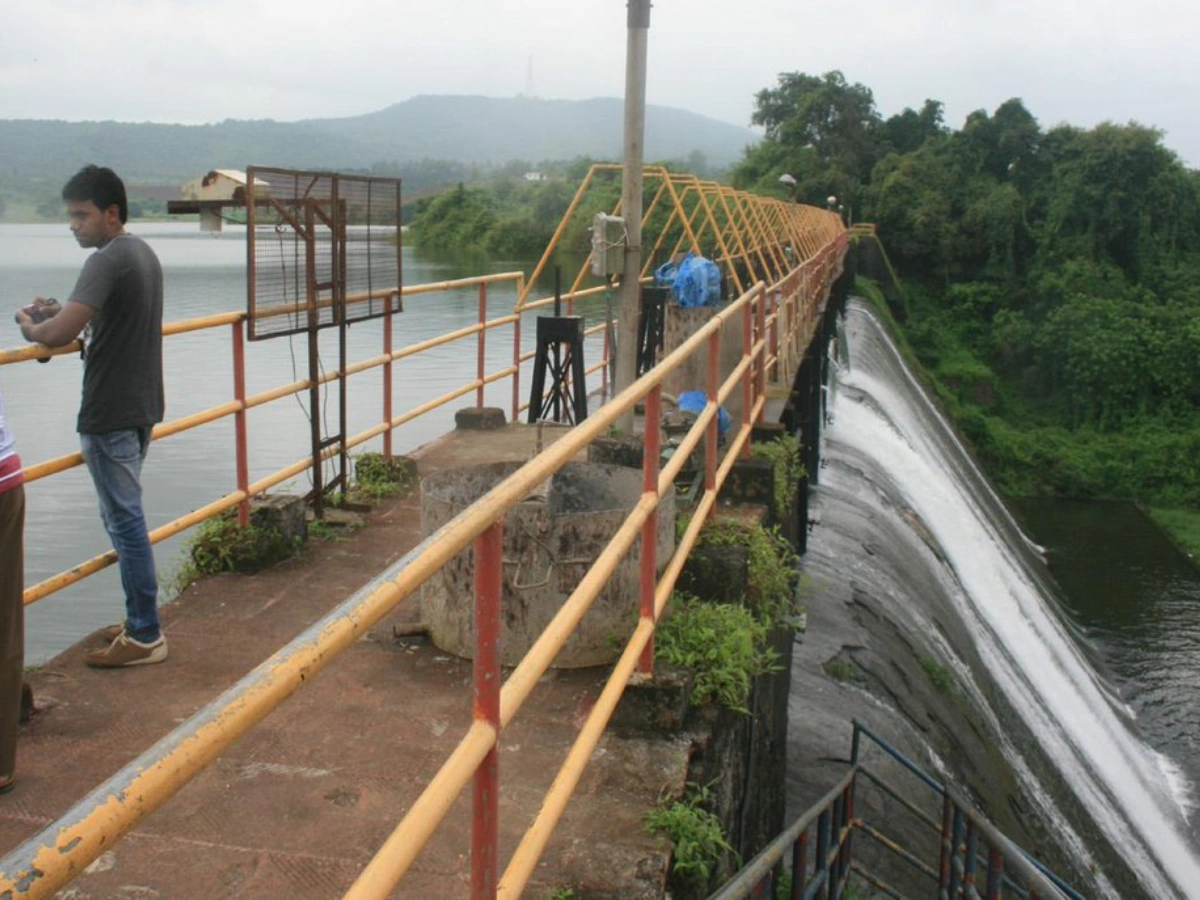
Ransai Dam was built in 1971 by the Maharashtra Industrial Development Corporation, widely known as MIDC. The purpose was simple but crucial. Secure water supply for the rapidly growing Uran–Panvel belt, especially as industrial and port activities started expanding.
Back then, the region was far less urbanised. The reservoir was created by submerging valley land above Dighode village, and over time it became the backbone of water supply for Uran Taluka. Today, nearly 65 percent of its water is allocated to central government installations and major industries, while the remaining portion serves 25 to 35 rural gram panchayats and municipal users.
And here’s the part nobody talks about much. Some tribal hamlets were displaced during the original construction. Rehabilitation issues from decades ago still echo in local discussions. Expansion proposals have stalled partly because of unresolved land acquisition concerns. History isn’t always pretty. But it matters.
In recent years, Uran has faced periodic water cuts when storage dropped below demand levels. During peak summer, supply has reduced to around 30 MLD against a demand crossing 40 MLD, forcing rationing. This highlights how critical Ransai Dam remains for the region.
Technical Details of Ransai Dam
Ransai Dam is an earthen and gravity-type structure standing approximately 116 to 120 feet high. Its gross storage capacity is around 10 million cubic meters. Under regular operations, it supplies roughly 30 to 36 million liters per day. However, current demand in Uran alone often crosses 40 MLD, which creates seasonal pressure.
The catchment area primarily receives rainwater from the Karnala hill ranges. Due to years of inadequate desilting, officials have acknowledged that storage capacity has reduced over time. This means during heavy monsoons, excess water often flows past the spillway instead of being stored efficiently.
Why is Ransai Dam Famous in Navi Mumbai?
When the reservoir fills up and the spillway starts cascading, it looks like a mini waterfall framed by dense greenery. Unlike crowded spots like Pandavkada Waterfall, Ransai still feels raw and less commercial. No ticket counters. No loudspeaker announcements. Just water, hills and wind.
It’s peaceful. Slightly mysterious. And yes, very Instagram friendly. But it’s also not developed infrastructure-wise. Which can be both a blessing and a warning.
Best Time to Visit Ransai Dam
June–September (Monsoon Peak)
This is when Ransai Dam looks dramatic. Overflow scenes, fog around the hills, intense greenery. But safety becomes a serious concern. Rocks turn slippery, currents become unpredictable, and there are no lifeguards. Visiting during heavy rainfall requires caution and common sense.
October–February (Green Winter)
Personally, this is my favorite period. The water level is still healthy after monsoon, the surroundings remain lush, and the weather becomes pleasant. Ideal for photography, short scenic walks, and peaceful nature visits without excessive humidity.
March–May (Summer Conditions)
Water levels drop gradually. Surroundings lose some greenery. Heat increases significantly. This is not the best time for scenic visits, though mornings can still be manageable.
Interestingly, this is when water scarcity news often appears for Uran because reservoir levels dip sharply before monsoon refilling.
Ransai Dam Timings, Entry Fee & Latest Rules (2026 Update)
Most people search one simple thing before planning a visit. Is Ransai Dam open today? The answer is yes in most cases, because it is not a gated tourist attraction and there is no official ticket counter. It functions as an open-access reservoir area, which means there are no fixed opening or closing hours, but visiting between 7 AM and 5:30 PM is strongly recommended for safety.
There is no official entry fee as of 2026. However, since this is an active water supply dam managed by MIDC and not a developed picnic park, authorities may temporarily restrict access near the spillway during heavy monsoon overflow or water scarcity situations. If crowding becomes risky, certain sections can be blocked without prior notice, so it’s always better to check local conditions before visiting, especially during peak monsoon weeks.
How to Reach Ransai Dam?
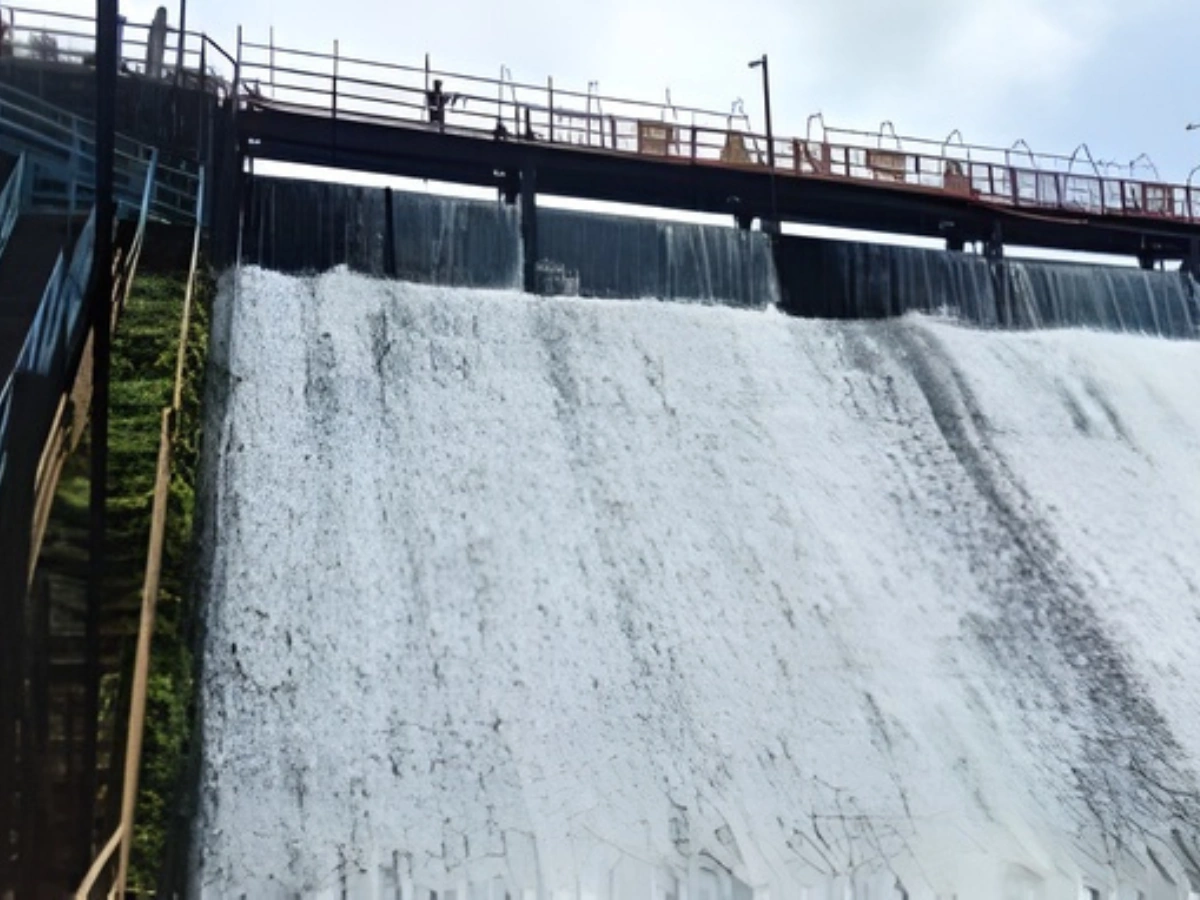
Reaching Ransai Dam is simple till Panvel. After that, it gets slightly adventurous.
By Train
The nearest railway station is Panvel Railway Station, which connects Mumbai suburban line and Konkan Railway. From Panvel, you’ll need to take a local ST bus, shared auto, or private vehicle toward Kalhe village side. The interior stretch becomes rural and patchy.
From Kalhe side, some routes even involve a 6–8 km forest stretch depending on which approach road you take. Network signals can drop. So download offline maps in advance.
By Road
You can drive via NH-66 or the Panvel–Belapur Road depending on your starting point. From Panvel city, follow directions toward Karnala region and then toward Ransai village. The last few kilometers are narrow village roads, so SUVs or bikes are more comfortable than low-clearance cars.
Google Maps works till a point, but asking locals near Ransai village gives clearer directions. Sometimes the mapped route shows shorter forest tracks which may not be ideal during monsoon.
By Bus
MSRTC buses operate till nearby villages from Panvel depot. Frequency is limited compared to city routes, so check schedules at Panvel ST stand before planning. NMMT buses generally do not go directly to the dam interior.
Realistically, a private vehicle is the most convenient option if you’re coming from Navi Mumbai or Mumbai.
Parking Availability
There is no officially marked parking lot. Visitors usually park along safe roadside patches near the approach area. During monsoon weekends, random parking can block village access, so please park responsibly.
This is not a developed tourism zone. Treat it like a rural eco-spot, not a mall.
Road Update
After the opening of Atal Setu and upcoming Navi Mumbai International Airport connectivity, traffic on Panvel–Uran stretch has increased noticeably. The main road till Ransai village is better than before, but the last 3 km stretch remains narrow and village-type.
During monsoon, potholes can appear in patches and roadside mud can make driving tricky. High ground clearance cars or bikes are the safest choice. Low sedans may struggle in heavy rain weeks.
Is Ransai Dam Safe? (Swimming, Accidents & Reality Check)
There are no lifeguards. No barricaded safety zones. No structured viewing decks. During monsoon, rocks become extremely slippery and water currents near overflow points can be unpredictable. Deep swimming is not recommended at all.
This dam is primarily a water storage and supply structure. It is not designed for recreational swimming. Every year in Maharashtra we hear unfortunate monsoon drowning stories from open water bodies. Please don’t become a headline for one reel.
Things to Do at Ransai Dam
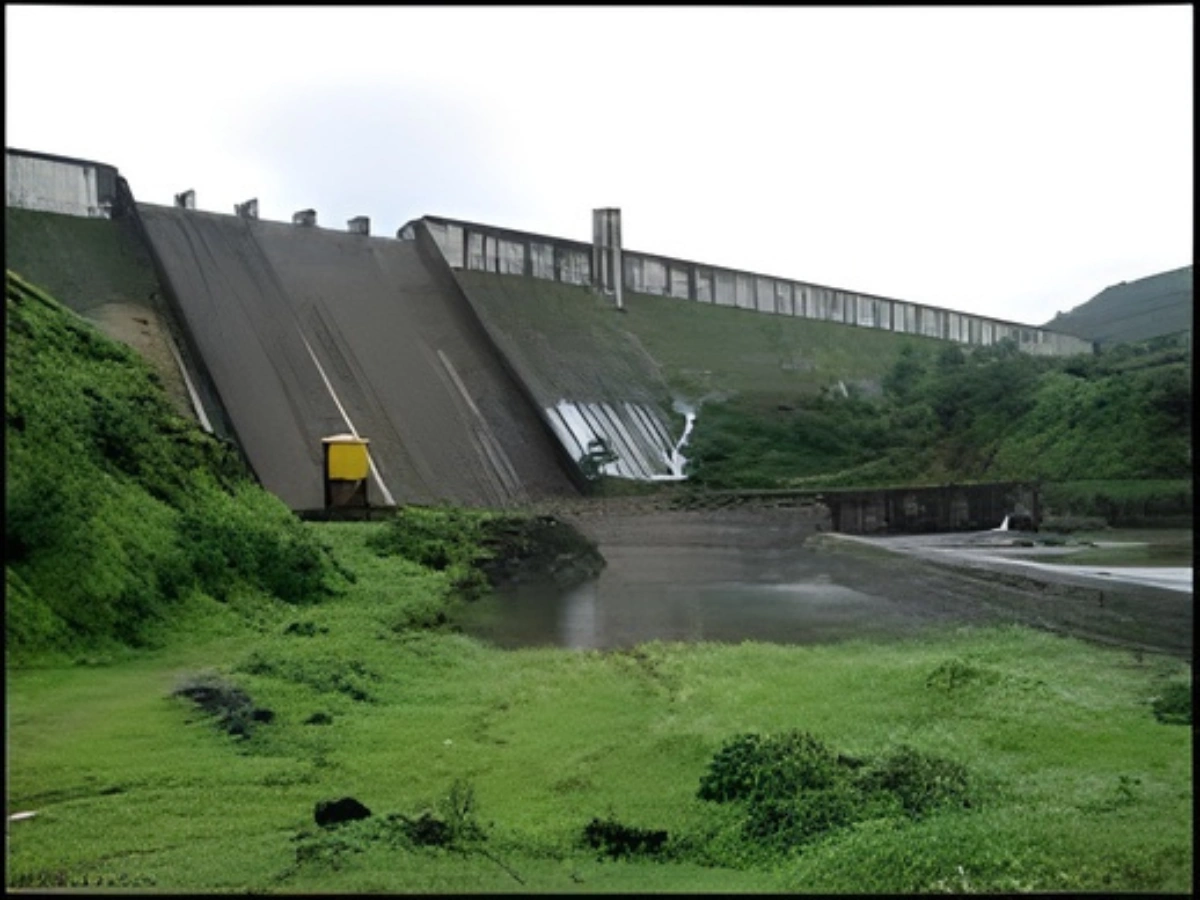
You can enjoy nature photography, especially during monsoon and early winter. The spillway visuals, forest backdrop and cloudy sky create cinematic frames. Short scenic walks around the safer dry patches are peaceful, especially if you go early morning.
Picnics are possible only during dry season and in responsible areas. There are no shops, no food stalls, and no proper seating benches. Drone usage is sensitive because it’s a water infrastructure site, so avoid flying drones without permission. Better safe than legal trouble.
Environmental Importance of Ransai Dam
It supports irrigation in surrounding farming zones and acts as a crucial water retention structure during heavy monsoons. The reservoir helps regulate seasonal water supply to villages and industrial establishments across Uran Taluka.
The surrounding forest belt, connected to the Karnala region, supports seasonal bird activity and biodiversity. Water bodies like this maintain groundwater balance and agricultural stability. Without Ransai, summers in Uran would be far more severe.
People come for reels. Villages depend on it for survival.
Nearby Attractions Around Ransai Dam
You can explore Karnala Fort, which offers a scenic trek and panoramic views of the Raigad region. Right next to it lies Karnala Bird Sanctuary, a peaceful forest zone known for birdwatching and greenery.
Panvel local market is another practical stop if you need supplies. Small grocery stores near Ransai village are limited, so buying essentials in Panvel city beforehand is smarter.
Make it a half-day nature circuit instead of a rushed one-hour stop.
Ransai Dam vs Pandavkada Waterfall – Which One Should You Visit?
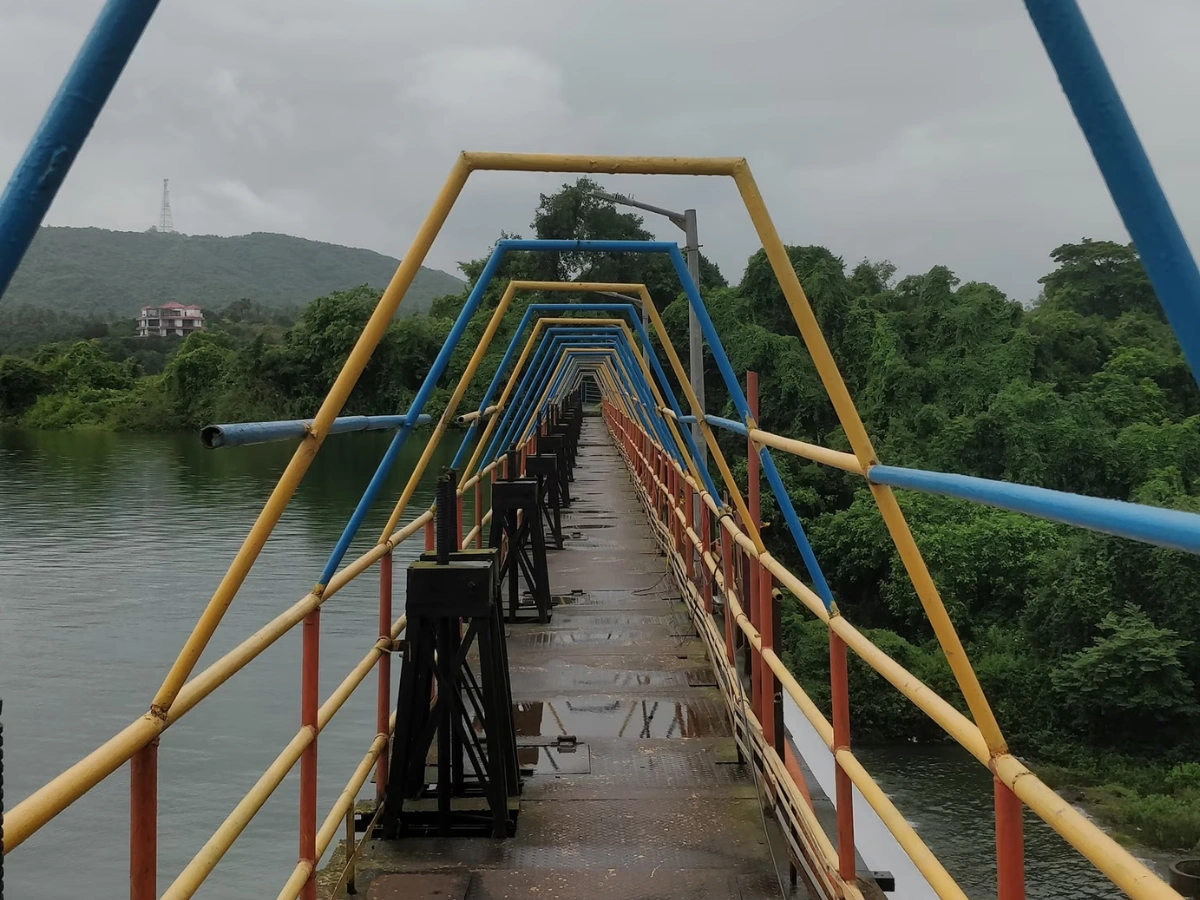
People in Navi Mumbai keep comparing Ransai Dam with Pandavkada Waterfall, but honestly, they offer very different experiences. Pandavkada is dramatic, loud, crowded and highly regulated. Ransai is quiet, raw, and still largely untouched by tourism infrastructure.
If you want easy access, rail connectivity and family-friendly paths, Pandavkada fits better. If you want silence, greenery, and a feeling of discovering something that hasn’t been Instagram-commercialized yet, Ransai wins.
| Factor | Ransai Dam | Pandavkada Waterfall |
|---|---|---|
| Crowd Level | Low to Moderate | Very High in Monsoon |
| Safety Setup | No Guards / Open Access | Police Controlled Area |
| Accessibility | Interior Village Roads | Easy from Kharghar |
| Entry Fee | Free | Paid Entry |
| Family Friendly | Limited | More Suitable |
| Cellular Network | Weak / Spotted | Strong (Full 5G) |
| Photography | Landscape & Minimalist | Action & Crowd Shots |
| Drone Allowed? | Sensitive (Avoid Near Spillway) | Strictly Prohibited |
| Commercial Setup | No Shops | Vendors & Stalls Available |
Things Nobody Tells You Before Visiting Ransai Dam
No one tells you that there are no proper shops near the dam. Not even basic water stalls. Carry your own drinking water and snacks from Panvel. Also, mobile network coverage becomes weak as you move deeper toward the dam, especially for non-Jio networks.
Another important thing. Avoid late evening visits. There are no street lights, no public movement, and forested zones become quiet very fast after sunset. This is not a sunset point. It’s a working reservoir area. Respect that reality.
Essential Travel Checklist for Ransai Dam
Ransai looks peaceful on reels, but ground reality thoda alag hota hai. So plan smart.
Mobile Network:
At the main spillway area, Jio works fairly stable. Airtel fluctuates. Vi and other networks become weak or disappear completely. Download offline Google Maps before entering village stretch.
Food & Water:
There are no restaurants within a 5 km radius of the dam. Dighode Village is the last point where you may find basic snacks or mineral water. It’s always safer to pack everything from Panvel city.
Responsible Tourism:
This is an active drinking water reservoir. Please avoid littering. Carry a trash bag. Keep Ransai plastic-free. If we don’t protect it, access restrictions will increase in coming years.
Final Verdict – Should You Visit Ransai Dam in 2026?
If you love quiet nature spots, early morning drives, monsoon greenery, and places that still feel local, Ransai Dam deserves a visit. It’s ideal for photographers, nature lovers, and people who enjoy exploring lesser-known places without crowd pressure.
If you’re expecting food stalls, paved walkways, selfie points and strict safety infrastructure, this place may disappoint you. Ransai Dam doesn’t entertain you. It simply exists. Calm. Functional. Powerful. And sometimes, that’s exactly what makes a place worth visiting.
FAQ's
Frequently Asked Questions