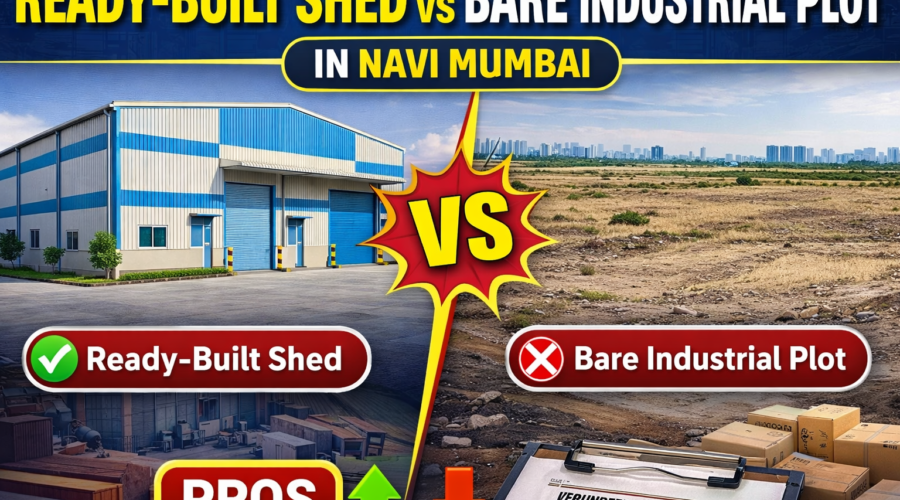
Ready-Built Shed vs Bare Industrial Plot in Navi Mumbai: Which Makes More Sense?
If speed, existing utilities, and faster occupancy matter most, a ready-built shed usually makes more sense. If custom layout, future expansion, and long-term land-led control matter more, a bare industrial plot is often the smarter choice. In Navi Mumbai, though, this decision changes sharply based on MIDC or CIDCO rules, sanctioned use, built-up legality, road and loading practicality, and the exact pocket, whether that is TTC, Taloja, Panvel, or Kalamboli.
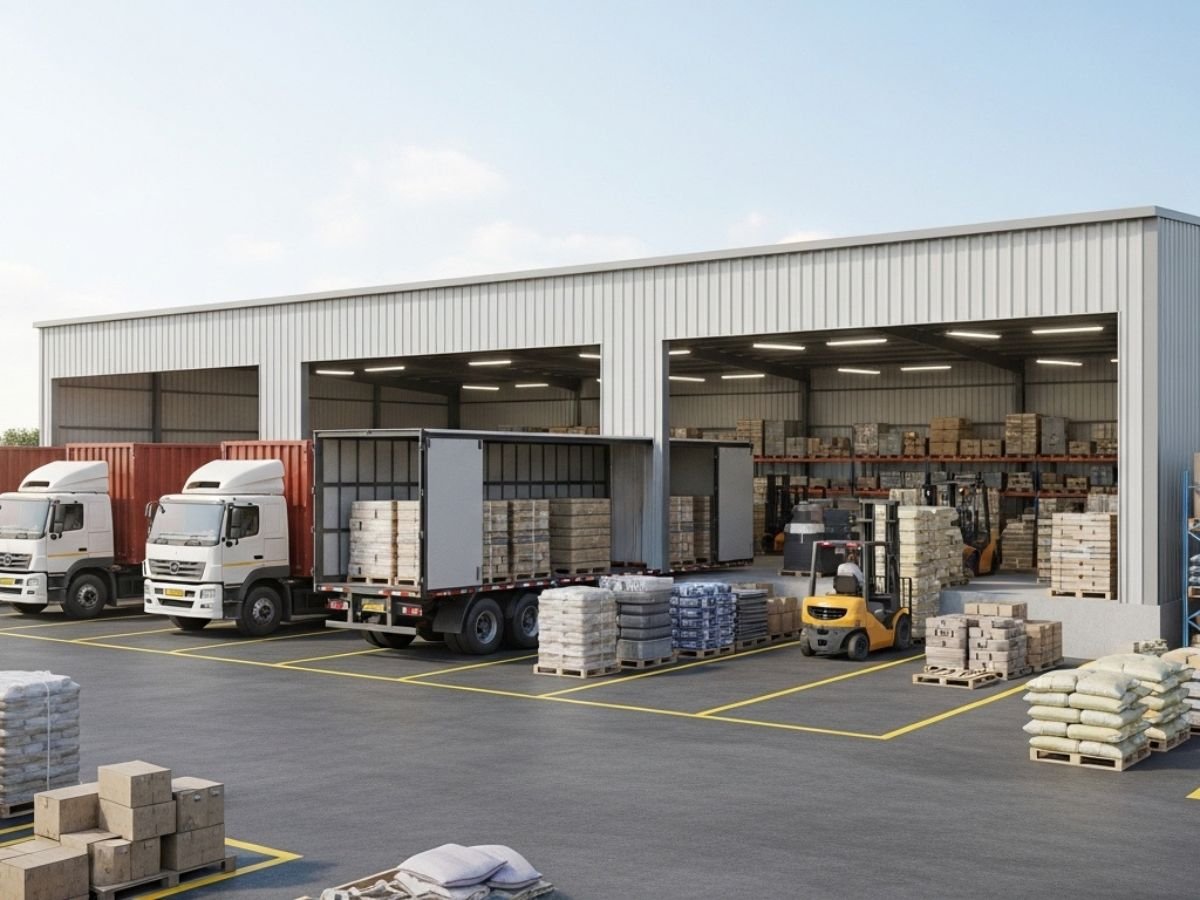
Ready-built shed or bare industrial plot: which one usually makes more sense in Navi Mumbai?
The Bottom Line: A ready-built shed is usually better for buyers who need to start operations quickly and can work within an existing structure. A bare industrial plot is usually better for buyers who want to design the property around their own process and can tolerate approvals, construction time, and execution risk.
| Factor | Ready-Built Shed | Bare Industrial Plot |
|---|---|---|
| Best for | Fast start, MSMEs, light logistics, investors seeking immediate income | Custom factory setup, long-horizon owner-users, land-led investors |
| Occupancy timeline | Faster (if structure/utilities usable) | Slower (due to approvals & construction) |
| Design control | Limited | High |
| Compliance risk | Legacy risk from existing structure | Development and approval risk |
| Expansion potential | Often restricted | Usually stronger |
| Upfront execution burden | Lower | Higher |
| Best local fit | Mature belts like TTC where land is scarce | Taloja, Panvel-side expansion pockets, larger-format needs |
The real difference is not “built-up vs vacant land” it is speed vs control vs risk
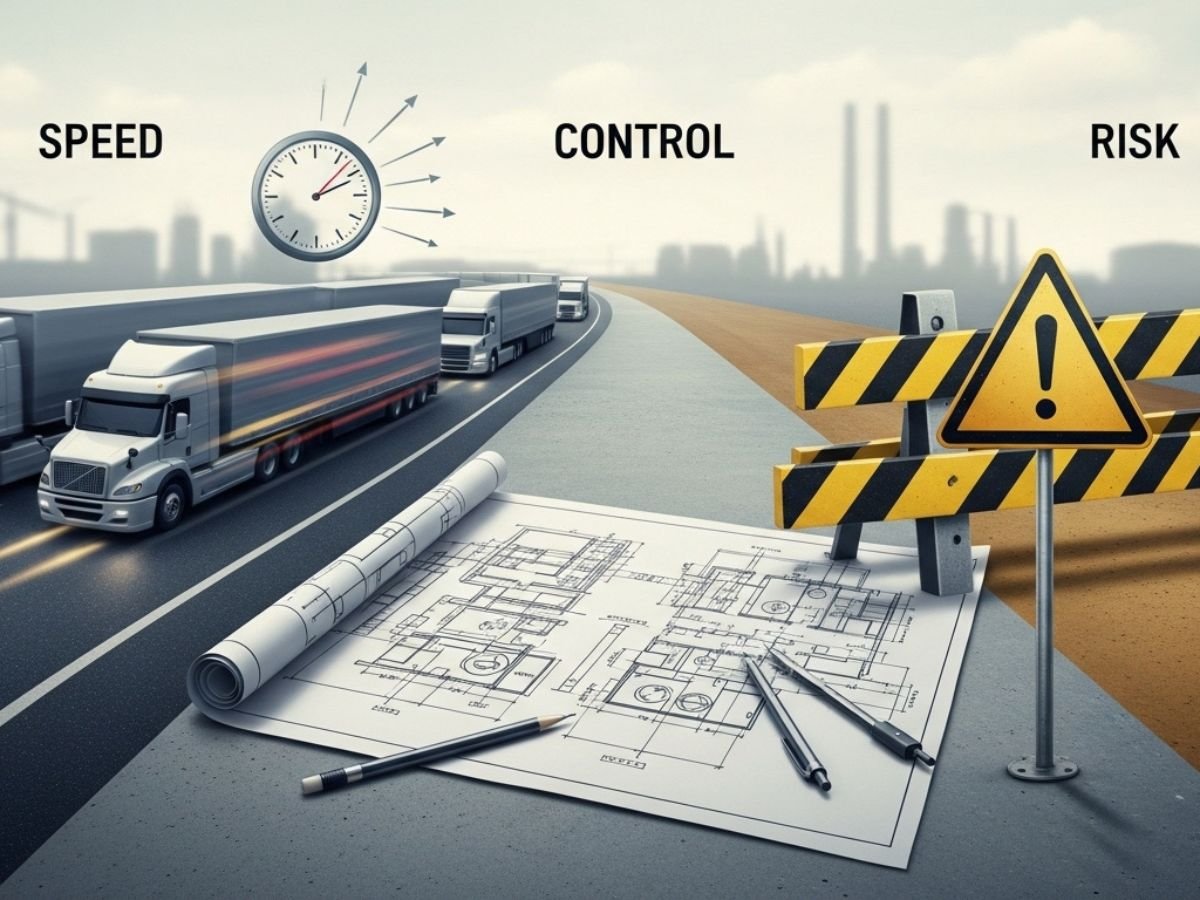
A buyer is not really choosing between a building and an empty site. The buyer is choosing between three things: speed to start, control over the final facility, and which risks they are willing to absorb.
A ready-built shed transfers construction risk and much of the approval history to the seller. That sounds easier, and sometimes it is. But it also means the buyer may inherit hidden problems such as unauthorized mezzanine floors, weak loading design, outdated power load, old fire compliance, or built-up area that does not fully match approved plans.
A bare plot does the opposite. It gives control. You can plan clear height, loading bays, circulation, plant layout, effluent treatment, and future expansion exactly the way the business needs. But that control comes at a price. The buyer takes on design risk, approval risk, construction cost inflation, time delays, and in MIDC areas, a regulatory clock linked to development obligations.
That is why this is not a cosmetic property choice. It is a business model choice.
When does a ready-built shed clearly make more sense?
A ready-built shed becomes the better option when the business values time more than perfect customization.
If your business needs to start fast
This is the clearest case. A logistics operator, a packaging unit, a spare-parts distributor, or a light assembly business may lose far more money in delay than it saves by building from scratch. A greenfield plot may take months just to move through approvals and then more months for construction.
A ready shed helps bypass much of that delay, provided the structure is legally and operationally usable.
If existing power, office area, and loading setup already work
A built-up industrial asset makes sense when the existing setup is already close to your operational requirement. This can include:
- suitable office integration
- existing loading space
- boundary wall and internal circulation
- usable power connection
- basic water and drainage readiness
- a standard layout that does not need heavy redesign
For many MSMEs, this is enough. They do not need a perfect custom facility. They need a functional one that starts generating output quickly.
If you do not want approval and construction execution risk
Plot buyers often underestimate how much follow-up, documentation, consultant coordination, and cash flow discipline a new industrial build demands. Even where online approval systems officially target shorter timelines, actual execution can stretch due to linked NOCs and local technical issues.
That is why a ready shed often makes more sense for businesses that do not want to manage architects, structural consultants, contractors, utility applications, and approval follow-ups together.
A realistic example is a 3PL operator that wins a new regional distribution contract near Panvel. Waiting 8 to 12 months for a new PEB building could mean losing the contract itself. In that situation, a ready warehouse-type shed is not just convenient. It is commercially necessary.
When does a bare industrial plot clearly make more sense?
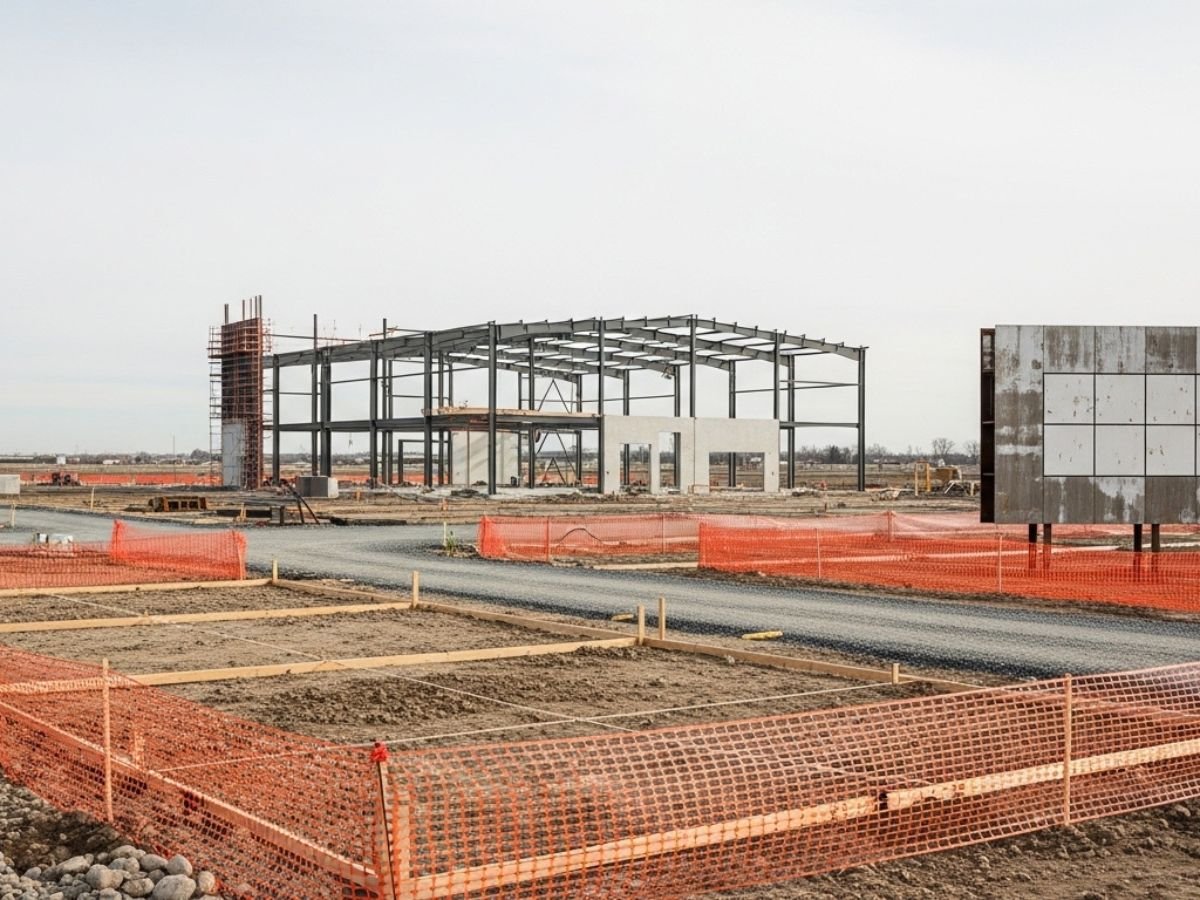
A bare plot is usually the smarter choice when the operation is highly specific and the long-term business benefit of building correctly outweighs the pain of slower execution.
If your process needs custom height, loading, circulation, or plant layout
Many legacy industrial sheds were not designed for modern technical needs. They may lack the clear height, floor load, truck turning radius, crane support, or internal workflow required by current manufacturing or heavy industrial users.
If your operation depends on EOT cranes, specialized plant layout, heavy machine foundations, hazardous material handling, clean-room standards, or a custom effluent treatment configuration, a ready shed can become a compromise from day one.
In such cases, a bare plot is not a luxury. It is the correct format.
If future expansion matters more than immediate occupancy
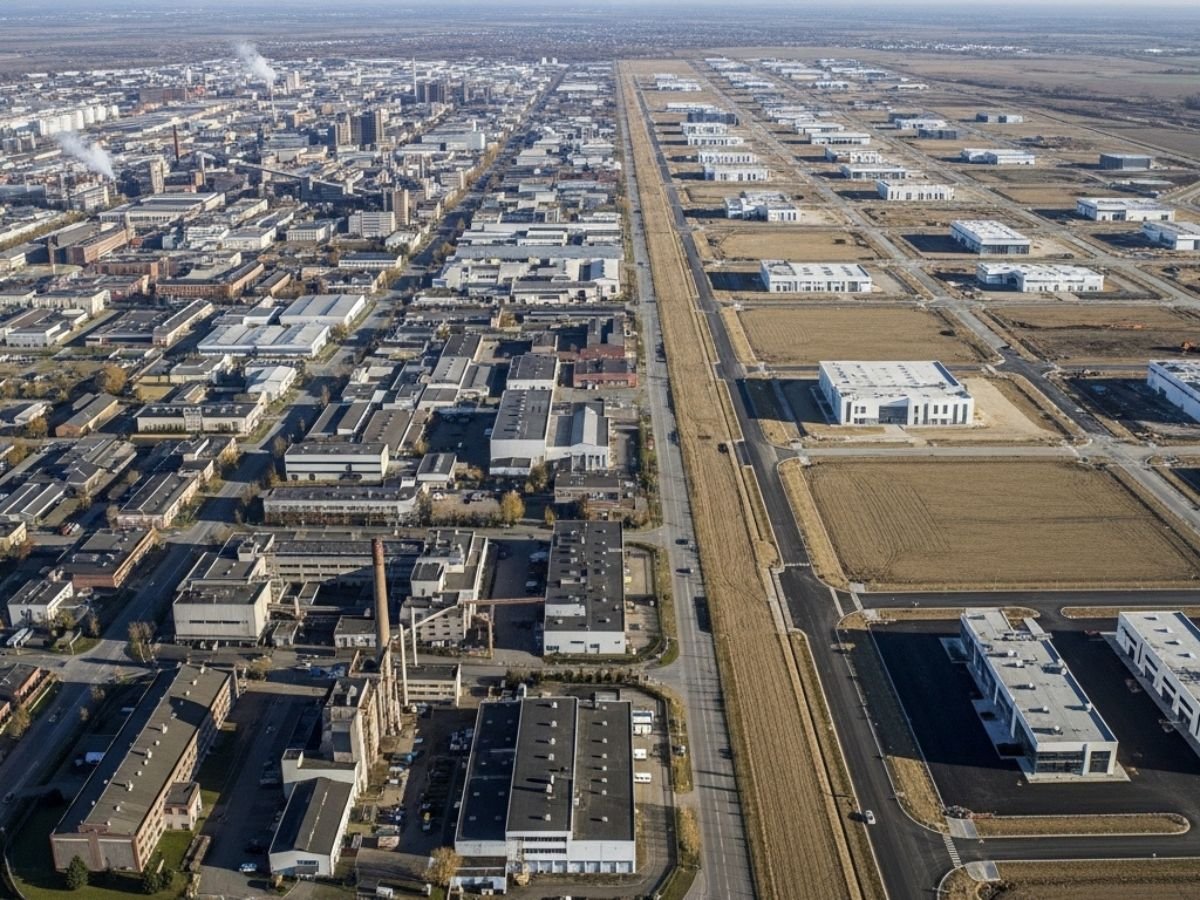
This is one of the strongest reasons to choose land. A ready-built shed may work today but become a constraint in two years. Expansion can be difficult due to FSI limits, open-space restrictions, structural limitations, or adjoining plot conditions.
A bare plot gives a longer runway. You can phase construction, preserve expansion room, and build with future operational scale in mind.
If you are thinking like a long-horizon owner-user or land-led investor
In expansion nodes such as Taloja and some Panvel-side belts, lower base land rates and larger-format opportunities make plot acquisition more attractive for long-term thinkers. A buyer who is comfortable deploying capital into land plus construction may build better long-term value than someone buying a compromised built-up asset in a saturated zone.
But this logic works only if the buyer can actually execute development. A plot is not a passive trophy asset in industrial Navi Mumbai. In MIDC areas especially, development obligations must be taken seriously.
A realistic example would be a specialized chemical or engineering unit choosing Taloja over an older TTC shed because it needs a custom PEB structure, process-specific layout, and long-term expansion room. Slower today, yes. Smarter over ten years, very often yes.
What becomes expensive later if you choose the wrong asset?
This is where the real financial damage happens.
A wrong shed purchase becomes expensive when the buyer assumes that built-up means usable. An older gala or shed may contain an unauthorized mezzanine, poor loading design, or limited expansion potential. What looked quick and efficient can turn into retrofit cost, regularization cost, or operational inefficiency.
A wrong plot purchase becomes expensive when the buyer assumes that empty land is flexible and low-risk. It is not. Construction cost, approval time, and utility readiness can stretch both budget and timeline. If the buyer cannot develop in time, extension and non-utilization exposure can turn a cheap-looking plot into a capital trap.
Two common traps illustrate this clearly:
- The shed trap: a buyer acquires an older industrial unit in a mature belt and later discovers that the internal loft is treated as unauthorized FSI because the headroom crosses the mezzanine threshold. The buyer then faces compounding charges or demolition pressure.
- The plot trap: a buyer purchases a plot in Taloja planning to build quickly, but working capital gets tight. Construction stalls, deadlines slip, and the buyer starts facing extension pressure and non-utilization cost.
So the wrong asset does not merely slow you down. It changes the economics of the deal.
In Navi Mumbai, local area logic changes this decision more than most buyers expect
The right answer in TTC is often not the right answer in Taloja. The right answer in Panvel logistics pockets may be very different from both.
Mature industrial belts where ready-built stock often makes more sense
In the TTC belt, including Mahape, Pawne, Turbhe, and Rabale, land is scarce and expensive. Indicative MIDC land rates for TTC are far above expansion belts, making fresh bare-plot acquisition difficult for most practical users. This is one reason why built-up stock, redevelopment opportunities, and gala-style formats dominate here.
That does not mean every shed is a good buy. It means ready-built and redevelopment paths are usually more realistic than waiting for the perfect vacant plot in a saturated micro-market.
Expansion belts where plots can make more sense
Taloja and Additional Taloja offer a very different equation. Indicative MIDC rates there are far lower than TTC, and the area remains more expansion-friendly for manufacturing-oriented users. This is where bare plots can make much stronger sense, especially for buyers who want custom PEB structures rather than adapting older stock.
Panvel and Kalamboli also change the logic, particularly for warehousing and logistics. In these belts, both ready-built institutional warehouses and land-led strategies can work, depending on whether the buyer values immediate rental or operational start versus land appreciation and custom layout.
Why “industrial in Navi Mumbai” is not one single market
This is the main local truth generic articles miss. Navi Mumbai’s industrial market is not one uniform block. It is split by:
- authority framework, especially MIDC versus CIDCO
- node maturity
- land scarcity
- road and freight movement practicality
- utility readiness
- business type, from IT-linked light industrial to heavy manufacturing and logistics
That is why the same advice cannot be blindly applied across TTC, Taloja, Panvel, and Kalamboli.
Which side is usually better for investors, and which side is better for real operators?
Investors and operators should not think the same way.
For a pure investor, a ready-built shed or gala often makes more sense because it can start generating income faster and avoids construction risk. In multi-unit industrial parks or warehouse clusters, immediate rent and better liquidity can matter more than design freedom. In some Panvel and Taloja corridor situations, rental yields in the broad 6% to 8% range may make built-up stock attractive, though actual returns vary by asset quality, tenant profile, and location.
For a real operator, the answer depends on the business model. A light logistics or standard MSME user may still prefer a ready shed. But a manufacturer with technical layout needs, machine load requirements, ETP planning, or phased expansion should usually lean toward land.
Here is the practical split:
- Ready-built shed usually suits: small manufacturers, light logistics operators, MSMEs needing quick start, investors seeking income
- Bare plot usually suits: heavy manufacturers, custom-process units, expansion-minded owner-users, long-horizon land-led buyers
What legal and authority checks matter more for sheds than buyers realize?
Built-up stock is not automatically safer. In many cases, it simply hides different risks.
Transfer of asset is not the same as operational suitability
A legal transfer does not automatically mean the asset suits your business. A shed may be transferable, but still wrong for your loading pattern, machine layout, power demand, or circulation requirement.
Sanctioned built-up area, completion status, and approved use
This is where many buyers get careless. The physical structure on site must be checked against sanctioned plans and completion documents. Unauthorized extensions into open spaces, extra built-up area, or mezzanines treated as FSI can become the buyer’s problem after transfer.
If the asset is in a newer industrial project or gala-based park, MahaRERA relevance should also be checked where applicable, especially if the project crosses the threshold for registration.
Power, access, subdivision, and change-of-use limitations
Do not assume that the existing power load is enough just because electricity is present. Do not assume the approach road works for your truck size. Do not assume a marketed use is the same as sanctioned use.
Before paying token, a buyer should verify:
- sanctioned plans and actual built-up match
- Building Completion Certificate or equivalent completion status is available
- present activity aligns with approved use
- power load and utility setup match business need
- there are no hidden regularization or compounding liabilities
- transfer conditions under MIDC or CIDCO have been clearly calculated
What legal and development checks matter more for bare plots?
A vacant plot looks simpler than it really is.
Plot title, lease conditions, and permitted activity
Most industrial land here is leasehold, not true freehold in the way many first-time buyers imagine. The buyer is acquiring leasehold rights subject to authority conditions, transfer approvals, and use restrictions. MIDC and CIDCO rules are not interchangeable, and the cost logic changes accordingly.
Buildability is not the same as empty land
A plot may be vacant, but that does not mean you can build anything you want. Permitted activity, setbacks, access, road width, service infrastructure, and development conditions all matter. In MIDC areas, the buyer must also understand the development timeline and utilization obligations attached to the plot.
Approvals, timelines, and utility readiness
Plot buyers should not rely on ideal approval timelines. Official targets and practical reality can differ. Water, drainage, and high-tension power readiness should not be assumed. In some cases, the buyer may need to fund part of the utility infrastructure or wait through longer approval cycles than expected.
Cost is not just price: how the real comparison should be made
| Cost Layer | Ready-Built Shed | Bare Industrial Plot |
|---|---|---|
| Base acquisition | Higher per usable built-up area in many cases | Lower land entry in expansion nodes, but only first layer |
| Stamp duty and registration | Applicable | Applicable |
| Transfer charges / premium | Can vary by authority and asset history | Can vary sharply by MIDC/CIDCO rules |
| Retrofit / fit-out | Can be significant if existing structure is wrong | Lower if built right from start, but full build cost applies |
| Construction cost | Usually not applicable except redevelopment | Major cost, with PEB roughly in the ₹1,800 to ₹2,800 per sq ft range |
| Utility activation | Lower if already live and sufficient | Potentially high and time-consuming |
| Time cost | Lower | Higher |
| Carrying risk | Lower if immediately usable | Higher due to approval period |
💡 The Real Math: What Smart Buyers Compare
- Acquisition cost
- Transfer and statutory cost
- Retrofit or construction cost
- Utility readiness cost
- Carrying cost during delay
- Lost business time
Stop relying purely on price per sq ft or price per sq mtr.
A simple decision framework: who should buy what?
The cleanest answer is this:
- Buy a ready-built shed if your business needs to start fast, your operational needs are standard, the existing structure is legally compliant, and the current utilities already fit your requirement.
- Buy a bare plot if your business needs custom height, load, circulation, environmental setup, or future expansion, and you have the capital and patience to execute development properly.
- Pause and verify if the shed has unapproved built-up area, unclear completion status, suspect mezzanine additions, or if the plot is close to a development deadline with unresolved utility or approval issues.
This decision becomes even sharper by buyer type:
- MSME occupier: usually shed
- Light logistics operator: usually shed
- Heavy manufacturer: usually plot
- Custom-process industry: usually plot
- Pure income investor: usually shed
- Long-horizon owner-user with expansion plan: usually plot
Conclusion
A ready-built shed is usually the smarter choice when the business needs speed, immediate usability, and lower execution burden. A bare industrial plot is usually the smarter choice when the business needs technical control, phased growth, and long-term operational fit.
In Navi Mumbai, though, this decision should never be made as a generic shed-versus-plot debate. It must be made as a local, authority-aware, use-case-specific decision. In mature belts like TTC, ready-built or redevelopment stock often makes more sense because land scarcity and cost change the equation. In Taloja and several Panvel-side expansion pockets, bare plots can be far more powerful for the right owner-user.
So do not ask only, “Which is cheaper?” Ask the better question: “Which asset lets my business operate correctly, legally, and profitably after all costs, delays, and constraints are counted?” That is the question that usually leads to the right industrial buy.