Real Estate Mis-selling in Navi Mumbai: Red Flags Every Buyer Must Recognize
Buying a home in Navi Mumbai feels like chasing a dream that smells like fresh paint, new tiles, and weekend visits to IKEA in Turbhe. But honestly, beneath the glossy brochures and sample flat lighting, there is a side most buyers realise only after signing documents. Mis-selling is not rare anymore. It is quietly becoming part of the real estate ecosystem.
I have personally met buyers who booked flats near Pushpak Nagar and Ulwe thinking airport view means guaranteed appreciation. Some gained, but many landed into delayed possession or documentation confusion. And the scary part is nobody talks about it openly. Everyone whispers. Today we are not whispering. We are peeling back the layers of marketing to see the concrete reality underneath.
Why Mis-selling Is Common in Rapid-Growth Zones Like Navi Mumbai

Navi Mumbai is growing at a speed that sometimes feels unreal. Areas like Ulwe, Dronagiri, Pushpak Nagar, and Taloja are transforming faster than Google Maps can update roads. When growth happens this quickly, regulation struggles to keep pace and developers sometimes exploit that gap.
Property prices in Ulwe currently range around ₹11,000 to ₹17,500 per sq ft depending on sector and project approval stage. Meanwhile, areas near Bamandongri station still have smaller local markets like Ganesh Super Market and Om Sai Dairy serving daily residents. When buyers see growth and infrastructure hype, emotions often override verification.
Developers and agents know buyers are attracted to future stories more than present reality. Airport announcements, metro plans, and coastal road connectivity create psychological urgency. Buyers start thinking if they wait, prices will shoot up and they will miss their chance. That fear becomes the biggest selling tool. And honestly, many buyers are first-time investors who do not fully understand approval structures like NA permissions, environmental clearance, or CIDCO transfer norms. The imbalance between knowledge and marketing is where mis-selling begins.
Selling Without Approved Plans – How It Happens
One of the most dangerous but surprisingly common tactics is selling units before full plan approvals. Buyers often hear phrases like “approval in process” or “CIDCO file submitted”. It sounds safe because it feels official. But legally, selling without sanctioned plans can put the entire project at risk.
In regions like Taloja Phase 2, where average rates float around ₹6,000 to ₹8,500 per sq ft, multiple smaller developers launch pre-launch offers. Nearby shops like Vaishnavi Snacks Corner and Taloja Metro Mart serve growing residents, giving buyers a feeling that the area is already settled. That emotional comfort sometimes hides the documentation gap.
Pre-launch pricing often looks attractive. Developers offer discounts or flexible payment plans. Buyers think they are entering early and saving money. But if approval gets rejected or delayed, construction can stop completely, leaving buyers stuck in EMI plus rent situations. The bigger concern is resale. Banks usually hesitate to finance properties without clear approvals. Buyers later struggle to sell or mortgage their flats. Saving two lakh at booking can sometimes convert into years of financial stress.
The "12-Year Rule"
If you have visited property agents in the interiors of Panvel, Chirner, or Uran recently, you have likely heard this charming sales pitch: “Sir, just buy this plot, forget about it for ten years, and watch it turn into gold when the airport is fully operational.”
Stop right there. This is the most dangerous piece of financial advice currently circulating in the Navi Mumbai market.
In the legal world, there is a concept known as Adverse Possession (often linked to the Limitation Act). To put it in plain English: If someone else—a caretaker, a local farmer, or a squatter—occupies your land for 12 continuous years without you interrupting them or taking legal action, they can eventually claim ownership of your property.
How the Scam Unfolds in 2026 Imagine you are an investor living in South Mumbai or working abroad. You buy a 2,000 sq. ft. plot in a developing node like Vindhane or Pushpak Nagar. Since the area is still raw, you rarely visit. You lock your sale deed in a cupboard and feel secure.
But on the ground, the reality is different. A local encroacher quietly builds a temporary tin shed on the corner of your plot. They get a legitimate electricity meter installed in their name. You don’t notice because you are busy with your life. Twelve years later, when you finally decide to sell the land for a profit, you find a permanent house standing there. The occupant produces twelve years of electricity bills and ration card records. In the eyes of the court, your negligence might just cost you your land.
The Role of Unregistered Agents Dishonest agents thrive on this negligence. They often sell plots to city investors knowing they won’t visit frequently. In some cases, the same network tips off locals to encroach on the land. When you finally discover the encroachment years later, you are forced to pay a heavy “settlement fee” just to get your own land back.
“Guaranteed ROI” Promises and Why They Are Illegal

Let us talk about the most seductive phrase in Navi Mumbai real estate marketing: Guaranteed return on investment. Honestly, whenever I hear this, it feels like someone promising rain during peak summer just to sell umbrellas.
Under Indian real estate law, especially RERA regulations, developers cannot legally promise fixed investment returns. Real estate is a market-driven asset and returns depend on demand, infrastructure completion, and economic cycles. Still, in areas like Dronagiri, where prices range between ₹7,500 to ₹11,000 per sq ft, ROI schemes are quietly marketed through agents.
Buyers are often told they will receive 8 percent to 12 percent assured rental or appreciation returns. Sounds safe, sounds logical, sounds tempting. But these returns are rarely backed by enforceable legal agreements. Many times they exist only in marketing brochures or WhatsApp messages. I remember speaking to one buyer who booked a 1 BHK near Dronagiri node after hearing about airport-driven rental demand. He imagined airline staff tenants and steady income. Three years later, the airport progress was slower than expected and rental demand never matched projections.
The Hidden Trap of "Carpet Area" vs "Loading"
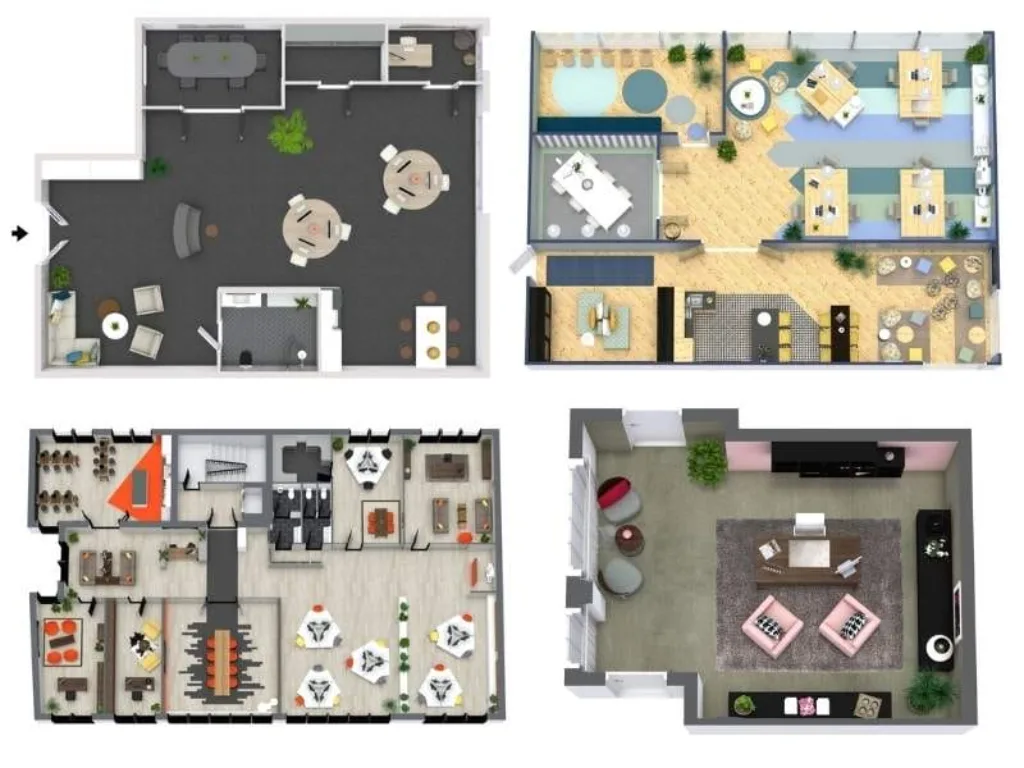
One of the most common ways buyers get short-changed in Navi Mumbai is through the confusion between Carpet Area and Built-up Area. Despite RERA making it mandatory to sell on Carpet Area, many brochures in developing nodes still highlight the “Super Built-up Area” to make the flat seem larger and the price per square foot seem lower.
In areas like Kamothe, where property rates range between ₹10,000 to ₹14,000 per sq ft, a buyer might think they are getting a steal, only to realize that the actual usable space is 30-35% less than what was advertised. I’ve seen families walk into their “spacious” 2 BHK near D-Mart Kamothe only to realize their king-sized bed barely leaves room to walk. This isn’t just a measurement error; it’s a calculated move to inflate perceived value.
Always ask for the RERA Carpet Area. If the developer talks about “Loading” or “Saleable Area” more than the actual floor space, consider it a yellow flag. In Navi Mumbai, a 1 BHK should ideally give you at least 420-450 sq ft of pure carpet. Anything less being sold at “market rates” is a compromise on your lifestyle.
| Red Flag | What Developers Claim | Actual Risk | Affected Areas |
|---|---|---|---|
| Selling Without Approvals | Plans under process, early booking benefit | Construction delays or cancellation | Taloja, Ulwe, Pushpak Nagar |
| Guaranteed ROI Schemes | Fixed 8 to 12 percent returns | Illegal under RERA, no legal protection | Dronagiri, Ulwe |
| Infrastructure-Based Selling | Airport or Metro price boom | Timeline uncertainty affects returns | Pan Navi Mumbai |
| OC-less Possession | Move in early, save on rent | Illegal stay, no water connection, resale issues | Kharghar, Ulwe |
OC-less Possession Offers and Their Long-Term Risk
One of the most emotionally confusing situations buyers face is when developers offer possession without an Occupancy Certificate (OC). On paper, it sounds like a shortcut to happiness. After years of waiting, someone hands you keys and says you can shift immediately. Families often accept because rent pressure, EMI burden, and social expectations quietly push them to say yes.
In Ulwe Sector 19 and parts of Kharghar fringe areas, several buyers accepted OC-less possession because projects looked physically complete. Property rates there hover between ₹13,000 to ₹19,000 per sq ft depending on connectivity. With markets like Charli Market and Rameshwar Super Store running smoothly, the society feels ready. But legally, living without an OC means water connections are often temporary, property registration is complicated, and resale challenges remain hanging like a cloud.
Most buyers realise the seriousness only when they try selling or taking home loan top-ups later. Banks frequently reject loans for OC-less properties. Electricity and water connections are often charged at commercial rates, increasing monthly expenses silently. Shifting into a house without an OC is like celebrating a wedding before legal registration. Emotionally satisfying, but legally risky.
Misuse of CIDCO NOC Claims by Developers

CIDCO involvement automatically builds trust among buyers. Developers know this emotional trigger extremely well. Many advertisements loudly mention “CIDCO NOC approval,” making projects sound government-backed even when approvals are partial or related only to land transfer, not construction permissions.
Pushpak Nagar is currently one of the most aggressively marketed zones because of airport proximity. Property prices there range between ₹9,500 to ₹14,500 per sq ft depending on the sector. Buyers visiting the area often stop at small but popular spots like Shree Datta Snacks Corner or Pushpak Tea House while site visiting. That local settlement vibe makes buyers assume documentation must also be stable.
The tricky part is understanding what a CIDCO NOC actually covers. Sometimes it confirms land ownership transfer but does not guarantee building plan approval, environmental clearance, or a Commencement Certificate (CC). Buyers see the word CIDCO and assume full government security. I personally feel developers should explain approval layers more transparently. But marketing rarely likes clarity. Buyers must demand written proof of each permission stage. Verbal statements about CIDCO association hold almost zero legal weight.
False Infrastructure Narratives (Airport, Metro, MTHL)
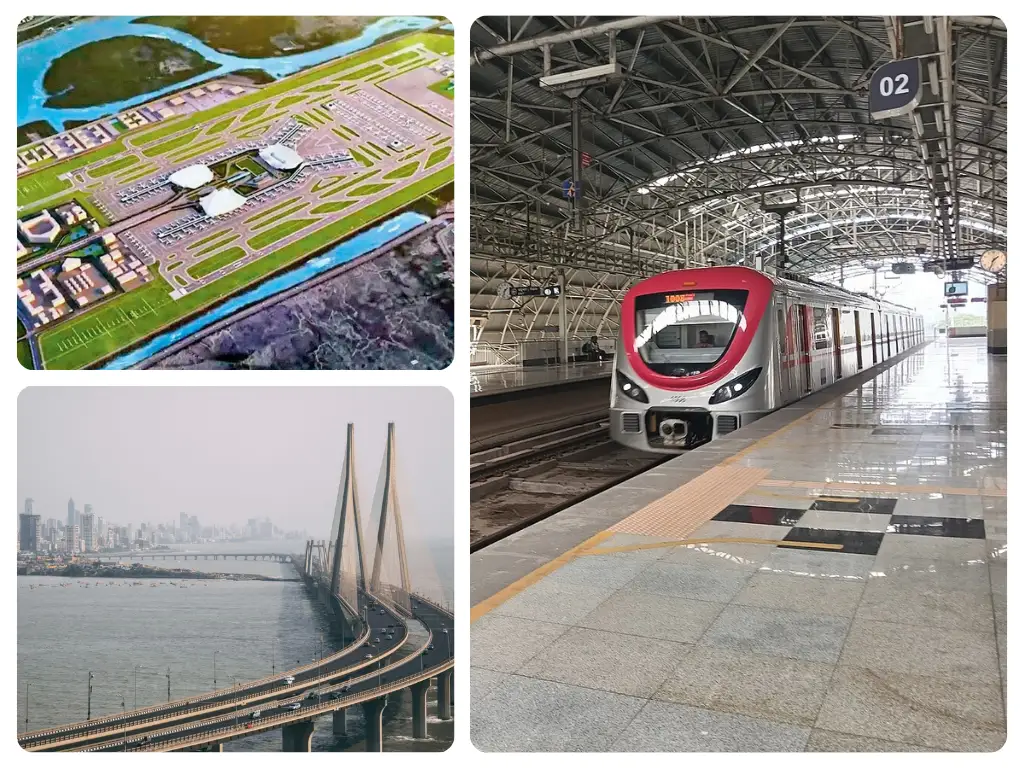
Infrastructure storytelling is probably the most powerful sales weapon in Navi Mumbai real estate. The moment someone mentions the Navi Mumbai International Airport, Mumbai Trans Harbour Link (MTHL), or upcoming Metro lines, buyer imagination automatically starts calculating appreciation graphs. I get it. Infrastructure genuinely drives growth. But timeline manipulation is where mis-selling hides.
Take Dronagiri and Ulwe. Prices there jumped significantly after airport announcements, with 1 BHK apartments currently ranging between ₹45 lakh to ₹75 lakh. Areas around Bamandongri station already have daily utility hubs like Om Sai Medical and Krishna Fast Food operating actively. These visible developments create a psychological confirmation bias among buyers.
But infrastructure completion does not always follow marketing timelines. Airport projects involve regulatory, environmental, and financial coordination that can delay execution. Metro route expansions also move through phased approvals. Developers sometimes present “estimated completion” as “guaranteed launch dates.” Investing based purely on infrastructure hype feels like planting seeds expecting fruits next month. Growth happens, but patience decides profit.
The "Sample Flat" Illusion: What You See Isn't What You Get
Have you ever walked into a sample flat in a premium Kharghar project and felt like you’re in a Bollywood movie? The mirrors are strategically placed, the ceilings are high, and there are no doors to make the rooms look bigger. This is a classic psychological tool.
In Kharghar’s upcoming sectors (34 to 37), where prices touch ₹18,000 to ₹26,000 per sq ft, sample flats are designed by top interior designers. But when you get the actual possession, the walls might be thicker (reducing carpet area), the ceiling height might be lower, and the “premium” fittings might be replaced with standard ones.
I always tell buyers: carry a measuring tape to the sample flat. Ask the sales executive exactly which items are included in the price. Often, the elegant false ceiling, the modular kitchen, and the Italian marble are “extra” or just for “representation purposes.” Don’t let the fragrance of expensive room fresheners cloud your judgment of the actual brick-and-mortar reality.
Role of Unregistered Agents in Mis-selling

Let us be honest. Navi Mumbai property buying rarely happens without brokers. Some are extremely helpful and genuinely guide buyers like family members. But the problem begins with unregistered agents who operate without MahaRERA registration and rely heavily on verbal promises.
In nodes like Kalamboli and Roadpali, where property rates currently range between ₹9,000 to ₹15,000 per sq ft, many freelance agents operate through WhatsApp groups. Buyers visiting Roadpali often see growing retail spaces like Mahalaxmi Kirana Store and Aai Mata Dairy serving residents, giving the impression of fast development. Agents use that ground activity to push urgency.
Unregistered agents usually lack accountability. If project delays, approval issues, or false ROI promises surface later, buyers struggle to trace them. Many operate on temporary phone numbers or informal partnerships with developers. I have personally seen buyers trusting agents simply because they spoke confidently or showed multiple site options in one day. Confidence sometimes feels like credibility. But without MahaRERA registration, buyers have almost no formal complaint channel.
Maintenance and Hidden Costs: The Post-Purchase Shock
Mis-selling doesn’t end at the time of booking. It often continues into the “hidden costs” phase. Many developers in Navi Mumbai attract buyers with a low base price but hide the “Development Charges,” “Clubhouse Membership,” “Advanced Maintenance,” and “Legal Fees” in the fine print.
In Taloja, a developer might quote ₹45 Lakhs for a flat, but by the time you reach the registration table, the cost has magically climbed to ₹52 Lakhs. This 15-20% jump can wreck a buyer’s financial planning. Moreover, the “Advancement Maintenance” for 2 years is often collected upfront, and yet, the society services remain poor.
Why do we accept this? Because we are already too deep into the process. We have paid the 10% booking amount, and the fear of losing it makes us sign more cheques. Genuine real estate involves transparency. If a builder doesn’t give you a “Cost Sheet” with every single rupee accounted for on day one, they are mis-selling the affordability of the project.
How to Verify Project Claims Independently
One thing Navi Mumbai buyers slowly learn, often after one bad experience, is the importance of self-verification. Developers and agents provide curated information. Independent verification brings uncomfortable truths sometimes. But uncomfortable truth is still better than comfortable fraud.
- MahaRERA Portal: This is your best friend. Check the project registration, the proposed date of completion, and if there are any litigations against the builder.
- The Site Visit Audit: Don’t just look at the flat. Look at the surrounding. Is there a dumping yard nearby? Is the access road actually owned by CIDCO or is it private land?
- Legal Scrutiny: Spend ₹10,000 to ₹15,000 on a local lawyer who understands Navi Mumbai land laws. It’s better than losing lakhs later.
- Talk to Neighbors: If the builder has completed a phase 1, go talk to the residents there. Ask them about water supply, lift maintenance, and if the builder delivered what was promised.
Sometimes I feel property buying should come with emotional counseling and legal education together. Because buyers are investing not just money but life stability. Taking two extra weeks for verification rarely hurts. Taking shortcuts often does.
Legal Remedies Available to Buyers
Many buyers assume once mis-selling happens, there is no solution. That fear keeps people silent. But Navi Mumbai buyers do have strong legal protection under MahaRERA, Consumer Court, and civil legal channels. Awareness is still low, which allows developers to misuse buyer hesitation.
If a project is delayed beyond promised timelines or approvals were misrepresented, buyers can file complaints through the MahaRERA portal. Buyers from Panvel and Kamothe areas, where property rates range between ₹10,000 to ₹16,000 per sq ft, have successfully used RERA intervention in several delayed project disputes. Daily life hubs like D-Mart Kamothe and local vegetable markets continue functioning normally, but legal disputes quietly unfold behind apartment walls.
Consumer Court allows compensation claims for financial and emotional losses caused by mis-selling. Buyers can also pursue refund claims with interest if project delivery fails. However, legal processes require patience and documentation proof. I once spoke to a buyer who fought a three-year legal battle to recover a booking amount from a stalled Ulwe project. He said something that stayed with me: “Property loss hurts financially, but betrayal hurts emotionally more.”
Conclusion
Navi Mumbai is honestly one of the most promising real estate destinations in India right now. Planned infrastructure, expanding connectivity, and growing employment zones make it attractive for both investors and end users. Watching nodes like Ulwe and Pushpak Nagar transform from dusty construction belts into lively residential clusters feels exciting.
But growth stories sometimes move faster than regulatory clarity. Buyers often get emotionally attached to future possibilities. Airport view balconies, metro connectivity promises, and smart township advertisements create beautiful mental pictures. And maybe that is where buyers need to pause.
Just pause and ask one extra question. Because a home is not just an address on a CIDCO plot; it is the sanctuary where your family’s future will live. Make sure that sanctuary is built on the truth, not just on a glossy brochure.
FAQ's
Frequently Asked Questions