
Seawoods Commercial Rates and Market Trend: Offices, Shops, Rents and Buyer Reality
Seawoods is a strong but selective commercial market, not one uniform premium zone. In early 2026, the station and Seawoods Grand Central belt is clearly priced very differently from internal sector shops, older mixed-use stock, and Palm Beach-facing visibility-led units. Office rates, shop rates, showroom pricing, and rents do not move together here. If you read Seawoods through one average number, you can easily overpay.
That difference exists because Seawoods is anchored by a transit-oriented commercial ecosystem, not a normal high-street market. L&T-linked project pages still position the area around Seawoods Grand Central as part of a 40-acre transit-oriented development with direct access to Seawoods Station and nearby offices, while Nexus Seawoods continues to describe the mall as a 1.0 million sq. ft. transit-oriented destination with 98% leasing occupancy as of December 31, 2025. That is why the commercial premium in Seawoods is real, but also why it is concentrated.
Quick summary: what Seawoods commercial pricing looks like right now
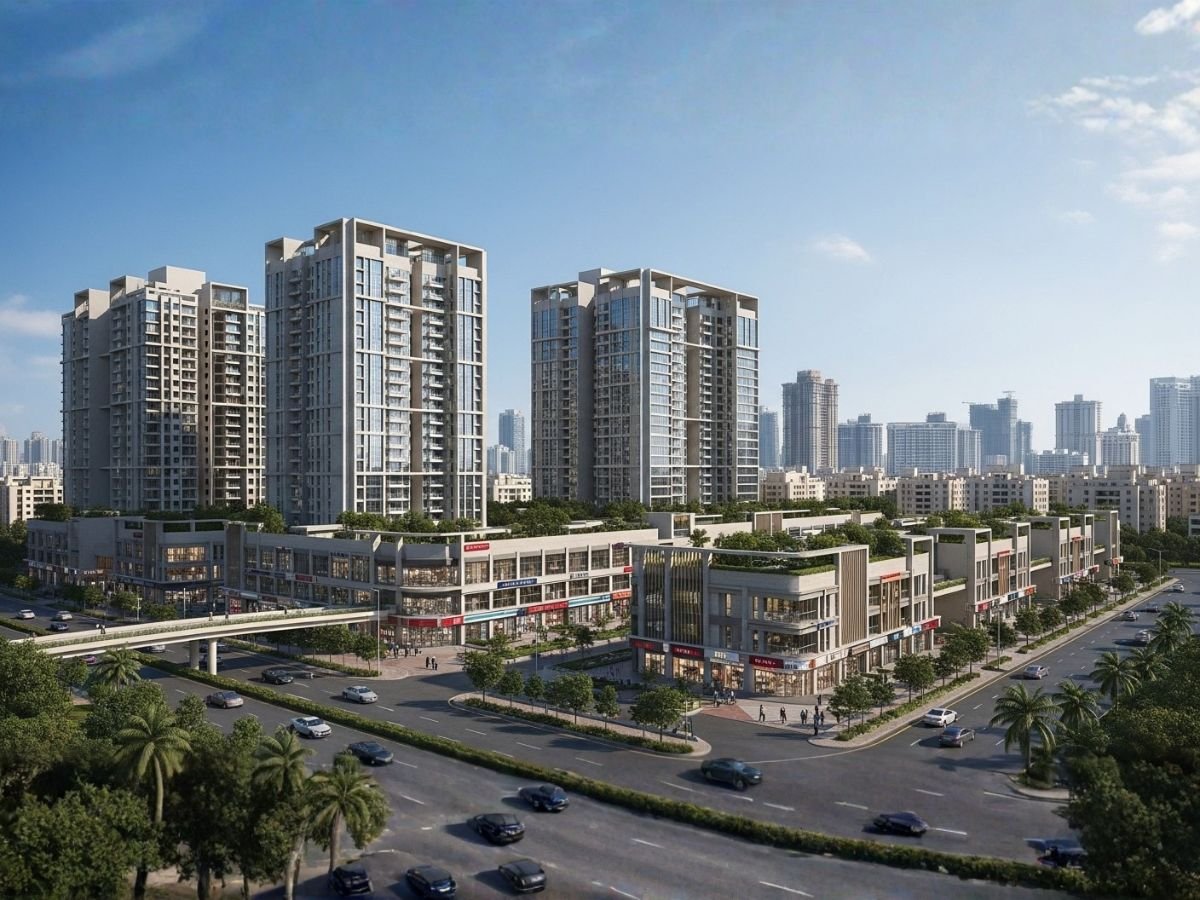
These are directional early-2026 asking and rent bands based on the approved research dossier and current market observations. They should be read as practical working ranges, not guaranteed closing values.
| Asset type / pocket | Directional asking band | Directional rent signal | Who it suits | Main caution |
|---|---|---|---|---|
| Retail shop, station / SGC influence zone | ₹60,000 to ₹72,000+ per sq.ft. carpet | Strong only where station capture, mall linkage, or true external visibility exists | Branded retail, premium services, commuter-facing business | Paying SGC-level money for a unit that is only “near” SGC |
| Internal catchment shop, Sector 44 / 50 side | ₹22,500 to ₹27,500 per sq.ft. carpet | Roughly ₹30,000 to ₹80,000 a month depending on size and frontage | Daily-needs retail, pharmacy, clinic, local service | Weak yield if sale price gets stretched |
| Grade-A office, SGC towers / premium hubs | ₹22,000 to ₹38,000 per sq.ft. carpet | Roughly ₹90 to ₹250 per sq.ft. per month depending on shell and fit-out | Corporate office, self-use professional office, selective long-hold office investor | Fit-out capex and vacancy between tenants |
| Standard office, Sector 40 / 42 environs | ₹15,000 to ₹20,000 per sq.ft. carpet | Lower and more building-specific | Small office, back office, cost-sensitive occupier | Less defensible if building quality is average |
| Palm Beach frontage retail / showroom | ₹25,000 to ₹45,000 per sq.ft. carpet | Visibility-led more than commuter-led | Showroom, clinic, branded destination business | Frontage premium collapses if access and parking are weak |
Seawoods commercial rates are strong, but they are not strong in the same way everywhere
The market is strong, but the strength is not evenly distributed. That is the first thing a buyer, tenant, or investor should settle before reading any portal listing.
A true station-led or Seawoods Grand Central-linked asset sits in one commercial reality. An internal neighbourhood shop in Sector 50 sits in another. A Palm Beach-facing showroom sits in a third. When generic pages flatten all of that into “Seawoods average commercial rate,” they stop helping the reader and start misleading them.
The core local reality is simple: Seawoods is not valuable because the whole node behaves the same way. It is valuable because certain pockets enjoy a stronger mix of station access, organised retail pull, corporate office demand, and better catchment quality than others. Recent listings and current project positioning still support that logic. SGC office inventory remains active on MagicBricks, while internal-sector shop supply is also active on Housing and 99acres. That tells you Seawoods is not a dead market. It tells you it is a segmented market.
What does “commercial rate in Seawoods” actually mean: shop, office, showroom, clinic, or mixed-use space?
It means very little unless you first separate the asset class.
A shop is priced on frontage, immediate visibility, footfall quality, and repeat spending. An office is priced on building grade, efficiency, parking, access, and tenant profile. A showroom depends heavily on clean frontage and road visibility. A clinic or fitted service unit may justify a higher operating cost because it solves an actual business need from day one.
That is why “one Seawoods commercial average” is not useful. Recent resale and rental inventory around Seawoods Grand Central itself already shows wide variation. 99acres search results currently show SGC commercial resale inventory from about ₹2.04 crore to ₹13.77 crore, with a headline price point around ₹16,997 per sq.ft. for some office stock, while MagicBricks rental listings show much larger fitted or semi-fitted offices quoted anywhere from around ₹2 lakh to ₹9.3 lakh a month depending on size, furnishing, and floorplate. These are not interchangeable assets.
Why one average rate number misleads buyers
Because it mixes unlike things.
A 300 sq.ft. ground-floor shop, a 3,400 sq.ft. fitted office, a bare-shell office floor, and a Palm Beach-facing commercial unit can all sit under “Seawoods commercial,” but the market values them for totally different reasons. If you average them together, the number may look neat, but the decision will still be wrong.
Why carpet area matters more than loose portal comparison
Commercial buyers in Navi Mumbai still get trapped by chargeable-area pricing. The practical comparison should always be on usable carpet area, not on whatever headline area makes the listing look cheaper.
That matters even more in Seawoods because some of the expensive stock here is sold on image. If the image is strong and the usable area is weaker than you thought, you can end up paying an SGC-level rate for a much weaker real unit.
Which Seawoods pockets actually command a premium, and why?
This is where Seawoods starts making sense.
Station and Seawoods Grand Central belt
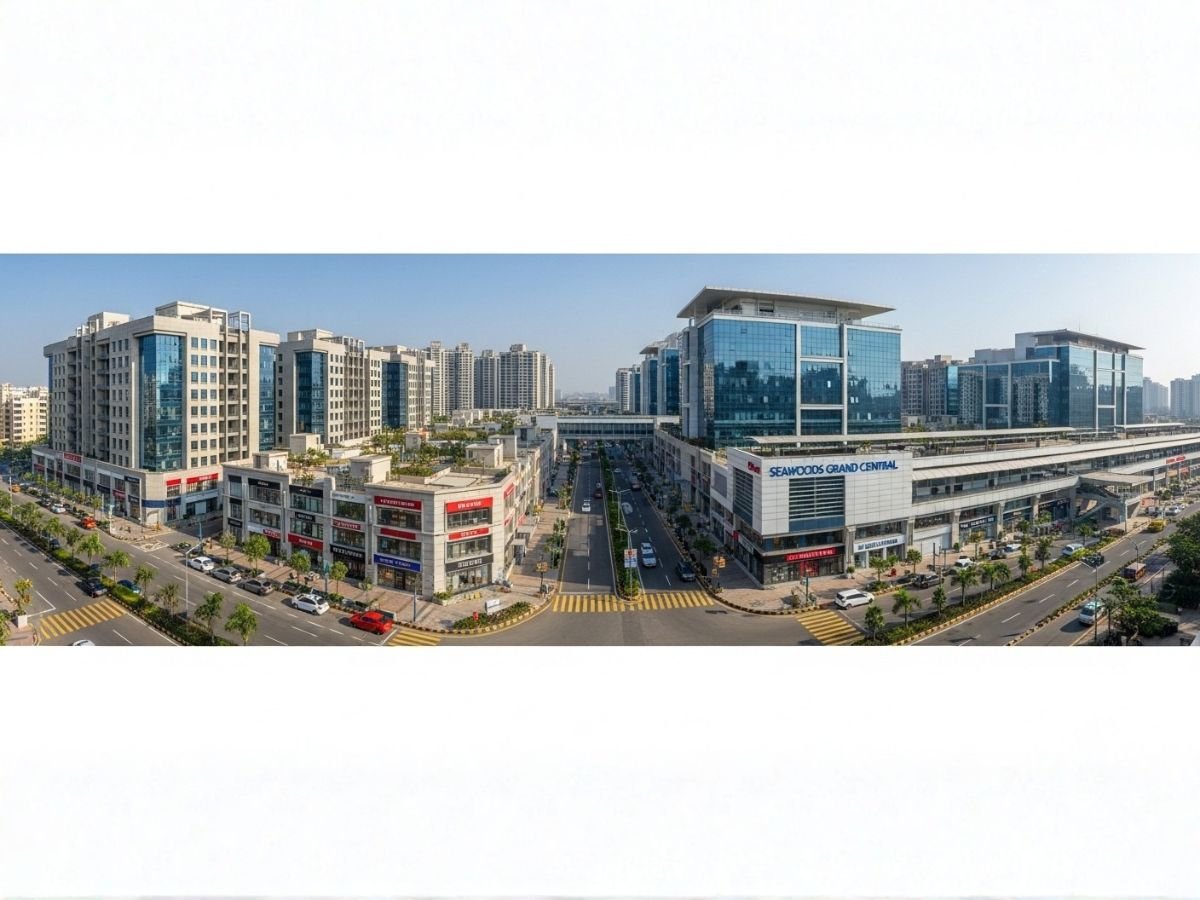
This is still the strongest commercial pocket in Seawoods for formal office demand and high-ticket visibility-led retail. The premium is not just about a famous address. It is about an integrated market structure: railway access, organised retail pull, corporate office positioning, and brand-recognition value concentrated in one zone. L&T’s official commercial page highlights direct railway integration and the Sector 40 station address, while Nexus Seawoods reports 98% leasing occupancy and over 300 stores as of December 2025. That is not a casual neighbourhood market.
But buyers should be careful here too. The SGC ecosystem creates what many local buyers misunderstand as automatic spillover. In reality, the station and mall absorb a lot of movement internally. So a shop that is technically close to Seawoods Grand Central but sits outside the real movement line may not benefit as much as the seller claims.
Internal sector shops and daily-needs pockets
Internal-sector stock in places like Sector 44A, 46, 48, and 50 follows different economics. This is more of a residential-catchment, repeat-spending, daily-needs market. It can work very well, but it should not be priced like a station belt asset.
Current portal observations support that. Housing is still showing a large live pool of Sector 50 shop inventory, and 99acres search results continue to show smaller internal shops quoted around local-use budgets such as a 700 sq.ft. unit at ₹75,000 rent and multiple active Sector 50 listings. That points to a functioning neighbourhood commercial market, not a dead one, but also not a station-led one.
Palm Beach and frontage-led commercial visibility
Palm Beach-facing commercial value comes from a different driver again: not station capture, but clean road visibility and destination-led access.
That is why this pocket suits showrooms, clinics, branded service businesses, and selected businesses that need to be seen more than they need railway footfall. Gami Palm Amore is itself being positioned in Sector 46A opposite NRI Complex with MahaRERA registration P51700052377, showing how even new mixed-use supply is trying to monetise Palm Beach-side visibility and a stronger west-side catchment story.
Are current asking prices in Seawoods actually workable, or are many of them portal ambition?
Some are workable. Many are not.
That is normal in commercial property, but Seawoods adds a branding premium on top. Sellers know the node sounds expensive, so older internal-sector stock often gets quoted as if the Seawoods name alone will carry the value.
This is where buyers make their first serious mistake. They compare a 10 to 15 year old shop in an internal lane with weak frontage to newer SGC-facing stock or strong frontage-led commercial units, then assume the seller’s number must still be reasonable because “it is Seawoods.” It is not that simple.
A good filter is this: if the seller’s pitch depends more on the Seawoods pin code than on actual business viability, frontage, tenant fit, or rent support, assume the listing is inflated until proved otherwise. In practical deal terms, portal asks often behave like opening demands, not final value. For Seawoods, that gap matters a lot.
What are rent signals in Seawoods saying about real demand?
Rent is the cleaner truth. Sale prices can stay ambitious for months. Rent usually exposes the real market faster.
Recent office rentals in Seawoods Grand Central still show meaningful leasing depth. MagicBricks listings in late March 2026 show, among other examples, a 5,706 sq.ft. carpet office at about ₹9.3 lakh per month and a 3,400 sq.ft. carpet fitted office around ₹3 lakh per month. 99acres also continues to surface large SGC office rentals above ₹4 lakh a month. That supports the view that corporate office demand in this pocket is real, even though rents vary sharply with furnishing and scale.
Internal retail tells a different story. Sector 50 shop inventory is active, but the rent bands are more sensitive to frontage, width, ceiling height, and local-use suitability. A shop in that market can still be a sensible commercial buy, but only if the rent justifies the capital value.
That is the real test. A high sale price does not automatically mean a strong asset. If the rent comes weak, the value is weak, even if the address sounds impressive.
Two easy examples of how buyers misread Seawoods
Example 1: the “Grand Central adjacency” mistake A buyer pays a station-belt style rate for a unit outside the true movement line, assuming mall energy will spill over automatically. But the shopper and commuter flow stays mostly inside the integrated retail-and-station system. The unit ends up expensive and underperforming.
Example 2: the “respectable internal shop” mistake A buyer acquires an older internal shop because the ticket size looks manageable and the area name sounds strong. But once rent is compared to acquisition cost, the gross yield is too low and the asset is only surviving on address prestige, not commercial math.
Which businesses still make sense in Seawoods at today’s pricing, and which ones should be careful?
Seawoods still works for the right business model.
High-margin or visibility-sensitive businesses can justify stronger occupancy cost here. That includes specialist clinics, aesthetic businesses, branded salons, boutique retail, destination-led services, and selected corporate or professional offices. These users are not only buying or renting space. They are buying access, perception, and customer comfort.
Lower-margin businesses should be much more careful. A routine daily-needs store, a business that survives on thin margins, or a local shop that does not really monetise high rent should usually stay in internal catchment pockets. For many of them, Sector 50 logic is healthier than SGC-zone logic.
That is not a downgrade. It is the correct use-case match.
Is Seawoods a better buy for self-use, long-hold investment, or only selective leasing strategies?
For self-use, Seawoods can make strong sense.
If a doctor buys a clinic, a founder buys an office, or a professional wants a visible long-term operating base, the purchase may still work even if the pure investment yield is not dazzling. Self-use buyers are solving an operating problem, not just chasing yield.
For a pure investor, the math needs more discipline. This is where Seawoods becomes less forgiving because hidden costs are real. CIDCO’s property-transfer fee hike came into effect from April 1, 2025, and The Indian Express reported that commercial shops faced a 50% increase in transfer fees. CIDCO’s leasehold model also means it does not issue a no-objection certificate for sale until the transfer charge is paid. On the holding-cost side, NMMC-linked property-tax explainers based on the civic formula continue to show non-residential property tax at 68.33% of rateable value, not of gross rent, but that still materially reduces net yield.
So the practical answer is:
- Self-use buyer: often yes, if the micro-location solves a real business problem.
- Long-hold office investor: selective yes, especially in better office stock with real leasing depth.
- Blind internal-shop investor at stretched pricing: caution.
What local signals should you watch before calling the Seawoods market strong, overheated, or worth entering?
Do not read market trend only from asking rates. That is lazy and dangerous.
Watch occupancy depth, tenant quality, and whether the new supply entering the node is stronger or weaker than the resale stock you are considering. Tricity Promenade continues to market its Seawoods project with shops on the ground floor, and Palm Amore is also being sold on mixed-use and location logic. Fresh supply like this matters because it can make older commercial stock look suddenly tired.
Also watch parking more seriously than most buyers do. NMMC’s 2025 parking-policy coverage shows the corporation tightening visitor-parking expectations in its updated framework. Even where the rule being discussed is broader than one individual commercial deal, the practical lesson is clear: do not treat parking as a throwaway feature. In retail and showroom property, parking friction can quietly kill value.
What must buyers verify before trusting a Seawoods commercial deal?
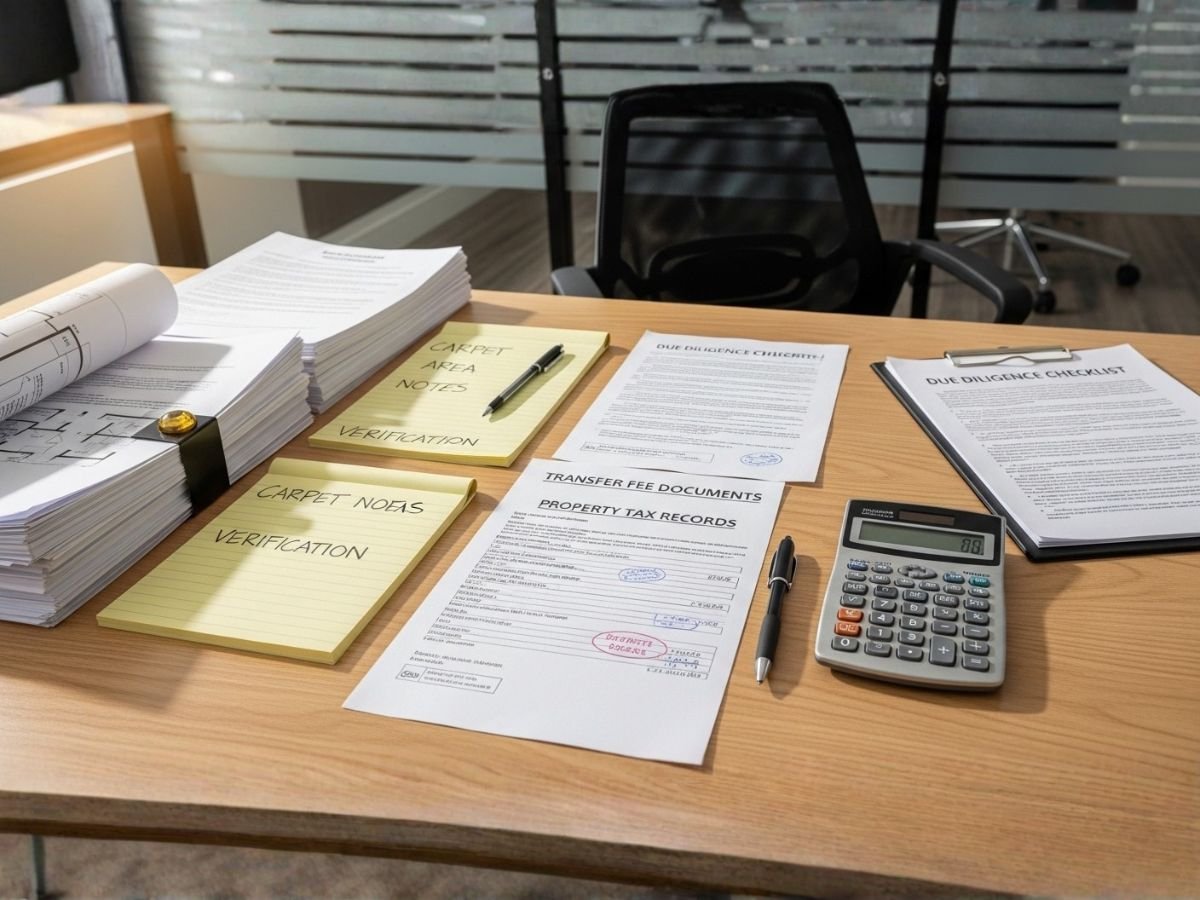
Use this as your working filter before you negotiate seriously.
The Seawoods commercial buyer’s checklist
- Compare every commercial option on carpet area, not super built-up.
- Separate the asset properly: shop, office, showroom, clinic-suitable, or mixed-use.
- Ask clearly who is paying the CIDCO transfer charge and get that in writing.
- Check the NMMC property-tax ledger, dues position, and usage classification.
- Physically verify parking allocation, not just verbal “parking hai.”
- Test whether the unit’s frontage and access actually suit your intended business.
- For under-construction or mixed-use inventory, verify the MahaRERA registration and current project status.
- Use the IGR Maharashtra eASR / Ready Reckoner only as a stamp-duty baseline, not as proof that the open-market asking price is fair.
That last point matters a lot. The official eASR platform itself says it provides only general or indicative rate information and advises users to verify rate details with the concerned office. MahaRERA remains the right starting point for project registration checks. Seawoods-linked projects like L&T West Square and Gami Palm Amore are discoverable through published MahaRERA numbers such as P51700045802 and P51700052377.
where Seawoods commercial pricing is justified, and where buyers should walk away
Seawoods is still one of Navi Mumbai’s more serious commercial nodes, but its value is hyper-concentrated.
Yes to better-quality SGC-linked offices where leasing depth, access, and brand comfort are real. Yes to Palm Beach frontage where visibility can actually be monetised. Yes to strong self-use buys where the location clearly improves business operations.
Caution for older internal shops being sold mainly on the Seawoods name. Caution for assets with weak frontage, weak parking, or weak rent support. Caution for any deal where the CIDCO fee burden, NMMC dues, or carpet-area reality is being brushed aside.
The cleanest way to read Seawoods commercial rates and market trend is this: the market is strong, but only selective assets deserve selective-premium pricing. If the unit has real station leverage, real frontage, real tenant fit, and workable rent math, the premium can make sense. If it is only borrowing the Seawoods address without those supports, it is safer to walk away.
Conclusion
Seawoods commercial rates are not difficult to understand. They just punish lazy comparison.
If you separate station-led commercial stock, internal neighbourhood shops, and Palm Beach visibility-led units, the market becomes much clearer. What looks expensive may still be justified. What looks prestigious may still be weak. That is the real Seawoods lesson.
The safest order is simple: read the pocket first, then the asset, then the rent support, and only then the asking price.
FAQ's
Frequently Asked Questions