
Shop and Showroom Investment in Navi Mumbai: Best Areas, Risks and Buying Logic
Shop and showroom investment in Navi Mumbai can work very well, but only in the right micro-market. The safest opportunities are in places where demand already exists, parking is manageable, visibility is real, and tenant use actually fits the location. Not every ground-floor commercial unit is a smart buy. In Navi Mumbai, the right decision depends on whether you are buying a small shop or a large showroom, which node you are targeting, and whether your goal is self-use, rent, or long-term capital appreciation.
Commercial retail is attractive for one clear reason: it can produce stronger rental returns than residential property. Broadly, commercial assets can generate around 6% to 8% yields, while residential assets usually stay much lower. But that number alone is dangerous. In Navi Mumbai, your real result depends on statutory costs, lease structure, frontage quality, parking, and whether the location has usable footfall or only a good sales pitch.
That is why this topic cannot be answered with generic “location matters” advice. A 250 sq. ft. shop in an occupied mixed-use pocket of Nerul is one type of investment. A 2,500 sq. ft. showroom on a visible road in Vashi or Seawoods is a completely different asset with a different tenant profile, different holding cost, and different risk.
Quick Summary
| Buyer Goal | Best Asset Type | Better-Suited Nodes | What to Watch Carefully |
|---|---|---|---|
| Steady rent from a smaller budget | Small retail shop | Nerul, CBD Belapur, Kharghar, select Kamothe pockets | Occupancy, local competition, lane visibility |
| Self-use business with long-term control | Shop or mid-sized commercial unit | Panvel, Kharghar, select growth belts | Current demand, future holding cost, access |
| Premium passive income | Main-road showroom | Vashi, Seawoods, Palm Beach influence zones | Parking, tenant covenant, overpricing |
| Appreciation-led long hold | Select shop units in growth corridors | Ulwe, Panvel-side expansion zones | Immediate rent may stay weak |
| Short-term flipping | Usually weak strategy | Very selective only | CIDCO transfer fees, exit friction, vacancy risk |
Is shop or showroom investment in Navi Mumbai actually a good idea right now?
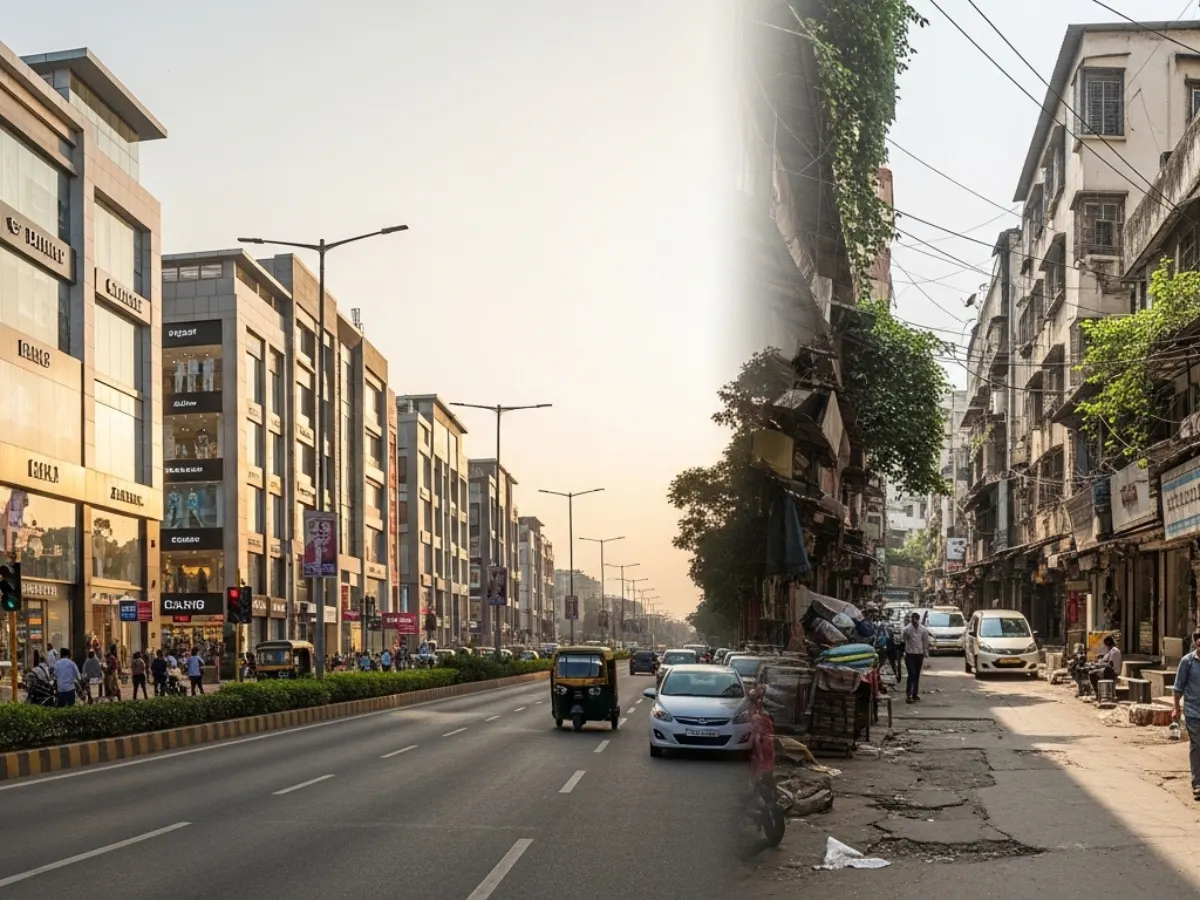
Yes, but only selectively. The broad commercial story is positive, because Navi Mumbai has matured beyond being only a residential extension of Mumbai. It now has stronger independent business activity, formal retail, office movement, transit-linked growth, and large infrastructure support from the Mumbai Trans Harbour Link, the airport corridor, and connected Panvel-side expansion.
Still, the commercial retail market is not uniformly healthy. Good high streets, organised mixed-use developments, and established catchments continue to perform. Weak podium retail, poorly designed strata spaces, and old underperforming retail blocks can remain vacant for long periods. In simple words, a commercial unit is not good just because it is on the ground floor or because a broker calls it “prime.”
A good retail investment in Navi Mumbai should usually pass four basic tests:
- people can actually see it
- people can easily reach and stop there
- the tenant type fits the area
- the price is not disconnected from practical rent
If even one of those breaks badly, the investment weakens quickly.
What is the difference between a shop investment and a showroom investment in Navi Mumbai?
This is where many buyers go wrong. They use both words as if they mean the same thing. They do not.
A shop usually works on daily or frequent neighbourhood demand. It is smaller, easier to lease to essential-service or convenience-oriented tenants, and more dependent on nearby residential occupancy. A showroom is a larger, more capital-heavy commercial asset that depends on visibility, road presence, parking, brand appeal, and stronger tenant quality.
Shops usually depend on repeat neighbourhood demand
A retail shop in Navi Mumbai is commonly in the 150 to 500 sq. ft. range. It is suitable for pharmacies, salons, mobile repair, small cafes, clinics, ATM space, or service-led businesses. Its success usually depends on regular nearby usage, not destination travel.
That means a shop can work in a strong internal market if the catchment is active and the use is right. But if the surrounding society is under-occupied, the lane is blind, or the tenant type is wrong, the unit can stay stuck.
Showrooms depend more on visibility, frontage, parking, and brand-fit
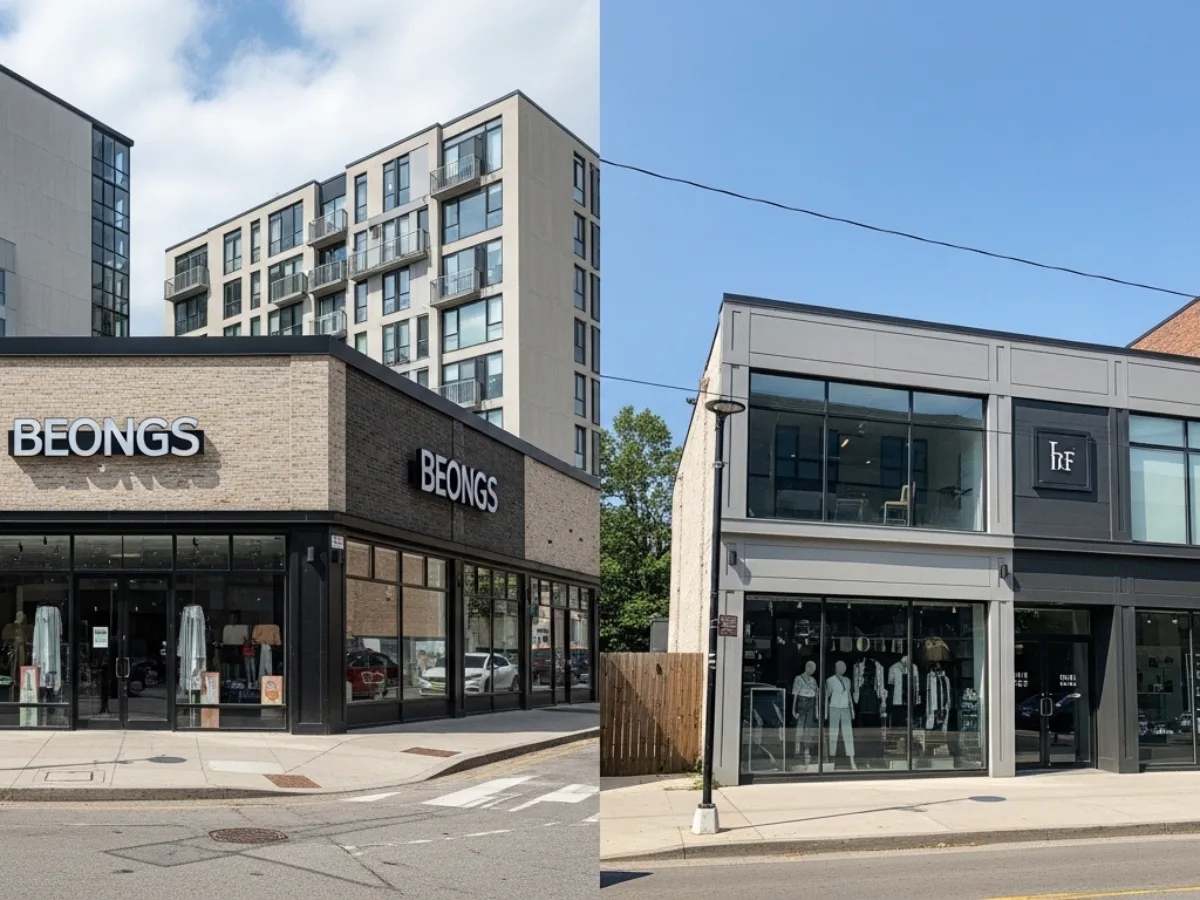
A showroom is a different game. These spaces are usually much larger, often 1,000 sq. ft. and above, and need more than just population around them. They need road visibility, signage, vehicular access, parking convenience, higher ceilings, and sometimes heavy power or loading-unloading support.
This is why a showroom on a weak internal road in an emerging node can be a serious mistake. Premium retail or branded tenants do not pay only for area. They pay for visibility, access, and business logic.
Which types of buyers should invest in shops, and which should look at showrooms instead?
The right asset depends less on excitement and more on who you are as a buyer.
If you are a budget or moderate investor, a smaller shop in an occupied location is usually more sensible than chasing a flashy showroom. It needs less capital, gives better flexibility, and can be leased to more common business types.
If you are a business owner tired of rising rents, buying a practical shop or medium-sized commercial unit for self-use can make sense, especially in Panvel, Kharghar, or selected growth belts where future holding can help you control occupancy cost.
If you are a high-net-worth investor looking for passive income, capital preservation, and better lease discipline, then a pre-leased showroom in Vashi, Seawoods, or another established visibility-led zone is more suitable. But the price of entry is much higher, and mistakes are more expensive.
If you are a speculative investor hoping the airport alone will turn any showroom into a goldmine, you need to be careful. That is where many people overpay.
Which areas in Navi Mumbai make the most sense for shop and showroom investment?
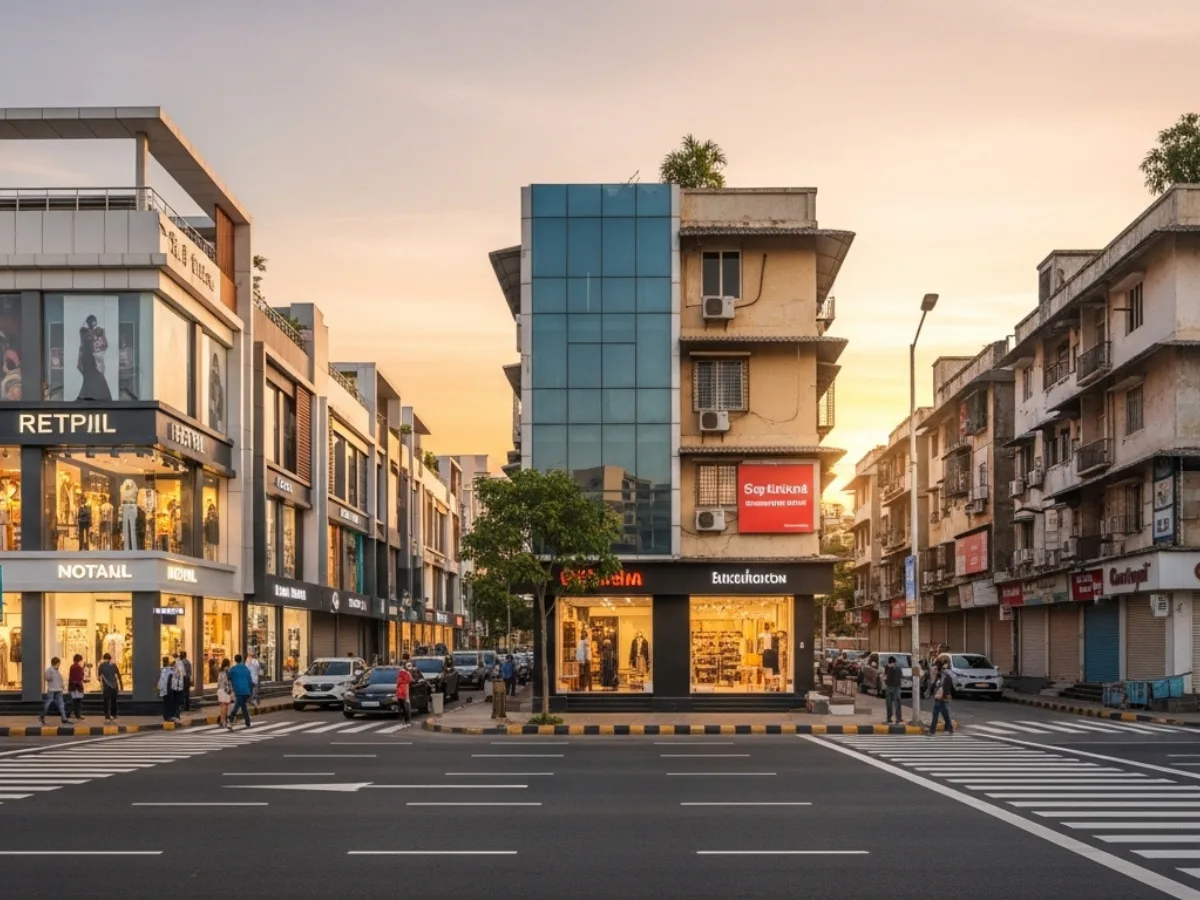
Not all nodes are playing the same commercial game. Some are established and stable. Some are growth corridors. Some are still being sold on future story.
Vashi, Nerul, Seawoods, and CBD Belapur for established catchment and stronger visibility logic
These are the safer commercial belts for investors who want real demand rather than theory.
Vashi remains one of the strongest retail-commercial locations in Navi Mumbai. Sector 17 has long functioned as a core high street and continues to hold strong visibility value. Approximate H1 2025 market ranges in Vashi were around ₹18,000 to ₹25,000 per sq. ft., with premium corners and fitted showrooms going higher.
Seawoods has become one of the premium commercial ecosystems because of the mall-led, transit-linked environment around Seawoods Grand Central. Approximate H1 2025 ranges were around ₹22,000 to ₹28,000 per sq. ft. This is a higher-ticket market, but its strength comes from better organised consumer flow and a more premium environment.
Nerul works well where there is steady residential density, practical movement, and mature local demand. It is not about one single flashy strip. It is about selective pockets where retail use fits daily life.
CBD Belapur stays relevant because of office movement, administrative importance, and more stable day-time demand. It may not always feel as premium as Seawoods, but it often works better than overhyped emerging areas for practical rent stability.
These nodes usually offer lower structural vacancy risk, though yields may look moderate on high capital values.
Kharghar and Panvel for selective growth-linked retail demand
Kharghar is one of the more balanced markets in Navi Mumbai. It has institutions, families, planned roads, and a growing commercial ecosystem. Approximate H1 2025 ranges of ₹14,000 to ₹18,000 per sq. ft. place it below Seawoods or Vashi, but the logic can still be strong when the unit sits in the right road-facing or mixed-use environment.
Panvel is different. It is a transport gateway, a growth market, and a business-use market. It suits self-use buyers, practical mid-ticket investors, and those who understand that the value here comes from long-term area growth and expanding occupancy, not instant premium-brand leasing everywhere.
Ulwe, Kamothe, and other emerging belts where pricing must be checked carefully

Ulwe is where many buyers get carried away. It has visibility because of the airport narrative, Atal Setu connectivity, and broader infrastructure story. Approximate H1 2025 commercial pricing around ₹9,000 to ₹12,000 per sq. ft. may look attractive versus core nodes. But the important point is this: lower entry price does not automatically mean strong current retail demand.
Ulwe can make sense as a long-term appreciation play in selected formats, especially smaller retail tied to improving occupancy. But large showrooms there often carry more promise than present-day leasing strength.
Kamothe and similar belts can work for practical shop investments where the surrounding catchment is already active. But the buying logic should stay local and use-case based. Do not assume all growth corridors deserve showroom-level pricing.
What makes one commercial retail location strong and another weak, even inside the same node?
This is often the difference between a productive asset and dead capital. Two units in the same sector can perform very differently.
A strong retail location usually has real frontage, practical parking or stopping ability, convenient entry and exit, and the right catchment behaviour. A weak one may look close on a map but fail in real daily use.
A unit on a visible corner road can attract better tenants than a cheaper unit just 50 metres inside a blind lane. That sounds unfair, but retail works like that. Customers do not study maps. They choose convenience.
In Navi Mumbai, this becomes even more important because many projects sell podium or ground-floor commercial space based on total society population. But if the road outside is narrow, congested, or unusable for quick stopping, the retail logic becomes weak.
A good buyer should always check:
- main-road or secondary-road visibility
- whether a car or bike can stop without chaos
- whether the surrounding catchment is residential, office-led, or mixed
- whether the likely tenant needs daily footfall or destination visits
- whether the road width and layout support real dwell time
When does showroom pricing make sense, and when are you just paying for frontage hype?
Showroom pricing makes sense only when the location can actually support showroom-grade tenants. That means the asset should have road presence, visitor convenience, signage value, parking logic, and a catchment with enough spending power or destination demand.
This is where some buyers overpay badly. In newer residential projects, developers often price ground-floor commercial units at a premium because they face a road and look polished. But premium showroom pricing is not justified by appearance alone.
A large road-facing unit in a low-density or still-maturing area may not attract the kind of national or organised tenant needed to support that premium. The market has already shown that simply building commercial space does not create commercial demand. Older underperforming malls and weak strata-retail formats across the region are reminders of that.
So before paying a frontage premium, ask one practical question: Would a serious tenant actually choose this location over an established high street or organised mall environment? If the answer feels doubtful, the price may be hype.
Is rental income from shops and showrooms in Navi Mumbai stable enough for investors?
It can be stable, but the stability comes from tenant quality and lease structure, not from the word “commercial.”
Smaller local shops can rent out faster in the right catchment because their ticket size is lower and tenant pool is wider. But they also face more churn. A pharmacy, clinic, or essential service tenant is usually safer than a trendy concept tenant.
Showrooms are more stable only when leased to strong tenants on better contracts. A branded tenant with a longer lock-in gives far more comfort than an empty premium unit waiting for the perfect occupier.
Another major issue is gross yield versus net yield. Many investors see only the rental figure and forget the cost side. In Navi Mumbai, commercial holding costs matter. NMMC commercial property tax burden is significantly heavier than residential. Commercial properties also carry maintenance, common area charges, and in some cases other operational costs that reduce the actual return.
A gross lease where the landlord absorbs property tax and CAM can weaken your real yield over time. A more structured lease, including cases where the tenant bears more ongoing outgoings, is usually healthier for larger assets.
So yes, commercial rental income can be attractive. But in reality, it is only as stable as the tenant, the agreement, and the net cost after taxes and maintenance.
What legal and practical checks matter before buying a shop or showroom in Navi Mumbai?
This is one section no buyer should skip. Commercial mistakes are expensive, and resale friction can be much worse than in residential property.
MahaRERA, sanctioned plans, CC/OC, and actual commercial use
If the project is under construction and falls under the applicable threshold, check its MahaRERA registration and project details carefully. That helps confirm basic title and progress transparency.
Also verify the sanctioned plans, commencement-related approvals where relevant, and occupancy position for ready property. Most importantly, confirm that the unit is legally approved for commercial use. Do not assume that any ground-floor unit can be used as a shop.
Commercial activity in residential spaces without proper permissions, change-of-use framework where required, and society acceptance can create serious problems later.
CIDCO leasehold, transfer rules, and building-level restrictions

This is one of the most important Navi Mumbai-specific realities. Much of Navi Mumbai sits on CIDCO leasehold structure. That means resale transfer is not always just a matter of paying the seller and registering the document.
CIDCO transfer fee mechanics can significantly affect your total acquisition cost. As per the research dossier, commercial transfer charges saw a sharp increase effective April 1, 2025. This changes the math especially for buyers who think they can enter and exit quickly.
So before purchase, check:
- whether the property is leasehold or converted under any applicable framework
- what CIDCO transfer charges may apply
- whether NOC or other transfer formalities are pending
- whether the seller has disclosed all transfer-related liabilities
Society rules, signage, parking rights, and loading access
Commercial use is not only about title. It is also about daily operation.
Check whether signage use is practical and compliant. In Maharashtra, commercial signage rules require Marathi Devanagari presence in a prescribed manner, so branding flexibility is not unlimited.
Parking matters even more now. A unit without workable customer parking may struggle to attract better tenants. For larger showrooms, loading and unloading space also matters. If the business model involves heavy goods, local Mathadi-related labour dynamics and on-ground logistics become real operational issues, not small side notes.
Which mistakes make shop and showroom investors lose money in Navi Mumbai?
Three mistakes appear again and again.
The first is buying dead strata retail in weak malls or badly planned commercial blocks just because the unit size looks affordable. A cheap unit inside a struggling retail structure can become illiquid dead capital.
The second is believing brochure footfall instead of real footfall. A developer may talk about thousands of families in a project, but if the commercial unit faces an awkward internal lane, has no stopping point, and sits away from daily movement, the demand may never match the story.
The third is ignoring net yield degradation. This happens when buyers calculate rent but do not properly account for commercial taxes, CAM, vacancy periods, and reletting cost.
Another major mistake in current Navi Mumbai conditions is the airport fixes everything mindset. Infrastructure helps. It can absolutely improve the long-term story. But premium showroom demand usually comes later than roads, bridges, and announcements. First infrastructure improves. Then housing and regular occupancy deepen. Premium spending power follows after that. This lag matters.
Should you buy now, wait, or lease first if you are considering shop or showroom investment?
There is no one answer for everyone.
Buy now if you are targeting an established core-node asset with proven commercial logic, especially in places like Vashi, Nerul, Seawoods, or stable parts of CBD Belapur. These locations are more suitable when demand already exists and pricing is supported by practical usage.
Wait if you are being pushed toward premium showroom pricing in low-maturity belts where real organised tenant demand is still thin. This is especially relevant in speculative corridors where commercial supply is arriving faster than quality retail demand.
Lease first if you are a business owner testing a new area. This is often the smartest strategy in a still-maturing corridor. It lets you validate demand before locking heavy capital into a long-term commercial buy.
In short, established node plus real demand usually supports buying. Emerging node plus story-led pricing often supports waiting or leasing first.
Real examples: what kind of commercial retail asset makes sense for different budgets?
Here is a practical way to think about capital allocation.
A buyer with ₹60 lakh to ₹1.2 crore looking for rent should usually focus on a 250 to 400 sq. ft. shop in a location where daily-use tenants can survive. Parts of Nerul, CBD Belapur, Kharghar, and practical mixed-use belts can make sense. The goal here is not glamour. It is consistency.
A business owner with ₹1.2 crore to ₹2.5 crore looking for self-use may consider a visible, functional unit in Panvel or another strong growth corridor. Here the value is not just rent. It is control over future occupancy cost and business stability.
An investor with ₹3 crore and above looking for passive income and capital preservation can consider a larger, pre-leased main-road showroom in Vashi, Seawoods, or other premium visibility-led zones. But such buyers should be even more careful about lease structure, covenant quality, and whether the rent is actually sustainable at that price point.
A practical checklist before you invest in any shop or showroom
Before paying token or finalising terms, check these points properly:
- Is the unit legally approved for commercial use?
- Is the project registered on MahaRERA where applicable?
- What is the exact leasehold or transfer status under CIDCO?
- What transfer fees or NOC costs may apply?
- Does the unit have usable frontage or just map visibility?
- Can customers stop, park, and access it easily?
- Is the likely tenant type suitable for this exact location?
- Are property tax and CAM outgoings already factored into your yield calculation?
- For large showrooms, is loading-unloading practical?
- Are you buying for current income or future story, and are you being honest about that?
conclusion
Shop and showroom investment in Navi Mumbai can be a strong move, but only when the buyer respects the difference between a practical retail asset and a brochure-led commercial trap. Small shops work best where daily residential or mixed-use demand is already active. Large showrooms work only in select visibility-led locations where parking, frontage, and tenant quality support the premium.
For most investors, the safest path is not chasing the biggest story. It is buying the most usable asset. In Navi Mumbai, that usually means choosing real catchment over hype, net yield over headline yield, and location logic over glossy frontage. If the unit can attract the right tenant today or in a realistic time frame, the investment can work. If the buy depends entirely on future hope, then caution is not optional.
FAQs
Frequently Asked Questions