
Shop vs Office Investment in Kharghar: Which Commercial Buy Makes More Sense?
For most investors in Kharghar, a small or mid-sized office usually makes more sense than a shop. The reason is simple: office demand is broader, leasing is usually more stable, and the investment depends far less on perfect frontage and perfect footfall. A shop can still beat an office, but only in selected Kharghar pockets where daily catchment, access, parking, and real conversion are already proven. Kharghar is not one single commercial market, and that changes the answer completely.
If you came here looking for one straight answer, this is it: office is the safer default, shop is the sharper but more selective bet.
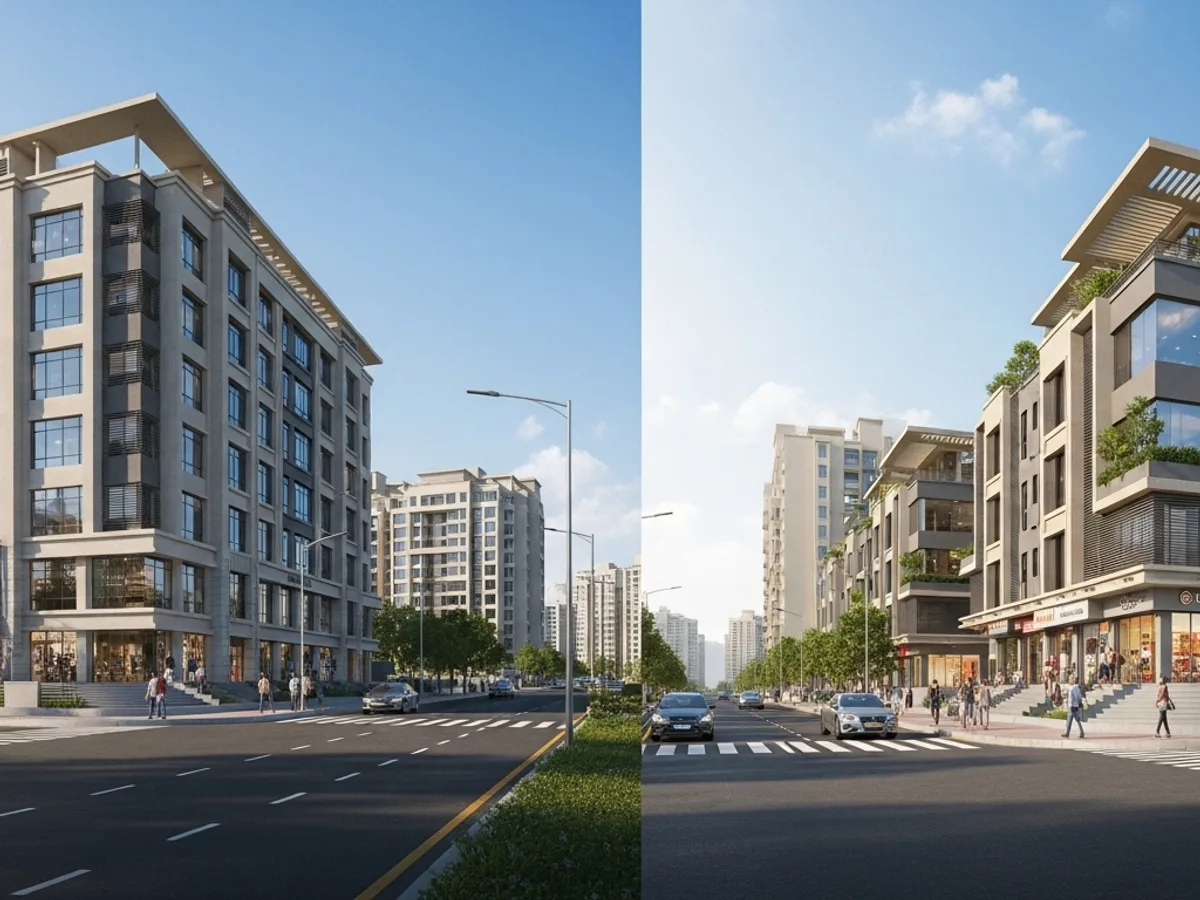
Shop or office in Kharghar: which commercial investment usually works better?
The biggest mistake in this topic is treating both assets as if they behave the same way. They do not.
A shop in Kharghar can look more attractive because the quoted yield is often higher. In many cases, retail sellers and brokers push the usual 6% to 8% gross-yield story. Offices, by comparison, are more often positioned in the 4% to 6% range. But gross yield is not the same as net realized return. Once you factor in vacancy, fit-out negotiation, rent-free periods, maintenance burden, and tenant replacement friction, the gap can shrink very quickly. That is exactly why so many first-time buyers misread commercial property.
Quick summary
| Factor | Office Space in Kharghar | Shop Space in Kharghar |
|---|---|---|
| Default fit for most investors | Better | More selective |
| Typical gross yield story | Usually lower | Usually higher |
| Tenant demand depth | Broader | Narrower and category-specific |
| Dependence on perfect location | Moderate | Extreme |
| Acceptable upper-floor use | Yes | Usually no |
| Vacancy risk | Moderate | Binary and location-sensitive |
| Fit-out reuse | Usually easier | Often more category-specific |
| Best use case | Passive investor, first-time commercial buyer, self-use + lease fallback | Experienced buyer with a proven retail pocket and patience |
So if your question is not emotional but practical, office wins for most people, while shop wins only when the micro-location is already doing the hard work for you.
Why the answer changes so much inside Kharghar
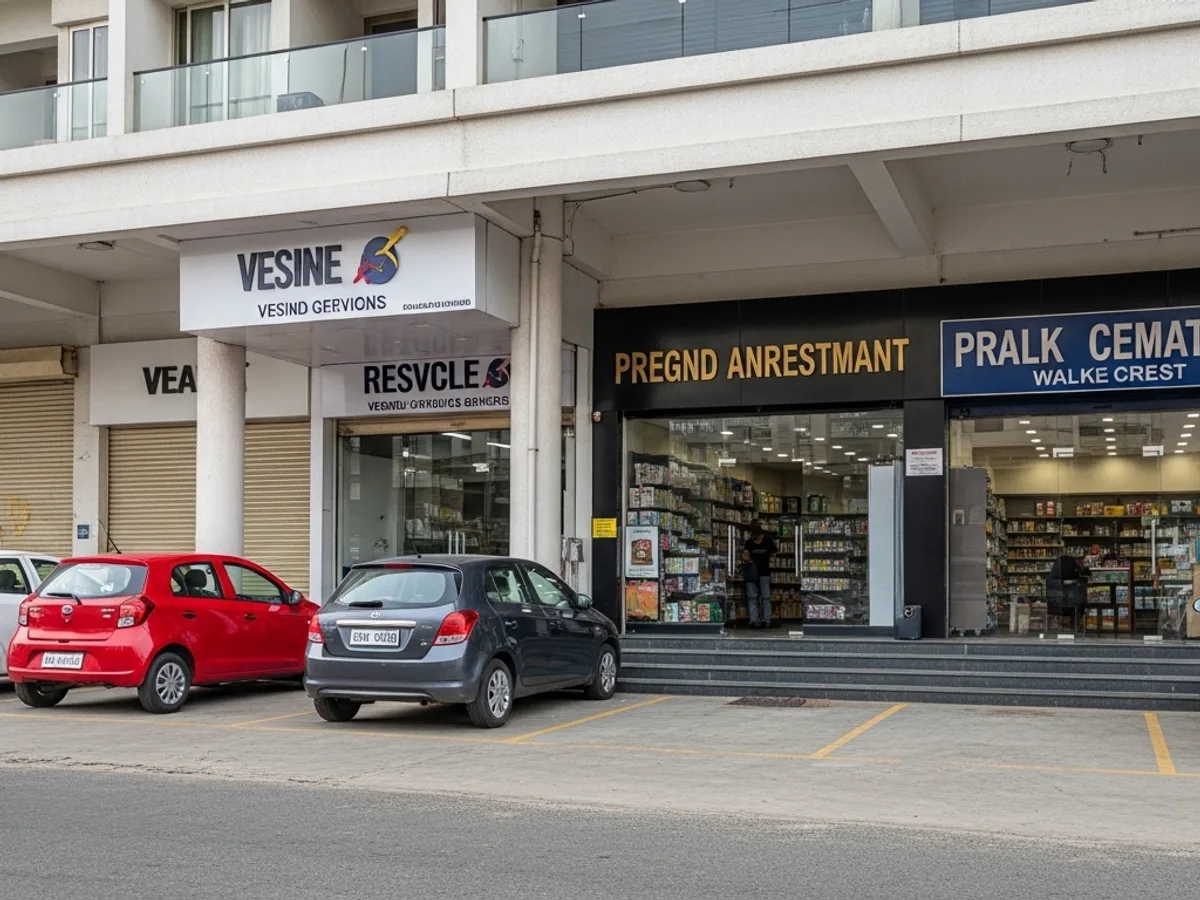
Kharghar is planned, but it is not commercially uniform. One sector can behave like a transit-led office market, another like a residential support market, and another like a selective retail strip.
That is why generic pages fail on this subject. They say “Kharghar commercial is good” without telling you where, for what, and for whom.
Station-linked retail pockets are not the same as office towers
Metro access and highway connectivity matter to both shops and offices, but not in the same way. For offices, transit access is a core leasing advantage because employees, clients, and small teams can actually use it every day. Navi Mumbai Metro Line 1 on the Belapur to Pendhar corridor is an operational reality, and metro-linked properties in the wider market have been associated with a clear premium. That helps office resilience more than it helps weak retail.
Residential catchment pockets reward some shops but not all
A shop near dense households, clinics, schools, or student-heavy movement can work very well. But a destination retail concept in a quiet residential belt may struggle even if the space looks good on paper.
Formal office buildings create a different leasing market
Kharghar is no longer just a place where people sleep and commute to Mumbai. NMIA was inaugurated in October 2025 and commenced commercial operations on December 25, 2025, while airport-linked logistics and corporate activity has already started building around the region. That broader formalization supports office demand much more directly than it supports random retail speculation.
When a shop in Kharghar makes more sense than an office
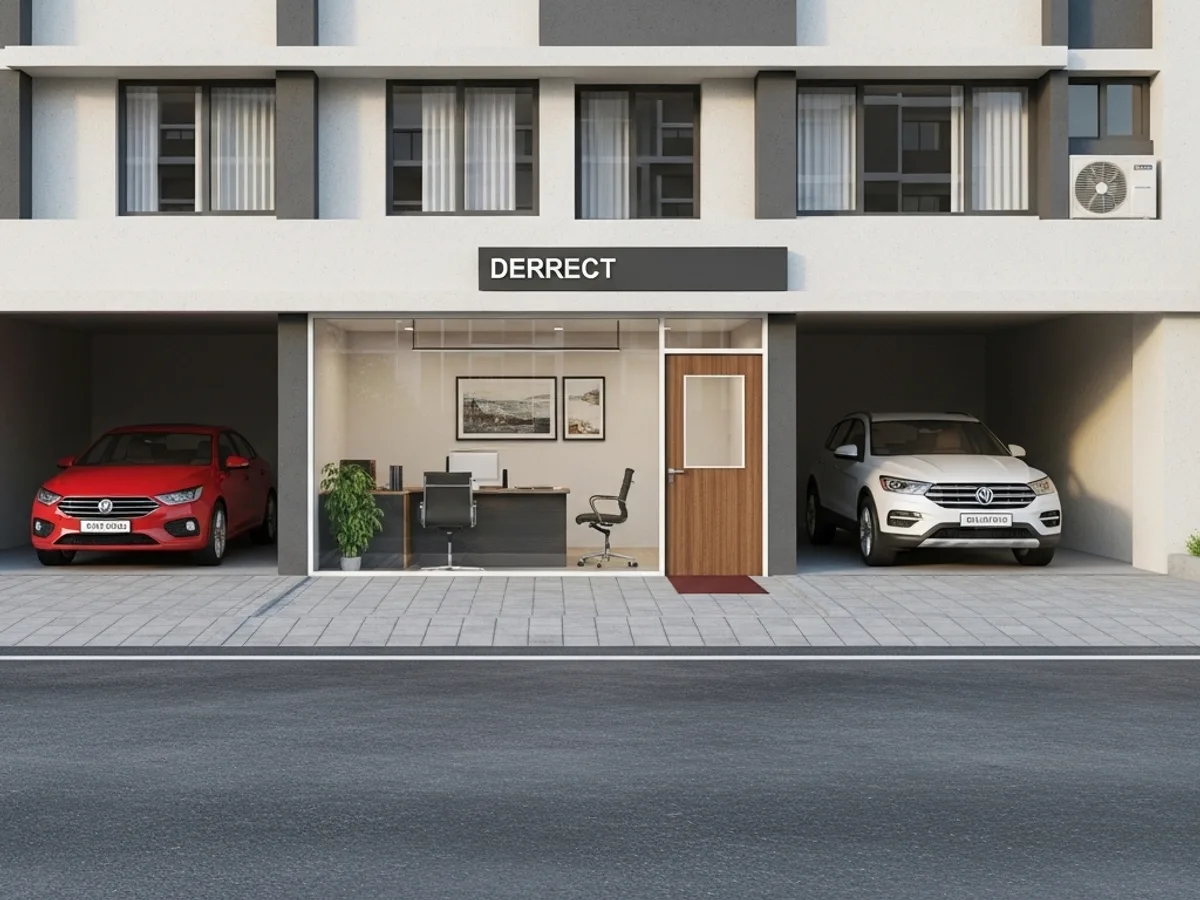
A shop in Kharghar makes sense only when the retail logic is already visible on the ground, not just in a brochure.
Daily-needs retail and service categories
Pharmacy, clinic, grocery, diagnostic, bakery, salon, compact food service, stationery, and daily-utility businesses are the usual categories that can survive and repeat in the right Kharghar pocket. These are not glamour categories, but they are often the categories that actually pay rent.
Ground-floor visibility with repeat residential catchment
A ground-floor shop is useful only when people can actually stop, park, enter, and return. That is the difference between visibility and usability.
This is where sectors like Sector 20 and some parts of Sector 12 become relevant in a real-world way. Listing-level market signals show active shop inventory and meaningful pricing in Sector 20, which supports the idea that it functions as one of Kharghar’s more established retail-service belts. But even there, one building can outperform another sharply based on frontage and access.
Buyers who can tolerate longer vacancy for better unit economics
If you are experienced, have holding capacity, understand local business categories, and can sit through vacancy without panic, then a shop can be a strong cash-flow asset.
But that only works when the shop is in a proven retail street or service pocket. Buying a shop in an unproven strip just because it is ground floor is not investing. It is guessing.
When an office in Kharghar makes more sense than a shop

This is the section most first-time commercial buyers need.
First-time commercial investors
If you are moving from residential investment into commercial, office is usually the better entry point. Why? Because office demand does not require perfect street drama. It requires acceptable building quality, access, connectivity, usable layout, and a realistic ticket size.
Smaller ticket-size investors seeking easier leasing depth
A compact office can appeal to consultants, branch teams, back-office users, training operators, service firms, clinics, and small businesses. That is a much wider occupier base than a category-sensitive retail shop.
Sector 10 is a good example of why this matters. Current listing signals continue to show office-led stock and pre-leased office opportunities in and around Sector 10, with clear investor attention around this micro-market. That does not prove achieved rent on every unit, but it does support the idea that the sector behaves more like an office-led commercial pocket than a random retail strip.
Buyers targeting consultants, back-office, clinic, training, or service users
Offices are also easier to underwrite because the user logic is simpler. A consultant or clinic does not need highway spectacle. It needs access, signage, decent maintenance, and client convenience.
That is why a small office can often be easier to lease than a weakly placed shop.
Shop vs office in Kharghar on the factors that actually matter
Here is the comparison that actually matters more than brochure language.
| Evaluation Metric | Office Space in Kharghar | Shop Space in Kharghar |
|---|---|---|
| Typical gross yield | Usually around 4% to 6% | Usually around 6% to 8% |
| Tenant profile | Consultants, clinics, startups, service firms, branch offices, back-office users | Grocery, salon, pharmacy, café, diagnostics, category-specific retail |
| Location dependency | Moderate | Very high |
| Vacancy profile | Usually manageable if ticket size and building are practical | Can be excellent or disastrous depending on frontage and conversion |
| Upper floor usability | Acceptable | Usually weak |
| CAM impact during vacancy | High but manageable if vacancy is short | High and painful if the shop sits empty |
| Fit-out reuse | Often easier | Often costly after tenant exit |
| Best sectors in principle | Transit-linked and office-led pockets | Dense retail-service pockets with true access |
A few things matter here.
First, commercial maintenance is not optional. If your unit is vacant, you still keep paying. MahaRERA’s threshold rules are clear on project registration triggers, and commercial projects above the relevant threshold need formal scrutiny. At the same time, society and maintenance liabilities in commercial buildings remain one of the most ignored costs by first-time buyers.
Second, fit-out risk is real. Office fit-outs can be expensive, but many office layouts are reusable. Retail fit-outs are often more destructive. A salon, café, medical store, and boutique do not leave behind the same reusable shell. So when the tenant exits, the landlord often pays again.
Third, vacancy drag destroys the yield story. A shop that promises 8% gross yield but stays empty for four months, while you keep paying CAM and maybe even property tax and brokerage, can quickly become less efficient than an office that quietly runs on a stable multi-year lease.
Which parts of Kharghar generally suit offices better, and which parts suit shops better?
This is not a rigid map. It is a practical one.
| Kharghar pocket type | Usually better for | Why |
|---|---|---|
| Sector 10 and similar transit-linked office pockets | Offices | Better corporate fit, access advantage, stronger formal workspace logic |
| Sector 20 retail-service belts | Shops | Better catchment, established shopping/service behavior, stronger ground-floor use |
| Sector 12 neighborhood daily-needs zones | Selective shops | Works for utility retail, clinic, pharmacy, neighborhood service |
| Student-influenced pockets around education ecosystems | Small shops and service retail | Food, stationery, low-ticket service demand can repeat |
| Mixed-use buildings away from proven catchment | Offices or neither | Building quality and access matter more than the sector label |
This is the real Kharghar answer. Offices cluster around movement and formal access. Shops survive on repeat behavior and stopping power.
The biggest mistake buyers make: assuming every ground-floor shop is a strong investment
Ground floor is not the moat people think it is.
A shop facing a fast road without service-lane logic, easy stopping, or practical parking can become a dead frontage. It is visible, yes. But that visibility does not convert into actual customers. This is one of the most dangerous traps in new commercial selling across Navi Mumbai, especially when “highway-facing” becomes the main sales pitch.
A driver seeing your signage at speed is not the same as a customer entering your shop.
That is why you should judge a shop by:
- entry and exit ease
- service lane logic
- stopping capacity
- nearby parking reality
- surrounding business mix
- repeat catchment, not just passing traffic
The second big mistake: comparing shop yield and office yield without comparing vacancy reality
This is where many commercial calculations become fiction.
A retail buyer hears “8% return” and assumes that number runs for 12 months. But real commercial leasing rarely behaves that neatly. You may face:
- vacancy while searching for a tenant
- fit-out time before rent starts
- negotiation on deposit and lock-in
- rent-free fit-out period
- CAM outgo during all of the above
So the better question is not “which gives higher quoted yield?” The better question is: which asset gives the better net realized yield after friction?
In many practical Kharghar cases, the answer is office.
Who should buy a shop in Kharghar, and who should avoid it?
A shop in Kharghar may suit you if:
- you already understand local retail categories
- you are buying in a proven service or retail pocket
- the unit has genuine accessibility, not just visual exposure
- you can hold through vacancy without stress
- you are comfortable with tenant turnover and refit risk
Avoid shop investment if:
- this is your first commercial purchase
- your budget is tight and vacancy will hurt you
- you are buying in an emerging strip just because it looks cheap
- you are depending only on broker yield promises
- you are not checking whether the surrounding retail actually trades well
Who should buy an office in Kharghar, and who should avoid it?
An office in Kharghar may suit you if:
- you are a first-time commercial investor
- you want broader tenant demand
- you prefer lower day-to-day friction
- you want self-use plus lease fallback flexibility
- you are okay with a slightly lower gross yield for a more practical risk profile
Avoid office investment if:
- you are buying a very large floorplate without understanding resale friction
- the building has weak access, poor maintenance, or odd layouts
- you are depending on appreciation alone without leasing logic
- you have not checked whether similar units in the same building are actually getting absorbed
What to check before buying either one in Kharghar

This is the due diligence section that matters more than any brochure.
Title, approvals, and occupancy status
If the project crosses the legal registration threshold, check it on the official MahaRERA portal and do not rely on a broker saying “RERA approved.” The portal and promoter guidance are clear that projects above the threshold must be registered, and the approved usage matters. If the sanctioned documents do not support the commercial use being promised, you are taking unnecessary risk.
Society, maintenance, signage, and usage restrictions
Commercial maintenance can become a major hidden burden. Also check:
- signage restrictions
- operating-hour restrictions
- loading/unloading practicalities
- whether the society or building format is actually shop-friendly or office-friendly
Parking, loading, and actual user convenience
This point is simple. If people cannot come comfortably, the asset underperforms. That applies to both shops and offices, just in different ways.
Asking rate vs achieved rent logic
Do not buy on asking price and quoted ROI alone. Current listing signals show meaningful variation even inside Kharghar: office listings in Sector 10 are visible at around the high teens to low 30-thousands per sq ft, while active shop stock in Sector 20 often sits around the upper 20-thousands to 30-thousands per sq ft and above depending on frontage and size. These are asking-side signals, not transaction truth. Use them only as market reference points, not proof of achieved value.
CIDCO transfer charge reality
This is where Navi Mumbai becomes different from many freehold markets. CIDCO’s revised transfer fee structure took effect in April 2025, and multiple reported summaries show sharp commercial transfer charges, with very high figures for larger commercial properties. That matters because it can hurt liquidity, especially if you are buying a large asset and assuming easy flipping later. This is one more reason compact, usable commercial units often make more practical sense than oversized speculative inventory.
A simple way to judge the deal: the C-A-R-E test
Before buying either a shop or an office in Kharghar, run this quick filter:
C – Connectivity Is the property actually easy to reach for the end user?
A – Absorption Are nearby similar units getting occupied, or are many still lying empty?
R – Rental reality What is the realistic net yield after maintenance, vacancy, and negotiation friction?
E – End-user demand Who exactly will rent this unit in this exact pocket?
If you cannot answer all four properly, you are not ready to buy that commercial unit.
Conclusion: for most investors in Kharghar, which is the smarter buy today?
For most buyers, office is the smarter commercial investment in Kharghar today.
Not because offices are glamorous. Not because shops are bad. Simply because offices usually give you a more forgiving investment structure: broader tenant demand, lower dependence on perfect frontage, better fit for first-time commercial buyers, and more stable leasing logic in a node that is becoming more institutional and employment-led. NMIA’s operational start, metro connectivity, and the wider formalization story all strengthen that office case.
A shop can absolutely outperform. But only when it sits in a proven retail pocket with real stopping power, real repeat catchment, and real tenant-category fit.
So the practical answer is this:
Buy an office if you want the smarter default. Buy a shop only if the exact location has already earned that confidence on the ground.
FAQs
Frequently Asked Questions