

Shop vs Office Investment in Panvel: Which Commercial investment is best?
In most Panvel cases, an office is the safer commercial investment, while a shop is a selective high-upside buy that works only in the right location. That is the practical answer. Offices usually have broader tenant demand, lower dependence on perfect frontage, and lower entry cost pressure. Shops can still outperform, but only when daily catchment, visibility, stopping convenience, and parking all work together. Panvel is not one uniform market, so the right answer changes by pocket, purpose, and holding power.
If someone tells you that “commercial is commercial” and both work the same, that is usually where the mistake starts. In Panvel, a shop and an office behave very differently after you buy them. One depends heavily on street-level business reality. The other depends more on usability, access, and tenant fit.
Shop or office in Panvel: what is the better investment for most buyers?
For most buyers, especially first-time commercial investors, an office usually makes more sense than a shop in Panvel. A shop can deliver stronger upside, but only when the location is almost surgically right. An office is more forgiving.
Here is the quick view.
| Factor | Shop in Panvel | Office in Panvel |
|---|---|---|
| Default suitability | Selective | Broader |
| Entry pricing | Usually higher for good frontage | Usually lower than prime retail |
| Dependence on visibility | Very high | Moderate |
| Dependence on parking/stopping | Very high | Important, but not always make-or-break |
| Tenant pool | Narrower and location-sensitive | Wider and more stable |
| Vacancy pain | Can be severe if location is wrong | Usually easier to manage |
| Best use case | Daily-needs retail, pharmacy, food, showroom, high-conversion service retail | CA, consultant, clinic, coaching, back-office, logistics support, professional services |
| Best buyer type | Higher risk tolerance, sharper location understanding | First-time investor, steady-rent buyer, self-use professional |
| Panvel verdict | High-reward if micro-location is strong | Safer default for most buyers |
The main mistake buyers make is assuming that because a shop is on the ground floor, it is automatically more valuable. In reality, a wrong shop becomes expensive dead weight much faster than a decent office.
Panvel’s 2025/2026 commercial context also matters here. Retail shops in good commercial stretches can go much higher on a per sq.ft. basis than offices. Offices generally enter at a lower capital band, which means the buyer is not taking the same level of location risk from day one. That difference matters a lot when leasing demand becomes slower than brochure promises.
Why an office is usually the safer commercial investment in Panvel
An office is usually the safer Panvel commercial buy because it depends more on usability than on perfect street drama. That sounds simple, but it changes everything.
Broader tenant pool than frontage-dependent retail
A shop needs the right kind of tenant. Not just any tenant. A pharmacy, quick-service food outlet, mobile store, diagnostics counter, ATM, or branded service business may value a shop. But each of these has specific frontage, parking, loading, signboard, and catchment requirements.
An office, on the other hand, can work for a far wider range of users. In Panvel, that may include chartered accountants, advocates, consultants, coaching operators, healthcare professionals, insurance teams, logistics back offices, and local service firms. That wider tenant pool makes a big difference when you need to re-let the unit.
Lower dependence on perfect visibility and impulse walk-ins
A retail shop is brutally exposed to small practical issues. A blocked signboard, weak frontage, no stopping space, or a traffic movement change can damage business. An office is less fragile.
A consultant, dentist, immigration office, or logistics support firm does not need random walk-in traffic all day. They need a usable building, decent access, clean common areas, lifts, broadband, and a location employees and clients can reach without too much frustration. That is why many offices lease well on upper floors, while many shops struggle even at road level.
Why smaller investors usually manage office vacancy better
This is where money reality matters. Commercial maintenance can range roughly from ₹10 to ₹25 per sq.ft. per month. That means vacancy is never free. The asset is sitting there, but the meter is still running.
A wrongly bought shop usually hurts more because:
- the capital entry is often higher
- the tenant requirements are narrower
- the building may look commercial on paper but not function commercially on ground
- reletting depends on micro-location more than the investor first assumed
A decent office in a structured Panvel pocket may still take work to lease, but once leased, office tenures are often longer and more stable than small retail churn.
When a shop can beat an office in Panvel
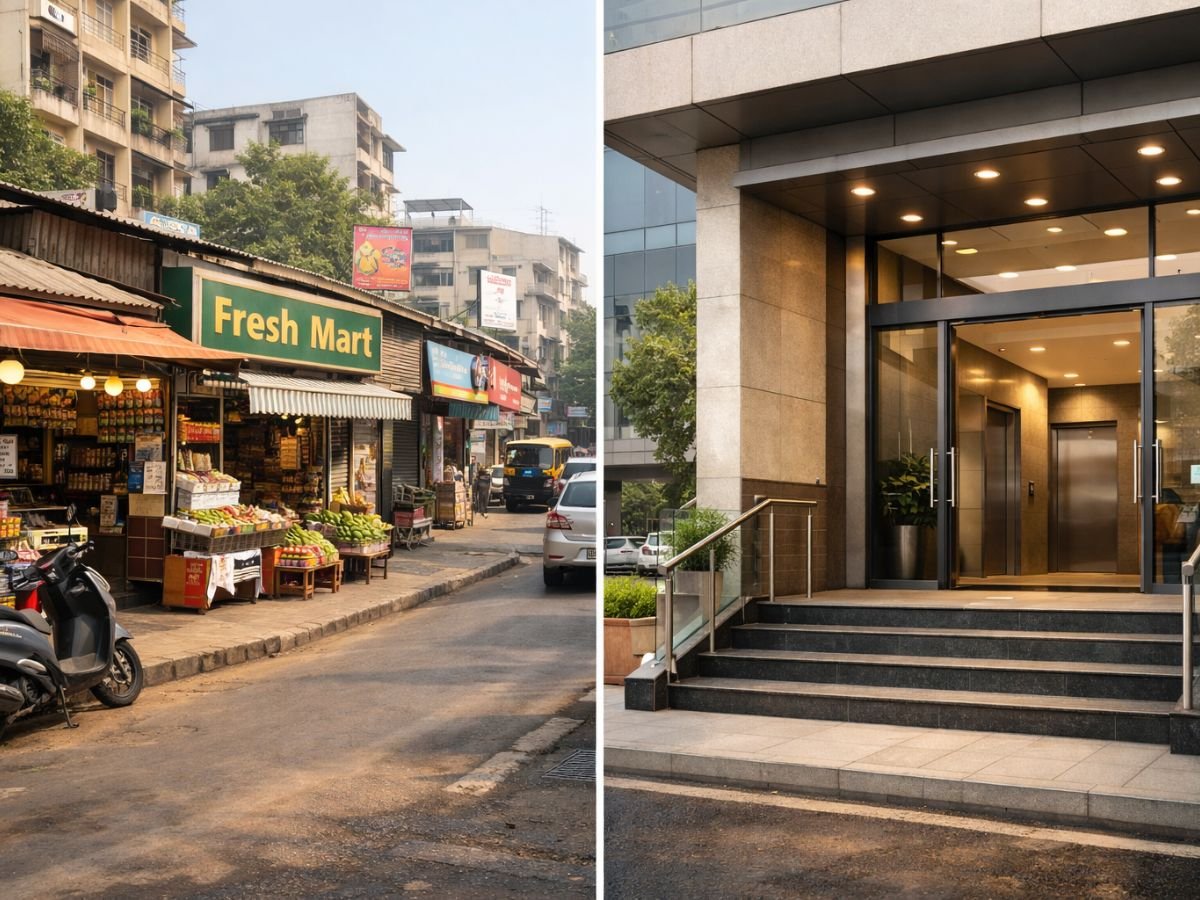
A shop can absolutely beat an office in Panvel. But only when the shop has real business logic, not just sales-brochure logic.
High-conversion daily catchment beats generic footfall
One of the biggest myths in commercial property is that footfall alone is enough. It is not. In Panvel, the question is not just “how many people pass here?” The real question is “how many people can actually stop, notice, and buy here?”
A compact shop near a genuine commuter need point, residential service cluster, or daily shopping spine can outperform an office because retail conversion is immediate and repeat-driven. But a shop in a shiny new project with weak real occupancy may remain empty for months, even if the brochure calls it a future hotspot.
Visibility, parking, and access matter more than brochure promises
This is where many buyers lose money. A shop on a fast-moving road without easy stopping is often weaker than it looks. Highway visibility is not the same as retail usability. If customers cannot slow down, park, turn, or safely enter, that frontage is more optical than practical.
Panvel has many stretches where road movement looks commercially exciting from a distance, but the actual retail business is weak because of stopping friction. The right shop needs:
- clear line-of-sight visibility
- easy approach
- legal and practical stopping convenience
- immediate catchment
- supporting nearby business mix
Which business types actually justify shop pricing
A shop can justify its premium when the tenant category is strong enough. In Panvel, that usually means:
- pharmacy
- bakery or QSR
- grocery or convenience retail
- branded service retail
- mobile or repair-based quick-service shop
- diagnostics pickup or health-linked counter
- tightly located service shops near commuter or residential clusters
A generic “retail opportunity” is not enough. Retail works when the business type matches the location type.
> Caution box: A shop should not be bought only because it is commercial and road-facing. In Panvel, road-facing without stopping ease, parking logic, and active catchment can become an expensive trap.
Which Panvel locations suit shops better and which suit offices better
Panvel does not behave like one single commercial market. This is the most important local truth in this article.
Old Panvel, New Panvel, Khanda Colony, station-linked belts, and peripheral growth-side pockets do not support the same commercial asset equally.
| Panvel pocket | Shops: suitability | Offices: suitability | Ground reality |
|---|---|---|---|
| Station-linked belts | Strong | Strong | Premium mixed-use demand because commuter movement supports both |
| Old Panvel | Stronger for traditional retail | Selective, often weaker for formal offices | Dense trade activity, local catchment, but congestion and parking are real issues |
| New Panvel | Selective retail | Stronger for offices and structured service businesses | Planned layout, wider roads, better organized access |
| Khanda Colony side | Good in the right market stretch | Good, especially mid-size offices | Balanced local demand and better service-business usability |
| Peripheral or airport-hype belts | Risky unless occupancy is already proven | Selective and still risk-sensitive | Brochure story may be ahead of real tenant demand |
Station-linked Panvel belts
These are often the strongest mixed-use commercial zones because Panvel’s station importance is not minor. It is a commuter anchor. That means both shop and office demand can work here, but for different reasons.
Shops work because commuters create repeat daily consumption. Offices work because employees and clients can reach the location more easily. This is one of the few areas where both asset classes can genuinely make sense, though the pricing also reflects that.
Old Panvel retail-heavy pockets
Old Panvel suits traditional retail better than modern corporate-style office use. The local trade environment is organic, dense, busy, and proven. But it is also congested. Parking friction is not a side issue here; it directly changes who can rent from you.
So yes, shops can work strongly in Old Panvel, especially for local services and dense catchment retail. But a buyer expecting premium formal office demand in tight internal lanes may be forcing the wrong asset into the wrong environment.
New Panvel and structured office-service pockets
New Panvel and planned CIDCO-style pockets are usually better for offices, clinics, coaching, and destination-based businesses. Wider roads, more predictable layouts, and cleaner access patterns matter more for office demand than many first-time investors realize.
A CA firm, consultant, dentist, or small operations office generally values building usability, approach comfort, and employee convenience more than raw bazaar-style footfall. This is where offices often become the better commercial buy.
Side pockets where marketing sounds stronger than real commercial demand
This needs to be said plainly. Airport influence and future infrastructure do not automatically make every peripheral commercial unit a good investment. In 2025/2026 market conditions, airport-led macro optimism is real, but that does not mean every shop several kilometres away suddenly has healthy leasing demand.
A half-occupied township with weak ground-level business is not saved by a beautiful brochure. Present demand matters more than future imagination.
Shop vs office in Panvel for rent income, vacancy risk, and resale
Commercial property discussions often become unrealistic because they focus only on gross rent. The real question is what happens when the unit is empty, when the tenant leaves, and when you want to exit.
Rent stability
A strong shop can command impressive rent. That is true. But the conditions are strict. It has to be the right shop, in the right stretch, with the right tenant use case.
An office may not always generate the same excitement, but it usually offers steadier leasing logic. The tenant pool is broader, and lease terms can be longer. For a buyer who wants less drama and better predictability, that matters more than occasional upside stories.
Vacancy pain and reletting speed
Here is the uncomfortable part. Empty commercial property keeps costing money. CAM charges continue. Taxes continue. Capital remains locked. If the unit is in a CIDCO-governed context, transfer and compliance realities also affect your longer-term maths.
A wrong shop usually creates sharper holding pain because:
- purchase cost is often higher
- reletting depends on very specific demand
- retail tenants are picky about frontage and business viability
- the market judges the exact spot, not just the building
A decent office can also stay vacant, of course. But it is usually easier to reposition, remarket, or re-let if the basic location and building usability are sound.
Resale liquidity and buyer pool
Short-term flipping in commercial property is far less simple than many buyers think. CIDCO transfer fee changes, especially after the revised slabs from April 2025, make resale economics much more serious in relevant nodes. That means a buyer should not treat commercial purchase like an easy quick-profit move.
Offices often have a wider resale audience because more buyers can imagine a usable outcome. A shop resale can be very strong, but only when the exact unit has obvious business logic. If it does not, the buyer pool narrows fast.
Which type of buyer should choose a shop and who should stay with an office?
This is where the answer becomes personal.
| Buyer type | Better fit | Why |
|---|---|---|
| First-time commercial investor | Office | Lower entry risk, wider tenant pool, easier logic |
| Self-use CA, consultant, lawyer, clinic buyer | Office | Operational comfort matters more than frontage |
| Family retail business owner | Shop | If catchment and parking logic are strong |
| Higher-budget investor chasing premium returns | Shop or office, but only after sharper filtering | Risk capacity is higher, but location precision still matters |
| Yield-seeking moderate investor | Office | Better balance of stability and affordability |
| Speculative buyer attracted by airport story | Usually neither without present proof | Future story alone is not enough |
A simple way to think about it is this: if you need business visibility, buy a shop only after severe location filtering. If you need steady usability, a smaller office often becomes the more rational move.
What usually gets mis-sold in Panvel commercial property deals
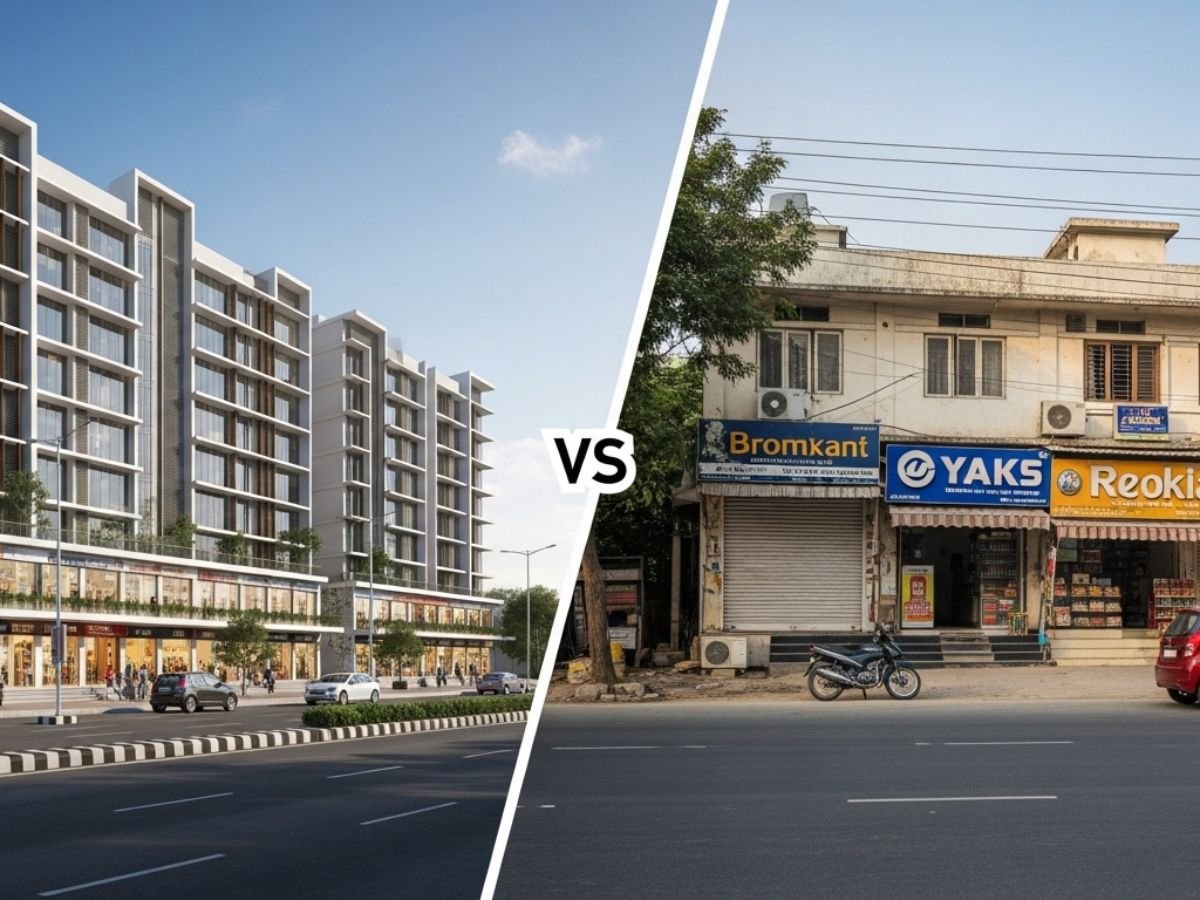
This section matters because buyers often lose money before the property even has a chance to perform.
“Future growth” without present business demand
Panvel has genuine long-term growth drivers. But future growth is not the same as current commercial viability. A shop in a location with weak current occupancy is still weak today, even if the larger region improves over time.
Big-road visibility without stopping convenience
This is one of the most common mis-sells. A large road-facing shop may look premium, but if customers cannot stop easily, the value collapses. In commercial real estate, movement speed matters. Not all visibility converts.
Expensive shop pricing in weak conversion locations
Buyers often pay premium rates because the unit is on the ground floor. But ground floor is not a business model by itself. Without catchment, parking, and tenant fit, a ground-floor premium becomes a financial burden.
Office stock in buildings with poor usability
Office buyers also make mistakes. A cheap office in a badly planned building with weak lift access, poor common areas, weak power backup, or low tenant comfort can stay unattractive even at a discount.
> Red-flag box: Beware the airport-hype shop sale. If the sales pitch depends more on future maps than current business demand, slow down. In Panvel, present occupancy, catchment, parking, and tenant fit matter more than presentation slides.
What to check before buying a shop or office in Panvel

A commercial buyer should never rely only on brochure positioning. Practical checks matter more.
Title, approvals, and MahaRERA status where applicable
If it is a new or under-construction commercial project, check MahaRERA status carefully. Not just whether it is registered, but whether progress matches promises. Delays mean dead capital.
Also check whether the property sits in a CIDCO-linked leasehold context or a different title structure under PMC-side reality. That changes transfer procedures and future cost implications.
Building usability checks on site
Visit like a tenant, not like a buyer. Check:
- frontage width
- signboard visibility
- lift quality
- floor plate usability
- washroom availability
- parking reality, not brochure parking
- common area upkeep
- employee and client access comfort
Leaseability checks before you believe rental promises
Ask what type of tenant can realistically use this unit. Not imaginary tenants. Real ones. A 300 sq.ft. office may suit a consultant. A retail unit may suit a pharmacy. But not every shop can become a bank branch, and not every office can become a clinic.
Pricing sanity check using actual local comparison logic
Use IGR Maharashtra ready reckoner context only as a registration and taxation baseline, not as proof that the market price is fair. Also remember that asking price, deal price, and achievable rent are three different numbers.
when a shop is the right Panvel buy and when an office is the smarter move
The final answer is not complicated once you remove the hype.
Choose a shop in Panvel if:
- you have a higher budget
- the location already has proven daily demand
- visibility is clear
- stopping and parking are practical
- the tenant category is obvious and repeat-driven
- you can tolerate sharper vacancy risk if the market slows
Choose an office in Panvel if:
- you want a safer first commercial investment
- you prefer broader tenant demand
- you care more about usability than retail drama
- you are buying for professional self-use
- you want a more stable leasing approach with lower frontage dependence
For most investors, the office remains the smarter default. The shop remains the sharper but riskier weapon.
Conclusion
If you are choosing between a shop and an office in Panvel, do not treat both as the same commercial asset. They are not. A shop is a location game. An office is a usability game. In 2025/2026 market conditions, Panvel’s office spaces usually make more practical sense for most buyers because they offer broader tenant demand, lower frontage dependence, and more manageable risk. Shops still win in the right pockets, but only when the ground reality is already working, not when the brochure says it will work later.
FAQs
Frequently Asked Questions