
Shreeji Ventures: A Mega Builder Shaping Navi Mumbai’s Real Estate Landscape
Navi Mumbai was never meant to be an overflow city. From the beginning, it was planned as a self-sustaining urban alternative to Mumbai, with structured nodes, wide roads, and clearly defined residential and commercial zones. Over the last two decades, that original vision has started turning into reality. What was once seen as distant or underdeveloped is now one of the most active real estate markets in the Mumbai Metropolitan Region.
This transformation has also changed the type of builders operating here. Early growth was driven by small local developers, often limited to one or two buildings. As infrastructure projects like the Navi Mumbai Metro, Mumbai Trans Harbour Link, and Navi Mumbai International Airport gained momentum, buyer expectations evolved. The market began demanding scale, planning, and long-term reliability. Shreeji Ventures fits into this shift almost naturally, as a new generation developer that sits between legacy local builders and massive national players, large enough to execute high-rise projects yet local enough to understand CIDCO realities and node-specific buyer expectations.
Shreeji Ventures at a Glance
Quick answer: Shreeji Ventures is a mid-to-large Navi Mumbai developer (Tier 1.5) known for high-rise, amenity-led communities across growth nodes.
- Builder type: Mid-to-large Navi Mumbai developer
- Address: Shreeji Ventures, Plot No D-227, TTC Industrial Area, MIDC Industrial Area, Shiravane, Nerul, Navi Mumbai, Maharashtra 410210
- Contact: 070599 00900
- Website: https://shreejiventures.in/
- Best nodes: Kharghar, Ulwe, Nerul
- Suitable for: End-users + long-term investors
- Risk factor: External infrastructure dependency (CIDCO/NMMC timelines)
- Overall verdict: Value-driven, not premium-brand luxury
About Shreeji Ventures
Builder Background and Evolution
The foundation of Shreeji Ventures is closely tied to the professional journey of its founder, Devji Patel. Unlike developers who enter real estate mainly through finance or land aggregation, Patel’s roots lie in hands-on construction, beginning in Kutch, Gujarat, where early work built capability in land handling, logistics, and ground-up execution.
A major turning point came after the Gujarat earthquake in 2001, when Patel led rehabilitation work that involved building over a thousand houses along with schools and essential infrastructure. Later, the move toward Mumbai started around 2005, followed by deep collaboration with Akshar Developers over the next decade, contributing to nearly four million square feet across residential, commercial, and IT segments in Navi Mumbai. In 2015, Shreeji Ventures consolidated as an independent developer, shifting from collaboration to building a standalone brand identity and gradually becoming known as a Tier 1.5 builder, more organized and stable than many local developers while maintaining pricing that stays more accessible than national brands.
Vision, Philosophy, and Development Approach
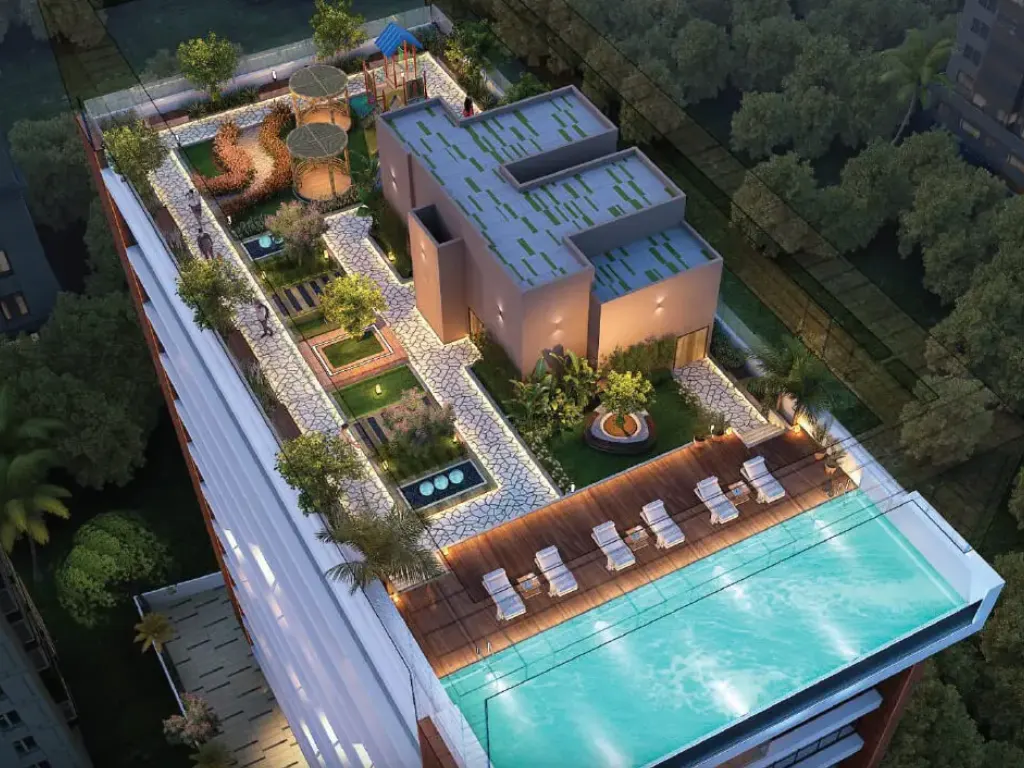
At its core, Shreeji Ventures follows a long-term development mindset rather than a quick inventory-sell approach. Many of its projects reflect a preference for scale, vertical growth, and integrated amenities, using large parcels to plan towers and shared infrastructure in a way that supports higher density without losing structure.
The philosophy leans toward planned communities, not standalone buildings. Layouts aim to balance density with livability by focusing on open spaces, ventilation, and internal circulation. This aligns with Navi Mumbai’s node-based planning where structured sectors allow a developer to build with long-term city logic. Affordability remains central, but not at the cost of planning, and the brand often operates in the affordable luxury zone, attracting young professionals, families, and long-term end users who want more than just a flat.
Presence of Shreeji Ventures Across Navi Mumbai
Strategic Locations and Nodes
Shreeji Ventures’ growth strategy fits Navi Mumbai’s sector and node-based model, where each node has its own maturity cycle, infrastructure roadmap, and buyer profile. Developers who understand this framework tend to make better location bets, because Navi Mumbai behaves like multiple micro-markets rather than one single city market.
The company’s strongest presence lies in the southern and central nodes, especially Kharghar, Ulwe, Nerul, and Seawoods. In Kharghar, the focus has been on scale and verticality through large parcels that support high-rise planning and internal amenities. In Ulwe, the approach is early-entry positioning tied to the airport and connectivity upgrades. In Nerul and Seawoods, the approach becomes more selective, reflecting mature micro-markets where premium housing and commercial spaces need tighter positioning. This multi-node spread reduces dependency on one zone and signals a builder with broader Navi Mumbai market understanding.
Why These Locations Matter
Location selection decides not just appreciation but day-to-day living quality, especially in Navi Mumbai where connectivity upgrades can reshape demand cycles. The nodes where Shreeji operates are closely linked to present and future connectivity, which is one of the strongest drivers of value movement in this region.
Kharghar benefits from strong social infrastructure and a growing ecosystem around education and lifestyle assets like Central Park, along with metro-led future mobility. Ulwe’s demand is being reshaped by transformational infrastructure, including the airport influence and Atal Setu-led access. Nerul and Seawoods remain established, with functional civic infrastructure, retail hubs, and railway connectivity, making them less speculative and more lifestyle-driven. For end users, this translates to livability that improves with time, while investors see emerging nodes as appreciation plays and mature nodes as steadier rental and demand zones.
Shreeji Ventures: Project Execution Snapshot (Based on Publicly Available Research)
Overall Execution Summary (As per Available Data)
| Category | Status |
|---|---|
| Completed Projects (Known) | 8+ projects |
| Ongoing / Under Construction Projects (Known) | 6+ projects |
| Primary Operating Region | Navi Mumbai (Kharghar, Ulwe, Nerul, Seawoods, Roadpali, Taloja) |
| Secondary Region | Mumbai Western Suburbs (Malad, Kandivali – redevelopment) |
Note: Shreeji Ventures operates through multiple LLPs and sister entities. Hence, exact lifetime project count varies by corporate structure, but the table below reflects major, brand-visible developments.
Completed Projects by Shreeji Ventures (and Group Collaborations)
Major Completed Projects – Shreeji Ventures
| Project Name | Location / Node | Segment | Status |
|---|---|---|---|
| Sai Radiance | CBD Belapur | Residential | Completed |
| Ratna Enclave | Roadpali | Residential | Completed |
| The Springs | Roadpali | Mid-segment residential | Completed |
| The Springs 2 | Roadpali | Mid-segment residential | Completed |
| Platinum Springs | Taloja | Early-entry residential | Completed |
| Akshar Shreeji Heights | Seawoods | Residential | Completed |
| Shreeji Orlem World | Malad West, Mumbai | Redevelopment township | Completed |
| Shreeji Castle | Ulwe | Residential | Completed |
Ongoing / Under Construction Projects
Ongoing & Upcoming Projects – Shreeji Ventures
| Project Name | Location / Node | Segment | RERA / Timeline |
|---|---|---|---|
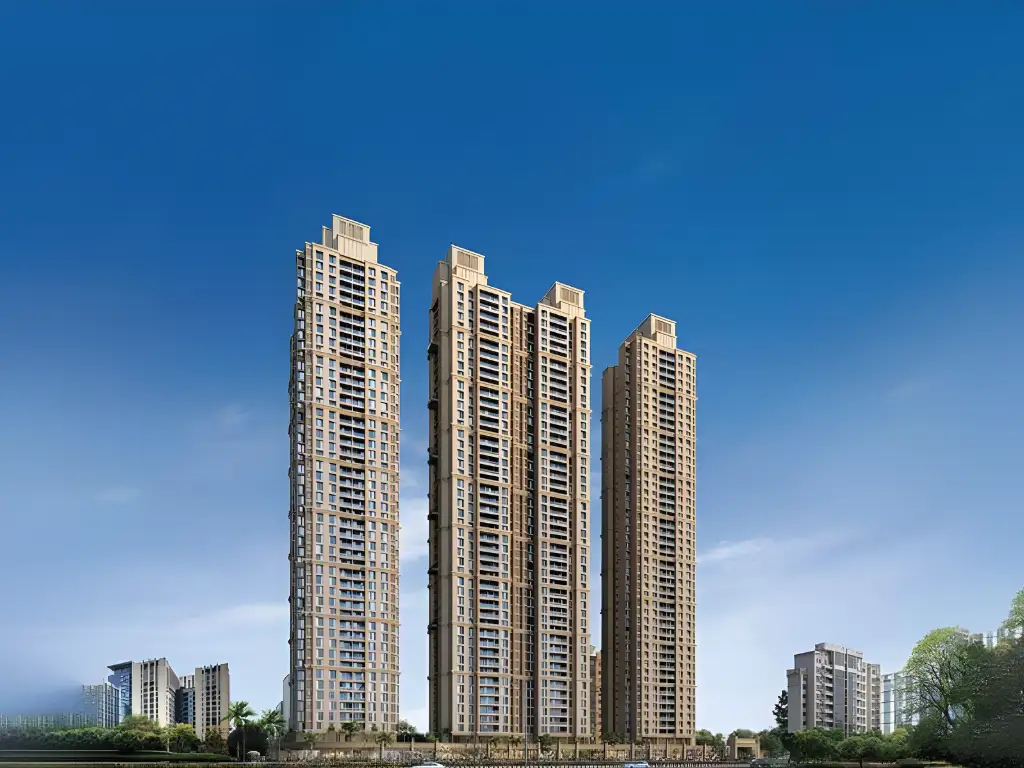
| Shreeji Divine | Sector 36, Kharghar | High-rise residential | RERA P52000034060, Possession ~2027 |
| Shreeji Cloud | Sector 21, Ulwe | Residential | Under construction, ~2026 |
| Shreeji Icon | Ulwe | Residential | New launch, ~2026 |
| Shreeji Hillcrest | Ulwe | Residential | Ongoing |
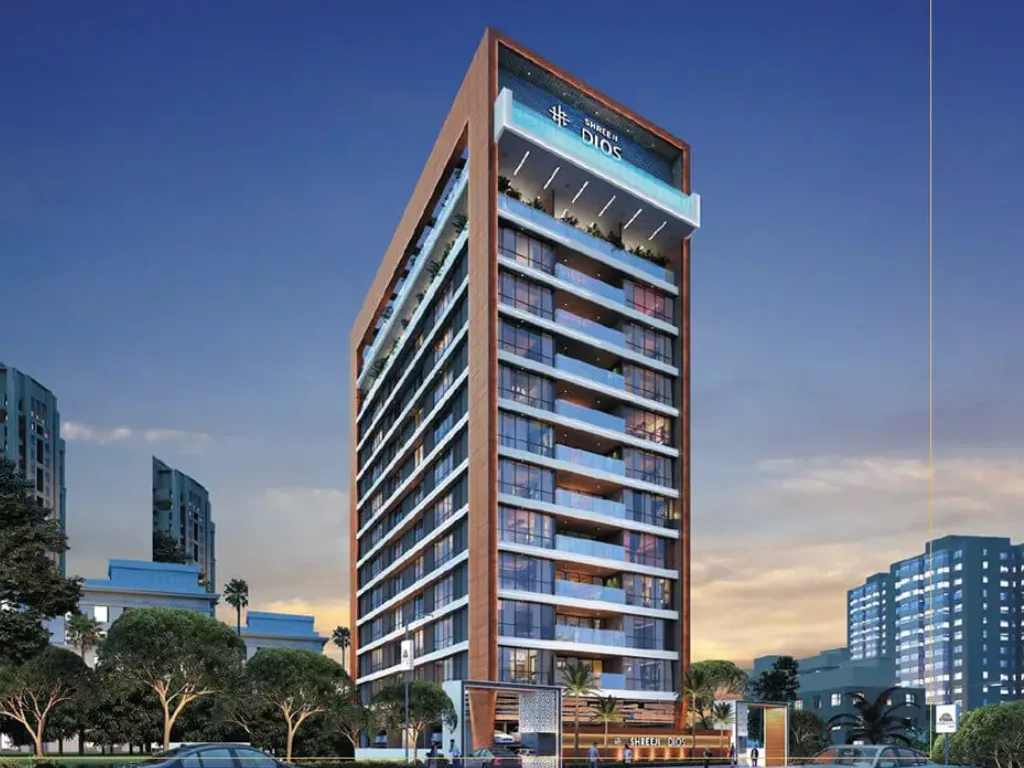
| Shreeji Dios | Nerul | Ultra-premium residential | Under construction |
| Shreeji Destiny | Nerul | Commercial office spaces | Under construction |
| Shreeji Darshan | Nerul | Residential | Possession target ~2028 |
Location-wise Project Distribution
Development Focus by Node / Area – Shreeji Ventures
| Node / Area | Nature of Development |
|---|---|
| Kharghar | Mega high-rise residential (Shreeji Divine) |
| Ulwe | Airport-led growth housing (Cloud, Icon, Hillcrest, Castle) |
| Nerul | Premium residential + commercial (Dios, Destiny, Darshan) |
| Seawoods | Completed residential societies |
| Roadpali | Mid-segment, family-oriented housing |
| Taloja | Early-entry residential projects |
| Malad (Mumbai) | Large-scale redevelopment township |
Location selection decides not just appreciation but day-to-day living quality, especially in Navi Mumbai where connectivity upgrades can reshape demand cycles. The nodes where Shreeji operates are closely linked to present and future connectivity, which is one of the strongest drivers of value movement in this region.
Kharghar benefits from strong social infrastructure and a growing ecosystem around education and lifestyle assets like Central Park, along with metro-led future mobility. Ulwe’s demand is being reshaped by transformational infrastructure, including the airport influence and Atal Setu-led access. Nerul and Seawoods remain established, with functional civic infrastructure, retail hubs, and railway connectivity, making them less speculative and more lifestyle-driven. For end users, this translates to livability that improves with time, while investors see emerging nodes as appreciation plays and mature nodes as steadier rental and demand zones.
Trust, Transparency, and Buyer Confidence
Regulatory Compliance and Documentation
In Navi Mumbai, compliance is central to trust because CIDCO planning and RERA frameworks shape buyer safety. Shreeji Ventures operates largely within this regulated environment, and the visibility of MahaRERA registrations and documentation helps reduce uncertainty for buyers.
Post-RERA, transparency has improved across the sector, making timelines, approvals, and disclosures more accessible than before. Marketing may still show optimistic targets, but official possession timelines tend to include buffers for regulatory and infrastructure delays. For buyers, this distinction matters because it shifts decision-making from emotional marketing to realistic project planning, and institutional funding on certain projects further strengthens confidence in financial discipline.
Delivery Reputation and Post-Possession Experience
Delivery timelines remain one of the most sensitive variables for any large developer, and Shreeji Ventures has faced criticism historically for delays in rapidly developing nodes such as Ulwe and Karanjade. These delays often fall in the six to twelve month range and are commonly linked to rapid expansion across multiple nodes, where resource allocation and contractor availability can get stretched.
The regulatory environment has pushed higher accountability, and official possession dates today are usually more conservative in filings. Post-possession experience, however, remains mixed in resident narratives, with concerns raised in some societies around maintenance responsiveness, seepage, and common facility upkeep. This phase shapes long-term brand reputation, because buyers often judge a builder not only on construction delivery but on how responsibly the ecosystem is handled after handover.
Shreeji Ventures vs Other Builders in Navi Mumbai
Positioning in the Mid-to-Large Developer Segment
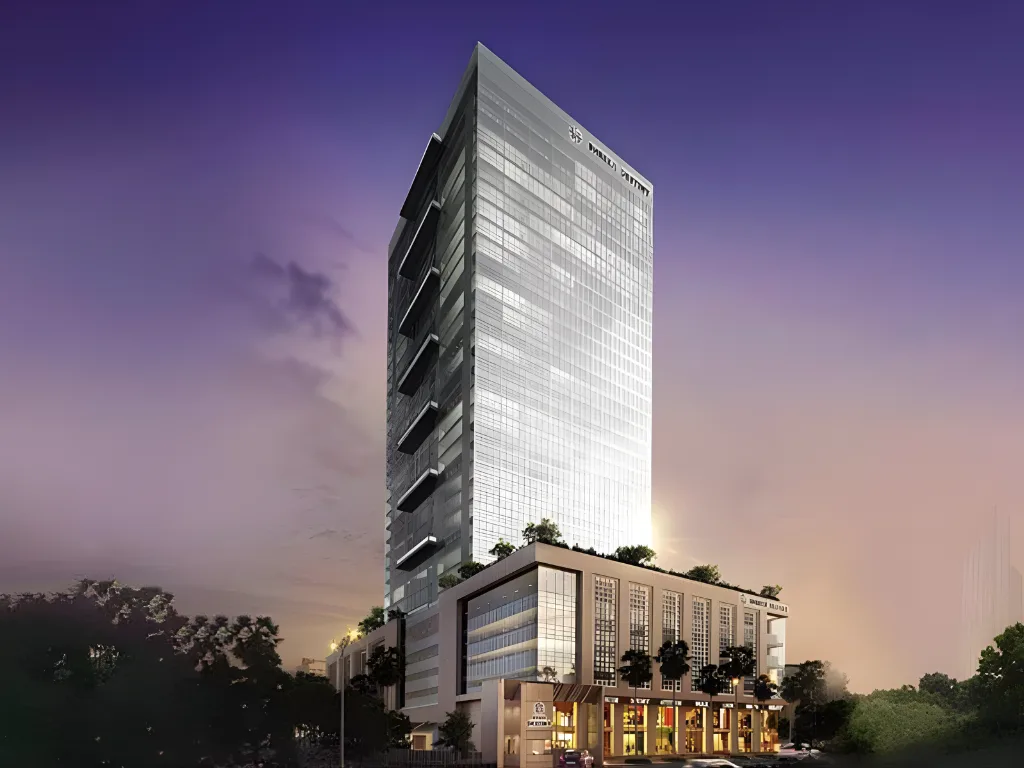
Shreeji Ventures is often placed in the Tier 1.5 band, positioned between local one-project builders and national pan-India developers. Structurally, it differs from many small builders by operating at scale across multiple nodes, which demands financial depth, planning capability, and engineering strength.
At the same time, pricing often remains more accessible than national developers, especially in emerging nodes like Ulwe and certain Kharghar sectors. Compared to smaller builders, Shreeji tends to offer stronger compliance and completion likelihood, and compared to national brands, it often delivers better space and amenity value at a moderate price point. The strength lies in large-volume execution, while the challenge lies in consistency across projects, particularly in post-possession ecosystem management.
Comparison Snapshot
Developer Positioning Comparison – Navi Mumbai
| Developer | Market Tier | Primary Focus Areas | Buyer Profile |
|---|---|---|---|
| Shreeji Ventures | Tier 1.5 | Kharghar, Ulwe | End-user |
| Godrej Properties | Tier 1 | Panvel | Brand-driven |
| Hiranandani | Tier 1 | Panvel | Lifestyle premium |
Who This Builder Is Best Suited For
Shreeji Ventures tends to suit end users planning long-term residence, especially those who prioritize space, community amenities, and future connectivity over short-term resale cycles. Buyers in developing nodes often need patience with infrastructure timelines, but in exchange they usually gain stronger value as connectivity improves.
Long-term investors also fit the profile, particularly those aligned with airport-led or metro-linked growth. Families often benefit from community-focused layouts where amenities are designed for daily use, and working professionals find the connectivity logic meaningful, especially as road and rail access improves. Buyers who want immediately mature surrounding infrastructure may prefer established micro-markets like Nerul and Seawoods, while those comfortable with transitional environments often look at growth zones like Ulwe and future-facing sectors of Kharghar.
Impact on Navi Mumbai’s Urban Development
Contribution to Housing Supply
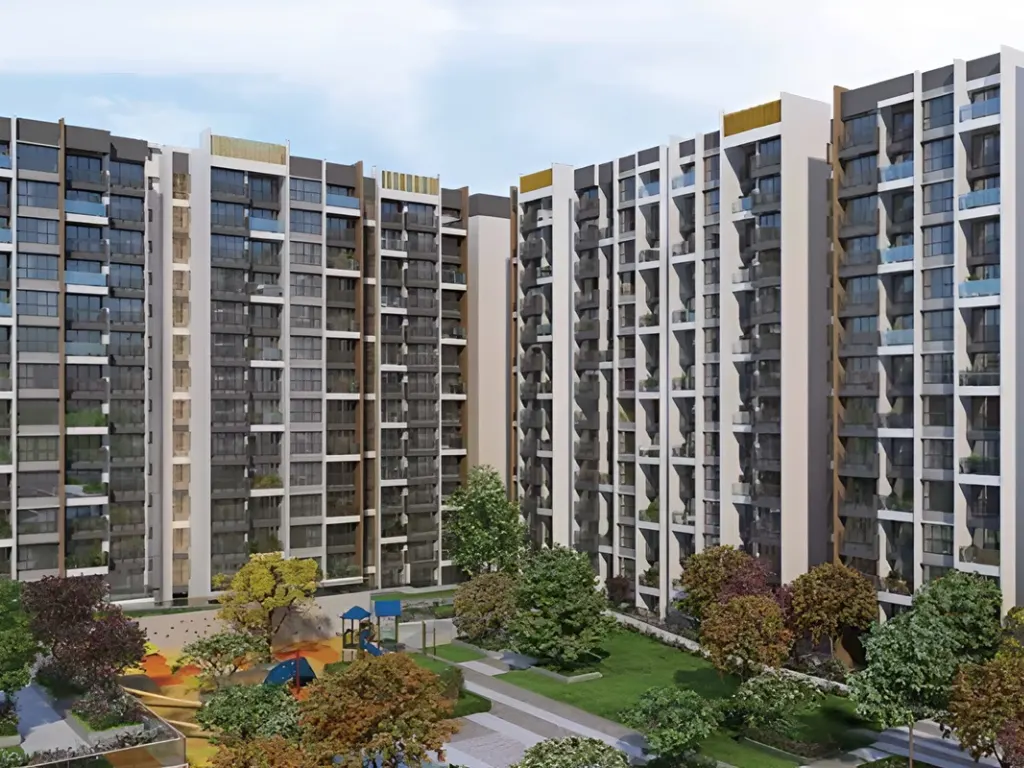
Large developers influence Navi Mumbai’s housing supply by delivering volume in a planned format, and Shreeji Ventures contributes through high-density, multi-tower residential development. This supports vertical growth without fragmenting land use, which aligns with Navi Mumbai’s planning logic where structured urban expansion is preferred over scattered development.
Multi-acre projects also allow centralized amenities, internal planning, and service efficiency that smaller projects struggle to match. The scale helps absorb demand from migrating populations, particularly professionals shifting from Mumbai due to affordability and planned-city advantages, which reinforces Navi Mumbai’s transformation into a primary residential and investment market.
Influence on Micro-Markets
Shreeji Ventures has influenced micro-markets by entering areas at early or transitional stages, and these early entries often help define pricing benchmarks and buyer confidence. As infrastructure progresses, early developments frequently benefit from appreciation because connectivity upgrades raise the value perception of entire sectors, even for completed or near-completion projects.
However, this influence remains tied to external infrastructure delivery, and where civic development lags, even premium projects can face quality-of-life perception challenges. This is why the market sometimes confuses municipal performance with builder performance, and why developer reputation in Navi Mumbai is influenced not only by internal project delivery but also by the pace of CIDCO and civic upgrades around the project location.
Investment Perspective: End-User vs Investor View
Livability and Lifestyle Perspective
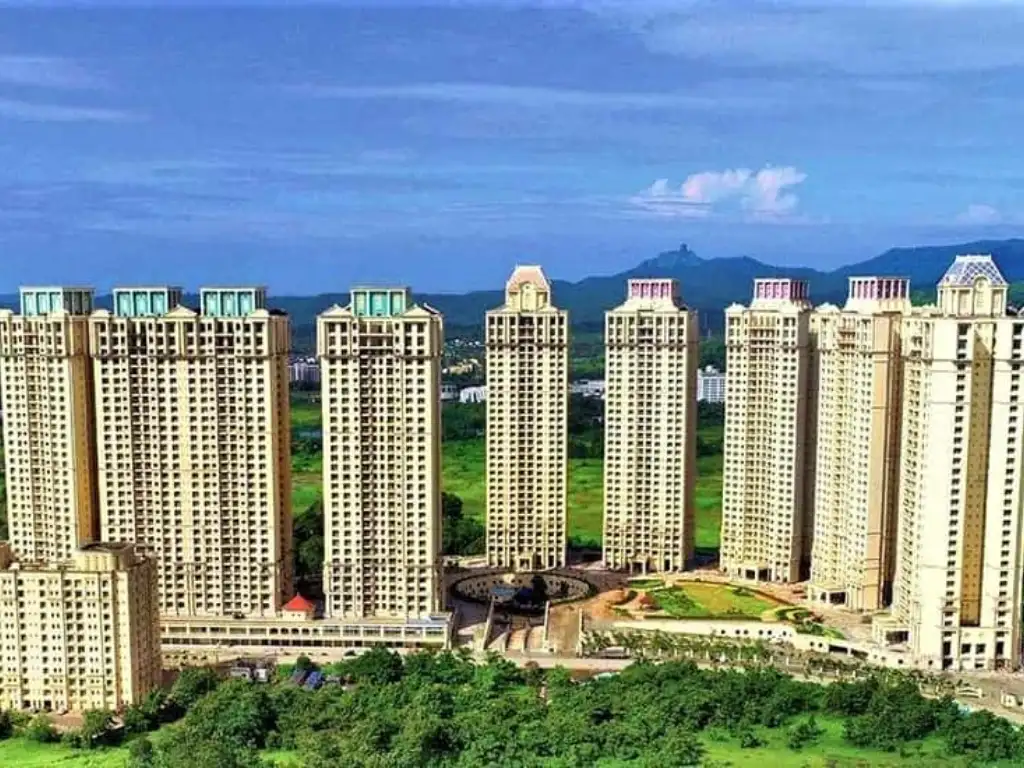
For end users, livability is ultimately about daily function, not brochure promises. Shreeji projects often emphasize internal amenities, security, and community spaces that support long-term living, while access to external conveniences varies by node and usually improves as the location matures.
Community living becomes a stronger factor in larger societies because shared spaces, resident networks, and daily routine infrastructure create stability. Over time, these communities often develop their own ecosystem, and the lived experience improves as surrounding civic development catches up with internal society planning.
Long-Term Appreciation and Rental Outlook
For investors, appreciation is most strongly linked to infrastructure timelines, especially airport influence, road upgrades, and metro expansion. Navi Mumbai historically rewards early entry when connectivity projects mature, and that pattern continues to shape how investors look at nodes like Ulwe and parts of Kharghar.
Rental demand remains stronger in established nodes such as Nerul and Seawoods, while emerging nodes like Ulwe increasingly attract professionals due to improved access and relative affordability. Over time, this supports both capital appreciation and rental yield logic, provided the investor is aligned with realistic timelines and understands that external infrastructure maturity is a key driver of market stability.
Credai Banm Expo
Another important credibility signal for Shreeji Ventures is its industry-level visibility and recognition. The company was the Main Title Sponsor of the Property Expo 2026, an event organised by CREDAI BANM (Confederation of Real Estate Developers’ Associations of India – Bhiwandi, Andheri & Navi Mumbai). Title sponsorship at a CREDAI-led property expo typically indicates strong standing within the developer community, financial stability, and peer-level acceptance, as such platforms are dominated by established builders rather than speculative or one-project developers. This association further reinforces Shreeji Ventures’ positioning as a serious, mid-to-large scale developer within the Navi Mumbai real estate ecosystem.
Future Vision and Growth Outlook
Upcoming Projects and Expansion Direction
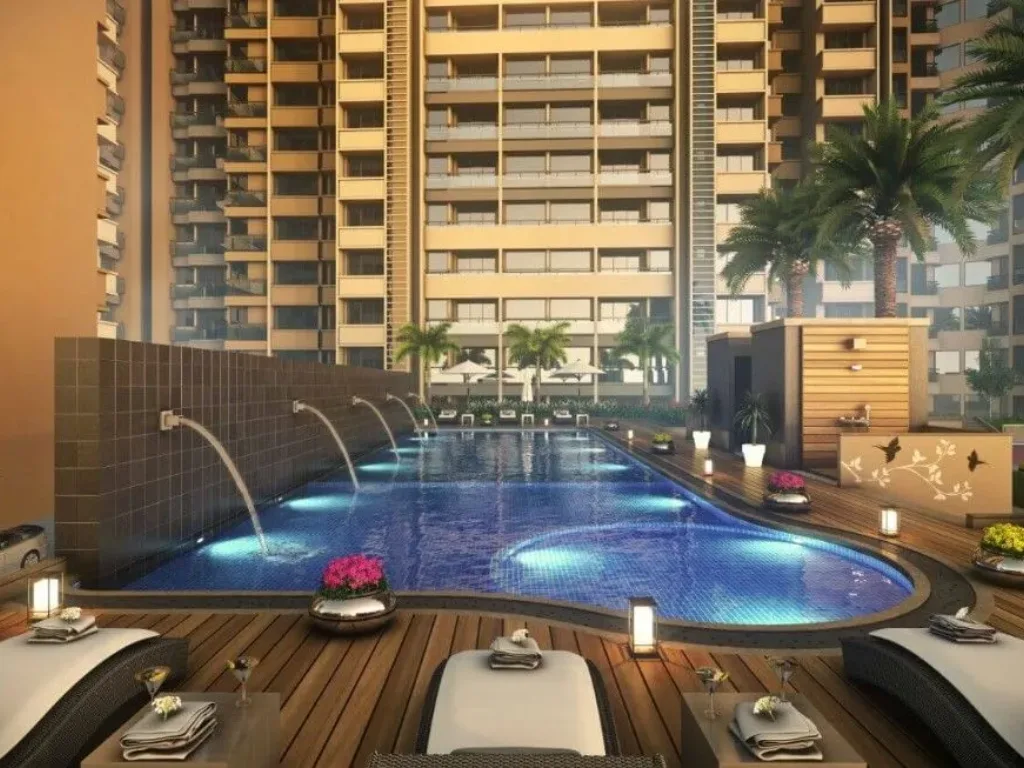
The future of Shreeji Ventures is closely tied to Navi Mumbai’s next development cycle, where infrastructure is converting potential into usable city value. The company’s location strategy shows preference for areas likely to benefit from large infrastructure rollouts rather than short-lived market excitement.
The Navi Mumbai International Airport is a major growth driver, expected to reshape demand across Ulwe, Kharghar, and parts of Panvel. Because Shreeji already operates in these zones, the company holds a first-mover positioning advantage that can translate into sustained demand as the airport-driven economy grows. Metro and highway upgrades further support this direction by improving movement across the region, reducing dependence on Mumbai, and strengthening Navi Mumbai as a primary city. The group’s selective exposure to Mumbai redevelopment also acts as a portfolio stabilizer, helping balance regional cycles.
Builder’s Role in the Next Phase of Navi Mumbai
As Navi Mumbai moves from growth into consolidation, developers will increasingly be judged on community outcomes, not just construction delivery. The market’s expectations are shifting toward ecosystem responsibility, where post-possession support, maintenance transition quality, and engagement with civic realities become reputation-defining.
Sustainability also plays a growing role, not just as an ethical narrative but as a practical buyer preference linked to utility costs and long-term livability. Educated buyers increasingly assess long-term maintenance and environmental efficiency alongside price and location. For Shreeji Ventures, stronger post-handover processes and more professional society transition systems can become the differentiator that helps it move closer to Tier 1 perception in a market where buyer trust is hard-earned.
Conclusion
Shreeji Ventures represents an important layer of Navi Mumbai’s real estate modernization, bridging the gap between small local builders and national giants. The company has grown alongside the city, building scale, moving into high-rise formats, and expanding across key nodes where connectivity and infrastructure define the future.
Its strength lies in large-format planning, location strategy, and compliance visibility, while key considerations include external infrastructure dependency and post-possession maintenance transition quality. For buyers and investors who understand Navi Mumbai’s phased growth and can align expectations with node maturity, Shreeji Ventures offers a value-driven proposition. Over time, the developer’s ability to strengthen community stewardship after handover will be the factor that determines whether it remains Tier 1.5 or climbs into true Tier 1 perception.
FAQ's
Frequently Asked Questions