Taloja MIDC Land Rates: Industrial Prices & Shed Rent
There is no single Taloja MIDC rate. As of early 2026, resale industrial land in the stronger core belts is typically being quoted in a broad band of roughly ₹4,000 to ₹7,500 per sq ft, while industrial shed rents usually sit around ₹22 to ₹45 per sq ft per month, depending on access, utility readiness, compliance comfort, and the actual condition of the asset. That is the real answer. In Taloja MIDC, the headline quote matters less than whether the property is truly usable, transferable, and financially clean.
A lot of fresh buyers and tenants get confused because three different numbers exist at the same time. The MIDC official land rate, the IGR ready reckoner value, and the live market quote are not the same thing. None of them is automatically “wrong.” They are simply used for different purposes. If you do not separate them, the deal will look cheaper or more expensive than it really is.
Taloja MIDC industrial land values and shed rents: the direct answer first
Before going deeper, here is the practical rate picture.
| Asset / Benchmark | Prevailing band or benchmark | Unit | What it really means |
|---|---|---|---|
| MIDC official industrial land rate, Taloja Main | ₹12,100 | per sq m | Government base rate for administration, premiums, and official calculations. Not the normal secondary market buying rate. |
| MIDC official industrial land rate, Additional Taloja / Zone II | ₹15,460 | per sq m | Higher official rate for those categories, still not equal to open market resale pricing. |
| IGR ready reckoner industrial value | ₹65,400 | per sq m | Stamp duty and valuation anchor. Roughly works out to about ₹6,076 per sq ft. |
| Resale industrial land in stronger Taloja core belts | ₹4,000 to ₹7,500 | per sq ft | Typical asking band seen in active listings and broker-led market discussions, varying sharply by asset quality and zone logic. |
| Factory shed rent, older stock | ₹22 to ₹28 | per sq ft / month | Usually lower-height, older RCC or weaker operational stock. |
| Factory shed rent, well-maintained core stock | ₹35 to ₹45 | per sq ft / month | Better-built, more usable, better-access industrial sheds. |
What a fresher reader should understand before comparing numbers is simple: Taloja MIDC land value and Taloja MIDC shed rent are not one market. Land is priced on transferability, location, future utility, and compliance status. Sheds are priced on immediate operating usefulness. That is why one plot and one shed sitting in the same broad area can still look like completely different financial products.
Why there is no single land value or single shed rent in Taloja MIDC
This is where most generic pages fail. They give one average number and move on. That does not work here.
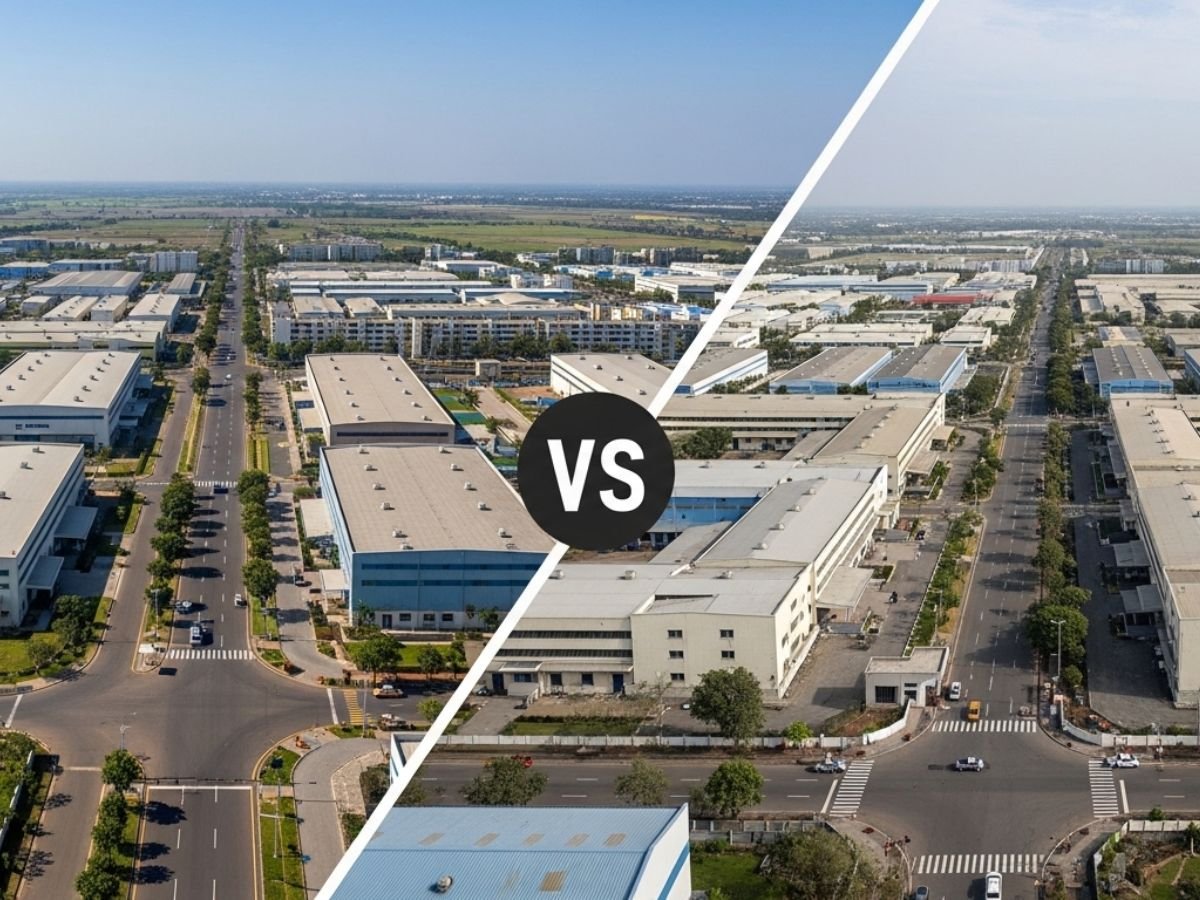
In Taloja MIDC, pricing changes because the industrial estate itself is not uniform. The chemical side behaves differently from the engineering side. A fully developed industrial plot with clean paperwork behaves differently from an open plot with pending compliance or weak development history. A modern shed with height, loading comfort, and proper flooring behaves very differently from an old structure that only looks cheap on paper.
Plot size, frontage, and road width
A regular-shaped plot with usable frontage and proper truck movement logic usually commands a better rate than an awkward plot of the same total area. In industrial property, shape is not a cosmetic issue. It affects layout efficiency, loading, turning radius, and how quickly a factory or warehouse can actually function.
Corner plots or plots on wider roads also attract a premium because they reduce operational friction. For many users, especially heavy engineering and logistics-linked occupiers, that is not a luxury. It directly affects dispatch and vehicle handling.
Utility readiness, power, and water
A plot or shed that already has workable utility support is simply worth more. In Taloja MIDC, this matters even more because industrial users are not just checking road access. They are checking power load, water comfort, drainage, and in certain use cases, whether the local industrial setup can support their operations without a long wait.
That is why a “cheap” plot in a weaker peripheral stretch often remains cheap. On paper it may look like a bargain. In practice, the missing utility comfort can delay operations and swallow money later.
Industrial use fit and compliance comfort
Taloja is not a general-purpose business park. It is a serious industrial ecosystem. The buyer profile for a chemical-zone plot is different from the buyer profile for a dry engineering or storage-led property. If the property fits the intended industrial use cleanly, value rises. If it creates compliance uncertainty, value drops even when the location sounds attractive.
Built-up quality, age, and operational usability
An older industrial shed may have the right address but still underperform badly if the roof, flooring, loading layout, or internal clear height is weak. That is why two sheds in the same broader Taloja MIDC area can rent at completely different levels. One is being valued as a working industrial tool. The other is being discounted because the tenant must spend money, time, and patience before real operations can begin.
What pushes industrial land values up inside Taloja MIDC
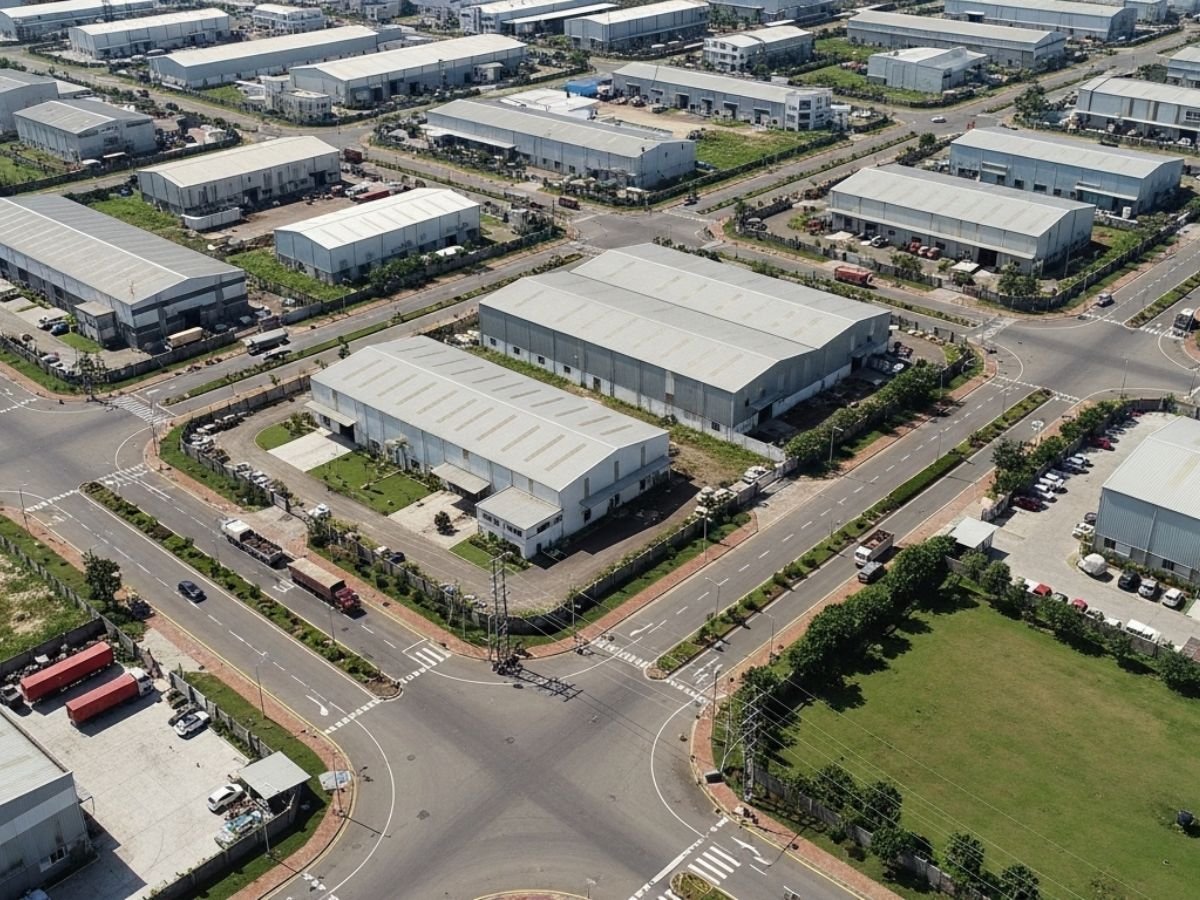
Industrial land gets expensive in Taloja MIDC when it saves time, reduces regulatory headaches, and lets a buyer move faster.
The strongest premiums usually go to plots with better access, a cleaner title chain, clearer development status, and fewer unpleasant surprises in transfer and compliance. Buyers are not paying only for square footage. They are paying for readiness.
Main-road and truck-movement advantage
Industrial users notice road logic immediately. If a plot sits on a road where heavy movement is easier, if container handling is simpler, and if loading does not become a daily headache, the asset deserves a premium. This is why a good access-led plot in a stronger core belt can quote far above a weaker plot of similar size deeper inside.
Regular shape, better frontage, and easier layout
A regular plot with practical frontage is easier to build on, easier to circulate within, and easier to monetize later. A distorted or narrow-frontage plot may look cheaper on a per-square-foot basis, but its usability can be worse enough to cancel that advantage.
Development maturity versus weaker internal stretches
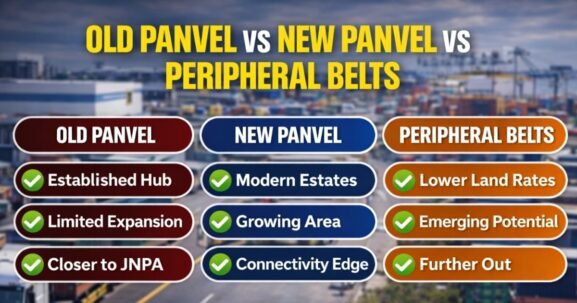
This is a big one in Taloja. The established core of Phase 1 generally commands stronger rates because infrastructure is more mature, industrial identity is clearer, and market confidence is better. By contrast, peripheral land in places loosely marketed as “Taloja Phase 2” or nearby villages such as Wavanje or Ghot Camp can trade far lower. The reason is not mystery. The infrastructure comfort, zoning confidence, and estate logic are weaker.
That is exactly why broad live quotes can stretch so widely. In the stronger core, active resale plot asking rates can rise into the ₹4,500 to ₹7,400 per sq ft range. In weaker peripheral non-core pockets, listings can drop below ₹1,500 per sq ft, and in some cases even lower. A buyer celebrating that discount must first ask what has been sacrificed to achieve it.
Transfer comfort and cleaner paperwork perception
In MIDC property, paperwork quality affects price more than many fresh buyers expect. A property with a cleaner transfer path, better documented development history, and less risk of surprise liabilities becomes easier to sell and easier to finance. That confidence itself creates value.
What pushes shed rents up and what keeps them lower
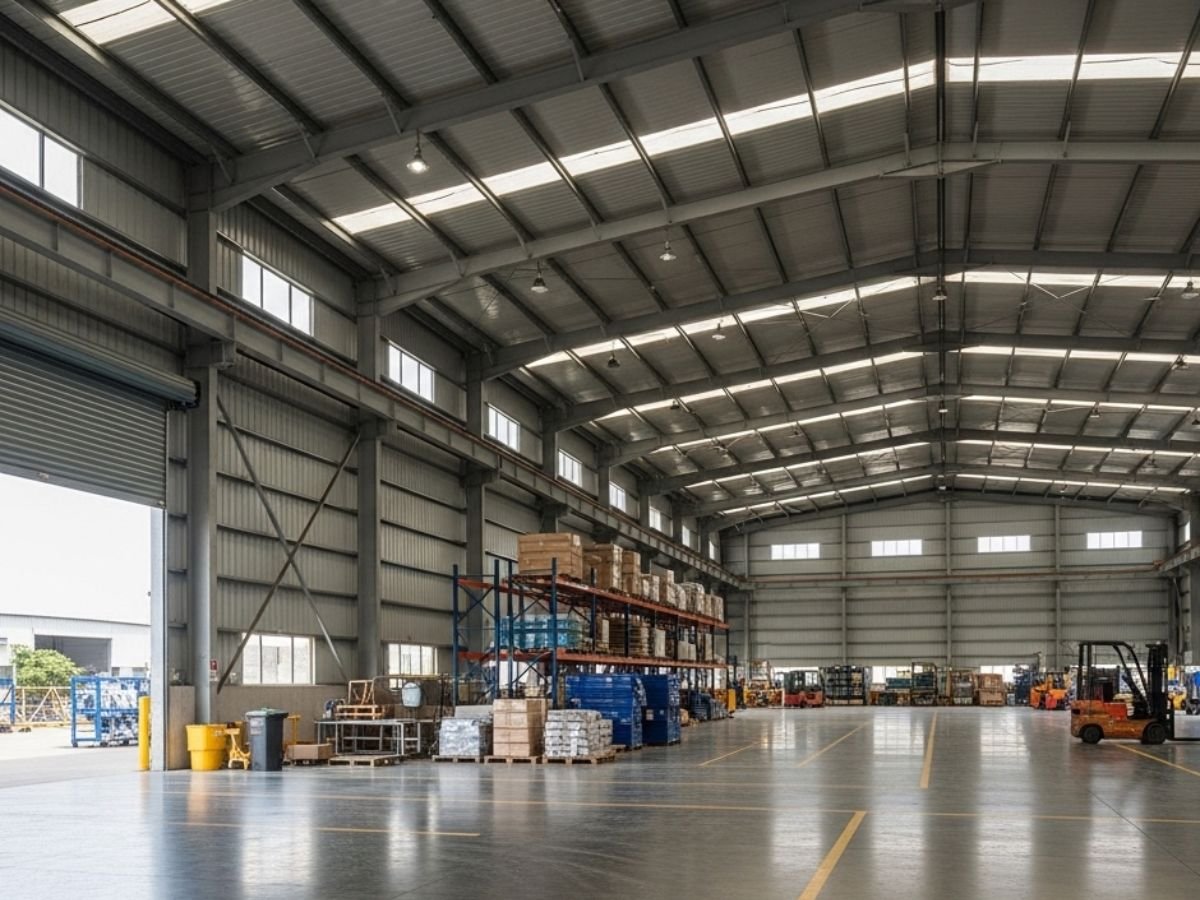
Shed rent in Taloja MIDC is mostly a test of operational readiness. Tenants pay more when the shed saves them time and capex. They pay less when the shed becomes a repair project in disguise.
Clear height, flooring, crane possibility, and loading
A shed with strong clear height, heavy-duty flooring, and better loading comfort can justify premium rent. For some occupiers, cubic volume matters more than flat area. A modern industrial user may not care only about 10,000 sq ft. They care whether the space can actually support storage stacks, machinery movement, or crane operations.
That is why well-maintained modern industrial sheds in the stronger Taloja core can reach ₹35 to ₹45 per sq ft per month. They are not merely “nicer.” They are more useful.
RCC versus PEB versus older converted structures
A good PEB shed and an old low-height RCC structure should not be treated as comparable stock just because both are called industrial sheds. That is a common market mistake. Older, low-height, weaker stock often settles in the ₹22 to ₹28 per sq ft per month range because the tenant is taking on operational compromise from day one.
Power load, fire comfort, and readiness
A shed that already aligns better with industrial use is more valuable to a serious tenant. If the occupier expects quick start-up, sanctioned load, fire-safety comfort, and lower immediate repair work, they will often pay more upfront rather than lose time later.
Small-unit demand versus large-unit absorption
Smaller industrial sheds can sometimes feel more liquid because more tenants can afford them. Larger sheds may attract selective occupiers only. So size alone does not make a property more rentable. Fit matters more than bragging size.
Industrial land versus ready shed in Taloja MIDC: which makes more sense for whom
This is the real decision hidden behind the rate query. Many people searching “Taloja MIDC land rate” are actually trying to decide whether they should buy land, buy a ready asset, or simply lease a shed and move faster.
| Option | Usually fits best for | Main advantage | Main risk |
|---|---|---|---|
| Vacant industrial land | Long-horizon manufacturers, specialised industrial users, businesses needing custom build-out | Full control over layout, process design, and long-term use | High upfront capital, approvals, transfer friction, slower start |
| Ready industrial shed | Businesses that need quicker start and usable built space | Faster operational start than raw land | Hidden repair, compliance, and operational mismatch risk |
| Older second-hand industrial stock | Value-seeking occupiers who understand industrial due diligence | Lower entry cost | May look cheap but become expensive after repairs, weak height, or utility issues |
If you are a long-term manufacturer, especially a user with specialised operational needs, land can make sense despite the upfront pain. If you need speed, working capital flexibility, and quicker possession, a ready shed is usually the better route. In Taloja MIDC, this difference becomes even sharper for chemical and heavily regulated users. Generic ready stock may not fit their real compliance needs.
Which kinds of Taloja MIDC pockets usually command stronger rates
It is better to think in broad industrial logic zones than in fake broker precision.
The strongest rates are usually seen in the core established belts of Phase 1, where infrastructure maturity, access comfort, and industrial confidence are higher. These pockets have the functional advantage that serious occupiers pay for.
Then there are regulated chemical action zones, where buyer profile, barrier to entry, and compliance requirements change the valuation story. These are not interchangeable with ordinary dry industrial stock.
Finally, there are weaker peripheral or non-core stretches, including land loosely sold under broader Taloja branding. These can look dramatically cheaper, but the discount often comes from weaker estate quality, lower infrastructure confidence, or weaker industrial usability.
This is also why you should be careful with the phrase “Taloja MIDC land price per sq ft.” The answer depends on which part of the industrial landscape you are actually talking about.
How to judge whether a quoted land rate or shed rent is fair
The smartest way to judge fairness is not to ask, “Is this quote low?” The smarter question is, “What am I actually getting at this quote?”
Start with four layers:
1. Official benchmark Check the MIDC official rate and the IGR ready reckoner value. These are not the live market entry price, but they help anchor the conversation. For example, the IGR industrial value of ₹65,400 per sq m works out to roughly ₹6,076 per sq ft, which sits surprisingly close to parts of the stronger live resale market.
2. Live market quote Check what similar assets are being quoted for in the same broad industrial logic zone. Do not compare a clean engineering-belt plot with weak peripheral land and call it a bargain.
3. Asset reality Ask whether the property is developed, transferable, usable, and clean. A cheaper asset with poor shape, weak access, old repairs, or hidden liabilities is not necessarily cheaper in real terms.
4. Transaction reality Check the extra cost layer. In MIDC property, the quoted number is often only the opening line of the story.
Asking rate versus achieved rate
What owners ask and what deals close at are not always the same. That is why “prevailing asking range” is a better phrase than “market price.” Negotiation still depends on asset quality, urgency, liability status, and the strength of the buyer.
Per sq ft, per sq m, built-up, plot area, and loading confusion
This is one of the costliest mistakes in the market. Government frameworks usually work in square meters. Brokers and landlords usually quote in square feet. If you do not convert carefully, your budget can go wrong very fast.
Also check what exactly is being quoted. Raw plot area, built-up area, usable area, and loading assumptions are not interchangeable.
Why a cheap quote can still be the costlier deal
A shed offered at an attractive headline rent can become far more expensive once the tenant starts paying for repairs, water, taxes, subletting-related burdens, compliance adjustments, and downtime. The same logic applies to a “cheap” plot carrying weak development status or liability baggage.
> Practical caution: In Taloja MIDC, do not compare only the quote. Compare the quote plus readiness, compliance comfort, hidden liabilities, and time to real operations.
The extra costs that change the real number in Taloja MIDC deals
This section is where many deals break.
For leased industrial sheds, the most important statutory burden is the MIDC subletting fee. For industrial use, the rule is 3% of the official MIDC land rate per year, typically paid in advance for the lease duration. In plain language, that means the legal structure of the land itself creates a recurring cost layer independent of the negotiated rent.
Here is the practical impact. If a shed sits on 1,000 sq m of industrial land with an official MIDC rate of ₹12,100 per sq m, then the annual 3% subletting charge works out to about ₹3.63 lakh per year. This is separate from the monthly rent. In real negotiations, landlords often try to pass this burden to tenants fully or partially.
For purchases, transfer premium matters heavily. The broad rule is:
- 10% of the prevailing MIDC official rate if the plot is adequately developed and crosses the relevant development threshold
- 30% of the prevailing MIDC official rate if the plot is open, under-developed, or does not qualify properly
That is a massive difference. It is one reason why speculative flipping of empty MIDC plots is much less attractive than it first appears.
Then comes the local municipal layer. Taloja industries have been facing long-running friction around PCMC property tax demands, with rates broadly reported in a band of roughly ₹17.18 to ₹31.44 per sq ft, depending on case and assessment context. This issue has remained contested, and buyers should never assume such liabilities are irrelevant. They need to be checked and negotiated.
There is also the operating cost side. MIDC water tariffs, following the controversial 2025 hike, broadly sit around ₹26 to ₹32.75 per KL depending on the billing structure involved. For water-intensive industries, that is not background noise. It affects real profitability.
One more important point: recent legal relief has helped the market because a High Court ruling held that GST is not applicable on transfer of MIDC leasehold plots to third parties. That helps, but it does not erase the rest of the fee burden.
What buyers and tenants must check before finalising industrial land or a shed
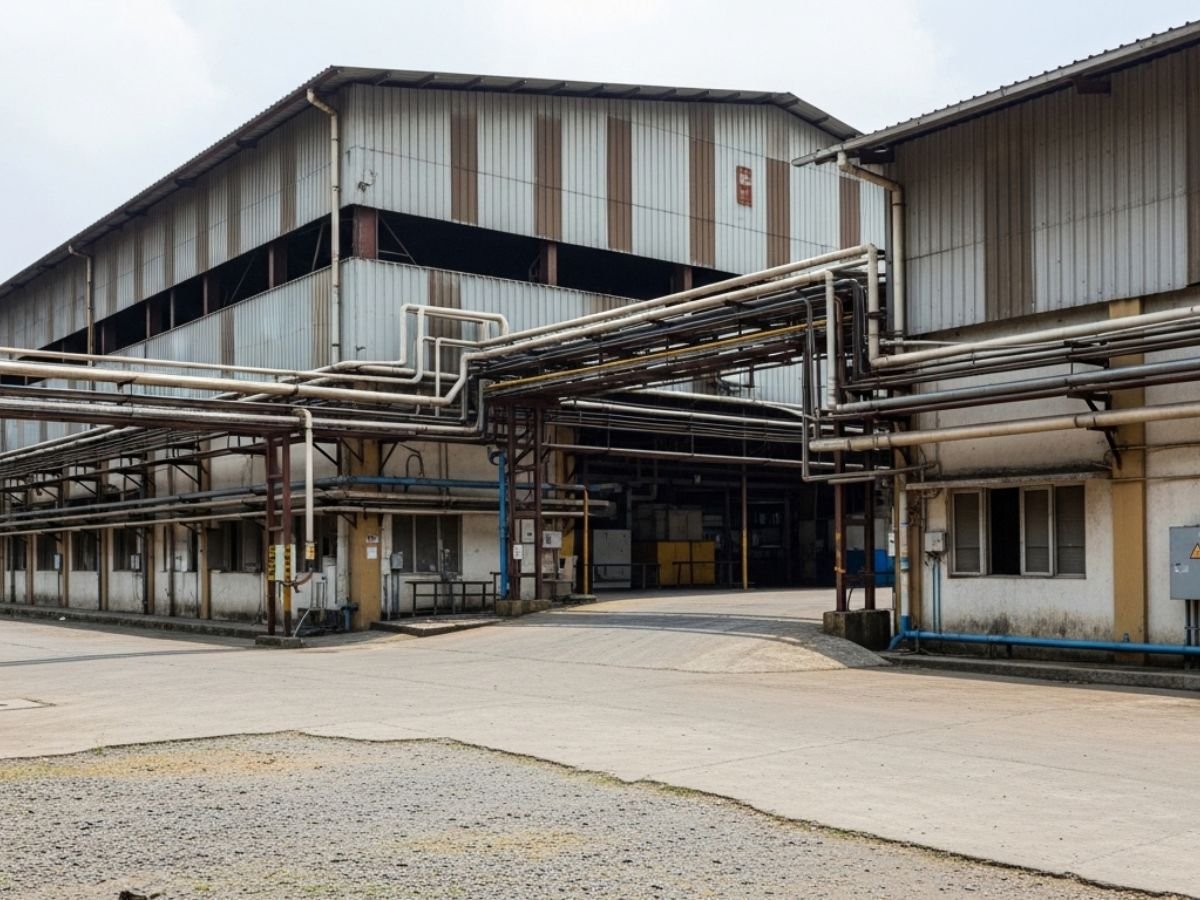
Industrial due diligence here has to be stricter than residential property checking.
First, confirm the title and transfer path. MIDC properties are not regular freehold assets in the way many fresh buyers imagine. These are leasehold rights inside a regulated industrial framework. Transfer rules matter, consent matters, and development status matters.
Second, check industrial use compatibility. Do not assume every industrial property can smoothly fit every industrial activity. Taloja’s zone logic, especially around chemical and engineering usage, changes the answer.
Third, inspect access and working practicality. Do not let “good location” remain a vague phrase. Check truck movement, turning comfort, approach roads, and whether the site can support real daily operations.
Fourth, verify physical condition against the brochure story. In older sheds, this matters a lot. Roof condition, clear height, flooring, structural fatigue, and repair liability can completely alter the economics.
Finally, ask for a clean picture on taxes, arrears, approvals, BCC status, and utility load. A cheap deal with unresolved baggage is rarely a cheap deal.
When Taloja MIDC is good value and when it is the wrong industrial market for you
Taloja MIDC is good value when your business truly needs a serious industrial ecosystem. It makes the most sense for heavy engineering, chemical-linked industries, specialised manufacturing, and operational users who need an established industrial base rather than a cosmetic business address.
It is also useful for buyers who understand that value here comes from industrial usefulness, not from a polished brochure. Taloja works when the business can convert infrastructure and compliance clarity into real production.
It is the wrong market when the user actually wants a cleaner office-like ecosystem, lighter corporate movement, or a low-friction commercial environment. It is also a weak fit for people treating industrial property like a casual quick-flip real estate story. Taloja is not that. It is a heavy operational market. It rewards seriousness and punishes shallow assumptions.
Conclusion
Taloja MIDC industrial land values and shed rents make sense only when you stop looking for one number and start looking at the full industrial reality. As of early 2026, the broad market band is clear enough to guide decision-making: core resale land is commonly quoted around ₹4,000 to ₹7,500 per sq ft, while shed rents generally sit around ₹22 to ₹45 per sq ft per month. But that number alone is not the decision.
The right question is this: how fast can this asset let my business operate cleanly, legally, and profitably? In Taloja MIDC, that is what value really means. Not the cheapest quote. Not the loudest broker line. Not even the official base rate. Real value here is usability, transfer comfort, infrastructure readiness, and fewer unpleasant surprises after the token is paid.
FAQs
Frequently Asked Questions