
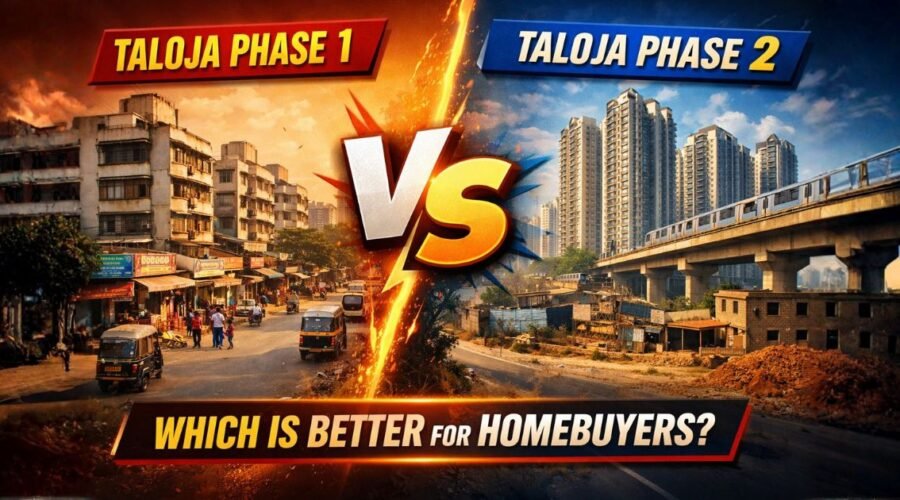
Taloja Phase 1 vs Phase 2 in Navi Mumbai: Which Is Better for Homebuyers?
If the goal is buying a home for actual living, Taloja Phase 1 is usually the better choice. It is more practical today, has a stronger lived-in feel, easier daily convenience, and fewer surprises after possession. Taloja Phase 2 becomes attractive mainly for patient buyers who can tolerate raw surroundings, civic gaps, and a longer wait in exchange for newer projects and possible future upside. So the real answer depends on self-use, commute comfort, project quality, and how much daily friction you can handle.
Taloja is often spoken about as one affordable location on the Navi Mumbai side, but that is exactly where many buyers go wrong. Phase 1 and Phase 2 do not behave like the same housing market on the ground. One feels more usable now. The other feels more like a developing bet.
For homebuyers, that difference matters more than brochure pricing.
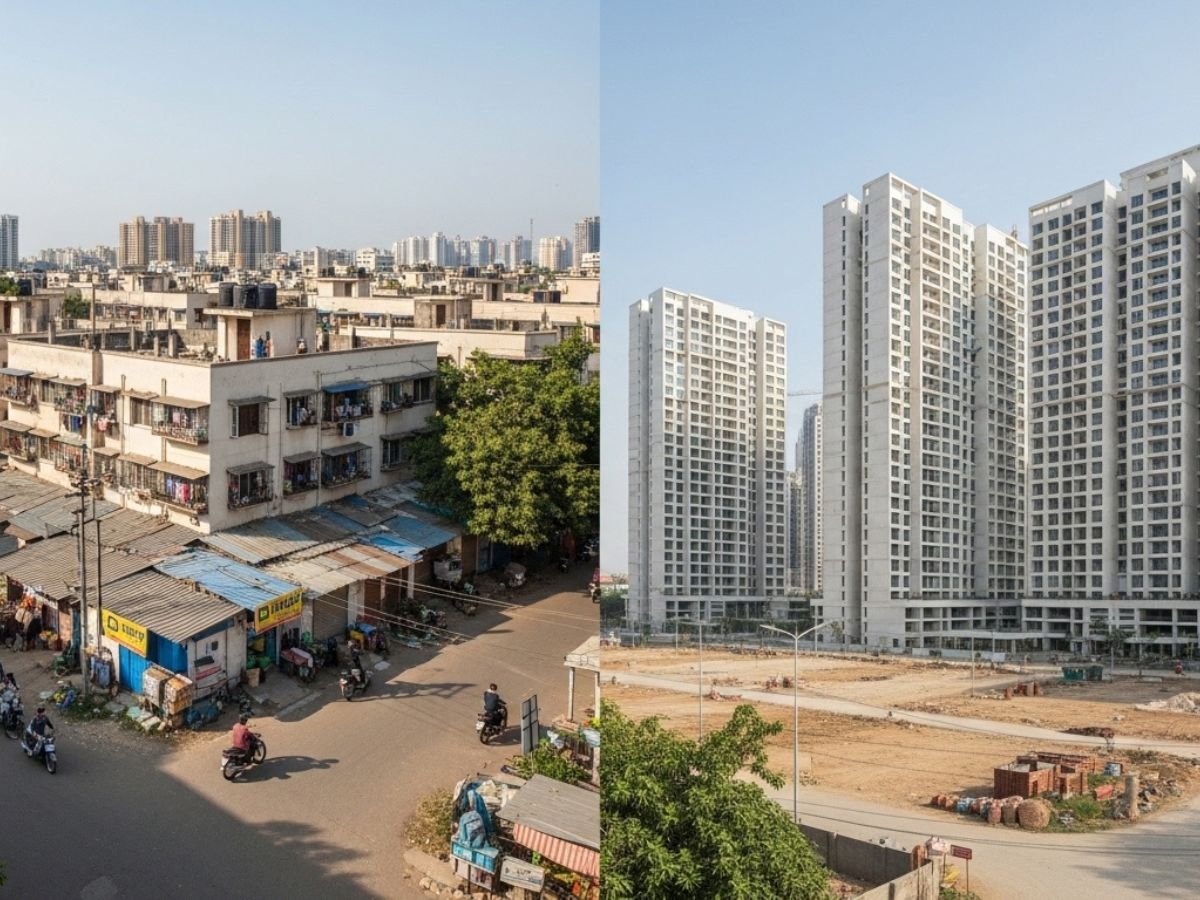
Taloja Phase 1 or Phase 2: which is usually better for homebuyers?
For most practical homebuyers, especially families and first-time buyers, Phase 1 usually wins. It is easier to understand, easier to live in, and less dependent on future promises. Phase 2 is not a bad choice, but it is more suitable for buyers who are okay with a developing environment and can wait for the surrounding ecosystem to catch up.
| Decision Point | Taloja Phase 1 | Taloja Phase 2 |
|---|---|---|
| Best suited for | Immediate end-users, families, cautious buyers | Patient buyers, long-term investors, some younger professionals |
| Daily livability | Stronger today | Still improving in many pockets |
| Residential feel | More active and settled | More fragmented, construction-heavy in many areas |
| Project type mix | Older resale stock, CIDCO-linked housing, standalone buildings | Newer gated projects, larger towers, amenity-led launches |
| Connectivity comfort | Better routine practicality overall | Better for select metro-facing pockets |
| Risk level for self-use | Lower | Higher if bought only on future story |
| Value logic | Better current usability | Better only if bought at the right price and with patience |
The simple version is this: if you want to move in and live with fewer headaches, Phase 1 is usually the safer decision. If you are willing to accept dust, unfinished surroundings, possible tanker dependence, and uneven last-mile comfort for a newer project, then Phase 2 can still make sense.
Why Phase 1 and Phase 2 should not be treated as the same property market
This is one of the biggest mistakes in Taloja-related buying advice. Both phases sit inside the broader Taloja node, but their ground reality is different enough that a single verdict does not work.
Taloja was shaped by CIDCO planning, industrial spillover from the Taloja MIDC belt, and affordable housing demand from buyers priced out of Kharghar and other stronger Navi Mumbai nodes. But development has not matured evenly. Phase 1 is older, more occupied, and more functionally settled. Phase 2 has more large-format private projects and taller towers, but many areas still show the classic problem of vertical construction running ahead of civic readiness.
That is why Phase 1 often feels more predictable, while Phase 2 can feel impressive inside the project and incomplete outside it.
There is another practical issue. Not every property sold as “Taloja” gives the same planning comfort. Buyers need to separate core CIDCO-planned sectors from looser peripheral pockets under other local administrative realities. That difference can affect title comfort, municipal service quality, and even loan ease. So even within the same broad area name, the buying experience can change sharply.
Which side feels more practical for daily living right now?
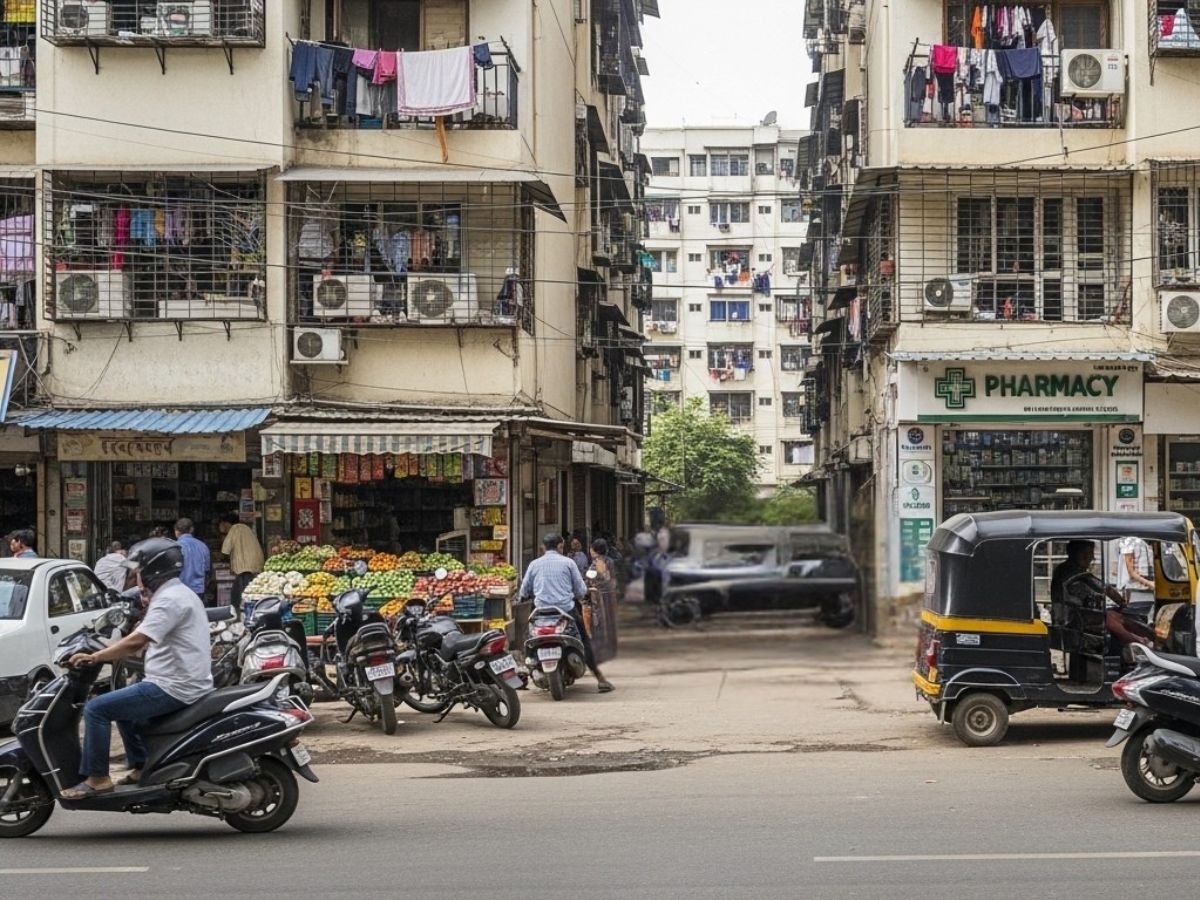
For present-day living, Phase 1 is usually more practical.
This does not mean every building in Phase 1 is better than every building in Phase 2. It means the surrounding ecosystem in Phase 1 is generally easier for normal life. You are more likely to find active shops, occupied societies, local movement, visible neighborhood rhythm, and less dependence on traveling elsewhere for basic needs.
Phase 2 often offers better-looking buildings and stronger internal amenities, but daily life is not lived only inside the clubhouse. Outside the gate, many pockets still feel underbuilt, dusty, or too dependent on future area maturity.
| Livability Factor | Phase 1 | Phase 2 |
|---|---|---|
| Grocery and daily retail | Easier and more active | Patchier, often dependent on project stores or travel |
| Neighborhood feel | More settled | Still uneven in many pockets |
| Internal road comfort | More functional overall | Can be rough in developing stretches |
| Healthcare convenience | Better immediate access | Often requires travel to stronger nearby pockets |
| Everyday predictability | Higher | Lower, varies sharply project to project |
For families, this matters a lot. A home is not just square footage and amenities. It is the school run, medicine at night, auto availability, road comfort in monsoon, and whether the area still feels half-finished after possession.
That is where Phase 1 usually feels more dependable.
Which phase gives better connectivity for work, station access, and routine movement?
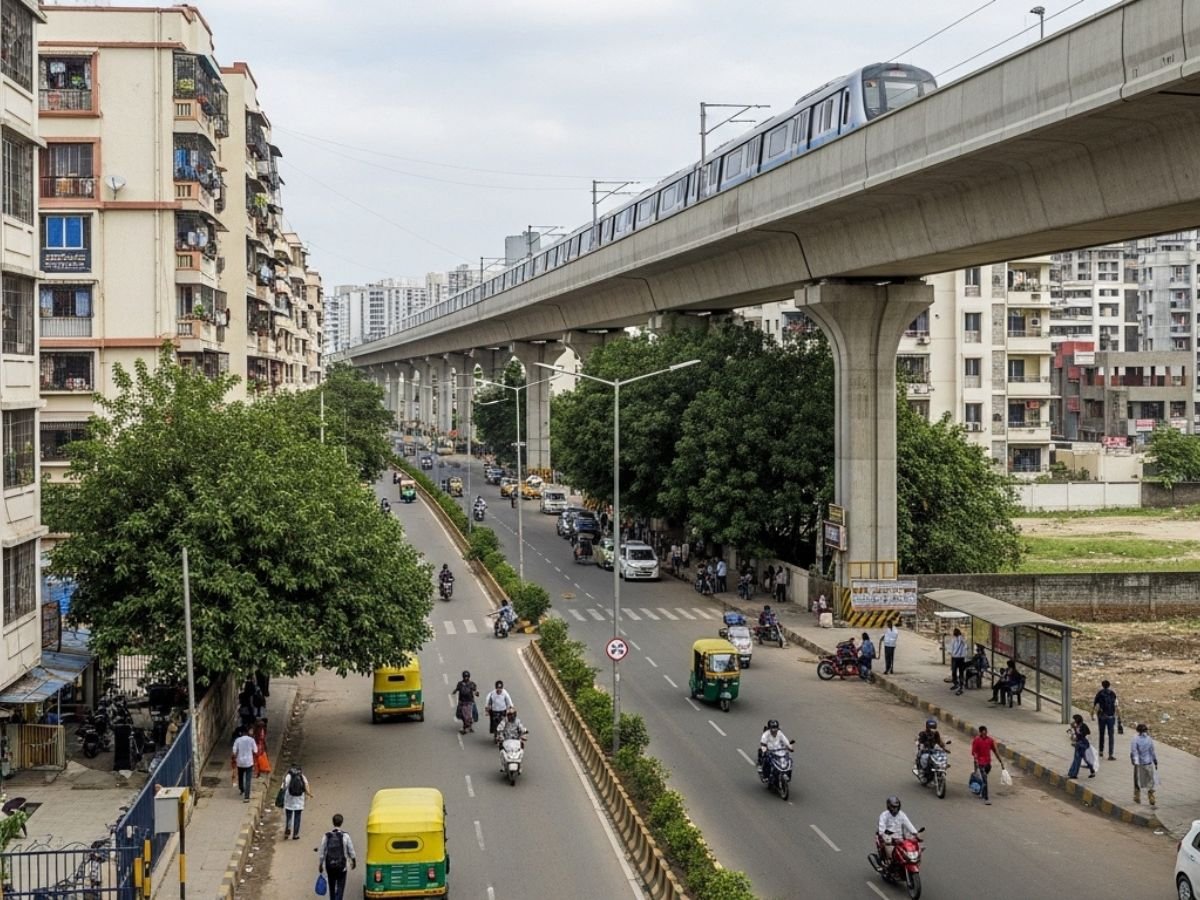
The answer here is slightly more nuanced. For broader routine movement, Phase 1 often feels easier. For select station-led or metro-led advantage, some parts of Phase 2 can look better on paper.
How rail and road access can change the buying decision
The metro changes the conversation. Pendhar Metro Station gives Phase 2 an edge for certain sectors and certain buyer profiles. If your project has genuinely workable access to the station, Phase 2 can score well for daily mobility.
At the same time, commute logic in Taloja is not only about map distance. It is also about what happens between your gate and the main road, the station, or the auto stand. That is why some buyers are disappointed even after buying “close to metro.” On paper the station looks near. On the ground, the route may still feel inconvenient.
Road infrastructure also matters. The Kharghar-Taloja flyover and wider corridor improvements strengthen the long-term case for the area, especially for Phase 2. But for a homebuyer buying now, future connectivity should improve a decision, not become the only reason for it.
Why internal approach roads matter more here than brochure distance
This is especially important in Taloja. A project may be marketed as well connected, but if the last stretch is rough, narrow, muddy, badly lit, or construction-dominated, the commute experience changes completely.
Phase 1 generally has a more usable internal movement pattern today. Shared autos, established roads, and day-to-day route familiarity make routine travel easier. Phase 2 may benefit more from certain upcoming and recent connectivity improvements, but internal approach comfort still varies too much from pocket to pocket.
So for real buyers, the smarter question is not “Which phase is closer?” It is “Which phase gives me easier movement every day without unnecessary friction?”
Price is not the full answer: where does the real value look stronger?
Many buyers assume Phase 2 should be cheaper because it feels less settled. But the market does not always behave that way.
In many cases, Phase 1 has older resale stock and simpler buildings, which keeps average pricing lower or more negotiable. Phase 2 often has newer towers with premium amenities, so headline rates can actually look higher even when the surrounding area feels weaker. That creates a very important lesson: lower discomfort does not always mean lower price, and higher price does not always mean better value.
Lower price vs better usability
For a homebuyer, value is not only about cost per square foot. It is about what the flat helps you avoid or forces you to deal with every day.
A slightly older flat in Phase 1 may give you a stronger surrounding ecosystem, easier access to daily needs, and lower adjustment stress after possession. A shiny new tower in Phase 2 may give you a much better lobby and clubhouse, but that does not automatically make it the smarter purchase if external convenience is weak.
When a cheaper flat becomes the costlier decision
A cheap entry price can become misleading if monthly living costs rise because of tanker dependence, weak society occupancy, poor access, or repeated travel for basic needs.
Example scenario
- A Phase 1 resale 1 BHK in a functional, occupied area may look less attractive visually, but daily life is easier and maintenance may stay more stable.
- A newer Phase 2 flat may look better at launch stage, but if the society depends heavily on tanker water, surrounding roads remain poor, and basic retail is weak, the total ownership experience becomes more expensive in real life.
This is where many first-time buyers get trapped. They compare brochure quality and carpet area, but ignore maintenance burden, water reality, and daily movement cost.
So in pure practical value, Phase 1 often looks stronger for self-use buyers. Phase 2 creates value only when the buyer is entering at the right price, choosing a strong project, and accepting a longer horizon.
Which phase is usually safer for self-use buyers, and which one suits patient buyers better?
For self-use, Phase 1 is usually safer. For patient buyers, especially those thinking long term, Phase 2 can still make sense.
A self-use buyer needs predictability. That means visible roads, active society life, nearby essentials, and fewer hidden shocks after possession. Phase 1 offers more of that. It is not perfect, but the decision is easier because the area already shows you what daily life looks like.
Phase 2 suits buyers who can handle uncertainty better. That includes:
- buyers who do not need immediate full-area maturity
- younger couples who prioritize internal project amenities
- investors or patient end-users who can wait for the larger area to improve
- buyers who are choosing with a 3 to 5 year comfort horizon, not only present-day usability
The key issue is not whether Phase 2 has potential. It is whether that potential matches your timeline and tolerance.
If a family with children is planning immediate relocation, Phase 1 is usually the more rational answer. If a buyer is okay entering a developing micro-market and believes the wider connectivity web will improve the node over time, Phase 2 becomes more appealing.
What kind of project quality and surrounding environment should buyers expect in each phase?
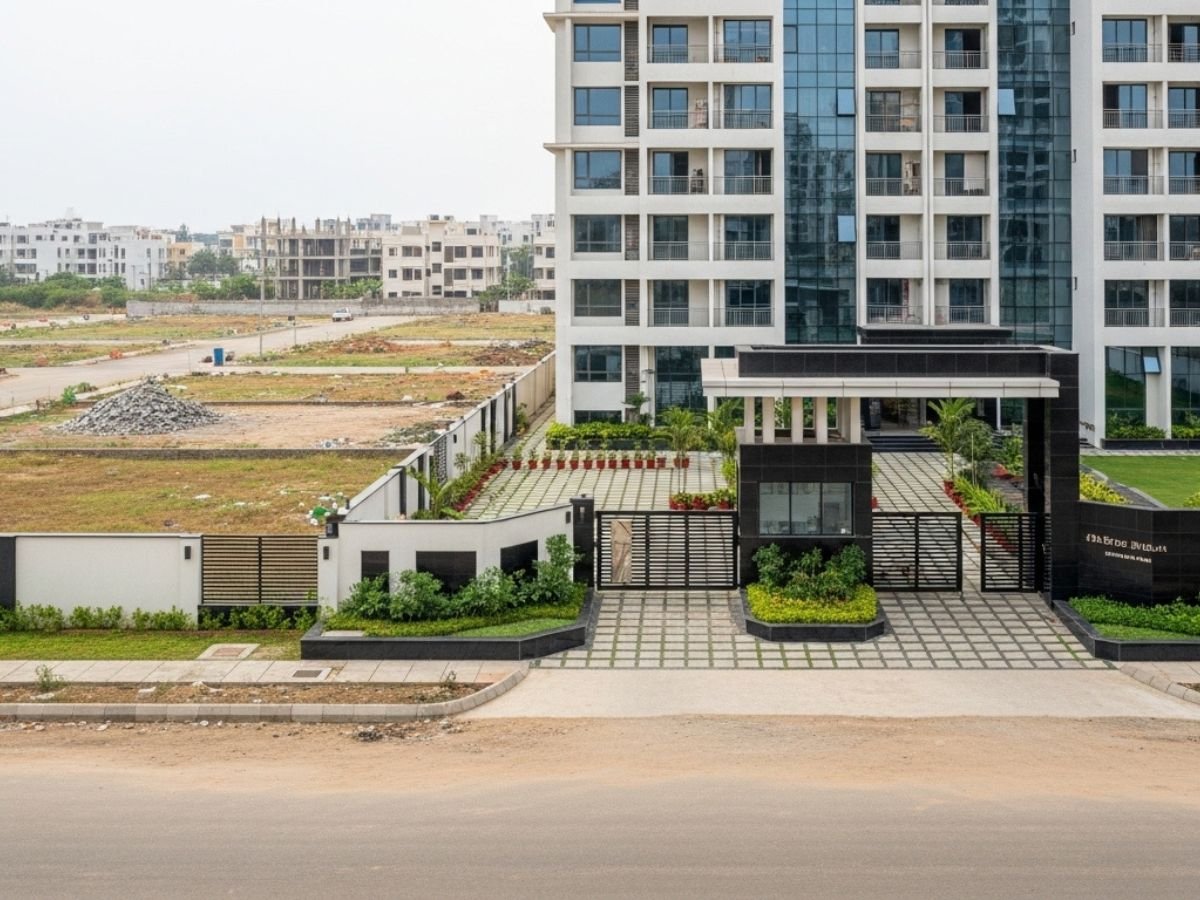
You should not choose only by phase label. You should choose by the actual project plus the immediate surrounding environment.
Building quality, occupancy pattern, and surrounding completion level
Phase 1 usually has a more mixed building stock. You may see older CIDCO-linked structures, simpler standalone buildings, and resale-heavy inventory. Some projects may need renovation, and not every society will look polished. But occupancy is usually stronger, which often improves the lived-in feel and day-to-day functioning.
Phase 2 usually has better-looking new construction. Many projects offer bigger compounds, clubhouses, podiums, branded fittings, and stronger visual appeal. But occupancy can be lower in some cases, and the area outside the project may still feel incomplete.
That creates a common Taloja contrast: better internal product in Phase 2, but stronger external practicality in Phase 1.
Why one good project cannot represent the whole phase
One strong project in Phase 2 does not prove all of Phase 2 is ready. One weak old building in Phase 1 does not prove Phase 1 is outdated.
That is why buyers should check:
- actual occupancy level
- maintenance quality
- water supply pattern
- condition of lifts and common areas
- road quality outside the gate
- nearby retail within walking distance
- whether surrounding plots are stable or still construction-heavy
- MahaRERA details if the project is under construction or recently launched
Also, Taloja’s broader environmental context matters. The MIDC belt affects area perception, and some buyers are more sensitive to industrial influence, dust, or air quality concerns than others. This is not a small issue to ignore during site visits.
Where can homebuyers make the biggest mistake while choosing between Phase 1 and Phase 2?
The biggest mistake is buying the story instead of buying the reality.
In Taloja, this happens in a few common ways:
- believing that every Phase 2 launch automatically becomes a great long-term buy
- assuming any project marketed near Kharghar or metro has the same usability as Kharghar
- buying only because a flat looks cheap
- trusting brochure connectivity without checking last-mile access
- ignoring tanker dependence and future maintenance burden
- treating all “Taloja” locations as equally planned and equally safe from a title and infrastructure point of view
Another mistake is rushing into Phase 1 assuming all settled areas are automatically good. Some Phase 1 buildings may be too old, badly maintained, or overpriced just because they are in a more active zone. So the safer phase still needs proper project-level filtering.
The right way to compare the two is simple: Phase 1 reduces present risk. Phase 2 increases the importance of careful selection.
If the goal is family living, which phase usually makes more sense?
For family living, Phase 1 usually makes more sense.
Families need consistency more than excitement. They need schools, shops, local movement, easier healthcare, safer walking conditions, and a neighborhood that already behaves like a residential area rather than a partly developing zone. That is where Phase 1 is usually stronger.
Children, senior citizens, and households with tight routines generally handle settled environments better than high-construction environments. Even if a Phase 2 project has better amenities inside, that advantage often gets diluted if basic external convenience is still weak.
So for a family planning actual end use in the near term, Phase 1 is usually the better answer.
If the goal is budget entry and future upside, does Phase 2 become more attractive?
Yes, Phase 2 becomes more attractive in that case, but only with caution.
This is the strongest argument in favour of Phase 2. Buyers can sometimes enter newer projects, better layouts, and stronger amenity formats while still staying below the pricing levels of more mature Navi Mumbai nodes. If wider connectivity keeps improving and the local ecosystem deepens, that can support future appreciation.
But this logic works only when three conditions are met:
1. the buyer is not depending on immediate area maturity 2. the project is legally and execution-wise strong 3. the price already does not fully reflect future hype
If a project is already asking a heavy premium simply by selling a future story, then the upside argument weakens. That is why Phase 2 is not automatically the smarter investor option. It is attractive only when bought with discipline.
What should you check on the ground before booking in either phase?
Before booking in either phase, site visit quality matters more than sales pitch quality.
Use this field checklist:
Ground Visit Checklist for Taloja Buyers
- Visit the area twice: once in daytime and once later in the evening
- Check the exact approach road from the main road to the project gate
- See whether shops, pharmacies, autos, and daily-use services exist within walking range
- Ask the society or builder clearly about water source and tanker dependence
- Check whether the project is on a clear CIDCO-linked planned plot and verify MahaRERA details
- Observe occupancy, not just the sample flat
- Look at drainage, road edges, and monsoon-readiness signs
- Ask who actually lives there: end-users or mostly investors
- Study monthly maintenance and what it includes
- Do not rely only on brochure distance to metro, highway, or Kharghar
In Taloja, these checks are not optional. They directly change whether a purchase feels smart six months later.
Taloja Phase 1 vs Phase 2: final decision by buyer type
The best answer depends on what kind of buyer you are, but the broad pattern is clear.
| Buyer Type | Better Choice | Why |
|---|---|---|
| First-time buyer planning quick move-in | Phase 1 | Stronger present-day livability and lower adjustment risk |
| Family with children | Phase 1 | Better routine comfort, surrounding ecosystem, and predictability |
| Retiree or cautious buyer | Phase 1 | Less dependence on future improvements |
| Young couple okay with some development-stage friction | Phase 2 | Newer projects and stronger internal amenities may appeal |
| Patient investor or long-horizon buyer | Phase 2 | Better fit for future-upside logic, if bought carefully |
| Buyer with very low risk tolerance on water, environment, and civic comfort | Usually Phase 1, or wait and re-evaluate | Needs practical clarity more than launch excitement |
The clean verdict is this: Phase 1 is usually better for buying a home to live in. Phase 2 is usually better only when the buyer knowingly chooses a longer-horizon, higher-tolerance path.
conclusion
If you are a normal homebuyer trying to decide where to actually buy and live, Taloja Phase 1 is usually the better choice. It gives you a more usable area today, a stronger residential ecosystem, and fewer unpleasant surprises after possession. Taloja Phase 2 is not the wrong choice, but it is a more selective one. It suits buyers who are buying with patience, not buyers who want immediate comfort just because the sample flat looked impressive.
So do not choose between Phase 1 and Phase 2 only by price, tower height, or launch marketing. Choose by daily life, water reality, access comfort, project execution, and your own tolerance for waiting. In Taloja, that is what separates a smart buy from a stressful one.
FAQ's
Frequently Asked Questions