How to Check Title Clear Property in Navi Mumbai Before Buying
A property has a clear title only when the ownership chain is legally traceable, the seller has the right to sell, and there are no major hidden claims, missing documents, or unresolved charges attached to it. In Navi Mumbai, you cannot prove this with one paper alone. A proper title search usually means checking the sale deed chain, Index II, seller identity, society or CIDCO records, mortgage signals, tax status, and project-level records where relevant. That is the part many buyers miss.
They hear things like “loan mil jayega”, “society registered hai”, “builder ka project bank approved hai”, or “MahaRERA pe hai”, and assume the property is legally safe. But title clear, approvals clear, and transaction safe are not the same thing. If you are buying in Vashi, Nerul, Belapur, Seawoods, Airoli, Kharghar, Kamothe, Ulwe, Taloja, Kalamboli, New Panvel, or other CIDCO-linked areas, that difference matters before paying even token money.
Quick Summary
A clear title means the current seller’s ownership is legally connected to the earlier ownership history without a serious break. It should also be transferable, not blocked by family claims, missing transfer permissions, unresolved loans, or document inconsistencies.
Here is the practical meaning:
| Question | Practical answer |
|---|---|
| What is a clear title? | A legally continuous and transferable ownership history |
| Can one document prove it? | No |
| What should you check first? | Sale deed chain and seller authority |
| What else matters in Navi Mumbai? | CIDCO records, society records, tax records, mortgage status, MahaRERA data where applicable |
| Is possession enough? | No |
| Is tax payment enough? | No |
| Is society membership enough? | No |
| Safe stage to pay token? | Only after basic document vetting and refund protection |
The biggest mistake is treating clear title like a simple label. It is not a label. It is the result of checking multiple linked records together.
Why buyers get confused between title clear, approvals clear, and transaction safe
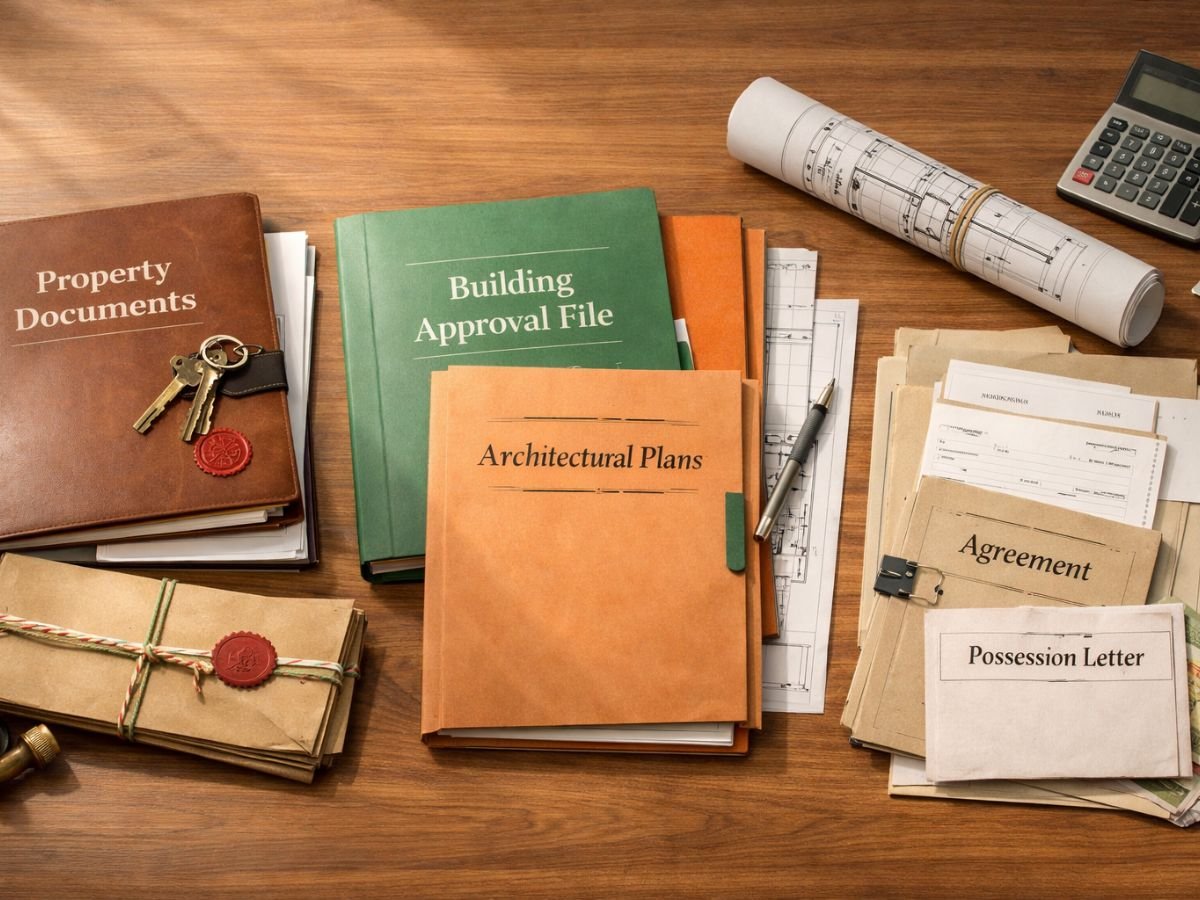
These three ideas overlap, but they do different jobs.
A property may have proper building approvals and still have title trouble at the unit level. On the other hand, a flat may have a sale history and still carry unresolved inheritance or mortgage risk.
A flat can have sale history and still be risky
Suppose a resale flat in Nerul has changed hands two or three times through registered deeds. At first glance, everything looks normal. But if one old owner died and the legal heirs were never properly brought on record, or one past mortgage was never properly cleared, the title may still be clouded.
That is why you should not stop at “deed hai”.
A project can be approved and the transaction can still be unsafe
A builder project in Kharghar or Ulwe may have MahaRERA registration, Commencement Certificate, or even Occupancy Certificate in some phases. That helps on the project side. But if your specific unit is being sold through an investor, a co-owner, an attorney holder, or someone with incomplete transfer records, your deal can still be risky.
A simple way to understand it:
| Concept | What it tells you | What it does not tell you |
|---|---|---|
| Title clarity | Whether the seller has legally marketable ownership | Whether the building is perfect in every approval sense |
| Regulatory approvals | Whether the project/building has key legal construction permissions | Whether your seller’s ownership chain is clean |
| Transaction safety | Whether your money, handover, and paperwork process are protected | Whether title history is automatically flawless |
Start with the ownership chain: who owned the property before the current seller

This is the foundation of the entire title search.
You need to see how the property moved from an earlier owner or original allotting authority to the current seller. In Navi Mumbai, that original source is often CIDCO in many areas, especially in older planned developments and leasehold-linked transactions.
How to read the sale deed chain in sequence
Read the chain backward from the current seller to the previous owner, then to the earlier owner, and so on. Each transfer should be supported by a registered document.
That transfer may be through:
- sale deed
- gift deed
- partition deed
- release deed
- succession documents
- allotment and lease documents in CIDCO cases
Each step should logically connect to the next. Names, property description, flat number, plot number, CTS or survey reference where relevant, and dates should not create unexplained breaks.
What a missing link usually means
A missing link means one stage in the ownership story is not properly proved.
Example: if the current seller bought from A, and A bought from B, but B’s own right is based only on an unregistered agreement or a vague family understanding, then the title chain becomes weak. That does not automatically mean fraud, but it does mean the property should not be treated as clean until a lawyer confirms how that gap is being legally cured.
Why inheritance, gift, release deed, partition, and GPA cases need extra care
This is where many resale buyers get trapped.
If the property came through inheritance, then all legal heirs matter. If it came through family settlement, the settlement should be properly documented. If one sibling is selling but another sibling’s rights were never formally released, that is not a small issue.
If the property is being sold through a power of attorney holder, be extremely careful. A GPA can authorise someone to act, but it does not itself become ownership. The real question is whether the true owner still exists, whether the authority is valid, and whether the final transfer is being done through a legally proper registered sale deed.
Which documents actually help you test title in a Navi Mumbai property deal
Buyers often collect random papers and feel reassured. But every document proves a different thing.
Registered sale deeds and Index II
These are the core records for ownership transfer. The sale deed shows the terms of transfer. Index II helps confirm that a transaction was officially registered.
Index II is useful because it lets you cross-check whether the transaction details match what the seller is showing you. It is not enough by itself, but it is an important support record.
Property card, 7/12 extract, or city survey records where relevant
These matter more for plots, independent structures, land-linked properties, and certain older or special land situations. They help verify land-level identity and recorded ownership position.
For many standard apartment transactions, buyers focus more on the deed chain, society records, and authority-specific records. But where land history matters, these records become important.
Society records, share certificate, and transfer entries in resale cases
For a resale flat in a co-operative housing society, the share certificate and society transfer records matter. They show whether the society recognises the seller as its member.
But this is where buyers often relax too early. Society records support the transaction. They do not replace title documents. A share certificate is not the same as a sale deed.
CIDCO allotment, lease, transfer permission, or NOC where applicable
This is a major Navi Mumbai reality.
In many CIDCO-developed or leasehold contexts, you must not treat the deal like a normal freehold resale. The original allotment, lease structure, transfer order, and required permissions may all matter. If the seller’s story depends on CIDCO-linked rights, but the transfer trail is incomplete, the risk increases sharply.
Tax records, utility linkage, and possession consistency
These are useful supporting checks, not title proof.
If property tax is being paid in a certain name, or the electricity bill comes in the seller’s name, that helps you understand possession and practical continuity. But none of these documents, by themselves, proves clean legal title.
Document-to-risk matrix: what each paper reduces and what it does not solve
| Document | What it helps you test | What it does not settle |
|---|---|---|
| Sale deed chain | Ownership continuity | Hidden equitable mortgage or future dispute by itself |
| Index II | Registration confirmation | Full title quality |
| Society share certificate | Society membership and transfer support | Full legal ownership chain |
| CIDCO allotment / transfer record | Authority-level leasehold continuity | Society-level or structure-level compliance by itself |
| Property tax receipt | Civic dues and possession clues | Ownership proof |
| MahaRERA project page | Project disclosures and approval visibility | Resale seller’s individual title quality |
| Loan closure letter / bank NOC | Whether known financing is closed | All historic title defects |
| Encumbrance-style search and lawyer scrutiny | Registered claims and legal risk review | Absolute certainty without full document quality |
How to check if there is a loan, charge, dispute, or other hidden claim
A title can look neat on paper and still be commercially dangerous.
Mortgage clues buyers often miss
One common mistake is assuming that if the seller has photocopies of title papers, everything is fine. Sometimes the original documents are with a bank. Sometimes an old loan was taken and not properly closed. Sometimes the project was once financed, and the buyer does not understand whether the specific unit has been released.
That is why buyers should ask direct questions about existing or past loans and ask for closure proof where relevant.
Why “bank-approved project” is not enough for resale comfort
A bank may have been comfortable with the project at one stage. That does not mean your resale flat today is free from seller-level mortgage or charge issues.
Project comfort is not unit-level clearance.
Litigation, notice, or family dispute signals to take seriously
Take these seriously:
- seller avoids sharing complete document chain
- one heir is “abroad” and not signing
- attorney holder is handling everything but ownership basis is vague
- society is hesitant to confirm transfer history
- CIDCO paperwork is partial or missing
- seller wants token before legal review
- names differ across documents without explanation
- old transactions were done only on unregistered papers
These are not small drafting issues. They can become money-loss issues.
The title search process is different for these 5 Navi Mumbai property types
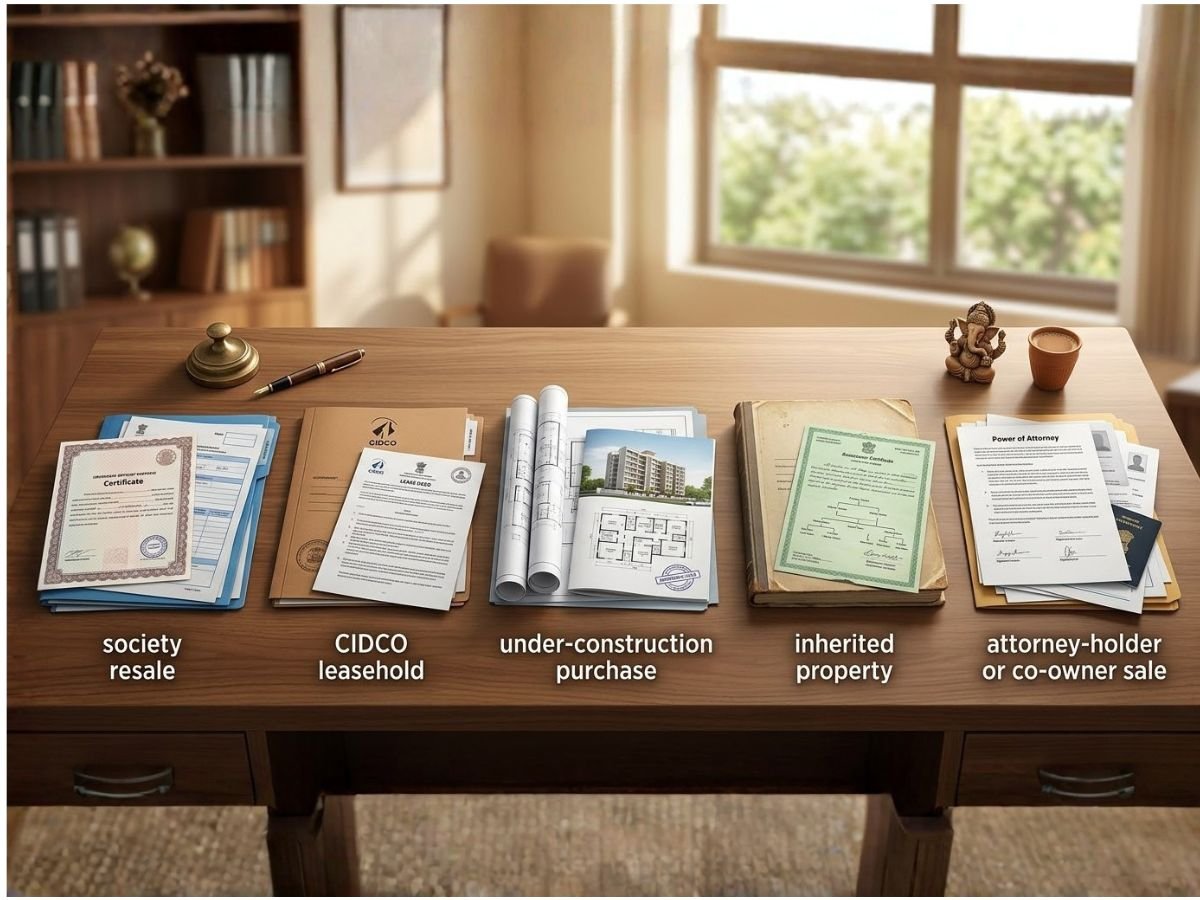
One checklist does not fit every property.
Resale flat in a co-operative housing society
Main focus: deed chain, society transfer record, share certificate, maintenance dues, seller identity, co-owner consent, and whether the society’s records align with the deed history.
CIDCO leasehold flat or plot
Main focus: original allotment, lease status, transfer permissions, transfer orders, authority compliance, and whether the seller’s rights are properly recognised in the CIDCO chain.
Under-construction project flat
Main focus: MahaRERA disclosures, promoter title report, sanctioned approvals, builder authority to sell, and whether you are buying directly from the promoter or through an investor-style transfer.
Inherited or family-transferred property
Main focus: legal heir position, will or succession basis where relevant, release deeds from all needed parties, and updated ownership records.
Property sold by attorney holder or one co-owner
Main focus: whether the seller actually has authority to sell the full interest being offered. This needs extra caution and should never be treated casually.
What you can verify yourself and what should go to a property lawyer
You should absolutely do your own first-level screening. But you should also know where that stops.
What you can verify yourself before token payment
You can usually do these basic checks yourself:
- compare seller name across key documents
- ask for latest sale deed and earlier link deeds
- check Index II details
- review society papers in resale cases
- check tax dues on the relevant civic portal depending on jurisdiction
- review MahaRERA page for under-construction projects
- confirm whether the property story sounds freehold, society-based, or CIDCO-linked
What should go to a property lawyer
A lawyer should review:
- continuity and legal strength of the ownership chain
- inheritance-based title
- GPA-based sale structure
- CIDCO transfer validity
- release deed sufficiency
- risk from missing registrations
- whether a formal title search report should clear the deal or stop it
When a title search report becomes necessary
In practice, it becomes necessary before the deal becomes serious. If the property is resale, inherited, CIDCO-linked, mortgaged, jointly owned, or document-heavy, a proper legal title scrutiny is not optional. It is part of safe buying.
A practical step-by-step title search workflow before paying token money
Before site visit or first negotiation
Understand the property type first. Is this a society resale, CIDCO-linked unit, under-construction flat, inherited property, or investor resale? This changes the document path.
Before token payment
Collect the latest core papers. At minimum, see the current title document, earlier link papers, seller identity trail, and society or CIDCO support papers where relevant. Do not pay token based only on brochure talk or broker comfort.
Before Agreement for Sale
This is the stage for deeper legal scrutiny. Get the chain reviewed properly. Check for unresolved loan issues, family consent issues, authority mismatch, or transaction gaps.
Before registration and possession
Confirm loan closure if applicable, no-dues status where relevant, and that the person executing the final sale deed is the legally correct seller with proper authority.
Red flags that should make you pause, renegotiate, or walk away
Some issues are manageable. Some are serious. Some are deal-breakers.
Deal-breaker style red flags
- missing ownership link that cannot be explained
- unregistered historical transfer forming the core of current title
- one heir missing in an inherited property sale
- one co-owner not signing
- CIDCO-linked property without proper transfer trail
- seller refusing legal scrutiny
- pressure for fast non-refundable token
- major name mismatch with no supporting correction documents
Serious red flags that need strong legal review
- society records not matching deed chain
- mortgage story unclear
- builder inventory and investor resale story mixed up
- family settlement claimed but not properly documented
- possession story different from document story
Common Navi Mumbai situations where buyers wrongly assume the title is clear
Society says okay, so buyer thinks everything is fine
This happens a lot in older society resales. The society may recognise the seller for maintenance purposes, but that does not mean every historical deed issue is clean.
Builder inventory and investor resale get mixed together
In growth areas like Ulwe, Taloja, Panvel-side markets, and even parts of Kharghar, buyers sometimes think they are getting a simple builder-side unit, but the transaction is actually being routed through an investor or allottee. That changes the risk profile.
CIDCO transfer papers do not match current possession story
A seller may physically occupy the unit and even have local acceptance, but if the CIDCO-side transfer logic is incomplete, the legal comfort is weaker than it looks.
Family settlement was “done at home”
That is one of the most dangerous lines in property buying. Family understanding is not the same as registered legal transfer.
Does a home loan sanction prove the title is clear
A sanction letter mainly shows that the bank is comfortable with your loan eligibility. It does not automatically mean the property’s title has passed every legal check at the stage when buyers usually assume it has.
Banks do legal review, but buyers should not wait passively and assume that the bank will save them from every defect. If the bank discovers a problem late, your disbursement may stop after you have already committed money.
That is exactly why token payment should not happen blindly.
Final buyer checklist for a cleaner, safer property purchase in Navi Mumbai
| Stage | What you should do |
|---|---|
| First screening | Identify property type: society resale, CIDCO, under-construction, inherited, co-owned |
| Basic document check | Ask for current title deed, link papers, seller ID consistency, society/CIDCO support papers |
| Before token | Get a preliminary legal view and keep refund protection in writing |
| Before agreement | Complete deeper title scrutiny, loan/charge verification, authority checks |
| Before registration | Confirm final seller authority, dues, loan closure, and record consistency |
Conclusion
If you want to check whether a property has a clear title in Navi Mumbai, do not ask for one magic document. Ask for the ownership story, the registered proof behind each step, the authority trail behind the property type, and the evidence that the seller has full legal power to sell today. That is the real title search.
For a normal buyer, the safest practical rule is simple: do your own first-level checks, but do not rely on broker confidence, society comfort, tax receipts, or loan language as proof of title. In a city shaped by society resales, CIDCO leasehold history, inherited flats, and mixed transaction structures, clear title is something you verify layer by layer, not something you assume. Source basis: approved blueprint and research dossier provided by the user.
FAQs
Frequently Asked Questions