

Turbhe Lake Navi Mumbai – Flamingo Habitat, Location & Timings
Turbhe Lake Navi Mumbai is a coastal wetland located near the Turbhe– Nerul belt, known for seasonal flamingo sightings between November and March. It forms part of the larger estuarine ecosystem connected to Thane Creek and sits dangerously close to the industrial TTC MIDC corridor.
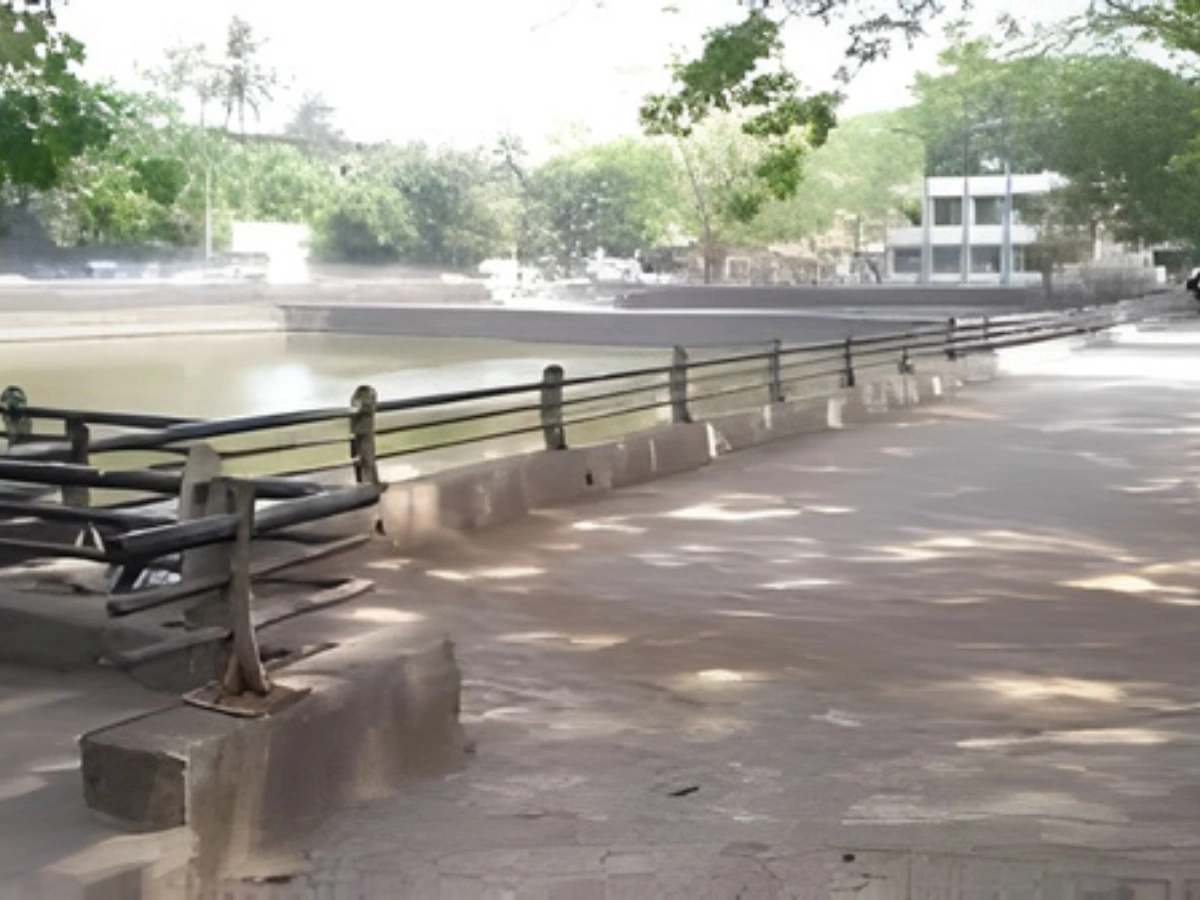
But Turbhe Lake is not just about flamingos and Instagram sunsets. It is a layered story of Agri-Koli heritage, landfill leachate, chemical industries, and aggressive urban redevelopment between 2024 and 2026. What you see on the surface and what exists underneath are two completely different realities.
Important Disclaimer
Turbhe Lake is an eco-sensitive coastal wetland, not a developed recreational park like Nerul Lake. There are no paved walking tracks, no benches, and no designated sitting areas around the water body.
Please wear sturdy footwear, carry your own drinking water, and avoid entering marshy patches. This is a natural habitat zone, not a landscaped garden space.
Quick Summary Table
| Detail | Information |
|---|---|
| Name | Turbhe Lake |
| Location | Turbhe Gaon, Navi Mumbai |
| Type | Coastal wetland connected to Thane Creek |
| Famous For | Seasonal flamingos (Nov–March) |
| Administrative Authority | Navi Mumbai Municipal Corporation |
| Nearby Landmark | TTC MIDC Industrial Area |
| Entry Fee | Free |
| Best Time to Visit | Sunrise hours (Nov–Feb ideal) |
| Environmental Status | Ecologically stressed zone |
| Major Concern | Industrial discharge + landfill impact |
Where is Turbhe Lake Located? (Map, Coordinates & Authority)
Turbhe Lake is located in Turbhe Gaon, Navi Mumbai, Maharashtra, at approximately 19.0668° N, 73.0169° E. Administratively, it falls under the jurisdiction of the Navi Mumbai Municipal Corporation, which oversees lake maintenance and urban planning in this zone.
The lake lies adjacent to the Trans Thane Creek Industrial Area developed by Maharashtra Industrial Development Corporation. It is roughly 3.5 km from Nerul railway station and directly accessible from Turbhe railway station on the Harbour Line, making it geographically central but environmentally vulnerable.
Is Turbhe Lake a Natural Lake or Part of Thane Creek?
Turbhe Lake is not a man-made ornamental pond. It is a natural low-lying coastal wetland that historically functioned as a tidal catchment linked to the larger estuarine system of Thane Creek.
Ecologically, it falls within the broader influence zone of the Thane Creek Flamingo Sanctuary, India’s first flamingo sanctuary. This hydrological connection explains why migratory flamingos occasionally use Turbhe’s shallow waters as a feeding ground during winter months.
Flamingos at Turbhe Lake – When Do They Arrive?
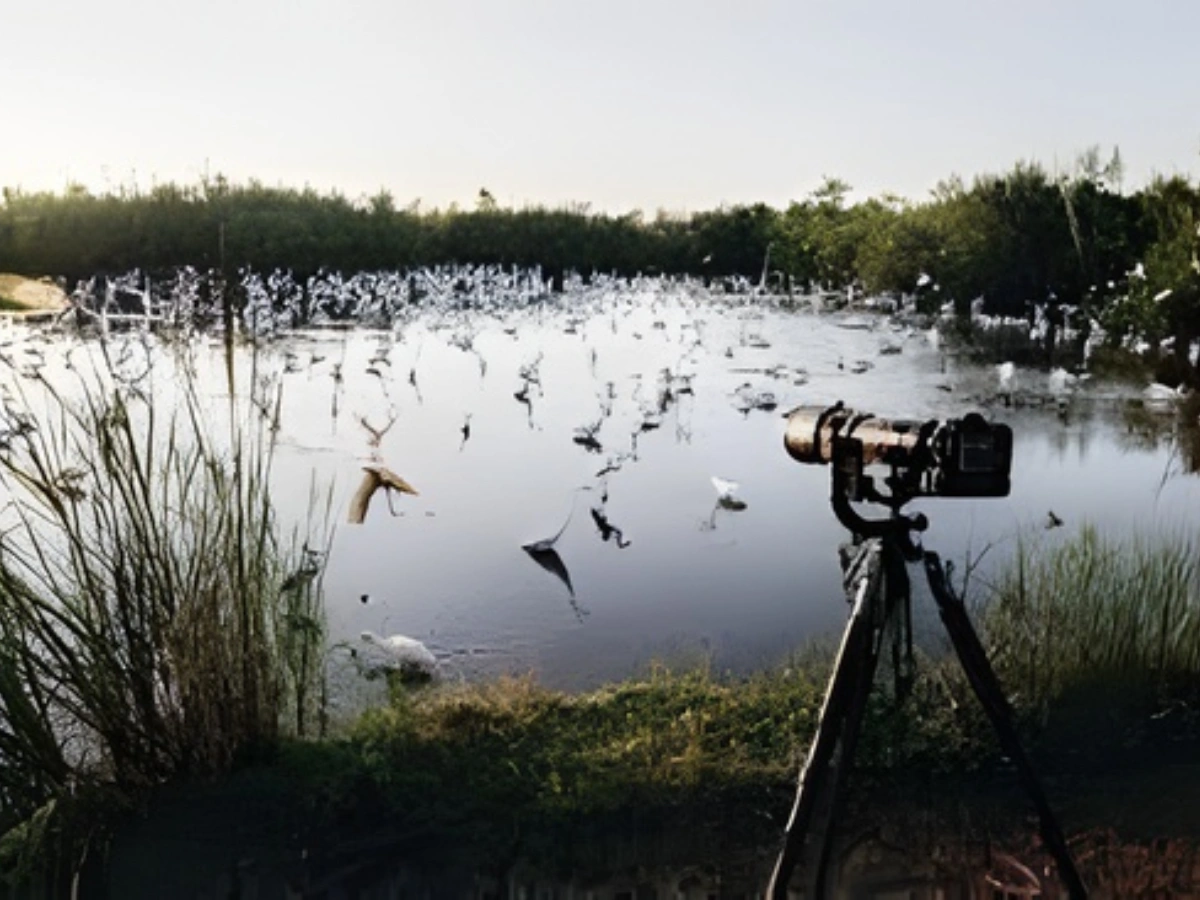
Flamingos are typically visible from November to March, with peak sightings in January and February. The birds migrate from regions such as Gujarat’s Rann and further north, following nutrient-rich tidal mudflats across the Mumbai Metropolitan Region.
Both Lesser Flamingos and Greater Flamingos have been observed here. Lesser Flamingos are smaller and pinker due to their algae-rich diet, while Greater Flamingos are taller with paler plumage. Their arrival depends entirely on water quality, salinity levels, and food availability, which makes pollution a direct threat to their seasonal presence.
| Month | Flamingo Visibility | Probability |
|---|---|---|
| Nov – Dec | Early arrivals, scattered groups | 40% |
| Jan – Feb | Peak Season (Best Time) | 90% |
| March – April | Departure begins | 50% |
| May – Oct | Rare/None | 5% |
How to reach from Turbhe Lake to NMIA
By Car
Travel from Turbhe Lake to NMIA by Car
| Route Option | Distance | Estimated Time | Main Roadways Used |
|---|---|---|---|
| Route via NH348A (Option 1) | 13.1 km | 22 min | Sion-Panvel Hwy, NH348A |
| Route via NH348A (Option 2) | 13.1 km | 23 min | Sion-Panvel Hwy, NH348A |
| Route via Palm Beach Road | 14.7 km | 28 min | Palm Beach Rd, Sakaram Patil Marg, NH348A |
By Bus
| Route Option | Bus/Train Number(s) | Key Route & Transfer Points | Service Provider | Total Duration | Approx. Cost |
|---|---|---|---|---|---|
| Fastest via Train/Bus | Train 98103 + Bus A-4 | Sanpada → Nerul Station → Nerul (E) Bus Stop (10 stops) | Central Railway & NMMT | 1 hr 6 min | – |
| Direct Bus Link | Bus S-563 | Sanpada Railway Station → NMIAL Terminal 1 (11 stops) | BEST | 1 hr 7 min | – |
| Transfer via Income Tax Colony | Bus 31AC + Bus A-4 | Turbhe Bridge → Income Tax Colony (11 stops) → NMIAL Terminal 1 (4 stops) | NMMT | 1 hr 16 min | ₹48.00 |
| Train & Shuttle Link | Train 98107 + Bus A-4 | Sanpada → Seawoods-Darave → Sterling College (6 stops) | Central Railway & NMMT | 1 hr 16 min | – |
| CBD Belapur Route | Bus 125AC + Bus 23 + Bus A-2 | Turbhe Bridge → CBD Belapur (10 stops) → Kharkopar (12 stops) → NMIA (2 stops) | NMMT | 1 hr 22 min | ₹49.00 |
| Targhar Connection | Bus 31AC + Bus A-2 | Turbhe Bridge → Targhar (15 stops) → Targhar Station → NMIA (5 stops) | NMMT | 1 hr 25 min | ₹47.00 |
How to reach from Turbhe Lake to Railway Station
By Car
| Route Option | Distance | Estimated Time | Key Landmarks |
|---|---|---|---|
| Route 1 (via Turbhe Village Rd) | 1.9 km | 10 min | Yash Tutorials, CAKE ART, Janta Market Rd |
| Route 2 (via Sion-Panvel Hwy) | 3.4 km | 10 min | I Love Turbhe, Thane-Belapur Rd, MH43 CHAIWALA |
| Route 3 (via Bank Of India Rd) | 2.1 km | 11 min | Shree Ramtanu Mata Mandir, Ganesh Pan Shop, Janta Market Rd |
By Bus
| Detail Category | Information |
|---|---|
| Bus Number | 82AC (Diva Mahotsav Naka) [cite: 151] |
| Service Provider | NMMT (Navi Mumbai Municipal Transport) [cite: 153] |
| Total Journey Time | Approximately 16 minutes [cite: 125] |
| Ticket Cost | ₹10.00 [cite: 183] |
| Start Point | Turbhe Lake [cite: 126] |
| Walking to Bus Stop | 5 min (350 m) to Turbhe Village stop via Ramtanu Mata Marg [cite: 129, 131, 150] |
| Bus Duration | 3 min (2 stops) from Turbhe Village to Turbhe [cite: 152, 154] |
| Arrival at Station | 8 min (600 m) walk from Turbhe stop via pedestrian overpass [cite: 158, 171] |
| Destination | Turbhe Railway Station, Sector 20 [cite: 182, 184] |
How to reach from Turbhe Lake to Bus Depot
By Car
| Route Option | Distance | Estimated Time | Key Landmarks |
|---|---|---|---|
| Via Highway Merge (Longest) | 2.9 km | 7 min | Sion-Panvel Hwy, Thane-Belapur Rd, Turbhe Bridge |
| Via Bank of India Rd (Mid) | 1.6 km | 8 min | Ganesh Pan Shop, Vashi-Turbhe Rd, NMMT Canteen |
| Via Janta Market Rd (Shortest) | 1.2 km | 10 min | Shree Ramtanu Mata Mandir, Bakul Plaza, Satyam Electronics |
By Bus
| Bus Details | Route Stops & Connection | Duration & Distance | Fare & Operator |
|---|---|---|---|
|
NMMT Route 60 (Bail Bazar) |
Pickup: Turbhe Village [cite: 164] Stops: 2 stops to Turbhe [cite: 166] Final Leg: 8 min walk (550 m) to Depot [cite: 170] |
Total Time: 16 min Walking: 13 min total [cite: 141, 170] |
Fare: ₹7.00 Operator: NMMT [cite: 167] |
| Walking Segments |
Start: Walk to Turbhe Village (350 m) [cite: 141] End: Walk from Turbhe to Depot via Pedestrian Overpass [cite: 170, 181] | Distance: 900 m total walking [cite: 141, 170] | — |
How to reach from Turbhe Lake to CSMIA
By Car
| Route Option | Distance | Estimated Time | Main Highways & Tolls |
|---|---|---|---|
| Via SCLR & CST Road | 23.2 km | 38 min | Sion-Panvel Hwy, Santacruz-Chembur Link Rd (SCLR), NH 48 (Tolls apply) |
| Via BKC Connector | 26.3 km | 44 min | Sion-Panvel Hwy, BKC Connector, Bandra Kurla Complex Rd, NH 48 (Tolls apply) |
| Via Ghatkopar-Andheri Link Rd | 21.4 km | 46 min | Sion-Panvel Hwy, Ghatkopar-Mankhurd Link Rd, Andheri-Ghatkopar Link Rd (Tolls apply) |
By Bus
| Bus/Route Details | Major Stops & Transfers | Total Time | Fare & Operator |
|---|---|---|---|
| Dolphin Travel House Bharat Benz A/C Sleeper | Sanpada to Vile Parle East (7 stops) | 1 hr 6 min | Dolphin Travel House |
| BEST S-563 & 321 LTD Connecting Route | Sanpada Station → Marol Depot → Domestic Airport Junction | 1 hr 51 min | BEST |
| NMMT 105 Bandra Bus Station | I.C.L. School (Vashi) to Income Tax Office (BKC) | 1 hr 28 min | ₹45.00 (NMMT) |
| BEST A-507 Santacruz Station (E) | I.C.L. School (Vashi) to Vakola Police Station | 1 hr 32 min | BEST |
| BEST C-505 Santacruz Depot | I.C.L. School (Vashi) to Income Tax Office (BKC) | 1 hr 37 min | ₹50.00 (BEST) |
| BEST 255 LTD & Metro Multi-modal Route | GTB Nagar Station → Dharavi Flyover → Metro Line 3 (Aarey JVLR) | 1 hr 24 min | BEST / MMRCL |
“See Also Other Flamingo Spots in Navi Mumbai”
- T.S. Chanakya Wetlands (Karave, Nerul)
- NRI Complex Wetlands (Seawoods)
- DPS Lake (Nerul)
- Turbhe Wetland (Turbhe Gaon)
- Panje Wetlands (Uran)
- Bhandup Pumping Station (Thane Creek)
Entry Fee, Timings & Ground Reality (2026)
There is no official entry gate at Turbhe Lake. No ticket counter. No formal promenade. The wetland remains openly accessible through village-side pathways, and entry is completely free as of 2026.
The best visiting window is between sunrise and 8:30 AM, especially during flamingo season. After sunset the area becomes poorly lit and isolated, and due to nearby industrial movement and landfill proximity, it is not considered safe for late evening visits.
Visitor’s Pro-Checklist for Flamingo Spotting
If you are visiting Turbhe Lake specifically for flamingo sightings, come prepared. The birds usually stay deeper in the mudflat zones, so binoculars or a DSLR with zoom lens will significantly improve your viewing experience.
Wear full-sleeve clothing as wetland areas naturally attract mosquitoes, especially during winter mornings. Sports shoes are strongly recommended because the ground can be uneven or slightly muddy. Also download offline maps beforehand, as mobile network can fluctuate near the lake’s interior edges.
Turbhe Lake vs Nerul Lake- Which Is Better for Visitors?
Many visitors confuse Turbhe Lake with the more developed Nerul lakefront. But they serve very different purposes.
The landscaped lake near Nerul Lake offers walking tracks, seating, cleaner surroundings, and structured access. Turbhe Lake, in contrast, is raw, ecologically significant, and surrounded by dense settlement and industrial pressure.
| Feature | Turbhe Lake | Nerul Lake |
|---|---|---|
| Development | Minimal | Developed promenade |
| Flamingos | Seasonal | Rare |
| Cleanliness | Environmentally stressed | Maintained |
| Entry Fee | Free | Free |
| Best For | Bird watchers, researchers | Families, walkers |
If you are a casual visitor looking for comfort, Nerul is easier. If you are a serious bird enthusiast or urban researcher, Turbhe tells the real story of Navi Mumbai.
Environmental Importance & Mangrove Ecosystem
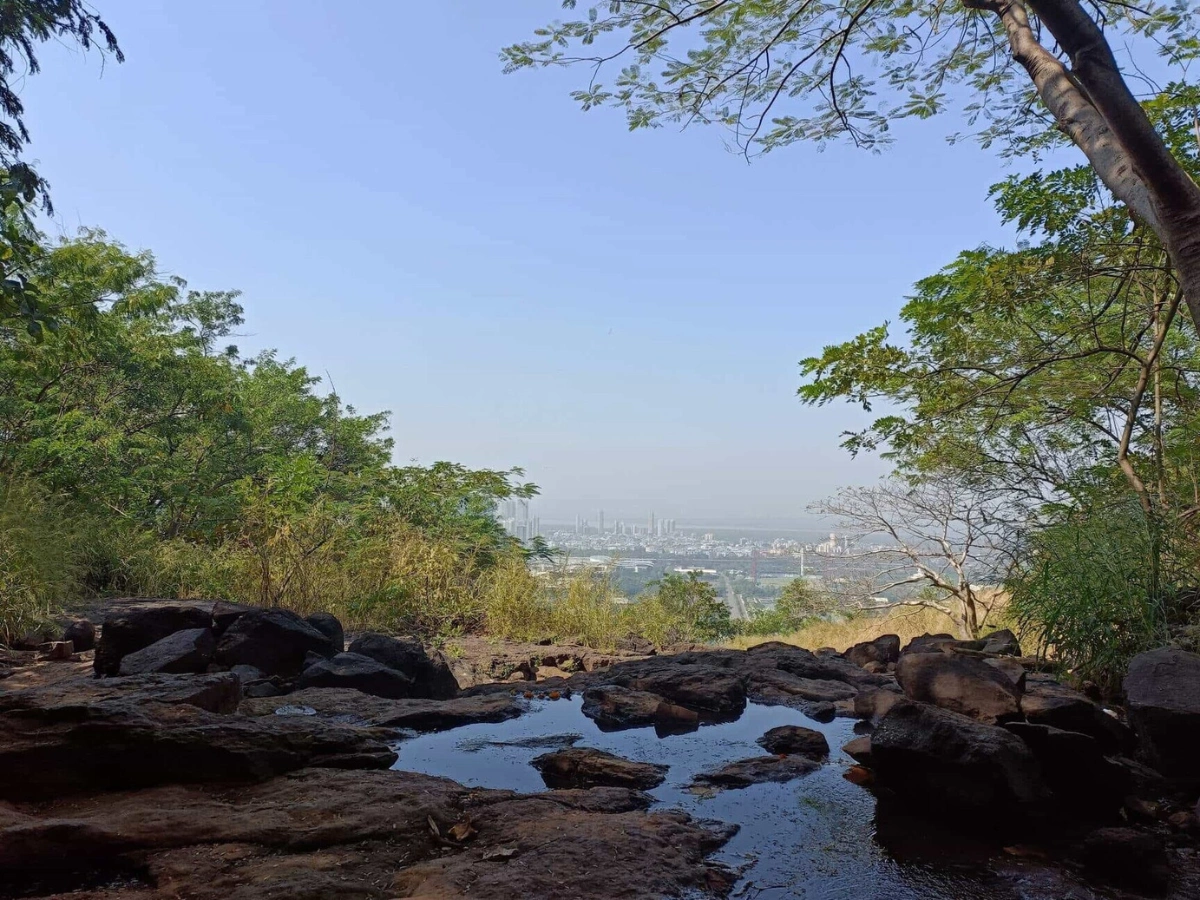
Turbhe Lake forms part of a fragile coastal wetland ecosystem influenced by tidal backflow from Thane Creek. These wetlands support benthic organisms, microalgae, and crustaceans which form the primary diet of migratory flamingos.
From a regulatory standpoint, this zone falls under Coastal Regulation Zone monitoring influenced by the Maharashtra Coastal Zone Management Authority. Any ecological disruption here affects not just birds but groundwater recharge, flood buffering, and mangrove stability across the Turbhe–Sanpada belt.
The Water Quality Contradiction – Official vs Independent Findings
On paper, reports from the Maharashtra Pollution Control Board in 2025 classify groundwater quality in Turbhe as “Good to Excellent” with a Water Quality Index of 42.50. COD values were reported between 32–36 mg/L and BOD between 8–9 mg/L, suggesting manageable organic load.
But independent testing by Atlas Lab in March 2025 showed COD levels of 6,361 mg/L and BOD of 2,140 mg/L in surface waters connected to Turbhe’s drainage system. That is not marginal variation. That is a completely different reality, reinforcing local complaints of nighttime chemical discharge and strong sulfur-like smells across Rabale–Turbhe belt.
Turbhe Landfill – The Silent Chemical Pressure
The 100-acre Turbhe dumping ground processes more than 850 metric tonnes of waste daily. Borewell samples near the landfill have shown coliform contamination and elevated nitrogen levels, indicating active leachate seepage into shallow groundwater layers.
Methane surface fires and hydrogen sulfide emissions are common. This landfill is not just a visual problem. It is hydrologically connected to the same aquifer system feeding the lake, which explains recurring algae blooms and water hyacinth overgrowth inside Turbhe Lake.
Air Quality Crisis – Quarry Dust & Industrial Emissions
Turbhe sits under the shadow of the Parsik Hills, where decades of quarrying have turned sections of the ridge into exposed stone faces. Fine particulate dust drifts toward residential pockets, especially during dry months, coating buildings and vegetation in a thin grey layer.
Beyond dust, emissions from the TTC MIDC belt release sulfur compounds and volatile organic gases. Historical SO₂ readings in Turbhe have crossed 287 µg/m³, nearly 3.5 times the safe daily limit, which explains the recurring “burnt rubber” or “rotten egg” smell residents report at night.
TTC MIDC – The Chemical Backbone of Turbhe
The Trans Thane Creek industrial area developed by the Maharashtra Industrial Development Corporation in 1963 transformed Turbhe from an Agri-Koli village into an industrial logistics hub. Today, over 3,000 units operate across chemicals, dyes, bulk drugs, petrochemicals, and textile auxiliaries.
These fall largely under Red Category industries, meaning high pollution potential. While they generate employment and GDP contribution for Navi Mumbai, they also create hydrological and atmospheric stress that directly impacts Turbhe Lake’s ecological balance.
The ₹2,100 Crore Waste-to-Energy Project – Solution or Shifted Risk?
In 2024, the Navi Mumbai Municipal Corporation approved a ₹2,100 crore integrated waste management project at the Turbhe landfill site under a PPP model, with R & B Greentech LLP as concessionaire. Phase I aims to process 1,500 tonnes per day and generate 27 MW of electricity.
The plant combines Bio-CNG processing for wet waste and Refuse Derived Fuel incineration for dry waste. While officials position it as a Smart City upgrade, environmental groups warn that incineration of mixed waste could release dioxins and furans, potentially worsening Turbhe’s already fragile air quality.
Kharghar- Turbhe Link Road- Tunneling Through the Hills
The ₹2,100 crore Kharghar- Turbhe Link Road project involves twin tunnels drilled through the Parsik Hills to ease congestion on the Sion-Panvel corridor. The project is being executed by City and Industrial Development Corporation.
What concerns conservationists is that hill tunneling projects were exempted from full Environmental Impact Assessment under specific regulatory interpretation. Aquifer disruption remains a serious risk, potentially affecting groundwater recharge systems historically feeding wetlands in Turbhe and Kharghar.
The “Lake View” Real Estate Narrative
Between 2025 and 2026, developers began marketing nearby towers with phrases like “Turbhe Lake View.” From certain elevations in Sanpada or the Kharghar side, the open wetland does create a wide horizon visual.
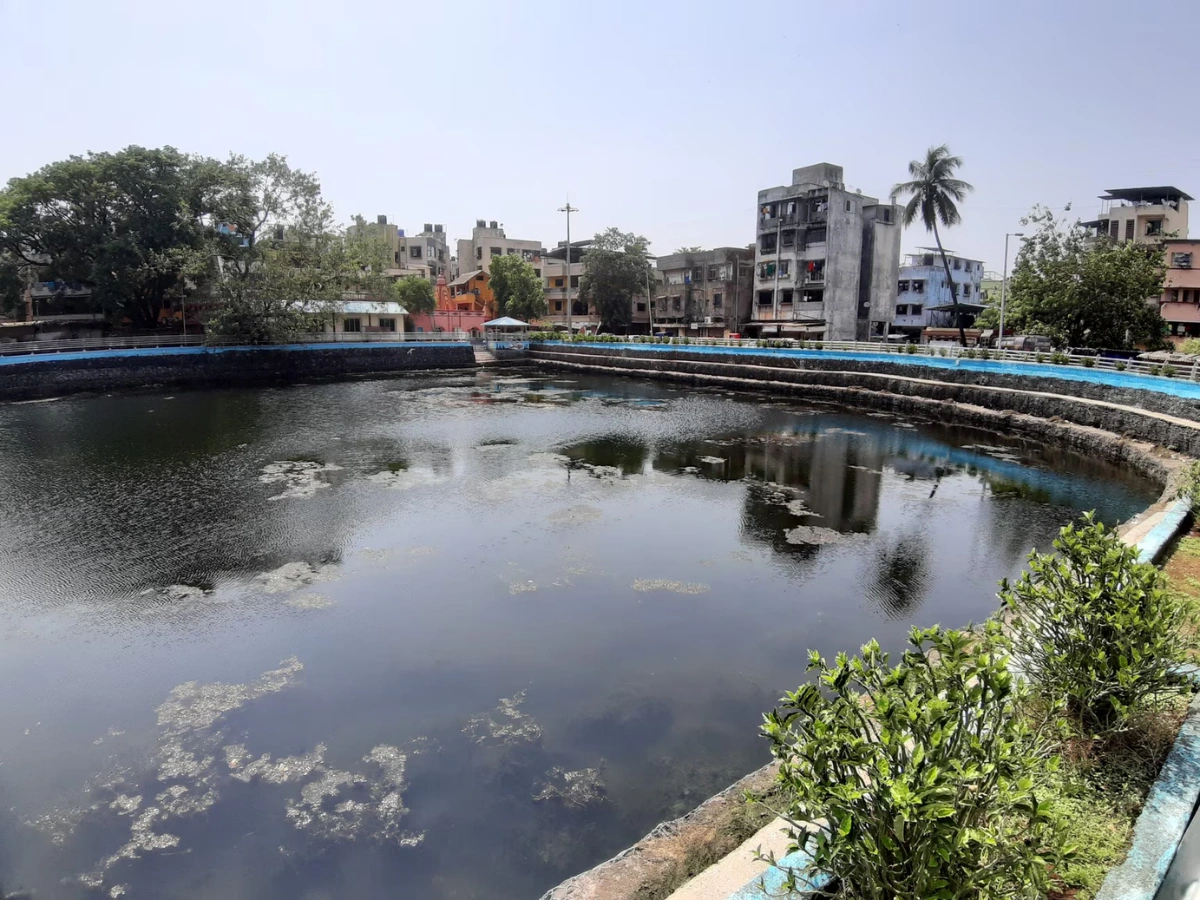
But on ground level, the lake is surrounded by dense settlements, industrial corridors, and landfill proximity. The branding captures skyline openness, not ecological restoration. The distinction matters for buyers expecting a landscaped waterfront experience.
Connectivity – Rail, Road & Airport Access
Turbhe is served directly by Turbhe railway station on the Harbour Line, making it easily accessible from Vashi, Nerul, and Panvel. Road connectivity includes Palm Beach Road, Sion-Panvel Highway, and the under-construction KTLR corridor.
The lake area lies approximately 25 km from Chhatrapati Shivaji Maharaj International Airport, reachable within 45–60 minutes depending on traffic. Accessibility is strong, but environmental quality remains the determining factor for visitor experience.
By Train
The nearest railway access point is Turbhe Railway Station on the Harbour and Trans-Harbour Line. From the station, take an auto-rickshaw toward Turbhe Gaon. The approximate fare ranges between ₹30–50 depending on traffic and waiting time.
Once you reach Turbhe Gaon, the wetland lies within walking distance through internal village roads.
By Road
You can approach via Sion–Panvel Highway by exiting at Turbhe Naka, or use Palm Beach Road and take the Sanpada–Turbhe internal connector.
There is no official parking zone near the lake. Visitors usually park along village roads at their own discretion, so choose a safe and non-obstructive spot.
Local Insider Tip (Agri-Koli Connection)
If you want to understand the true history of this water body, talk to the local Agri-Koli fishermen near Turbhe Gaon. They have seen this wetland transform from a pristine fishing spot to its current industrial state over the last 40 years.
Final Verdict- Turbhe as Navi Mumbai’s Ecological Mirror
Turbhe Lake reflects the contradiction of Navi Mumbai itself. A planned city with surplus municipal budgets and mega infrastructure projects, yet a wetland struggling under chemical load, landfill seepage, and quarry dust.
If strict enforcement replaces symbolic beautification, Turbhe could revive as a functional wetland within the Thane Creek ecosystem. If not, it risks becoming a seasonal flamingo stopover floating above a chemically stressed base. The choice, as always in urban India, lies between engineering pride and ecological responsibility.
Is Turbhe Lake part of a protected sanctuary?
It is not independently notified as a sanctuary, but it lies within the ecological influence zone of the Thane Creek Flamingo Sanctuary.
FAQ's
Frequently Asked Questions