
Ulwe Property Rates in 2026: Market Trend, Sector-Wise Prices and What Buyers Should Know
Ulwe property rates are no longer in the old “cheap future area” zone. In 2026, Ulwe has clearly moved into a more expensive and selective phase, with asking prices often looking much higher than actual deal values. In simple words, Ulwe is still relevant, but buyers now need to judge it sector by sector, project by project, and resale versus under-construction, instead of trusting one average number for the whole node.
That is the biggest truth most generic articles miss.
A lot of portals show Ulwe as if it is one single market moving in one single direction. Ground reality is different. Some pockets are benefiting from Bamandongri or Kharkopar railway access, some are gaining from airport-side sentiment, and some are still struggling with dust, heavy-vehicle movement, unfinished surroundings, or weak daily convenience. So the real question is not just “What is Ulwe’s average property rate?” The better question is: what kind of Ulwe property, in which part of Ulwe, and for what purpose?
Ulwe property rates right now: what the market is broadly quoting and what buyers actually see on ground
quoted prices in Ulwe are often much higher than registered deal reality.
Aspirational portal asking rates in Ulwe are commonly seen in the broad range of about ₹13,500 to ₹14,850 per sq ft for better-positioned inventory. But official-style registered transaction reality, as reflected through market tracking based on IGR-linked deal data, sits closer to roughly ₹10,500 to ₹11,500 per sq ft on average for flats. That spread matters a lot for real buyers.
Quick rate reality table
| Market view | 1 BHK broad band | 2 BHK broad band | Broad PSF view | What it usually means |
|---|---|---|---|---|
| Portal asking level | ₹45 Lakh to ₹70 Lakh | ₹80 Lakh to ₹1.4 Crore | ₹13,500 to ₹14,850 | New launches, premium societies, optimistic sellers |
| Practical transaction zone | ₹30 Lakh to ₹55 Lakh | ₹60 Lakh to ₹96 Lakh | ₹10,500 to ₹11,500 | Negotiated deals, utility-based buying, bank-friendly reality |
| Premium edge cases | ₹60 Lakh to ₹70 Lakh+ | ₹1.2 Crore to ₹1.5 Crore+ | Much higher in select projects | Branded, possession-ready, larger carpet, better sectors |
This is why buyers panic unnecessarily. They open a portal, see a polished quote, and assume Ulwe has become unaffordable. In many cases, the asking price is not the final price. It is only the opening mood of the market.
That does not mean Ulwe is cheap. It is not. It means the market has a wide spread, and smart buyers still negotiate using configuration, possession stage, building age, and actual surroundings.
Why Ulwe rates have moved up in the last few years, and what is still expectation-driven
Ulwe prices did not rise only because of marketing. Some of the biggest drivers are now real, delivered, and visible.
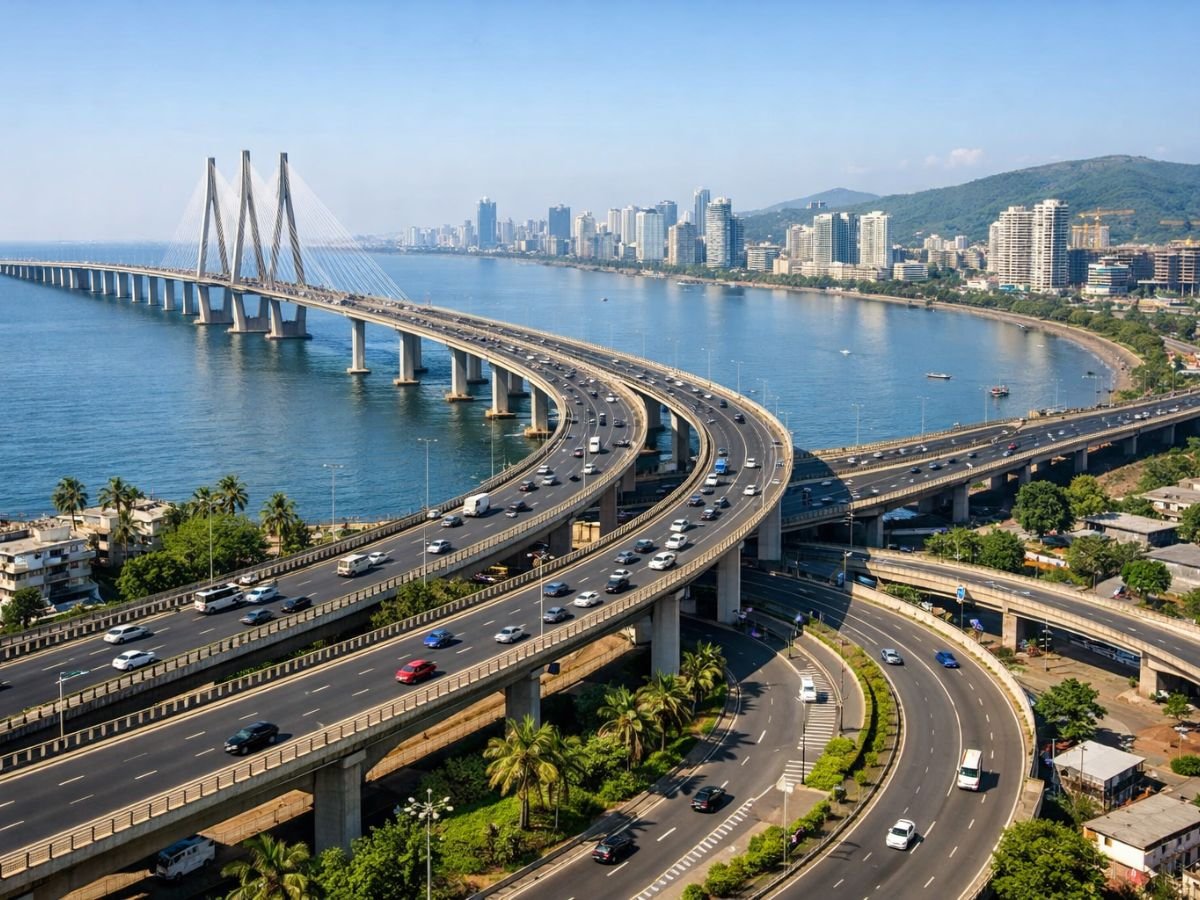
Navi Mumbai International Airport started commercial operations on 25 December 2025. The Atal Setu is operational and has changed how people mentally and physically look at this side of Navi Mumbai. The node is no longer seen only as a distant future bet. It has become part of an active airport-influence housing zone.
But this is where buyers need balance.
Yes, the airport matters. Yes, the bridge matters. Yes, connectivity perception has improved. But that does not automatically mean every building in every sector deserves premium pricing.
Airport impact
The airport has changed sentiment, job expectations, and long-term housing demand. That part is real. It supports better confidence in Ulwe than what existed a few years back.
But the airport does not solve all local issues overnight. A tower with weak approach roads, limited occupancy, or poor immediate ecosystem does not become premium just because it is in the broader Ulwe geography.
Atal Setu and Mumbai access psychology
Atal Setu has done something very important for Ulwe. It has reduced the psychological distance from Mumbai. Earlier, many people treated Ulwe like a remote side market. Now, the commute equation looks more serious and more practical.
This helps both end users and investors. But again, this benefit is strongest where internal access is also smooth. If the external bridge is fast but your daily internal movement is irritating, the premium becomes less convincing.
Rail and daily commute relevance
For middle-income families, railway relevance still matters. Bamandongri and Kharkopar side influence is important because end users do not buy only on airport stories. They buy on daily routine. Office commute, school drop, market access, and walkability still decide how much value a location holds.
A caution buyers should remember
Ulwe has moved from hype-led growth to more selective growth. The days of blindly buying “anything in Ulwe” and expecting dramatic upside are largely behind it. From here, micro-location quality matters more than broad location branding.
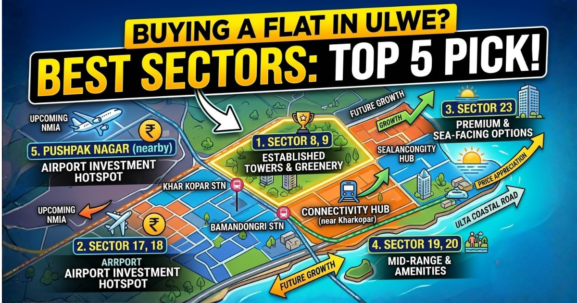
Ulwe is not one market: which pockets behave differently and why
This is the most important section in the whole article.
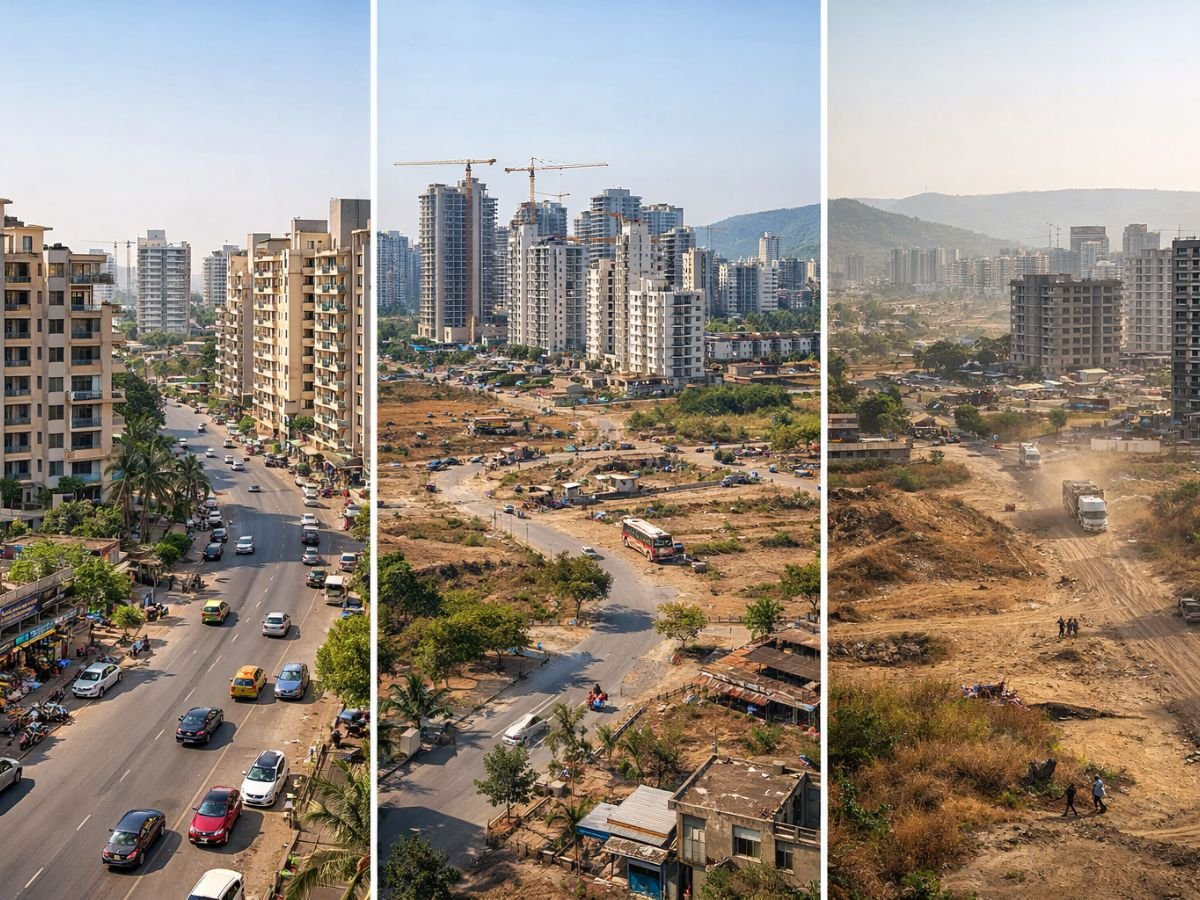
Ulwe should not be understood as one flat pricing zone. It behaves like multiple small micro-markets inside one large node.
Area behaviour comparison
| Pocket type | Typical examples from current market logic | Ground character | Price behaviour |
|---|---|---|---|
| More mature, station-influenced pockets | Sector 17, Sector 19, Sector 9 and nearby practical belts | Better daily activity, better retail comfort, stronger railway pull | Higher pricing, lower negotiation, stronger rental confidence |
| Mid-tier developing pockets | Sector 8, Sector 20, Sector 21 type areas | Ongoing improvement, mixed maturity, decent upside | Moderate pricing, better negotiation room |
| Peripheral or friction-heavy pockets | Sector 16, Jawle side, outskirts and truck-influenced stretches | Dust, logistics traffic, weaker daily comfort, patchy immediate ecosystem | Lower entry price, higher caution, more speculative behaviour |
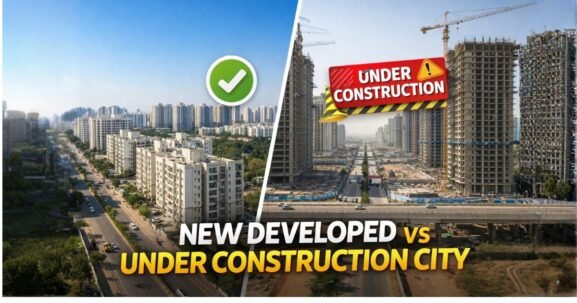
A flat near active daily-use areas, better internal roads, and station influence will not behave the same way as a flat in an isolated pocket with construction all around it.
This is also why one buyer says Ulwe feels ready and another says Ulwe still feels incomplete. Both can be right. They are often talking about different parts of Ulwe.
1 BHK, 2 BHK, resale, and under-construction: where the real price differences come from
Configuration matters, but not as much as buyers think.
A 1 BHK in Ulwe can start around ₹30 Lakh in older or weaker-stock settings and can go to ₹60 Lakh or more in better, ready, premium societies. A 2 BHK can sit anywhere from about ₹60 Lakh to ₹96 Lakh in standard form, and much above that in large, premium, or branded projects.
So why does the gap become so large?
Because in Ulwe, buyers are not paying only for square feet. They are paying for four hidden factors: project age, possession certainty, sector practicality, and brand perception.
1 BHK budget zone
This is where first-time buyers and entry investors usually start. Budget stock exists, but very cheap-looking units often come with trade-offs such as older buildings, weaker finishing, less desirable surroundings, or more complex paperwork.
2 BHK family-buyer zone
The 2 BHK segment is where family buyers get serious. Here, the difference between “affordable on paper” and “comfortable in real life” becomes sharper. A slightly higher budget can completely change liveability if it moves the buyer into a better sector or possession-ready society.
Resale flats vs new launches
Resale flats are not automatically a bargain. In Navi Mumbai, especially on CIDCO-linked leasehold patterns, older resale properties may involve transfer charges, NOCs, and document-chain risk. In April 2025, CIDCO transfer charges were increased, which made secondary-market budgeting more sensitive.
That means a cheaper resale quote may still become less attractive after all transaction friction is added.
Possession-ready premium vs promise premium
Buyers today willingly pay a possession premium to avoid double pressure: EMI plus rent. This is very real in Ulwe.
A ready 1 BHK in a practical sector may feel expensive, but many families still prefer it over a larger under-construction flat in a weaker area because certainty itself now has value.
Is Ulwe still a good market for buyers, or has it become mostly an investor story
Ulwe is no longer only an investor story. It has clearly become more end-user relevant. But it is not equally good for every buyer profile.
For end users, Ulwe works best when the property is in a practical sector with visible daily life around it, reliable water outlook, and realistic commute convenience. For investors, Ulwe still offers a meaningful airport-linked and rental-led story, but only with patience.
Decision checklist
Ulwe makes sense in 2026 if:
- you want a Navi Mumbai location with stronger long-term airport relevance
- you value Atal Setu-side access logic
- you are choosing carefully within the node, not blindly
- you are okay paying more than old Ulwe prices
Ulwe needs caution if:
- you expect very fast speculative doubling from here
- you are stretching your EMI too aggressively
- you are buying only because a broker used the word airport
- you are ignoring sector quality and paperwork
Ulwe is a weaker fit if:
- you want a fully mature city ecosystem immediately
- your budget is too tight for better pockets
- you are buying short term and hoping for quick flipping gains
What the rental market is saying about the strength of Ulwe demand
Rental demand is one of Ulwe’s strongest supporting signals.
A normal 1 BHK in Ulwe can broadly fetch around ₹15,000 to ₹20,000 per month, while a 2 BHK can range from around ₹20,000 to ₹46,000 depending on furnishing, society quality, and location quality. Broad rental yields in the node are usually seen in the 3.5% to 5% range, which is stronger than many traditional Mumbai residential markets.
That matters because rental strength is the market’s honesty test.
If nobody wanted to live here, the capital values would look much weaker. The fact that rents have meaningful depth shows Ulwe now has real residential pull, not only investor pitch decks.
Still, rental performance is not uniform. A well-located, ready apartment in a practical pocket will rent faster and better than an isolated property where occupancy is still thin.
What can make Ulwe rates rise further, and what can slow the market down
Ulwe still has future tailwinds. But it also has friction.
Positive triggers
- The airport ecosystem can deepen actual local demand
- The Hetawane water supply breakthrough is a major structural positive for long-term livability
- The Ulwe Coastal Road, once completed, can reduce some internal movement friction
- Stronger residential acceptance can support steady, moderate appreciation
Friction points
- Aggressive asking prices can hit affordability ceilings
- CIDCO transfer charge burden can hurt resale attractiveness
- Not all sectors are equally protected from dust, truck movement, or incomplete surroundings
- Metro-related assumptions are often exaggerated; buyers should not treat future metro planning as today’s delivered value in Ulwe
The practical reading is simple: Ulwe still has room for growth, but not blind growth. Moderate, infrastructure-supported appreciation is more realistic now than dramatic speculative jumps.
Should you buy in Ulwe in 2026, wait, or compare it with nearby options first
Ulwe is strongest when viewed as a middle-ground option.
It is usually more practical than very early-stage alternatives like Pushpak Nagar for many current end users. At the same time, it may still feel less immediately mature than parts of Panvel or Kharghar depending on what exactly a family wants.
Nearby comparison snapshot
| Area | Broad price logic | Main strength | Main caution | Best for |
|---|---|---|---|---|
| Ulwe | Mid-to-upper emerging price zone | Airport relevance, MTHL access, rail-linked pockets | Uneven micro-markets, resale friction | End users, long-hold investors |
| Pushpak Nagar | Lower entry point | Cheaper entry, future planning story | Early-stage livability and noise concerns | Patient investors |
| Panvel | More established pricing | Mature ecosystem, known family comfort | Broader budget pressure, different commute logic | Families wanting established surroundings |
| Dronagiri | Lower-cost play | Affordability, logistics-side value | Industrial feel, slower social ecosystem | Budget investors |
Buy now if
You want a ready or near-ready home in a better Ulwe pocket and your budget already matches today’s reality.
Wait if
You are stretching beyond comfort, buying only on FOMO, or still unclear whether you actually need Ulwe or just want “airport-side appreciation.”
Compare nearby areas first if
Your budget is tight, your priority is immediate family ecosystem, or you are open to sacrificing some airport-side advantage for lower entry pricing.
What to check before trusting the asking price in any Ulwe project
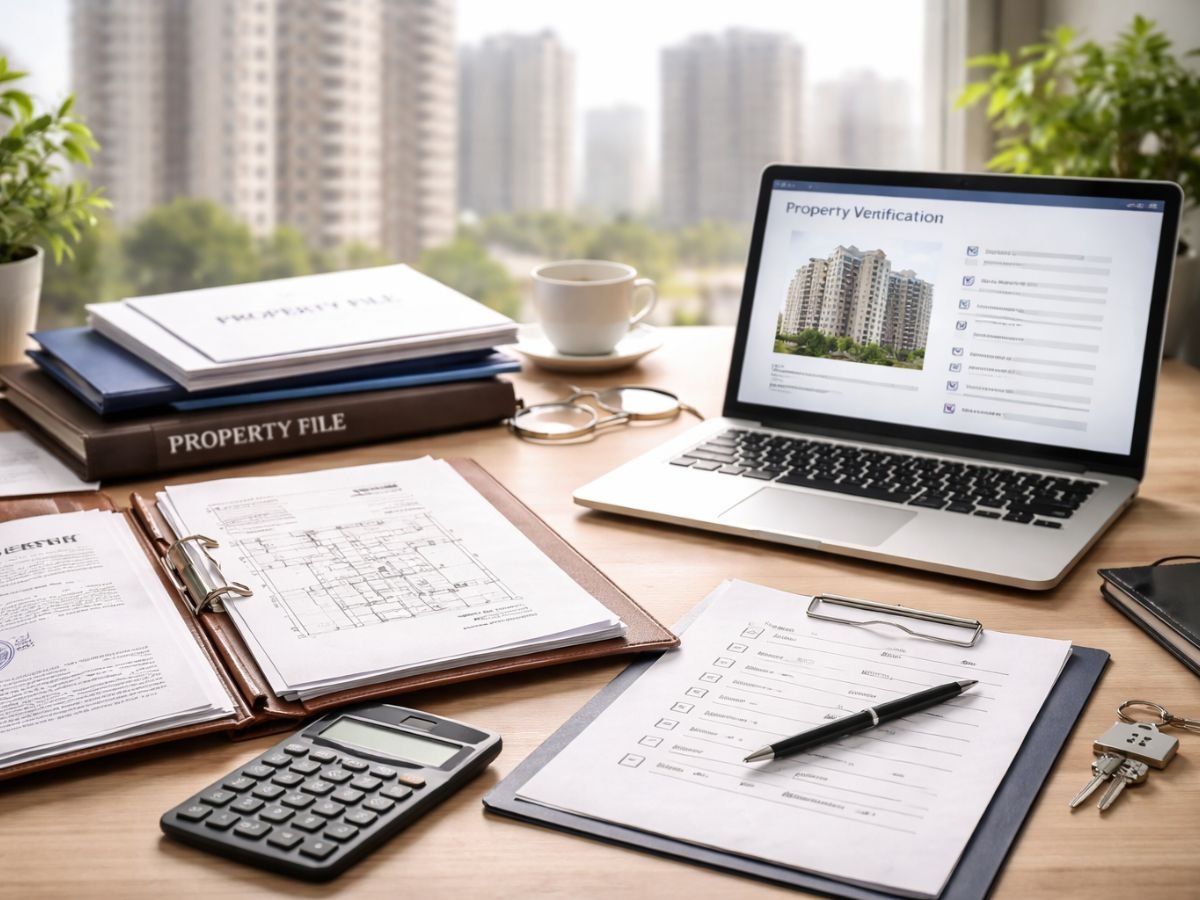
This is where buyers save money and save stress.
Do not trust the asking price unless you have checked what exactly you are paying for.
Practical due-diligence checklist
- Check MahaRERA registration and latest progress status for under-construction projects
- Verify whether the project is truly near practical daily-use infrastructure or only near a future promise
- Ask clearly whether the property is freehold-like in practical transfer ease or CIDCO-linked leasehold with extra process burden
- Check if water, occupancy, and internal road reality match the sales pitch
- In resale cases, verify chain of title, society paperwork, and CIDCO NOC requirements with a property lawyer
- Compare asking price with registered market reality, not just with another broker’s quote
- Clarify who bears transfer-related costs before agreeing on a deal
Also remember one important difference: asking value, registered value, and emotional seller expectation are three different things. In Ulwe, many deals fail because buyers and sellers are working with completely different price assumptions.
Conclusion
Ulwe property rates in 2026 are no longer cheap enough to buy casually and no longer simple enough to understand through one average number. This is now a maturing market, not a blind hype market.
That is the real takeaway.
Ulwe still has a strong case because the airport is operational, Atal Setu has changed access psychology, rental demand has real depth, and long-term infrastructure logic is stronger than before. But the easy-money version of the Ulwe story is mostly over. From here, success depends on choosing the right pocket, the right inventory type, and the right entry price.
So, should you buy in Ulwe?
Buy if you are selecting carefully, budgeting honestly, and focusing on real usability or long-hold value. Wait if you are being pushed by hype, overpaying for future promises, or ignoring how different one Ulwe sector can be from another. In 2026, Ulwe is not a blanket yes or no. It is a location that rewards disciplined buyers and punishes lazy ones.
FAQ's
Frequently Asked Questions