
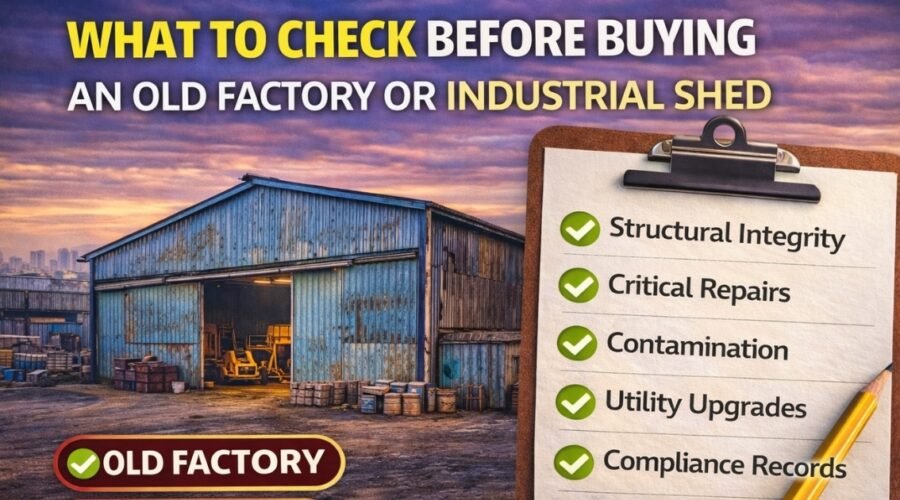
What to Check Before Buying an Old Factory or Industrial Shed in Navi Mumbai
Buying an old factory or industrial shed can make sense, but only if the file, structure, access, utilities, approvals, and transfer conditions are still workable. Age by itself is not the real problem. The real risk is buying a unit that looks cheap but later demands heavy repair money, carries old dues, has transfer restrictions, or simply does not suit modern industrial use. That is what you need to check before token, agreement, and final payment.
In Navi Mumbai and nearby industrial belts, this matters even more because older stock is common in places like the TTC belt and Taloja. Many of these units were built for a very different era of trucks, machinery, pollution control, and building compliance. So the right question is not “Is the shed old?” The right question is “How much usable life, legal clarity, and operational value is still left in it?”
Should you even consider buying an old factory or industrial shed?
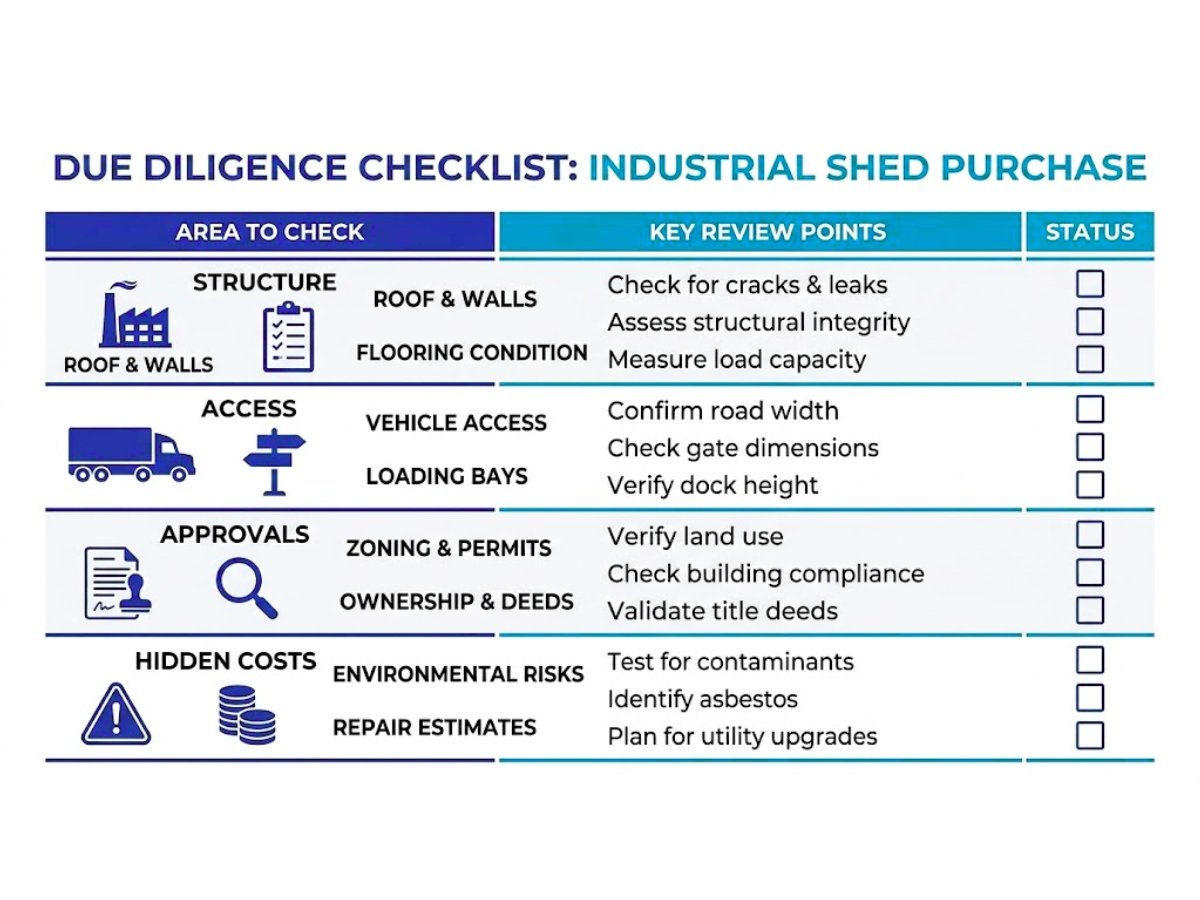
Yes, sometimes you should. An old industrial property is not automatically a bad deal. In fact, in established belts, an older unit can still be a smart buy if the location is strong, the file is clean, and the building can still support your use without massive hidden capex.
The mistake is assuming that old means cheap value. Sometimes it means cheap trouble. A 25-year-old shed with intact structure, good truck movement, valid approvals trail, and clean transferability can be safer than a newer-looking property with unauthorized changes or weak paperwork.
Quick summary
| Check area | Good sign | Bad sign | Why it matters |
|---|---|---|---|
| Title and transfer | Clear ownership and transferable rights | Past transfers done informally or without authority approval | Registration alone does not always make the transfer clean |
| Structure | Repairable ageing, manageable leakage, usable floor | Major corrosion, settlement, structural distress | A cheap structure can become a rebuilding project |
| Access and loading | Trucks can enter, turn, load, and exit practically | Blind reverse, narrow gate, weak loading geometry | Poor movement kills daily operations |
| Approvals and utility | Valid or renewable compliance trail | Expired consents, missing plans, unclear power/water status | Old papers do not automatically protect present use |
| Hidden costs | Repair budget still lower than value gain | Roof, fire, drainage, electrical, and regularisation costs too high | Cheap purchase price is not the real entry cost |
A simple rule helps here: do not buy age; buy remaining utility.
What should you check first before even visiting the site?
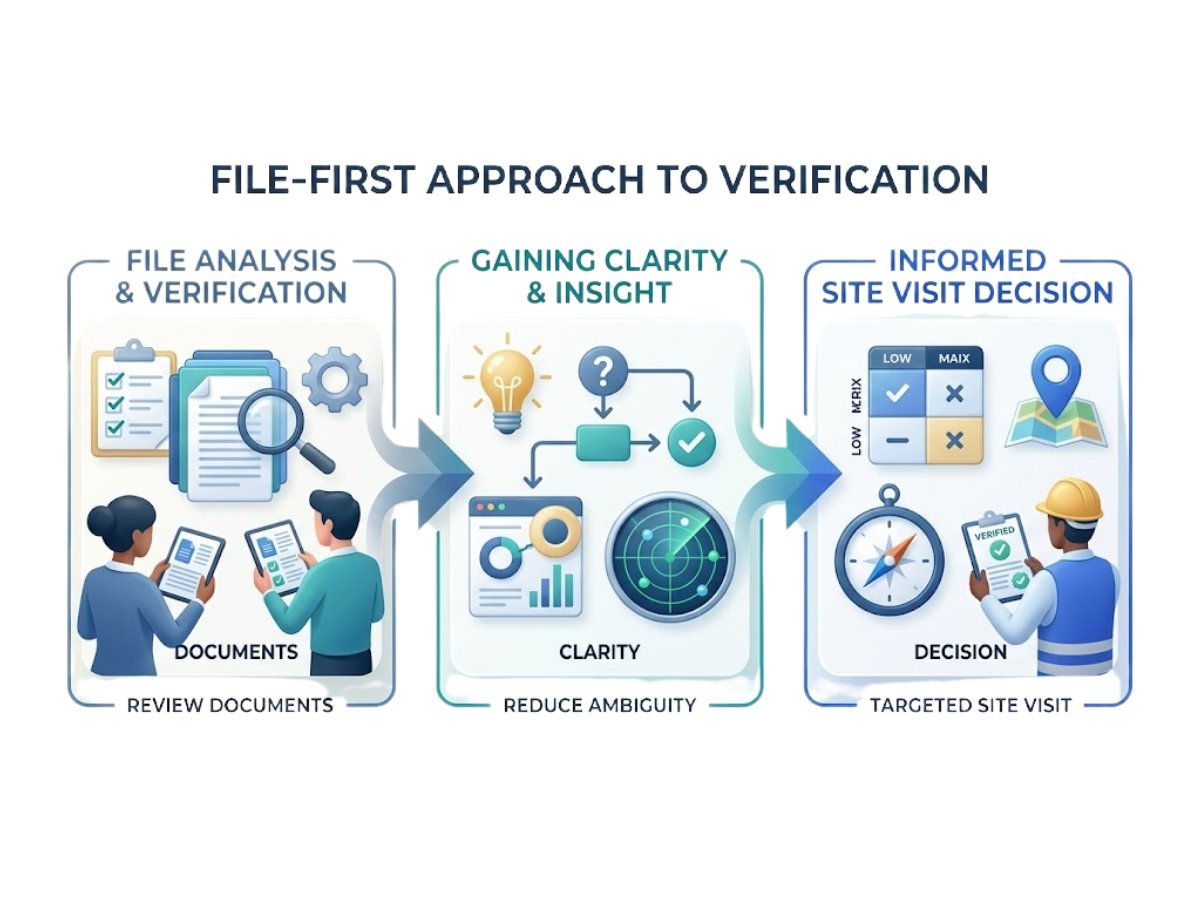
Before you spend time on a physical visit, ask for the basic file first. Many industrial deals collapse on paper long before a site inspection becomes relevant.
In practical terms, the seller should be able to share a preliminary document set: allotment-related papers if authority land is involved, ownership proof, latest tax receipt, current approval status, utility snapshot, and photographs that match the sanctioned structure. If the file already looks confused, the site visit is just a distraction.
Start with the property file, not the building
The first check is simple: who owns what, and under which rights? In industrial belts around Navi Mumbai, many buyers assume they are buying land ownership when they are actually buying leasehold rights subject to authority conditions. That difference changes valuation, transfer cost, and future control.
Also confirm whether the seller is offering only the built structure, the leasehold interest, an occupied running setup, or some bundled business transfer story. These are not the same transaction.
Confirm what exactly is being sold
This is where many first-time buyers make a costly mistake. A broker may say “factory available” as if it is one simple asset. But you need to know whether you are buying:
- leasehold rights in authority-governed land
- an old structure sitting on that land
- a tenanted or occupied unit
- machinery and business setup along with premises
- a property that has been altered beyond approved plans
If this is not clearly defined, stop and clarify it before moving forward.
> Caution: If the sanctioned building record shows a smaller or different structure than what is standing on site, that is not a minor paperwork issue. It can affect transfer, compliance, finance, and even future demolition or regularisation options.
Which documents matter most before you pay token?
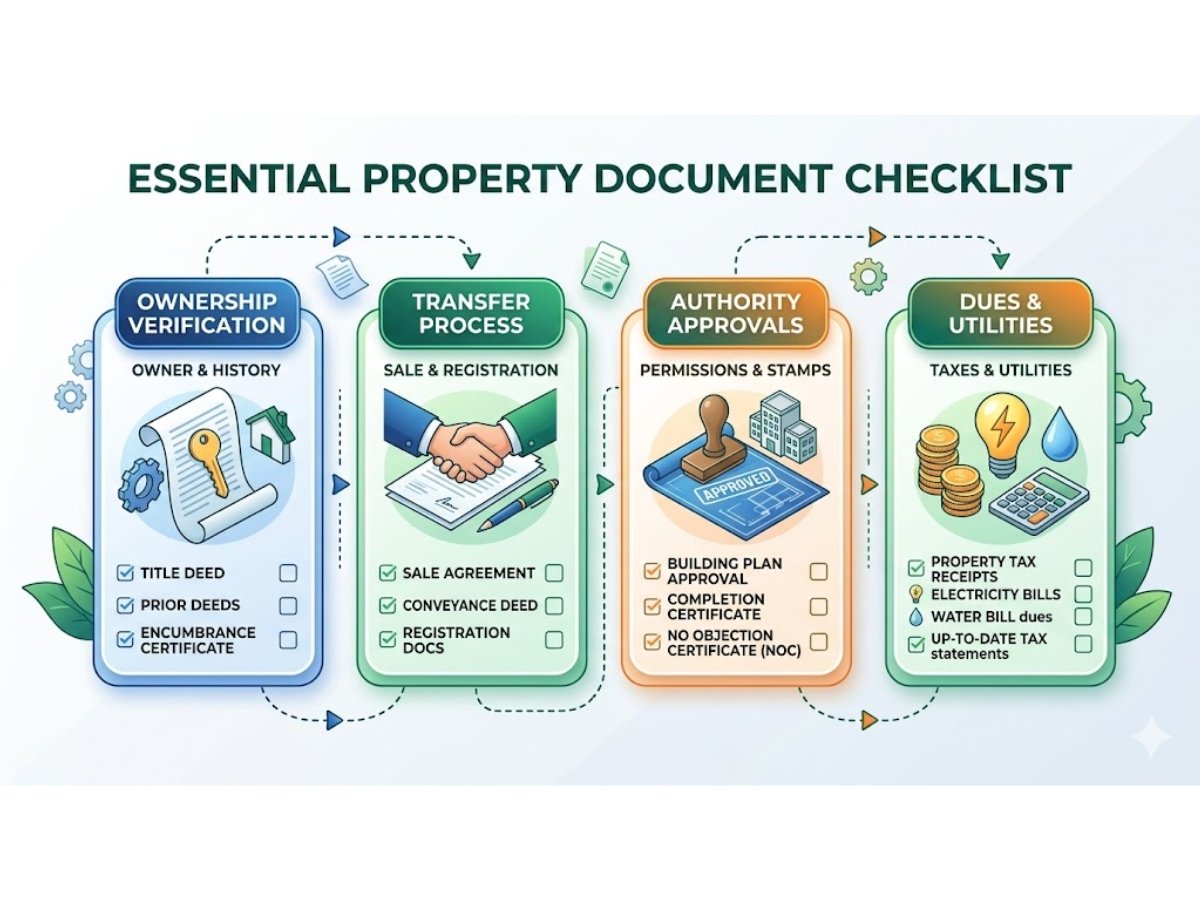
Token payment is the stage where many buyers lose leverage. Once money is paid, even a “small token” becomes a negotiating trap. So before token, document checking must be serious.
Broadly, you should verify four pillars: ownership, transferability, building legality, and dues.
Title chain and present ownership proof
The seller must prove a clean title history and present authority to sell. In industrial property, this is not just about the latest name on paper. You need to understand the chain, past transfers, and whether any encumbrance, mortgage, or unresolved claim exists.
A current encumbrance check and a properly reviewed title chain are basic. They do not guarantee perfection, but they are the minimum starting point before your legal team proceeds further.
Transfer permission, authority conditions, and pending restrictions
This becomes critical in Navi Mumbai because industrial assets may sit under MIDC or CIDCO-type authority frameworks, not a simple freehold setup. A transfer recorded with the sub-registrar does not automatically mean the lessor authority has approved it. That is a major distinction.
Also check whether there are lock-in conditions, mortgage NOCs, transfer premiums, or usage-related restrictions. In some cases, authority charges and transfer economics can materially change the transaction math. Step 2 research also highlights that CIDCO transfer charges rose sharply in 2025, making authority identification a serious financial issue, not a minor clerical detail.
Sanctioned plans, approvals, and completion-related records
Ask for the sanctioned plan and compare it with the actual structure. This matters more than many buyers realize. An unauthorized mezzanine, extended shed portion, extra floor, or altered footprint can later block approvals, transfer, finance, or operational licensing.
If BPAMS-style digital approval systems or formal occupancy/completion-related records apply, they should align with the physical structure. Old photocopies alone are not enough.
Tax, utility, and authority dues
Do not inherit old defaults by accident. In Navi Mumbai’s industrial context, this is especially important in the TTC belt, where NMMC tax issues are not some small side topic. They can be a serious survival issue.
Check for:
- property tax arrears
- water dues
- electricity dues
- authority dues or penalties
- any sealing or recovery risk linked to historic non-payment
How do you judge whether the old structure is still usable or already a liability?
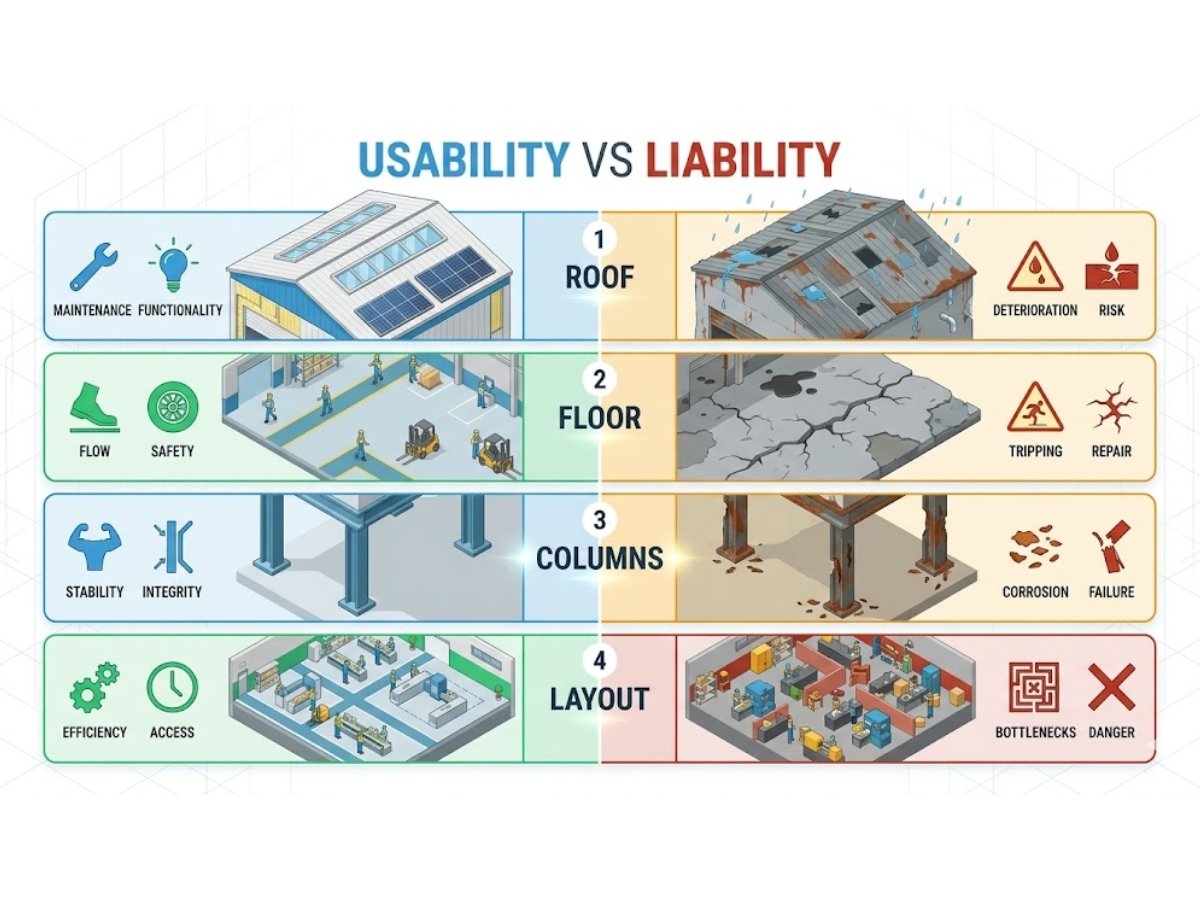
This is where buyers often get misled by paint, polish, and a low asking rate. A structure should be judged by engineering health and practical usability, not by surface appearance.
You are not trying to become a structural expert yourself. You are trying to identify warning signs early and know when a formal audit is compulsory.
Roof condition, leakage history, corrosion, and structural fatigue
A little ageing on roofing sheets is not always fatal. But heavy corrosion, pitting, rusted purlins, weak trusses, repeated leakage, and improvised patchwork are warning indicators of deeper failure. That can mean real money after purchase, not cosmetic repair.
Step 2 research shows that roof truss and panel remediation can become significant, with beam-related repairs running from around ₹50,000 to ₹2 lakh and premium waterproofing moving much higher depending on scale and condition. If the roof is repeatedly leaking over machinery or stock zones, the issue is operational, not aesthetic.
Floor condition, load-bearing capacity, settlement, and drainage
Industrial flooring is not like ordinary commercial flooring. Soft spots, cracking, visible settlement, repeated water pooling, or uneven levels may indicate sub-soil or drainage problems. In that case, surface coating is not the real solution.
If your business needs forklifts, stacking, heavy racking, or machinery load, then the floor must match that reality. Epoxy coating may improve surface function, but it cannot solve a structurally weak base underneath.
Column spacing, clear height, mezzanine, and layout efficiency
A shed can be legally saleable and still be functionally outdated. Old layouts often have inconvenient columns, low clear height, awkward mezzanines, and inefficient internal movement. That matters a lot for warehousing, crane use, heavy fabrication, and modern storage systems.
Many modern users need clear heights that older stock simply cannot support. If your business model depends on vertical storage, EOT crane compatibility, or high-bay movement, low-height old stock may only suit light storage or basic assembly, not serious industrial efficiency.
Doors, shutters, loading bay, and truck movement practicality
This one gets ignored too often. Stand at the gate and imagine actual daily operations. Can the truck enter cleanly? Can it turn? Can loading happen without chaos? Can dispatch happen in rain?
Step 2 research notes that a 40-foot trailer needs serious turning geometry, and many legacy sheds fail this badly. If trucks must reverse blindly from a public road or loading blocks circulation, the property is functionally weak even if the price looks attractive.
Which physical site problems usually turn a cheap deal into an expensive one?
Some defects look minor during the visit but become daily business pain after purchase. These are the problems that quietly destroy the economics of a “good bargain.”
Bad internal access is one of them. If roads are too narrow, gates are awkward, or the internal turning radius is weak, your dispatch team will pay for it every day in delay, driver resistance, and damage risk.
Waterlogging is another. Check foundation stains, site slope, drainage channels, and whether water remains after rain. If pooled water stays long after a shower, the site may face seasonal disruption.
Ventilation and heat build-up also matter more than buyers expect. A low, badly ventilated shed can become a miserable work environment, especially in process use, packaging, or labor-heavy operations.
Then comes ageing electrical infrastructure. Old panels, unsafe cabling, improvised extensions, or unclear load history are not just technical defects. They are fire and downtime risks.
> Red-flag box: > A property is not “cheap” if it gives you low price and high friction together. Poor access, repeated flooding, unsafe electricals, and weak loading geometry can bleed money far faster than a slightly higher purchase price in a better unit.
Does the unit still fit modern industrial use, or only light storage use?
This is one of the most important questions in the entire deal. Industrial suitability depends on your exact activity, not on the generic label “industrial unit.”
An old shed that works for storage may fail for heavy machinery. A unit that works for light engineering may not suit food processing. A premises that once held one pollution profile may not automatically support a stricter one today.
For example, if the previous activity was light or green-category style usage and your future plan triggers heavier compliance, the old compliance trail may not help much. Step 2 research clearly notes that if machinery upgrades materially increase capital investment or change the operational profile, a fresh regulatory path may be triggered.
So ask directly: does this unit still fit your intended use, or are you buying a compromise?
What hidden costs should you calculate before agreeing on price?
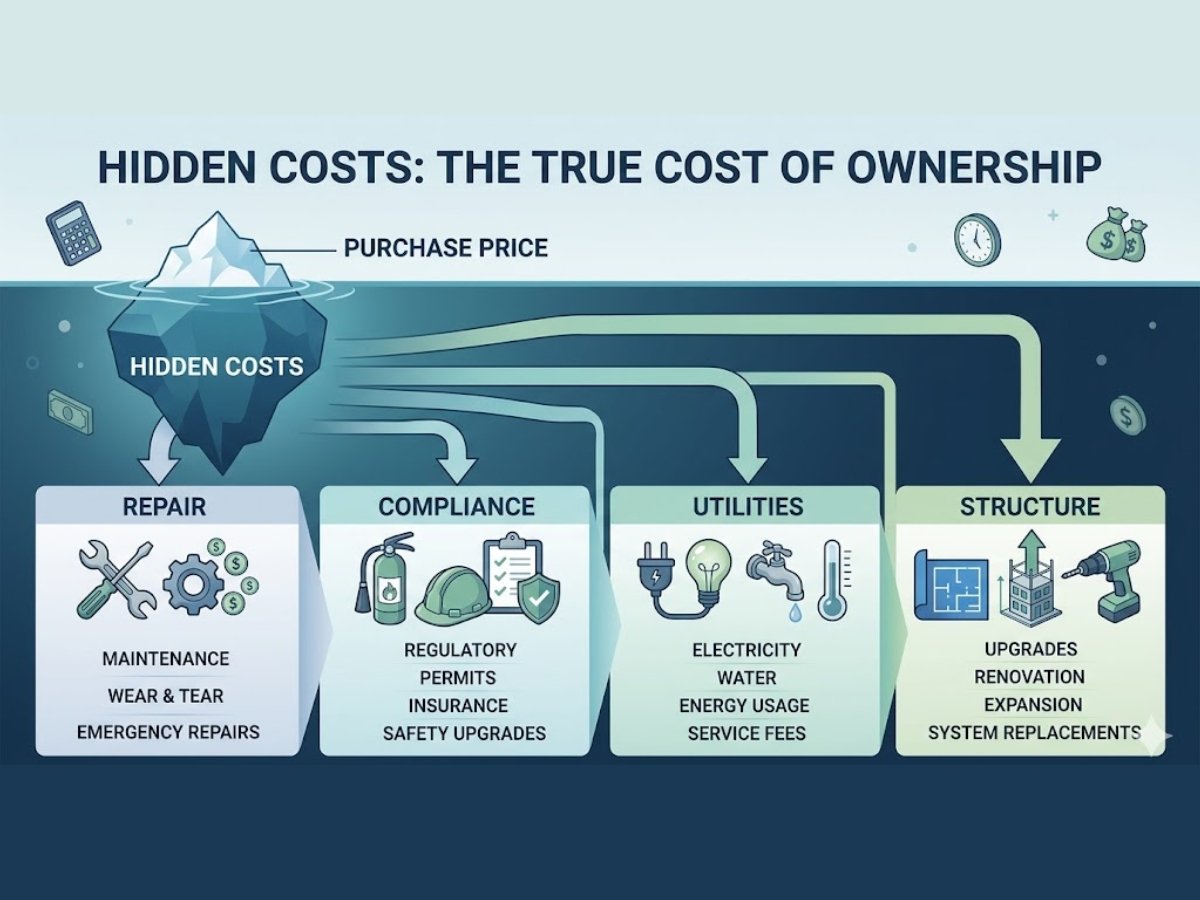
This is where many buyers get trapped. The real acquisition cost is not the agreed purchase price. It is the purchase price plus repair capex plus compliance capex plus transfer and cleanup cost.
A cheap old unit becomes expensive very quickly if you must replace the roof, upgrade power, fix drainage, install fire systems, clean legal irregularities, and renew approvals.
Step 2 research gives useful approximate cost bands. They vary by project and timing, but they show the direction clearly:
- new PEB construction may run roughly ₹1,200 to ₹2,500 per sq ft
- new RCC construction may run roughly ₹2,200 to ₹3,500 per sq ft
- industrial epoxy flooring may range around ₹30 to ₹140 per sq ft
- fire safety systems add meaningful cost depending on the final compliance requirement
- roofing and beam-level remediation can become a separate capital event, not a routine repair
This is why the buyer must compare discount versus deferred capex honestly. If the structure is so weak that replacement economics begin to look more rational, the asking price should reflect that reality.
When is an old industrial shed actually a smart buy?
An old industrial shed becomes a smart buy when the discount is real, the structure is still usable, the file is clean, and the location gives you something that newer peripheral stock cannot easily match.
This is especially relevant in established industrial ecosystems. In parts of the TTC corridor, for example, location can still offer strong practical value because of existing vendor networks, arterial connectivity, and market familiarity. But that location premium should not blind you to tax, transfer, and compliance stress.
Sometimes the real value is in the land logic rather than the old building itself. If road width, FSI, and redevelopment potential are favorable, the old unit may make sense as a redevelopment play rather than a long-term “as-is” factory acquisition.
Old shed bargain vs old shed trap
| Situation | Smart buy | Trap |
|---|---|---|
| Price discount | Discount comfortably covers repair and compliance burden | Discount is too small compared to future capex |
| Structure | Core frame remains usable | Major fatigue, weak roof, settlement, serious structural distress |
| Layout | Still supports present business | Outdated geometry kills efficiency |
| File | Transfer path is realistic and clean | Prior transfer history or permissions look doubtful |
| Future value | Location supports resale, rental, or redevelopment | Hard-to-exit asset with weak future demand |
When should you walk away from the deal immediately?
Some problems deserve negotiation. Some deserve exit.
Walk away fast if you find:
- unclear ownership or broken title chain
- prior transfers that appear recorded but not properly approved where authority approval is essential
- major tax or utility dues without credible closure path
- active sealing or enforcement issues
- serious encroachment or plot-boundary conflict
- illegal mezzanine or structural additions with no approval trail
- property beneath high-tension risk zones or beside entrenched encroachment pockets
- visible distress that strongly suggests structural audit trouble
- a use mismatch so large that the shed only suits light storage while you need real manufacturing
- a seller who keeps avoiding document clarity
In some TTC micro-markets such as Digha-Shirwane-side problem belts, physical boundary and encroachment reality deserves extra caution. A map is not enough. Site-level reality matters.
What should happen between token, agreement, and final payment?
A safe industrial transaction should move in stages. Do not treat all checks as one final legal step.
Before token
Before paying token, you should verify the basic file, ownership path, dues snapshot, approval outline, and intended-use fit. This is the stage for eliminating obvious bad deals early.
Before agreement
Before agreement, move deeper. This is where engineering, utility, and practical compliance checks become serious. If warning signs exist, structural review by a recognized professional becomes important. This is also the stage to chase specific no-dues confirmations and authority-linked clarity.
Before final payment or registration
Do not rush to final payment just because the commercial discussion feels done. If authority transfer approval, mortgage NOC, or other formal clearances are still pending, the transaction is not fully safe yet. Registration is an important step, but it should not be confused with total legal cleanliness where leasehold authority conditions still govern the asset.
Is an old factory better than a newer industrial shed for your use case?
There is no universal winner here. It depends on what your business values more.
If you need modern clear spans, faster operational readiness, better geometry, cleaner compliance, and less retrofitting pain, a newer industrial unit may justify the premium. Step 2 research notes that modern PEB structures can be quicker to execute and more efficient in layout than old RCC-style stock.
But if your business values established location, vendor ecosystem, known industrial belt behavior, and potentially better land economics, an older unit may still win. In Navi Mumbai industrial logic, this often becomes a choice between better modern geometry and better established positioning.
Final buyer checklist before you say yes
Before saying yes, the buyer should be able to answer all of these with confidence:
- Do I understand exactly what is being sold?
- Is ownership and transfer path clear enough for legal review to proceed safely?
- Do the sanctioned records broadly match the standing structure?
- Are major dues, penalties, or enforcement risks under control?
- Does the building actually suit my intended industrial use?
- Can trucks move in and out without daily operational pain?
- Is the structure repairable, or am I silently buying a rebuild?
- Does the discount genuinely cover future capex and compliance burden?
- Is this location valuable enough to justify the effort?
- If I need to exit later, will this asset still look usable to the next buyer or tenant?
If too many of these answers are weak, the deal is weak too.
Conclusion
Buying an old factory or industrial shed is not about finding the lowest rate. It is about avoiding the wrong kind of discount. In Navi Mumbai and nearby industrial belts, the best deals are usually the ones where the file is cleaner than expected, the structure is more usable than it looks, and the future capex is still under control. If the paperwork is confused, the layout is outdated, the dues are heavy, and the repair burden starts looking like a rebuild, walk away early. A slightly costlier but workable industrial asset is often much cheaper than a bargain that never becomes operational.
FAQs
Frequently Asked Questions