

Who Should Buy Commercial Space in Nerul? Buyer Fit, Cost Reality and Local Checks
Commercial space in Nerul is best for serious end-users, selective office investors, and retail buyers only in proven catchment pockets. It is usually a weak fit for bargain hunters, short-term flippers, and buyers who assume every Nerul location has equal demand. That is the real answer. Nerul is a mature Navi Mumbai commercial market, but it is not one single market. Station-linked sectors, Palm Beach frontage, older internal buildings, and new MIDC-side office projects behave very differently.
If you are asking whether buying commercial space in Nerul makes sense, the real question is not “Is Nerul good?” The real question is: Are you the right type of buyer for the exact type of unit in the exact pocket of Nerul?
That one filter can save a lot of money.

Quick Summary
Nerul commercial property usually makes sense when the buyer has a clear use case, enough capital buffer, and a realistic understanding of costs beyond the base rate. It does not reward vague plans.
| Buyer type | Fit level | Why it can work in Nerul | Main caution |
|---|---|---|---|
| Established end-users like doctors, CA firms, consultants, agencies, clinics | Best fit | They lock in a permanent business location and avoid annual rent escalation | Parking and access can be weak in older sectors |
| Office investors targeting Grade-A stock | Selective fit | Nerul has growing corporate-style office demand, especially in newer MIDC-side supply | Vacancy periods, fit-out cost, and lease risk must be handled |
| Retail showroom or brand-led buyers | Selective fit | Strong frontage on the right road can create real brand value and footfall | A bad retail micro-location can fail even inside Nerul |
| Pre-leased asset buyers with legal and financial discipline | Selective fit | Can work if lease, lock-in, tenant strength, and exit logic are strong | “Pre-leased” is not automatically safe |
| Under-capitalised investors chasing monthly EMI support | Poor fit | Commercial vacancy and holding cost can damage cash flow fast | One empty period can create stress |
| Short-term speculative flippers | Poor fit | Nerul is too mature and too friction-heavy for easy flipping | CIDCO transfer charges can destroy margins |
Why Nerul works differently from many other Navi Mumbai commercial locations
Nerul sits in a very different position from places like Taloja, Dronagiri, or even parts of Panvel. It is not a raw future-bet location where buyers are mainly betting on a story. It is also not a fully saturated legacy trading market like the oldest parts of Vashi. Nerul is more stable, more mature, and more selective.
That maturity matters. In practical terms, it means commercial space in Nerul can offer more predictable tenant logic than pure speculation-driven nodes. But it also means entry cost is higher, upside is more measured, and mistakes become expensive. You are not buying into an “anything will work” market.
This is also where many buyers get carried away by big infrastructure narratives. Yes, Navi Mumbai has been shaped by large connectivity and airport-related optimism. But in Nerul, much of that premium is already reflected in pricing. So the better question is not whether the airport or major roads will help someday. The better question is whether your specific unit can attract the right occupier today.
That shift in thinking is important. Nerul rewards tenant demand, building quality, access, and location logic more than blind future hype.
Which buyers usually make the most sense in Nerul?
Serious end-users who want control over business location
This is the clearest buyer fit in Nerul.
If you are a doctor, consultant, chartered accountant, lawyer, therapist, coaching operator, or service-led local business, buying a commercial unit for self-use can make real sense here. Nerul has a strong residential base, established catchment, and enough middle-to-upper-income density to support trust-based businesses.
For these buyers, the biggest advantage is not just appreciation. It is stability. Instead of facing rent escalation every few years, you secure your operating base. That matters even more in a mature node where good units are not always easily replaceable once occupied.
But self-use buyers still have to be practical. A unit near heavy walk-in demand may work beautifully for a clinic or pathology centre, while the same unit may be inconvenient for a quiet back-office setup if parking is poor and circulation is chaotic.
Office buyers targeting steady tenant demand
Office buyers can also make sense in Nerul, but this is a more selective category.
The stronger office investment case usually sits in newer commercial supply, especially in the MIDC Shiravane belt and highway-linked office corridors where Grade-A inventory, podium parking, and corporate aesthetics are shaping a more formal office ecosystem. In this format, Nerul is no longer just a residential-service market. It is also becoming a serious office destination in parts.
This is where a compact office in a modern building can work better than an older resale office in a tired structure. Corporate tenants usually care about lift quality, lobby feel, fire compliance, HVAC readiness, parking, and how the building looks to employees and clients. They are less dependent on spontaneous footfall and more dependent on destination convenience.
That gives office buyers a wider range of workable micro-locations than retail buyers. But it does not remove risk. Vacancy between office tenancies can last months. During that time, the owner still pays maintenance, property tax, and often EMIs.
Retail buyers with access to truly strong catchment-led pockets
Retail can work in Nerul. But retail is where buyers make the biggest mistakes.
A shop investment depends far more on exact frontage, road visibility, pedestrian pattern, parking practicality, and daily catchment. In other words, buying a shop in Nerul is not the same as buying “commercial property in Nerul.” It is buying one very specific business outcome from one very specific street position.
That is why some retail units become strong long-term assets while other nearby units struggle. A pharmacy, quick-service outlet, bank branch, clinic, or branded convenience shop can perform well near station-linked movement or dense service corridors. But a random internal shop with weak access can remain vacant longer than expected, even inside a strong node.
Retail buyers should therefore be very careful with broker language like “prime location” or “future footfall.” In retail, current footfall and current usability matter much more than sales language.
Premium visibility-led businesses that can monetise frontage
There is also a narrow but valid buyer category for high-visibility businesses. These are buyers who are not just purchasing income. They are purchasing brand presence.
On corridors like Palm Beach Road or other premium main-road stretches, a well-placed commercial unit can carry visibility value beyond immediate rent. For automobile-linked brands, premium dining, design studios, niche showrooms, or businesses targeting affluent clients, frontage itself can justify the capital deployed.
But this is not a mass-market category. It needs deep pockets, operational clarity, and patience. The wrong visibility-led purchase becomes an expensive ego asset.
Who should usually avoid buying commercial space in Nerul?
A lot of buyers should actually pause before entering this market.
If your total budget is already stretched at acquisition stage, Nerul commercial property can become stressful very quickly. A commercial unit is not a small residential flat where tenant replacement is relatively easier. One vacancy period can hurt.
You should usually avoid buying commercial space in Nerul if you fall into one of these groups:
- You need immediate rental income from month one to comfortably survive the EMI
- You are buying only because “commercial gives higher returns”
- You think any shop in Nerul will naturally attract a tenant
- You are underestimating interior, maintenance, and holding costs
- You plan to flip quickly for short-term gains
- You are relying entirely on verbal promises around approvals, leasehold issues, or transfer charges
The biggest red flag is the buyer who is only calculating gross rent. That buyer often ignores the shadow costs of ownership. Commercial yields may look better than residential yields on paper, but the cost of being wrong is also much higher.
And then there is the resale friction. Recent CIDCO-side transfer fee realities have materially changed the math in Navi Mumbai’s commercial secondary market. That does not mean resale is impossible. It means your profit and exit assumptions must be much more disciplined than before.
Does Nerul make more sense for office buyers or shop buyers?
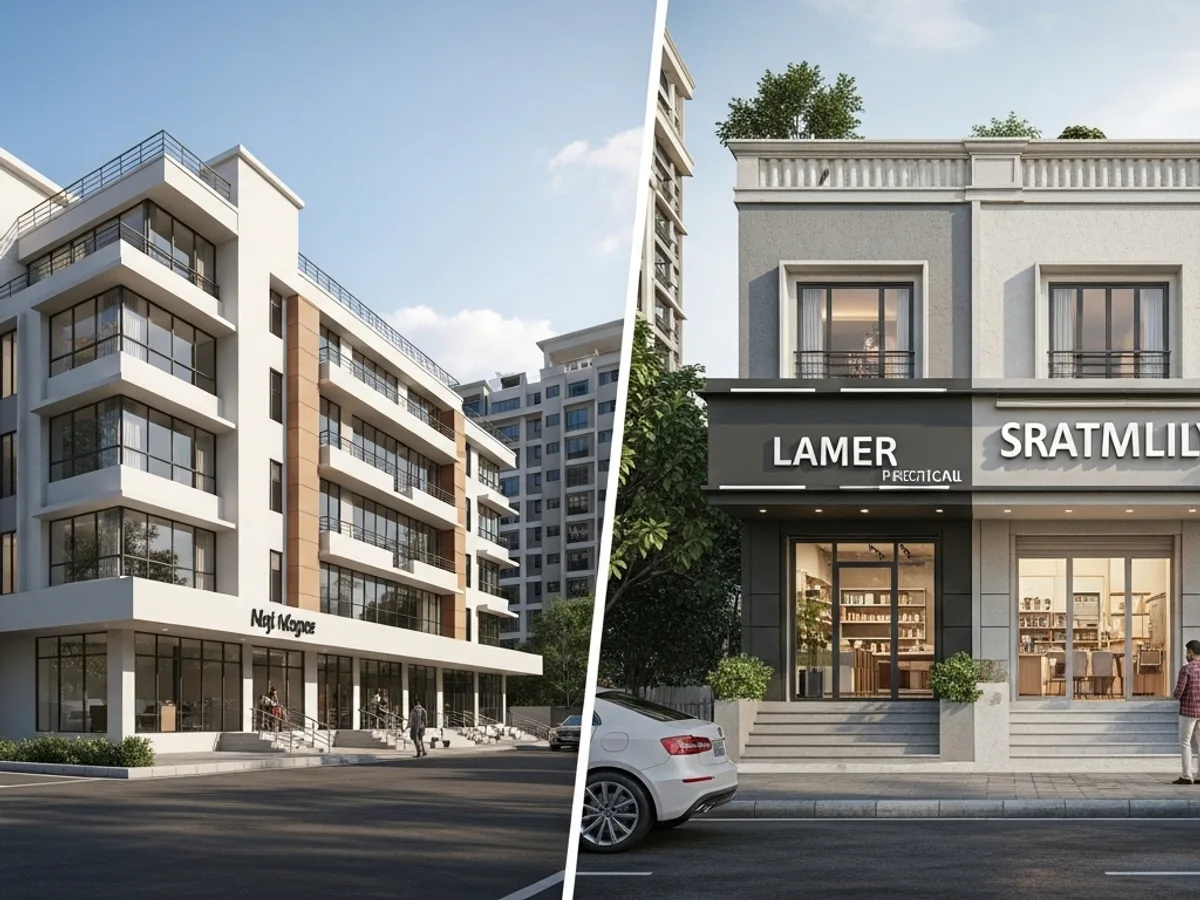
For most buyers in Nerul, office space usually makes more sense than retail. Retail can outperform, but only when the unit sits in a genuinely strong retail position.
| Factor | Office space in Nerul | Shop investment in Nerul |
|---|---|---|
| Entry logic | More flexible across newer commercial buildings | Strong units are much more expensive because frontage matters |
| Dependence on footfall | Limited. Office use is destination-driven | Very high. Weak catchment can destroy performance |
| Tenant pool | IT/ITES, consultants, BFSI, agencies, back offices, clinics | F&B, pharmacy, service retail, boutiques, banks, convenience formats |
| Micro-location sensitivity | Moderate to high | Extremely high |
| Fit-out sensitivity | High. Bare-shell offices often need serious work before leasing | Moderate to high depending on use type |
| Vacancy risk | Moderate. Corporate churn happens | Lower in truly prime spots, but severe if location is weak |
| Better for whom | End-users and disciplined office investors | Experienced retail buyers or brands needing visibility |
The simple version is this: a shop has a higher bar. It needs more precision.
An office can still work on an upper floor in a good building if the building quality, access, lifts, and parking are right. A shop cannot hide from a weak street. If the road does not pull people, if the frontage is awkward, if parking is messy, or if the catchment is misread, the shop suffers immediately.
So if you are a first-time commercial buyer in Nerul, office is often the safer starting lens unless your retail use case is extremely clear.
Self-use or investment: which kind of buyer has the stronger case in Nerul?
Self-use buyers usually have the stronger case.
That is because self-use removes the single biggest operational risk in commercial real estate: vacancy. The moment you occupy the space for your own clinic, office, studio, or service business, the investment starts solving a real business problem. You are no longer waiting for a tenant to validate your purchase.
In a mature node like Nerul, that is powerful. Commercial rents can keep rising over time, and a permanent business address can become a long-term advantage in credibility, branding, and local recall. For a service-led business, the value is not just monetary. It is strategic.
Investment buying can still work, but only when the asset is chosen with more discipline than most buyers usually apply. In 2026, the cleaner investment story often tilts toward newer Grade-A stock rather than ageing resale units with hidden maintenance issues, parking problems, or transfer-fee friction.
So the ranking is usually simple:
1. Best case: self-use buyer with stable business logic 2. Second-best case: well-capitalised investor buying the right office asset 3. Most selective case: retail investor buying only where catchment is already proven
What kind of commercial location in Nerul changes the answer completely?
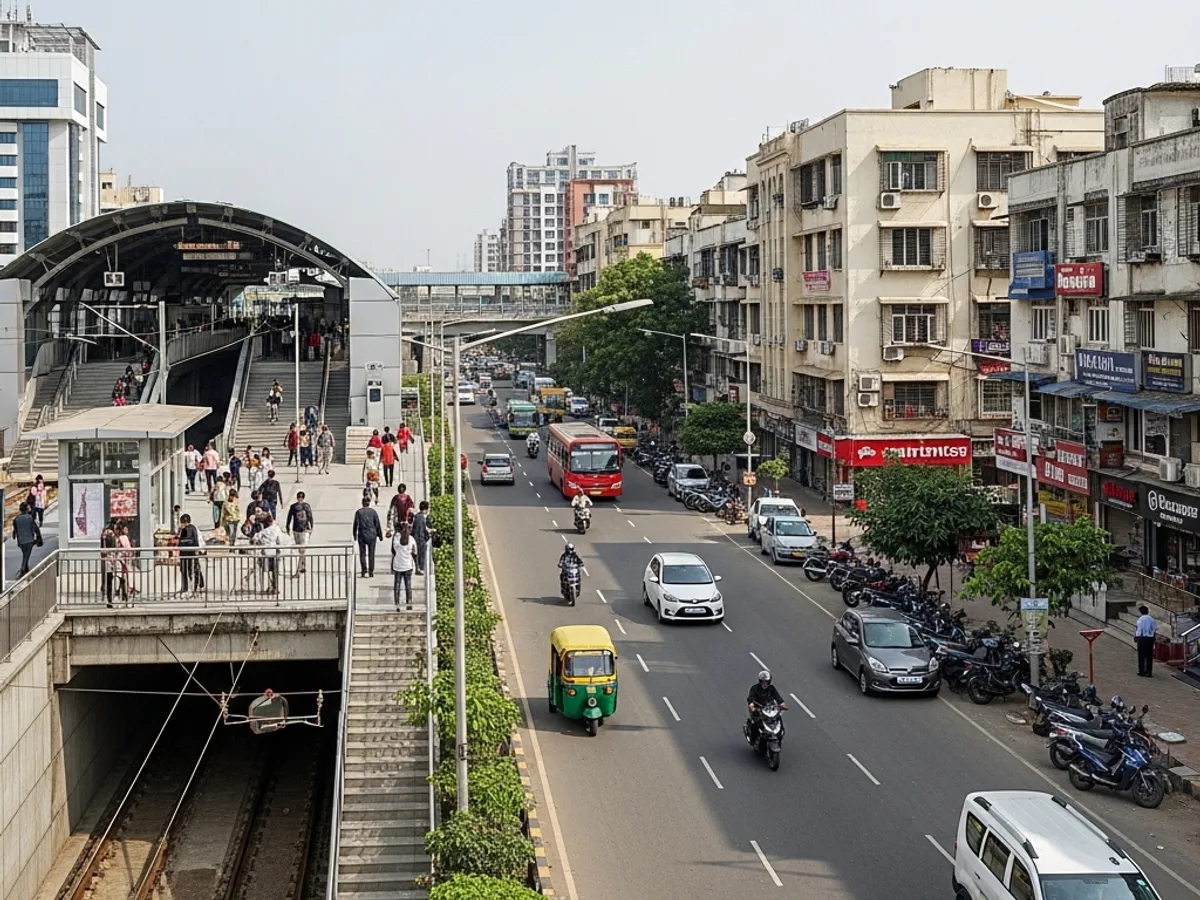
This is where the article really turns practical. Nerul is not one commercial market. It is a cluster of very different demand zones.
Station-linked and easy-access pockets
Areas around Nerul station and busy sectors such as 11, 15, and nearby movement-led pockets can support clinics, service retail, diagnostic formats, quick transactions, and walk-in businesses. These locations benefit from daily human movement and familiarity.
But they also come with a serious weakness: parking. That can limit the type of business that thrives. A pathology lab may work. A premium destination office may not.
Main-road visibility pockets
Main-road and premium frontage locations carry visibility value. These are stronger for showrooms, high-identity brands, and businesses that gain from being seen. The unit itself becomes part of the brand.
The caution is obvious. You pay for frontage. If your business model does not monetise visibility, you may be overpaying.
Internal-sector convenience locations
Some internal mixed-use commercial spaces work because they serve the local residential ecosystem. These are not always glamorous, but they can work well for neighbourhood clinics, service offices, tuition-related businesses, convenience retail, and daily-need formats.
Still, this segment needs careful reading of the building and the street. Older internal stock can come with leakages, repair burden, weak parking, and maintenance fatigue.
Building-led office destinations and the MIDC Shiravane belt
This is a major shift in Nerul’s commercial story.
The MIDC Shiravane belt and highway-oriented newer commercial developments have strengthened Nerul’s office case. Here, the building matters almost as much as the node. Projects with better lobbies, podium parking, structured access, and corporate specifications create a leasing environment that feels very different from older mixed-use stock.
That is why a new office project opposite a major landmark or along a strong corridor can suit an investor much better than an older resale office simply because the newer product is easier to position to a modern tenant.
What costs and risks make a “good” Nerul commercial deal go wrong?
Many buyers lose discipline after seeing the quoted price. That is a mistake. In commercial real estate, the quoted price is only the beginning.
Here is the real danger zone.
The silent capital killers checklist
- Bare-shell fit-out cost: A bare-shell office may need flooring, ceiling, air-conditioning setup, electrical work, fire-related compliance, and networking before it becomes usable or leasable.
- Vacancy holding cost: During a vacancy period, you still carry maintenance, NMMC property tax obligations, financing cost, and sometimes other outgoings.
- CIDCO transfer-side friction: In resale transactions, transfer charge realities can materially change ROI and resale liquidity.
- Parking mismatch: A unit may look attractive on paper, but poor parking can reduce both tenant quality and buyer exit confidence.
- Old building repair risk: Lower rate per sq.ft in older stock can hide larger future expense in plumbing, terrace issues, structural wear, and common-area deterioration.
- Wrong retail assumption: A shop purchased without real footfall logic can remain stubbornly vacant.
- Wrong lease assumption: A pre-leased unit with a short remaining lock-in is not a safe bond-like asset.
This is why a “cheap” resale unit can actually become more expensive than a costlier new unit.
A buyer who stretches to purchase a resale shop in an older Nerul building may later face transfer-cost friction, structural repair burden, weak tenant response, and a poor resale story. On the other hand, a slightly higher-ticket office in a new project may actually be easier to lease, easier to hold, and easier to explain to the next buyer.
What should you verify before buying any commercial space in Nerul?
In Nerul, commercial due diligence is not optional. It is the difference between an investable asset and a capital trap.
Title, approvals, and MahaRERA where relevant
If the purchase is in the primary market, verify the project properly. Check whether it is MahaRERA-registered where applicable. Confirm possession timelines, project status, promoter details, and whether the project is being presented correctly.
If the purchase is in the resale market, do not assume the older asset is simpler. In many cases, it is more complicated. Chain of title, CIDCO-side documentation history, old transfer records, and society-level paperwork may all matter.
Occupancy and possession reality
Do not confuse brochure confidence with operational readiness. Check what the actual possession condition is. A commercial unit may be described as ready, but the building ecosystem, access, tenant readiness, or completion quality may still be weak.
Lease terms if the asset is pre-leased
This is a major trap for first-time investors.
A pre-leased commercial property in Nerul is only as safe as the lease itself. You need to see:
- remaining lock-in period
- lease tenure
- rent escalation clause
- tenant profile and financial strength
- who pays maintenance and taxes
- exit scenario if the tenant leaves
If the tenant can leave soon, then you are not buying secure income. You are buying a potentially overpriced vacant unit.
Access, parking, and user practicality
This sounds basic, but it is where many commercial deals fail in the real world. Stand outside the building. Watch the road. Check parking. See the lifts. Understand who can realistically use this unit and how easily.
A good commercial address is not just about the pin code. It is about whether the business can actually function there without friction.
Real buyer examples: who should buy and who should walk away?
Example 1: The pediatrician near a residential catchment
A pediatrician buys a compact ready unit near a busy Nerul residential-service corridor. For this buyer, self-use makes excellent sense. The location already has patient familiarity, the doctor avoids rising rent, and the unit supports long-term trust building.
This is a strong fit, provided parking and accessibility are workable.
Example 2: The consultant or CA firm buying a small office
A CA firm buys a 350 to 500 sq.ft office in a modern building with decent lobby presentation and parking. This buyer does not need mass footfall. They need a credible, stable address and a professional environment for clients.
Again, good fit. Office logic is stronger than shop logic here.
Example 3: The NRI investor buying a new Grade-A office
An NRI or HNI investor buys a commercial office in a newer MahaRERA-registered project in a highway or MIDC-side corridor. They wait through construction, aim for a stronger tenant class, and avoid some of the messier secondary-market friction attached to older commercial resale.
This can be a smart selective fit if the investor has patience and capital buffer.
Example 4: The first-time retail investor buying only on “prime location” talk
A first-time buyer stretches budget to buy a resale shop because someone said the location is prime and rents are guaranteed. But the unit has weak parking, tired building condition, and no truly proven catchment. Vacancy continues. Costs continue.
This is exactly the kind of Nerul commercial purchase that goes wrong.
Example 5: The monthly-income-dependent investor
A buyer uses most of their savings and takes a loan expecting immediate rent to support EMI. The unit stays empty for four months. Maintenance, tax, and EMI continue.
This buyer should usually not buy commercial space in Nerul at all, at least not yet.
So, who should actually buy commercial space in Nerul in 2026?
The best-fit buyers are clear.
Best-fit buyers
- Established end-users
- Clinics, consultants, CA firms, agencies, local service businesses
- Buyers who want to control their address and eliminate rental uncertainty
- Investors with enough capital to buy better-quality office stock and survive vacancy periods
Selective-fit buyers
- Pre-leased asset buyers who can properly audit lease strength
- Retail buyers with strong understanding of frontage and local catchment
- Brand-led businesses that can monetise visibility
- HNIs using Nerul as a stable capital-preservation-plus-yield play, not a quick flip
Poor-fit buyers
- Short-term speculative flippers
- Buyers who need instant rent for EMI survival
- Buyers entering old resale commercial buildings only because rate looks cheaper
- Retail investors who have not studied footfall, parking, and road behaviour
- Anyone assuming CIDCO-side transfer realities, municipal updates, and holding costs can be ignored
So the final answer is simple.
Commercial space in Nerul is worth buying when you are solving a real operational need or making a disciplined long-term investment in the right asset. It is not a market for vague optimism, loose ROI calculations, or casual retail bets.
Conclusion
If you are a serious end-user, a disciplined office buyer, or a well-capitalised investor choosing the right commercial product, Nerul can make strong practical sense. If you are chasing quick appreciation, depending on immediate rent, or buying a retail unit without studying the street properly, Nerul can become an expensive mistake.
In short, Nerul rewards clarity, patience, and precision. It does not reward assumption.
FAQs
Frequently Asked Questions
