

Who Should Buy Commercial Space in Seawoods? Buyer Fit, Cost Reality and Local Checks
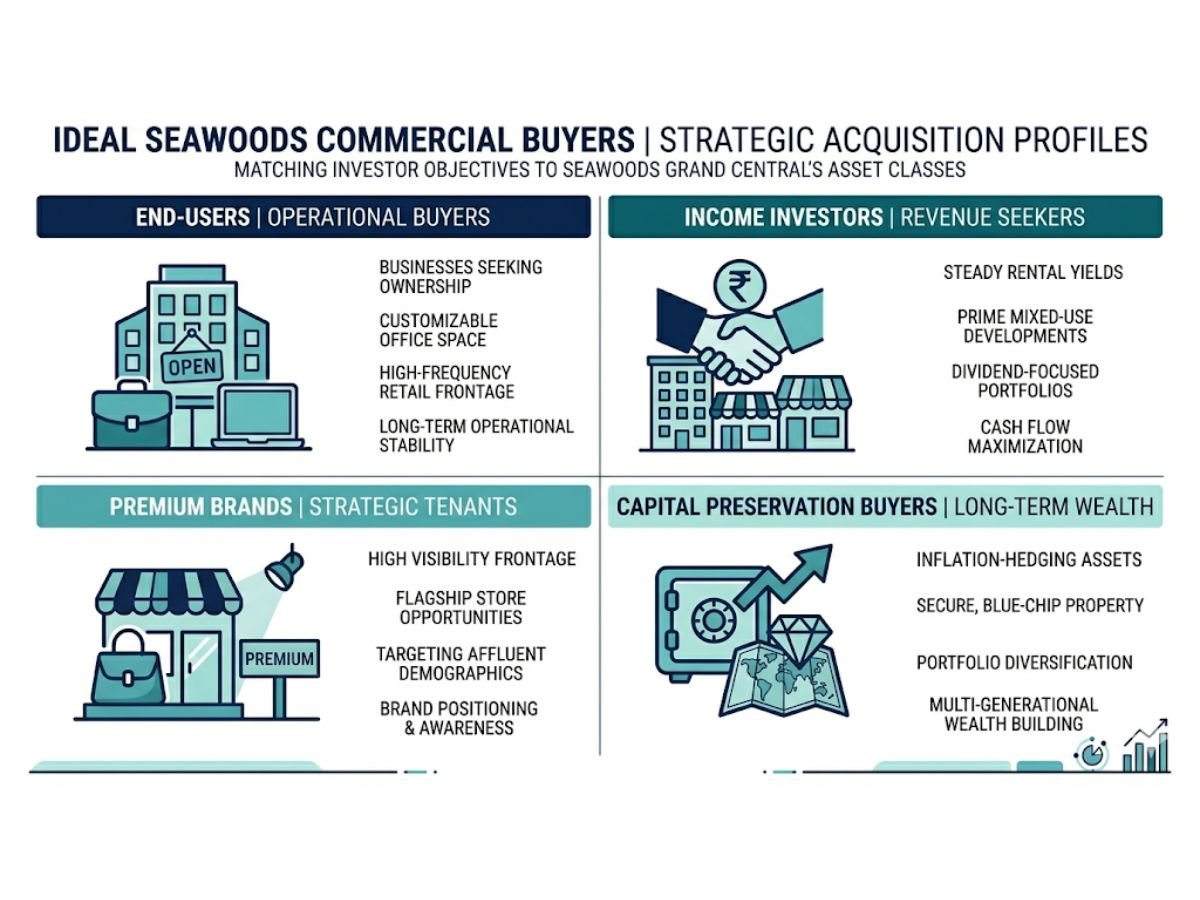
Commercial space in Seawoods usually makes sense for four kinds of buyers: serious end-users who are tired of rising rent, investors who want stable premium tenants instead of lottery-style upside, brands that benefit from station-linked visibility, and buyers who value capital preservation more than cheap entry. It is usually a poor fit for bargain hunters, low-budget investors, and anyone still expecting early-stage airport-belt style appreciation. Seawoods today is a mature premium market, not a hidden gem.
The short answer: who actually fits Seawoods commercial property?
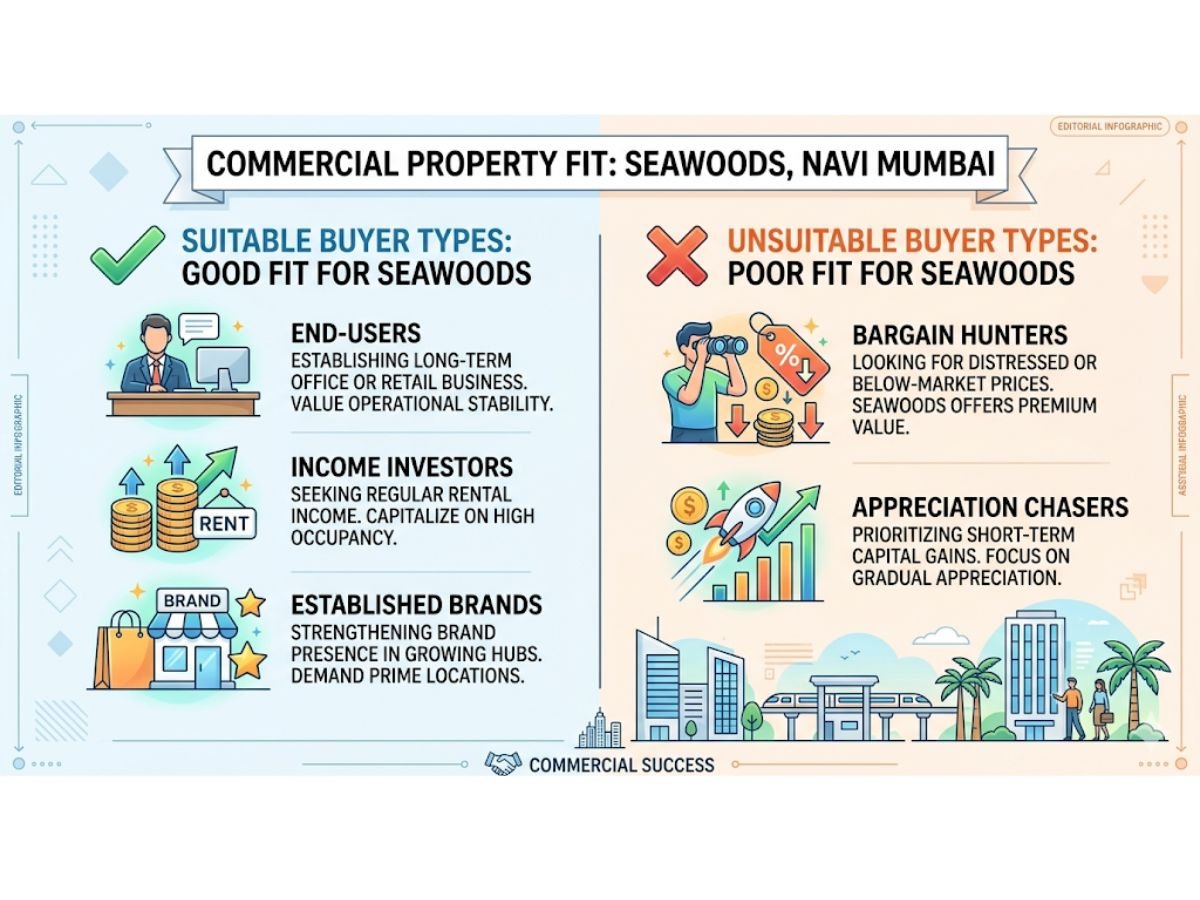
| Buyer type | Does Seawoods usually fit? | Why |
|---|---|---|
| Business owner using the space | Yes, often strongly | Helps lock in occupancy cost in a premium location instead of paying rising lease rent forever |
| Pre-leased income investor | Yes, but only with proper net-yield math | Seawoods works better for stable income than aggressive upside chasing |
| Retail/service brand needing footfall | Yes, selectively | Works best when location truly benefits from station, mall, or premium catchment flow |
| Buyer chasing fast appreciation | Usually no | Seawoods is already a mature premium market |
| Small investor looking for “cheap entry” | Usually no | Entry ticket and holding costs are too high for casual buying |
| Buyer ignoring taxes, transfer fees, and leasehold rules | Definitely no | Local cost structure can damage returns badly |
Indicative market context supports this buyer-fit view. Seawoods sits in premium commercial territory, not bargain territory. That is why it usually suits buyers who value stability, location quality, and execution clarity more than low entry cost or speculative upside.
Why Seawoods is not a normal Navi Mumbai commercial market
Seawoods is not just another local shop-and-office node. It is a premium transit-linked commercial ecosystem.
That matters because buyer fit changes completely in a place like this. A typical internal commercial building survives on neighborhood demand. Seawoods, especially the station-linked and Grand Central ecosystem, pulls from a wider base: commuters, office users, branded retail, premium service businesses, and destination footfall. L&T describes Seawoods Grand Central as a major TOD project, while Nexus reports high leasing occupancy and large shopper traffic.
The macro backdrop also supports premium commercial demand better than a generic local market story. Navi Mumbai International Airport began commercial operations on December 25, 2025, and the Mumbai Trans Harbour Link was completed in January 2024, improving regional connectivity into Navi Mumbai. At the broader Mumbai office level, Cushman & Wakefield said 2025 gross leasing volume touched 16.9 million sq ft and citywide vacancy moderated to around 10%, which is a helpful signal for premium office demand sentiment.
This does not mean Seawoods is the best buy for everyone. It simply means the market behaves more like a premium, stabilized commercial zone than an emerging, underpriced corridor.
Who should buy commercial space in Seawoods?
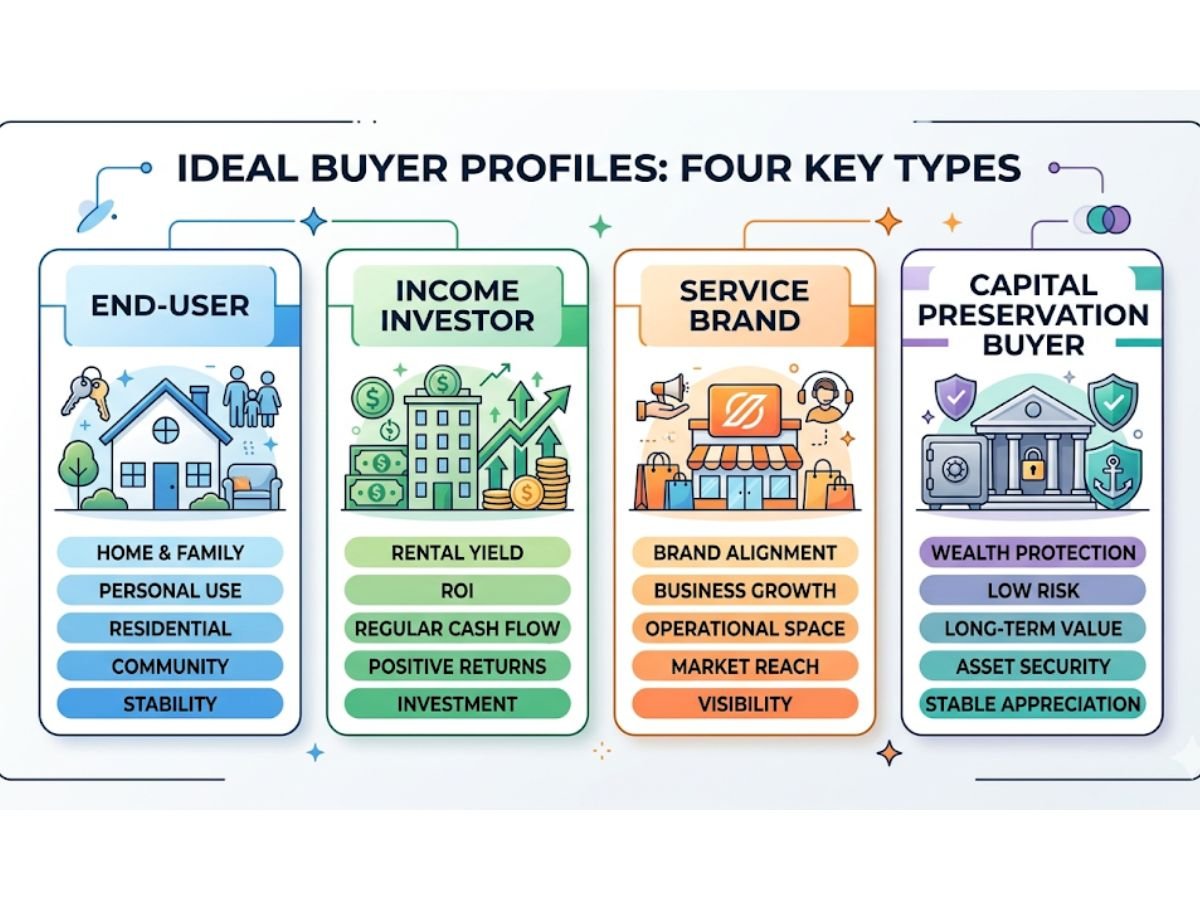
1) The end-user who is already paying painful rent
If your business is already paying strong monthly rent in Seawoods, Nerul, Belapur, or a similar premium belt, buying can make real sense here.
This is especially true for professional offices, boutique healthcare, consulting setups, branded service businesses, and established retail operators who know they want to stay in this catchment for years. In Seawoods, the value is not only in ownership. It is also in locking your occupancy cost in a node where premium location supply is limited and leasing demand is not random.
A serious end-user should not think like a speculative investor. The question is simpler: “Am I building long-term business value here, and will this location still help me five to ten years from now?” In Seawoods, that answer can often be yes.
2) The investor who wants income stability, not miracle upside
Seawoods suits the investor who wants a decent-quality commercial asset with tenant stability, not someone hoping for instant capital multiplication.
That distinction matters. Seawoods has already seen strong appreciation over the last five years. 99acres published a 63.4% five-year appreciation figure for Seawoods in late 2024, which is exactly why this node no longer behaves like an early-entry opportunity. You are mostly paying for maturity, demand quality, and location strength now.
So who fits? The buyer looking for:
- a pre-leased office or shop
- stronger tenant quality
- lower vacancy anxiety
- long holding comfort
- prestige and better exit readability than a weak micro-market
If that is your style, Seawoods can work. If you want a low-base, high-risk, high-reward story, it usually will not.
3) The brand or service operator who genuinely benefits from commuter and premium-catchment visibility
Some businesses do better in Seawoods simply because Seawoods is Seawoods.
This is not true for every business. But it can be very true for pharmacies, clinics, diagnostics, branded food formats, beauty and wellness, niche education, banking, premium services, and selected lifestyle retail. The TOD nature of the location means visibility, convenience, and commuter capture are part of the asset logic, not a side benefit. Nexus’ own numbers on occupancy and shopper traffic explain why some buyers pay a premium here.
But the keyword is genuinely. Do not buy a premium Seawoods shop just because “footfall” sounds attractive. Buy only if your business model actually converts that movement into paying customers.
4) The capital-preservation buyer
Some buyers are not looking for the next explosive node. They are trying to place money in a safer, stronger, more readable commercial market.
That is where Seawoods can suit them. Listing-led pricing checks show Seawoods commercial assets sitting in a clearly premium bracket, with sale listings ranging from about ₹17,500 per sq ft for larger commercial stock to above ₹50,000 per sq ft for smaller or more prime units, while listed office leases in Seawoods Grand Central are visible around ₹115 to ₹217 per sq ft per month depending on unit size and fit-out. These are indicative listing ranges, not final transacted rates, but they make one thing clear: Seawoods is a premium deployment market.
A buyer who is comfortable with that reality and values asset quality over cheap entry may fit Seawoods very well.
Who should usually avoid Seawoods?

A lot of people like Seawoods in theory but should still not buy here.
The first group is obvious: buyers chasing “cheap entry.” Seawoods is not cheap, and it is unlikely to become a cheap-entry market again. If your budget is already tight at the agreement stage, the local cost structure will feel even tighter after tax, maintenance, fit-out, registration, and leasehold transfer expenses are added.
The second group is the appreciation chaser. If your entire thesis is “airport aa gaya hai, ab yahan se double hoga,” you are probably late. NMIA has already started commercial operations, MTHL is already open, and Seawoods has already had a strong multi-year price run. The story here is now more about stability and premium demand than dramatic rerating.
The third group is the buyer who has not understood local cost mechanics. In Seawoods commercial, poor cost math can quietly destroy a deal that looked good on paper.
Office, shop, or pre-leased unit: what type of buyer suits what format?
The right format matters almost as much as the right location.
For most first-time commercial buyers in Seawoods, a pre-leased resale unit is usually the cleanest entry. You can see the tenant, the actual rent, the real building quality, the common area burden, and the occupancy pattern. In a premium market, that clarity is worth money.
A self-use office fits best when the buyer wants brand image, better access, corporate comfort, and long-term location control. Seawoods Grand Central office listings show the sort of scale and rent bracket that attract serious occupiers, not only speculative buyers.
A retail shop works only when the frontage, catchment, and customer behavior truly support it. This is where many buyers make mistakes. They buy “retail” as a category instead of buying the correct retail logic. In Seawoods, a small, well-placed unit can be smarter than a larger but weaker-positioned one.
An under-construction commercial launch is usually the most dangerous format for inexperienced buyers here. In residential, launch entry sometimes makes emotional sense. In commercial, an empty and delayed asset can burn time, capital, and confidence.
The local cost reality that can make or break the purchase
This is the section most generic pages get wrong.
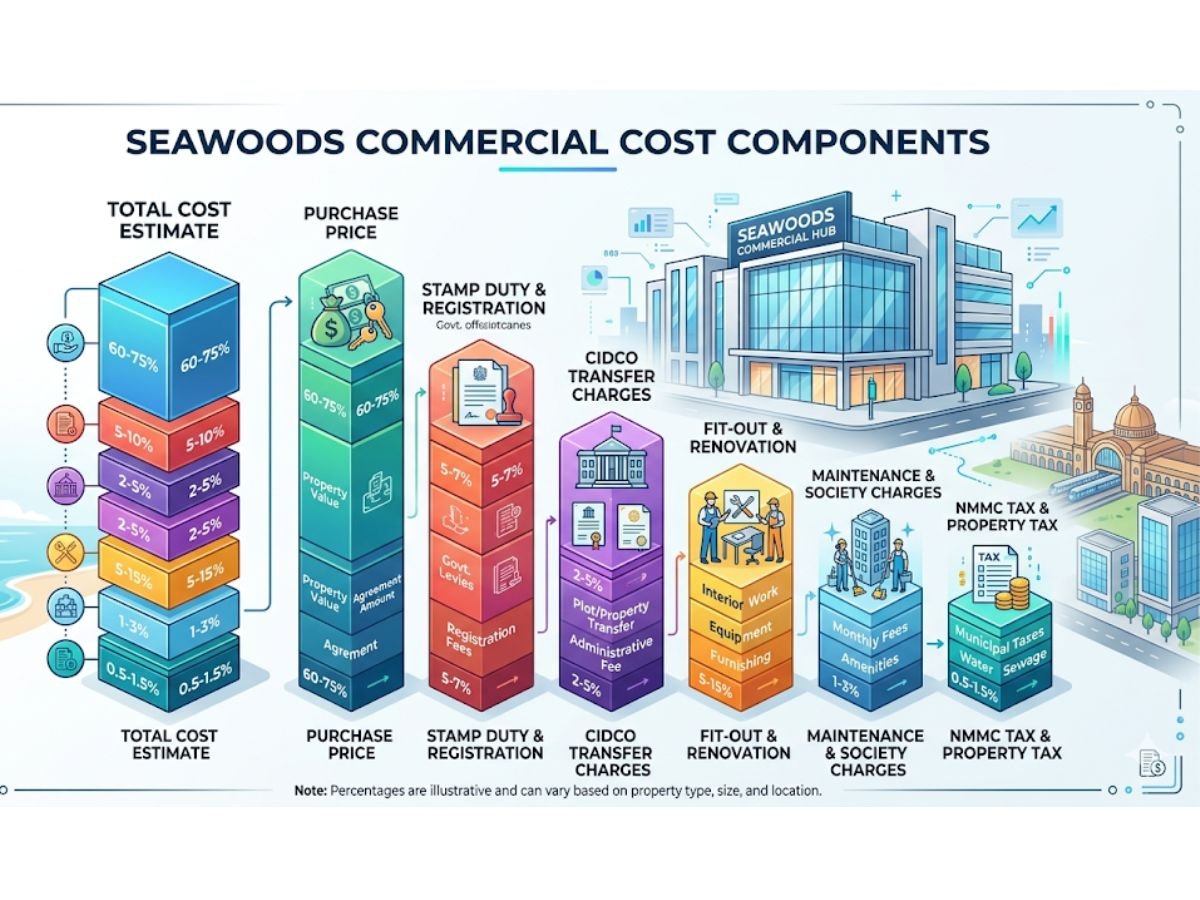
Seawoods commercial buyers are not buying a freehold, low-friction, low-tax product by default. CIDCO transfer charges were hiked in April 2025, with commercial shops facing a 50% increase. Published reports said commercial properties above 200 sq m could attract transfer charges up to ₹5,84,600 per sq m, while smaller commercial units could start around ₹26,700 per sq m depending on size and type.
Then comes NMMC property tax. For non-residential property, widely published guidance tied to the NMMC system says the tax is 68.33% of the rateable value, not 68.33% of gross rent. Rateable value is calculated from expected annual rent after a 10% statutory deduction, and actual assessment still depends on official records and property details. That difference matters because many buyers panic at the headline number without understanding the formula.
There is another trap: CIDCO’s 2025 freehold conversion relief is for residential leasehold plots, not for commercial shops and offices like the ones most Seawoods buyers are looking at. So do not assume you are entering a future freehold commercial asset just because you saw freehold headlines last year.
And yes, stamp duty still has to be budgeted properly. In municipal limits like Navi Mumbai, published 2025 guidance places stamp duty around 6% for men and 5% for women, calculated on the higher of agreement value or market value / ready reckoner basis.
> The practical rule: do not evaluate Seawoods commercial property on brochure price and monthly rent alone. Evaluate it on full entry cost, full holding cost, and full exit friction.
A simple Seawoods due-diligence checklist
Before you buy, confirm these in writing:
- exact CIDCO transfer charge and who is paying what share
- NMMC property tax history for the actual unit
- Occupation Certificate and building legality
- leasehold title chain and transferability
- actual maintenance burden, not verbal estimate
- current tenant details if pre-leased
- whether the quoted rent is gross or truly owner-retained
- whether the unit size matches real local tenant demand
When Seawoods is a strong buy, and when it is not
Seawoods is a strong buy when premium demand is your goal. It is a weak buy when low-entry growth is your goal.
Buy here when you want a proven premium location, strong connectivity logic, better-quality occupier interest, and lower confusion around whether the node itself will work. The combination of station integration, established retail ecosystem, regional connectivity upgrades, and mature demand is exactly why many serious buyers still prefer Seawoods despite the high ticket size.
Do not buy here when your plan depends on aggressive future rerating, loose cash flow, or blind optimism. In Seawoods, a wrong commercial buy is expensive to correct.
A simple Seawoods buyer scorecard
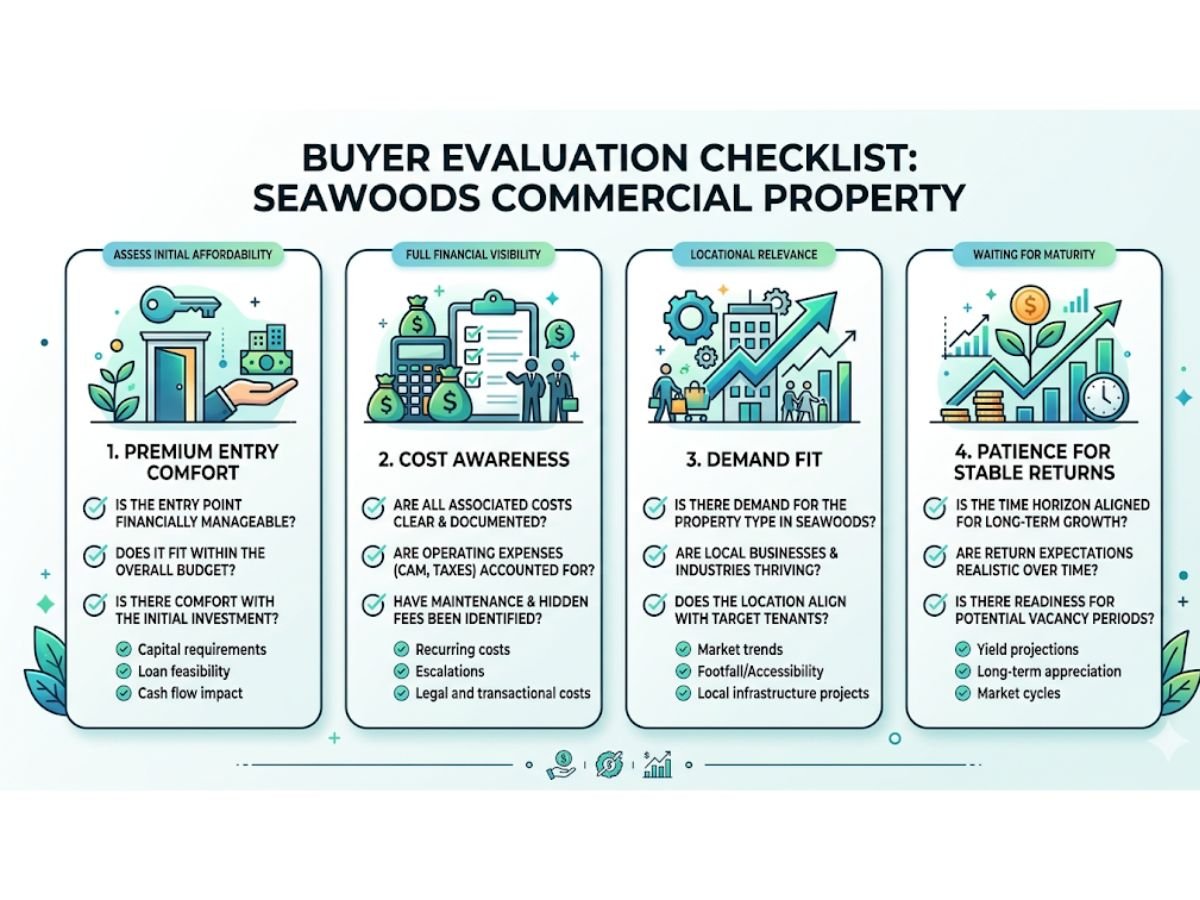
| Question | If your answer is “Yes” | If your answer is “No” |
|---|---|---|
| Are you comfortable with a premium entry ticket? | Seawoods may fit | Look at lower-entry nodes instead |
| Are you buying for self-use or stable income, not hype? | Positive sign | Seawoods may disappoint you |
| Have you fully priced CIDCO, NMMC, stamp duty, and maintenance? | Positive sign | Stop and recalculate |
| Does the exact unit have strong real demand, not just a nice brochure? | Positive sign | Risk of vacancy or weak resale |
| Are you okay with leasehold reality? | Positive sign | Do not proceed casually |
| Is the building legally and operationally clean today? | Positive sign | Prefer ready, cleaner stock or walk away |
| Are you patient enough for stable returns rather than fast jumps? | Strong fit | Wrong market for your expectation |
Real examples of who should buy here
Example 1: the upgrading end-user
A consulting, healthcare, finance, or service business already paying a heavy monthly rent in a premium Navi Mumbai belt can make sense in Seawoods if it wants location control, better client perception, and long holding comfort. This buyer is not trying to “beat the market.” They are trying to stop rent leakage and build equity in a proven node.
Example 2: the pre-leased income buyer
A buyer who finds a properly leased office or shop with a credible tenant, clear title trail, acceptable tax math, and a location that obviously works can fit Seawoods very well. This is one of the strongest buyer types for the node.
Example 3: the premium service brand
A pharmacy, diagnostic center, financial services office, wellness brand, or selected food and retail operator that truly benefits from visibility and premium catchment can do well here. But the asset has to match the business. A wrong format in the right node is still a wrong buy.
Example 4: the buyer who should walk away
Someone buying a large under-construction commercial unit only because it looks discounted, without checking MahaRERA progress, tenantability, and local demand fit, is taking the wrong kind of risk for Seawoods. In this node, clarity is usually worth more than early-launch excitement.
Conclusion
Commercial space in Seawoods should be bought by buyers who want premium location strength, stronger tenant quality, self-use stability, or capital preservation, and who are financially prepared for the local cost structure. It should usually be avoided by buyers chasing bargain entry, blind airport hype, or under-calculated commercial ROI.
The simple truth is this: Seawoods is not where you go to get lucky. It is where you go when you already know what kind of commercial buyer you are, and that buyer profile matches a mature premium market.