
Who Should Buy in Panvel? Families, Commuters or Investors in 2026
Panvel is a good buy in 2026, but not for everyone in the same way. It usually suits families who want more space at a practical price, commuters who can align properly with the railway or highway network, and patient investors who understand that different parts of Panvel behave very differently. It is less suitable for buyers expecting polished mature-node living everywhere, instant premium rental income, or a simple one-size-fits-all “airport growth” story.
That is the first thing to understand. Panvel is not one uniform market anymore. Old Panvel, New Panvel East, New Panvel West, Karanjade, Palaspe, and the wider airport-influence side do not serve the same kind of buyer.
The Navi Mumbai International Airport is already operational. The Atal Setu is already changing access patterns. The Panvel-Karjat suburban corridor is also moving close to commissioning. So the question is no longer whether Panvel has a future. The real question now is this: who is Panvel actually right for today?
Quick summary
| Is Panvel a Good Fit? Buyer-Type Based Reality Check (2026) | |||
|---|---|---|---|
| Buyer Type | Is Panvel a Good Fit? | Why It Works | Main Caution |
| Families | Yes, in the right pockets | Better space-to-cost value, decent school and hospital access, practical daily living in selected sectors | Water supply, congestion, construction dust, and civic variation across pockets |
| Daily commuters | Yes, but conditionally | Harbour Line access, Panvel station connectivity, Khandeshwar side access, and MTHL improve travel options | Door-to-door commute can still be tiring if the home is located deep inside less-connected pockets |
| Investors | Yes, mainly for patient investors | Entry prices remain lower than many mature Navi Mumbai nodes, and infrastructure-led growth is real | Much of the airport-led upside is already priced in, and rental yields are moderate rather than exceptional |
Why Panvel does not have one single answer for every buyer
A lot of confusion starts because people say “Panvel” as if it is one neat residential zone. It is not. Panvel today is a mix of old municipal areas, CIDCO-planned sectors, fringe highway-linked locations, and long-gestation airport-influence areas.
That difference changes everything.
Old Panvel has strong market access, dense daily convenience, and a more established local rhythm. New Panvel East is more station-centric and errand-friendly. New Panvel West, including Khanda Colony-side planning, feels quieter and more residential in character. Karanjade and Palaspe offer lower entry prices, but the environment is more transitional and more connected to logistics and highway reality than family comfort.
Then there is the wider airport-influence story. This is where many buyers get misled. The airport is real, the growth story is real, but the benefit is not equally distributed. A buyer looking at a long-term land or early-stage growth play is solving a completely different problem from a family that needs a good school, dependable water, and a manageable daily route from next month.
So the correct way to judge Panvel is not “Is Panvel good?” The correct question is: Which part of Panvel, for which buyer, under what timeline?
Is Panvel a good choice for families?
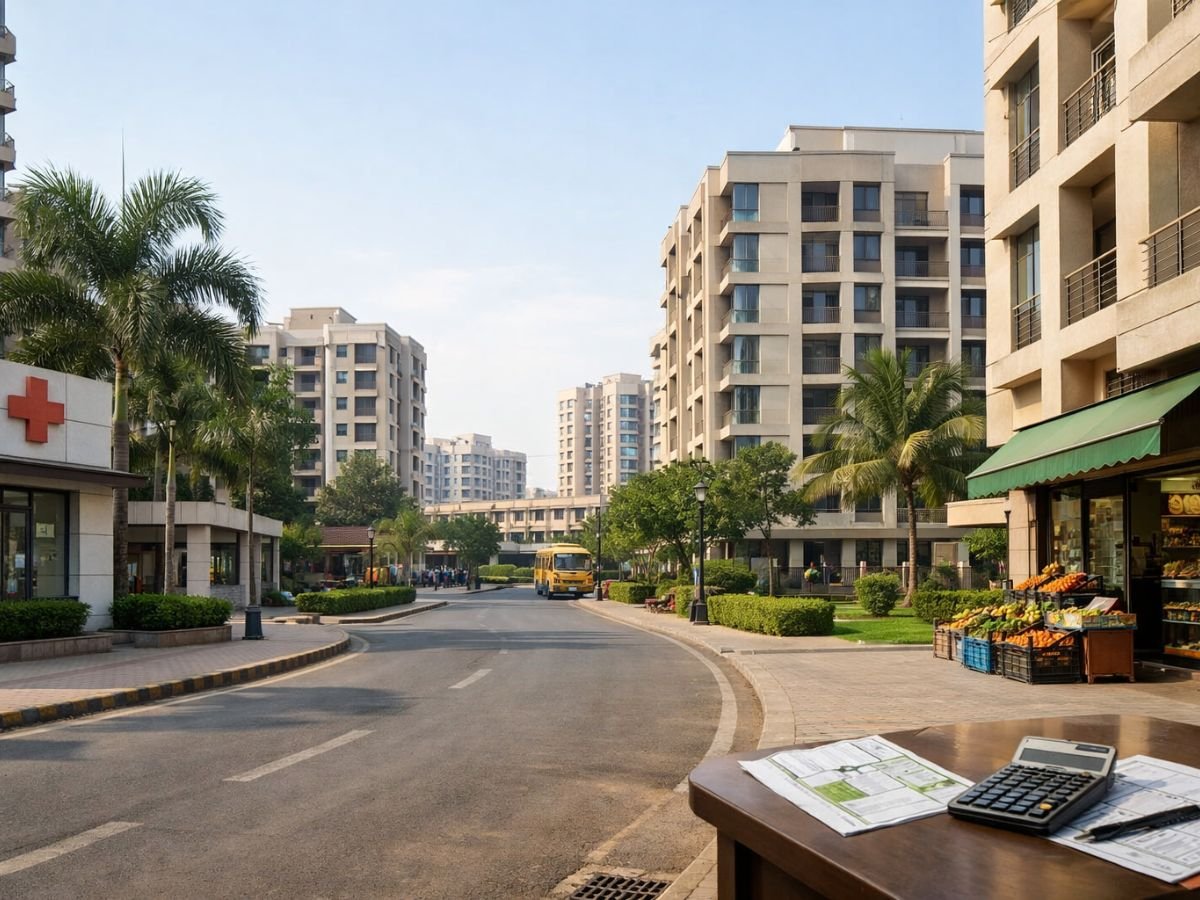
Yes, Panvel can be a good choice for families, especially those moving from more expensive or more cramped parts of Mumbai and Navi Mumbai. But the answer depends heavily on which family we are talking about.
For many practical families, Panvel’s biggest advantage is simple: you get more usable home for the money. That is still one of the strongest reasons why families keep looking here. A buyer who is moving from a smaller flat in an older suburb may genuinely feel an upgrade in daily life after shifting to a better-planned society in the right Panvel pocket.
Panvel also has a functional social infrastructure base. Schools such as DAV Public School, St. Joseph’s High School, and VIBGYOR improve the area’s credibility for families. Healthcare support from hospitals such as Lifeline and MGM also matters. This is why Panvel cannot be dismissed as only a speculative investment zone anymore. In selected areas, it is a working family market.
Where families may find Panvel practical
Families usually do better in New Panvel East and New Panvel West, especially where the residential environment is more stable and daily services are not too far.
What helps families here is not glamour. It is usability. A practical homebuyer will care about school runs, grocery access, clinics, parks, building quality, road width, and whether children can grow up in a reasonably liveable environment. In better sectors, Panvel does offer that.
The cost side also matters. The broader family cost of living can still compare favourably against costlier nodes like Kharghar or many central Mumbai suburbs. For a family of four, that monthly burden difference can be meaningful.
Where family buyers may feel friction
Panvel is not a polished, seamless family market in every pocket. That is where caution becomes important.
Older pockets can face monsoon waterlogging, denser roads, and more local congestion. Construction-heavy zones can feel dusty for long stretches. Some PMC-side realities, especially around water supply stress in summer, can become a serious day-to-day issue if the building depends too heavily on tanker arrangements.
There is also a civic split that families should understand before buying. CIDCO-planned areas and PMC-managed realities do not always feel the same on the ground. The road design, drainage quality, and daily service experience can differ sharply. This is not a small point. For families, it affects comfort every day.
A family buyer should check these points before saying yes:
- Is the school commute practical in real traffic, not just on Maps?
- Does the building rely on regular tanker water in summer?
- Is the surrounding area still under heavy construction?
- Are hospital, pharmacy, grocery, and local transport within a usable radius?
- Is the society environment family-oriented or still too transitional?
Is Panvel a good choice for daily commuters?
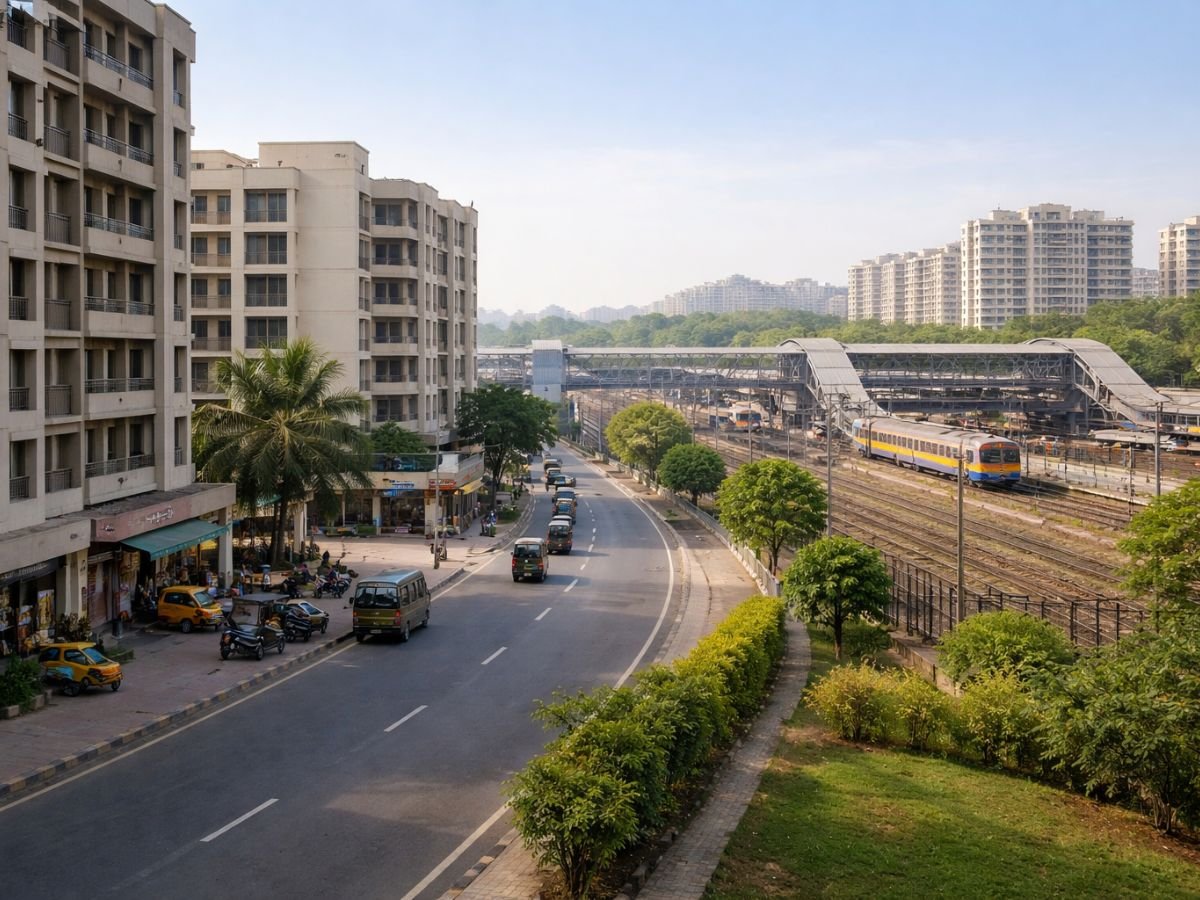
Panvel is a good choice for some commuters, but definitely not for all commuters. This is one category where marketing often makes the answer sound much easier than it really is.
The positive side is clear. Panvel has serious transport relevance now. The Harbour Line remains a core lifeline. AC local services on the CSMT-Panvel route have improved comfort. The Panvel-Karjat suburban line is expected to improve eastern and central connectivity further. The Atal Setu has also reduced regional travel distance in a big way.
But commute decisions are not made on project brochures. They are made on door-to-door time, last-mile stress, and how many days you need to do the trip.
When railway and road connectivity make Panvel work well
Panvel works best for commuters who live close to a useful station access point or an efficient road connection.
A buyer near Panvel station-side access in the East gets a stronger daily advantage if the routine depends on the Harbour Line, bus connectivity, or quick market movement. A buyer in New Panvel West / Khanda Colony side may prefer the relative calm of that side and use Khandeshwar station logic where it makes more sense.
Road commuters also benefit more than before. MTHL has changed how South Mumbai access is discussed. On paper, that matters a lot. In real life, it matters most for people whose work pattern is not an exhausting five-day deep-city commute with multiple last-mile delays.
When the daily commute still becomes tiring
This is where buyers need to be honest with themselves.
A Panvel-to-South Mumbai bridge crossing may be fast, but the full journey is not just the bridge. Reaching the entry point from your residential sector takes time. Reaching the actual office district after Sewri takes time. Peak-hour traffic inside the city takes time. Daily toll economics also matter. So a person working in BKC, Lower Parel, Andheri, or Malad should not casually assume that “Atal Setu means easy daily commute.”
The same goes for rail users. A flat that looks attractive because it is in “Panvel” may still involve shared auto dependency, station crowding, and slower daily movement if it is not aligned properly with the actual route.
So who does Panvel suit most among commuters? Usually:
- hybrid workers
- rail commuters with strong station alignment
- professionals travelling a few days a week
- logistics, JNPT-side, or Navi Mumbai-side workers
- people who value space at home enough to tolerate some commute effort
It is less ideal for someone doing a punishing five or six day deep-Mumbai commute with weak last-mile access.
Is Panvel a smart buy for investors, or is it mainly an end-user market?
Panvel is both an end-user market and an investor market, but not in the same way and not with the same expectations.
The biggest mistake investors make is assuming that because Panvel saw strong appreciation between 2021 and 2025, the same explosive pattern will keep repeating automatically. That early airport-led jump was unusually strong. A large part of the “big reveal” phase is already behind the market now.
That does not mean the story is over. It means the story is more mature.
Panvel still makes sense for investors who understand that this is now a selective, patience-based infrastructure market, not a blind momentum market.
What kind of investor Panvel may suit
Panvel suits investors who can hold patiently for five to ten years, choose the right micro-location, and stay realistic about rent.
The price gap with more mature Navi Mumbai nodes still gives Panvel strategic relevance. Market estimates in Q1 2026 place capital rates roughly around:
- Old Panvel: ₹10,000 to ₹14,000 per sq. ft.
- New Panvel East: ₹7,000 to ₹9,500 per sq. ft.
- New Panvel West: ₹6,500 to ₹8,500 per sq. ft.
- Karanjade / Palaspe: ₹5,000 to ₹7,500 per sq. ft.
That means investors can still enter at a lower base than many premium nodes. For the right buyer, that matters.
What kind of investor may be disappointed
Panvel is not ideal for the investor who expects instant high residential yield or instant premium tenants everywhere because the airport is operational.
That is not how the market is behaving on the ground.
Typical residential rental yields in the Panvel side are still mostly in the conventional range, not fantasy range:
- Old Panvel: roughly 3.8% to 4.5%
- New Panvel East/West: roughly 3.5% to 4.2%
- Karanjade / Palaspe: roughly 4.0% to 5.5%
So yes, some budget pockets can show stronger yield patterns, especially where workforce demand is practical. But no, Panvel is not a universal 7% to 8% residential yield market.
The other caution is project quality and execution. Under-construction investments need more scrutiny now, not less. MahaRERA has improved grievance disposal, which is good for buyers, but that does not remove the need for strict project verification. A buyer still needs to check RERA status, possession stage, title flow, construction quality, and realistic local demand.
Which parts of Panvel suit families, commuters, and investors differently?
| Panvel Micro-Location Guide: Which Area Suits You Best (2026) | |||
|---|---|---|---|
| Micro-Location | Best Suited For | Main Strength | Main Limitation |
| Old Panvel | Established local families, resale-focused buyers | Market proximity, established character, immediate convenience | Dense roads, older urban fabric, less township-style calm |
| New Panvel East | Rail commuters, practical families, errand-focused end users | Panvel station access, bus depot utility, walkable daily life in selected areas | Busy rhythm, not equally calm in all stretches |
| New Panvel West / Khanda Colony | Families, quieter end users, professionals commuting toward Navi Mumbai | CIDCO-style planning, wider roads, calmer residential feel | More auto-rickshaw dependency, less walkable than East |
| Karanjade / Palaspe | Budget buyers, early investors, logistics-belt workers | Lower entry price, highway relevance, better yield potential in selected pockets | Heavy vehicle environment, limited polished family infrastructure, transitional development stage |
Old Panvel and market-linked pockets
Old Panvel suits buyers who value immediate market access and established local activity. It can work well for families already comfortable with that denser environment and for buyers who prefer resale clarity over future promises.
But someone expecting wide-sector township order may not enjoy it.
New Panvel East and station-linked practicality
New Panvel East is one of the most practical choices for commuters and for end users who want daily utility. The East-side station relationship matters a lot. This is where the 15-minute operational radius idea becomes useful. If your home, station access, local market, and regular errands sit within a tight daily circle, life becomes much easier.
This is one reason East often makes more sense than people assume.
New Panvel West and quieter family living
New Panvel West usually feels more suited to family buyers who want a quieter residential setup, wider roads, and a more planned neighbourhood character. It is not as aggressively errand-centric as some East-side stretches, but for the right family it can feel more balanced.
It also matters for buyers who may use Khandeshwar-side movement rather than depending only on Panvel station.
Outer or growth-side Panvel pockets
Karanjade, Palaspe, and airport-influence side opportunities are more complicated. These can work for budget-conscious buyers and investors who understand transitional markets. But they should not be sold as the same thing as established family-ready Panvel.
This is where the “airport adjacency” trap becomes dangerous. Being closer to a growth corridor does not automatically mean better end-user comfort next year.
When Panvel is a strong fit and when it is the wrong buy
A practical way to judge Panvel is to look at the buyer profile, not just the project.
Strong fit: A family currently living in a cramped flat, wanting a larger home, better society amenities, and acceptable school-hospital-market access at a more workable budget. For this buyer, selected New Panvel sectors can make real sense.
Strong fit: A hybrid worker who travels to Mumbai only two or three times a week and values a bigger, calmer home base. For this buyer, Panvel can be a meaningful lifestyle upgrade.
Conditional fit: A daily rail commuter whose home is properly aligned with Panvel station or Khandeshwar station. This can work, but only if last-mile movement is manageable.
Conditional fit: A long-term investor comfortable with a five-to-ten-year horizon and selective about project quality, legal clarity, and pocket-level demand.
Wrong fit: An investor expecting instant premium residential rent just because the airport is open.
Wrong fit: A buyer who wants the current polish of mature Kharghar-like livability everywhere but at a much lower price.
Wrong fit: A family buying in a fringe airport-influence pocket assuming schools, water stability, and daily services will catch up immediately.
What buyers often misunderstand about Panvel before purchasing
The biggest misunderstanding is simple: buyers think all Panvel advantages apply equally across all pockets. They do not.
The second misunderstanding is that airport-led growth automatically improves immediate residential quality. It does not. Growth and livability do not move at the same speed.
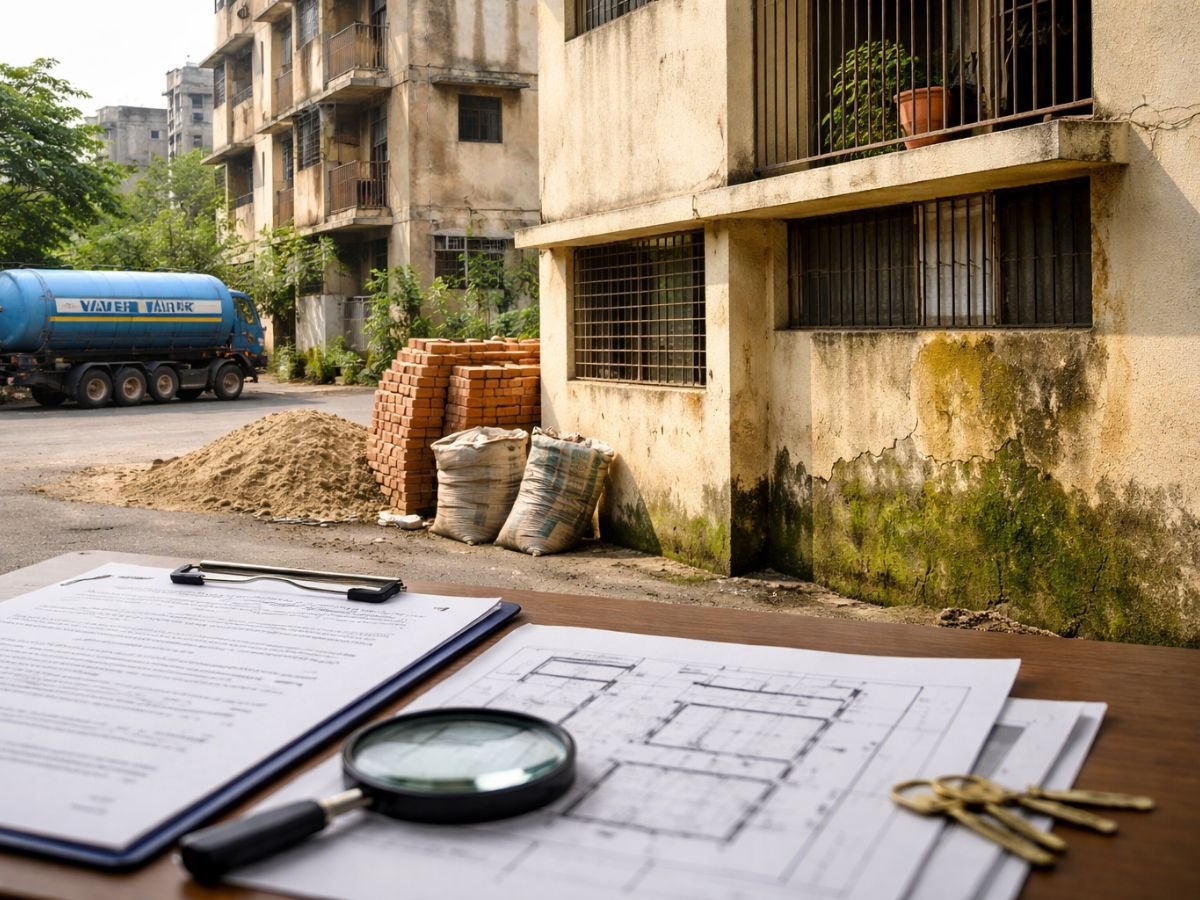
The third misunderstanding is more serious: buyers focus too much on amenities and too little on construction quality. In a fast-building, humid coastal environment, poor damp-proofing, rushed concrete work, and weak site discipline can create long-term problems. A shiny brochure does not protect you from leakage, structural stress, or bad finishing.
Then there is the civic reality. Some buyers still do not understand the CIDCO versus PMC divide until after purchase. That can affect expectations on taxation, service quality, water reliability, and local maintenance rhythm. The ongoing tax friction in annexed areas is also something buyers should know before committing. The legal and financial context matters, especially where retrospective demands and service-charge overlap have become public local issues.
So before buying, ask not only “Is the project good?” Also ask:
- Who manages this area in daily civic reality?
- What is the actual summer water situation here?
- What is the building’s complaint history?
- Is the project legally and structurally clean?
- Is this an end-user pocket or a future-growth pocket being sold as present-ready?
A simple decision framework: should you buy in Panvel or look elsewhere?
Buy in Panvel if most of the following are true:
- You want better space value than many mature Navi Mumbai nodes offer
- You are okay choosing carefully between Old Panvel, New Panvel, and fringe zones
- Your work pattern suits rail or selective highway commuting
- You are willing to verify water, tax, and construction quality issues properly
- You are buying either for self-use or for patient long-term holding
Look beyond Panvel if most of the following are true:
- You want highly polished, already mature livability across the entire area
- You need instant premium rental performance from a residential flat
- You cannot tolerate even moderate commute complexity
- You need next-year family comfort but are only looking at fringe growth pockets
- You are buying mainly on hype and not on micro-location logic
In practical comparison terms, Kharghar may still feel stronger for buyers willing to pay more for present-day livability. Ulwe may appeal more to airport-proximity believers, but it still does not match Panvel’s broader social infrastructure in many cases. Taloja may work for stricter budgets, but its industrial-side friction changes the equation.
That is why Panvel remains relevant. It often sits in the middle of the real decision set: more practical than pure speculative zones, but more affordable than many polished mature nodes.
Final verdict: which buyer type Panvel serves best
Panvel serves space-seeking practical families best, especially those choosing the right part of New Panvel and staying alert to civic and building-quality realities.
It also serves patient long-term investors reasonably well, but only if they are disciplined about micro-location, legal checks, construction quality, and realistic rental expectations.
For commuters, Panvel is a real option, but it is not an automatic yes. It works best when station access, road route, work location, and travel frequency are aligned properly. If those pieces do not fit, the commute story can become tiring despite all the transport upgrades.
So, who should buy in Panvel?
Buy in Panvel if you are a family wanting more liveable space, a hybrid or well-aligned commuter, or a patient investor who understands local variation. Be more careful if you want instant premium rent, fully mature civic comfort in every pocket, or a simple airport-led shortcut to easy profits.
Conclusion
Panvel is no longer just a future story. It is already a working real estate market shaped by an operational airport, stronger regional connectivity, and rising buyer attention. But its biggest truth is also its biggest trap: Panvel means different things in different pockets.
That is why the best buyer for Panvel is not “everyone.” It is the buyer whose needs match the right Panvel micro-market.
For families, that usually means usable social infrastructure and better space value. For commuters, it means genuine route alignment, not brochure-level connectivity. For investors, it means patience, realism, and proper due diligence.
If you read Panvel correctly, it can be a very smart buy. If you buy a vague “Panvel growth story” without understanding which Panvel you are buying into, it can become an expensive mismatch.
FAQs
Frequently Asked Questions