
Who Should Buy in Seawoods Navi Mumbai? Families, Premium End Users or Investors
Seawoods is usually the best fit for premium end users first, families second, and investors only selectively. It works very well for buyers who can afford its premium pricing and genuinely use its station, mall, and lifestyle convenience every week. It is much less suitable for yield-focused investors, short-term flippers, or families who mainly want more space for the same budget.
Seawoods is no longer a “future story” market in Navi Mumbai. It is already a mature premium node. That changes the buying logic completely. The right question is not whether Seawoods is good. The real question is whether Seawoods is good for the specific type of buyer entering at today’s price levels.
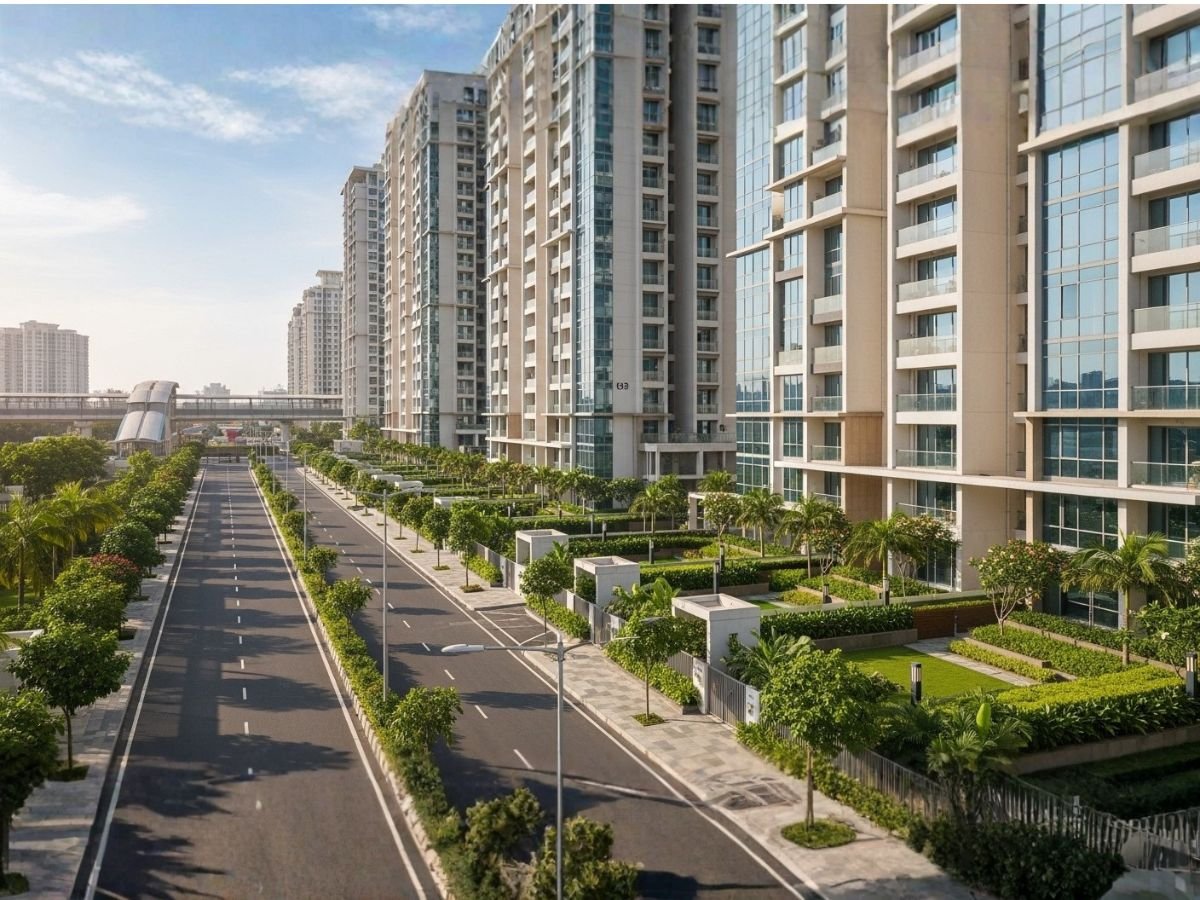
Who should buy in Seawoods right now?
The blunt answer is this: Seawoods is strongest for premium self-use buyers, good for certain families, and only conditionally suitable for investors.
| Buyer Type | Fit in Seawoods | Why |
|---|---|---|
| Premium end users | Best fit | Daily convenience, polished living, strong station-mall integration, Palm Beach prestige |
| Families | Conditional buy | Good if budget is comfortable and convenience matters more than maximum space |
| Investors | Conditional to weak fit | Works for capital preservation and premium holding, not for high rental yield or quick flipping |
This is important because Seawoods has become a polarized market. Listing-based price indicators in the area can sit around the high teens or low twenties per sq.ft. on average, but actual market behavior varies sharply by sector, building age, frontage, and project grade. Older CIDCO stock may sit around roughly ₹11,500 to ₹16,000 per sq.ft., while premium Palm Beach or top branded inventory can stretch well above ₹30,000 and even approach ₹47,000 per sq.ft. in exceptional luxury stock.
That is why Seawoods cannot be judged with one simple sentence. One buyer may enter at older-sector pricing for location value. Another may enter at ultra-premium tower pricing for sea views, status, and a curated lifestyle. Those are very different decisions.
Why Seawoods is not a broad-fit market like many buyers assume
Seawoods gets praised too easily. Many property pages treat it like a universal answer for anyone wanting to buy in Navi Mumbai. That is misleading.
Seawoods is not a broad-fit market like Panvel, not a value-growth play like some outer nodes, and not even a simple family-first node like parts of Nerul. It behaves more like a mature, premium, convenience-heavy urban pocket where the buyer is paying not only for the flat, but also for frictionless daily living.
That sounds attractive. It is attractive. But it also raises the entry barrier.
A buyer here must think beyond the purchase price. In many cases, the real cost of ownership also includes higher maintenance, higher taxes in practical terms because of higher rental value assumptions, and resale friction such as CIDCO transfer charges on leasehold-linked transfers. After the April 2025 hike, CIDCO transfer costs for many resale situations became a much more serious line item, and standard resale buyers often need to factor in roughly ₹1 lakh to ₹3 lakh depending on the property and transfer structure.
> Caution: In Seawoods resale deals, the budget should not be calculated only around agreement value, stamp duty, and registration. CIDCO transfer charges, society-related charges, and monthly maintenance can materially change the real affordability.
So yes, Seawoods is excellent. But it is excellent in a very specific way. Buyers paying for this location should actually need the lifestyle logic behind it.
Do families get real value from buying in Seawoods, or are they mainly paying a premium?

Families can get real value in Seawoods, but not every family will.
Seawoods works best for families that want a compact, efficient, high-convenience urban life. If both parents work, if train access matters, if weekend errands are often done nearby, and if the household values an integrated environment with schools, healthcare, retail, and transport within a short radius, then Seawoods can justify its premium.
That is where the node performs strongly. Good schools and healthcare options in the wider Seawoods-Nerul belt are accessible. The daily routine can become easier. There is genuine value in cutting travel friction.
But this is also where many families misread the market. A family may see the Seawoods name, the mall, the station, and the premium reputation and assume it is automatically the best family-buying choice. Not always.
For a strict budget, Seawoods often means less carpet area, higher monthly burn, and more traffic intensity than what the same money may buy in Nerul or other nearby family-friendly pockets. Daily life for a family is not only about looking polished from the outside. It is also about bedroom sizes, noise after evening hours, parking stress, service road movement, and whether the household is paying a premium for convenience it will not fully use.
Families who benefit most from Seawoods
Families usually fit Seawoods well when they fall into one of these patterns:
- Working parents who actively use rail connectivity or want strong commute efficiency
- Households that value walkable errands more than maximum square footage
- Buyers comfortable with premium maintenance costs
- Families preferring gated premium environments such as stronger township-style settings
- Households that see safety, convenience, and integrated living as worth paying extra for
Families who may be better off in another node
Some families should slow down before buying in Seawoods. That includes:
- Families needing 3+ bedrooms on a tight budget
- Buyers who want quieter residential lanes over high-energy urban convenience
- Households that do not really need station-plus-mall access
- Buyers sensitive to maintenance outgo, parking chaos, and local congestion
- Families that prioritize room size and calm surroundings over brand value
In practical Navi Mumbai terms, this is where the Seawoods vs Nerul overlap becomes very real. Some buyers search for Seawoods because the name sounds premium, but what they actually want is the quieter, more settled, more school-belt style of living that parts of Nerul often deliver better.
Is Seawoods best suited for premium end users who want daily convenience and polished living?
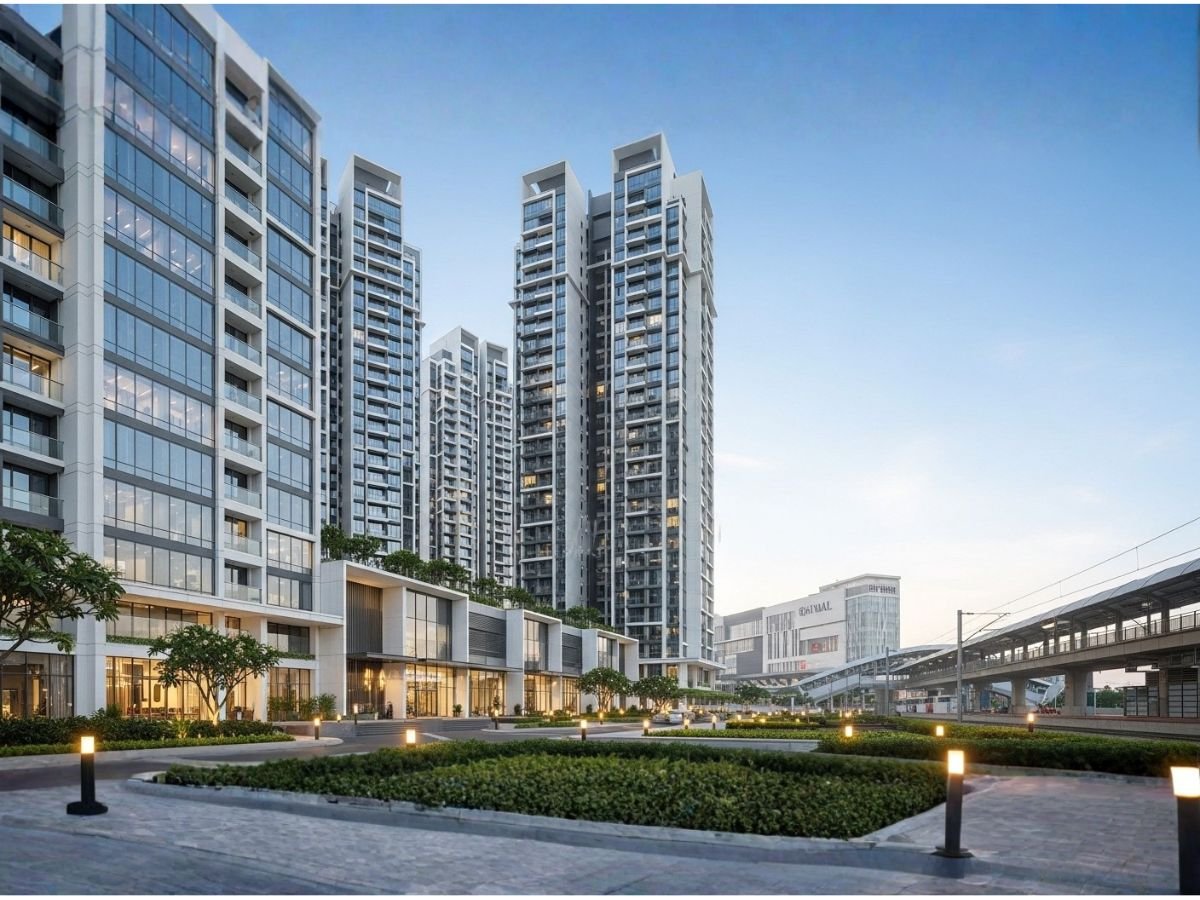
Yes. This is the clearest buyer fit in the market.
Seawoods is at its strongest when viewed as a premium self-use location for buyers who want daily convenience, strong urban polish, and an environment that reduces routine friction. This is where the Transit-Oriented Development logic matters. Seawoods Grand Central is not just a mall landmark. It changes how the area functions.
In the strongest projects and pockets, the buyer is paying for a very specific lifestyle package: station access, retail underfoot, corporate-grade demand around the node, major road connectivity, and a more curated residential product. That is why projects like L&T Seawoods Residences or ultra-premium Palm Beach inventory command very high pricing bands.
The value here is not only emotional. It is practical. A premium end user in Seawoods is often buying back time.
A working couple living in a station-integrated or close-to-SGC pocket may save repeated short trips through traffic every week. Over a year, those saved hours become meaningful. In that sense, a buyer paying ₹31,000 to ₹34,000 per sq.ft. in a premium branded tower is not only paying for finishing and branding. The buyer is paying for a time dividend.
That is why Seawoods feels more convincing for premium end users than for pure investors. Self-use buyers can consume the convenience every single day. Investors cannot.
Is Seawoods still a good choice for investors, or mainly for stability-focused buyers?

Seawoods is not a strong market for every investor. It is mainly suitable for stability-focused investors, not yield hunters.
This is one of the biggest buyer mistakes in Navi Mumbai. High rents do not automatically mean high returns. A flat earning ₹70,000 per month may sound attractive, but if the entry cost is ₹2.5 crore or more, the gross rental yield is still modest. In Seawoods, gross rental yields generally hover around 3.0% to 3.5%, and only in certain specialized premium leasing situations may they stretch somewhat higher.
That makes a huge difference.
An investor looking for strong cash flow usually gets mathematically better yield in developing nodes like Ulwe or Panvel, where entry prices are lower and rental returns as a percentage are stronger. Seawoods, by contrast, has a heavy capital base. The pricing has already moved up sharply, which compresses yield.
So who can still buy in Seawoods as an investor?
Investors for whom Seawoods can still work
Seawoods can still make sense for:
- Capital preservation buyers
- NRIs who want a strong-status asset in a mature Navi Mumbai location
- Investors who want lower vacancy risk in premium corporate-renter segments
- Buyers with a long holding period who want stable positioning near major future infrastructure such as NMIA and Metro Line 8
Investors who should probably look elsewhere
Seawoods is usually the wrong fit for:
- Yield-focused investors
- Short-term flippers
- Buyers chasing a dramatic airport-effect price spike
- Investors who need low-friction resale math
Why short-term flipping becomes difficult is simple. High entry cost, stamp duty, registration, CIDCO transfer charges, and resale transaction friction eat into margins quickly. The airport story and metro story are positive, but much of that premium expectation is already reflected in current pricing, especially in the strongest micro-markets.
So, is Seawoods good for investment? Yes, but only if “investment” means capital safety, premium holding quality, and long-term relevance, not high rental yield or fast arbitrage.
What exactly are you paying extra for in Seawoods?
This is where buyers need price logic, not just price awareness.
| Premium Factor | What it means in Seawoods | Who benefits most |
|---|---|---|
| TOD premium | Direct or near-direct access to rail and future Metro Line 8 connectivity logic | Working professionals, commuters, corporate tenants |
| SGC ecosystem premium | Mall, errands, dining, entertainment, and commercial integration in one zone | Premium end users, families valuing convenience |
| Palm Beach prestige premium | Better address value, views, stronger luxury identity | HNIs, NRIs, status-focused self-use buyers |
| Project-quality premium | Branded towers, clubhouse scale, amenities, security, curated living | Premium families and end users |
| Time dividend premium | Fewer small travel frictions across the week | People who actively live a high-mobility lifestyle |
This is why a 3 BHK in stronger Seawoods stock can stretch into a much higher budget band than a buyer initially expects. The premium is not random. But it is also not universally useful.
A retired buyer who rarely commutes and mainly wants a larger calm home may not need this full package. A corporate executive who values seamless daily movement may value it heavily. Same area. Completely different buyer outcome.
Which parts of Seawoods suit which type of buyer?
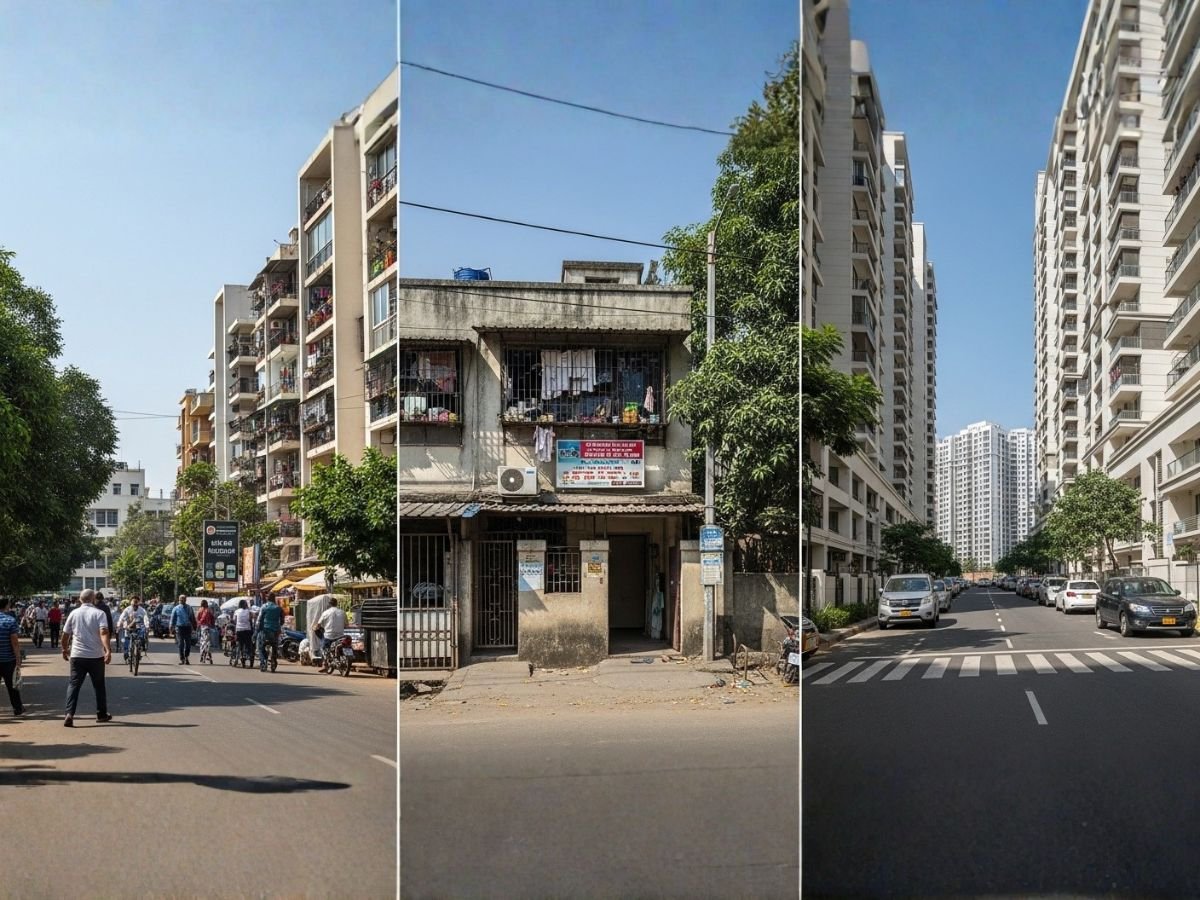
Seawoods should never be treated as one flat market. Its sectors behave differently.
Station-convenience oriented pockets
Sectors closer to the SGC-station ecosystem, such as parts of Sector 40 and 42, usually suit working couples, high-mobility households, and corporate renters better. These are higher-energy locations. They are attractive because they offer the purest version of Seawoods’ convenience story.
The trade-off is that they also carry more movement, more crowd impact, and in some stretches the parking and service-road frustration locals already know too well.
Premium tower and lifestyle-oriented pockets
Palm Beach Road-side and NRI Complex influenced areas such as Sector 56, 58, and 58A suit premium self-use buyers, NRIs, and larger affluent families better. These pockets are closer to Seawoods’ quiet luxury identity. Pricing is usually much higher, but the buyer here is not searching for a bargain anyway. This segment is buying security, address value, views, and a more insulated lifestyle.
Older stock vs newer premium stock
Older CIDCO-led or legacy stock in sectors such as 36, 44, and 48 can suit location-conscious end users who want Seawoods without paying top-tier tower prices. These properties may not deliver the same polish, amenities, or prestige, but they can still offer strong local access and practical entry into the node.
That difference matters. A buyer should not say, “I want Seawoods.” The better question is, “Which version of Seawoods actually suits the budget and purpose?”
Who should avoid buying in Seawoods even if they can afford it?
This is one of the most important questions, because many bad property decisions happen at high budgets too.
Seawoods should usually be avoided by buyers who want fast multi-bagger appreciation, high rental yield, or maximum space efficiency. It should also be avoided by buyers who are financially stretched after the purchase. A premium node becomes uncomfortable very quickly if the buyer can afford the down payment but not the holding costs.
Maintenance is a real issue here, especially in top-end buildings. In stronger luxury projects, monthly society maintenance can rise to levels that materially affect household cash flow. Even where it is not extreme, Seawoods is not a low-burn ownership market.
It is also not ideal for buyers who are highly sensitive to traffic spillover, illegal parking, or the high-energy environment around the SGC ecosystem. That is a real ground reality, not a minor complaint.
So even an affluent buyer should pause if the actual need is peace, oversized rooms, low monthly burn, and a quieter long-term family setting. In that case, another node may feel less glamorous on paper but better in lived reality.
Seawoods vs what buyers usually compare it against in Navi Mumbai
Most Seawoods buyers mentally compare it with Nerul or Vashi, even when they do not say so clearly.
| Area | Best for | Where it wins | Where it loses |
|---|---|---|---|
| Seawoods | Premium self-use and convenience-led buying | TOD living, station-mall integration, polished modern feel | Lower yield, higher costs, less value-for-space |
| Nerul | Family stability and balanced residential living | Better calm, school-belt comfort, better space logic in many pockets | Less curated modern TOD polish |
| Vashi | Legacy premium and business practicality | Centrality, established commercial relevance, bigger older stock in some belts | Less seamless modern integrated living than Seawoods |
That is why Seawoods should not be bought only because it sounds premium. It should be bought when its specific strengths are the ones a buyer will actually use.
A simple decision framework: buy in Seawoods, consider carefully, or skip
Buy in Seawoods if:
- the buyer is a premium end user
- commute convenience is a genuine daily need
- the household values station access, mall integration, and polished living
- the budget can comfortably absorb both purchase cost and monthly maintenance
- the goal is long-term self-use or capital preservation
Consider carefully if:
- the buyer is a family needing more space for the budget
- the buyer likes Seawoods but may actually fit Nerul better
- the purchase is in an older building where location is strong but product quality is mixed
- the buyer is counting too much on future appreciation to justify today’s entry price
Skip Seawoods if:
- the buyer is a rental-yield hunter
- the buyer wants to flip in the short term
- the household is already stretching financially
- the buyer wants silence, low maintenance, and maximum usable area more than city-style convenience
Conclusion
Seawoods is fundamentally a lifestyle-upgrade and capital-preservation market, not a broad, one-size-fits-all buying destination. It is strongest for premium end users who will actively use its transit-oriented convenience and polished urban setup. It is a good but conditional choice for families that can afford the premium without compromising on space or monthly comfort. For investors, it is usually a selective long-hold asset, not a strong yield play.
So who should buy in Seawoods? Premium self-use buyers first. Certain families second. Investors only when the goal is stability, prestige, and long-term holding, not quick returns.
FAQ's
Frequently Asked Questions