Who Should Buy Property in Ulwe: End Users, Investors, or Airport Workers?
Ulwe is not the right buy for everyone. In 2026, it usually makes the most sense for practical end users and disciplined long-term investors, while the future airport worker case is much more conditional than brokers make it sound. The airport is now operational, but that does not automatically make every sector, every project, or every buyer type a good match. The real answer depends on daily convenience, entry price, commute pattern, and how much friction a buyer can tolerate.
Ulwe has changed. For years, it was sold almost entirely on future promise. Now the story is more complicated. The Navi Mumbai International Airport has started commercial operations, the Atal Setu has changed regional access, and railway connectivity has made parts of Ulwe more usable than before. At the same time, water stress, uneven sector quality, incomplete civic maturity, and a gap between asking prices and actual deal reality still matter a lot.
That is exactly why this question matters. Not “Is Ulwe good?” but “Who is Ulwe actually good for right now?”
The short answer: who Ulwe suits best right now
Here is the practical answer before we go deeper.
| Buyer Type | Ulwe Fit in 2026 | Plain-English Verdict |
|---|---|---|
| End users | Strong but selective | Good for patient buyers who want connectivity and can accept some civic friction |
| Investors | Moderate and conditional | Works mainly for long-hold buyers who negotiate hard and stay realistic on rent and exit |
| Future airport workers | Conditional | Makes sense for some roles, but not all airport-linked buyers should assume Ulwe is the automatic choice |
In simple terms:
- Best fit: pragmatic end users who want access, future upside, and a still-developing node
- Second-best fit: long-term investors buying near usable transit pockets, not chasing hype
- Most over-marketed fit: future airport workers, because airport employment does not automatically mean Ulwe is the best ownership decision
Why this question matters more in Ulwe than in many other Navi Mumbai nodes
In a mature node like Vashi, Nerul, or even much of Kharghar, the buying decision is easier to decode. Prices there are tied more closely to present lifestyle value. You can see the schools, hospitals, markets, daily convenience, and community maturity on the ground. The trade-off is clearer.
Ulwe is different.
Ulwe sits in that tricky in-between stage of Navi Mumbai’s development curve. It already has major location advantages. It benefits from the airport story, the Atal Setu effect, railway access through the Uran line, and long-term commercial relevance. But it still does not deliver equal everyday comfort across the node. That gap between future expectation and present usability is what creates confusion.
This is also why many generic articles mislead readers. They treat Ulwe as one market. It is not. One sector can feel reasonably livable, connected, and functional. Another can still feel like a promise under construction.
So the question is not just whether Ulwe has future growth. It does. The real question is whether your buyer profile matches the kind of Ulwe that exists today.
Is Ulwe a strong choice for end users today, or only for patient buyers?
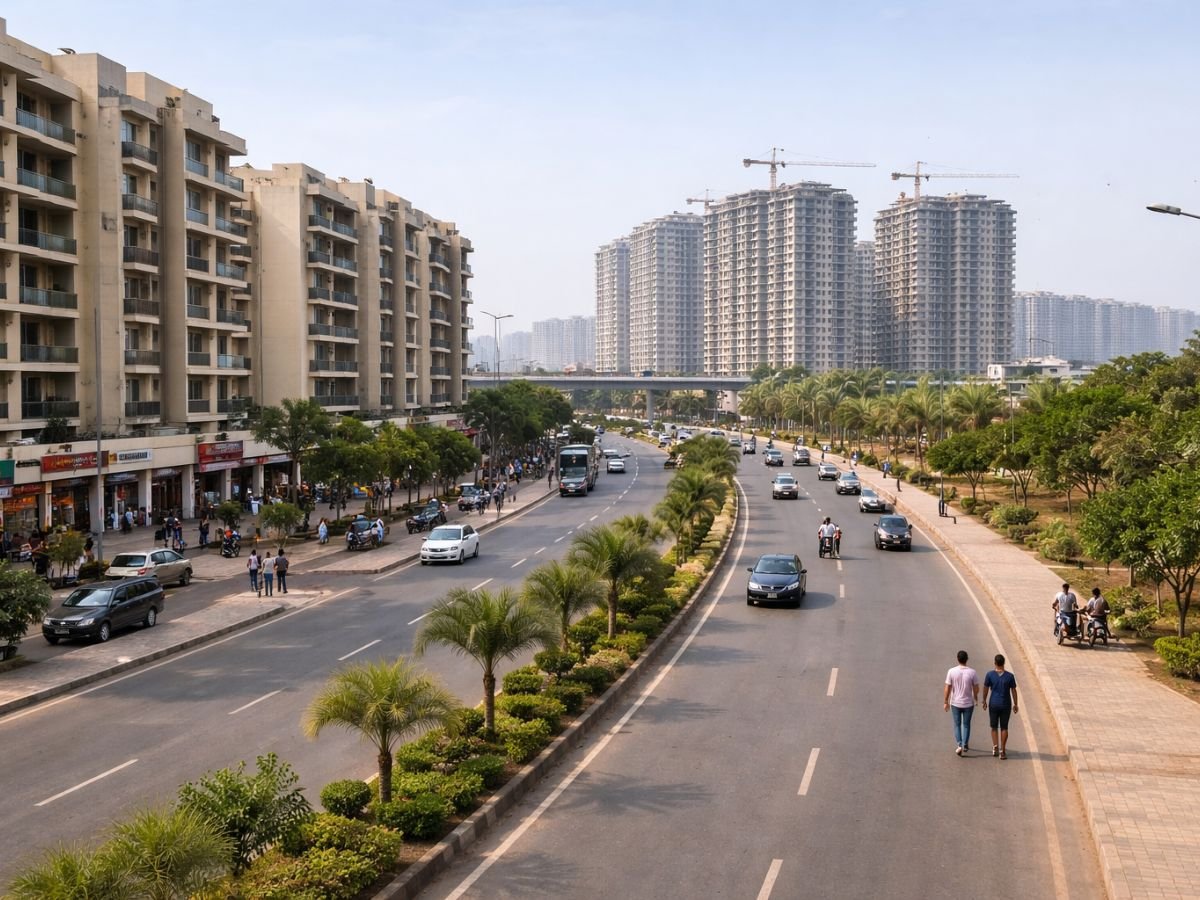
For end users, Ulwe can be a very sensible buy today, but only if the buyer is practical and not expecting a polished, plug-and-play lifestyle from day one.
The strongest case for Ulwe is not emotional luxury living. It is practical long-term urban positioning. If a family wants a Navi Mumbai location with improving connectivity, decent room for future growth, and better entry logic than more expensive mature nodes, Ulwe deserves attention. But that comes with conditions.
End users who usually fit Ulwe well
Ulwe suits end users who think like this: “I can live with some development-stage inconvenience today if the location logic is strong and daily movement works.”
That usually includes:
- families buying for self-use, not for status display
- salaried buyers who want better access toward South Mumbai or other Navi Mumbai employment belts
- buyers who are comfortable choosing a ready-possession or functioning resale flat instead of blindly chasing a new launch
- people willing to prioritise station access, road exits, and actual sector usability over brochure amenities
For this group, Ulwe can be a smart medium-term lifestyle buy. Sectors closer to active railway access and functioning local retail have a very different feel from the more peripheral pockets. In such areas, daily life becomes workable, even if not fully polished.
This is where Ulwe for end users starts making sense. Not because everything is perfect, but because the location’s long-term logic can justify today’s imperfections.
End users who may feel daily friction here
Ulwe is not ideal for buyers who want maturity from day one.
A family that expects seamless water supply, large-format retail nearby, immediate hospital comfort, strong civic finish, and a completely settled neighbourhood may struggle. That does not mean Ulwe is unlivable. It means the buyer’s expectations may be mismatched.
The biggest friction points remain practical, not theoretical:
- water supply stress in several pockets
- dependence on building-level preparedness, especially storage capacity
- uneven market and convenience infrastructure
- construction-heavy surroundings in some sectors
- better macro-connectivity than micro-lifestyle maturity
This is why Ulwe property for self use is best for patient buyers, not impatient ones.
Quick check: are you an end user who fits Ulwe?
You may be a good fit if most of these are true:
- you want to buy for at least 5 to 7 years
- you are okay choosing a sector carefully instead of buying anywhere in Ulwe
- you value connectivity more than instant luxury ecosystem
- you are open to ready-possession or good resale stock
- you can verify building-level water and occupancy realities before buying
You may be a poor fit if these sound like you:
- you want mature-node comfort immediately
- you do not want to deal with civic uncertainty
- you are buying mainly because “airport ke paas hai”
- you expect Ulwe to feel like Seawoods or mature Kharghar today
Does Ulwe still work for investors, or has too much of the airport story already been priced in?
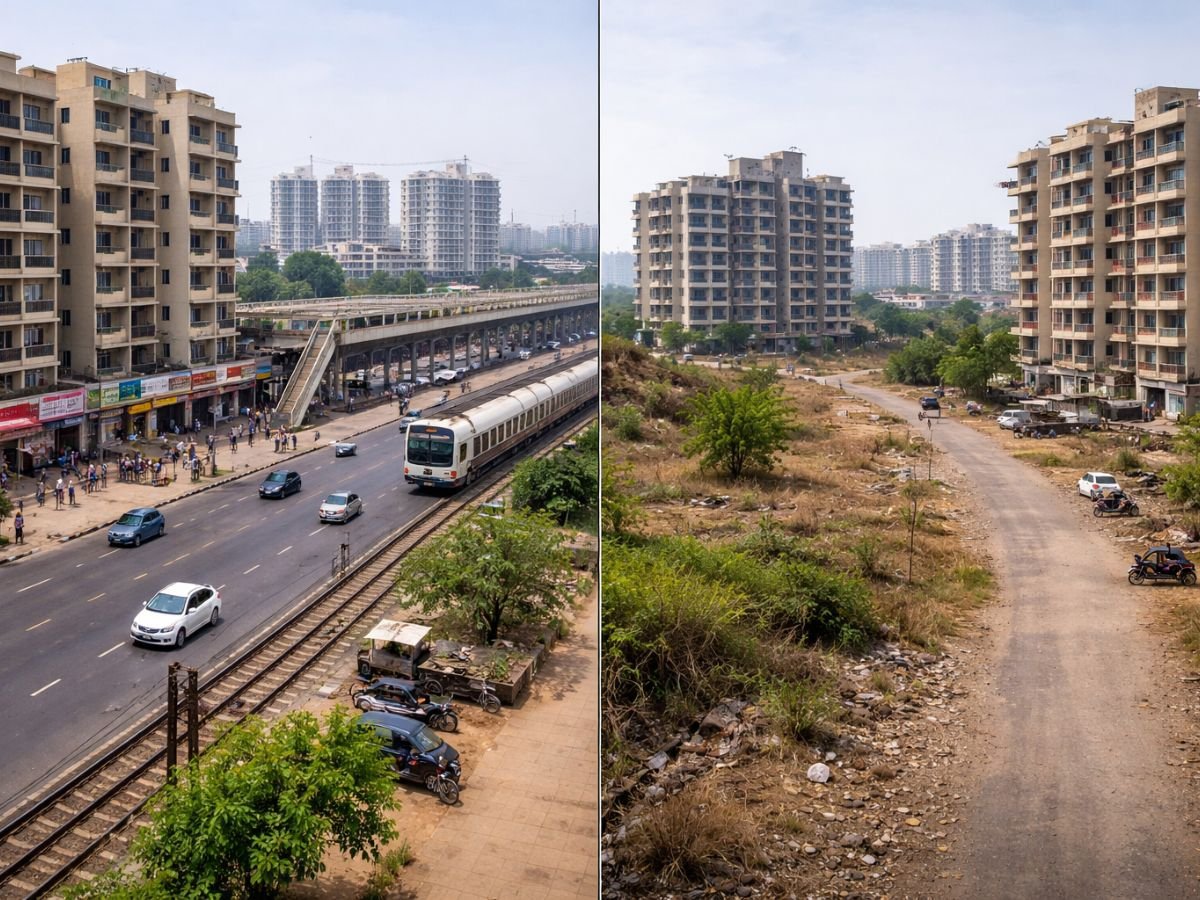
Ulwe still works for some investors, but the easy money phase is largely over.
That is the most important thing to understand.
For years, Ulwe investment potential was built around one thesis: buy before the airport becomes real. That phase already delivered a big part of its reward. Historical appreciation between 2021 and 2025 was already significant. So in 2026, an investor entering Ulwe is not entering a hidden market. They are entering a market where the airport premium has already been heavily discussed, marketed, and partly priced in.
That changes the investor profile completely.
Where the investor case still makes sense
Ulwe still makes sense for investors who are disciplined on three things:
1. Time horizon 2. Entry price 3. Micro-location
A long-hold investor with a 5-to-10-year mindset can still find logic here, especially in compact units near real transit utility such as Bamandongri or Kharkopar influence zones. That kind of inventory has a better chance of rental absorption and lower vacancy than flats in weaker, future-dependent sectors.
The investment case is stronger when the buyer is not chasing glamour. A practical 1BHK or compact 2BHK near functioning movement corridors is often more sensible than buying a larger premium unit based on imagined executive demand.
This is where Ulwe for investors still has life. Not through blind appreciation hopes, but through usable location logic.
Where investor expectations often become unrealistic
This is also where many buyers make mistakes.
Portal asking rates and on-ground deal reality are not the same thing. In Ulwe, asking rates can look far more aggressive than actual market-clearing prices. That matters because a buyer who enters too high may immediately reduce their future exit flexibility.
The second mistake is yield fantasy. Rental yields in the market are still modest. If a buyer is entering at a high cost and expecting rent to comfortably justify the purchase, the math usually does not support that. This is not yet a pure rental-yield market.
The third mistake is short-term flipping. That is where Ulwe becomes dangerous. A buyer expecting a quick two- or three-year upside just because the airport is now live may discover that the “big story” is already well known. If the purchase price is inflated and the resale market is crowded, exits become difficult.
Practical caution: Ulwe is not a clean short-term investor market. It is a selective long-term hold market.
Should future airport workers buy in Ulwe, or is that assumption too early?
This is the most misunderstood part of the whole Ulwe story.
A lot of people assume that because the Navi Mumbai International Airport is operational, airport workers will automatically buy in Ulwe. That sounds logical on the surface. But in real estate, surface logic is often where bad decisions begin.
Airport-linked demand is real, but it is not one single type of demand.
When the airport-worker buying logic is sensible
Ulwe can make sense for future airport workers when the buyer is:
- reasonably sure they will be based close to airport operations for years
- in a role where commute convenience matters more than township-style living
- comfortable living in a still-maturing node
- buying a compact, functional home rather than an aspirational lifestyle flat
This may suit some categories of ground staff, cargo-linked employees, support teams, and people whose main priority is proximity.
For them, Ulwe near the Navi Mumbai airport is not just a slogan. It can be a practical ownership case, especially if the purchase is in a usable sector with decent access and not in an isolated pocket.
When renting first may be smarter than buying
For many future airport workers, renting first is the smarter move.
Why? Because airport-related employment is not uniform. Work location, shift timing, housing support, long-term role stability, and lifestyle preference all vary. Some employees may discover that Panvel, Kharghar, Nerul, or another node actually works better depending on transport, family needs, or employer-linked housing patterns.
This becomes even more important when we look at institutional housing behaviour. Larger organised housing decisions linked to airport staff do not necessarily favour fragmented local stock in Ulwe. Integrated township-style options elsewhere can appeal more to executive and corporate segments.
So the phrase “Ulwe for airport workers” needs decoding.
It is sensible for some workers. It is not an automatic ownership recommendation for all of them.
What actually changes the answer: station access, sector quality, and everyday convenience
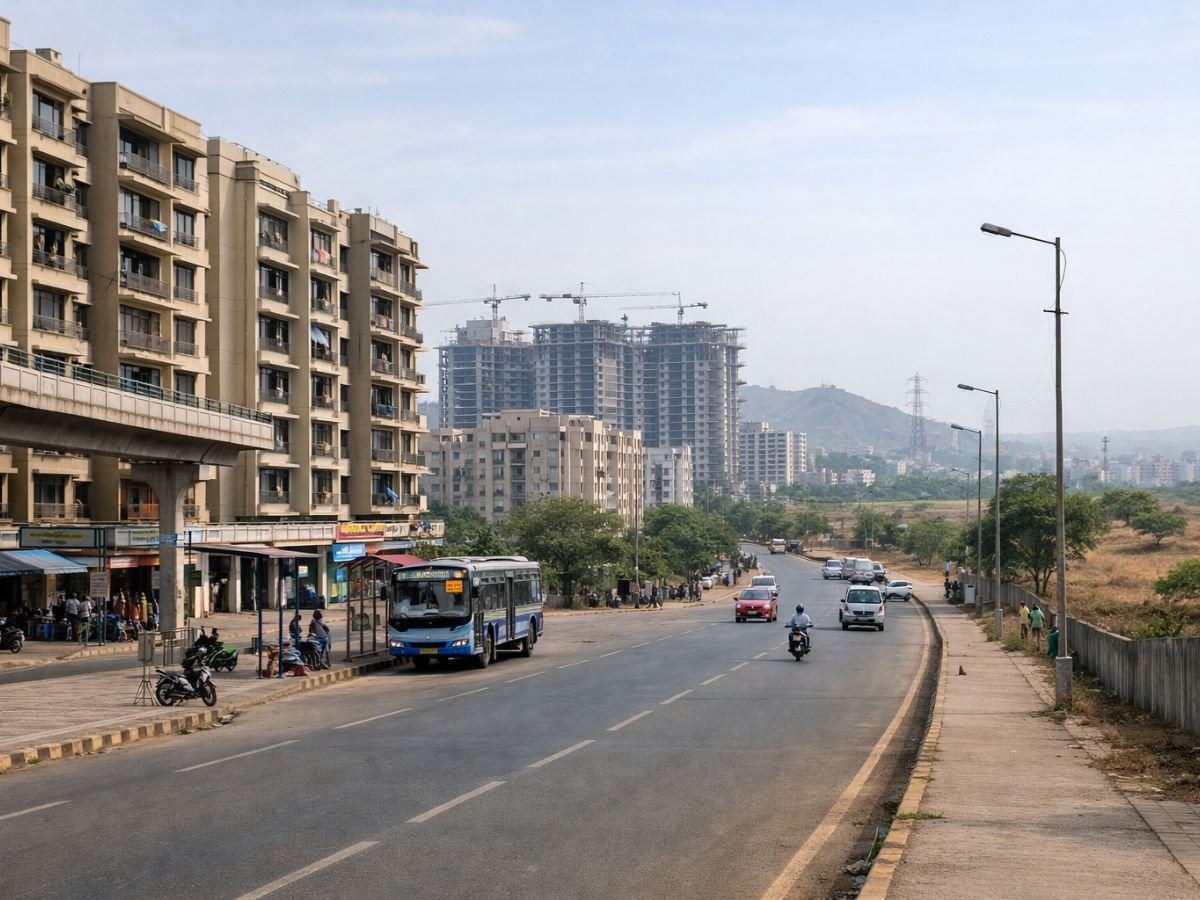
This is where the real decision happens.
A buyer who says, “I am buying in Ulwe,” has still not said enough. The real question is: which part of Ulwe, in what kind of project, with what kind of daily access?
That is because Ulwe is highly uneven at the micro level.
Areas helped by railway and daily movement
Sectors influenced by Bamandongri and Kharkopar connectivity usually offer better practical value. The reason is simple. Railway access does not just help commute. It helps daily movement, retail activity, footfall, and the development of a more usable local ecosystem.
Pockets around stronger transit anchors tend to perform better in three ways:
- better livability for end users
- better tenant appeal for investors
- lower regret risk compared with more peripheral sectors
This is also why sector quality matters more than broad price talk. A slightly higher entry in a better-connected pocket may be more sensible than a cheaper flat in a sector that still depends mostly on future promise.
Areas that still depend more on future promise than present usability
Peripheral or weaker sectors can still attract budget-conscious buyers because the rate looks lower. But many of these areas still carry heavier friction.
That can include:
- patchy convenience ecosystem
- more dust and construction impact
- weaker night environment
- dependence on future improvement rather than current usability
This is where some buyers get trapped by low-ticket temptation. They think they are buying value, but they may actually be buying inconvenience plus delayed exit potential.
In Ulwe, cheap is not always value. Sometimes it is just future risk packaged as affordability.
Which buyer type gets the best balance of price, lifestyle, and future upside in Ulwe?
If we compare all three profiles honestly, one buyer type stands out.
The pragmatic end user currently gets the best overall balance in Ulwe.
Why? Because this buyer can benefit from both present and future value. They can use the connectivity today, live through the development phase with intent, and still participate in the node’s longer-term maturing cycle. That is a stronger setup than a short-term investor hoping for a quick exit or an airport worker buying before understanding their actual long-term housing pattern.
| Buyer Profile | Present Comfort | Future Upside | Risk of Regret | Best Overall Reading |
|---|---|---|---|---|
| Practical end user | Moderate | Strong | Moderate but manageable | Best overall fit |
| Long-term investor | Low direct comfort relevance | Moderate | High if bought at inflated rates | Good only with discipline |
| Future airport worker | Varies sharply by role | Conditional | High if bought too early without role clarity | Rent-first often smarter |
This does not mean every end user should buy in Ulwe. It means that among the three groups, the practical self-use buyer usually has the strongest full-picture case.
Who should avoid buying in Ulwe for now?
This section matters because good real estate advice should disqualify the wrong buyer, not just encourage the right one.
Ulwe should probably be avoided for now by the following types of buyers.
1. Buyers who want a fully mature lifestyle from day one
If the expectation is immediate premium convenience, big retail access, seamless utility comfort, and a polished social ecosystem, Ulwe may disappoint. Some parts are improving, but this is still not a finished lifestyle node in the way mature Navi Mumbai pockets are.
2. Buyers entering only because of airport excitement
This is a classic mistake. The airport is now real, but that does not mean every property near it becomes a winning asset. Location advantage is real. Lazy buying logic is still dangerous.
3. Short-term speculators
If the plan is to buy now and exit in a couple of years at a big premium, the risk is high. Appreciation has already been front-loaded to a meaningful extent, and unrealistic pricing expectations can freeze resale activity.
4. Buyers who cannot do project-level due diligence
In Ulwe, project quality and legal status matter too much to buy casually. Under-construction risk, MahaRERA compliance, occupancy status, and water reality all need verification. This is not a market where brochure trust is enough.
If you still want to buy in Ulwe, what should you check before booking or purchasing?
A good Ulwe purchase is possible. A careless one can become a long headache. So before you book or buy, check the basics properly.
Project-level checks
- Verify the MahaRERA status of the project, especially if it is under construction.
- Check whether the project has a valid Occupancy Certificate if it is being sold as ready to move.
- Do not rely only on model flat presentation. Ask about actual possession, actual completion, and current occupancy.
- Physically inspect the building’s water storage capacity. In Ulwe, this is not a minor issue.
Area-level checks
- Visit the sector in the morning, evening, and ideally at night.
- Check the real distance and walkability to railway access if station convenience is part of your buying reason.
- Observe whether daily retail is active nearby or whether every basic need will require vehicle dependence.
- Ask residents about water, dust, internal roads, and actual society functioning.
- Consider how future infrastructure like the coastal road may improve movement, but do not buy as if future completion is already present-day reality.
Ownership and pricing checks
- Compare the quoted rate with IGR Maharashtra transaction reality, not just portal asking rates.
- For resale, check the title chain carefully, especially in CIDCO-origin properties.
- Account for CIDCO transfer-related charges and related resale implications.
- Treat any very high per sq. ft. quote with caution unless the micro-location and building quality clearly justify it.
Final verdict: which kind of buyer Ulwe rewards, and which kind it punishes
Ulwe rewards the buyer who is clear-headed.
It rewards the end user who buys for actual living, chooses the sector carefully, values connectivity, and accepts that some parts of the node are still catching up on civic maturity. It can also reward the patient investor who buys at a realistic price, near real transit utility, and stays in the game long enough for the next phase of local demand to mature.
But Ulwe punishes the buyer who confuses story with certainty.
It punishes the short-term speculator who thinks the airport alone will create easy upside from any entry point. It punishes the lifestyle buyer who expects a fully settled urban experience immediately. And it can punish the future airport worker who buys first and understands their actual housing needs later.
So who should buy in Ulwe?
Mainly practical end users first, disciplined long-term investors second, and only selected airport-linked buyers after role, budget, and commute realities are clear.
FAQs
Frequently Asked Questions