
Who Should Take Warehousing Space in Kalamboli?
Kalamboli usually makes the most sense for heavy B2B distribution, steel and industrial goods, port-linked cargo movement, and businesses that depend on frequent truck dispatch. It does not suit every warehouse user. If your operation needs clean storage, high-SKU piece picking, premium client-facing space, or dust-sensitive handling, Kalamboli can become the wrong location even when the quoted rent looks attractive. Its answer depends on cargo type, dispatch pattern, road access, and local pocket fit.
Quick Summary
| Business type | Fit in Kalamboli | Why |
|---|---|---|
| Steel traders, metal stockists, heavy material distributors | Best fit | The market already has heavy-goods ecosystems, truck-led movement, and industrial handling logic. |
| Port-linked EXIM, freight forwarders, industrial B2B distributors | Strong fit | Kalamboli sits at the junction of the Mumbai-Pune Expressway, NH-48, NH-66, and the Sion-Panvel corridor, which is useful for fast surface dispatch. |
| Auto parts and rugged spare-parts staging | Conditional fit | Works better for bulk staging than for delicate or dust-sensitive inventory. Air quality and handling conditions matter. |
| FMCG, apparel, consumer retail fulfillment | Weak fit | Per-box handling economics and dust-heavy surroundings can hurt fast piece-picking models. The Mathadi framework is also relevant. |
| Pharma, electronics, premium clean inventory | Poor fit unless highly specialized | Sensitive stock may need a cleaner, sealed, more controlled warehousing environment than a standard Kalamboli setup offers. |
Who usually makes the most sense for warehousing space in Kalamboli?
The best occupier in Kalamboli is not just “someone who needs a warehouse.” It is someone whose business moves like Kalamboli moves: by truck, by bulk, by route efficiency, and often by industrial rhythm.
Logistics and transport operators with frequent truck movement
If your business depends on regular inbound and outbound truck activity, Kalamboli is naturally strong. The location sits at a rare road junction connecting the Mumbai-Pune Expressway, NH-48, NH-66, and the Sion-Panvel side of the MMR network. That matters much more to active operators than to passive stockholders.
A transport operator, cross-docking user, or regional distributor can use Kalamboli as a route-efficient dispatch base without needing to push every heavy vehicle deep into Mumbai city movement. That practical surface logic is the real strength here.
Import-export and port-linked distribution businesses
Kalamboli also suits businesses that need port-side staging and onward movement into Navi Mumbai, Pune, Thane, Gujarat, or inland industrial belts. It is part of the wider port-logistics geography of the region, and its value comes more from ground transport linkage than from image or address value. NMIA has started passenger operations and first-phase cargo capability, but Kalamboli still remains more of a surface and sea transit node than an air-cargo-first warehousing market.
Steel, hardware, industrial material, and project-supply businesses
This is where Kalamboli feels most natural. The node has long operated inside a rugged industrial-trade environment. Businesses dealing in TMT bars, coils, heavy spare parts, construction materials, machinery inputs, industrial consumables, and project cargo are structurally more comfortable here than premium retail-led users. CIDCO itself also reflects the continuing importance of transfer permissions, lease conditions, and industrial-commercial land management in such nodes.
Regional distributors serving Navi Mumbai, Mumbai, Panvel, and Pune-side routes
A regional B2B distributor who needs a buffer warehouse plus dispatch base can find Kalamboli practical. This is especially true where the operation needs to move goods outward quickly rather than maintain polished inward-facing customer experience. In simple terms, Kalamboli works better as an operational base than as a brand showcase.
Businesses needing storage plus dispatch, not just passive stockholding
This is one of the most important filters. Kalamboli makes more sense for active storage than passive storage. If your stock sits quietly for months and hardly moves, you are not really using what this location gives you. In that case, cheaper interior alternatives may be financially smarter than paying for route strength you do not actually use.
Which businesses should think twice before taking warehouse space in Kalamboli?
A useful local guide should not just tell you who fits. It should also tell you who should stay away.
Businesses needing premium clean, image-led, or client-facing space
Kalamboli is an operational market first. It is not a natural fit for clean, premium, visitor-heavy warehouse formats where presentation matters almost as much as movement. Even current air-quality tracking for the Kalamboli side shows moderate-to-poor conditions at times, and nearby Taloja-linked pollution concerns continue to matter.
Low-volume users who do not need truck-heavy operations
A small business with light dispatch, limited pallet movement, or mostly static stock often overestimates its need for Kalamboli. The location may look strategically powerful on a map, but route power has to translate into daily operating value. Otherwise the business just takes on a more industrial environment without enough payoff.
Businesses that need specialized clean-room or highly controlled warehousing
The Maharashtra Mathadi, Hamal and Other Manual Workers Act, 1969 is a real legal framework and not just a market rumour. In practical terms, manual handling, local labor arrangements, and operational rigidity can affect how efficiently some business models run in warehousing belts like this. Sensitive categories such as pharma, delicate electronics, or high-value clean inventory should not assume a normal Kalamboli warehouse will automatically suit them.
> Caution: Cheap quoted rent is not the full answer in Kalamboli. Labor handling structure, approach congestion, dust exposure, and unit-specific access can easily change the real operating cost.
What makes Kalamboli work so well for the right occupier?
The short answer is route logic.
Kalamboli is powerful because it sits where major freight roads meet. That reduces friction for the right operator. The MSIDC Kalamboli Junction project itself exists because this node is such a major movement point, though construction also means present-day delays and traffic volatility around the junction.
There is also an important rail distinction that many generic pages miss. Kalamboli has passenger-side and freight-side railway functions, and the freight utility is the one that matters to warehousing logic. Your warehouse decision should not be based on passenger convenience alone if your real business need is cargo flow.
A simple example makes this clear. Suppose a heavy engineering distributor brings in oversize components linked to port cargo, stages them in a crane-capable or rugged warehouse format, and dispatches them daily toward Pune-side industrial clients. That use case matches Kalamboli. A premium fashion brand doing fast carton-level consumer fulfillment does not match it nearly as well.
Which pocket inside Kalamboli fits which warehouse user?
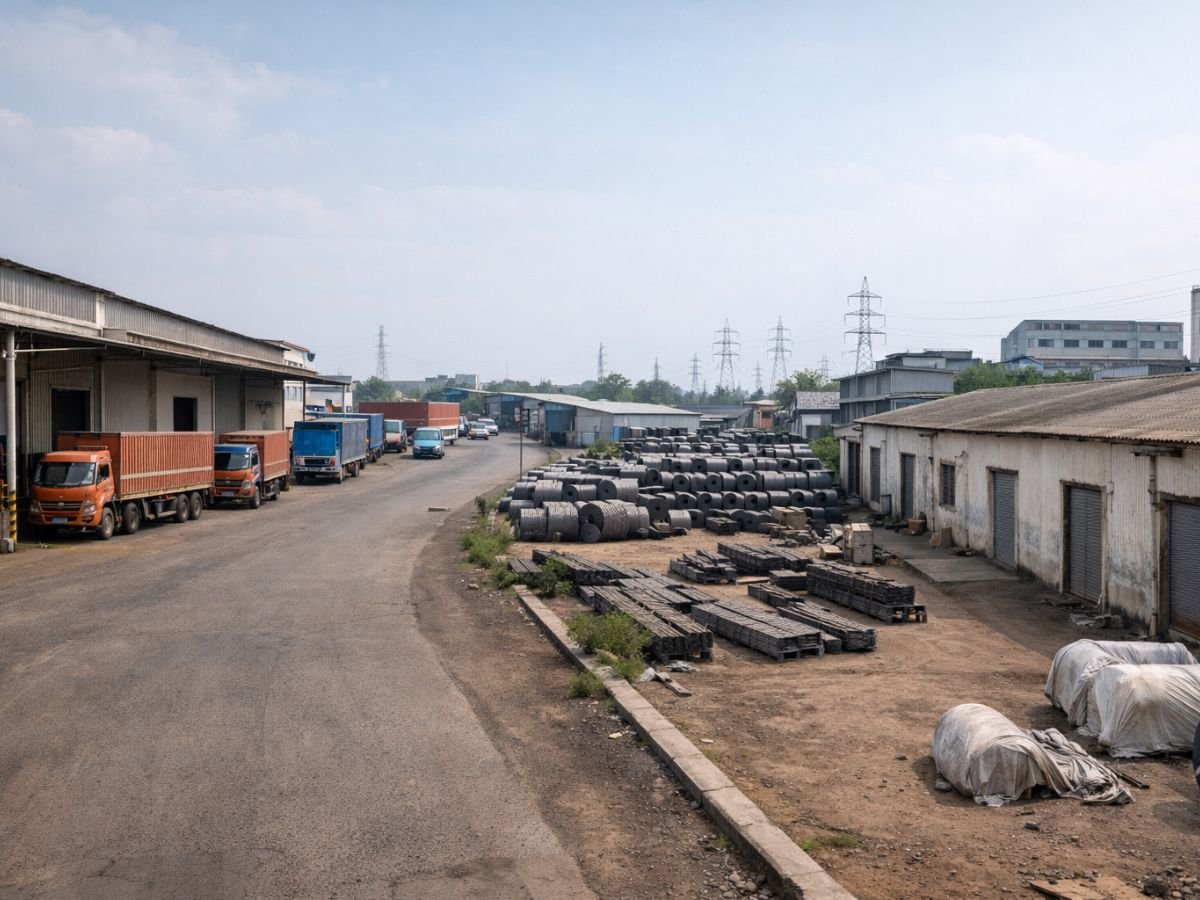
Kalamboli is not one single warehouse market. This is where many bad decisions begin.
Truck Terminal side
This side is more naturally aligned with transport coordination, truck movement, cross-docking, and quick onward dispatch. If your operation depends on fleet movement and surface transport efficiency, this can be more relevant than older market-style stock points. But approach roads and real turning radius still matter more than map location.
Steel Market and heavy-goods belts
This is where heavy metal, hardware, industrial material, and more rugged stockholding logic becomes stronger. If your cargo is heavy, dusty, bulky, or crane-linked, these belts may feel operationally correct. If your cargo needs cleaner handling, narrower SKU control, or retail-like speed, this can feel like the wrong ecosystem.
Smaller mixed-use and edge pockets
Some smaller occupiers, traders, or buffer-stock users may not need a full modern PEB warehouse. They may only need a functional godown or gala in the right approach location. That works, but only if the operational format matches.
Which pocket usually fits which user?
| Kalamboli pocket type | Usually fits | Usually does not fit |
|---|---|---|
| Truck Terminal-facing / highway-oriented areas | Transporters, cross-docking users, active dispatch operators | Businesses needing quiet, dust-light, customer-facing setups |
| Steel Market / heavy-goods belts | Steel, hardware, industrial inputs, rugged B2B storage | Clean inventory, apparel, premium consumer handling |
| Smaller mixed-use storage pockets | Small traders, buffer stock users, local distribution | High-bay, forklift-heavy, modern warehouse-led automation |
Does your cargo type actually match Kalamboli warehouse logic?
This question is more important than the rent.
Heavy metals, industrial supplies, non-fragile B2B goods, project material, and rugged spare-parts stock usually fit Kalamboli better because the area’s operating culture already accepts heavy handling, truck dependence, and industrial movement. Sensitive goods do not get the same natural advantage.
If you handle apparel, premium packed FMCG, dust-sensitive electronics, or product categories where ambient environment affects quality, you should inspect the unit much more critically. Do not judge only by the inside shed photo. Judge by the full environment around the warehouse.
How much dispatch activity should you have before Kalamboli becomes worth it?
As a rule, Kalamboli starts making more sense when your warehouse is a live operating node, not a storage archive.
If you have daily or frequent truck movement, route-driven dispatch, repeat industrial clients, or constant stock turnover, Kalamboli can justify itself. If your warehouse is mostly quiet, slow-moving, and used for long-duration holding, you may be overpaying for a logistics position you are barely using.
That is the difference between an active warehouse and a passive warehouse. In Kalamboli, active wins.
Should a small business, trader, or distributor take a godown here or a proper warehouse?
Not everyone needs a full modern warehouse.
A smaller trader or distributor may do perfectly well with a simpler godown or gala if the goods are manageable, the loading pattern is basic, and the weekly movement is modest. But once the business depends on forklifts, larger bays, better vertical clearance, structured loading, higher tonnage, or serious truck rotation, a proper warehouse becomes necessary.
The real question is not what sounds bigger. It is what your operation actually needs.
When does leasing warehouse space in Kalamboli make more sense than buying?
For most occupiers today, leasing is the more practical route.
CIDCO’s transfer charge structure was increased from April 1, 2025, and large commercial plot transfers can become extremely expensive. At the same time, CIDCO’s widely discussed freehold conversion move applies to residential plots, not general commercial warehouse plots. In other words, many buyers wrongly assume they are moving toward easy freehold-style ownership when commercial reality remains much stricter.
So if you are a growing occupier, a contract-led business, or a company still testing route stability, leasing usually protects capital better. Buying starts making sense only for very long-term owner-users with deep balance-sheet comfort and almost no relocation intention.
What should you check before finalising warehousing space in Kalamboli?
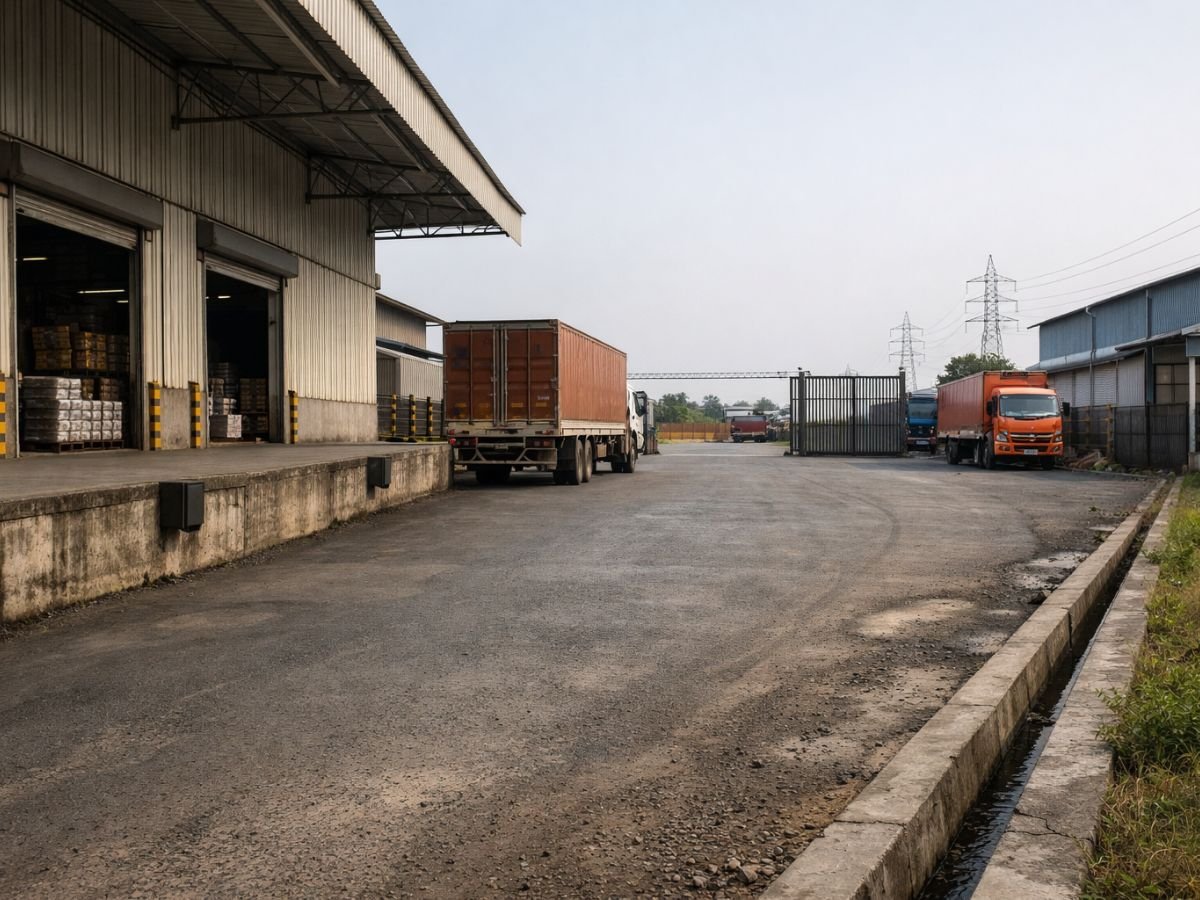
This is the part that saves money.
Pre-lease checklist for Kalamboli warehousing space
- Physically check whether a 32-foot or 40-foot vehicle can actually enter, wait, turn, and exit during active hours.
- Visit during peak traffic time, not only in a quiet afternoon. Kalamboli Junction works differently during congestion and construction phases.
- Verify whether the space is legally usable for storage under the relevant CIDCO allotment and building permissions. CIDCO remains central to transfer and land-right issues.
- Understand the local Mathadi handling reality before signing. Do not assume your loading model from another city will simply continue here.
- Check plinth height, drainage, and monsoon practicality. Low-lying or poorly drained sites can become costly.
- Ask whether the quoted rate changes because of crane access, road width, tenure, or loading advantages. Market rates vary. Recent reported ranges for standard warehouses in Kalamboli have broadly sat around the high teens to mid-twenties per sq. ft. per month, with better units going higher, but exact rents remain unit-specific.
What are the biggest mistakes occupiers make when taking warehouse space in Kalamboli?
The biggest mistake is choosing only by cheap rent.
A business may see a rate around ₹18 to ₹24 per sq. ft. and feel it has found a bargain. But if truck idling, difficult internal roads, handling costs, dust exposure, or the wrong pocket reduce daily efficiency, the “saving” can disappear fast. Reported market bands themselves are approximate and vary sharply by access, shed quality, and operational features.
The second mistake is assuming every Kalamboli warehouse behaves the same. It does not. A heavy industrial belt and a transport-facing dispatch location are not interchangeable.
The third mistake is confusing passenger connectivity with freight utility. Your team reaching KLMC more easily is not the same thing as your cargo operation benefiting.
Is Kalamboli better than Bhiwandi, Taloja, or TTC for your warehousing need?
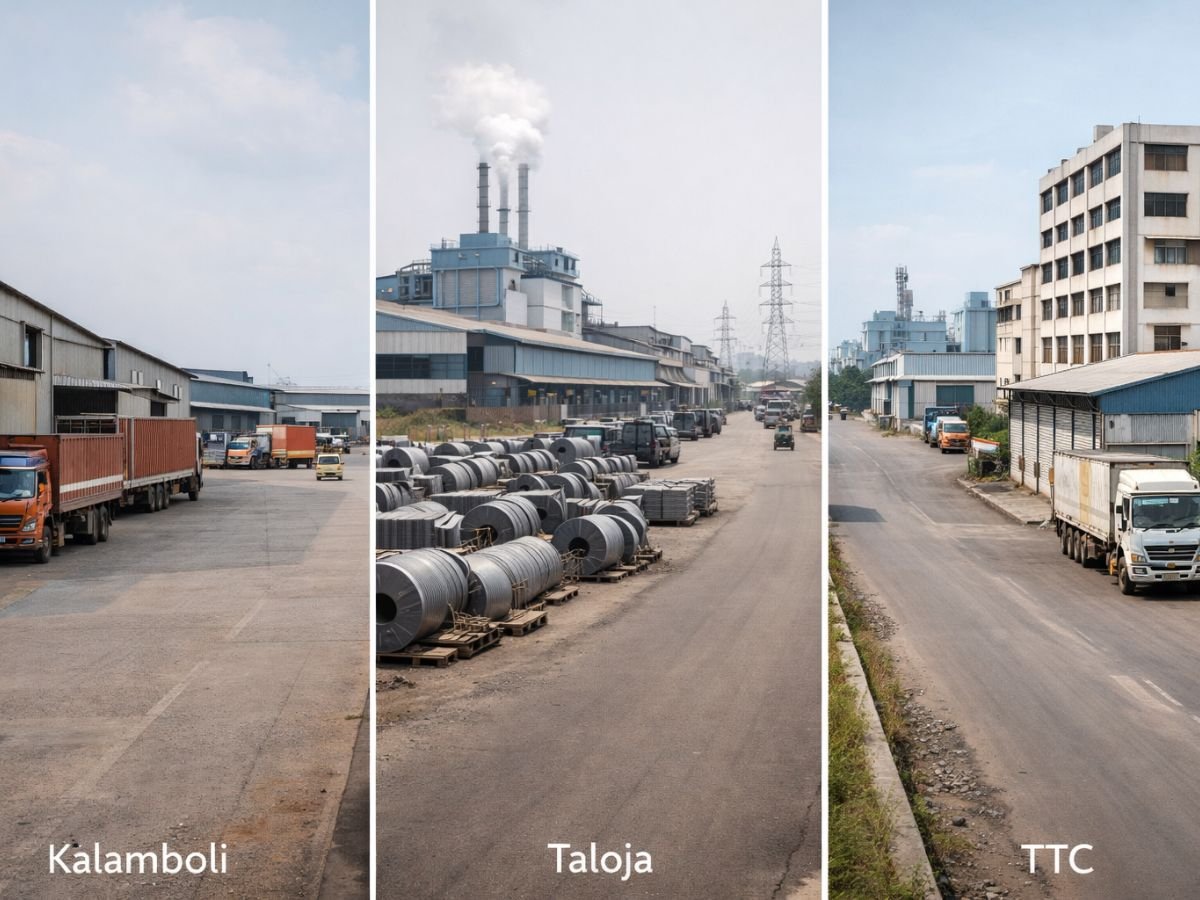
This depends on what you move.
Kalamboli usually wins for heavy B2B transit, steel and industrial distribution, and port-linked road movement. Bhiwandi is structurally stronger for high-volume consumer fulfillment and modern retail-e-commerce style warehousing. Taloja often becomes more relevant where manufacturing integration, MIDC logic, and certain industrial utility needs matter. TTC is a different commercial-industrial ecosystem altogether and is not the default answer for heavy warehousing just because it is in Navi Mumbai.
So the right question is not “which node is best?” It is “which node is best for my operating model?”
Conclusion
If your business runs on heavy goods, truck movement, port-linked dispatch, industrial supply, and active B2B logistics, Kalamboli can be one of the most practical warehousing locations in the Navi Mumbai side of the market. If your business needs clean storage, polished presentation, carton-level fulfillment economics, or highly controlled inventory conditions, you should be much more careful.
So who should take warehousing space in Kalamboli? Best fit: steel traders, heavy material distributors, rugged EXIM-linked operators, industrial B2B stockists, and active transport-led users. Conditional fit: auto parts, general 3PL, and moderate-dispatch users, but only in the right pocket and the right unit. Poor fit: premium consumer fulfillment, sensitive goods, pharma-style clean handling, and businesses trying to run a polished warehouse model inside a rugged industrial environment.
That is the real answer. Kalamboli is powerful, but only when your business actually moves like Kalamboli.
FAQs
Frequently Asked Questions