CREDAI BANM: Role, Members, Projects & Impact on Navi Mumbai Real Estate
At a Glance
| Attribute | Details |
|---|---|
| Full Name | CREDAI BANM (Builders Association of Navi Mumbai – Raigad) |
| Office Address | 308/309, Persipolis Premises Co.Op. Soc, Plot No. 74, Sector-17, Vashi, Navi Mumbai – 400703 |
| Contact Number | +91 8000066669 |
| Website | https://credaibanm.in/ |
| credaibanm@gmail.com | |
| Role | Policy advocacy, developer coordination, consumer protection |
| Core Influence Area | Navi Mumbai + Raigad district |
| Key Drivers | CIDCO planning, NMIA, MTHL, logistics growth |
| Active Period Covered | 2003 to 2026 |
| Ideal Readers | Homebuyers, investors, planners, policy observers |
Why CREDAI BANM Matters for Navi Mumbai & Raigad Region
Planned urbanization is not just about wide roads and neat sectors. In a city like Navi Mumbai, it is also about how builders, regulators, and residents negotiate daily realities like approvals, infrastructure handovers, and buyer trust. That is where CREDAI BANM becomes relevant, even to someone who is not in the real estate business.
For a homebuyer, this body often acts like a pressure valve between the market and the system. When approvals slow down, policy interpretations change, or big infrastructure timelines shift, the outcome finally lands on possession dates, pricing, and project delivery. Investors also track such associations because they are usually the first to signal regulatory headwinds or upcoming corridor-level opportunities.
For locals living around growth nodes like Kamothe, Kharghar, Panvel, and the airport influence belt, this is not abstract policy talk. It shows up as construction intensity, traffic patterns, dust control enforcement, new rail and road proposals, and the pace at which a node becomes “fully liveable.” Understanding CREDAI BANM is, in a way, understanding how Navi Mumbai’s next decade will feel on the ground.
What is CREDAI BANM?
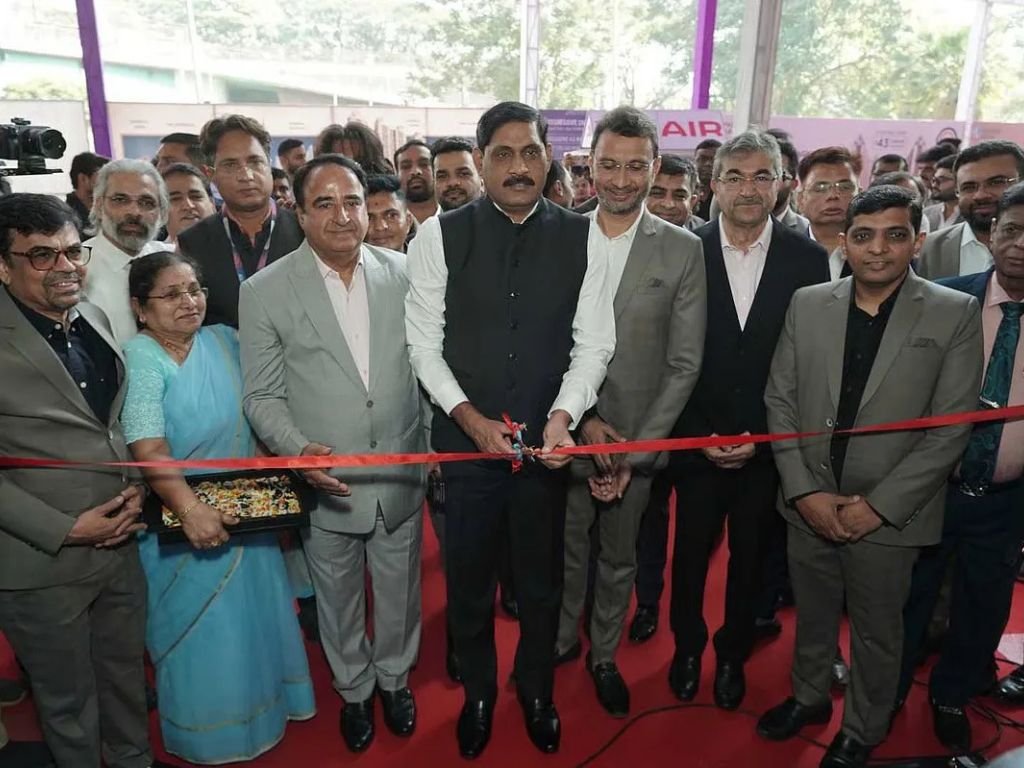
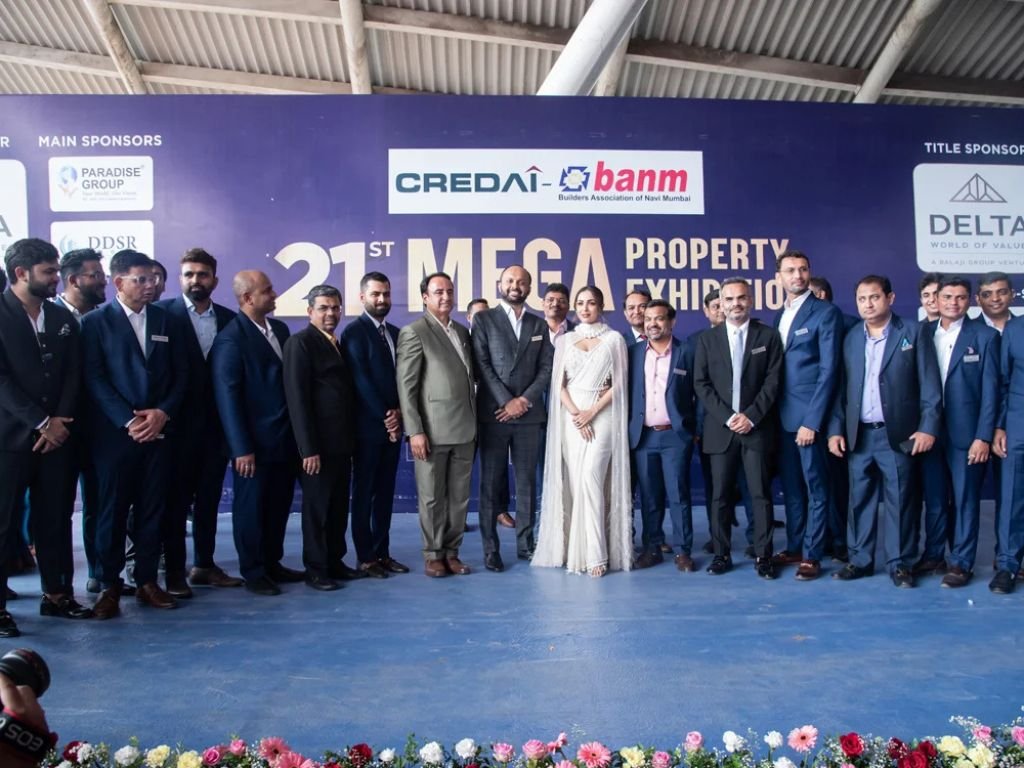
At the simplest level, CREDAI BANM is an organized association of developers operating across Navi Mumbai and the wider Raigad development belt. Over time, it evolved from a local protective group into a structured chapter aligned to CREDAI, the national umbrella body that represents private real estate developers in India.
CREDAI, as a national entity, is known for policy advocacy, standard-setting, and representing developer concerns in front of government agencies. The BANM identity, historically tied to Navi Mumbai’s builder ecosystem, reflects a regional coalition that grew up alongside CIDCO-planned nodes and the Raigad district’s fast-changing land and infrastructure realities. In practical terms, it functions as a collective voice when individual developers find it difficult to resolve regulatory bottlenecks alone.
Operationally, this chapter works through committees and leadership roles, coordinating with planning authorities, engaging in negotiations on fees and approvals, and responding to events that impact the market. It also positions itself as a consumer-facing body through ethical codes and dispute-resolution mechanisms, which becomes important when buyer confidence is fragile.
Is CREDAI BANM Different from CREDAI National?
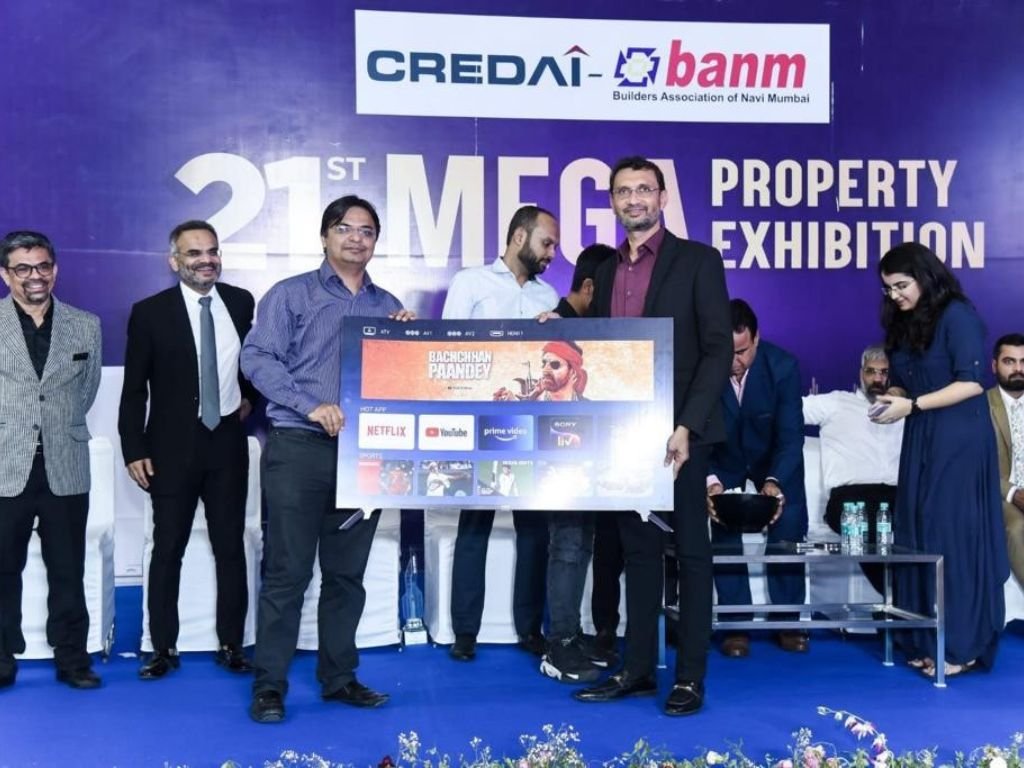
Yes, the difference is functional rather than philosophical. CREDAI operates at a national scale and shapes broader policy positions, industry standards, and national-level advocacy. CREDAI BANM operates at the regional execution layer, dealing with issues that are highly local, time-sensitive, and deeply tied to Navi Mumbai and Raigad’s administrative machinery.
For example, the chapter’s historical work includes negotiations with CIDCO, pushing for specific connectivity outcomes like a rail station, and addressing localized legal deadlocks that directly affected sectors and nodes. In the 2024–2025 period, the chapter’s role became even more visible because environmental clearances and pollution indexing disputes were not theoretical. They were blocking real projects and freezing regional supply.
Formation and Background of CREDAI BANM Raigad

The roots of this institution go back to 2003, when Navi Mumbai’s southern nodes were still transitioning from promise to pressure. The association began under the name “Mansarovar Builders Association,” reflecting its early geographic concentration around Mansarovar and Kamothe. The founding logic was straightforward: eight developers realized that fragmented, individual handling of local disruptions was making projects unviable.
In those early years, the biggest challenge was not branding or marketing. It was site continuity. Developers faced intimidation, access restrictions, and unreasonable local demands that could stall material movement and workforce operations. A collective association gave them negotiating strength and a way to handle disruptions through a unified front rather than isolated confrontations.
As the region expanded and Raigad became a wider theatre of real estate activity, the association evolved from a local shield into a district-level advocacy institution. The shift also mirrored the professionalization of the entire ecosystem, where the focus moved from basic protection to policy reforms, technical alignment, and ethical positioning, especially as CIDCO nodes matured and private land development widened.
Areas & Micro-Markets Covered by CREDAI BANM
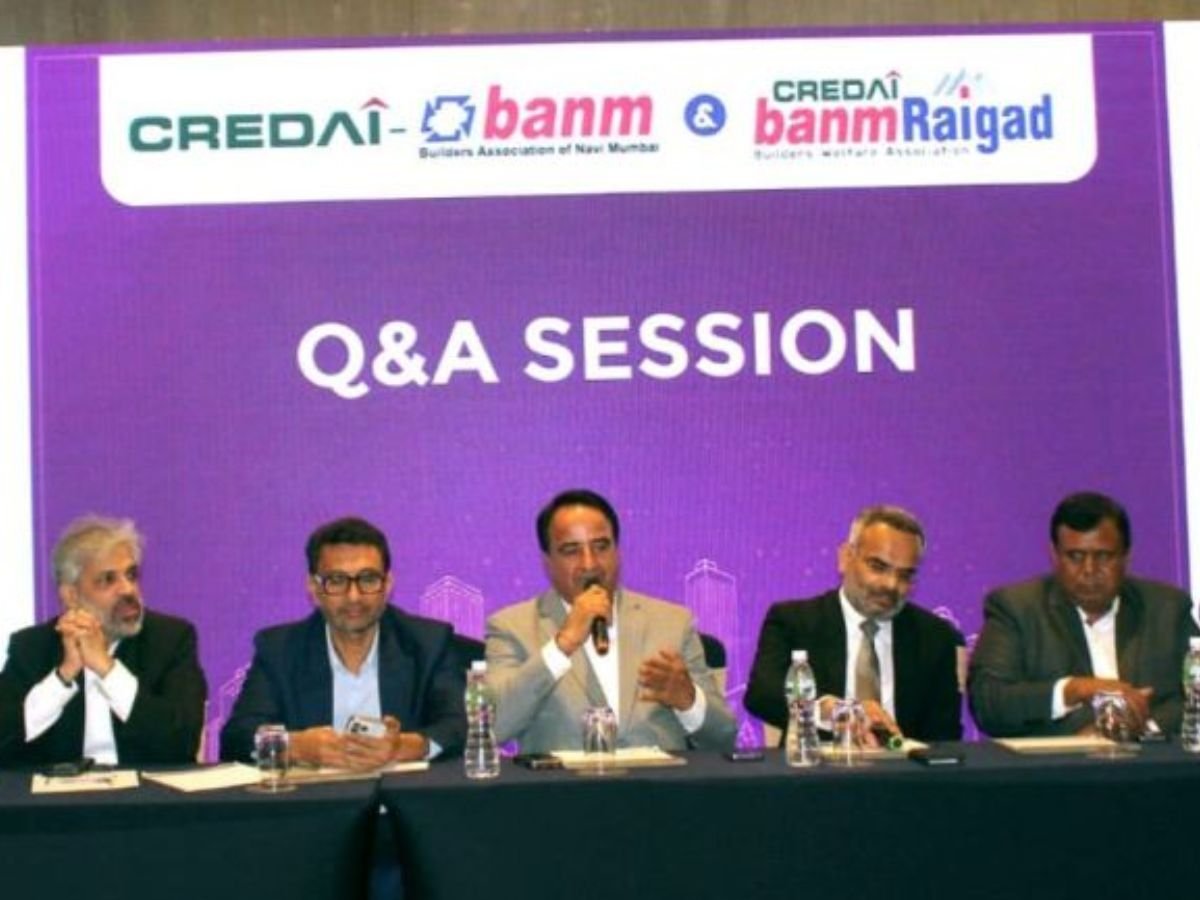
The geographical influence of CREDAI BANM stretches far beyond the traditional definition of Navi Mumbai. Its footprint follows infrastructure, land aggregation patterns, and administrative realities rather than municipal boundaries. This is precisely why the association has remained relevant as growth keeps shifting southward and outward.
Instead of being confined to a single city, the chapter operates across a mosaic of nodes that together form the extended urban system of Navi Mumbai and Raigad. Each micro-market under its influence behaves differently, shaped by rail access, highway connectivity, airport proximity, and planning authority control.
Panvel Region
Panvel represents the hinge point between old Navi Mumbai and emerging Raigad development. Historically a transport junction, it has transformed into a residential and commercial magnet due to rail convergence and highway access. Developers here deal with a blend of legacy plots, CIDCO layouts, and NAINA-linked planning complexities.
For CREDAI BANM, Panvel is strategically important because policy decisions taken here tend to ripple into surrounding belts. Pricing behaviour, approval timelines, and infrastructure sequencing in Panvel often set benchmarks for newer nodes further south.
Navi Mumbai Extended Nodes: Ulwe and Dronagiri
Ulwe and Dronagiri together represent the future-facing edge of Navi Mumbai’s planned expansion. These nodes are no longer speculative zones; they are active construction theatres shaped by airport-led demand and sea-link connectivity. Developers operating here are deeply sensitive to environmental regulations, height norms, and transit-oriented layouts.
The association’s engagement in these nodes has increasingly shifted from basic approvals to managing scale and compliance. With large-format projects, logistics-linked housing, and premium residential towers emerging, coordination with planning authorities becomes critical to avoid fragmented growth.
Karjat–Khopoli Belt
The Karjat–Khopoli belt occupies a different position in the regional matrix. It caters to plotted developments, second homes, and nature-oriented residential formats. Unlike core Navi Mumbai nodes, the demand here is lifestyle-driven rather than purely employment-driven.
For developers, the challenge lies in balancing environmental sensitivity with infrastructure feasibility. CREDAI BANM plays a quieter but important role here by aligning development expectations with realistic access, services, and long-term livability, rather than short-term hype.
Uran & JNPT Corridor
The Uran belt, influenced heavily by the Jawaharlal Nehru Port Trust, operates at the intersection of logistics, industrial activity, and housing demand. Residential projects here are closely tied to port-related employment and upcoming transport corridors.
Regulatory scrutiny tends to be higher in this zone due to coastal and environmental considerations. The association’s role often involves clarifying zoning interpretations and ensuring that housing supply keeps pace with employment without violating planning norms.
Alibaug & Coastal Raigad
Alibaug and coastal Raigad represent aspirational and investment-led development rather than mass housing. This belt attracts high-net-worth buyers, second-home seekers, and resort-style projects. Land aggregation, access roads, and environmental permissions dominate developer concerns here.
Although smaller in volume compared to Panvel or Ulwe, this region carries symbolic weight. It signals how Raigad is diversifying beyond utility-driven housing into lifestyle real estate, a trend closely watched by long-term investors.
Who Are the Members of CREDAI BANM?
The membership base of CREDAI BANM is deliberately diverse, reflecting the layered nature of Navi Mumbai and Raigad development. It includes small, mid-sized, and large developers, each operating under very different risk and capital structures.
Smaller developers often focus on single-building or limited-layout projects, particularly in established nodes like Kamothe or Karanjade. Mid-sized players usually operate across multiple nodes, balancing affordable and mid-segment housing. Larger developers are increasingly involved in township-scale or infrastructure-adjacent projects.
A significant aspect of this diversity is the coexistence of CIDCO-allotted land developers and private land developers. Each category faces different approval pathways and constraints, which makes a collective platform essential for resolving conflicts and standardizing expectations.
How Developers Benefit from CREDAI BANM Membership
For developers, membership is less about branding and more about operational survival. The association provides a structured channel to raise issues that cannot be solved at an individual project level, especially when they involve systemic delays or policy ambiguity.
It also creates peer accountability. Decisions taken within the association, whether related to ethics or dispute resolution, carry weight because they come from industry veterans rather than external enforcement alone. This internal discipline becomes increasingly important in a market where buyer awareness is rising.
From a strategic standpoint, developers gain early visibility into regulatory shifts, infrastructure planning, and judicial developments. In a region where timing often determines viability, this shared intelligence can make the difference between a stalled project and a completed one.
Types of Real Estate Projects Under CREDAI BANM Members
The project landscape represented by CREDAI BANM mirrors the layered demand of Navi Mumbai and the Raigad district. It is not driven by a single housing category but by a spectrum that responds to employment hubs, transport corridors, and shifting buyer profiles. This diversity is one reason the association’s policy positions tend to carry weight with authorities.
Over the years, the mix has gradually moved from purely residential supply to more complex, multi-use ecosystems. The change is visible in both planning approaches and capital allocation, especially after the acceleration of airport and port-linked infrastructure.
Residential Projects
Residential development remains the backbone of member activity. These projects range from compact buildings in mature nodes to larger residential clusters in emerging areas. What distinguishes this segment is the constant negotiation between affordability, compliance, and delivery timelines.
In nodes like Kamothe and Karanjade, residential supply is driven by end-users seeking proximity to rail and road networks. In newer nodes, design decisions increasingly reflect future density expectations, rather than present-day surroundings.
Affordable Housing
Affordable housing has remained a sensitive but important segment within the association’s portfolio. Policy incentives, changing FSI norms, and the demand from service-sector workers have kept this category relevant, particularly along transit corridors.
Developers in this segment operate on thin margins, making regulatory clarity crucial. Any delay in approvals or infrastructure provisioning has a disproportionate impact here, which is why the association’s advocacy often highlights this category when negotiating with planning bodies.
NA Plots and Townships
NA plots and plotted townships have gained renewed interest in peripheral belts like Panvel and NAINA-linked areas. Buyers increasingly see land ownership as a hedge against apartment saturation and long-term price volatility.
From a development perspective, these projects involve complex coordination around road access, drainage, and phased infrastructure. The association’s role often lies in aligning expectations between planners and developers so that such layouts do not remain partially serviced for years.
Warehousing and Logistics Parks
Warehousing and logistics parks have emerged as a structural growth segment rather than a cyclical one. Proximity to ports, highways, and the upcoming airport has made Raigad a natural logistics extension of Mumbai.
Members involved in this space deal with a very different approval environment compared to residential projects. Zoning clarity, environmental compliance, and traffic impact assessments dominate decision-making, making collective representation essential.
Mixed-Use and Commercial Developments
Mixed-use and commercial projects represent the long-term maturation of the region. These include office spaces, retail components, and integrated developments near transit hubs.
Such projects signal a shift in how Navi Mumbai is perceived. It is no longer just a residential spillover city but an employment generator in its own right, a narrative that the association actively reinforces through its planning submissions and public positioning.
CREDAI BANM’s Role in Policy, Approvals, and Government Liaison
Policy engagement is where CREDAI BANM exerts its deepest influence. Individual developers can rarely engage meaningfully with regulatory complexity, especially when interpretations differ across departments. The association acts as a stabilizing intermediary in this fragmented landscape.
Its role is not limited to lobbying. It involves continuous dialogue, documentation, and follow-through, often over multiple years, to ensure that policy intent translates into executable ground reality.
Coordination with RERA
The introduction of RERA fundamentally altered accountability norms in the real estate sector. While the regulation improved buyer confidence, it also exposed developers to risks beyond their direct control, particularly infrastructure dependencies.
The association has consistently highlighted the need for synchrony between RERA timelines and infrastructure delivery by planning authorities. This advocacy has become more pronounced in areas where developers face penalties despite delays originating outside their control.
Engagement with CIDCO, MMRDA, and Local Bodies
CIDCO’s dual role as landowner and planning authority makes it central to Navi Mumbai’s development narrative. The association’s engagement here spans issues like transfer fees, layout approvals, and infrastructure sequencing.
With MMRDA and local municipal bodies, the focus shifts to regional integration. Road widths, metro alignments, and inter-node connectivity often require multi-agency coordination, where the association functions as a single point of representation for developer concerns.
Environmental and Zoning Discussions
Environmental compliance has become one of the most consequential dimensions of project viability. The association’s recent engagement on pollution indexing and clearance processes illustrates how technical data can shape economic outcomes.
Rather than opposing regulation, the association’s stance has emphasized timely, data-driven decision-making. This approach seeks to balance environmental responsibility with the need for predictable approval frameworks.
Impact of CREDAI BANM on Raigad & Navi Mumbai Economy
The economic footprint of the association’s member activity extends well beyond real estate transactions. Construction cycles generate employment, stimulate allied industries, and accelerate the transition of semi-rural zones into urban economies.
This impact becomes visible when tracking how nodes evolve. Areas once dependent on agriculture or informal trade gradually integrate into the metropolitan system through housing, services, and logistics.
Job Creation
Construction activity under member projects supports a wide employment chain, from skilled engineers to daily-wage labor and service providers. Each new node that matures creates a semi-permanent employment ecosystem.
Over time, this stabilizes local economies and reduces dependency on long-distance commuting, especially as commercial and logistics projects gain traction.
Infrastructure Push
Infrastructure expansion often follows real estate momentum. Roads, rail stations, and utilities become viable only when population density justifies investment.
By aggregating developer demand, the association indirectly accelerates infrastructure prioritization, particularly in nodes transitioning from planned layouts to lived neighborhoods.
Urbanization of Raigad Villages
One of the most visible impacts is the gradual urbanization of Raigad’s villages. This process is not instant, but over a decade, it reshapes land use, employment patterns, and local governance expectations.
While this transition brings challenges, it also integrates these areas into the broader metropolitan economy, altering their long-term development trajectory.
Spillover Effect on Navi Mumbai Property Prices
As development pushes outward, pricing dynamics shift inward. Mature nodes experience value stabilization, while emerging belts absorb speculative and long-term investment demand.
This spillover effect links Raigad’s growth directly to Navi Mumbai’s property cycles, reinforcing the association’s relevance across both geographies.
CREDAI BANM and the Navi Mumbai International Airport Influence
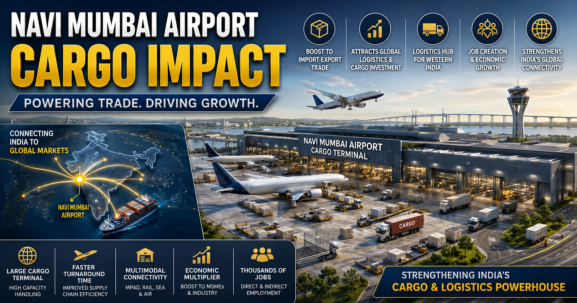
The launch and scaling of the Navi Mumbai International Airport has altered the development logic of the entire region. What was earlier a peripheral advantage has now become the central growth driver for Raigad and extended Navi Mumbai. For CREDAI BANM, the airport is not just an infrastructure project but a structural reset for planning priorities.
Airport-led development changes demand patterns in a predictable but intense way. Housing demand shifts closer to access corridors, logistics requirements multiply, and investor timelines compress. The association’s recent advocacy reflects an understanding that airport influence must be managed proactively, not reactively.
Logistics demand has been one of the earliest visible outcomes. Warehousing, cold storage, and last-mile facilities are clustering along highway and rail-linked belts. Member developers operating in these segments rely heavily on zoning clarity and environmental approvals, making coordinated representation critical.
Housing demand has followed closely behind. Staff housing, mid-income residential supply, and premium formats for executives have all seen increased traction. The association has consistently highlighted the need for balanced development so that speculative spikes do not distort long-term affordability.
Investor interest has also intensified. Institutional and private investors now view nodes like Ulwe, Dronagiri, and Panvel through an airport-centric lens. The association’s public positioning plays a role in moderating expectations and anchoring investment narratives to realistic infrastructure timelines.
Why Homebuyers and Investors Should Track CREDAI BANM
For a homebuyer, tracking CREDAI BANM is less about industry politics and more about risk awareness. When regulatory bottlenecks emerge or policy interpretations change, the first signals often come through collective developer action rather than official announcements.
Safer developer practices are one indirect outcome of association oversight. Membership implies adherence to codes of conduct and peer accountability, which can act as an early filter for buyers assessing credibility. While it is not a guarantee, it adds an additional layer of comfort in a complex market.
Policy awareness is another advantage. Buyers who understand how land pooling, environmental clearances, or infrastructure sequencing works are better equipped to evaluate timelines and pricing. The association’s public interventions often clarify these otherwise opaque processes.
For long-term investors, the association functions as a barometer of structural health. When advocacy intensifies around a particular corridor or policy, it usually signals underlying shifts that will shape supply and demand over several years.
Challenges Faced by CREDAI BANM and Raigad Developers
Despite its influence, the association operates in an environment defined by friction and uncertainty. Approval delays remain a persistent issue, particularly when multiple agencies interpret regulations differently. Even compliant projects can face extended waiting periods that strain financial viability.
Infrastructure lag is another structural challenge. Developers are often dependent on external agencies for roads, drainage, and utilities. When these are delayed, project delivery suffers, yet accountability mechanisms remain asymmetrical.
Environmental concerns have become sharper and more immediate. Air quality enforcement, dust control norms, and pollution indexing have introduced a layer of operational complexity that cannot be ignored. The association’s recent experiences show that compliance is no longer a one-time clearance but an ongoing process.
Maintaining neutrality while advocating for members is also a balancing act. The association must defend legitimate developer interests without appearing dismissive of environmental or consumer concerns, a tension that defines its credibility.
Future of CREDAI BANM and Raigad Real Estate (2025–2035)
Looking ahead, the future trajectory of CREDAI BANM is closely tied to how Navi Mumbai integrates into the broader metropolitan economy. Growth corridors will increasingly align with transit infrastructure rather than administrative boundaries.
Emerging nodes are expected to develop in a more planned and denser format. Transit-oriented development around metro lines, highways, and the airport will shape both residential and commercial supply. The association’s leadership has already signaled this shift in its public vision.
Long-term integration with Navi Mumbai will likely blur the distinction between city and district. Raigad’s development is no longer peripheral; it is becoming structurally embedded in the metropolitan system. This integration will test planning capacity, environmental resilience, and governance coordination.
Between 2025 and 2035, the association’s relevance will depend on its ability to evolve from reactive advocacy to anticipatory planning. If it succeeds, it will help define not just how much the region grows, but how well it grows.
CREDAI BANM – Frequently Asked Questions
Is CREDAI BANM a government body?
No, it is not a government body. CREDAI BANM is an industry association representing private real estate developers. It works with government agencies but does not exercise regulatory authority.
Is CREDAI BANM membership mandatory for developers?
Membership is voluntary. However, many developers choose to join because it provides collective representation, policy visibility, and access to dispute-resolution mechanisms that are difficult to achieve individually.
How does CREDAI BANM help homebuyers?
The association promotes ethical standards, encourages transparency, and operates grievance-resolution mechanisms. While it does not replace legal remedies, it often enables faster, less adversarial solutions.
Is Raigad safe for real estate investment?
Raigad’s safety as an investment destination depends on location, project quality, and infrastructure timelines. Association-led advocacy has improved regulatory clarity in many areas, but buyers should still conduct project-level due diligence.
How is CREDAI BANM linked to Navi Mumbai’s growth?
The association acts as a bridge between developers and planning authorities shaping Navi Mumbai’s expansion. Its interventions influence approvals, infrastructure alignment, and the pace at which new nodes become functional urban spaces.
FAQ's
Frequently Asked Questions