
TTC Navi Mumbai Guide: MIDC Areas, Property Types, Leasehold Rules & Buyer Checks
If you have searched for “TTC Navi Mumbai” and landed here, you probably want one of three things: you are trying to find a business space, understand a property deal, or figure out whether this area makes sense for investment. This guide answers all three plainly, without broker language.
| Quick Answer | What It Means |
|---|---|
| TTC full form | Trans Thane Creek |
| What it refers to | The industrial belt along the Thane-Belapur corridor in Navi Mumbai |
| Is it one locality? | No it is a long belt with very different pockets |
| Main land and planning authority | MIDC (Maharashtra Industrial Development Corporation) |
| Other authorities that matter | NMMC for tax and civic, IGR Maharashtra for registration, MahaRERA for qualifying projects |
| Best known for | Industrial units, galas, MSME spaces, IT offices, warehouses depending on the pocket |
| MIDC regional office for TTC | MIDC Mahape Office, beside Lokmat Newspaper, Ghansoli Station Road (Mon–Fri, 10am–6pm) |
| Official MIDC portal | [midc.maharashtra.gov.in](http://midc.maharashtra.gov.in/) |
What is TTC Navi Mumbai, exactly?
TTC stands for Trans Thane Creek. In everyday Navi Mumbai usage, it refers to the industrial spine that grew along the Thane-Belapur corridor not a residential neighbourhood, not a single society, not one pin on a map.
The simplest way to understand it: TTC is one belt, but not one answer.
Some pockets are older industrial stock sheds, galas, workshop-style premises built decades ago. Others now behave more like modern office and IT zones. That is why a broker saying “TTC property” tells you almost nothing useful until you know the exact pocket, the permitted use, and the document position. The name alone is not enough information to make a decision.
Which areas fall inside the TTC belt?
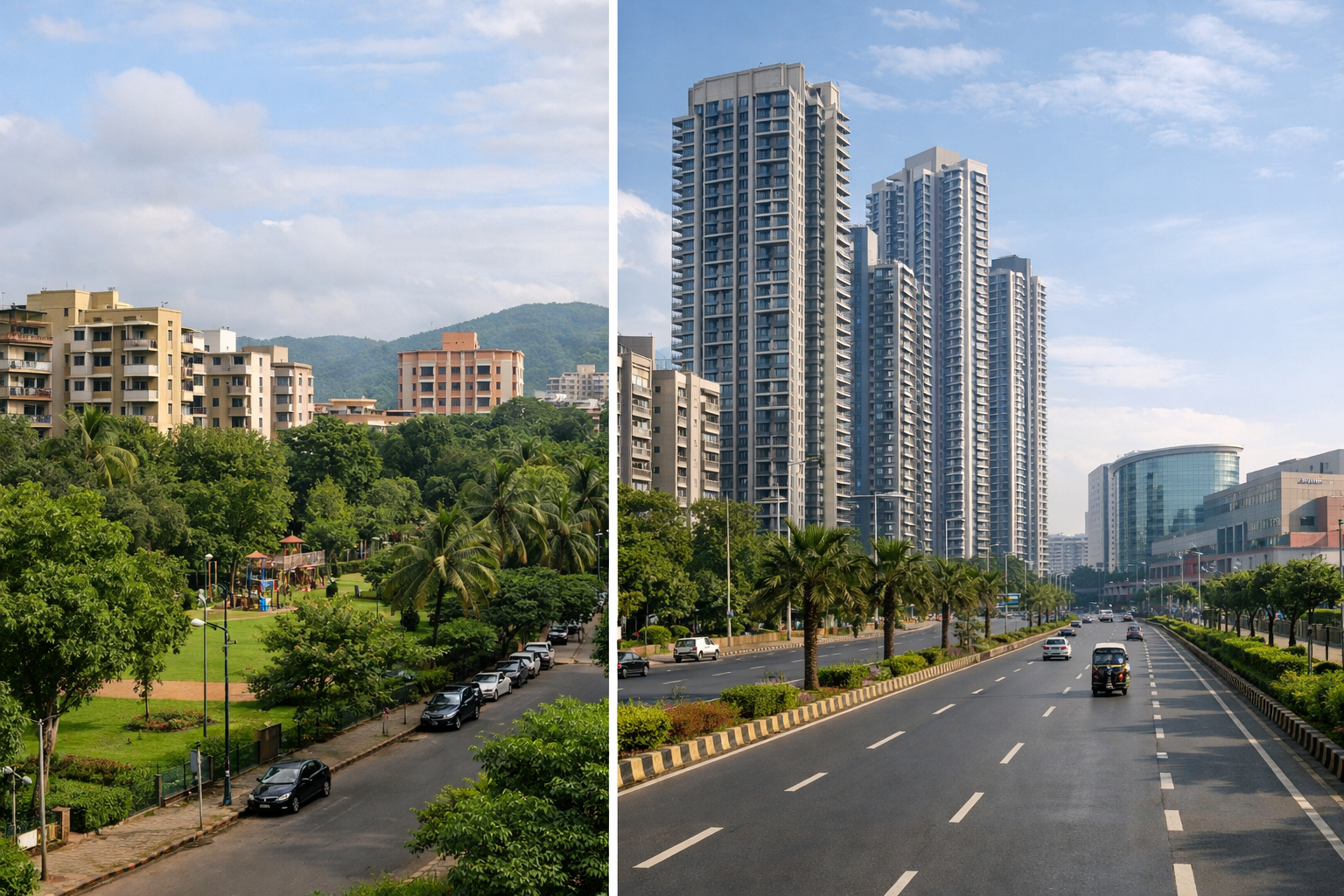
In local and market usage, TTC usually covers industrial pockets around Airoli, Rabale, Mahape, Ghansoli, Kopar Khairane, Pawane, and Turbhe. The boundary is not fixed by a single notification it shifts depending on who is speaking and for what purpose.
Here is how each pocket actually behaves on the ground:
Airoli has the strongest office and commuter pull on the northern side of the belt. The station is well-connected on the Trans-Harbour Line and many knowledge-work companies prefer this side because staff movement is easier.
Rabale is genuinely mixed you will find industrial character alongside commercial buildings that work perfectly for MSMEs who need a small office and a light operations area in the same premises. Rabale Railway Station is one of the better-designed stations on the Trans-Harbour Line and serves the area well for daily commuters.
Mahape is the most recognisable IT and office pocket in TTC. Millennium Business Park, located in Sector 2, Mahape, is the anchor reference most people in Navi Mumbai recognise immediately. Companies across banking technology, software, and back-office operations are set up here. That said, anyone who has commuted from Ghansoli or Rabale station knows that the last stretch into Mahape can add 15–20 minutes on a busy morning so “near station” needs to be checked, not assumed.
Ghansoli and Kopar Khairane offer mixed-use industrial and commercial stock. Along the Thane-Belapur Road, some buildings have frontage visibility that works well for businesses where road presence or walk-in access matters.
Pawane is more traditional industrial territory manufacturing, assembly, fabrication, and operations-heavy businesses sit more naturally here than in the office-friendly northern pockets.
Turbhe is where logistics and warehousing conversations usually begin. The proximity to the Thane-Belapur Road and the approach toward the Mumbai-Pune Expressway corridor makes Turbhe a natural first stop for businesses with daily dispatch needs, container movement, or storage-heavy operations.
Two units with the same carpet area can feel completely different in TTC. One may work perfectly for a software back office. The other may suit only storage, fabrication, or light industrial activity. The pocket matters more than the square footage.
Who actually controls TTC MIDC, NMMC, CIDCO, or someone else?
This is the part most people get confused about and it is important to get right.
MIDC is the key authority for land and planning inside notified MIDC zones. MIDC’s mandate includes planned industrial development and it functions as a special planning authority. In practical terms, this means MIDC handles land allotment, transfers, sub-leasing and sub-letting approvals, building plan approvals, occupancy certificates, and infrastructure like internal roads, water supply, drainage, and common facilities. If your unit is on MIDC-notified land, MIDC is your first and most important authority relationship.
The MIDC regional office serving most of TTC covering Rabale, Airoli, Turbhe, Ghansoli, and surrounding areas is located in Mahape, beside Lokmat Newspaper, off Ghansoli Station Road. It handles land-related work for all these pockets. Office hours are Monday to Friday, 10am to 6pm. The official portal is [midc.maharashtra.gov.in](http://midc.maharashtra.gov.in/).
NMMC matters for property tax and you cannot ignore it. The Navi Mumbai Municipal Corporation (NMMC), headquartered at Palm Beach Road, CBD Belapur, has authority over property tax in the TTC belt. The Supreme Court has upheld NMMC’s right to collect property tax from small-scale industrial units in this area, and sealing action has been taken against defaulters. Even if your day-to-day land interface is entirely with MIDC, outstanding NMMC dues can create serious problems. Always ask for the latest NMMC tax receipt before committing to any unit.
CIDCO shapes the larger Navi Mumbai planning context rather than controlling individual MIDC plots. It was created as Navi Mumbai’s development authority and continues to influence the broader node framework transport corridors, surrounding residential development, and city-level planning around the belt.
IGR Maharashtra handles document registration. A registered document is not the same as planning approval. Registration confirms the transaction was recorded; it does not confirm that the use, the building, or the transfer is MIDC-compliant.
MahaRERA applies only where a project qualifies. Where applicable, it adds a layer of project-level disclosure. It does not replace MIDC land and building compliance.
> Remember this: In TTC, land control, civic tax, document registration, fire approval, and pollution consent can all sit with different authorities. Missing even one of these can turn a “good deal” into an expensive file problem that takes years to untangle. >
What kind of spaces can you actually get in TTC?
TTC is not only factories. That is outdated thinking that costs people good opportunities.
The actual stock across the belt includes old industrial plots, standalone sheds, gala-style units, office floors of varying quality, IT/ITES-grade commercial premises, warehousing and logistics facilities, and some roadside commercial frontage in specific stretches.
Industrial plots and sheds suit manufacturing, fabrication, storage, engineering, and any operation that needs loading movement, truck access, or floor-level activity.
Galas are the workhorse of TTC. Compact, practical, and typically the most affordable entry point into the belt. MSMEs, service workshops, assembly units, and distribution businesses use galas constantly. Local brokers in Navi Mumbai have been seeing rising demand for TTC galas especially from Mumbai-based businesses looking for more affordable alternatives to BKC or Andheri industrial areas.
Office and IT space is more relevant in Mahape and Airoli-facing parts of the belt. Quality ranges from older commercial floors to newer Grade-A style buildings.
Warehousing and logistics stock is stronger in the Turbhe-Pawane corridor because highway approach logic matters in this business.
Commercial frontage has selective value in stretches where road visibility and walk-in business are part of the model.
One thing many first-time buyers miss: MIDC land is almost always leasehold, not freehold. MIDC tender documents commonly state long lease terms such as 95 years. MIDC also runs formal processes for transfer, sub-leasing, sub-letting, mortgage consent, and post-allotment changes.
So when someone says “sale property in TTC,” the very next question must be: what exactly is being sold the land, or transferable leasehold rights in that unit? These are different things with different paperwork, different approval requirements, and different cost implications.
Which TTC pocket works best for your specific use case?
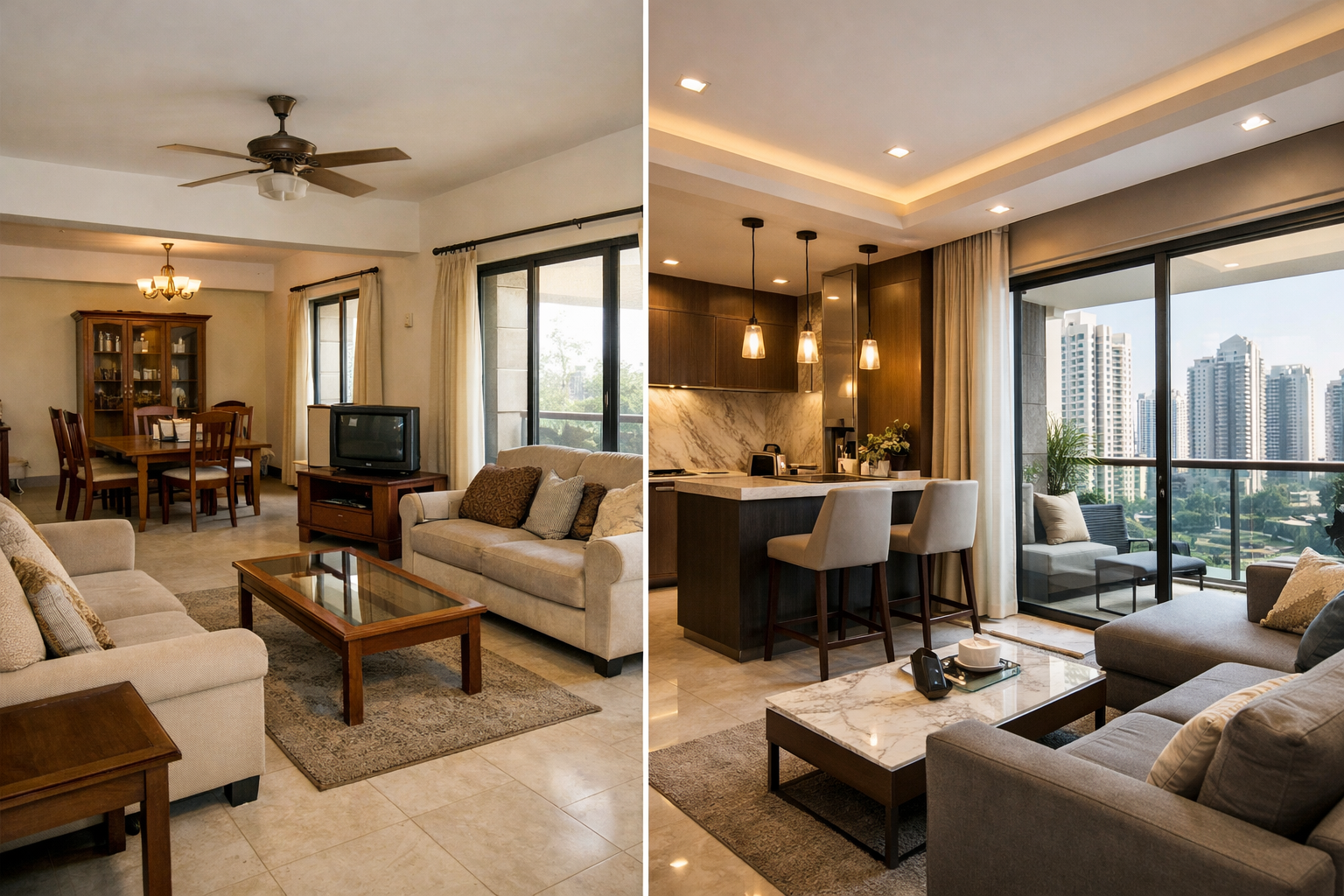
There is no universal “best pocket.” There is only best for your use.
| Your Use Case | Better-Fit Pocket | Why It Works |
|---|---|---|
| Manufacturing and engineering | Rabale, Pawane | Industrial character, vendor ecosystem, factory-style stock, better for truck and workman movement |
| Warehousing and logistics | Turbhe, Pawane | Stronger highway approach, better dispatch economics, corridor logic works in your favour |
| IT, ITES, back-office | Mahape, Airoli | Office-grade stock, better for staff hiring and client perception, Millennium Business Park area |
| MSME office plus light operations | Rabale, Kopar Khairane | Mixed stock, practical for users who need both a desk and a ground-floor operation |
| Staff commute-sensitive setup | Airoli, Rabale | Rabale and Airoli stations on Trans-Harbour Line give the best daily commute logic in TTC |
If you are a manufacturer, Pawane and Rabale will almost always make more practical sense than a polished office building in Mahape. Truck movement, workman access, vendor proximity, and operational tolerance matter more than a reception area.
If you are an office occupier, Mahape and the Airoli-facing stretch are worth shortlisting first. Daily staff commute, hiring ease, client perception, and available office stock all tilt in your favour here.
If you are a warehouse or logistics operator, start with Turbhe. A slightly older building that saves an hour of daily movement time will beat a newer building with bad approach roads almost every time.
How is connectivity in TTC really?
Every listing says “excellent connectivity.” That phrase means nothing unless someone explains for whom and for what.
The Trans-Harbour Line is the backbone for employee commuting across TTC. Key stations are Airoli, Rabale, Ghansoli, Kopar Khairane, and Turbhe each serving a different part of the belt. Rabale station is well-designed, relatively clean, and handles good frequency to both Thane and Vashi. But rail access does not solve the last-mile gap.
“Near station” in TTC can mean a 5-minute walk, a 20-minute auto ride, or a messy internal industrial road at peak hours. Mahape is the most cited example on paper it looks central, but parts of it still require a meaningful last-mile effort from the nearest station.
For practical planning, think about connectivity this way:
For trucks and goods vehicles: road width, turning radius, loading bay access, and internal encroachment risk matter most. Some internal TTC roads that looked fine five years ago now have permanent obstructions.
For staff: check actual last-mile time at office hours, not map distance. Send someone at 9am on a Monday morning.
For clients and walk-in traffic: frontage, direct navigation from a known landmark, and parking matter more than raw map distance.
For round-the-clock operations: reliable power supply, drainage performance in monsoon, and MIDC infrastructure maintenance in your specific pocket matter almost as much as road access.
Is TTC a good place to buy, lease or invest in 2026?
Yes for the right purpose. No if you are buying based on “MIDC area always appreciates.”
For occupiers, TTC still works because it offers space types that most other Navi Mumbai locations simply cannot match. If your business genuinely needs industrial permissions, operational flexibility, workshop-style use, or an office-plus-operations mix, TTC remains one of the few corridors in the Mumbai metropolitan region where that combination still makes economic sense.
For tenants, the biggest advantage is variety. Within one larger corridor you can find older sheds, galas, office floors, mixed-use buildings, and logistics units very different in character and cost. That variety gives flexibility, but it also means a wrong-fit unit in the right pocket is still a wrong deal.
For investors, TTC can work but only if you understand the structure of what you are buying. Leasehold position, transfer approvals, permitted use, NMMC tax dues, and building compliance all affect both your return and your exit. As of 2026, demand for smaller MIDC galas in the 500–1,500 sq ft range has been notably stronger, driven partly by MSMEs decentralising operations out of Mumbai proper. That is the opportunity. But it rewards people who understand industrial property paperwork, not just those who trust brochure language.
Also worth knowing: if you are seeking fresh allotment directly from MIDC, the process is not casual. MIDC’s guidelines say areas where more than 80% of plots are already allotted go through auction, while less saturated areas may follow a direct procedure with DPR submission and scrutiny. If your plan is direct MIDC allotment rather than resale, this process and timeline must factor into your planning from the start.
What to verify before taking any unit in TTC your pre-purchase checklist
Print this. Use it before you pay any token, sign any LOI, or enter any agreement.
Document and title checks:
- Agreement to Lease or Lease Deed confirm exactly what right is being transferred to you
- Transfer status with MIDC if the property changed hands earlier, verify MIDC records reflect that transfer properly
- For recently allotted plots check whether the 5-year restriction on transfer or sub-letting applies
Use and building checks:
- Permitted use do not assume every unit can legally run every activity; confirm in writing
- Building plan approval and occupancy certificate MIDC’s town planning function handles this in notified areas
- Fire NOC and final fire approval MIDC’s fire department handles this at both plan stage and pre-occupancy stage
- Pollution consent manufacturing users must check category and consent status before committing
Tax and utility checks:
- NMMC property tax dues ask for the latest paid receipt; verbal assurances mean nothing
- Power load position especially important if your process is power-heavy
- Water and drainage situation particularly relevant for manufacturing or processing businesses
- Parking and internal road access check physically, not on listing photos
Legal and financial checks:
- Mortgage or lender consent if the property has a loan against it, tripartite paperwork may be required
- IGR Maharashtra registration a registered deed confirms the transaction; it does not confirm planning or usage compliance
- MahaRERA check where a project qualifies, verify registration on the MahaRERA portal
> Practical rule for TTC: Never confuse possession with compliance. Never confuse registration with permission. These are different things and mixing them up is where most costly mistakes begin. >
Five problems people in Navi Mumbai discover too late in TTC

First: assuming all TTC stock is interchangeable. A building that works for light assembly operations may be completely wrong for office staff. A unit that looks ideal on Google Maps may be impractical for loading. The pocket and the building type must match your activity.
Second: ignoring leasehold structure and transfer cost. MIDC runs formal transfer and post-allotment processes. If you do not price the approval-related time and cost into your deal from the start, your cost sheet can move significantly after you have already committed.
Third: underestimating last-mile friction. Staff do not commute by GPS. They commute by station, auto, bus, and internal road at peak hour, in monsoon, every single working day. For many occupiers in TTC, that daily friction matters more than headline rent.
Fourth: skipping municipal and utility due diligence. A property tax dispute, old NMMC dues, weak power infrastructure, or a fire-compliance gap does not appear in a listing photograph. It appears when operations start and you are already locked in.
Fifth: assuming “industrial area” means anything goes. It does not. Permitted use, pollution category, building approvals, and the authority framework still apply to every unit. The industrial label does not grant blanket permission for all activities.
Quick answers to the most common TTC Navi Mumbai questions
Is TTC the same as MIDC? No. TTC is the geographic belt. MIDC is the authority that developed and manages industrial land and planning in notified zones within that belt. People often use both terms in the same sentence, but they mean different things.
Is Mahape part of TTC? Yes. In standard Navi Mumbai market usage, Mahape is one of the most prominent pockets in TTC. The MIDC regional office for the entire TTC area is also located in Mahape, beside Lokmat Newspaper off Ghansoli Station Road.
Is TTC only for factories, or can offices operate here? Both but not evenly across the belt. Mahape and the Airoli-facing stretch are genuinely office-friendly today. Pawane and Turbhe remain more industrial and operations-heavy. The right answer depends on your activity, not just your address.
Are TTC properties mostly leasehold? Yes. MIDC industrial properties are typically leasehold rights, commonly with 95-year lease terms in tender documents. The specific tenure and structure must always be verified in the actual property papers for that unit.
Which stations serve TTC best? Airoli, Rabale, Ghansoli, Kopar Khairane, and Turbhe all on the Trans-Harbour Line. But do not stop at the station name. Check the actual last-mile distance and travel time from that station to the specific premises.
Can an industrial plot be converted to commercial use? Not without formal approval. Change of use requires an application through MIDC and is not guaranteed. MIDC also restricts change of use during the initial period after fresh allotment. Verify the exact permitted use for any plot before modelling a future conversion.
Where do I go for MIDC matters related toa TTC? MIDC Mahape Office, beside Lokmat Newspaper, Ghansoli Station Road, Mahape, Navi Mumbai. Handles land-related work for Rabale, Airoli, Turbhe, Ghansoli, and surrounding TTC pockets. Open Monday to Friday, 10am to 6pm. Portal: [midc.maharashtra.gov.in](http://midc.maharashtra.gov.in/).
Conclusion
TTC Navi Mumbai is not a one-line industrial label. It is a long, mixed belt where the right answer changes by pocket, by activity, and by paperwork.
The clean takeaway: TTC is genuinely strong for businesses that need practical industrial or commercial space but it only works well when you match the exact unit to the exact use and verify the authority side properly before you sign anything.
FAQs
Frequently Asked Questions